In Search of the Ghosts of the Forest – Leopard Safari in Rajaji Park
I recently completed a leopard photography tour to Rajaji Park in Uttarakhand, in search of leopards, the ghosts of the forest. This is a report of this trip.
Trip Overview – The Leopards of Rajaji Park
Leopards are called the ghosts of the forest for a reason. They are superbly camouflaged and naturally elusive, making leopard sightings in the wild very rare. However, Rajaji Park has earned a reputation of good leopard sightings.
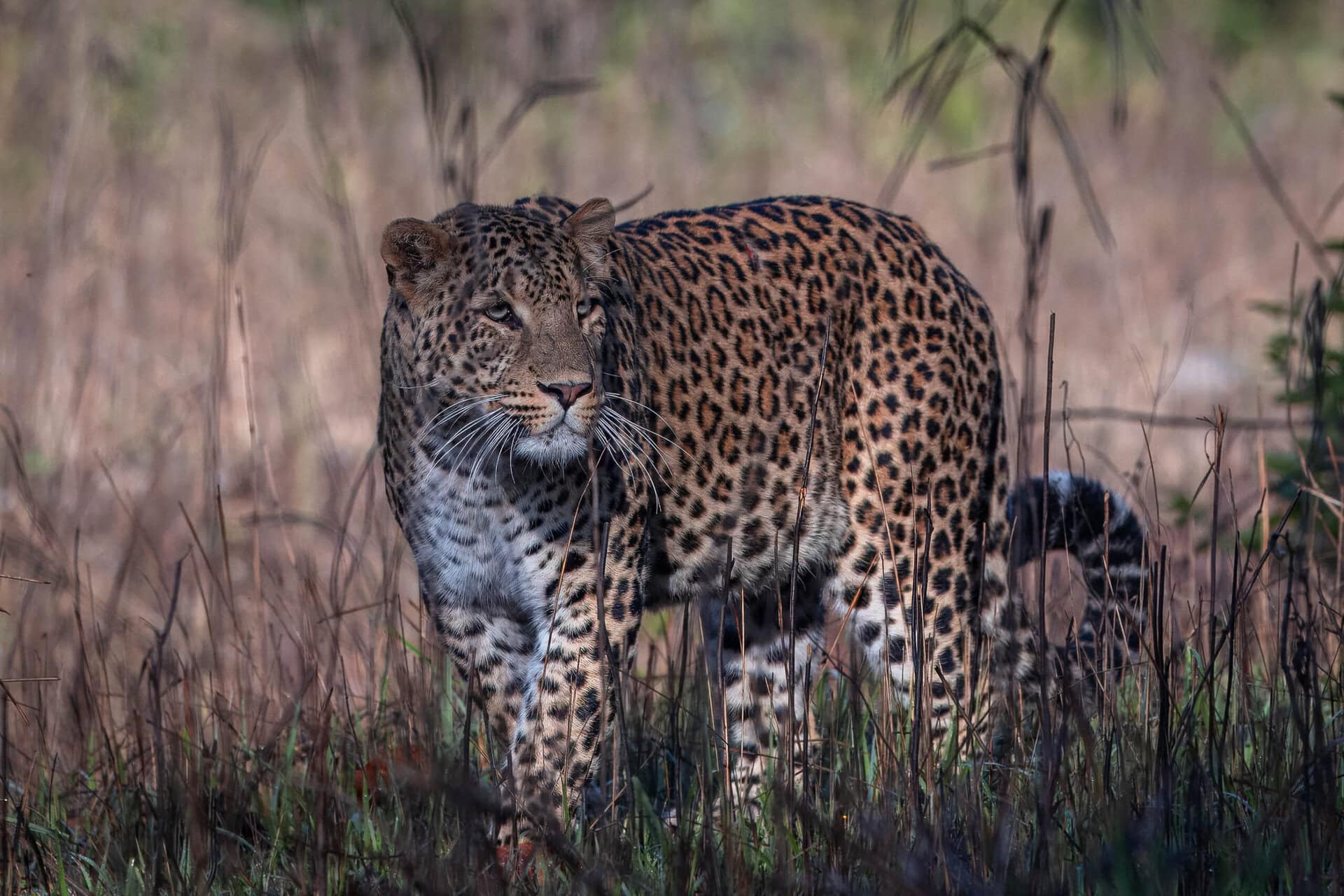
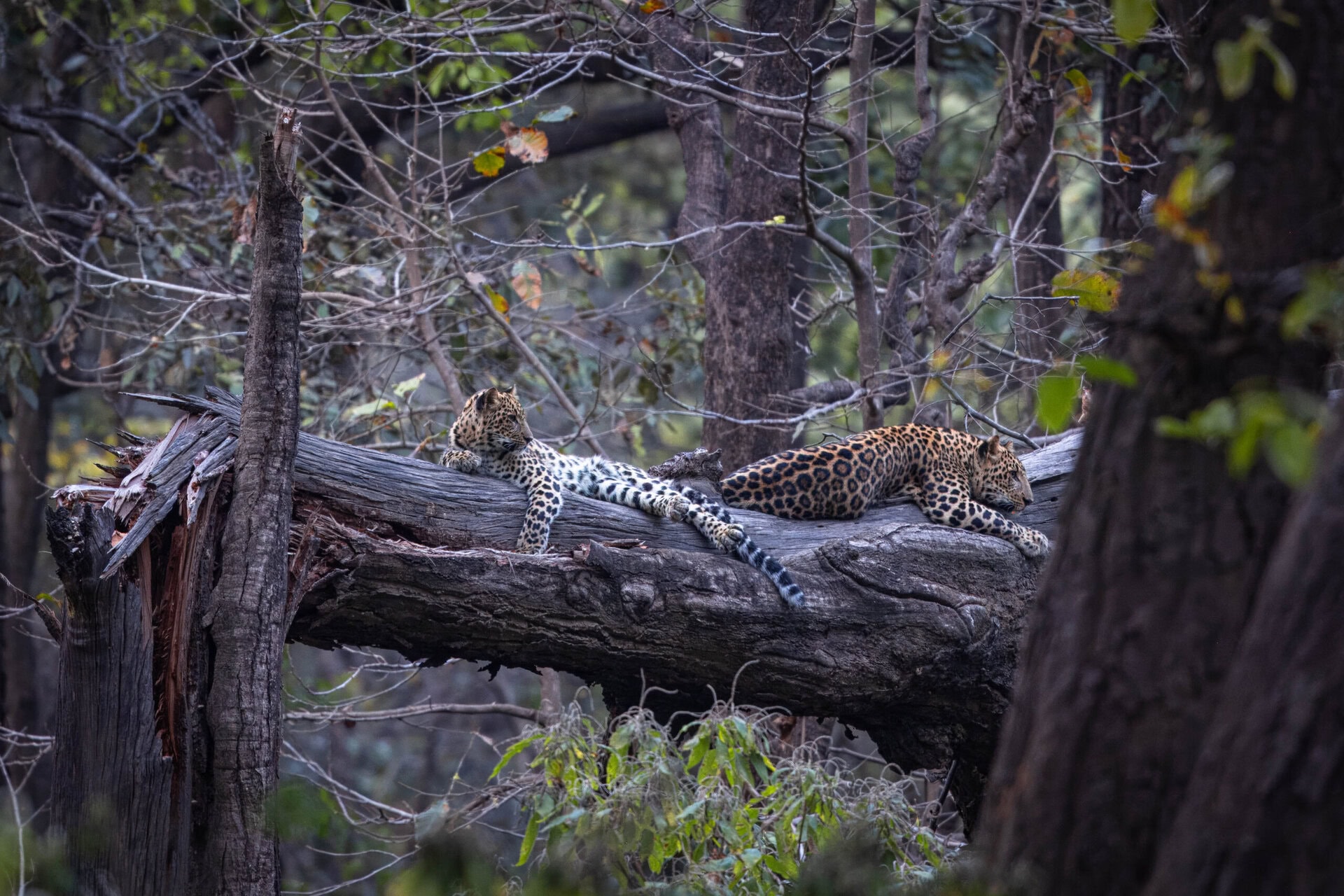
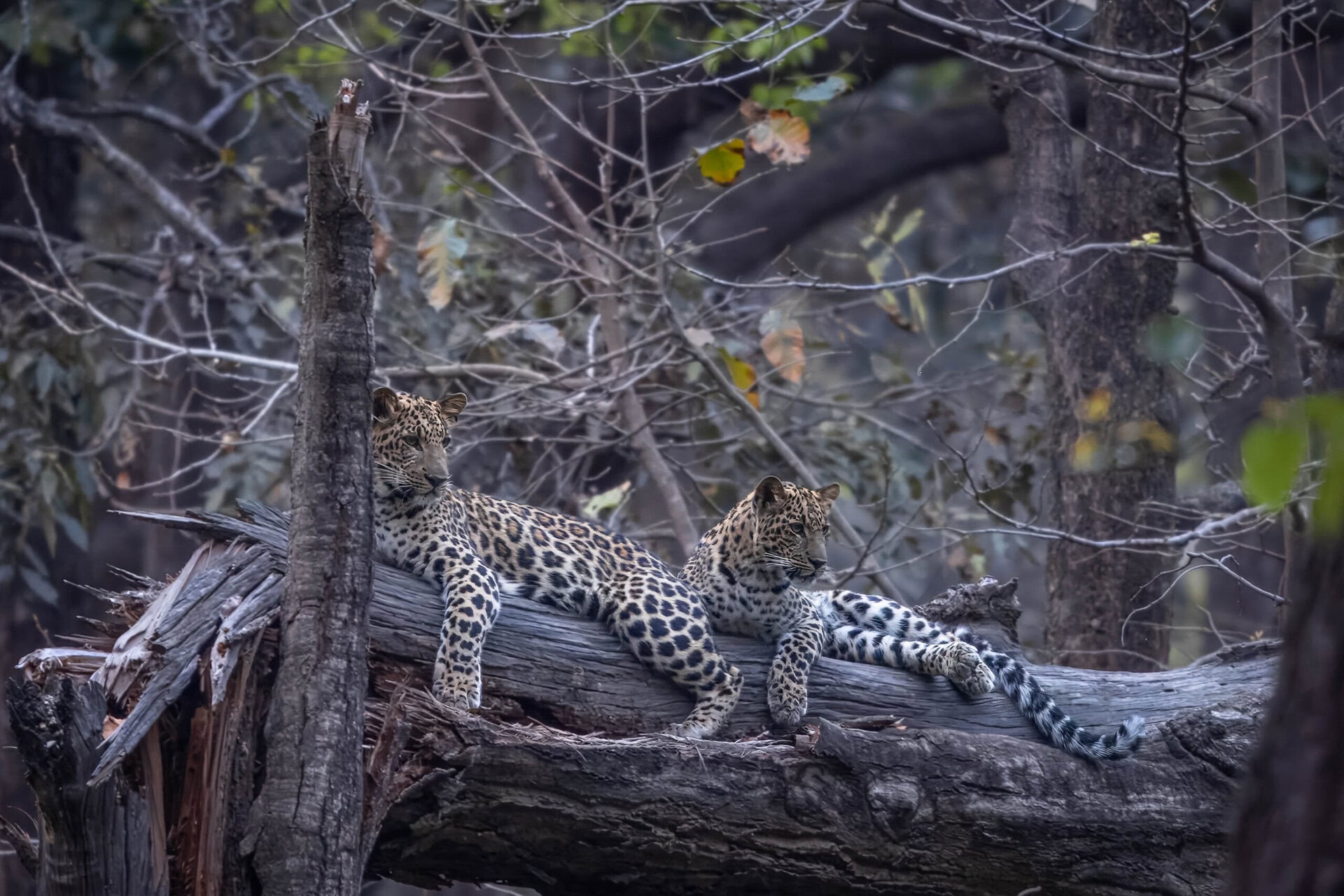
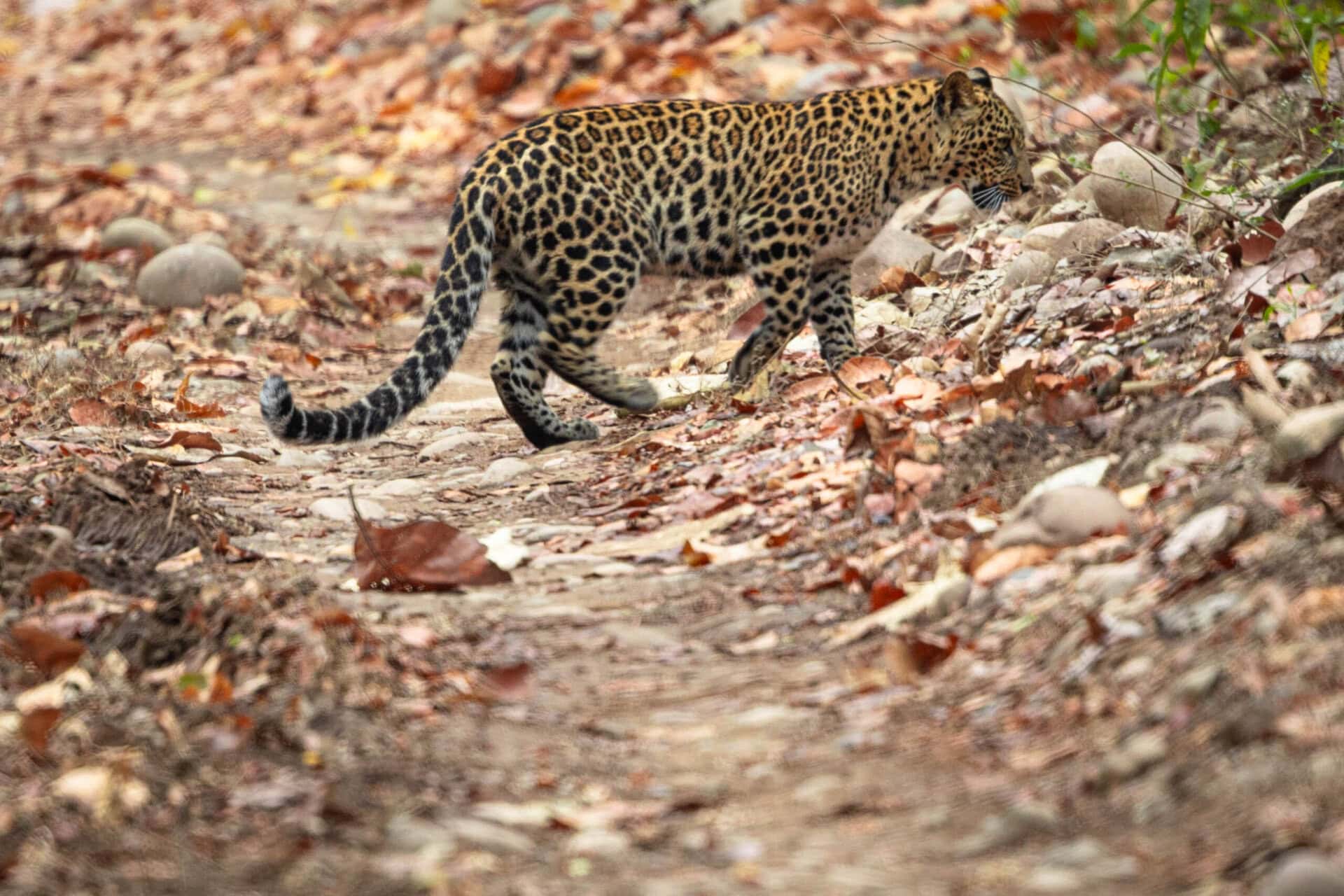
Out of the seven safaris we did, we had a couple of great encounters: an adult male crossing the road at close range and feasting on its kill, and a mother with two cubs in another. Below are some teaser pictures from these sightings.
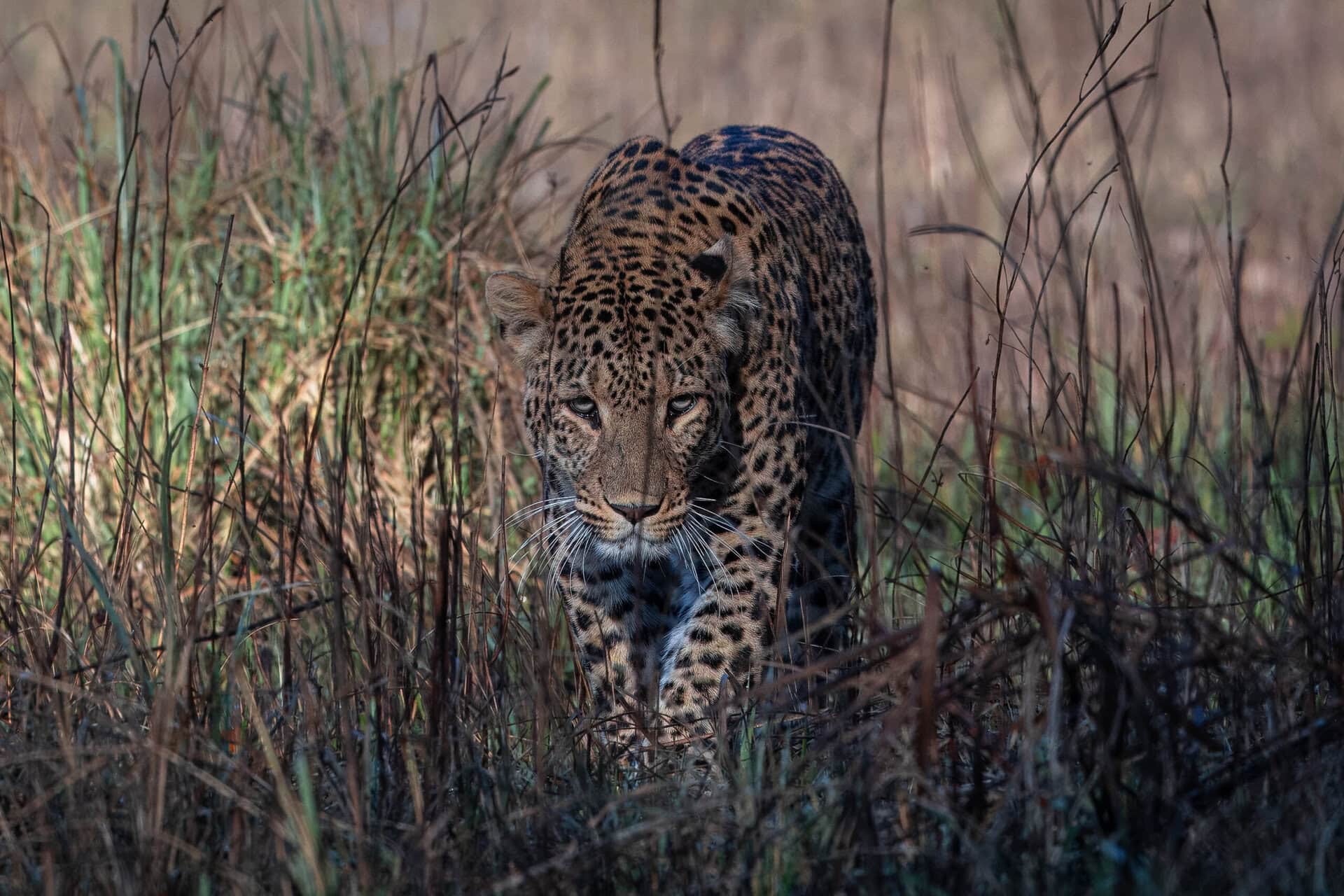
As this is going to be a long report, let me split this into sections. Jump to the section of interest from the TOC below, and use the Back to TOC button to come back here. Also, I have arranged the pictures as galleries. Click on the pictures to open a higher resolution picture and scroll through the galleries.
The Plan and Reaching Rajaji Park
My friend Robi and I had been planning a trip to Rajaji Park for over a year. But the plans did not materialize for one reason or another. In mid-December 2025, we saw an announcement from Mr. Vipul of Wild Ark about a photography tour to Rajaji Park in March 2026. We both immediately signed up for the trip.
I have attended a few other tours organized by Vipul—a herping trip in Agumbe, lion photography in Gir, and snow leopard photography in Kibber. His tours are very well planned and organized. He takes very good care of all aspects like stay, food, the safaris, and access to very good drivers and guides. He is very knowledgeable in wildlife and photography, and shares a lot of information in the field.
The day before the program started, I took a flight from Coimbatore to Dehradun, and then a taxi from Dehradun airport to the homestay near Rajaji Park. Robi took a flight from Bangalore and reached Rajaji Park.
The Stay
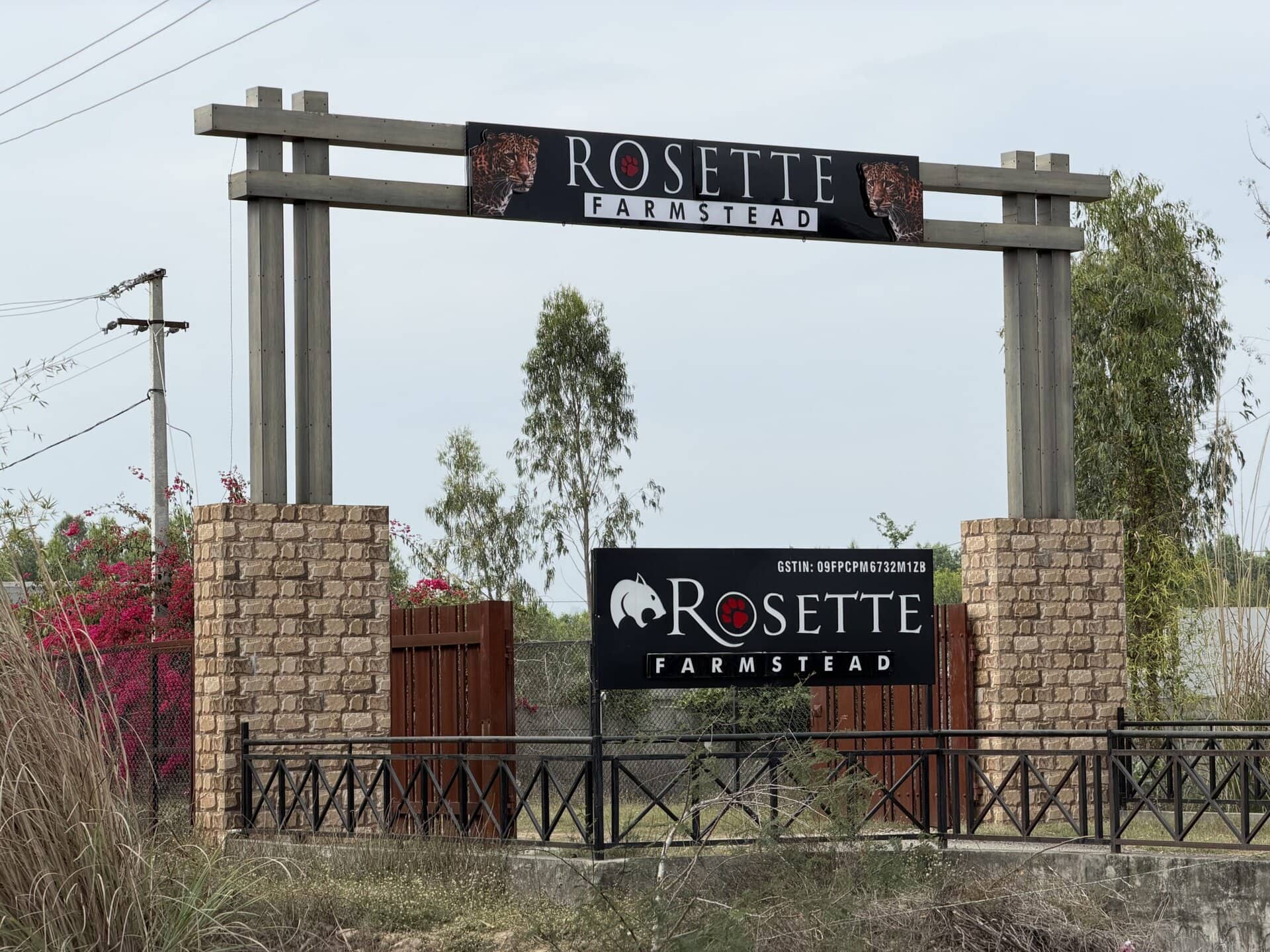
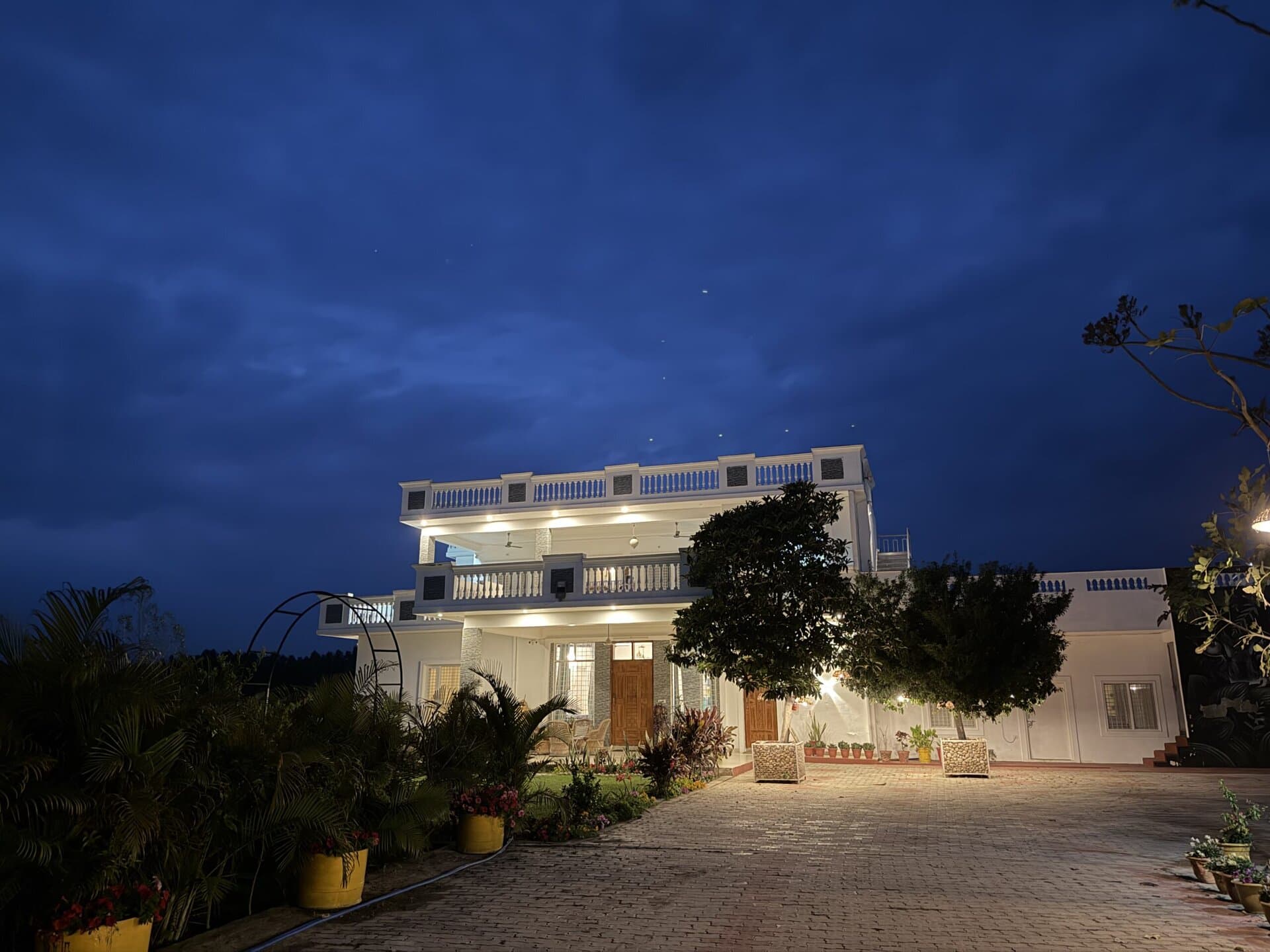
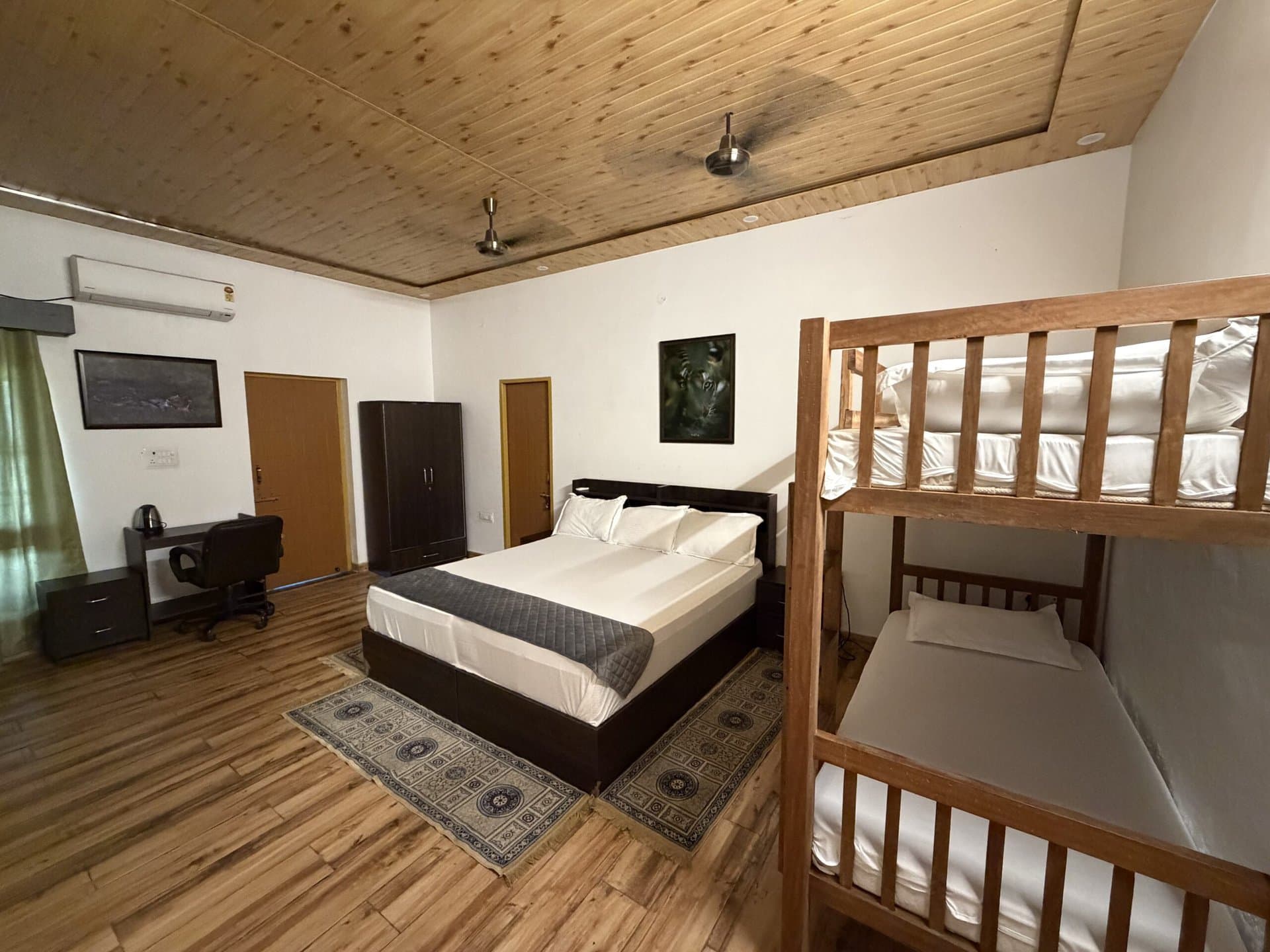
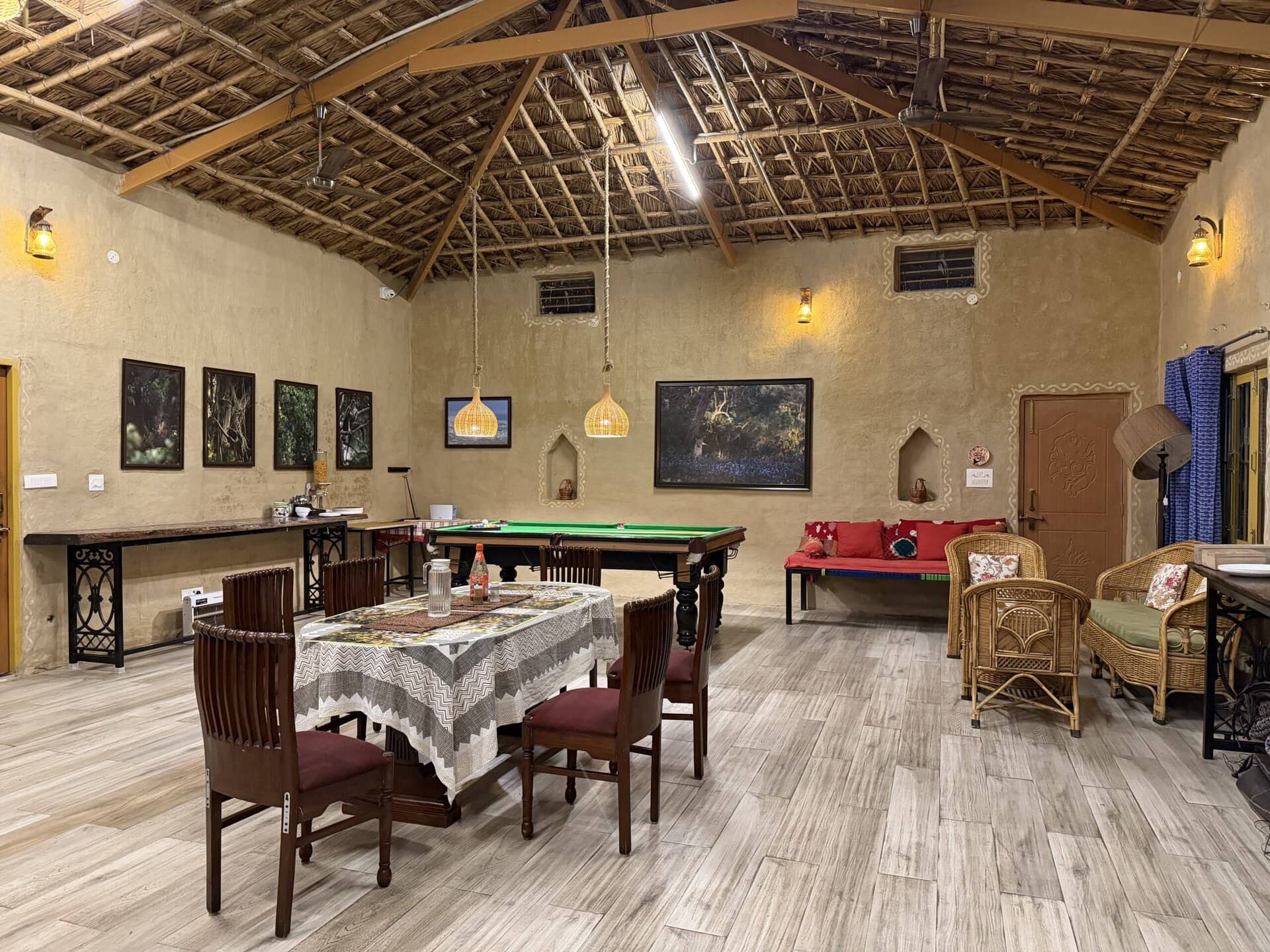
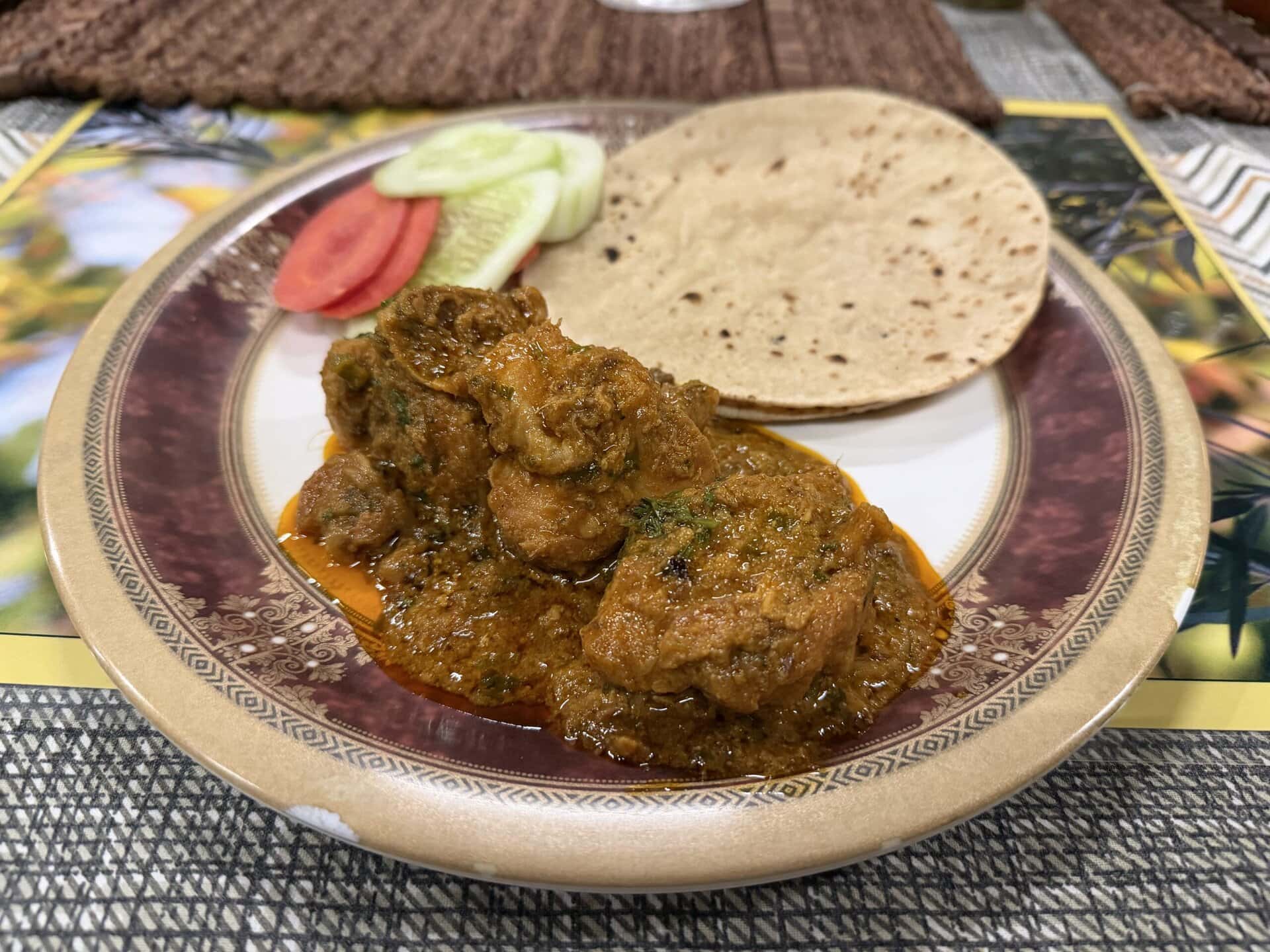
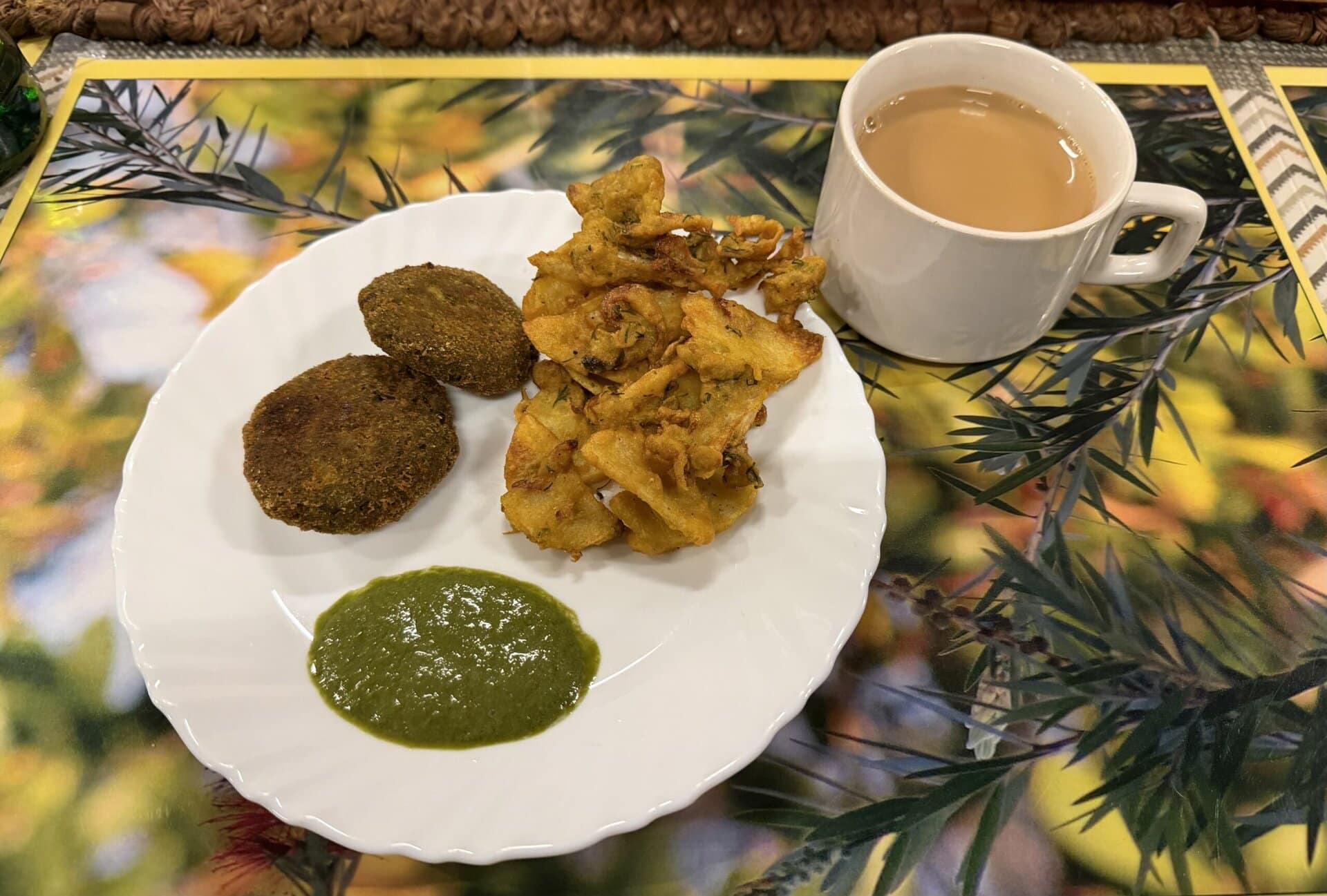
We stayed at a homestay called The Rosette Farmstead. It is located about a 10-minute drive from the main gate of Rajaji Park. The homestay is run by Mr. Achintya, who is himself a wildlife photographer. The rooms were very clean, and there is a well-designed common area with dining tables, comfortable seating, and a pool table. The walls are filled with leopard photographs shot by Mr. Achintya. The food was simple and tasty, and the staff were very friendly and responsive to any needs. Below are a few pictures of the property.
The Routine
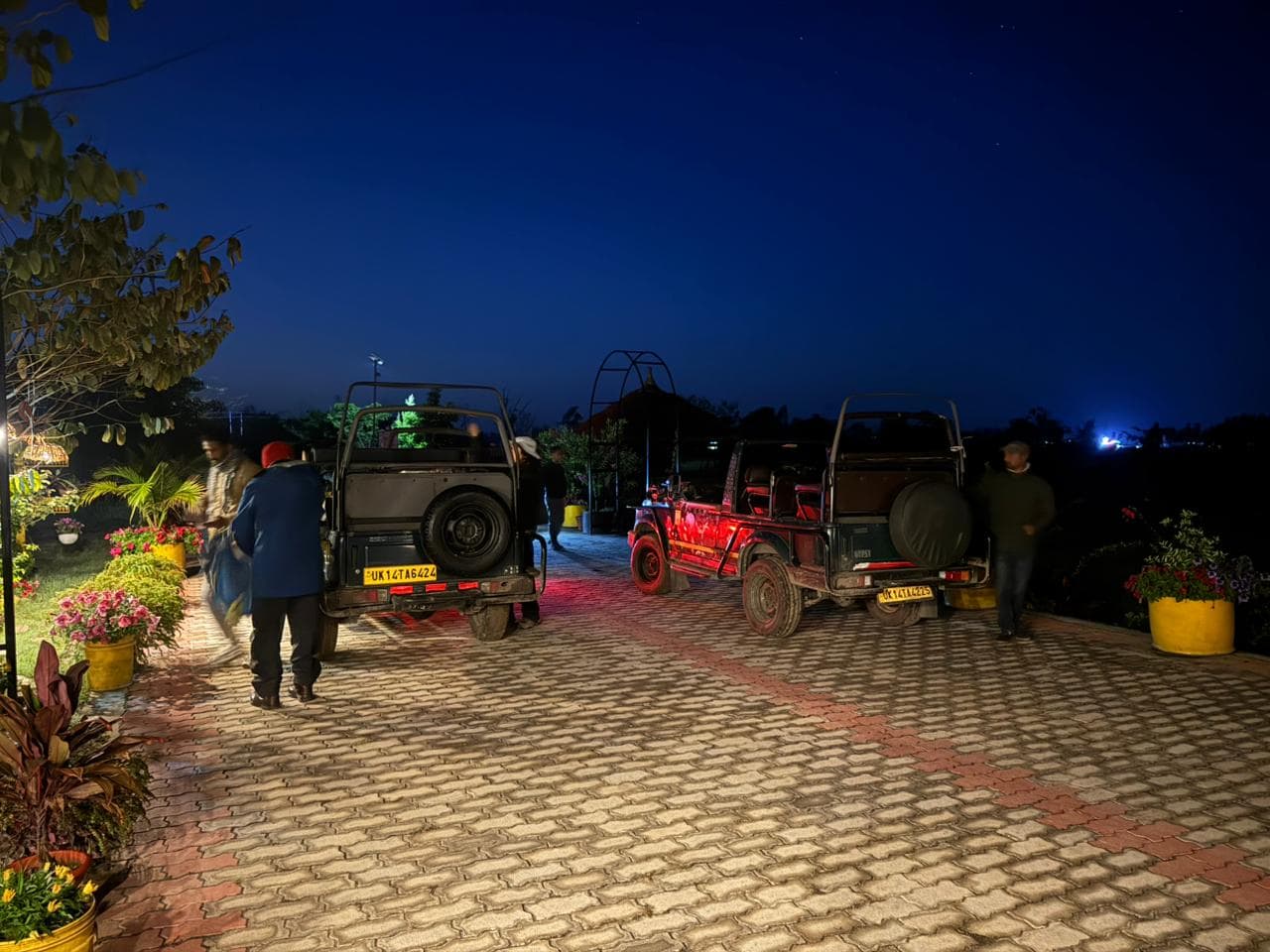
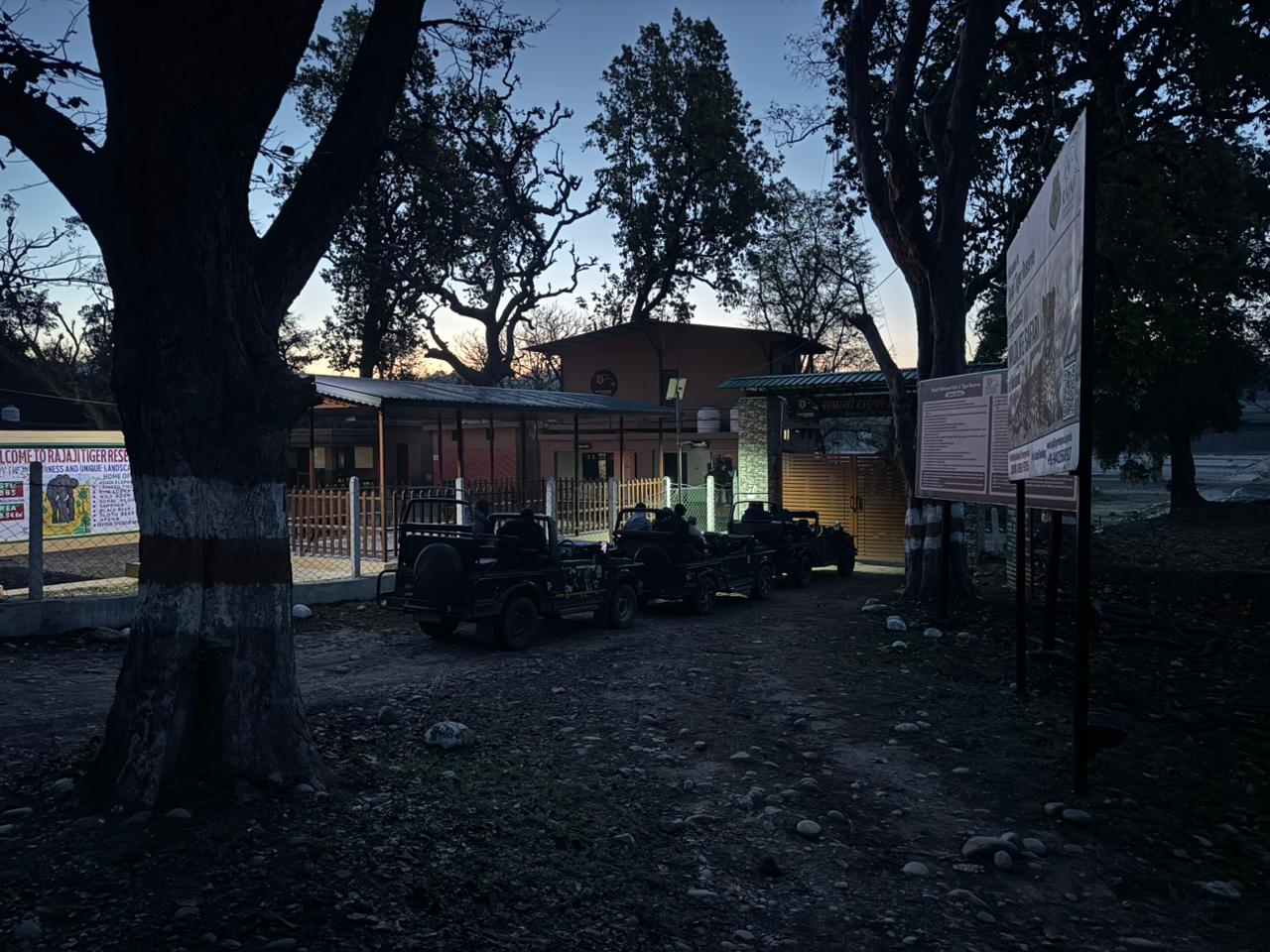
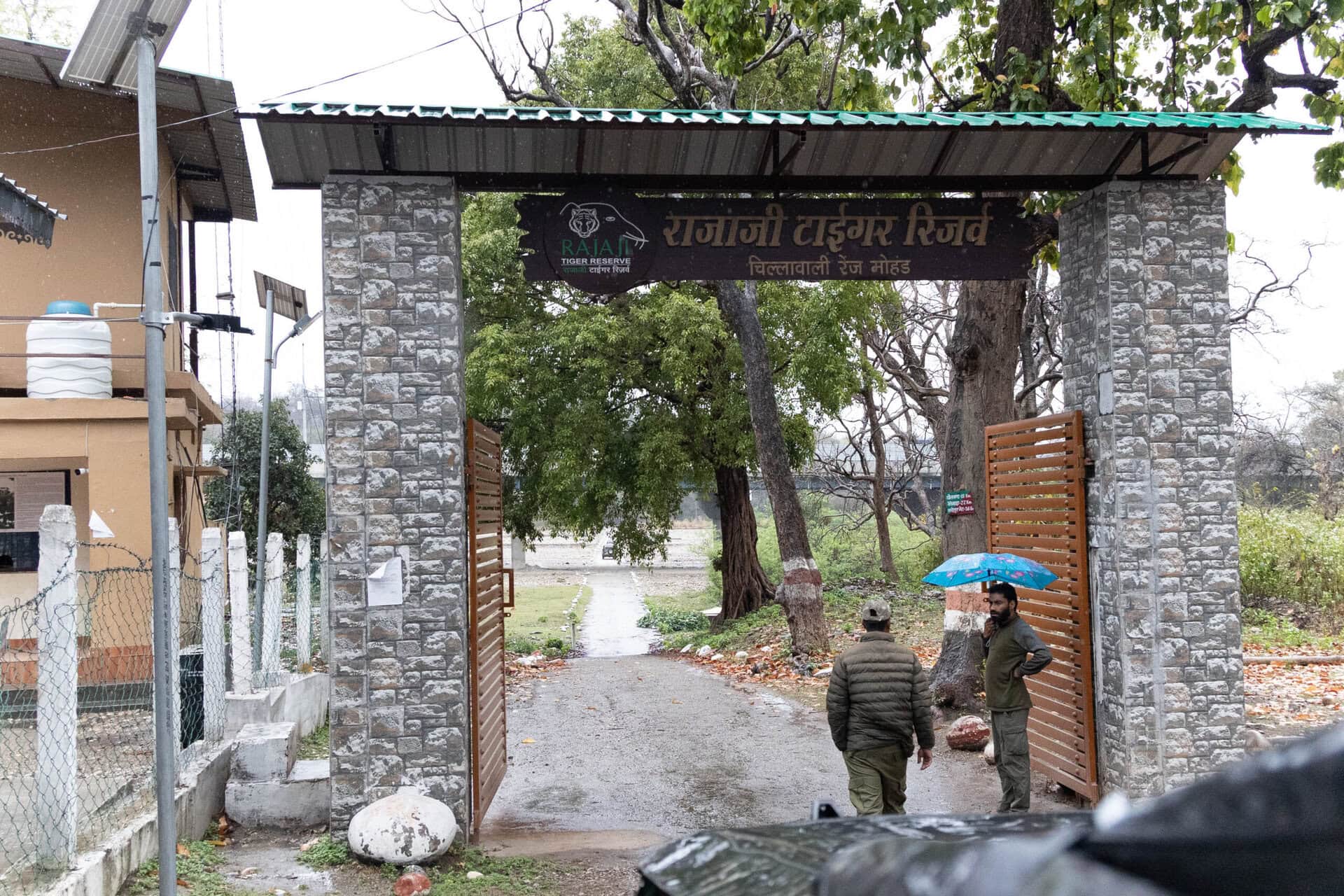
We did two safaris every day. The morning safari was from 6:00 AM to 10:00 AM, and the evening safari from 2:00 PM to 6:00 PM. We assembled in the dining hall sharp at 5:15 AM for tea and some biscuits. By then, the safari drivers would also arrive, and Mr. Vipul would get all the documents (permits, vehicle assignments, etc.) ready. We left the homestay by 5:30 AM and reached the park gate by 5:45 AM. The drivers would then get the documents verified, and the gates opened sharp at 6:00 AM. After four hours of safari, we left the park and reached the homestay around 10:15 AM.
We then had breakfast and spent some time discussing the sightings and photo opportunities, after which we went to our rooms to rest. We assembled again in the dining hall at 1:00 PM for lunch, and left by 1:30 PM for the afternoon safari from 2:00 PM to 6:00 PM. After returning, we had tea and snacks, and the routine of discussions repeated. We had dinner at 8:30 PM and were in bed by 9:15 PM.
The Safaris
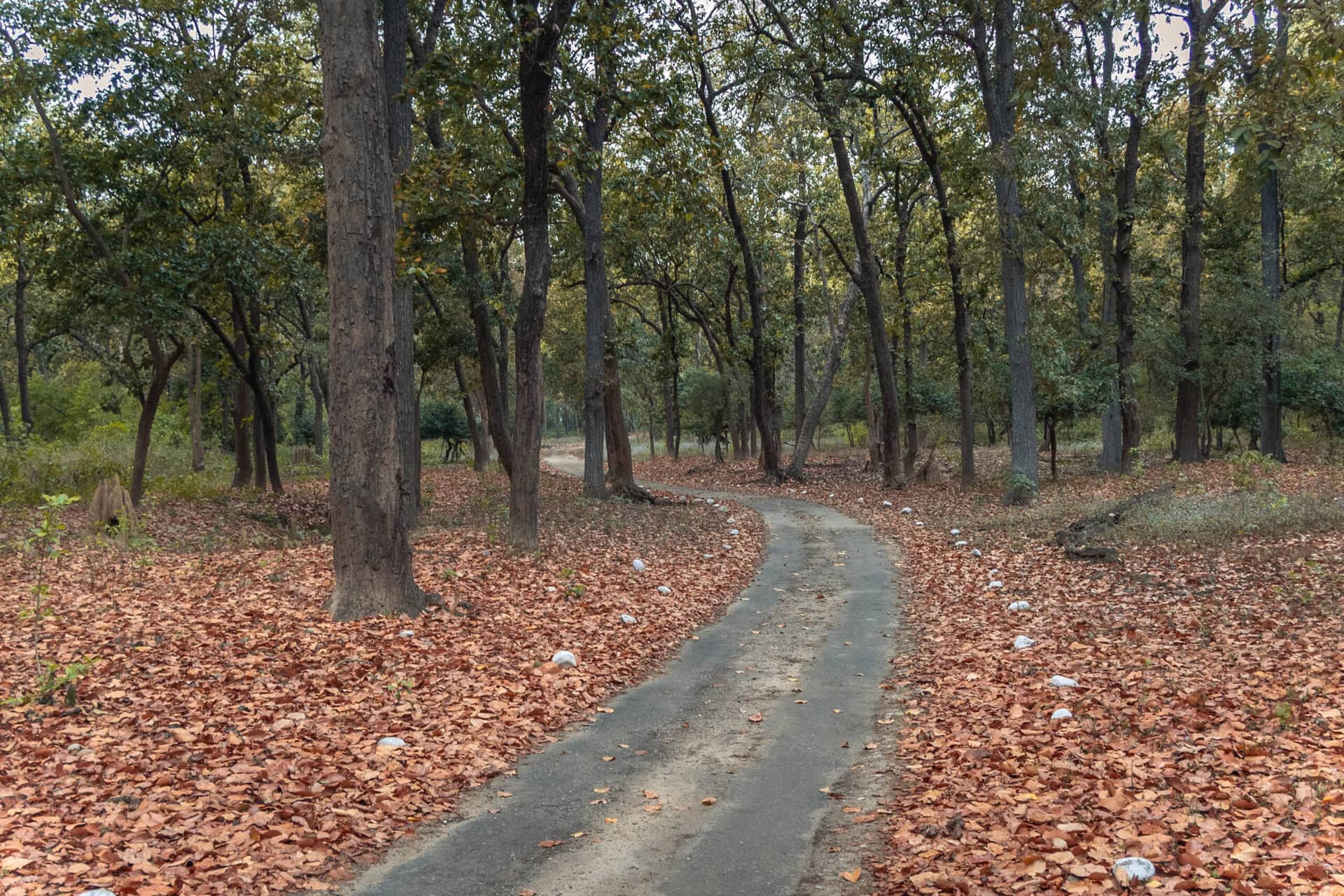
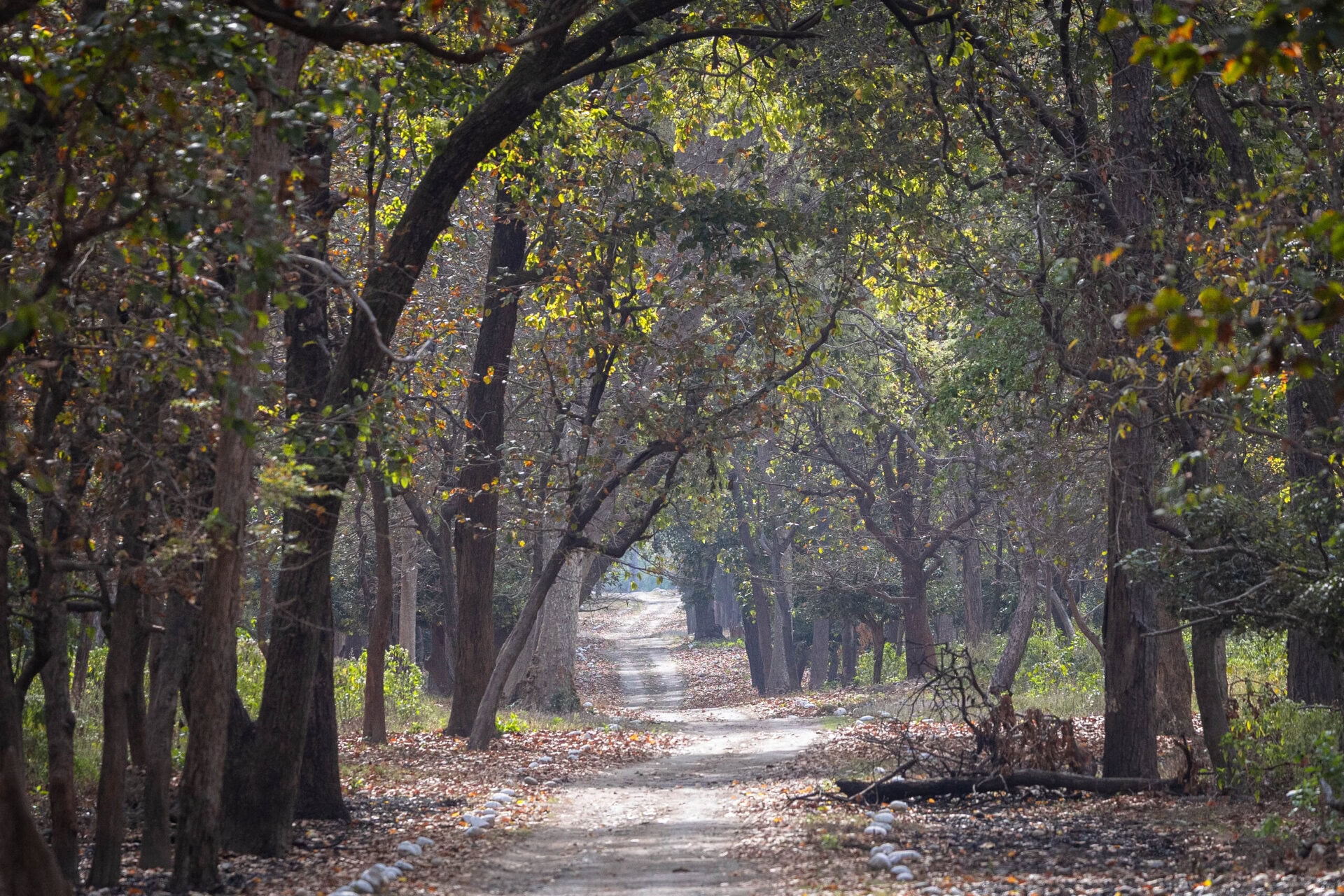
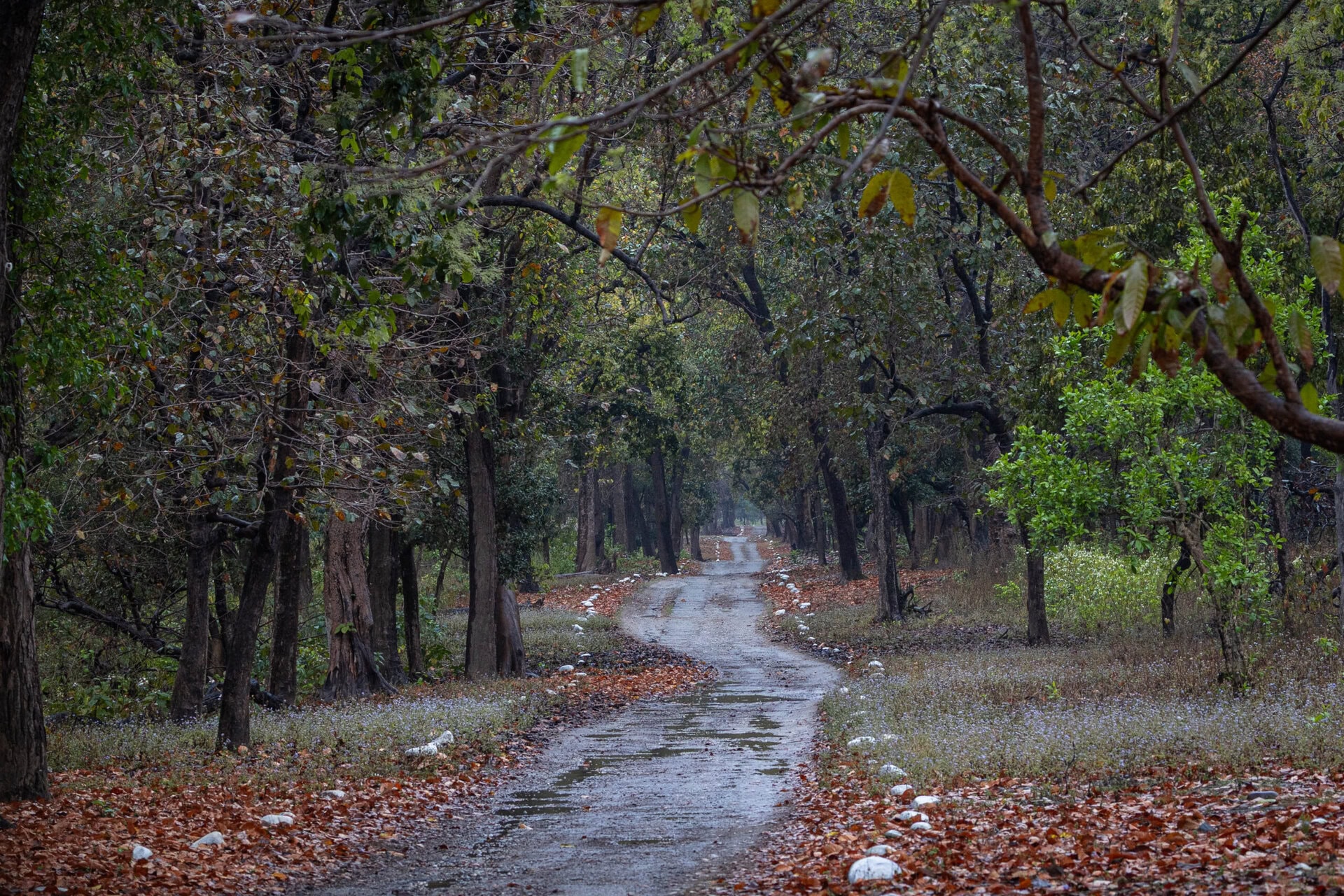
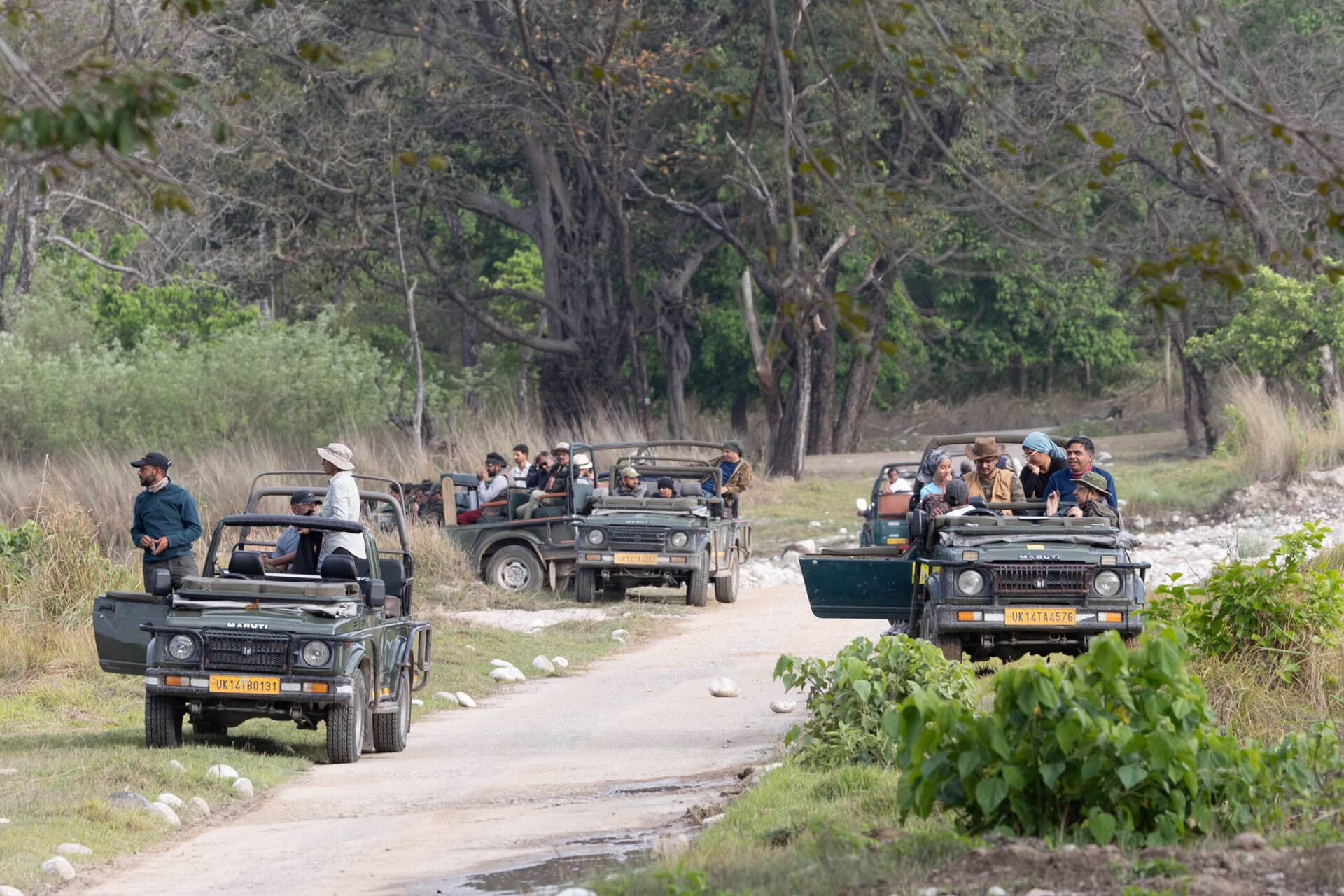
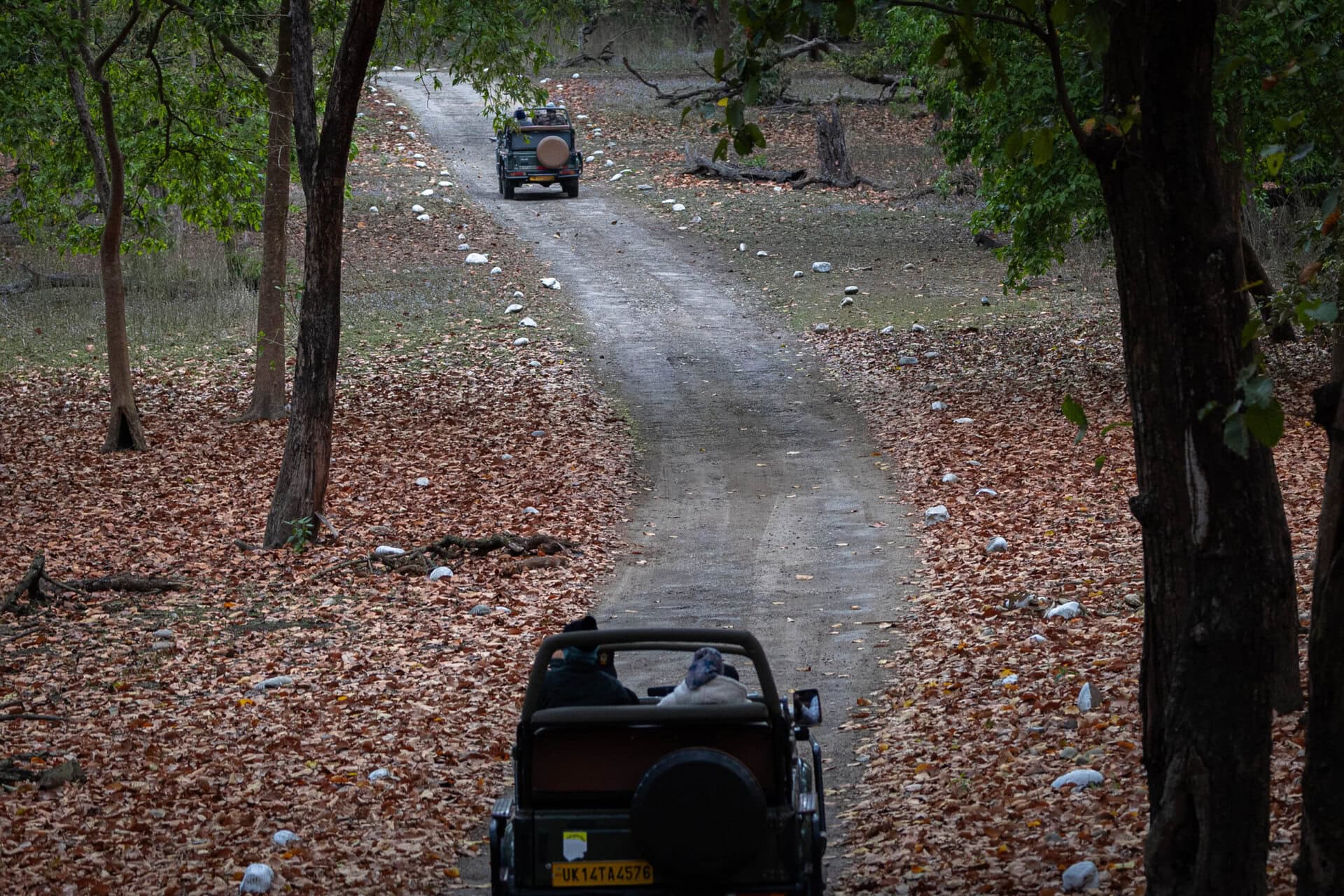
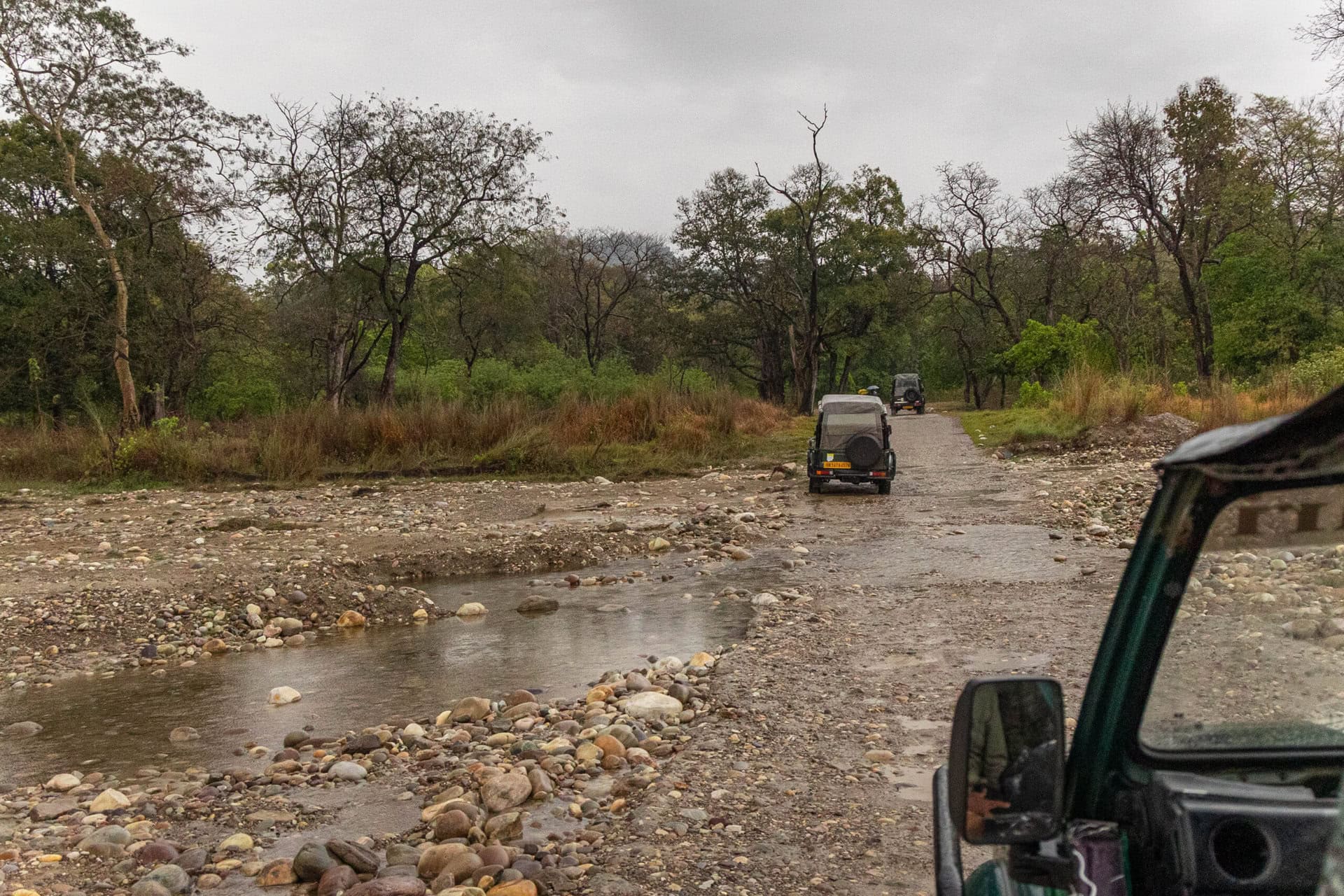
The safari in Rajaji Park has one main road running for about 10 kilometers (I am not very sure of the exact distance). This road passes through several riverbeds, most of which were dry. After a day’s rain, some of these had water flowing, and we had to cross shallow streams. Several side tracks branch off from this main road, often leading to waterholes. The drivers would make repeated circuits along these routes, looking for signs of leopard movement. The landscape is filled with tall trees and dense shrubs—ideal habitat for leopards, which stay well hidden behind bushes or up in the trees.
Leopard safaris are a game of patience. The drivers listened for alarm calls of monkeys, birds, and other animals, and would quickly head in that direction in the hope of spotting a leopard. At times, we waited at a spot for close to an hour, expecting a leopard to emerge, only to return empty-handed, or to see one appear some 500 meters away. There were moments when the driver would say, “look, there is a leopard,” and all we caught was a brief glimpse of it slipping back into the forest—sometimes just enough to capture a part of its back. But every now and then, this patience is rewarded. In two of the seven safaris, we had such moments.
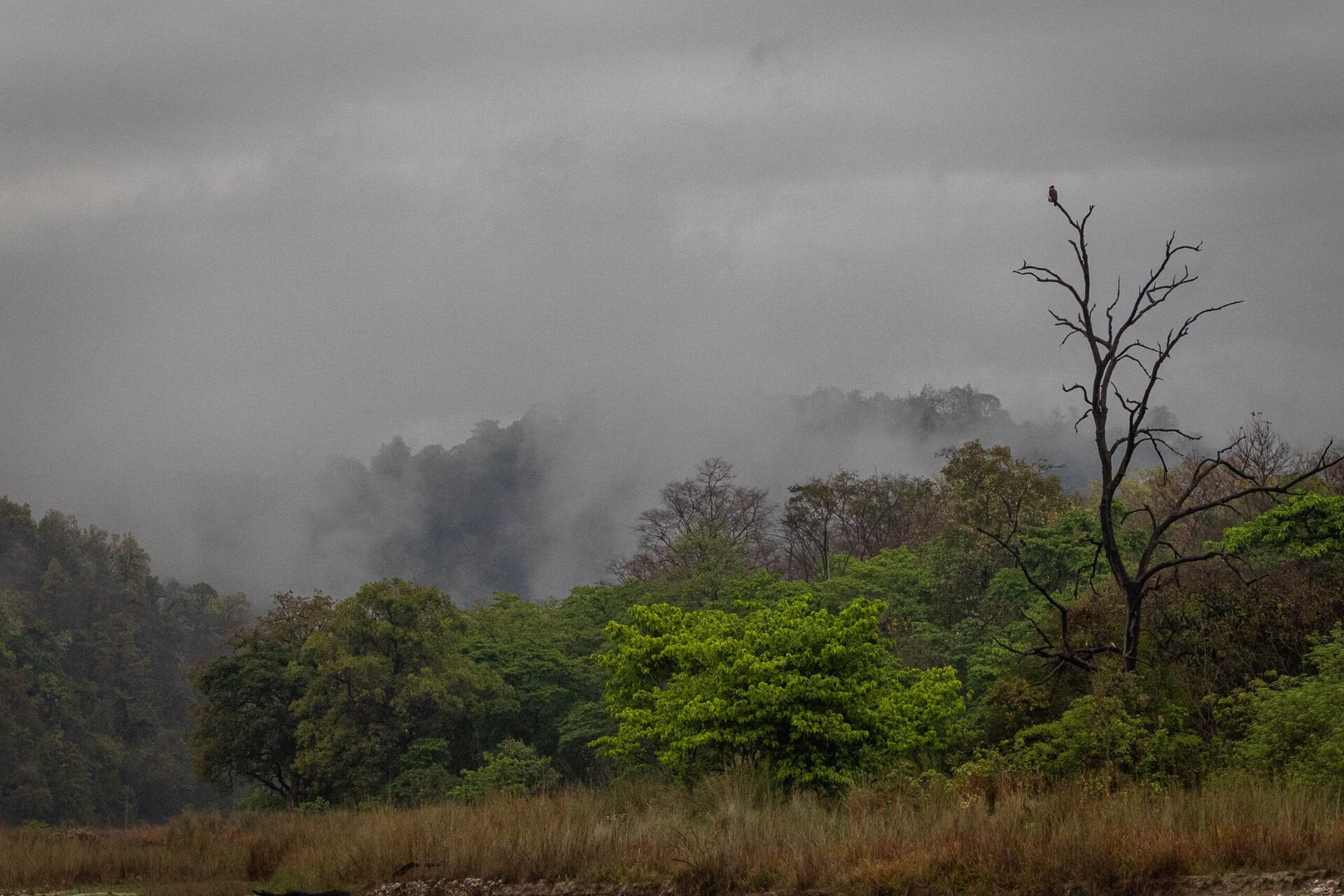
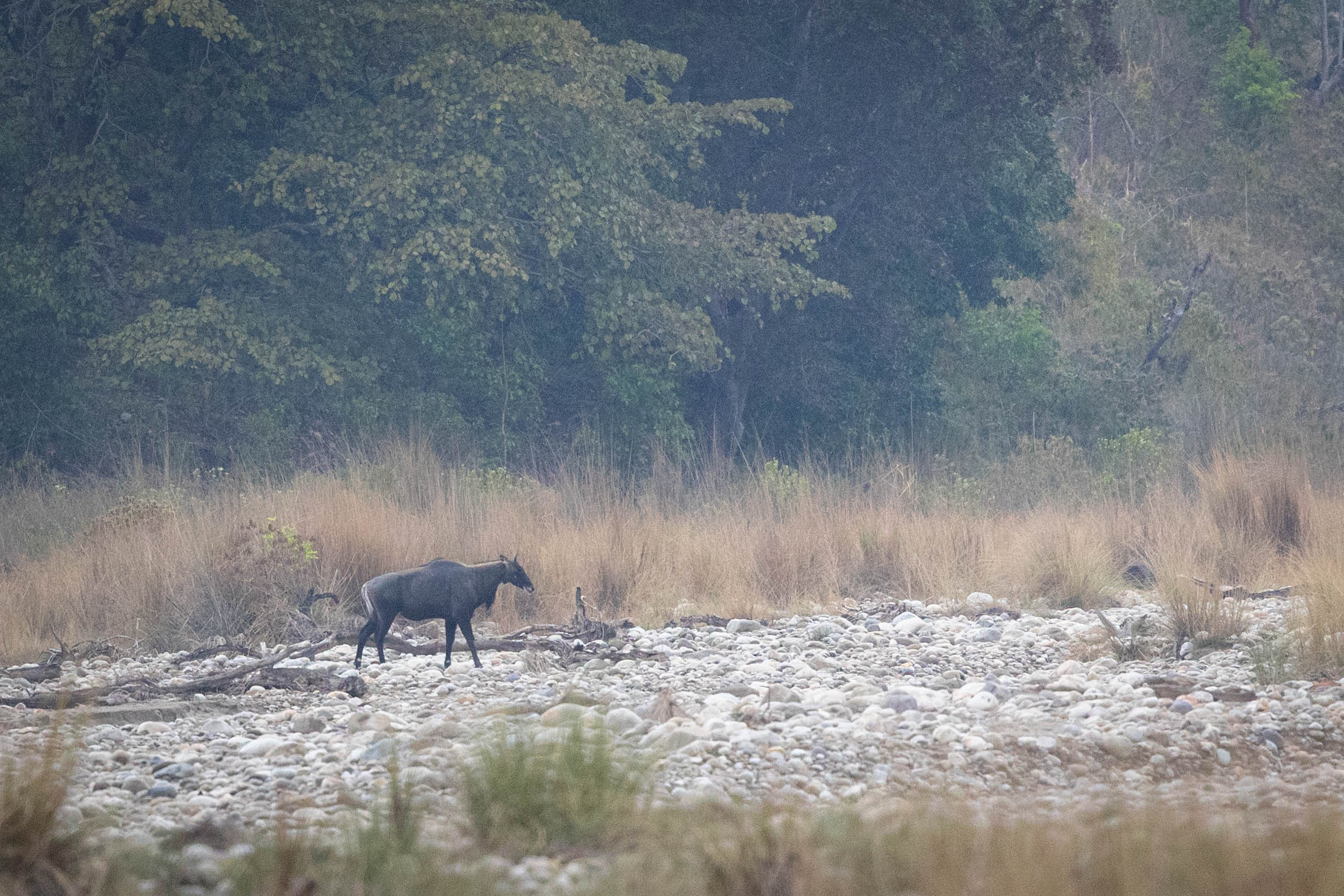
As cell phones are strictly prohibited during the safaris, I had to shoot even landscape images with my telephoto lens at around 100mm. On one of the days, when it was raining continuously, I switched to the 24–105 lens and managed to capture a few landscape shots. Below are some pictures of the Rajaji park landscape.
Leopard Sightings
Male Leopard by the Waterhole – Safari #1
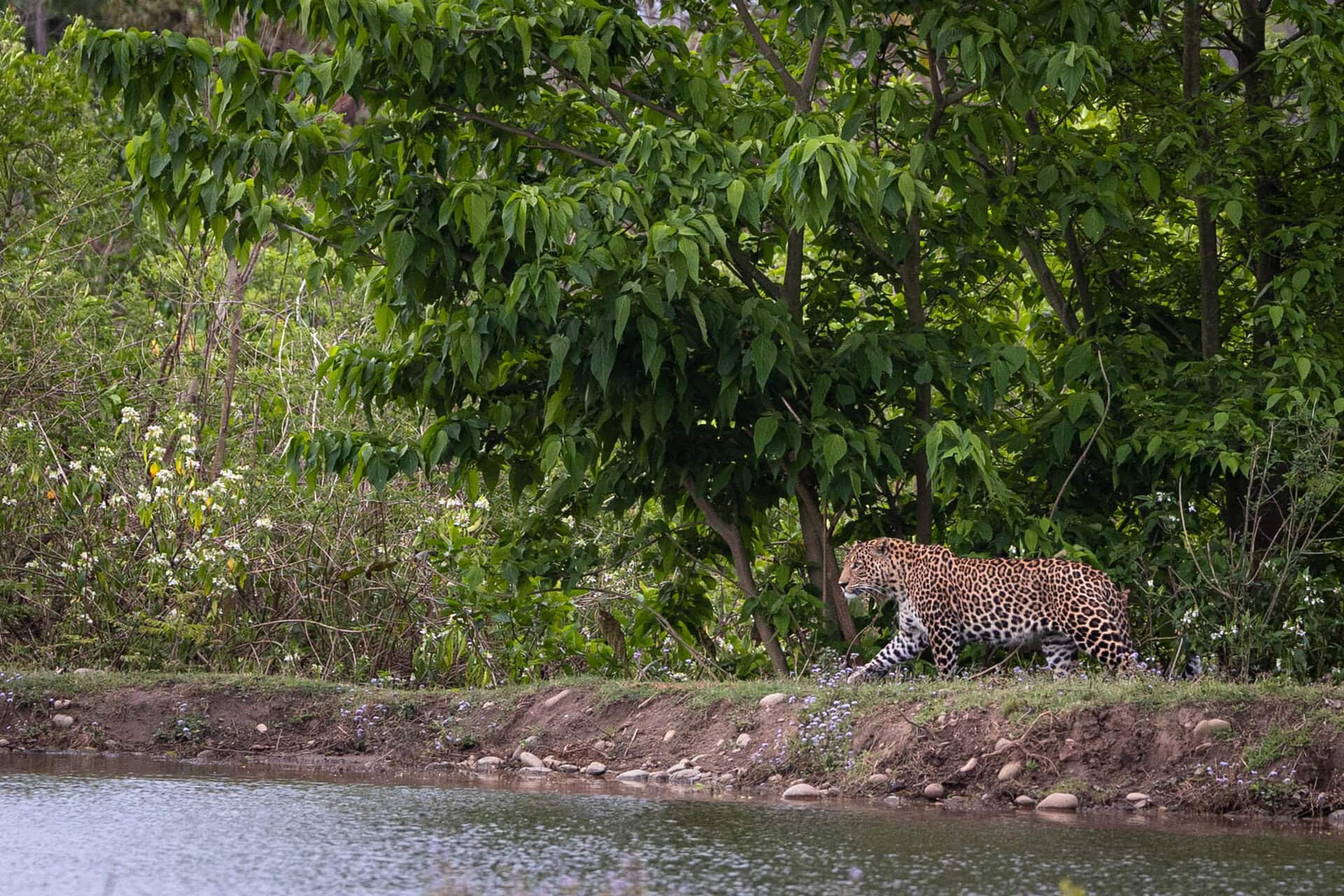
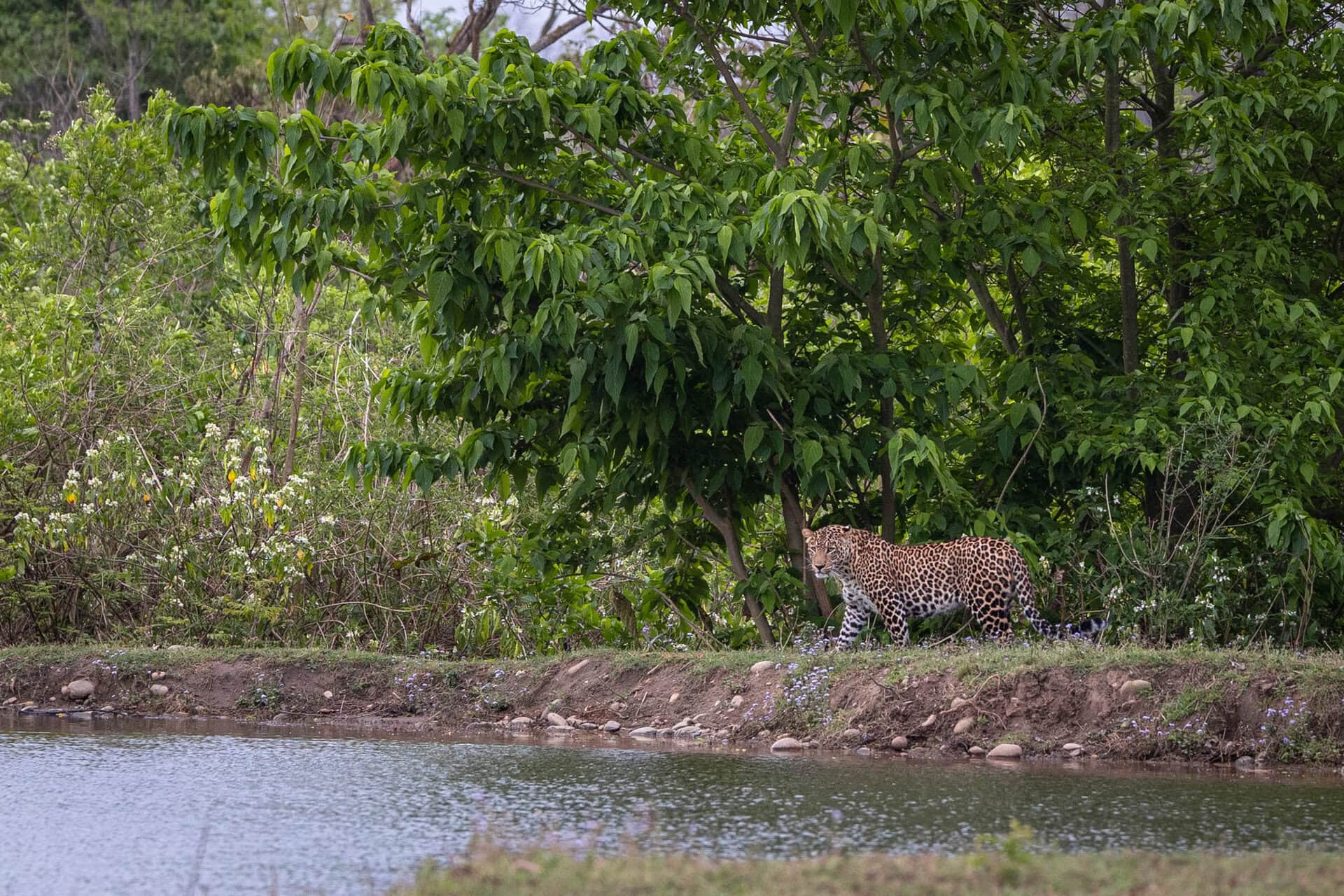
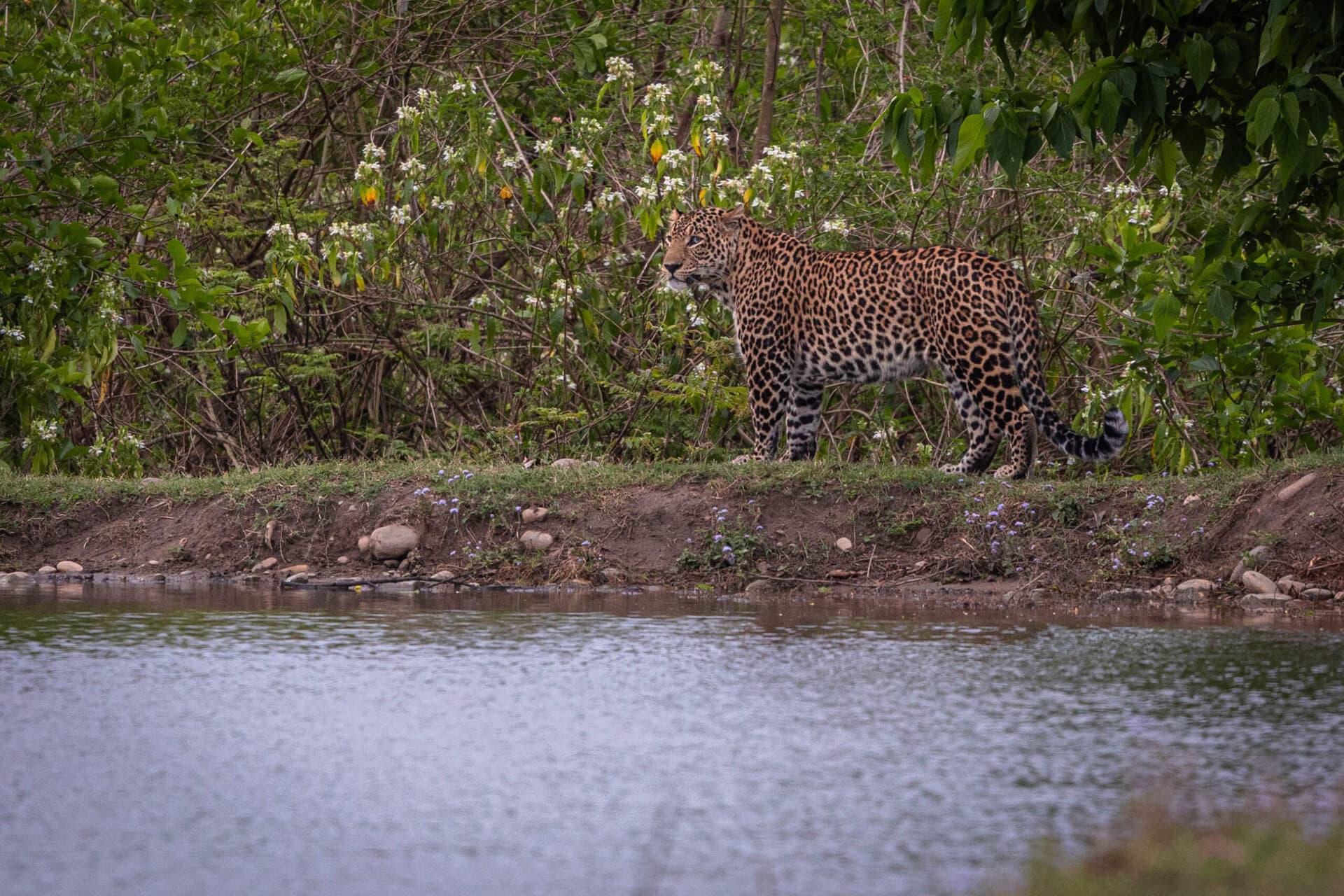
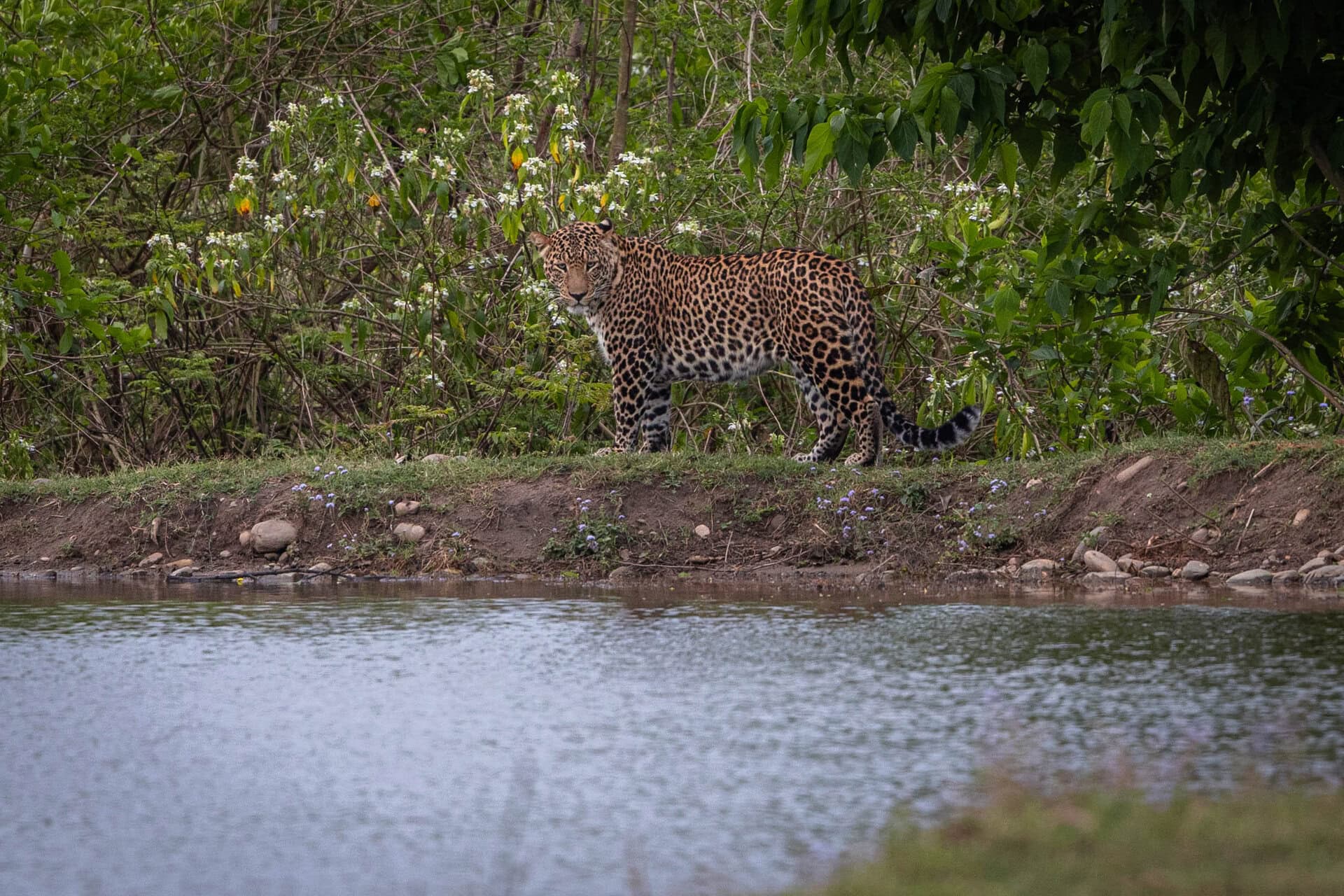
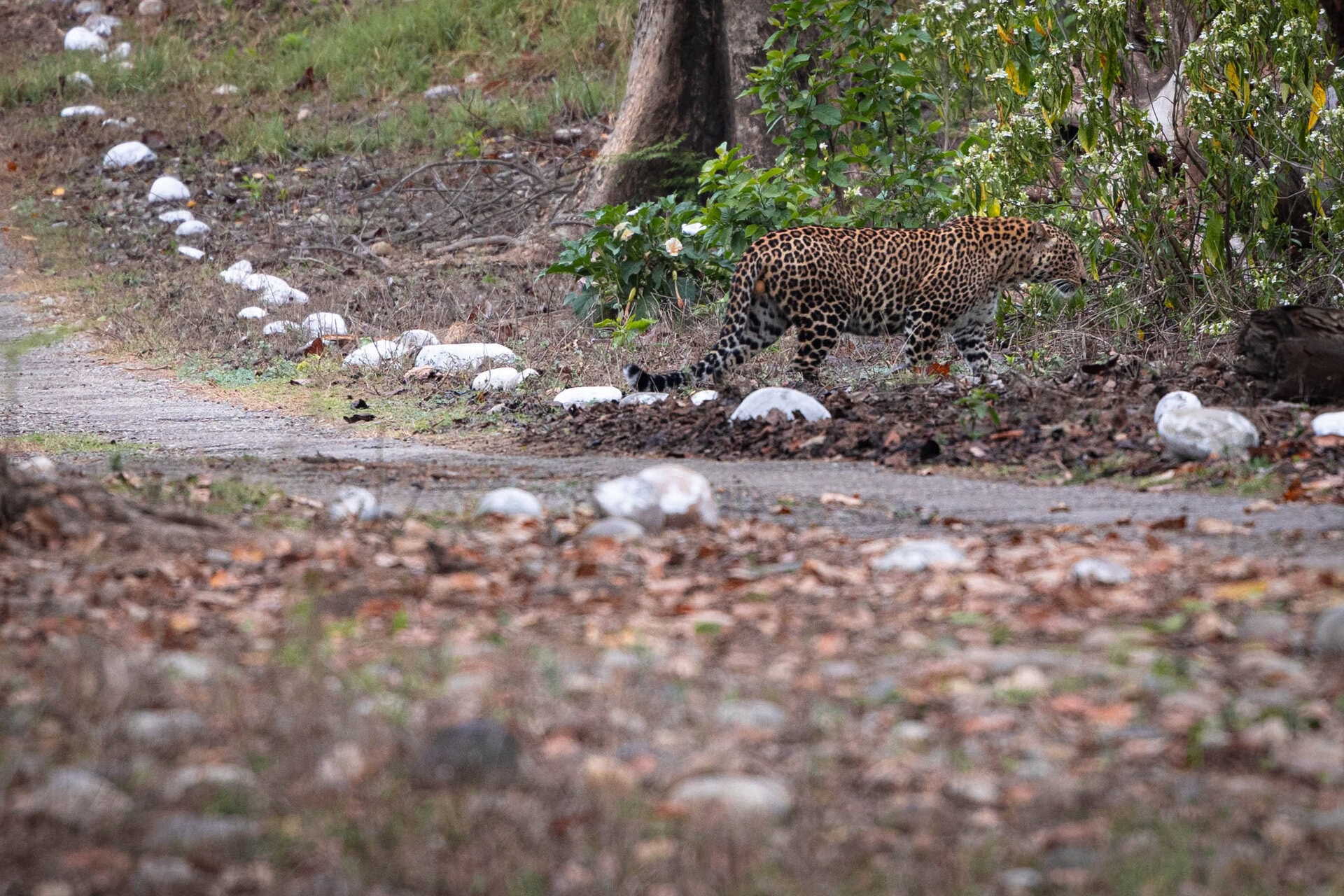
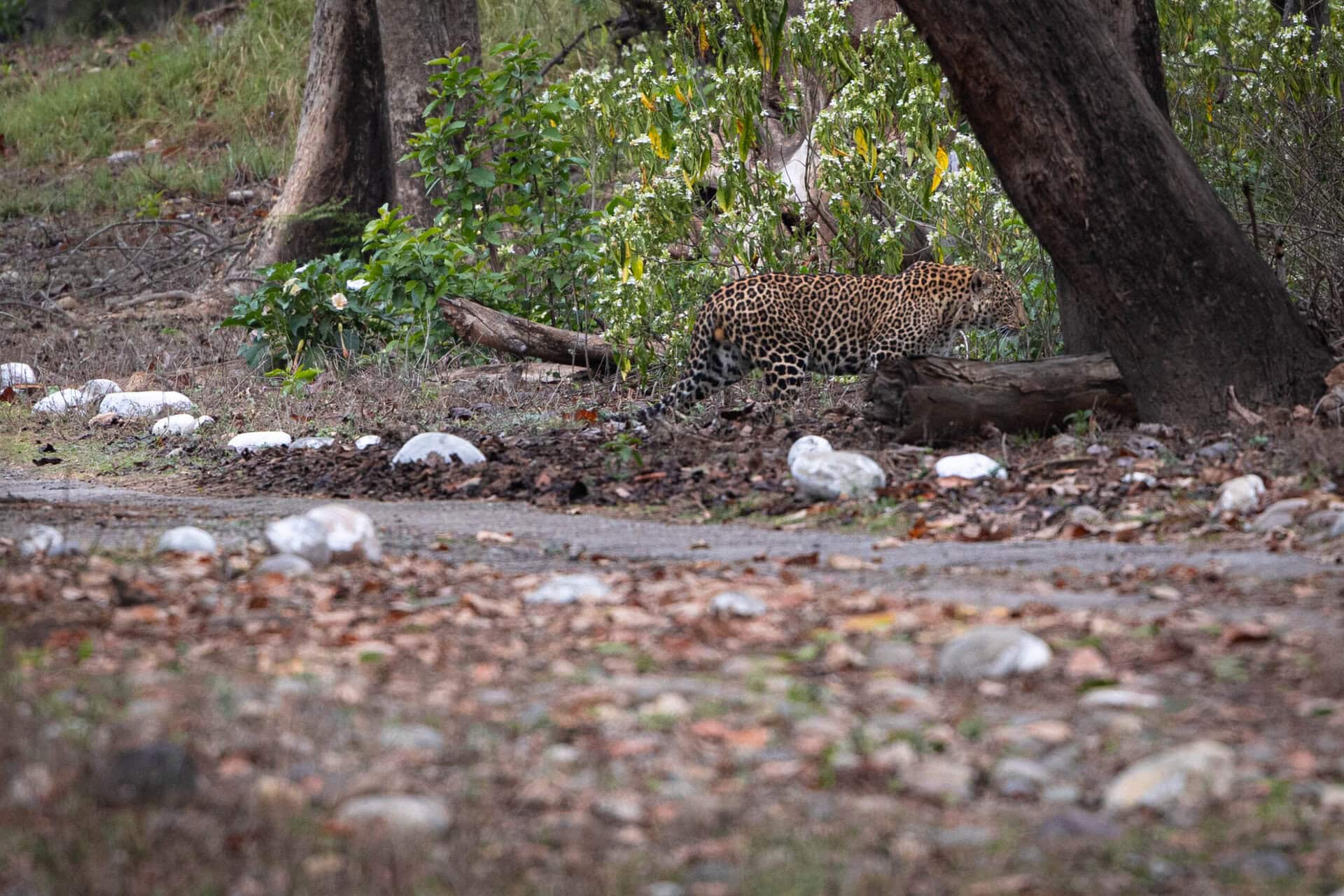
On the very first safari, we were lucky to spot a single male leopard by the side of a waterhole, and then crossing the road. The driver was doing his routine checks, and when we reached this waterhole, he spotted a leopard emerging from the bushes. It walked along the edge of the waterhole, gave us a brief look, and vanished into the forest. All of this happened in about 10 seconds.
The driver then guessed the path it would take and drove us to a nearby road, saying the leopard would cross there. His prediction turned out to be right, and the leopard did cross the road. But it happened in a flash, and many of us did not get a clear view. I was lucky to get a couple of shots of the leopard crossing.
Mother and Two Cubs Crossing the Road – Safari #2
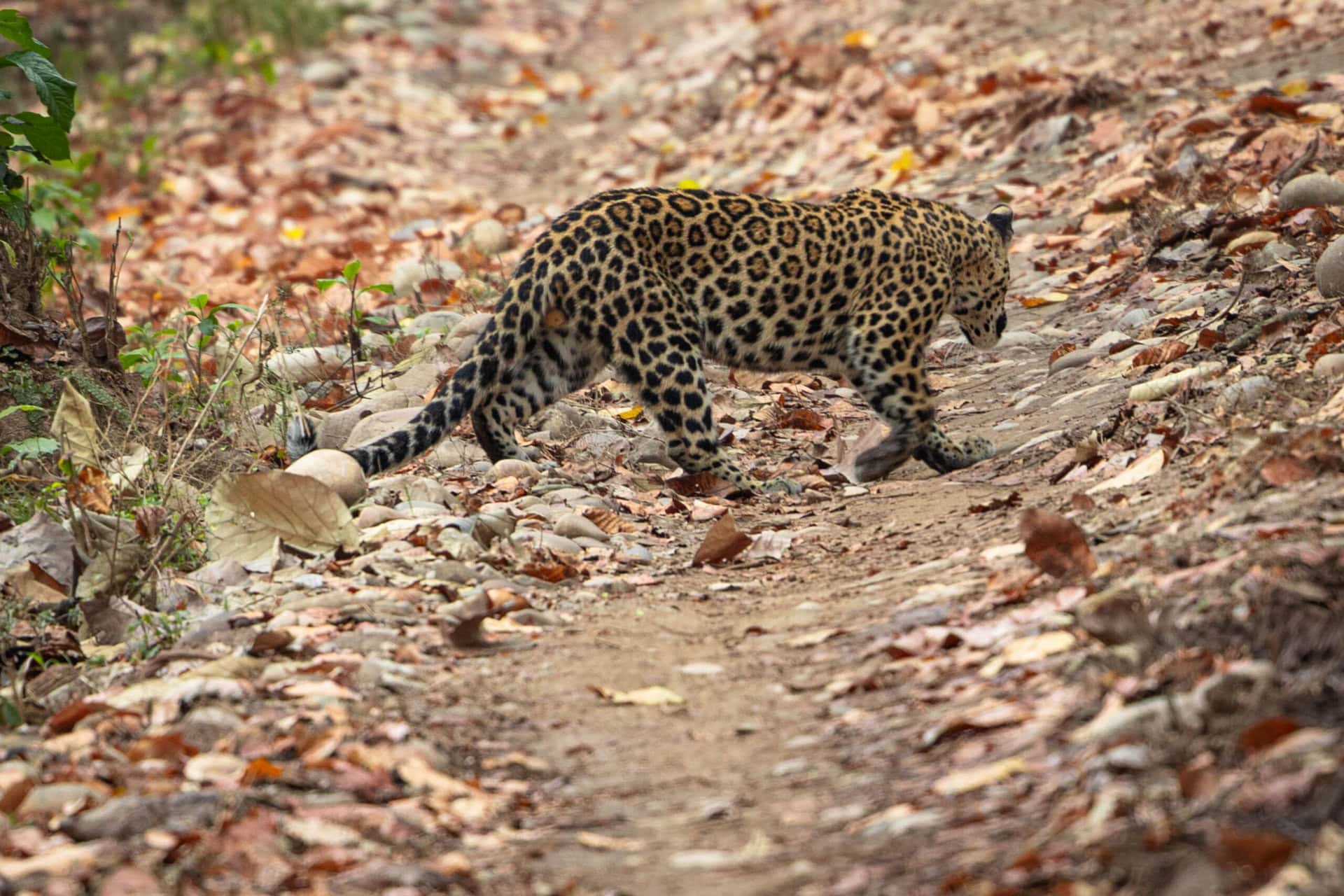
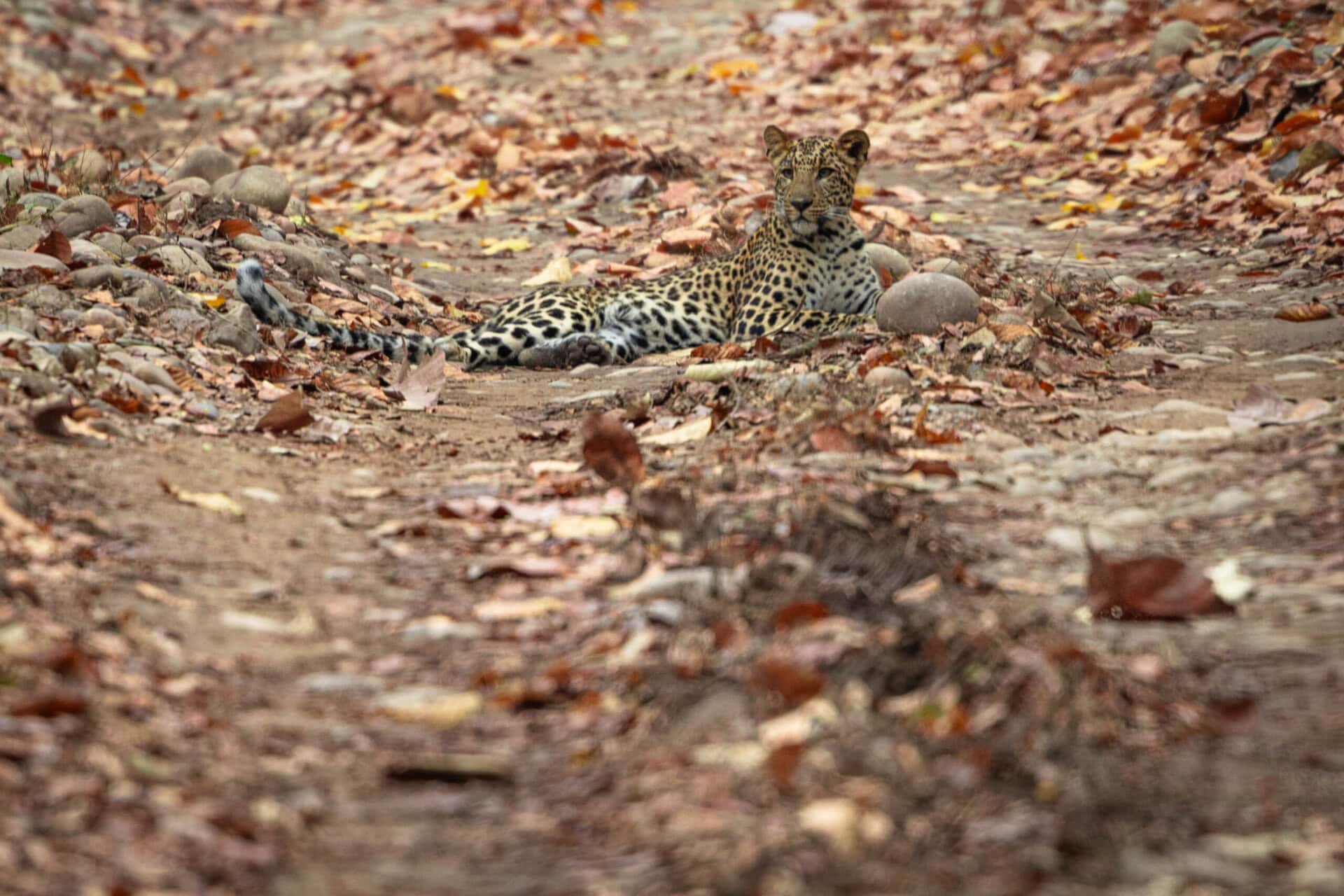
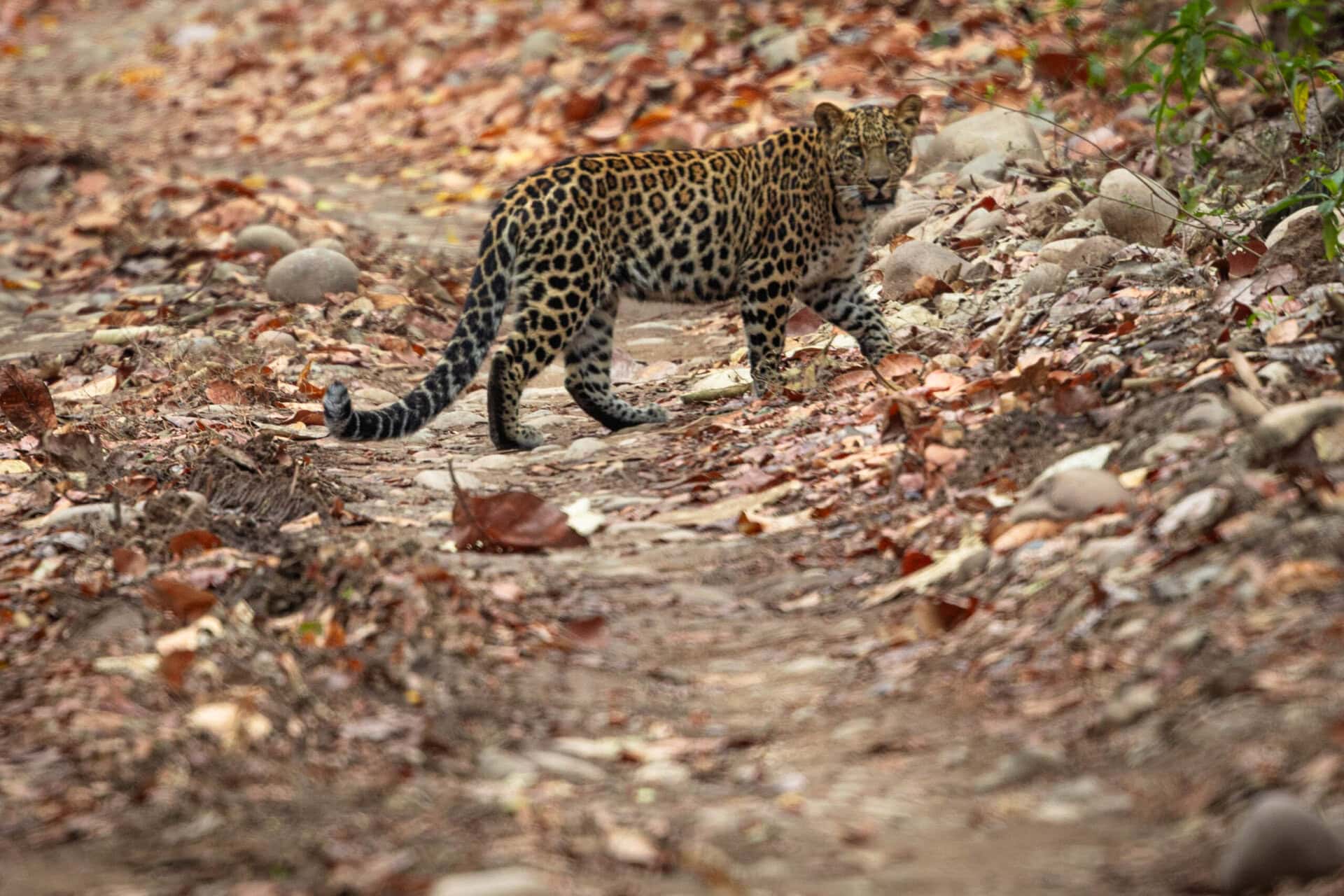
On the second safari, in the afternoon of the first day, we heard alarm calls from langurs in a particular area. We were told by drivers from other vehicles that a mother with two cubs had been seen there. So we kept circling the area, and on one of the smaller branch roads, we noticed some movement by the side of the road.
The driver stopped at a distance, and we saw two cubs crossing the road. They were very relaxed and crossed slowly. They also seemed curious about the safari vehicles, pausing to look at us. The mother, on the other hand, crossed the road in a flash.
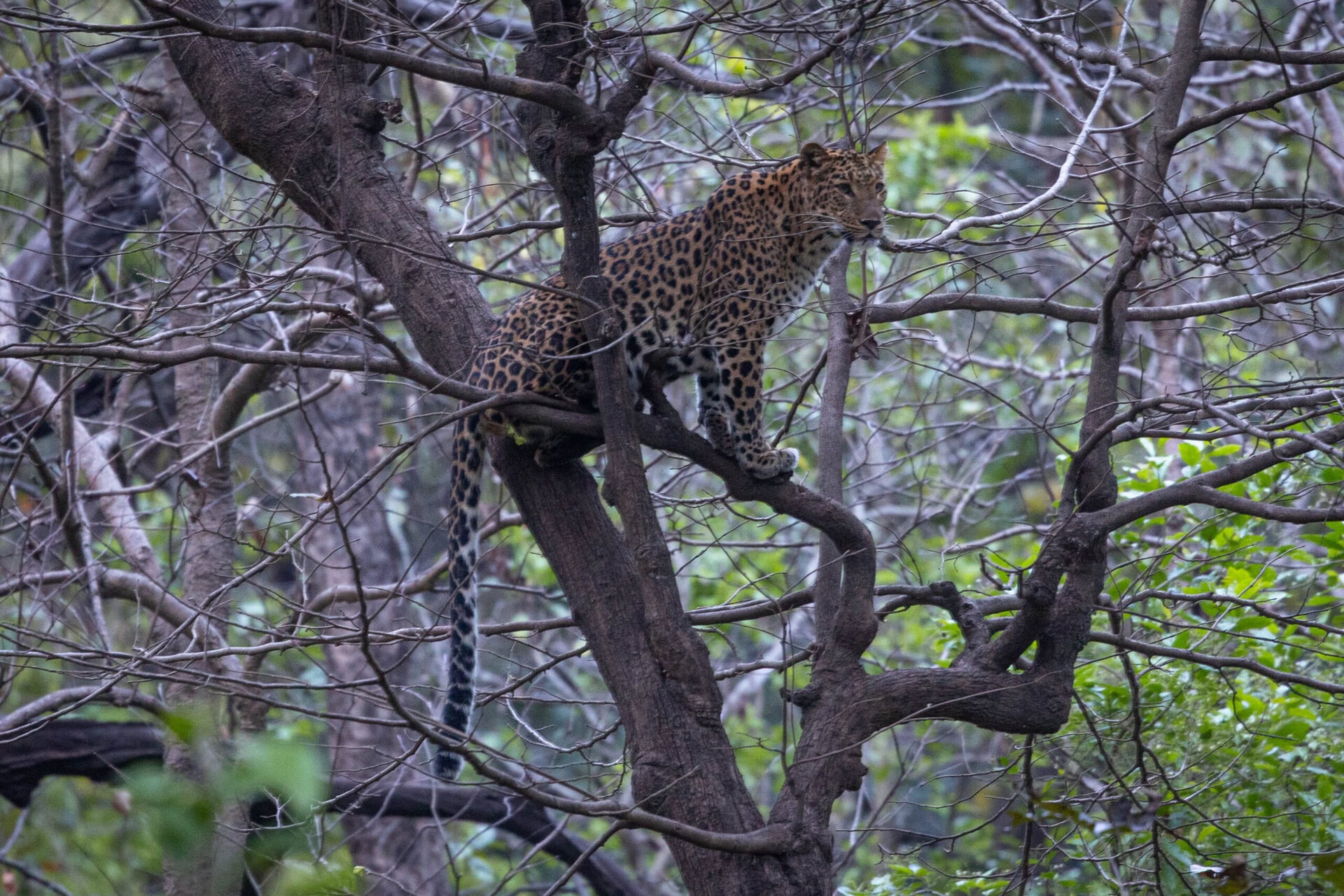
Mother and Two Cubs on a Tree – Safari #6
In the sixth safari, on the evening of day three, we heard about a leopard inside the forest near the road, and waited there for almost an hour, expecting it to come out. But to our disappointment, it emerged nearly 500 meters away from the road and sat down facing away from us. As it was closing time, we had to start heading towards the exit.
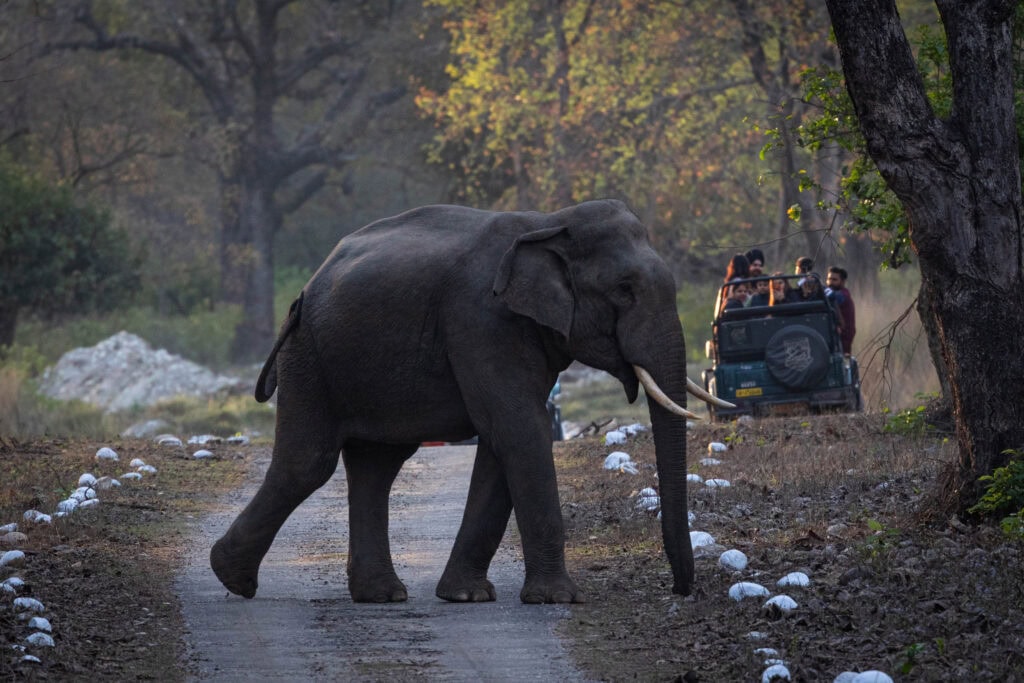
On the way, we were delayed for about 30 minutes by a tusker that would not let vehicles pass (I will cover this in a later section). By the time we got past it, it was around 6:30 PM and getting quite dark. As we approached the exit, we saw a few vehicles parked by the roadside, and our driver stopped as well.
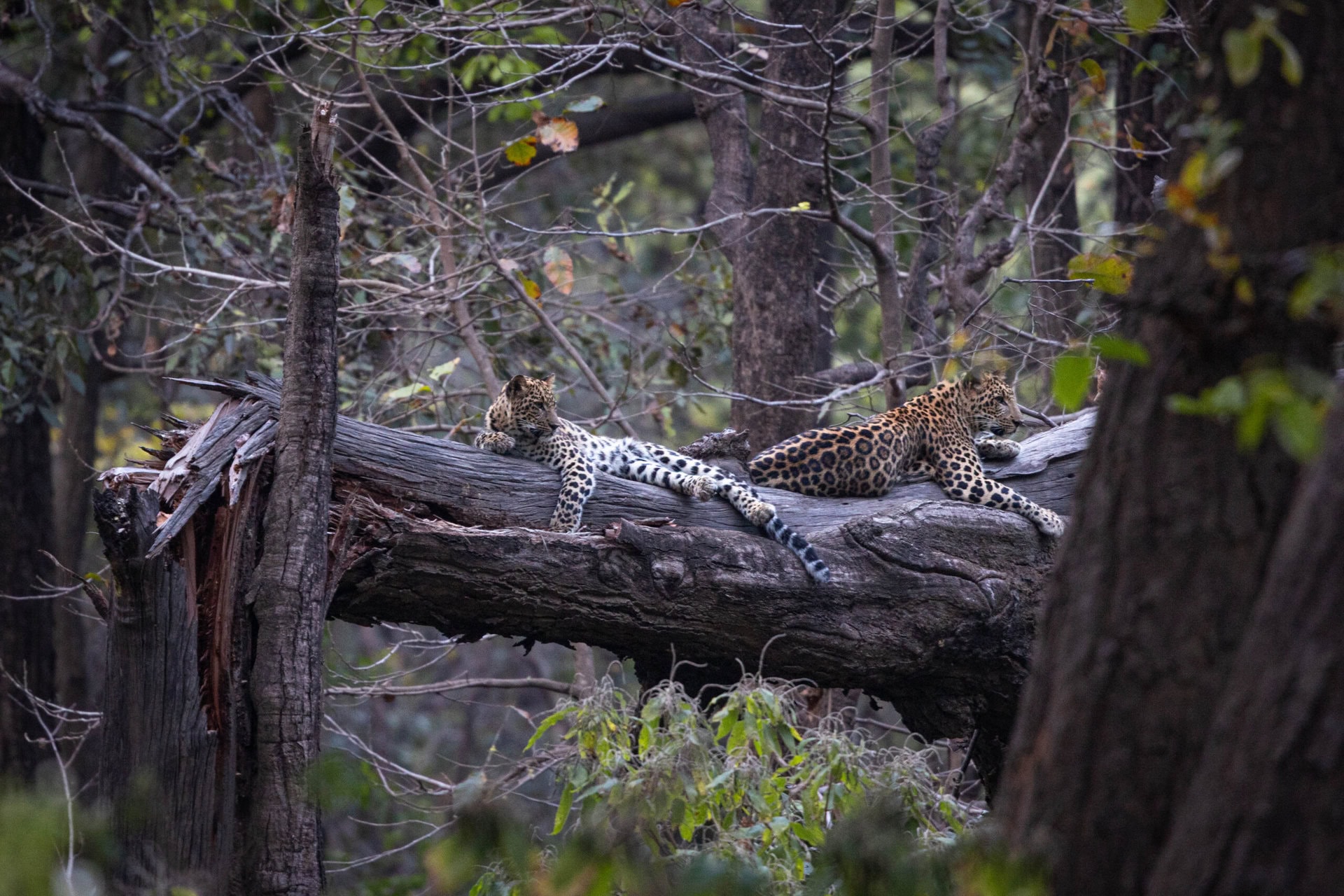
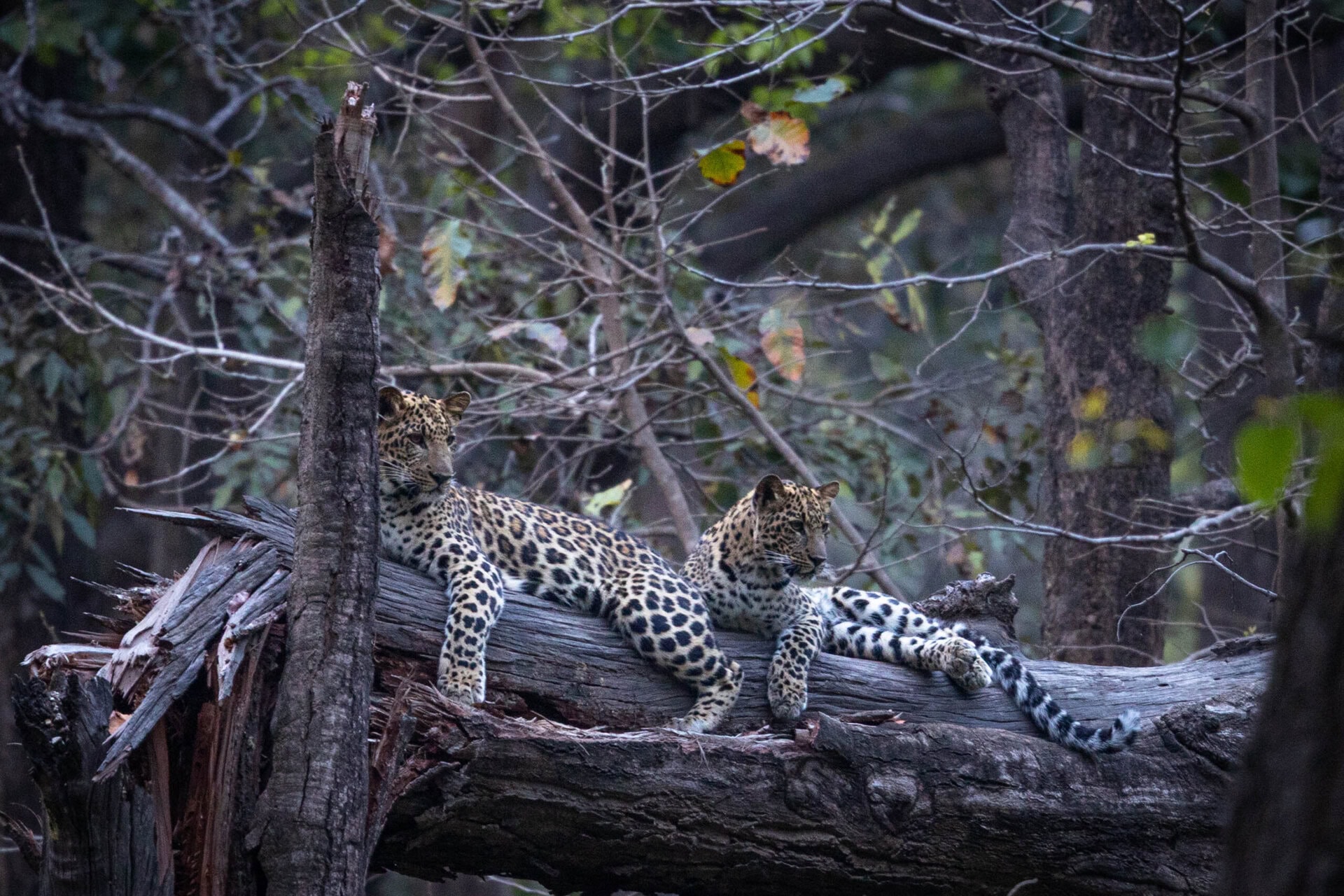
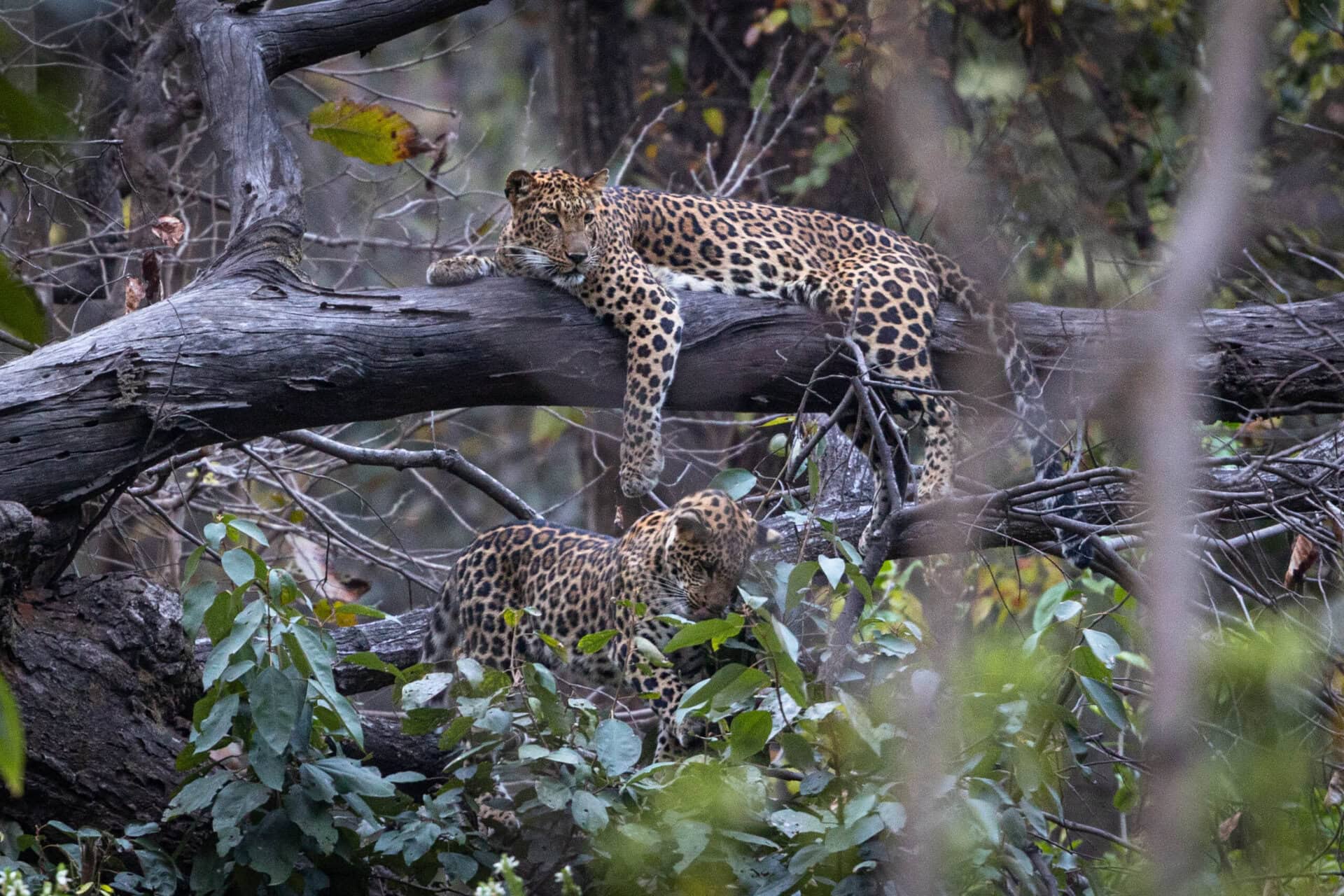
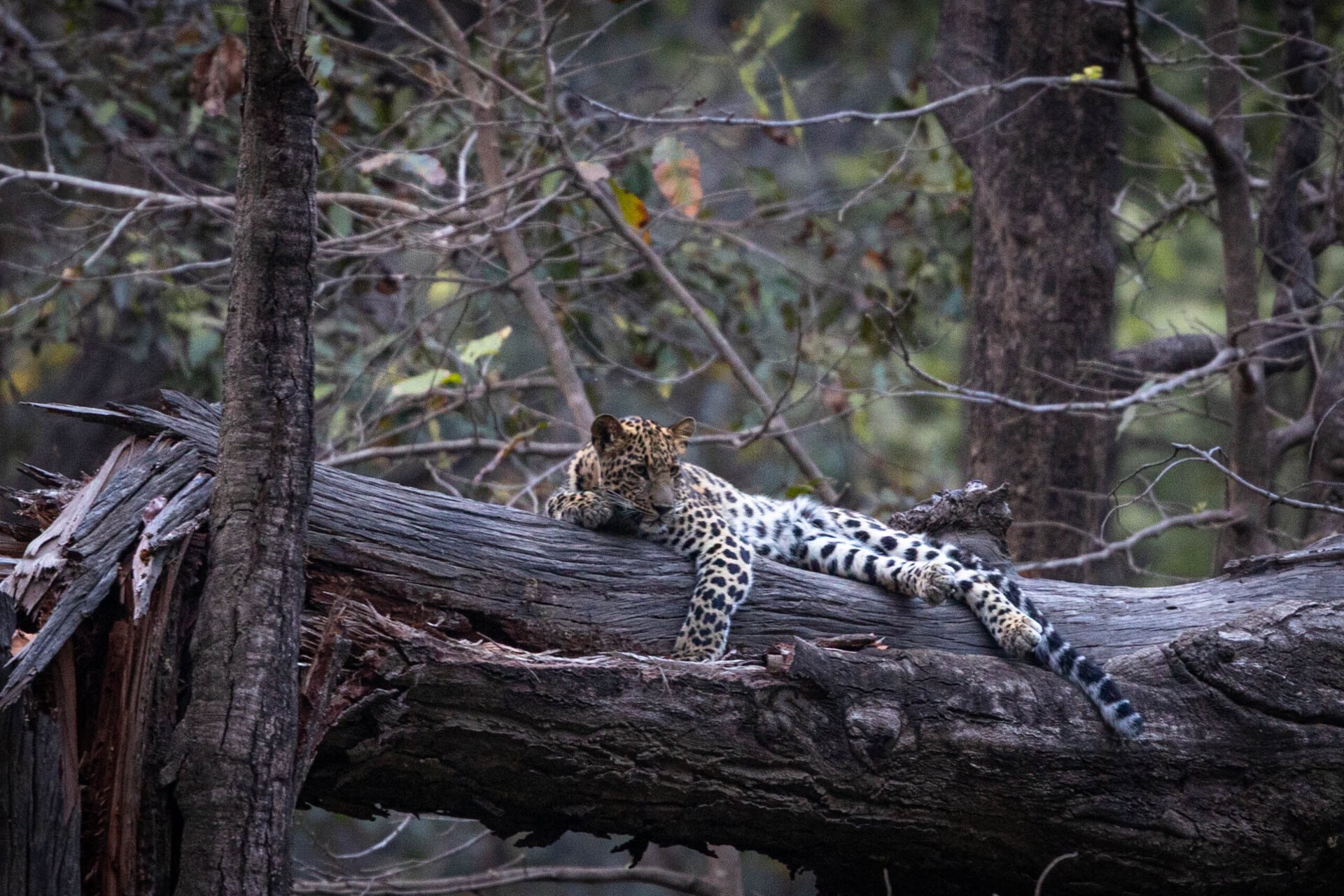
That is when we saw the same mother and two cubs resting on a tree, barely 20 meters from the road. It was an incredible sighting. The cubs were relaxed and resting. After some time, one of the cubs got up and climbed higher up the tree, and the mother followed, climbing another nearby tree. Though we wanted to stay longer to observe and photograph them, we had to leave, as we were already well past the park’s closing time.
Below are a few pictures from this sighting.
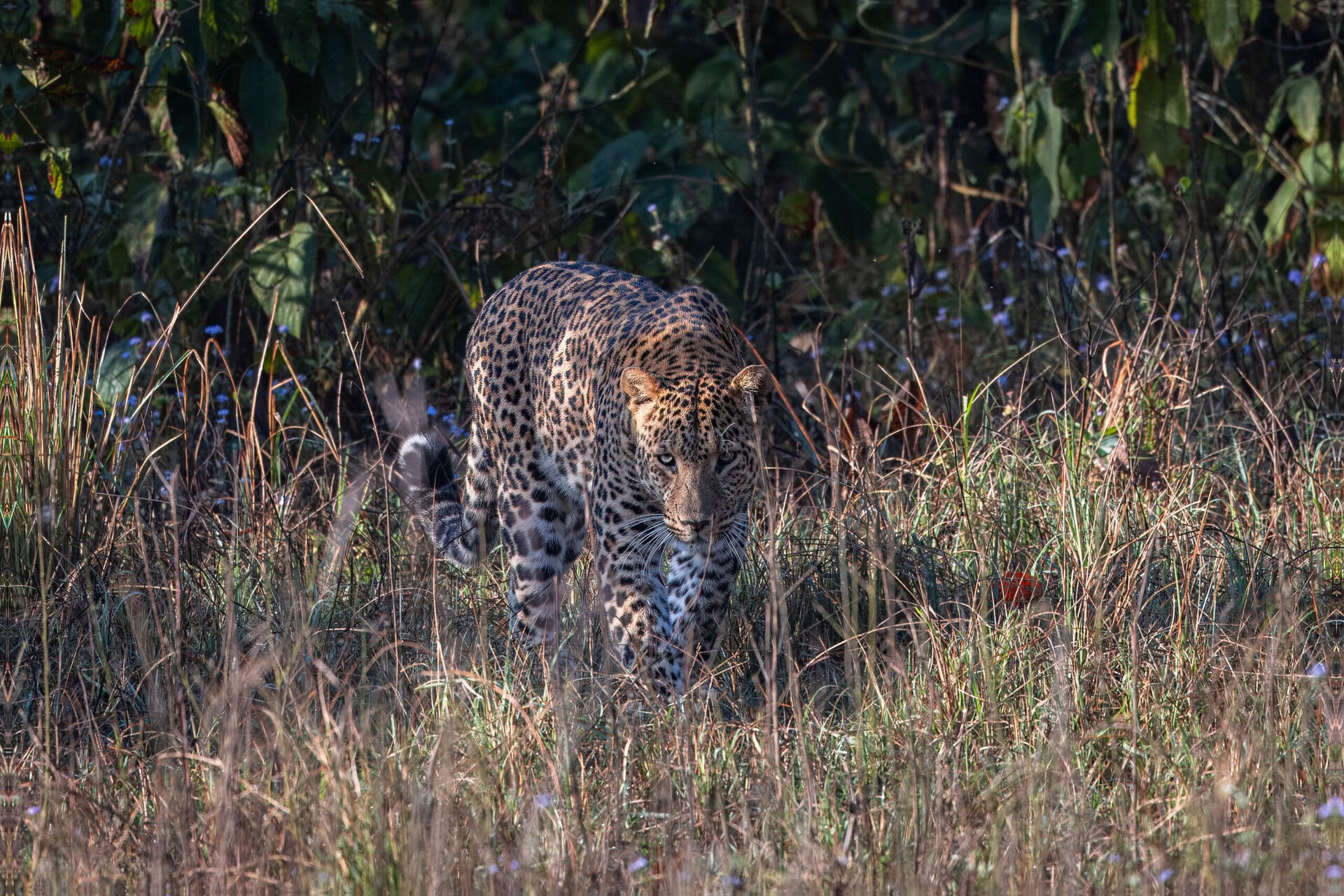
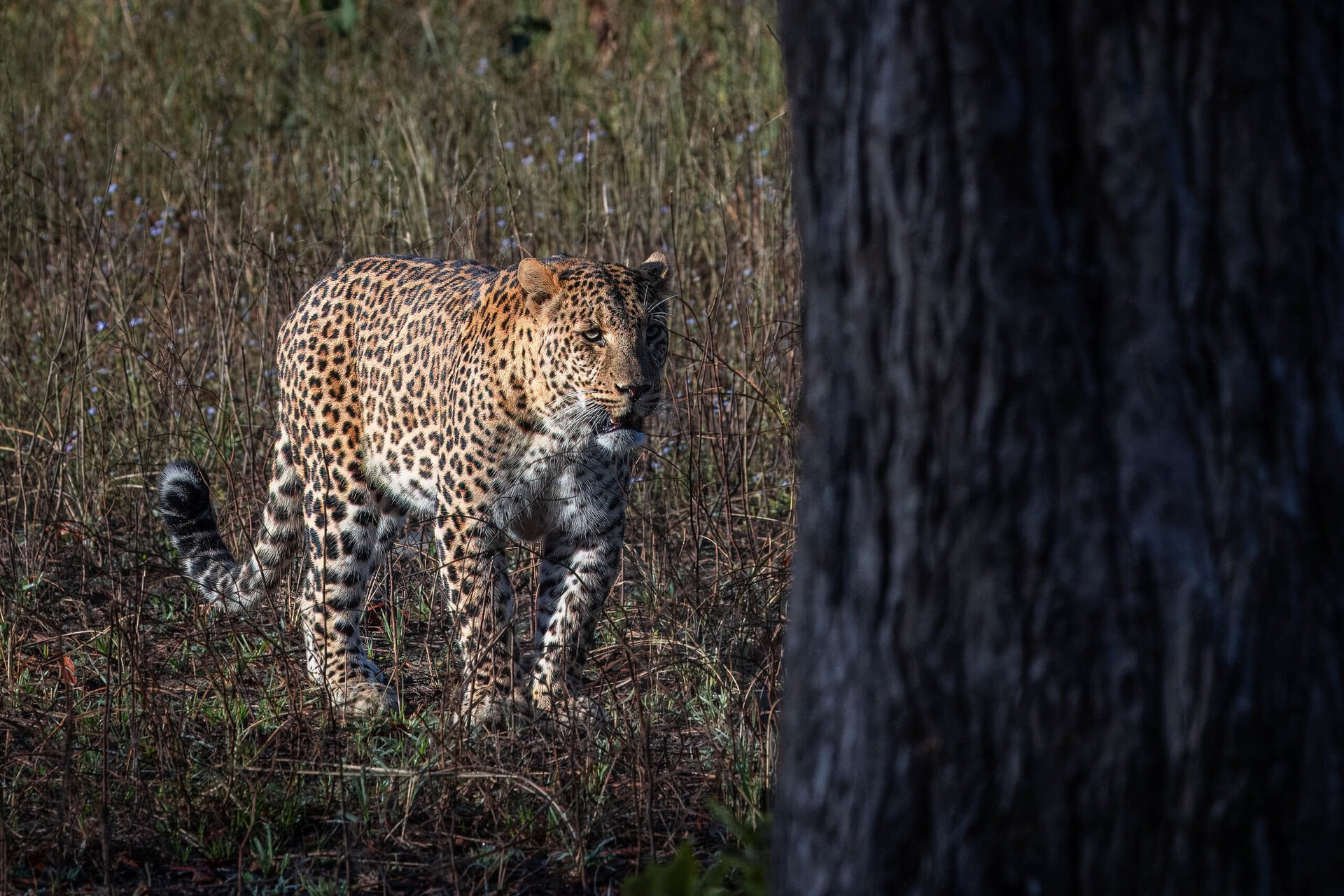
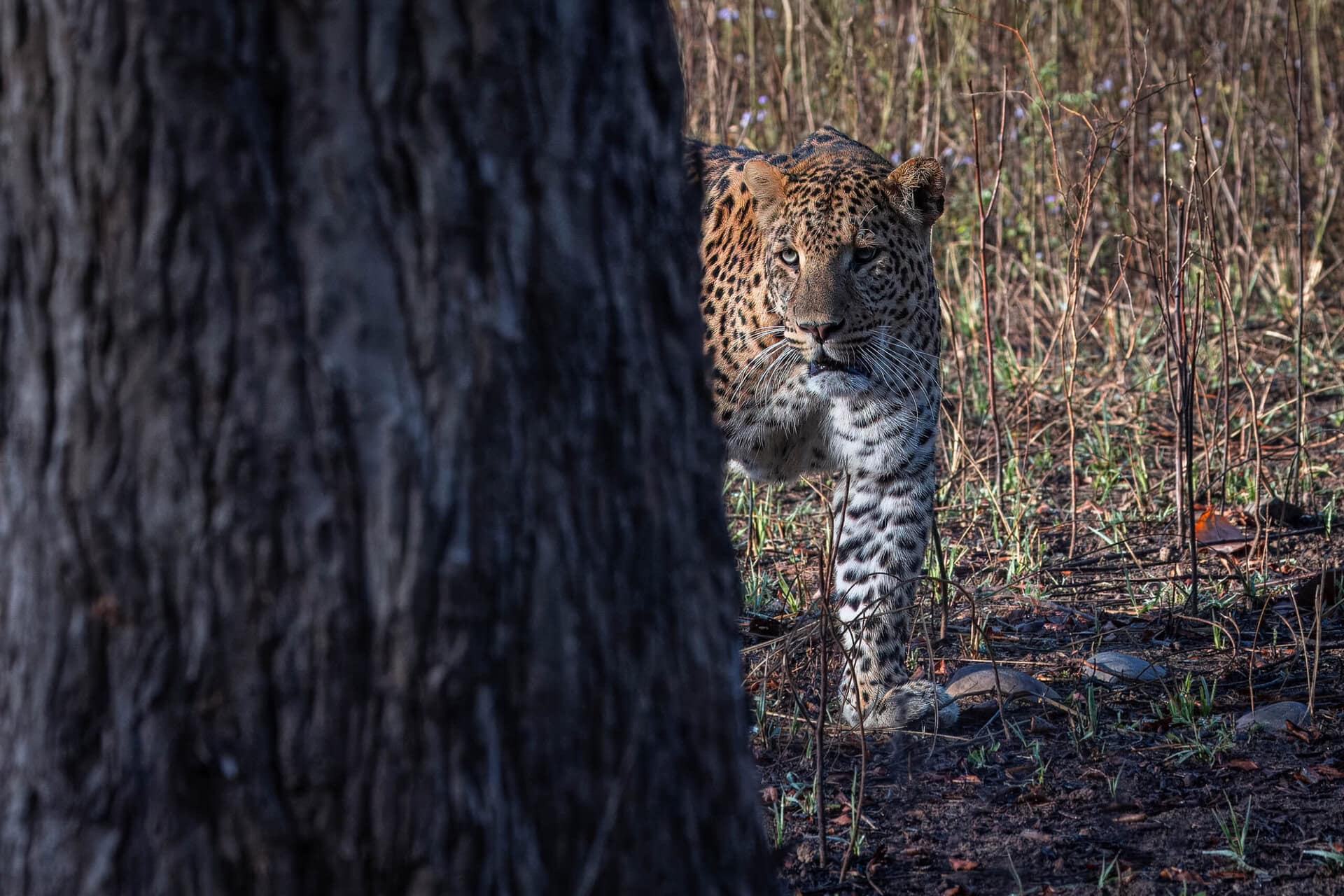
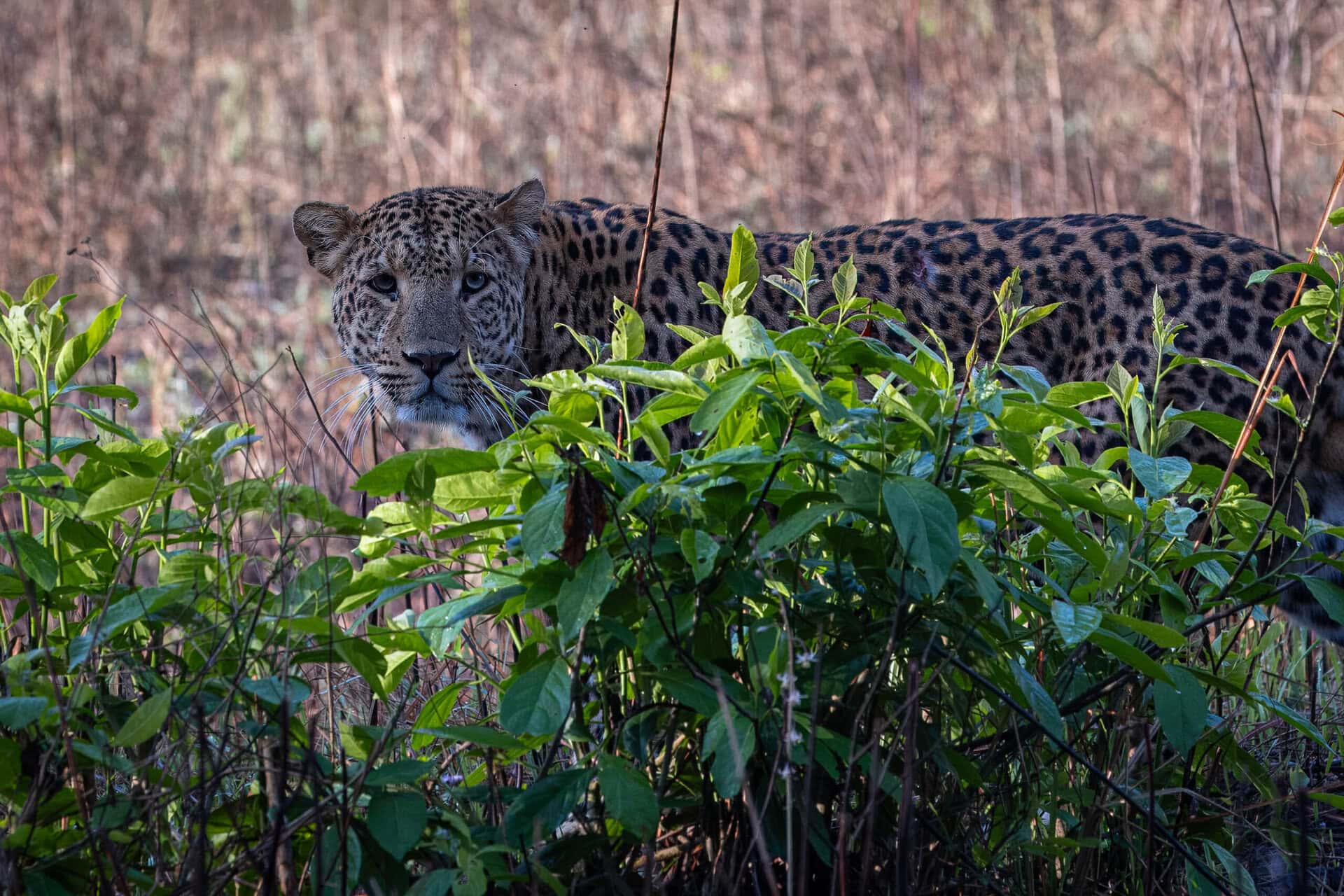
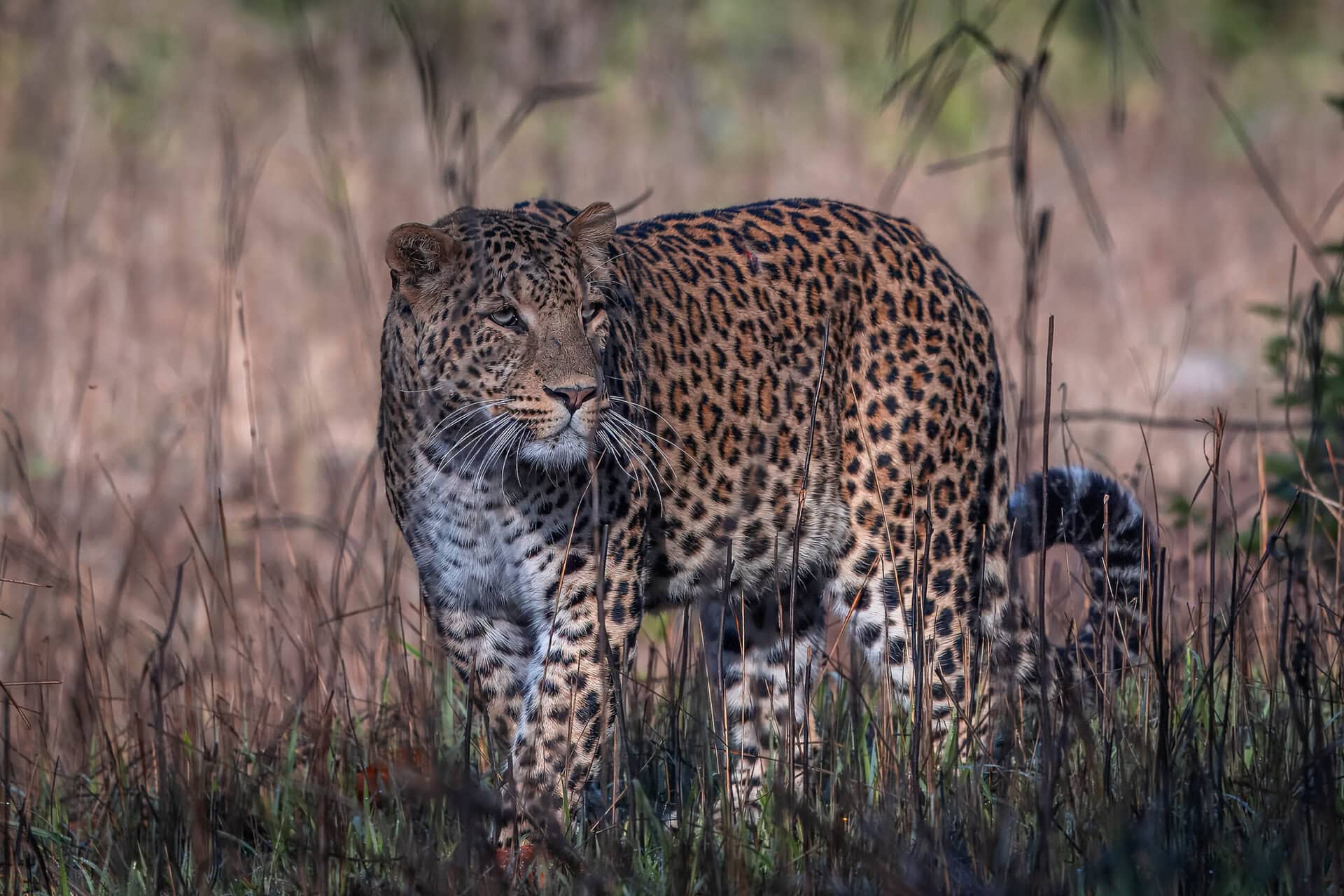
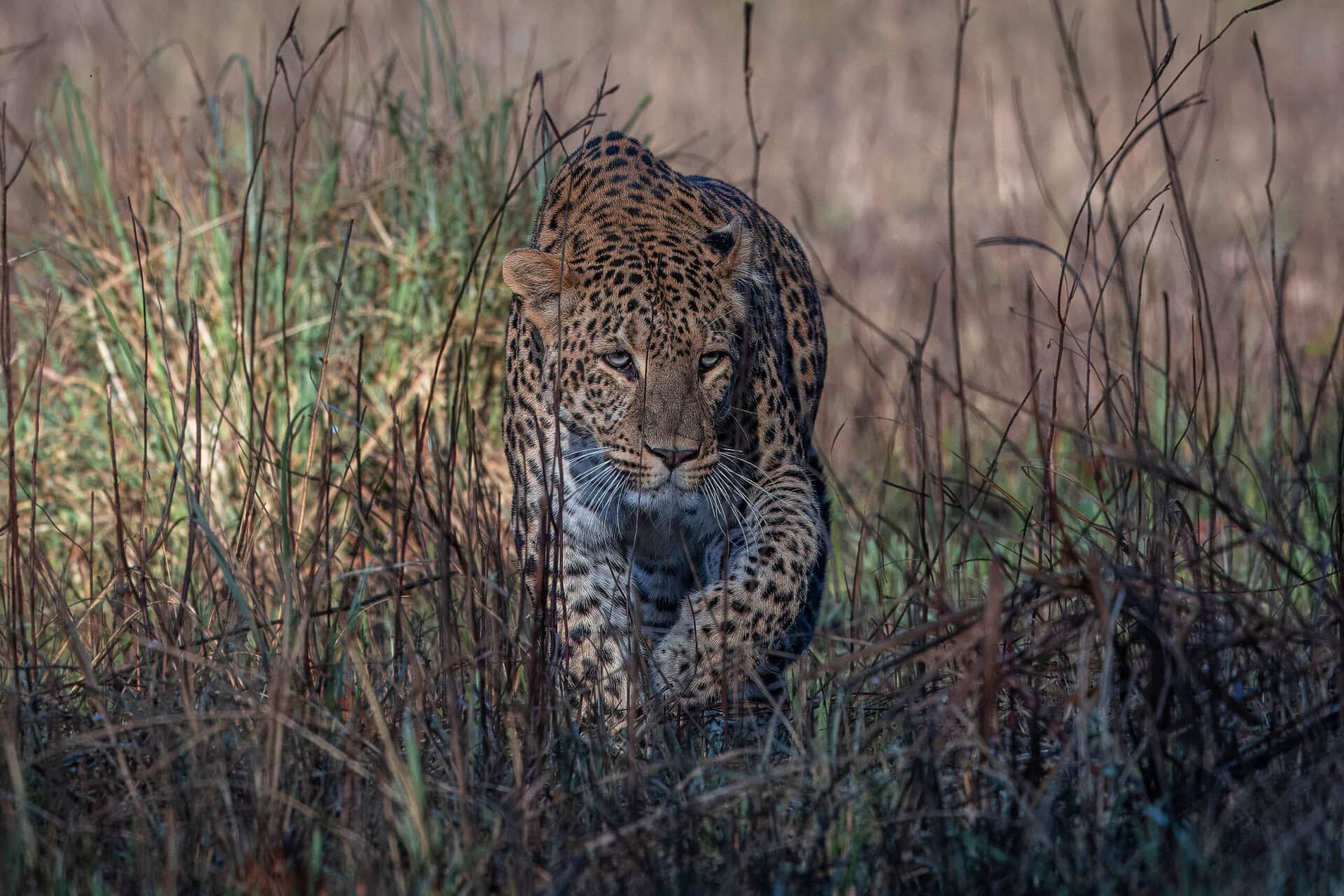
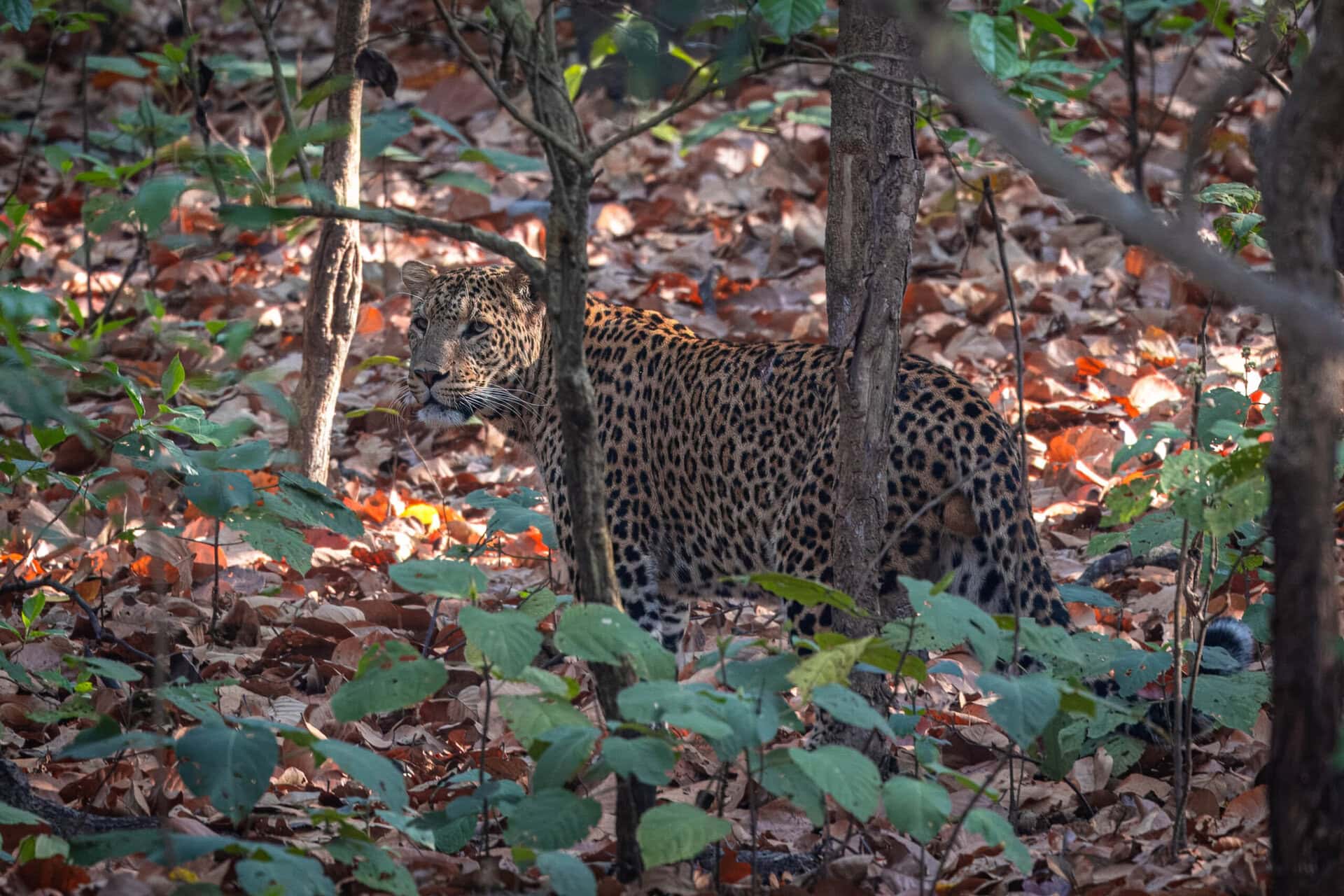
Adult Male Resting by the Road and Feasting on a Kill – Safari #7
We hit gold very early in the last safari, on the morning of day four. Within an hour of entering the park, the driver heard about an adult leopard resting by the side of the road. This was in a deeper part of the forest that we had not covered in the previous three days.
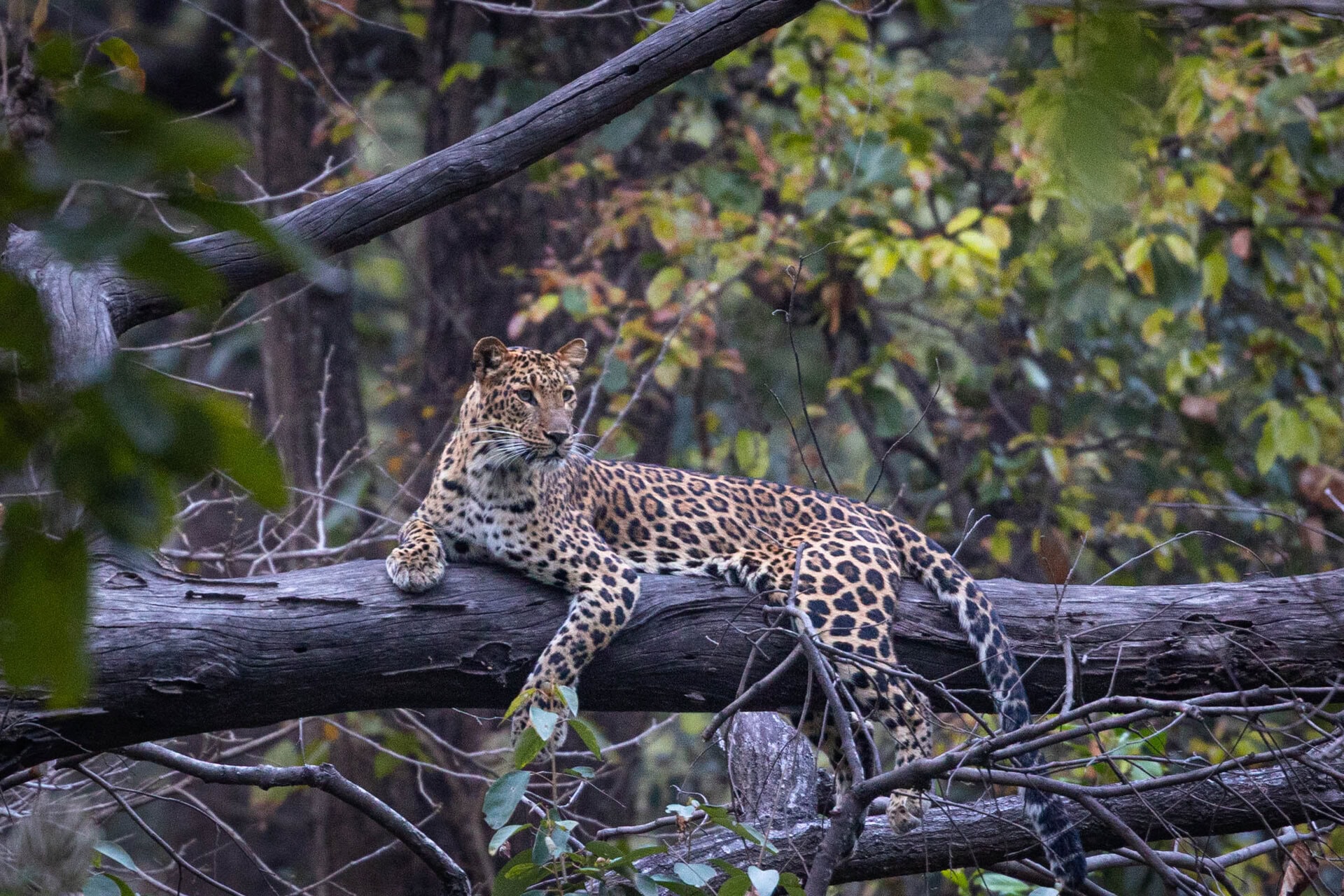
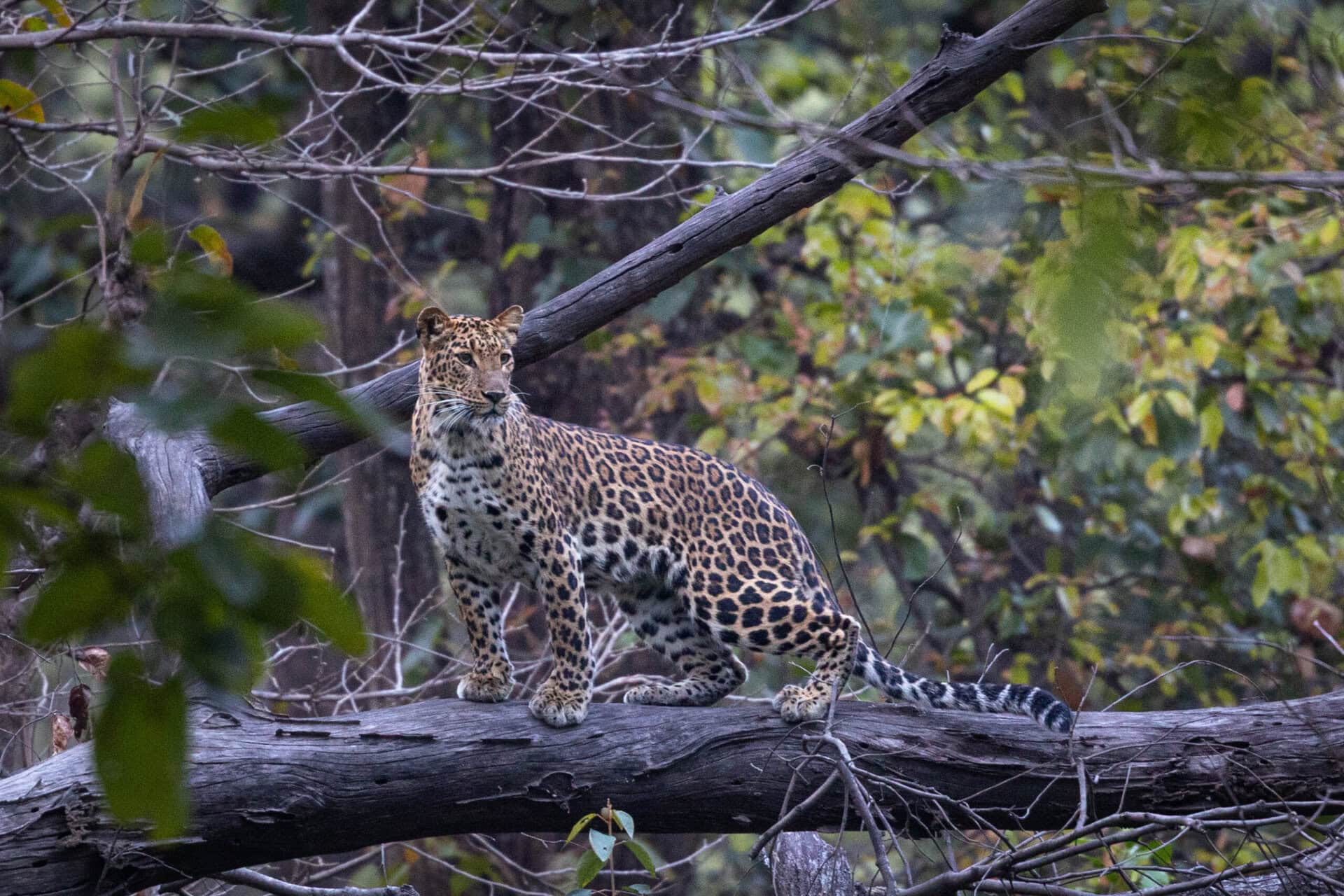
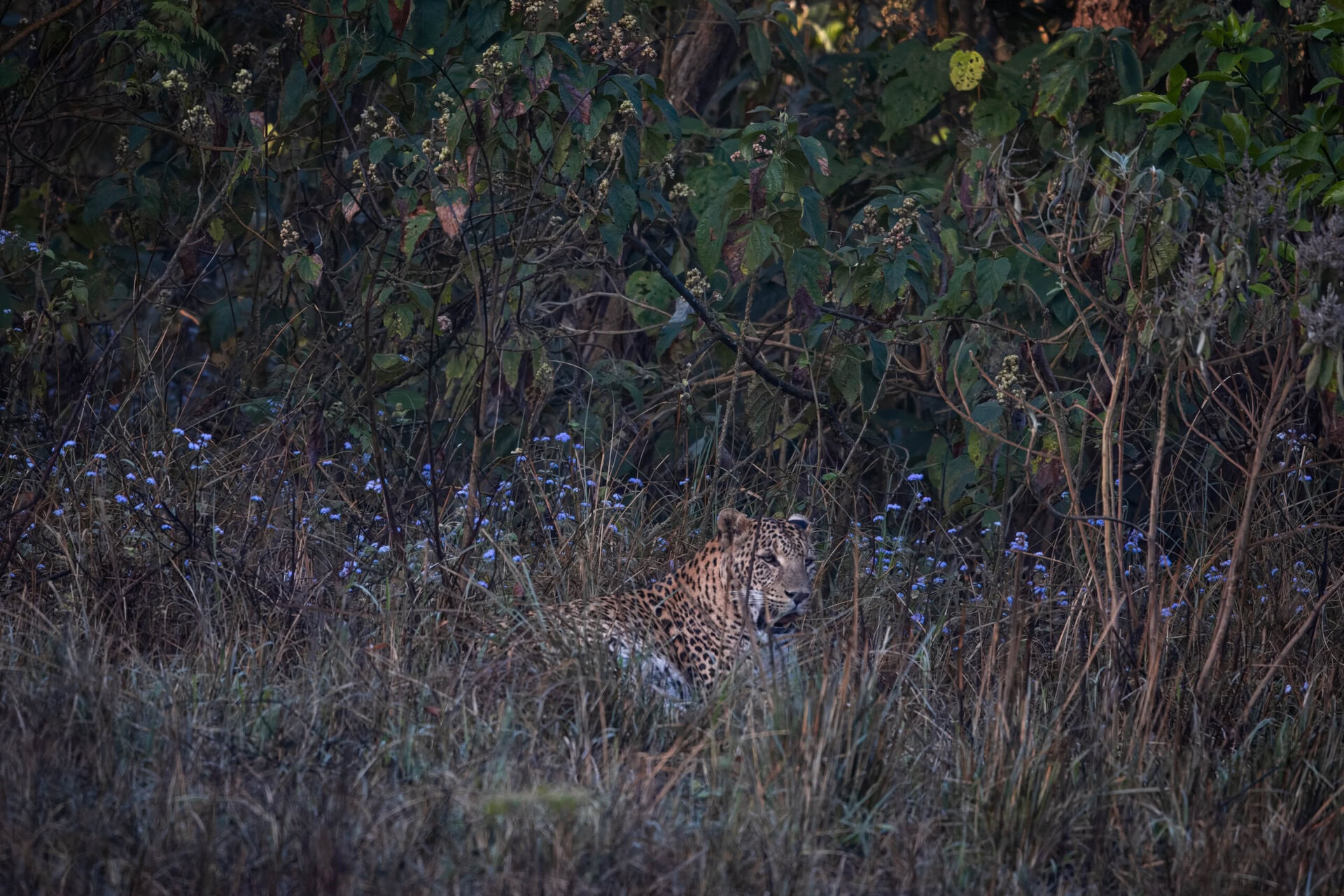
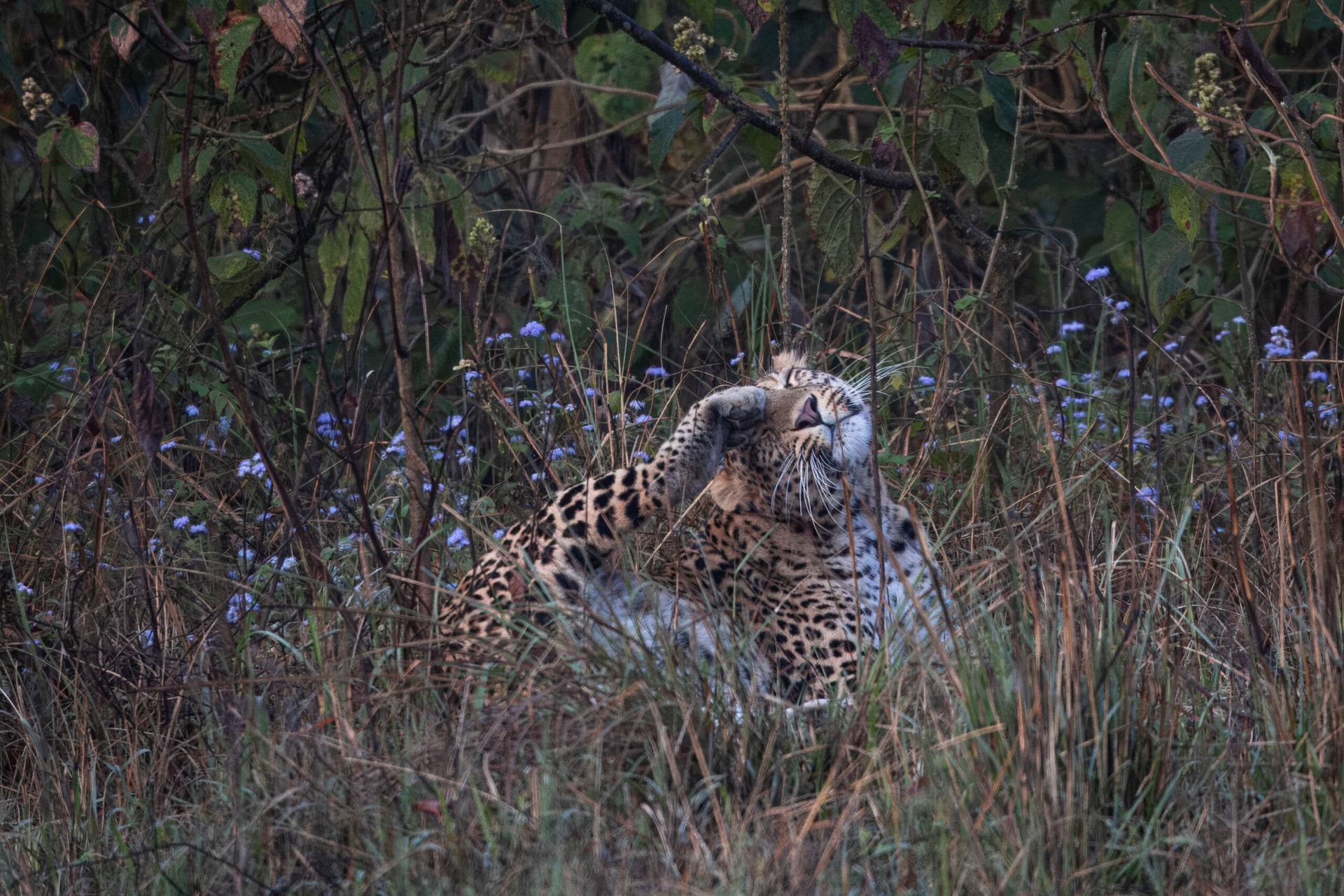
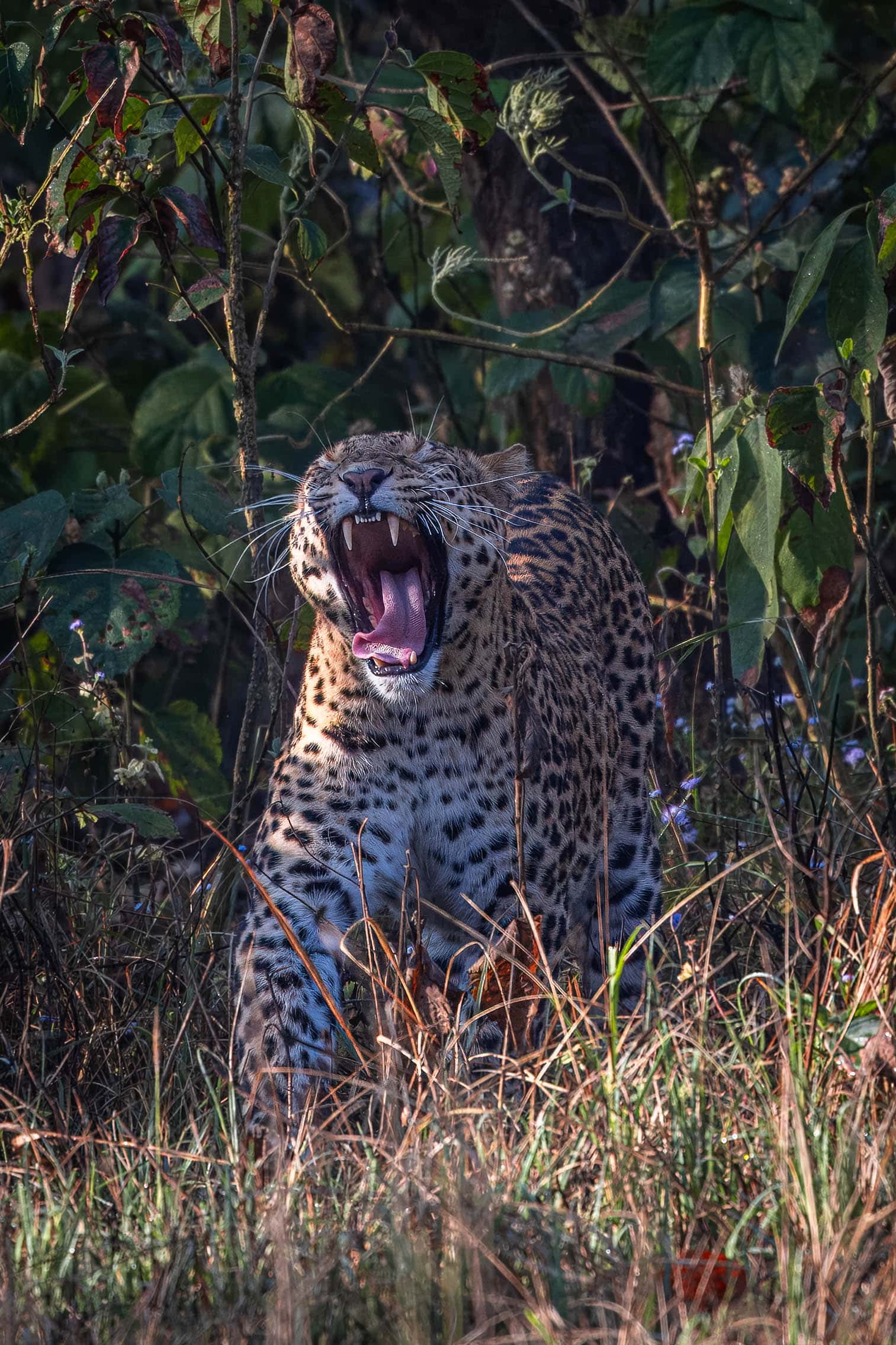
When we arrived, several vehicles were already parked along the road, and we saw the leopard about 40–50 meters away, resting in a bush surrounded by blue mink flowers. It seemed to be enjoying the sun after a couple of days of rain and cloudy weather. After about 30 minutes, the leopard got up, stretched, yawned, and began walking towards the road. This was quite surprising, as leopards usually move away from human presence and deeper into the forest.
This was the closest we got to a leopard, and everyone managed to get some great photographs of the adult male. The reason for it approaching the road became clear when it crossed over and moved behind a bush where it had hidden a kill—possibly a spotted deer. After feeding for about 30 minutes, it got up again and walked back into the forest.
This turned out to be the best safari of the trip, and I came away with a large number of images from this sighting.
Below are the pictures from this session.
The Distant Sightings
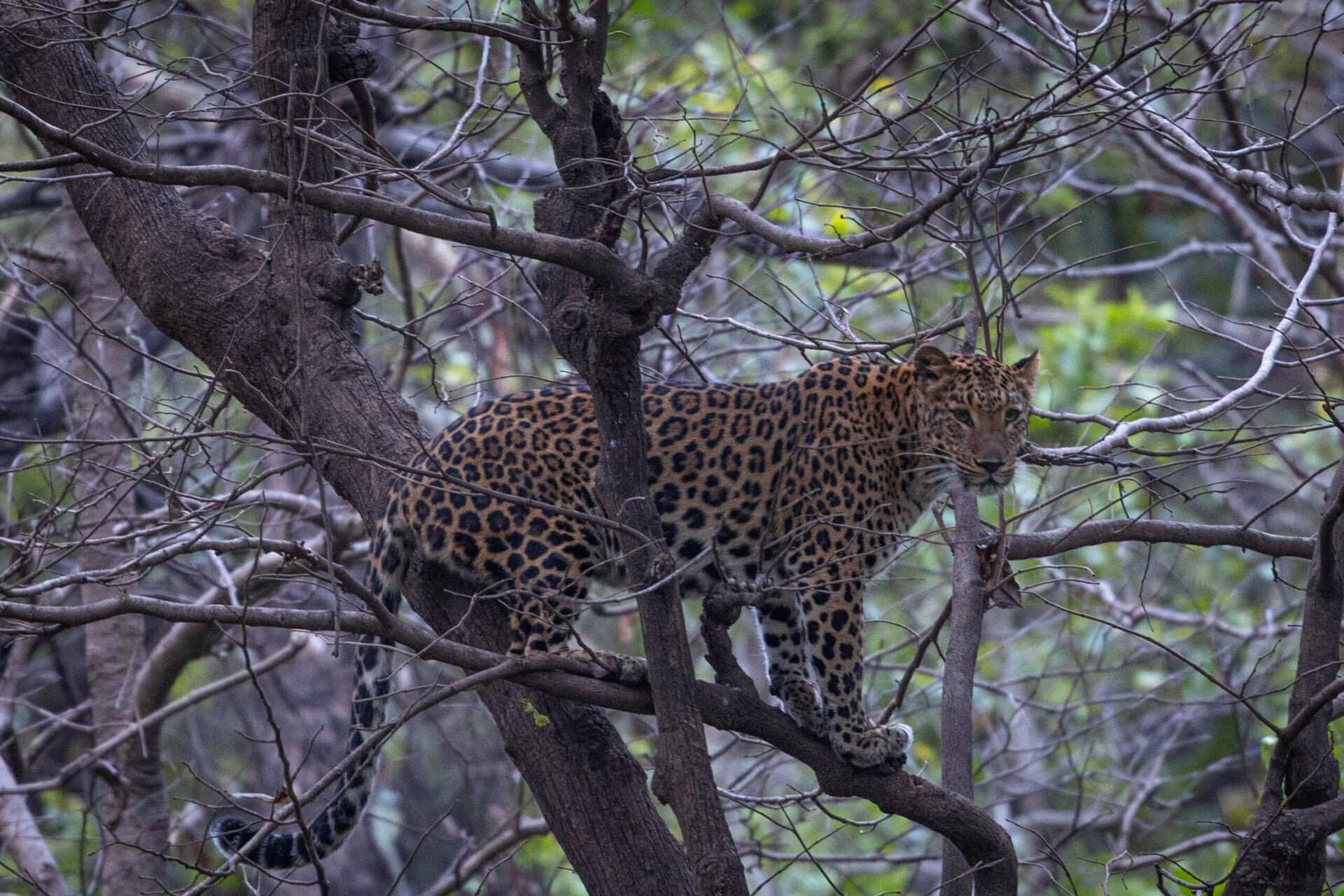
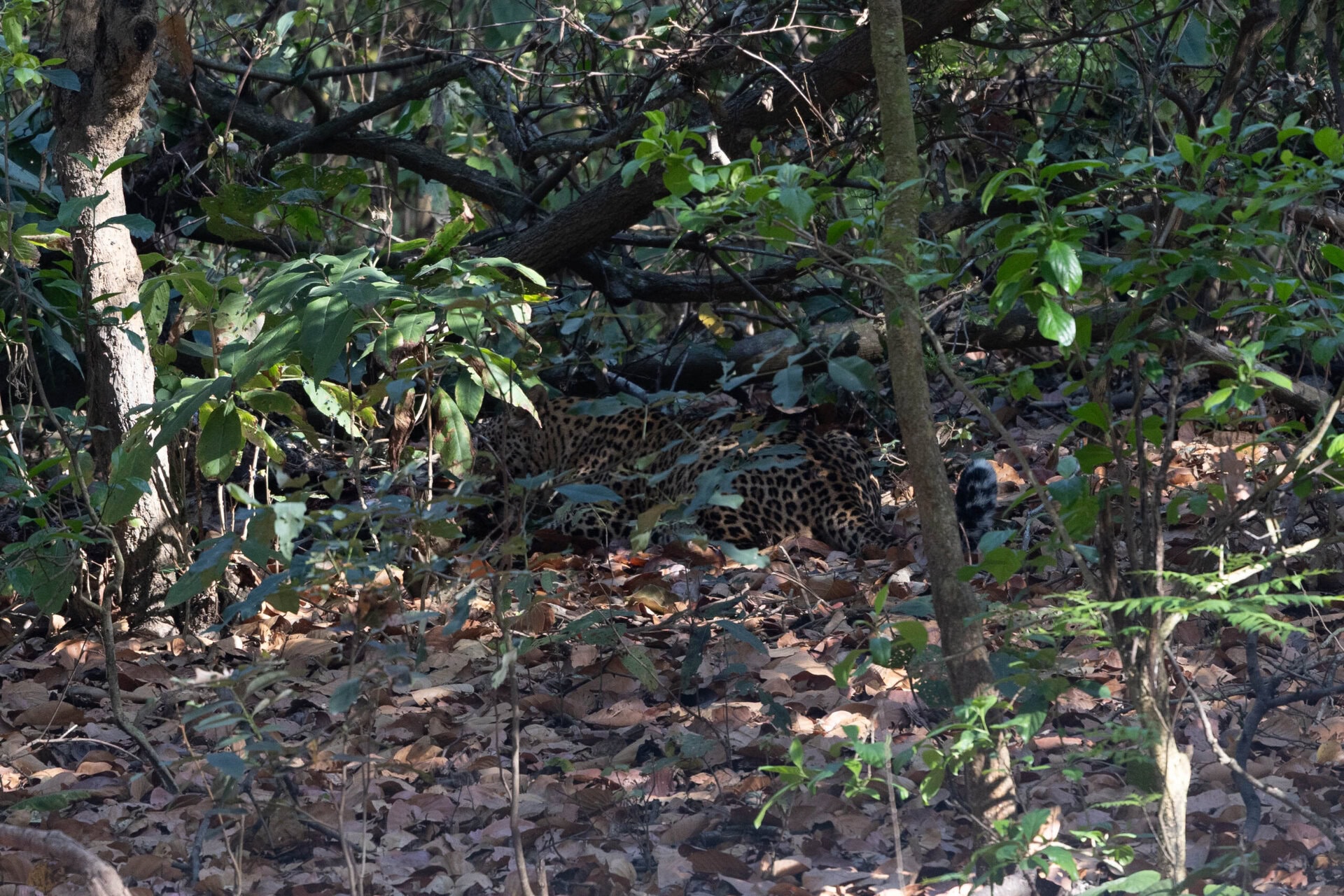
As I had mentioned earlier there were times when we saw the leopards too far away after waiting for a long time. This report will not be complete without a few of these pictures.
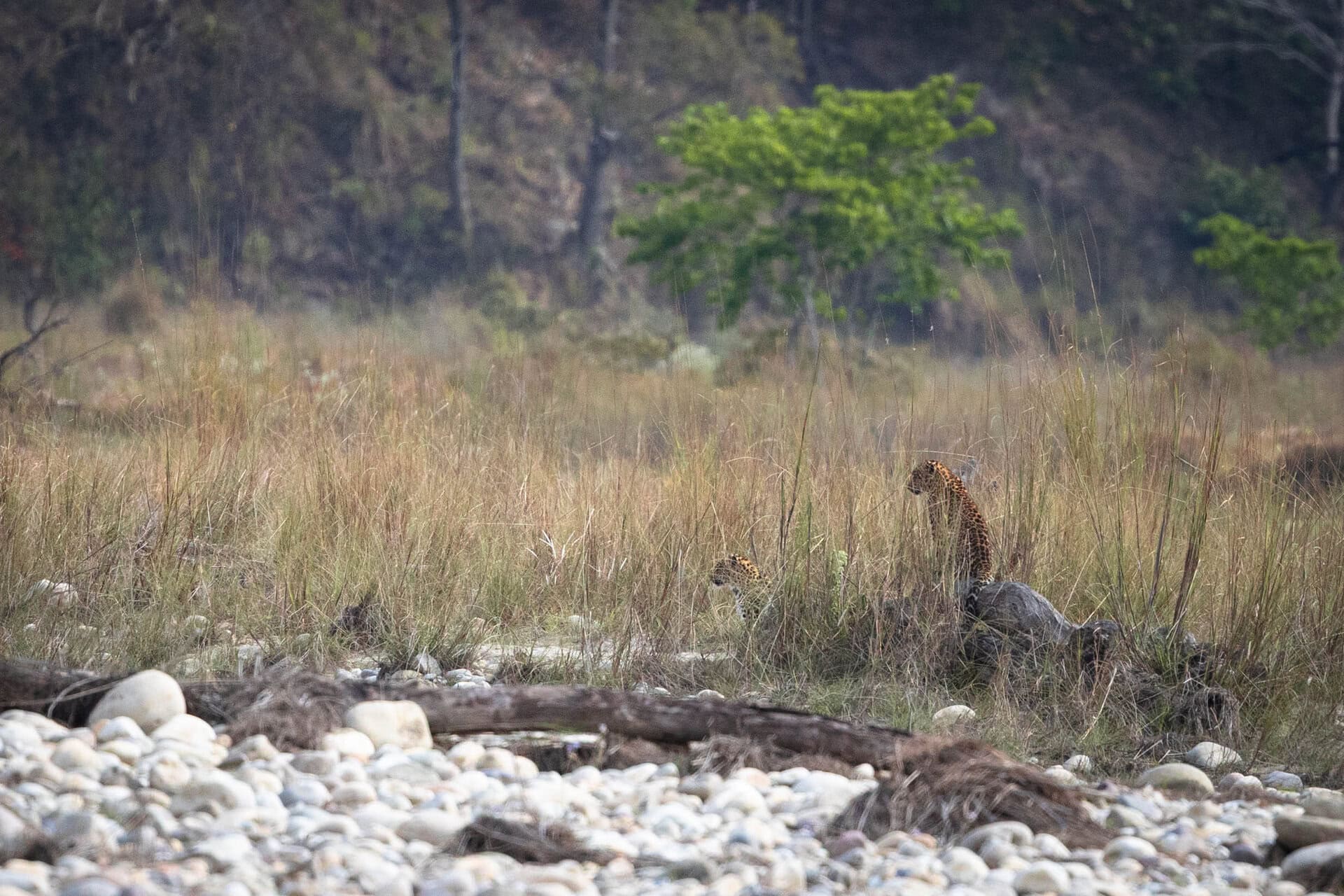
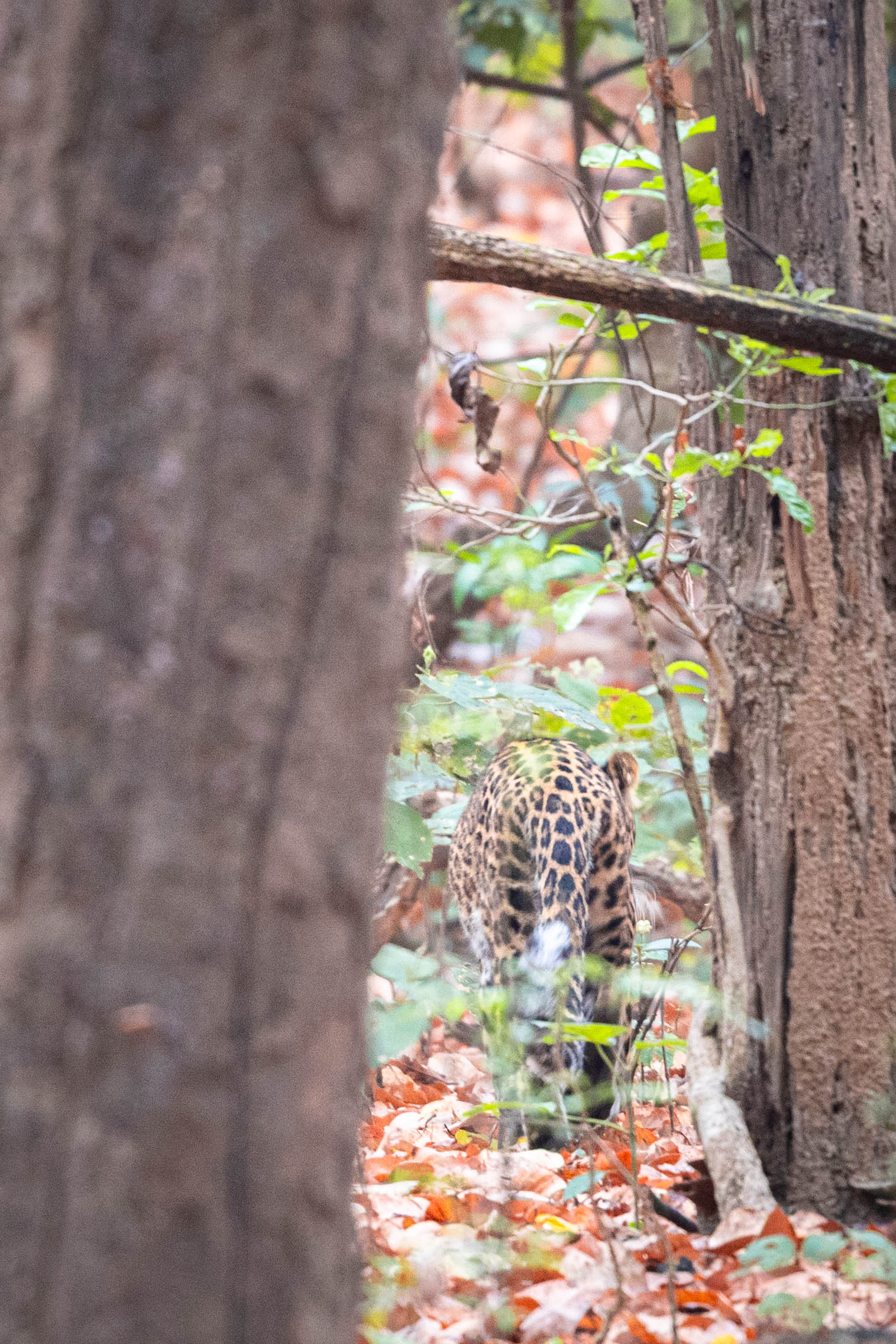
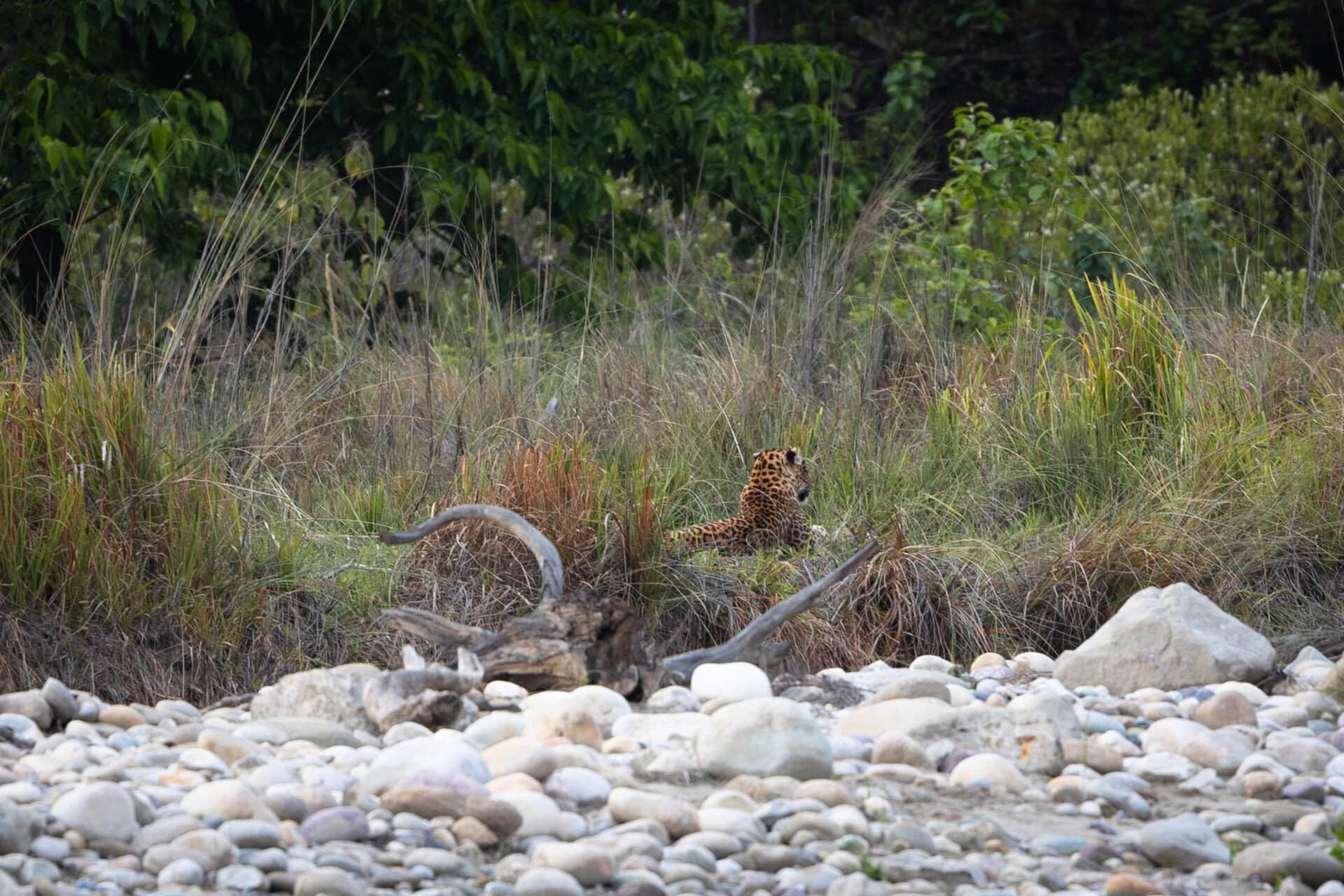
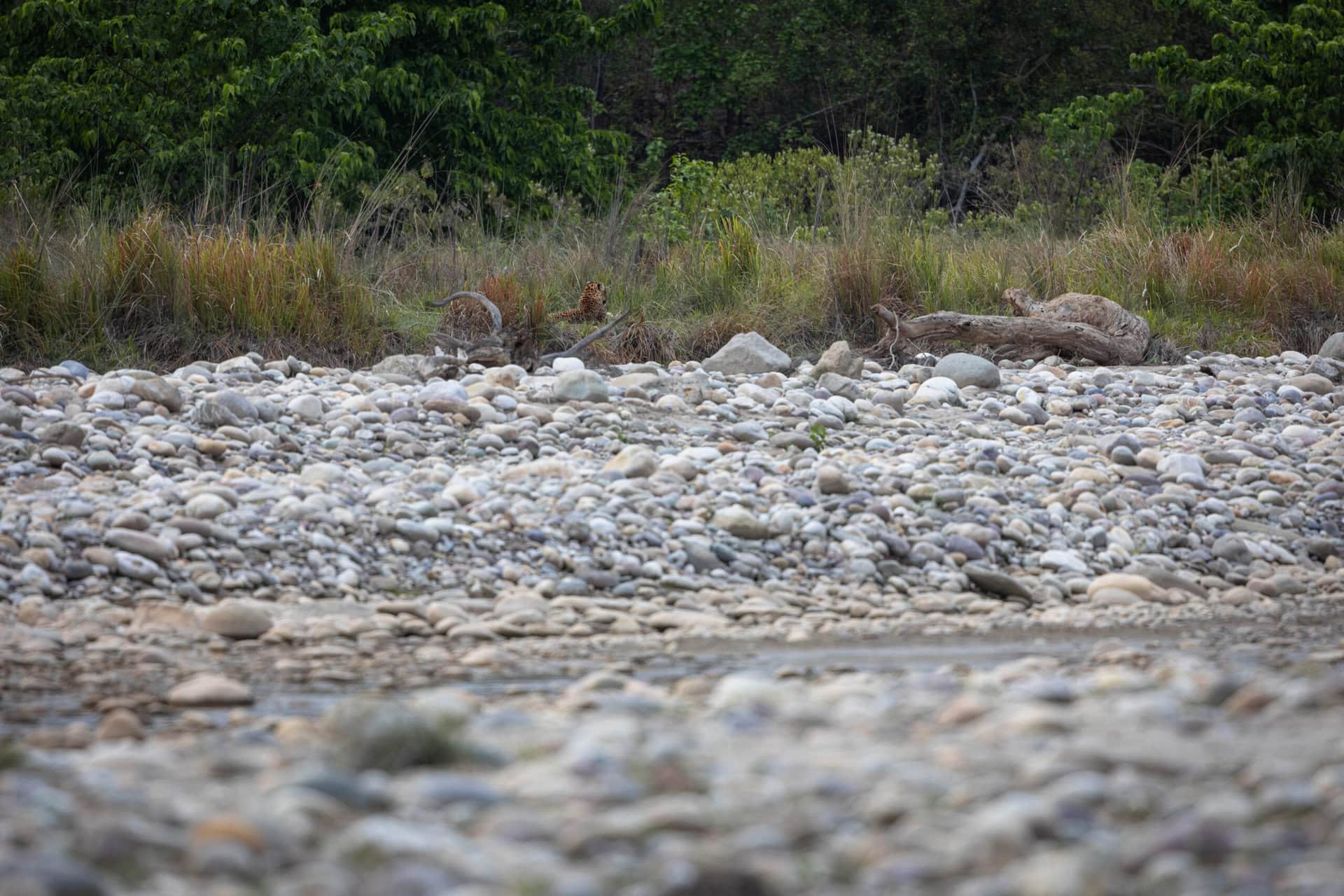
The Charging Tusker
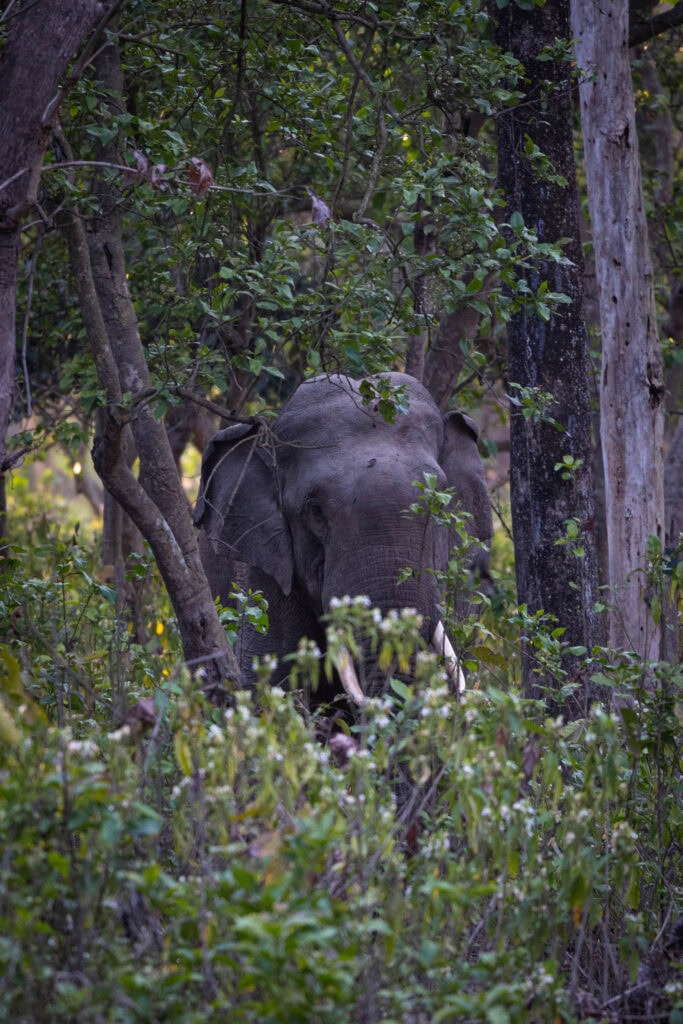
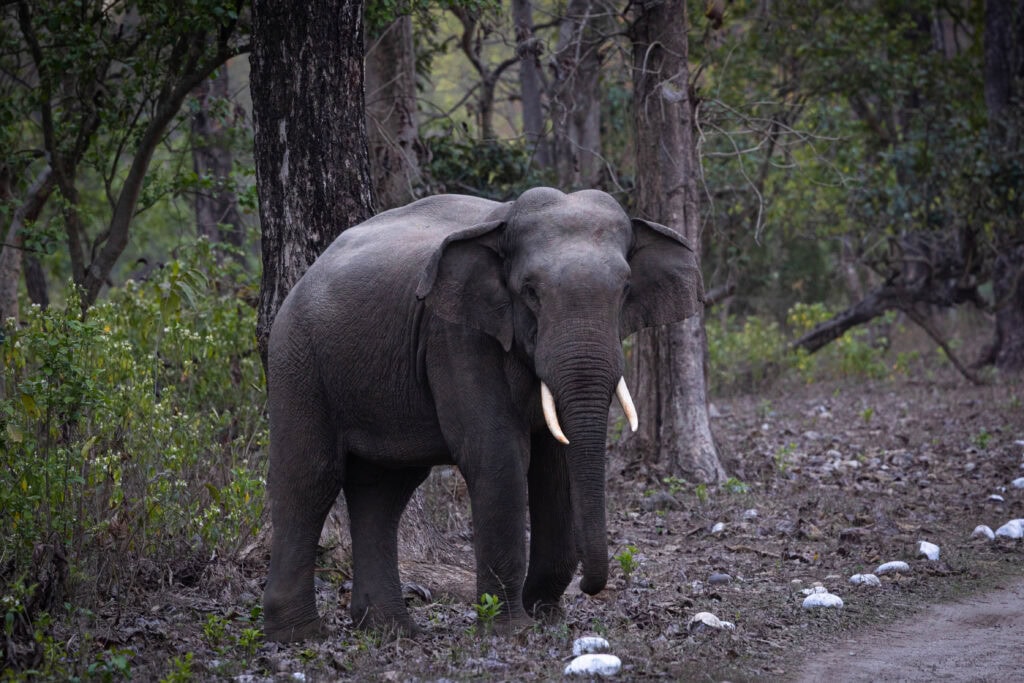
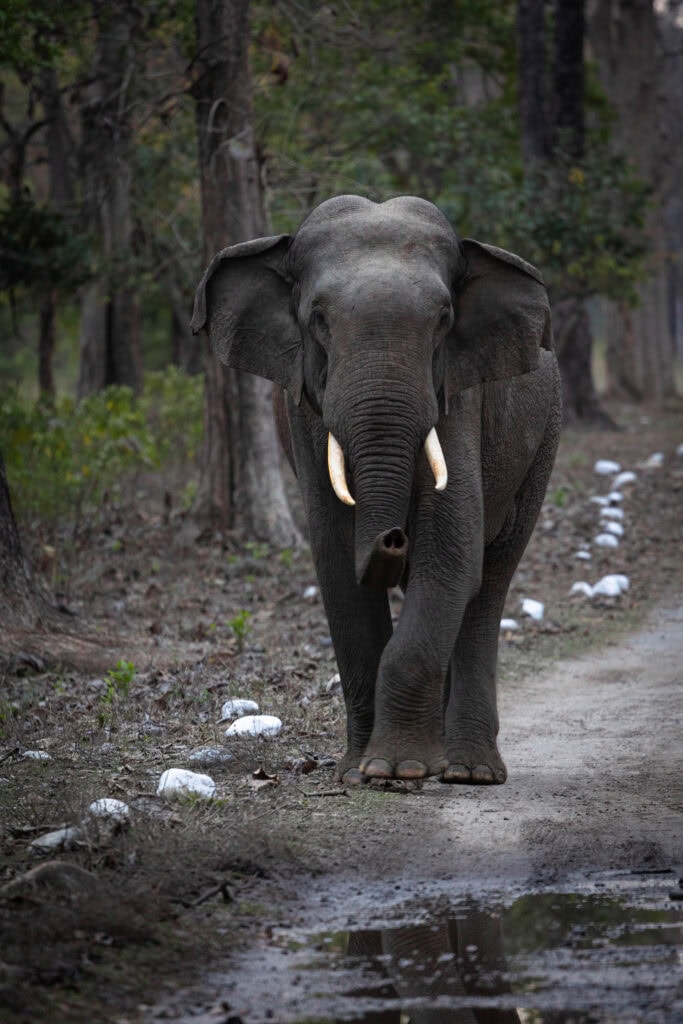
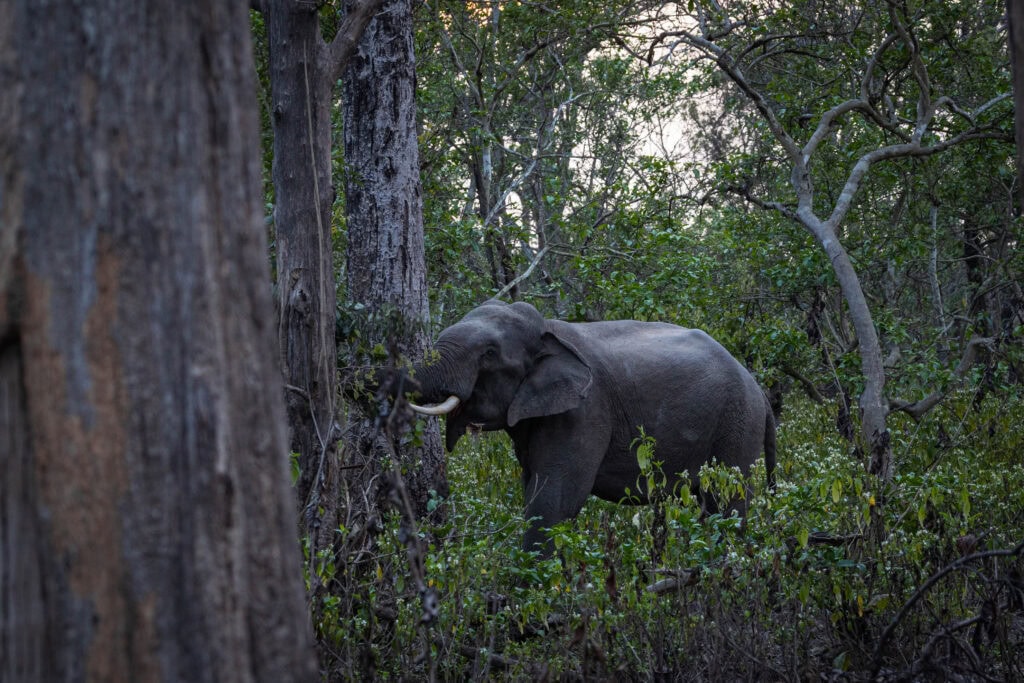
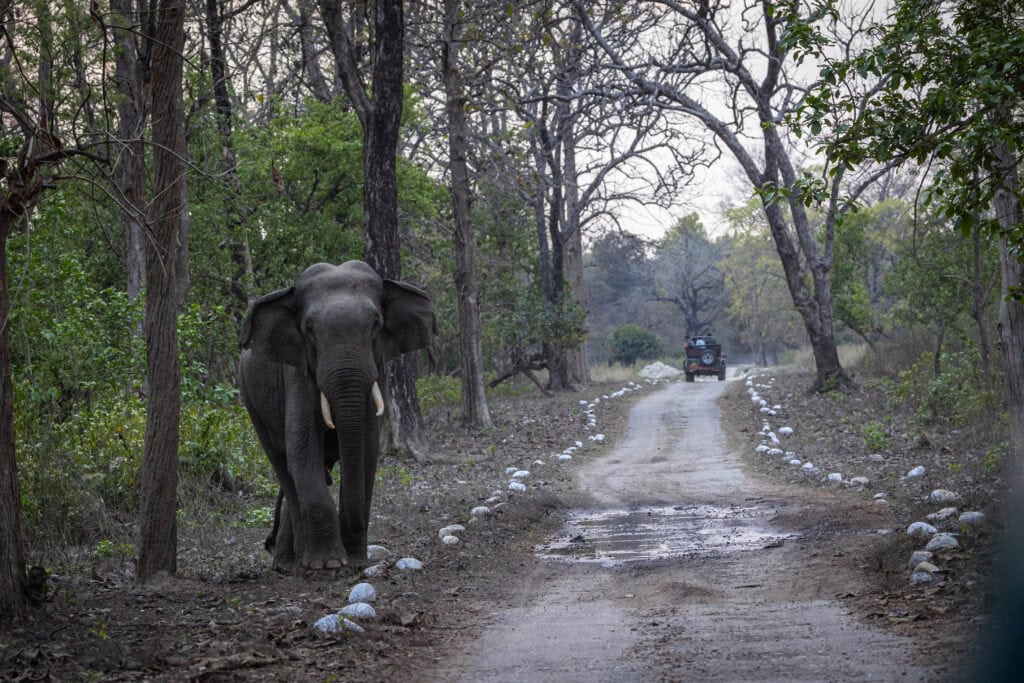
As I had mentioned earlier, during the sixth safari on the evening of day three, as we were heading towards the exit, a lone male tusker was standing on the road, not letting any vehicles pass. It would charge towards the vehicles, forcing them to reverse. It would then move into the forest, break a few branches, and return to block the road again. Whenever a vehicle tried to slip through during these brief gaps, it would charge back and stop them.
This went on for almost 30 minutes. It was the first time I had witnessed such behaviour from an elephant, and it was quite scary. But Vipul and the driver remained calm. Vipul later explained that this is called a mock charge, and the elephant did not intend to harm anyone.
A few pictures from this encounter are below.
Animals and Birds of Rajai Park
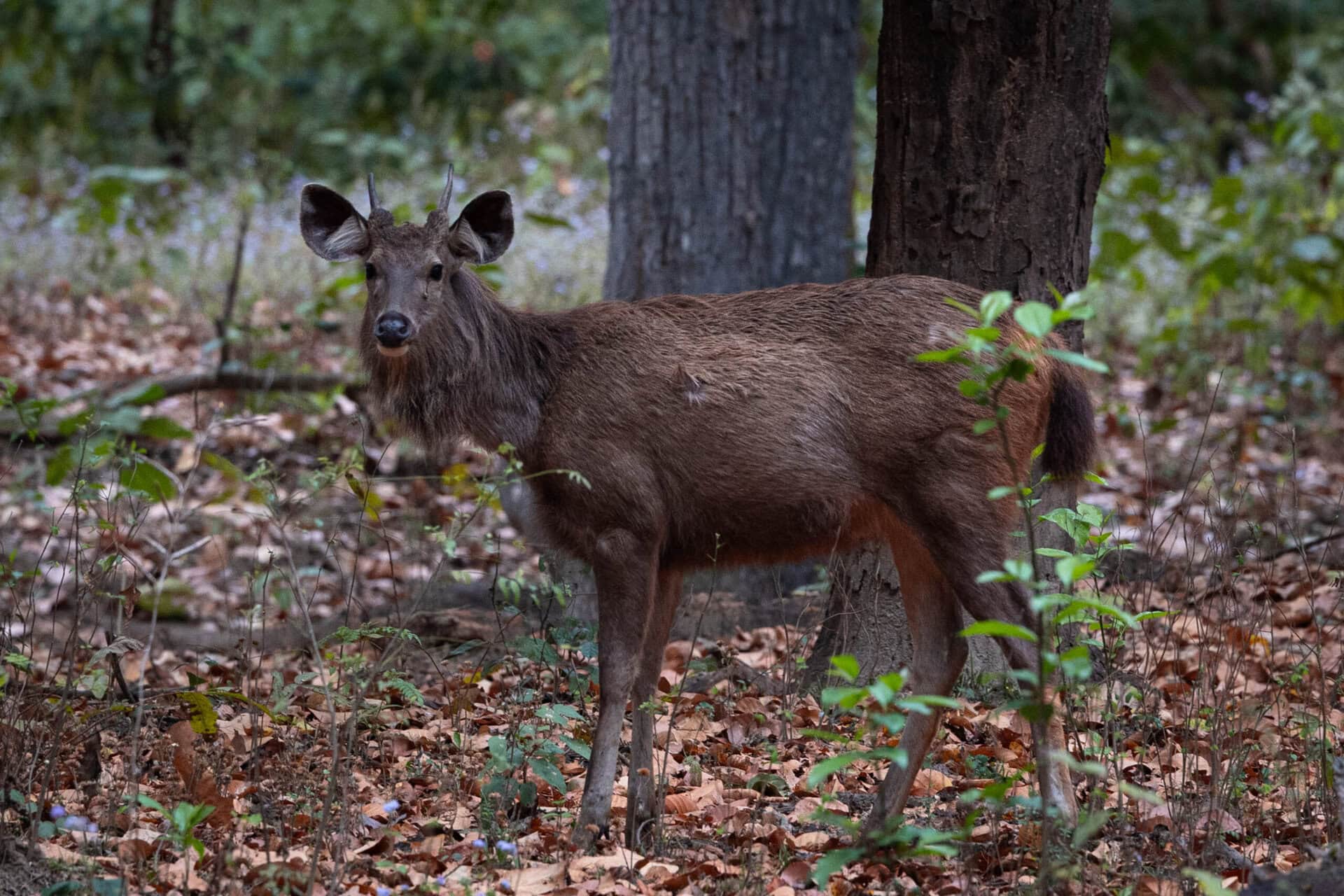
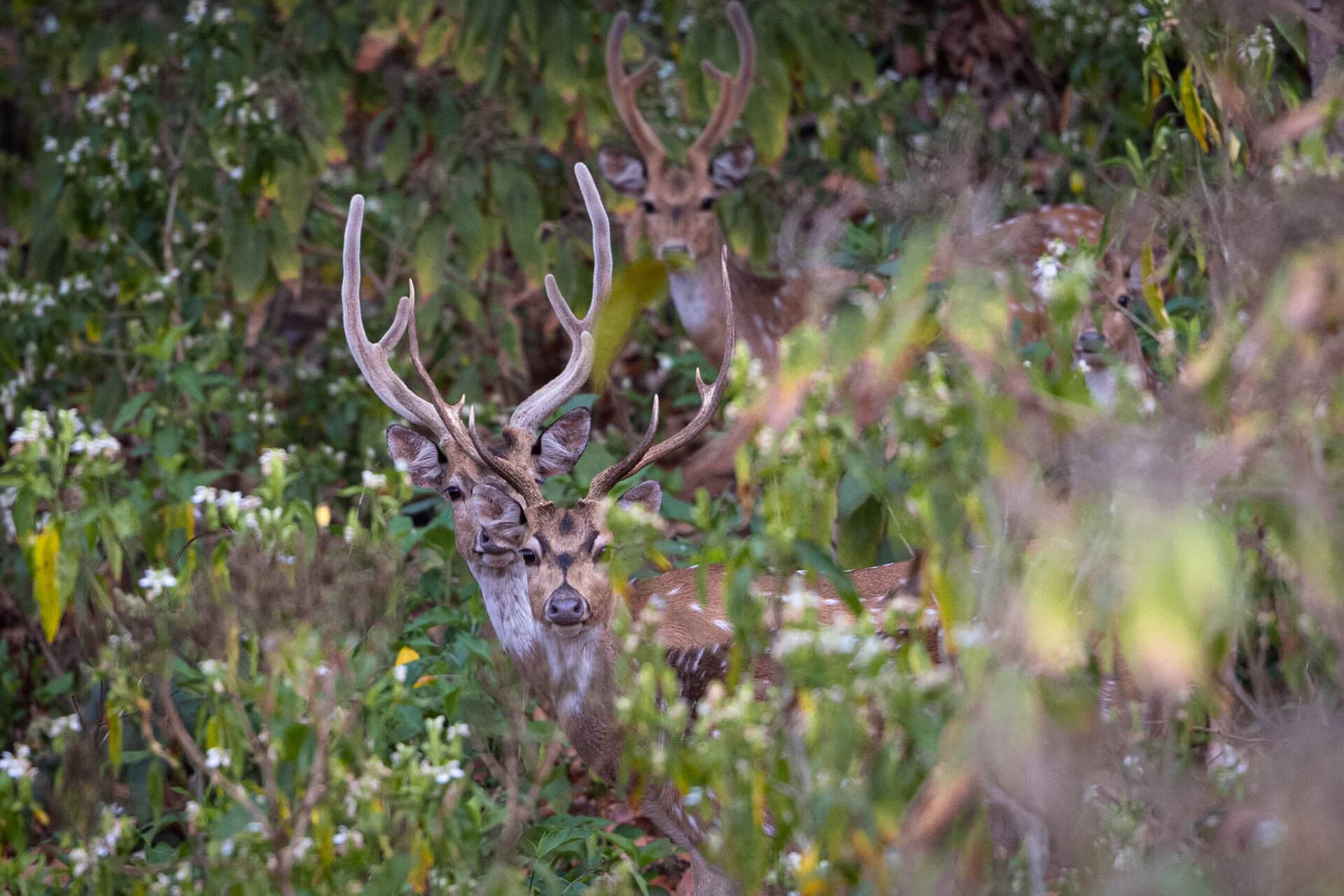
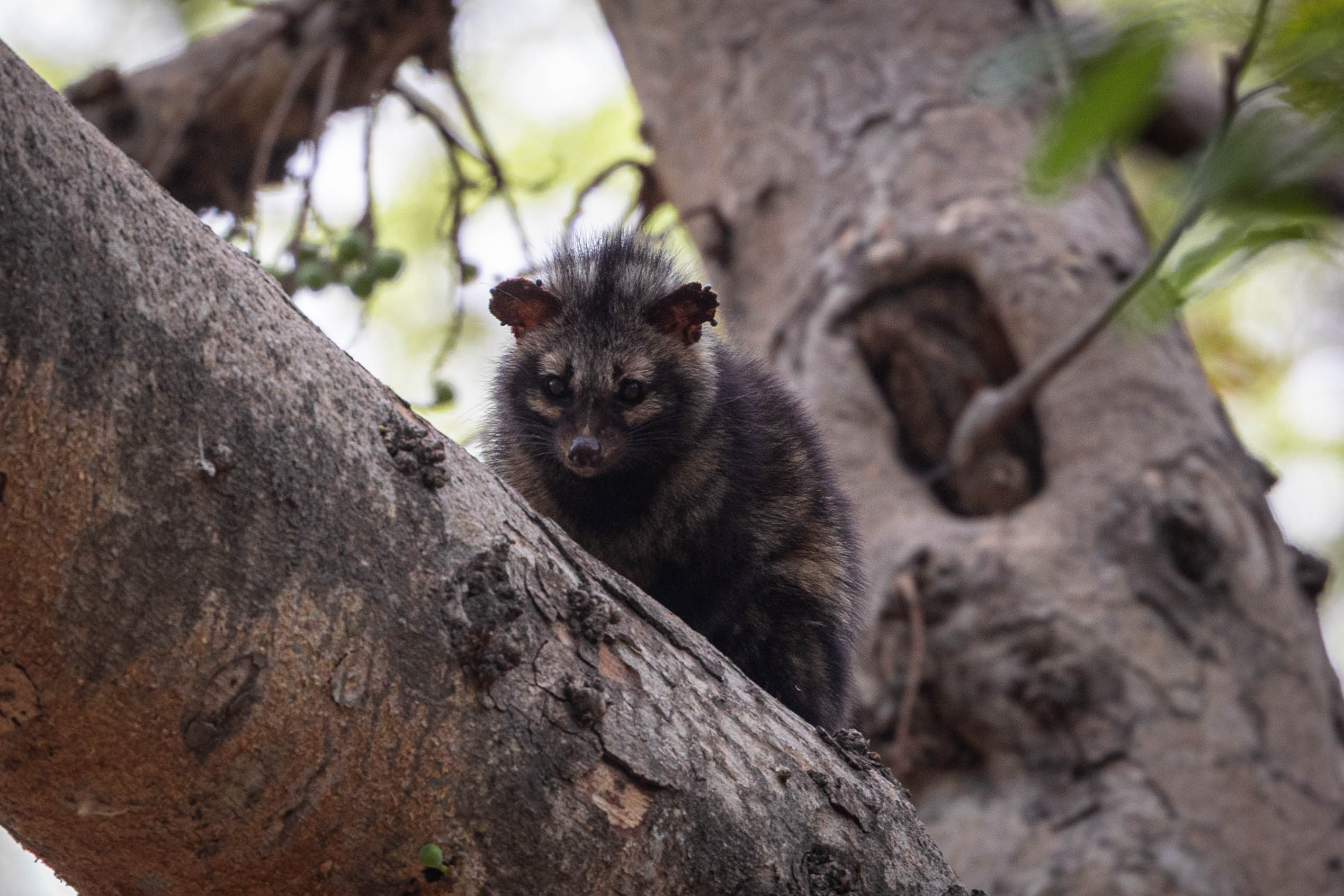
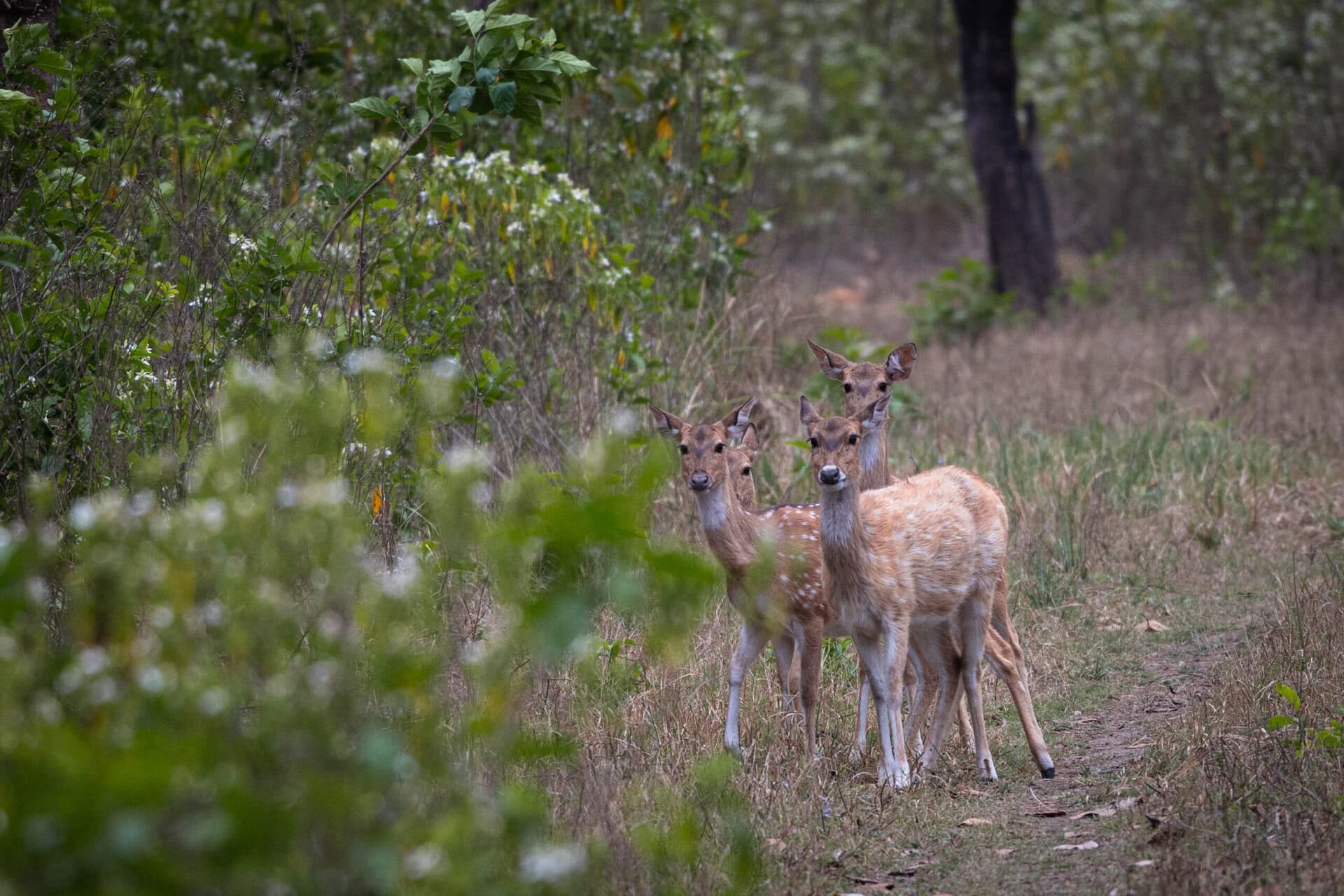
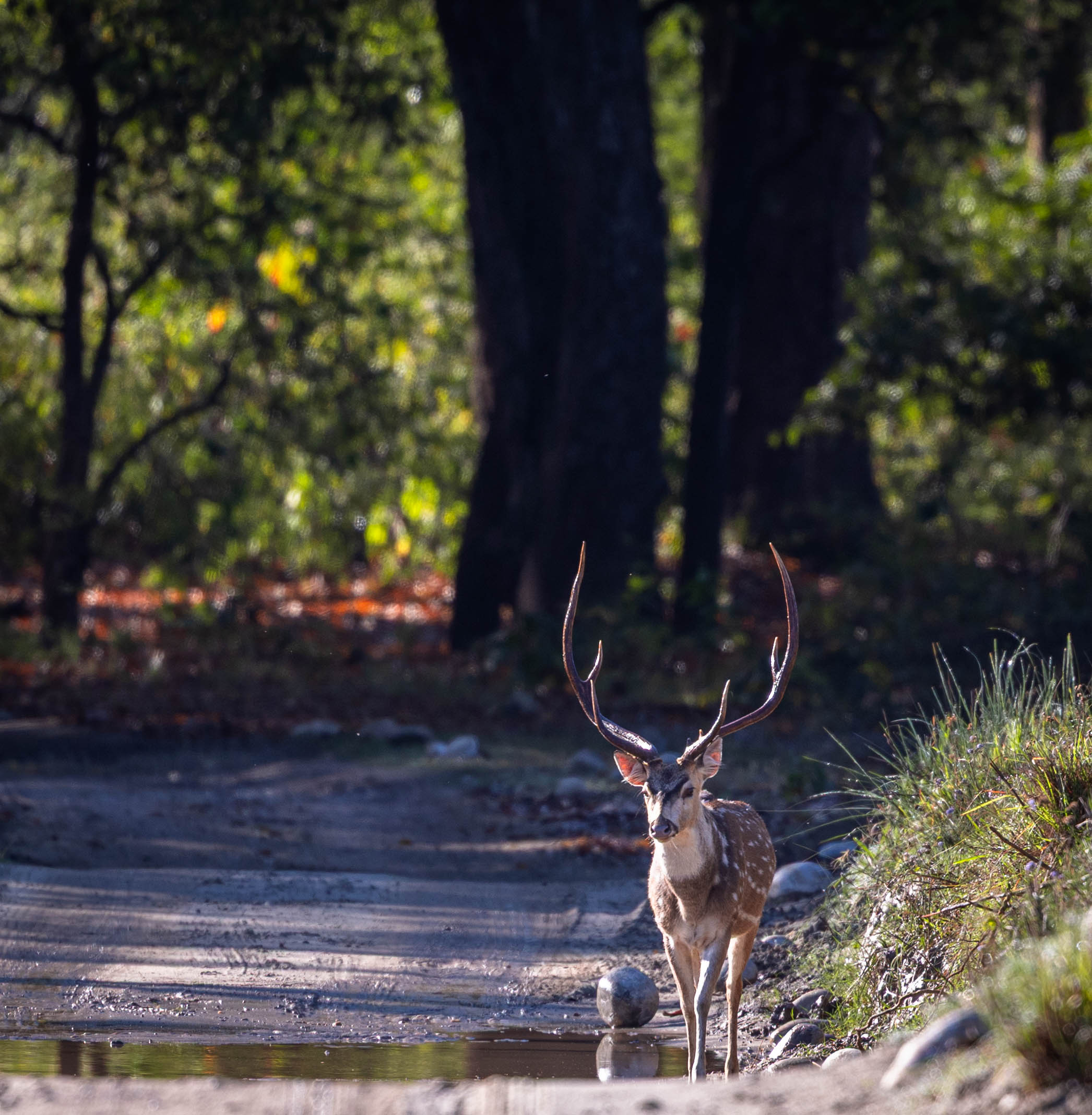
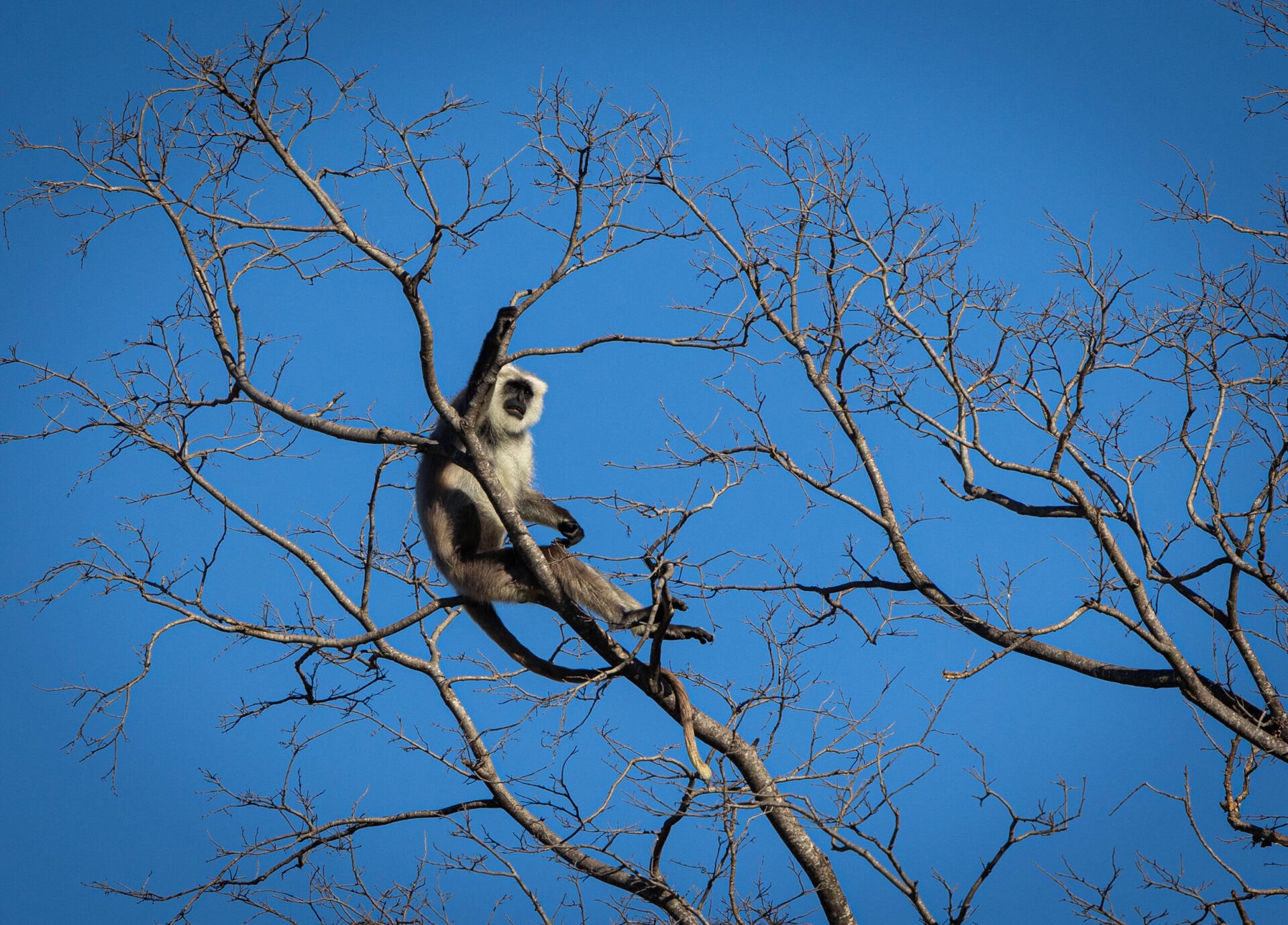
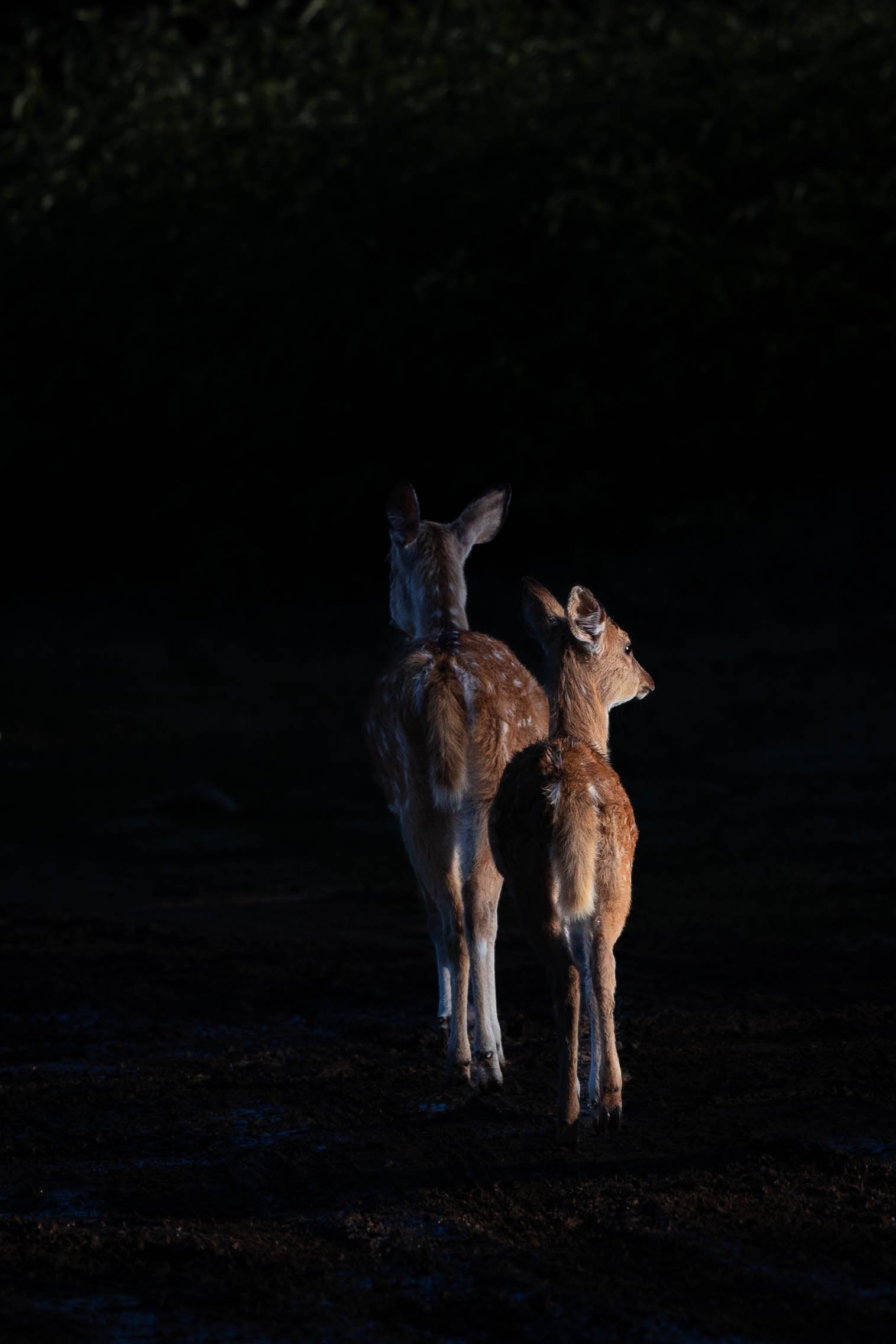
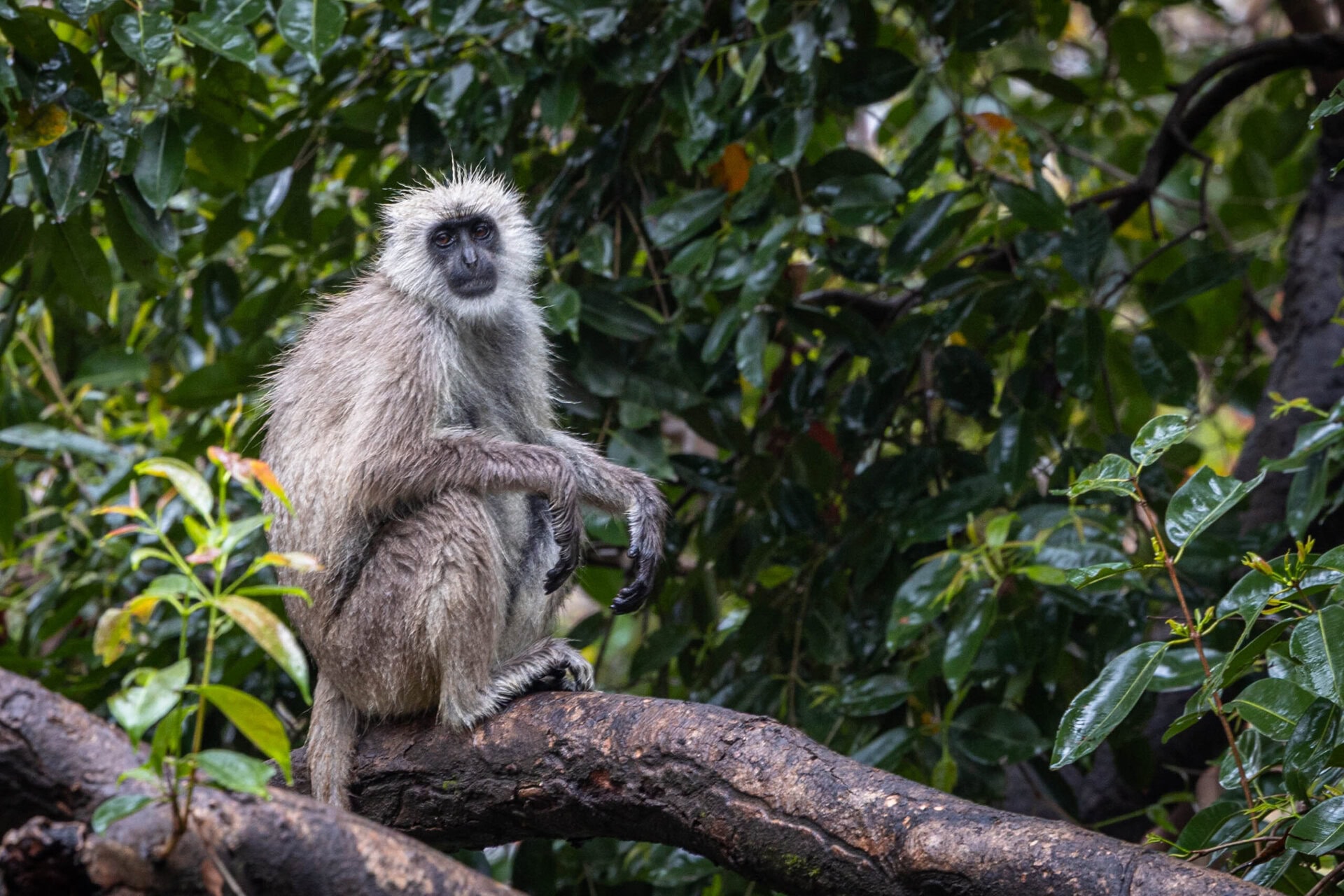
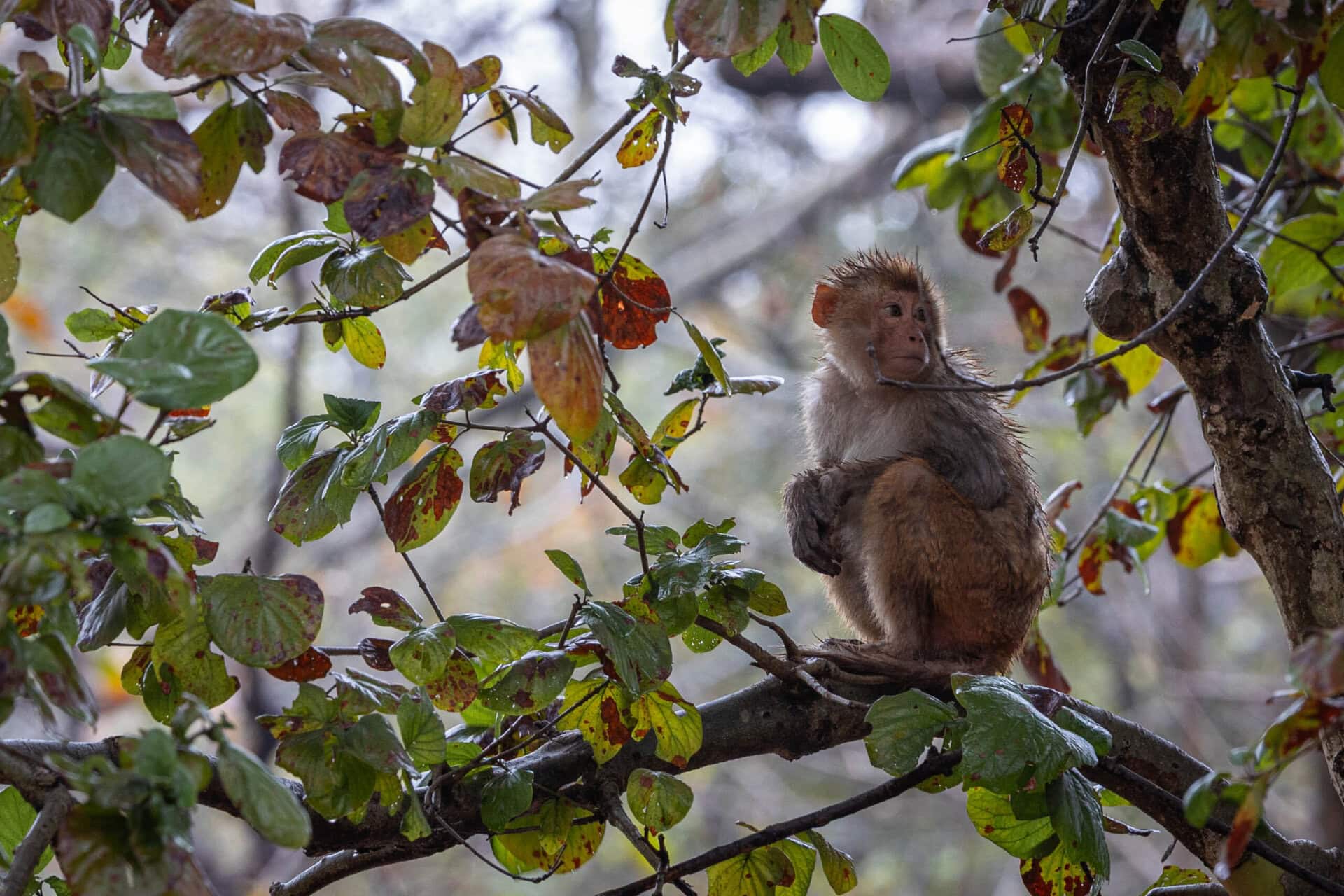
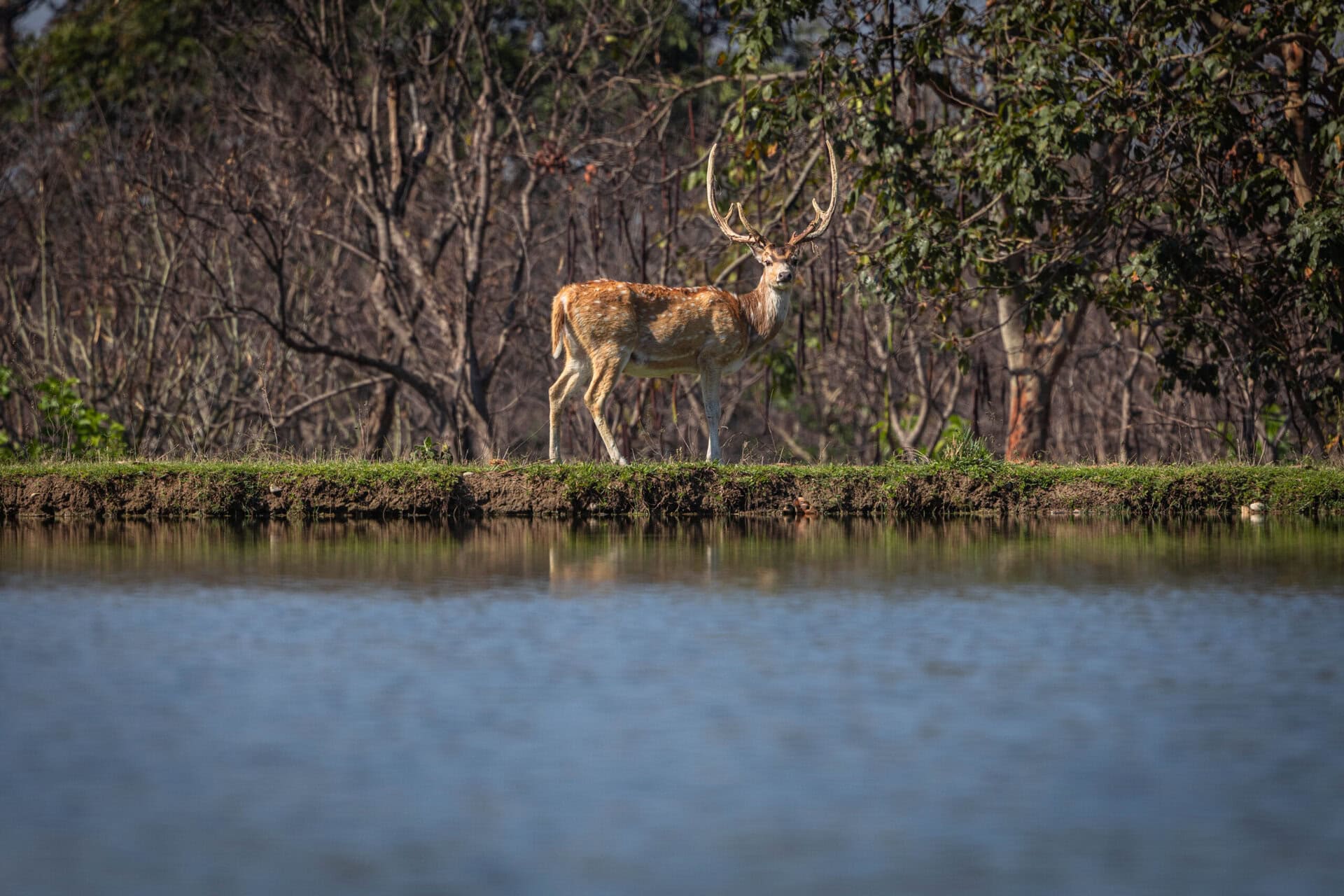
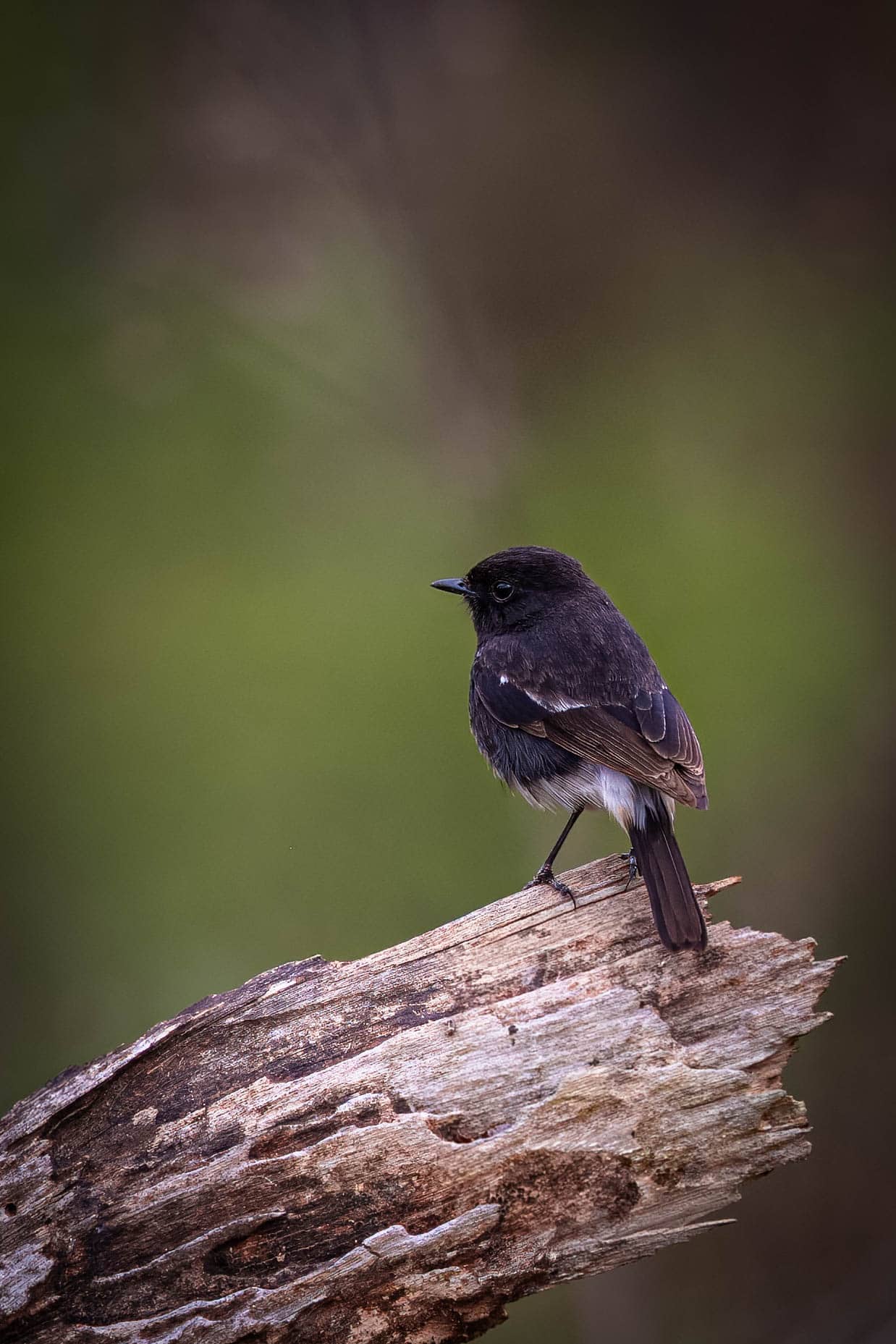
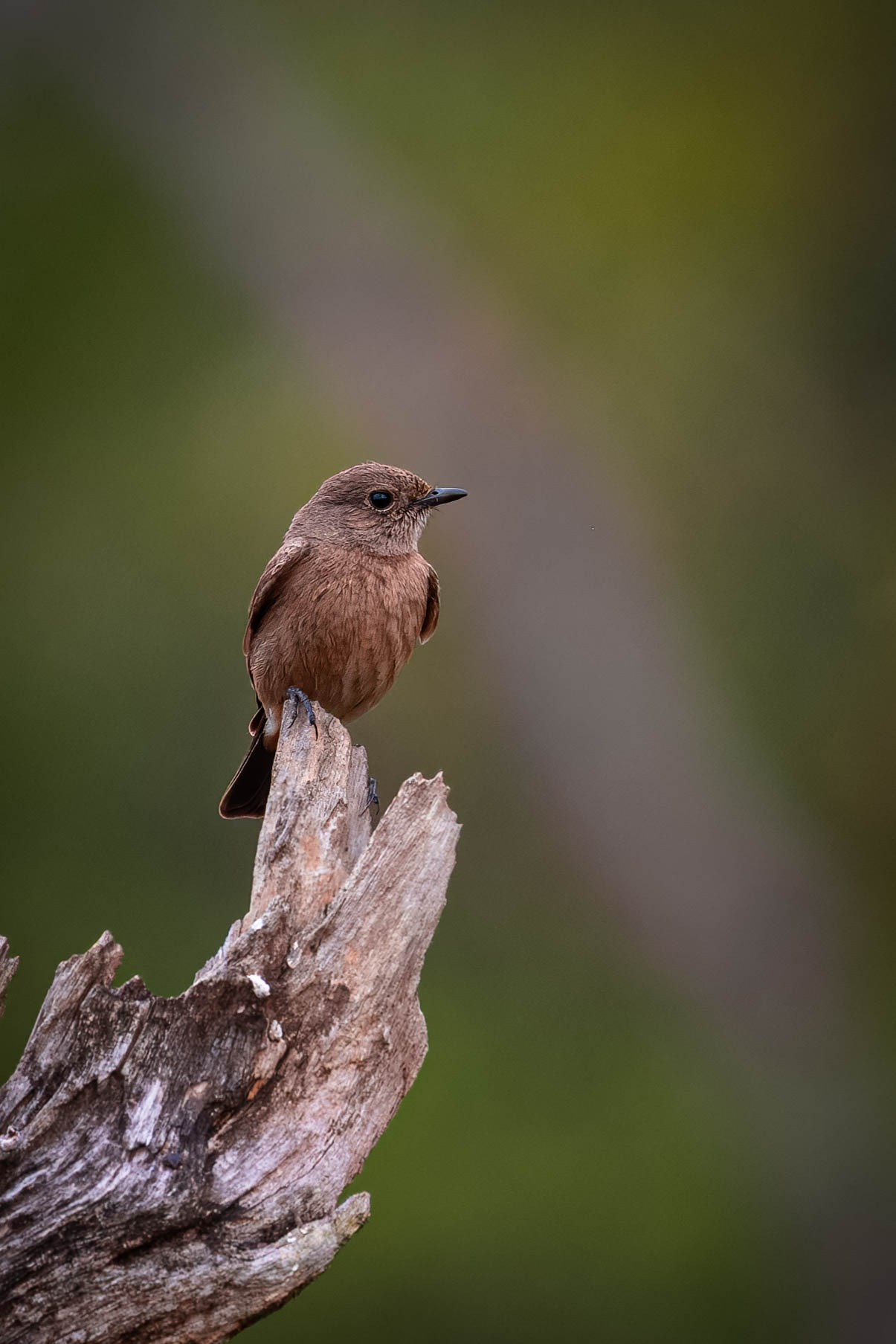
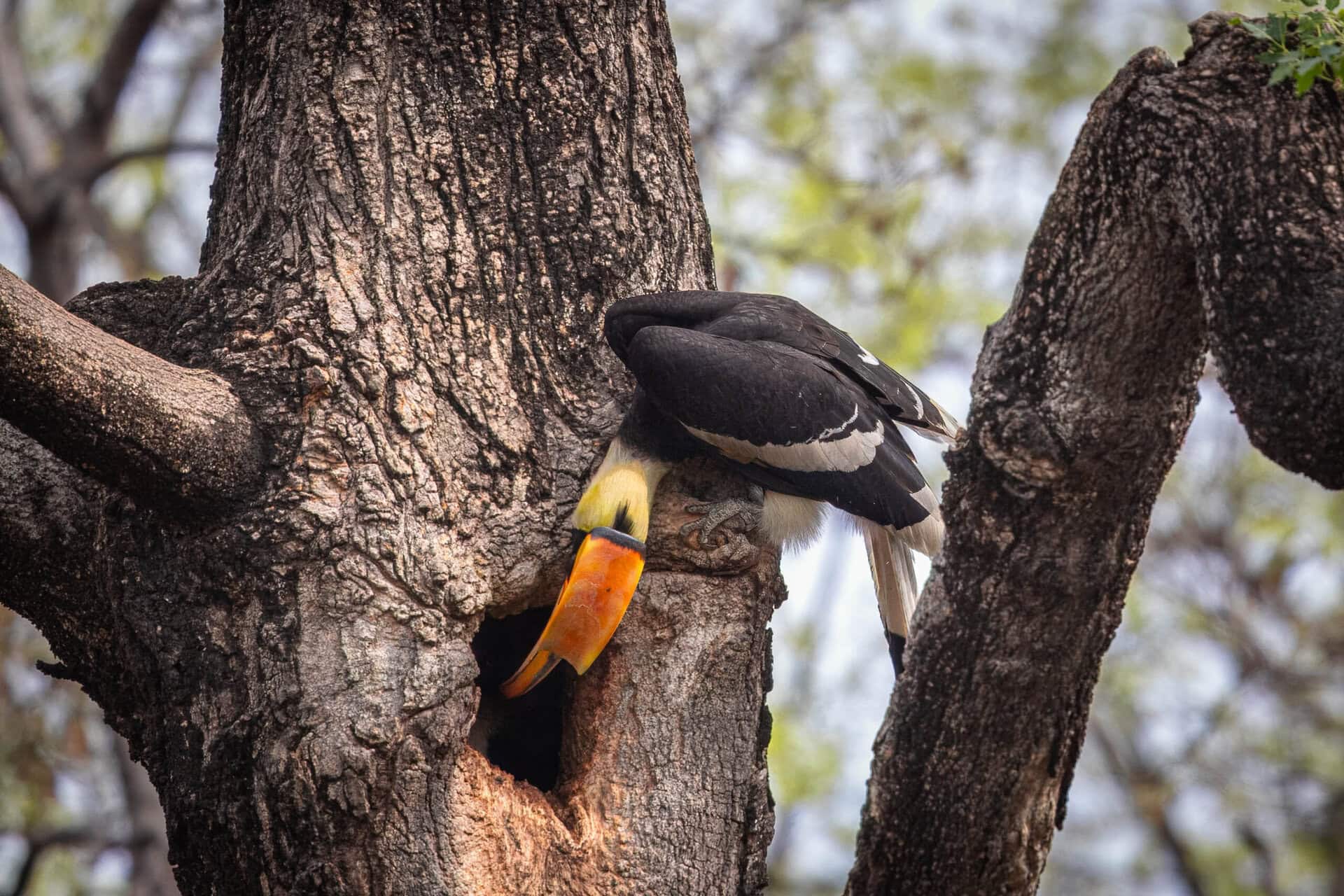
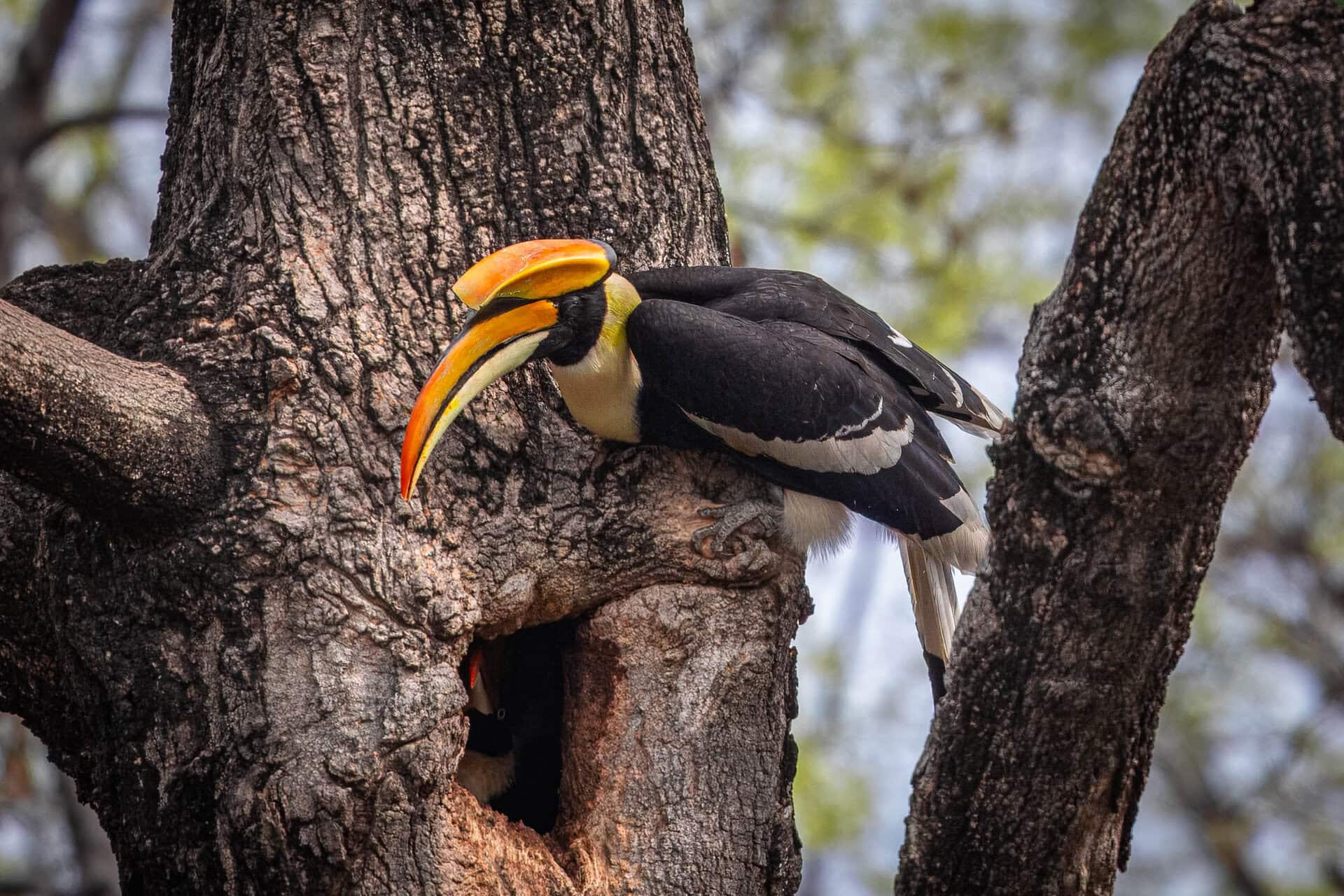
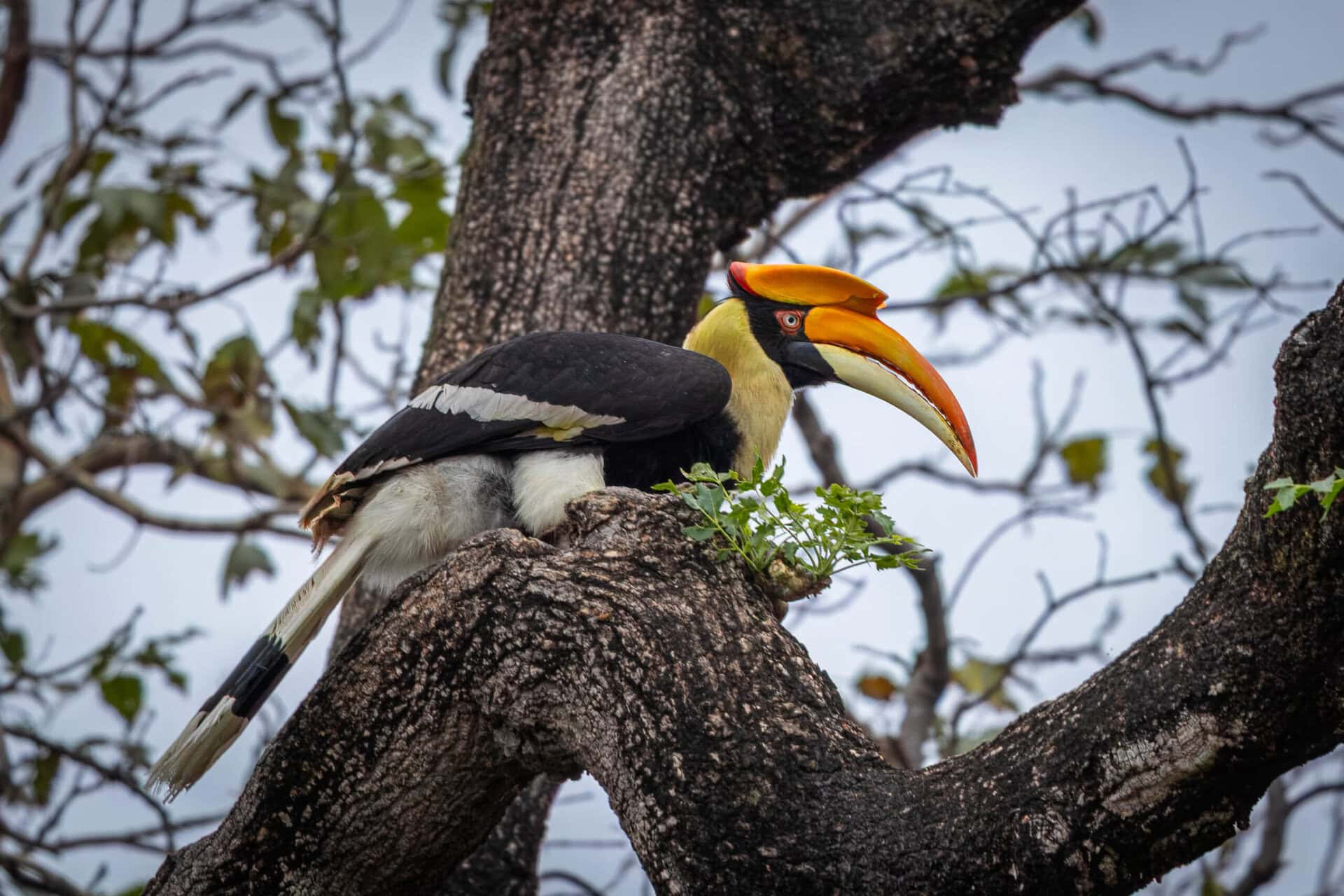
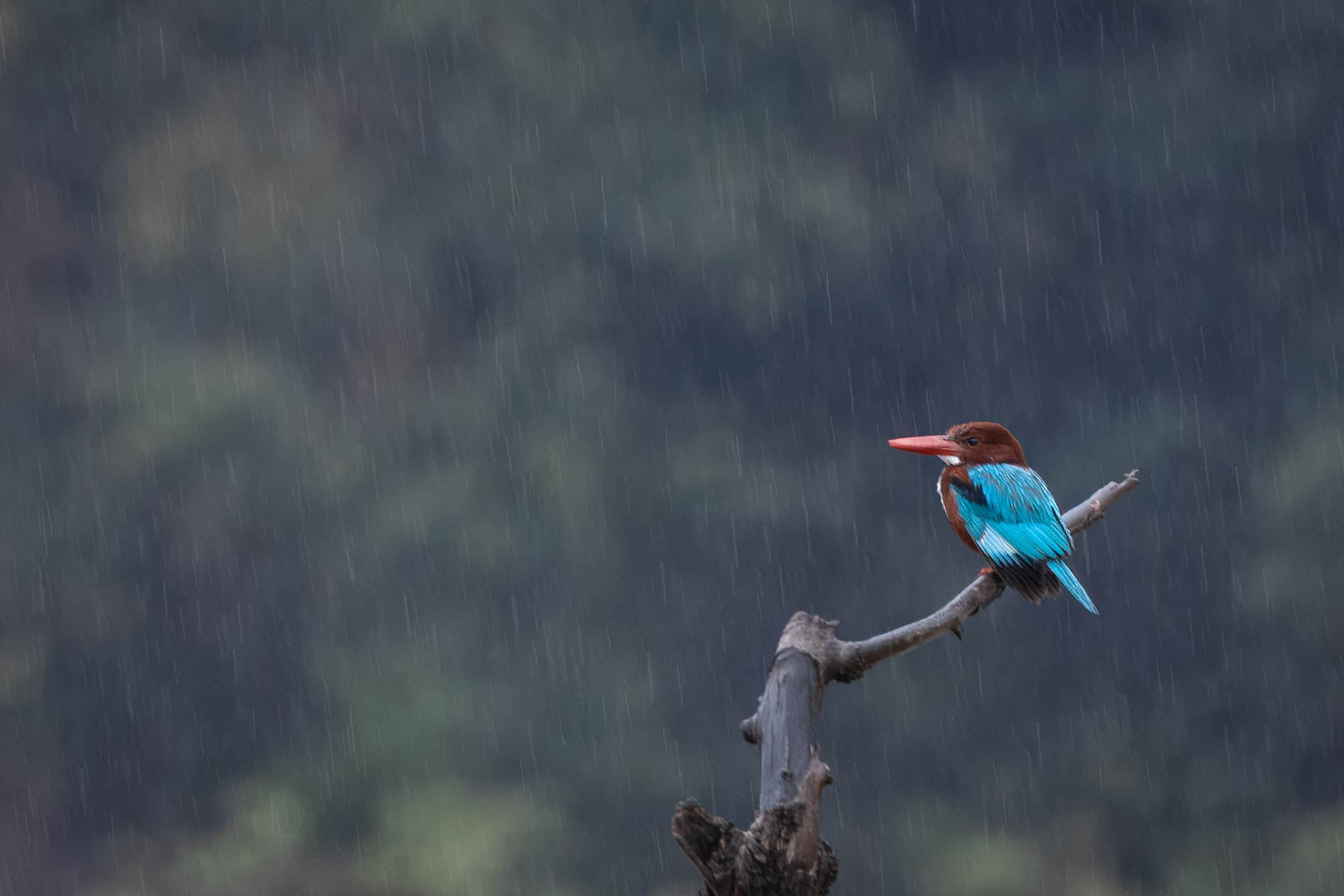
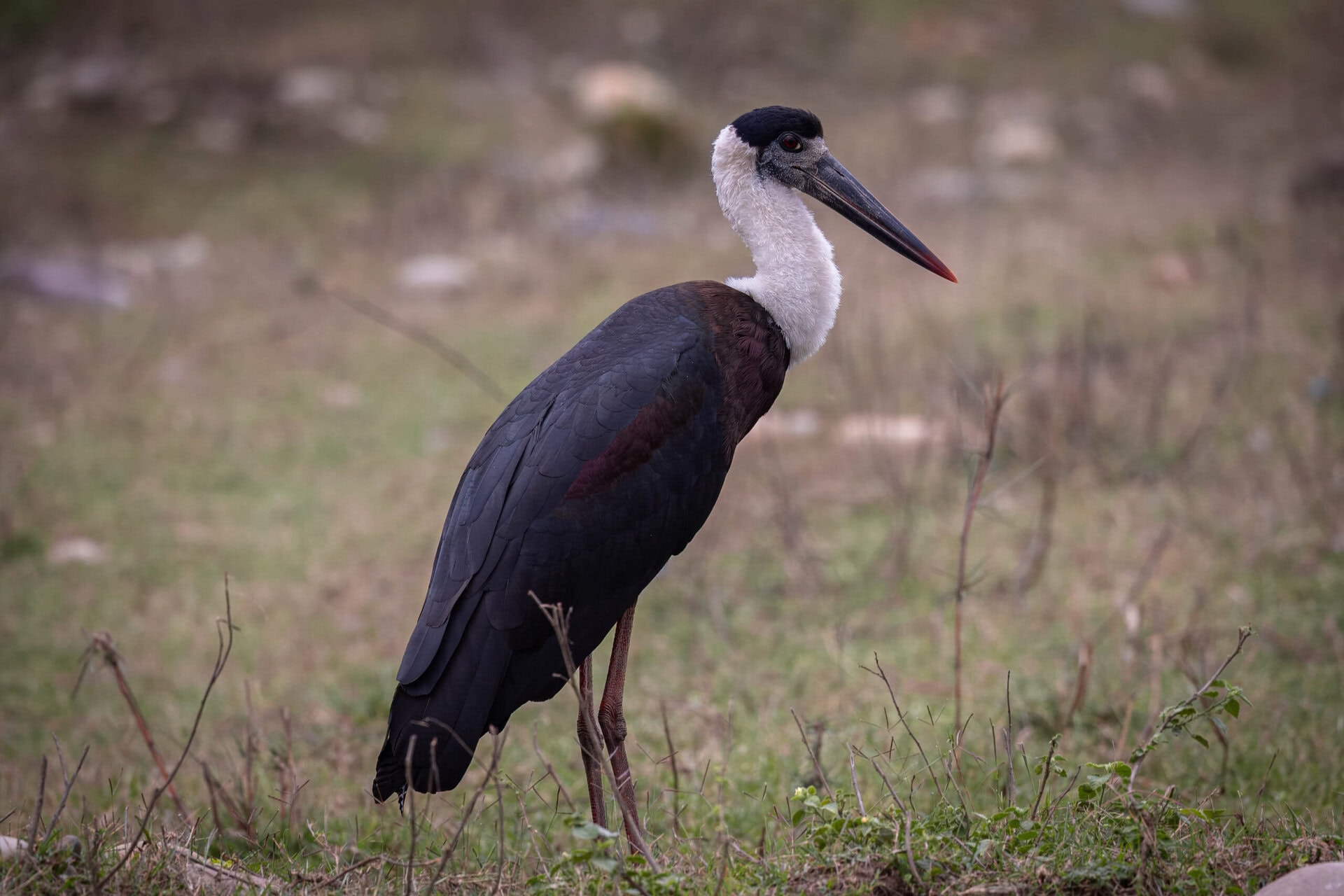
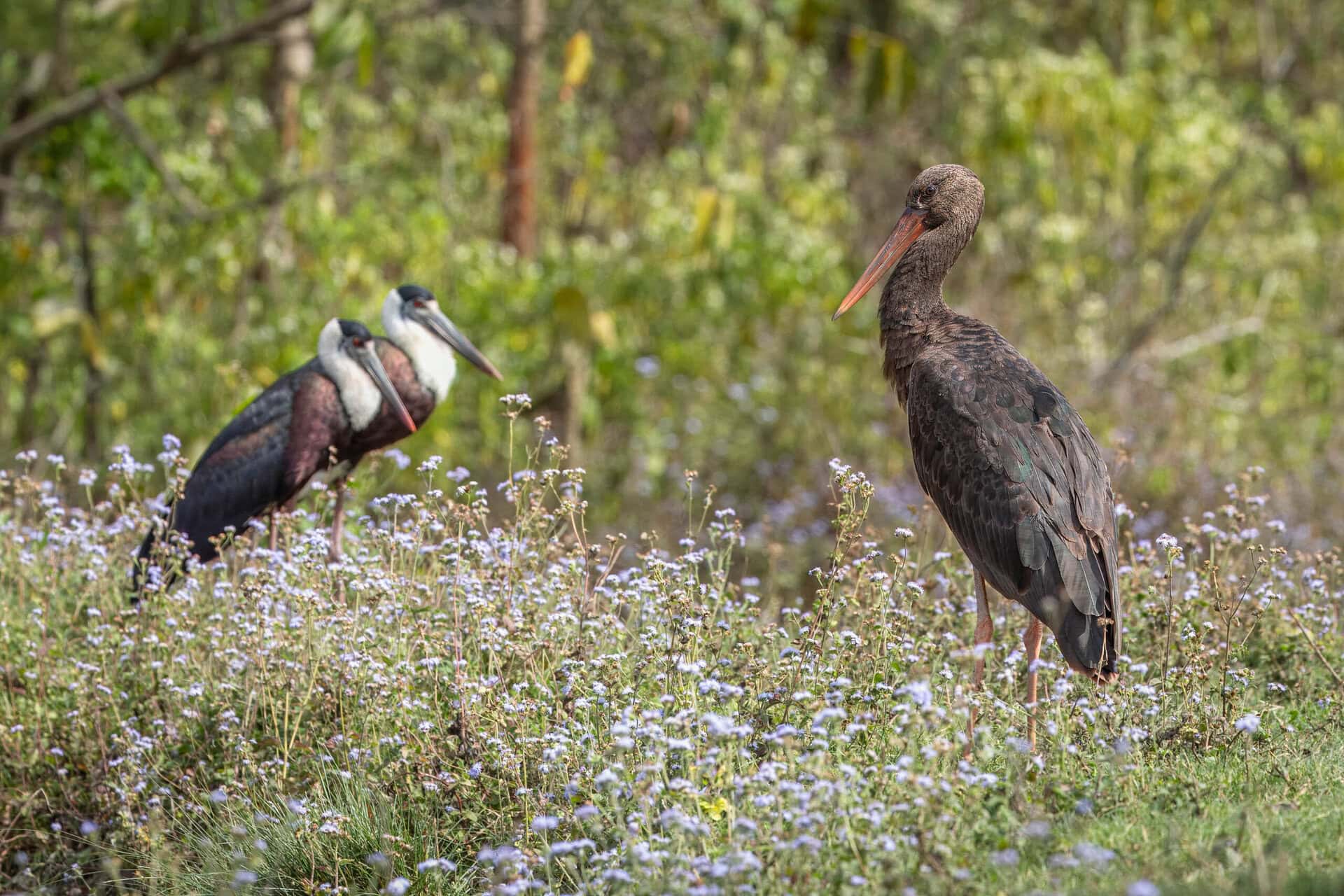
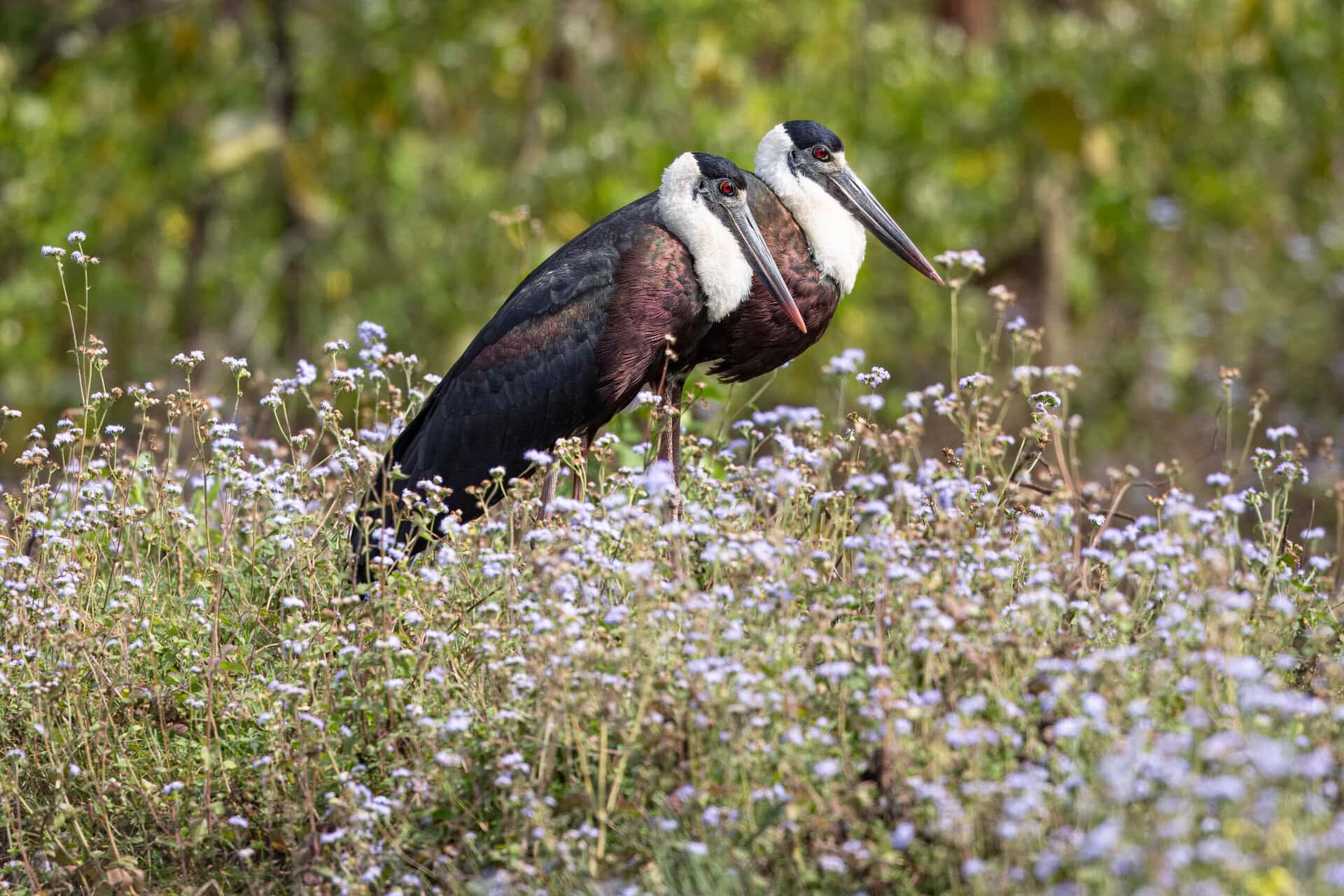
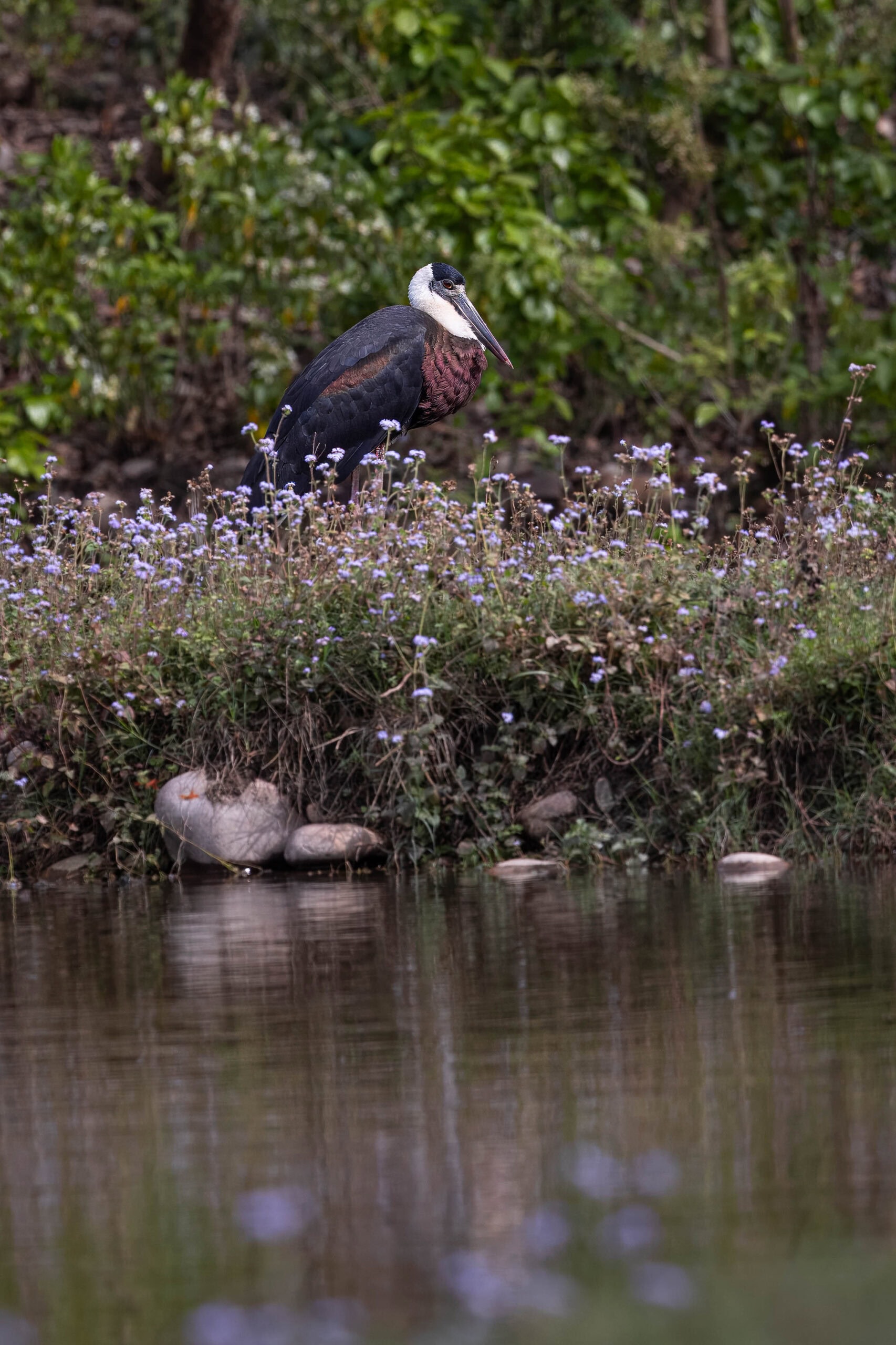
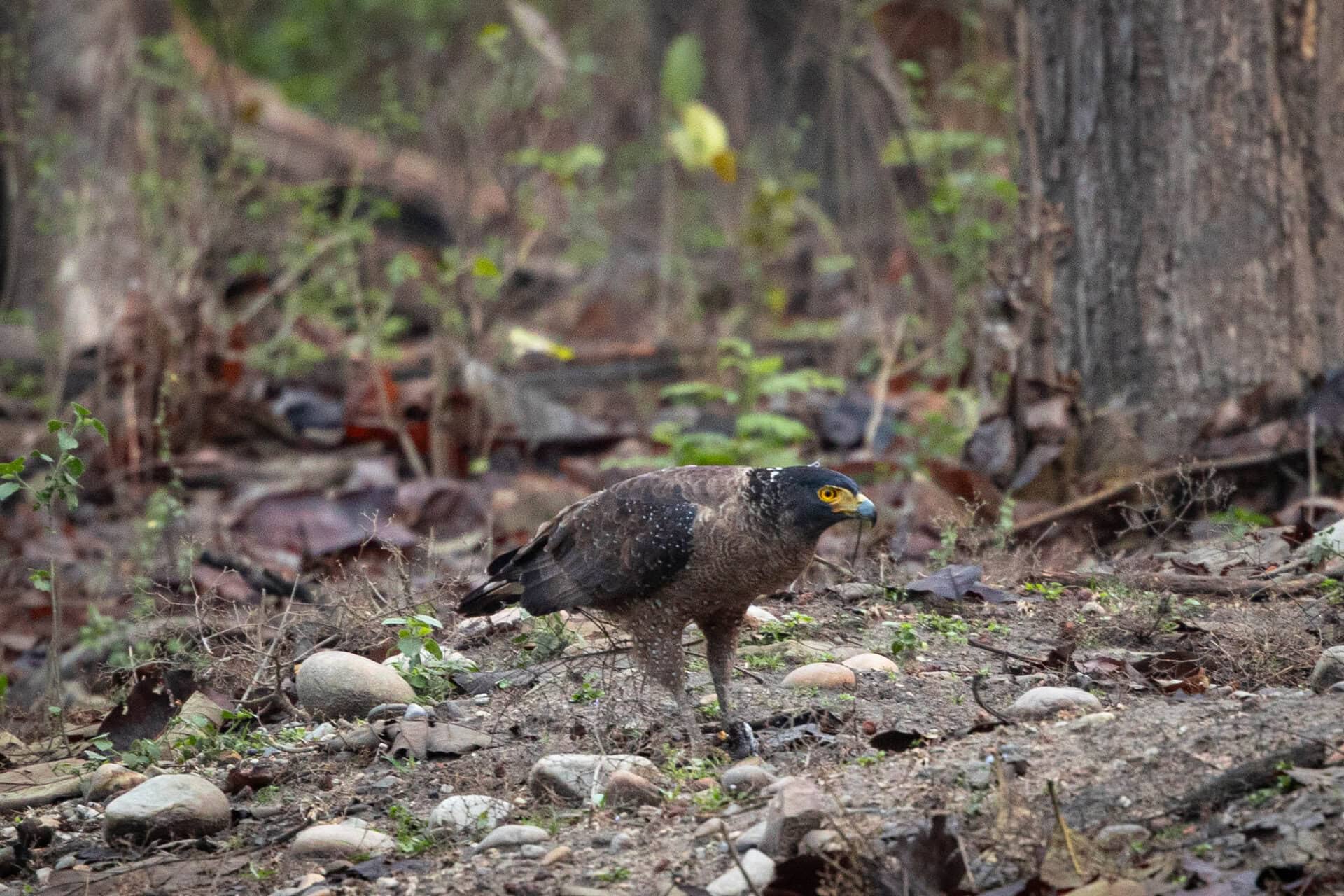
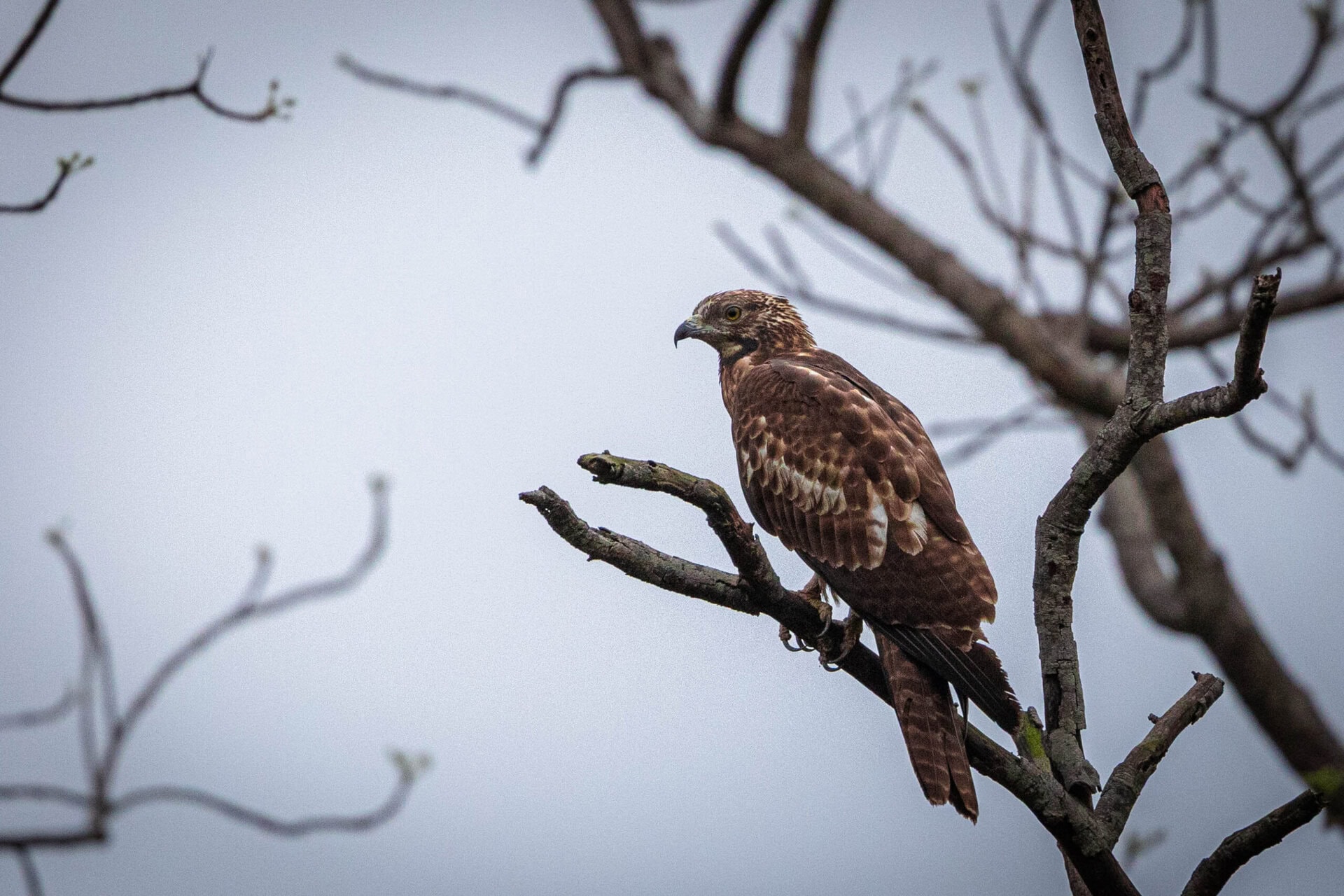
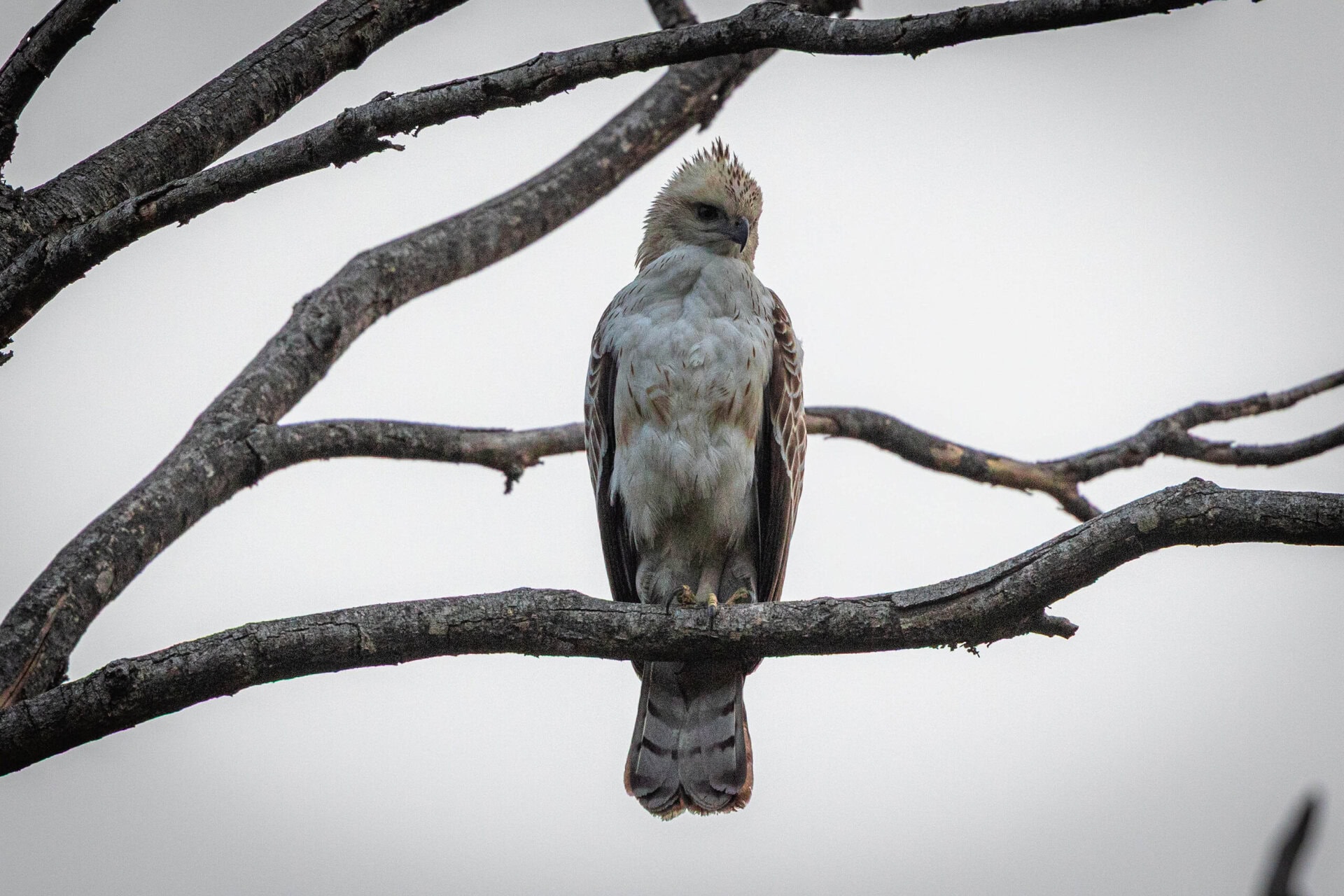
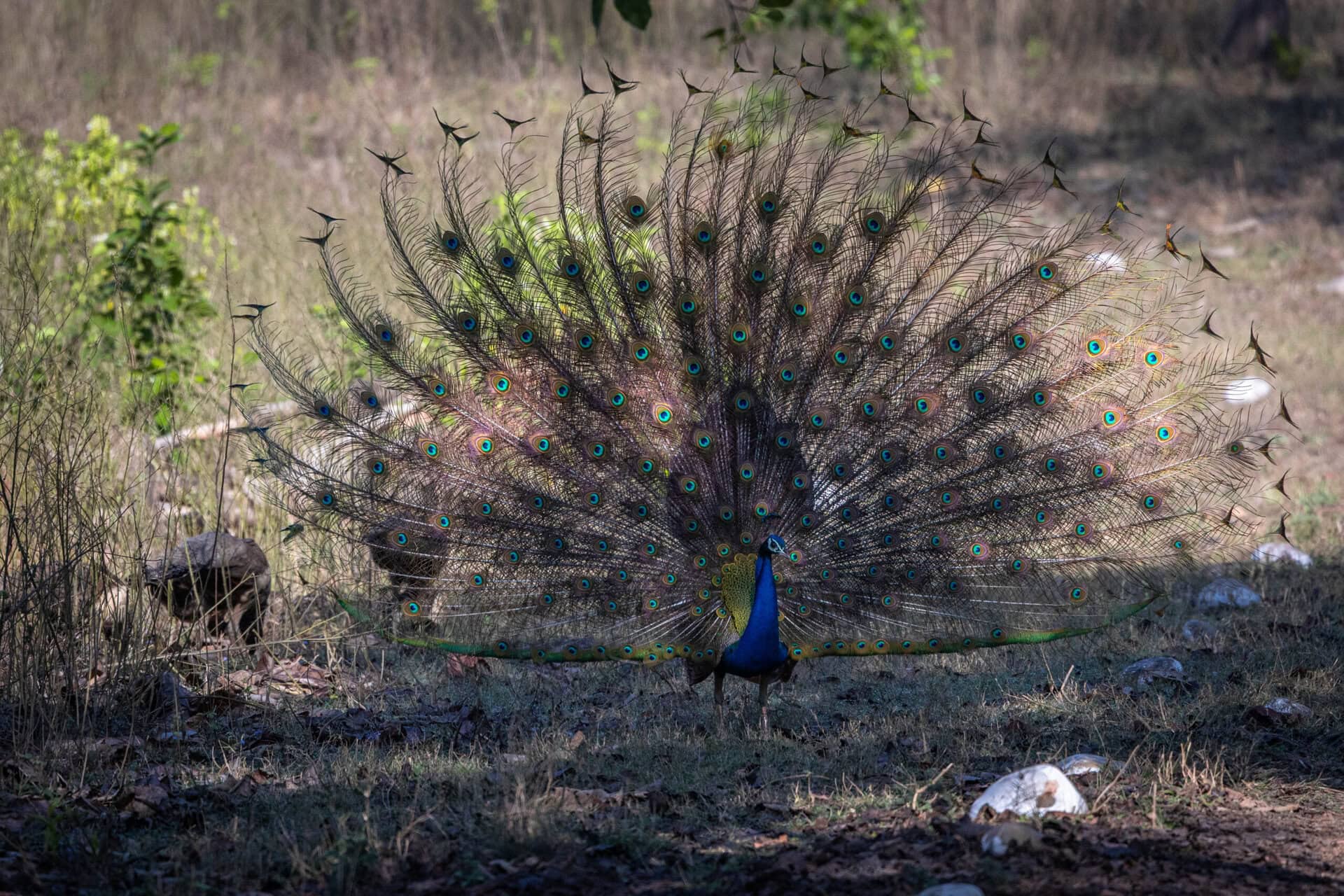
Rajaji Park also had a diverse range of wildlife—langurs, macaques, spotted deer, sambar deer, and we even spotted a rare palm civet. We also saw a variety of birds—peacocks, lapwings, bee-eaters, serpent eagles, and changeable hawk-eagles, to name a few.
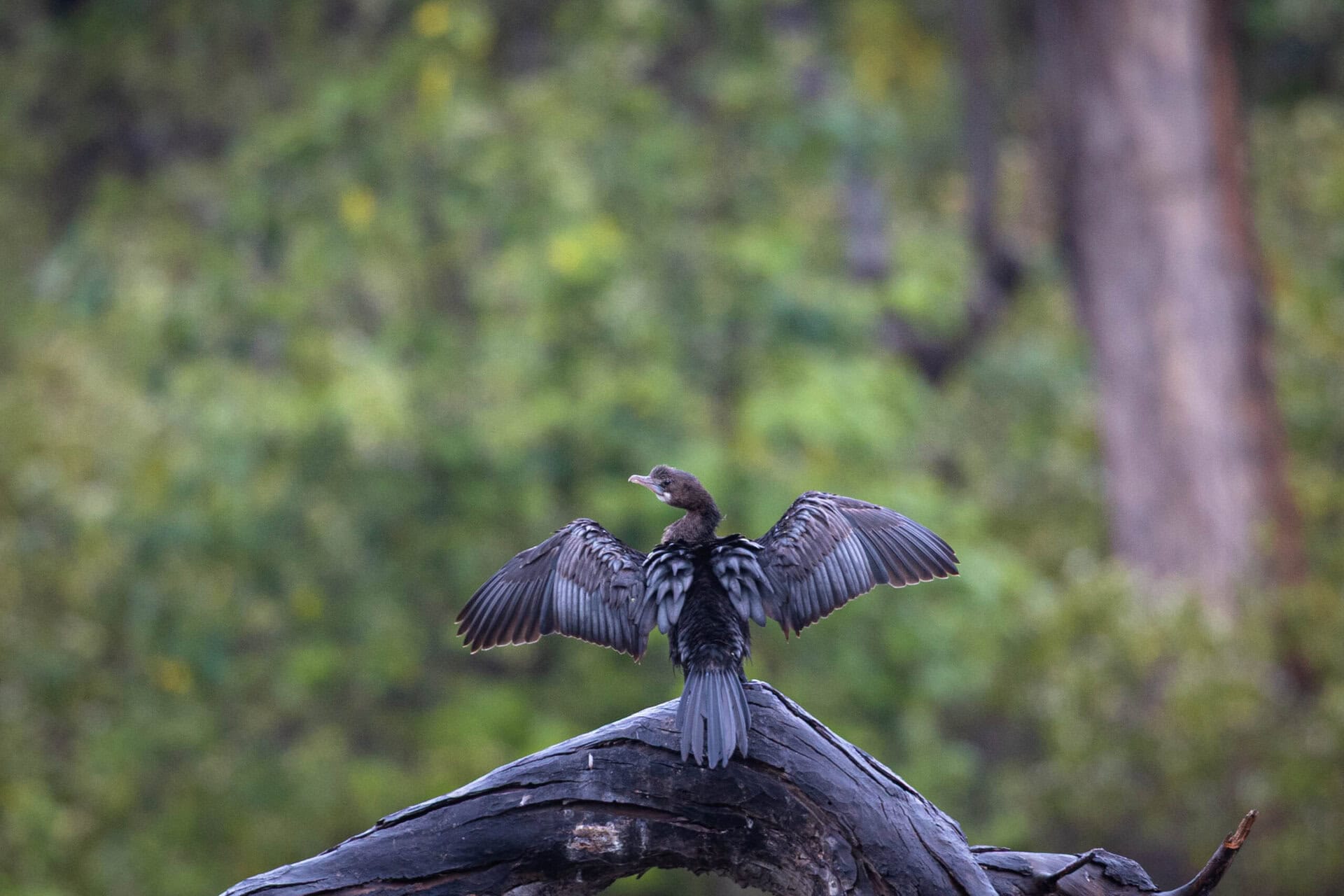
On days when leopard sightings were scarce, we spent time photographing these animals and birds. Below is a collection of images of the wildlife we captured during the trip.
Animals
Birds
Conclusion
After returning from the last safari on day four, we packed up and left. My friend Robi took an evening flight from Dehradun to Bangalore. As I did not have an evening flight to Coimbatore, I stayed the night in Dehradun, and took a morning flight the next day with a long connection in Mumbai, reaching home late at night.
Overall, this was a fantastic trip. I went in with very low expectations, given the elusive nature of leopards and the difficulty in spotting them, but came back with great memories and some wonderful images from the trip.