
LCHF and Keto 101 – A Beginners Guide to Low Carb Eating, Part – 1
Introduction:
In my previous blog article about my weight loss journey (link), I had mentioned about switching to an LCHF (Low Carb High Fat) diet at one point of time which helped bring down the weight from high 80’s to high 70’s, and then doing strict Keto diet with IF for 4 months, which helped in reducing my weight from 80 kilos to 68 kilos. In this two part series, I will discuss about the LCHF and Keto diets.
The wrong food guidelines:
For decades we have been brainwashed about how bad fat is for the heart. We have been taught again and again to eat more grains, eat meat in moderation and completely avoid fat.
Following pictures show a couple of food guidelines issued by USDA, where grains form major part of the diet with 6-11 servings a day while fat from oils is kept to minimum.
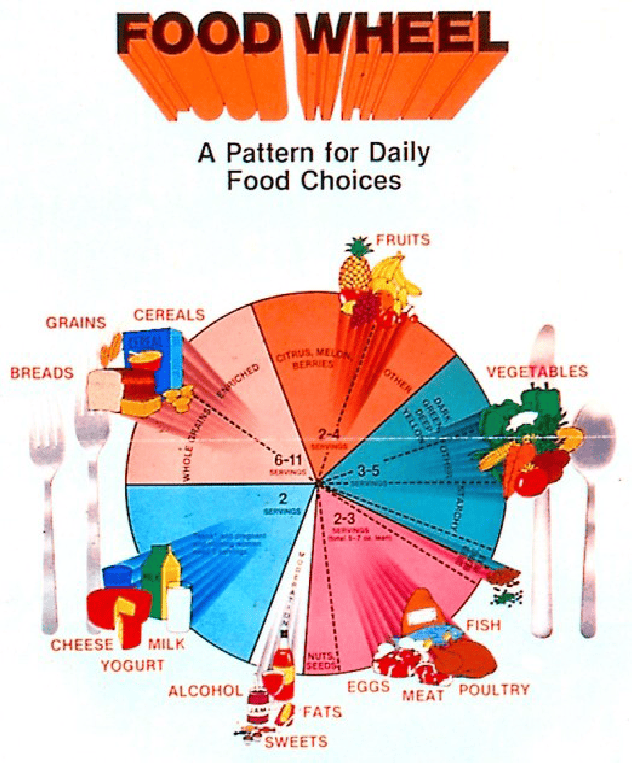
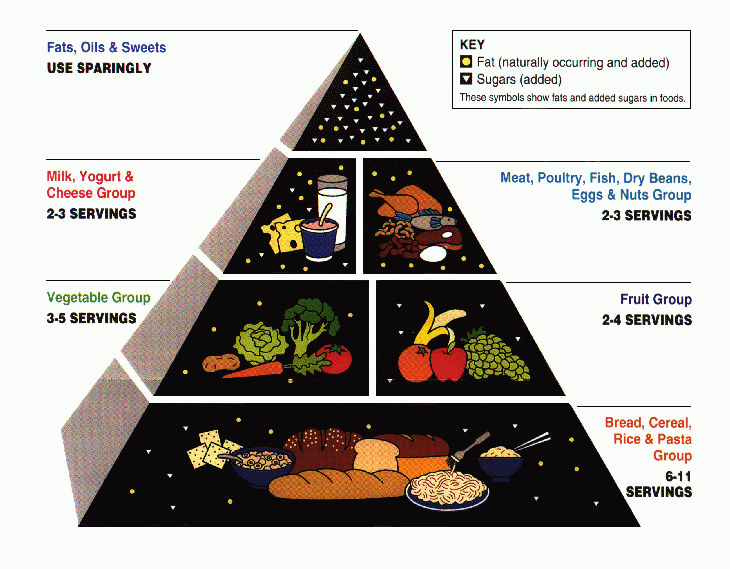
Image source: https://www.choosemyplate.gov/eathealthy/brief-history-usda-food-guides
I believe these food guidelines are the most important contributors to the increase in obesity, diabetes and heart disease in populations around the world. Our Indian diet almost resembles the above guidelines with rice and wheat as major part with moderate quantities of vegetables and low quantities of meat and eggs.
Why we get fat:
There are three macronutrients in food – carbohydrates (or carbs), protein, and fat. Protein is used by the body to repair and build muscles. Carbs and fat are energy sources. Most modern-day diets are based on carbs as the main macronutrient – rice, breads, pasta. And the comfort food we are used to in our modern life – cakes, pastries, ice creams, soft drinks etc., are full of sugar which again is carbs.
In the highly recommended low-fat diet, out of the 2000 calories a person consumes on average in a day, almost 1500 calories come from carbs.
Carbohydrates are converted into glucose in our body. When glucose level in the blood rises, the pancreas secretes a hormone called insulin. Insulin is the hormone that tells the cells to use this glucose for energy. Insulin is also a storage hormone which signals the fat cells to convert the sugar into fat and store it for later use. So, the body works in a spend-save mode where most of the glucose is spent and some of the glucose is saved. So far so good. As long as the cells burn most of the glucose for energy and save a little as fat, and when the body uses this fat when there is no food (in the nigh when we are sleeping) things are normal.
However, when the body is exposed to a constant supply of glucose in a high carb diet, cells start developing resistance to insulin (just like pests start developing resistance to pesticides). This triggers a couple of chain of events.
- As cells resist using glucose, more of this glucose gets stored in fat cells, and we start becoming fat.
- As cells resist using glucose and glucose levels do not go down, this triggers the pancreas to put more insulin in the blood. So, to maintain the same glucose level in the blood, more insulin is required. More insulin means more storage of fat. And with more insulin, the insulin resistance of cells become higher. This becomes a chain reaction which takes place over a couple of decades and at some point, the pancreas maxes out on its insulin generating capacity. This is when we develop type-2 diabetes and need external medication to keep blood sugar under control.
Understanding the role of insulin is very important in dealing with obesity and diabetes. This concept is explained very well in the book “Why we get fat” by Gary Taubes. I have mentioned in my previous blog how this book was a turning point in my life.
As high insulin level in blood is the root cause for obesity and diabetes, reducing carbs in the diet which in turn reduces insulin levels and/or increasing the time the body stays free of insulin will naturally reverse the above chain of events.
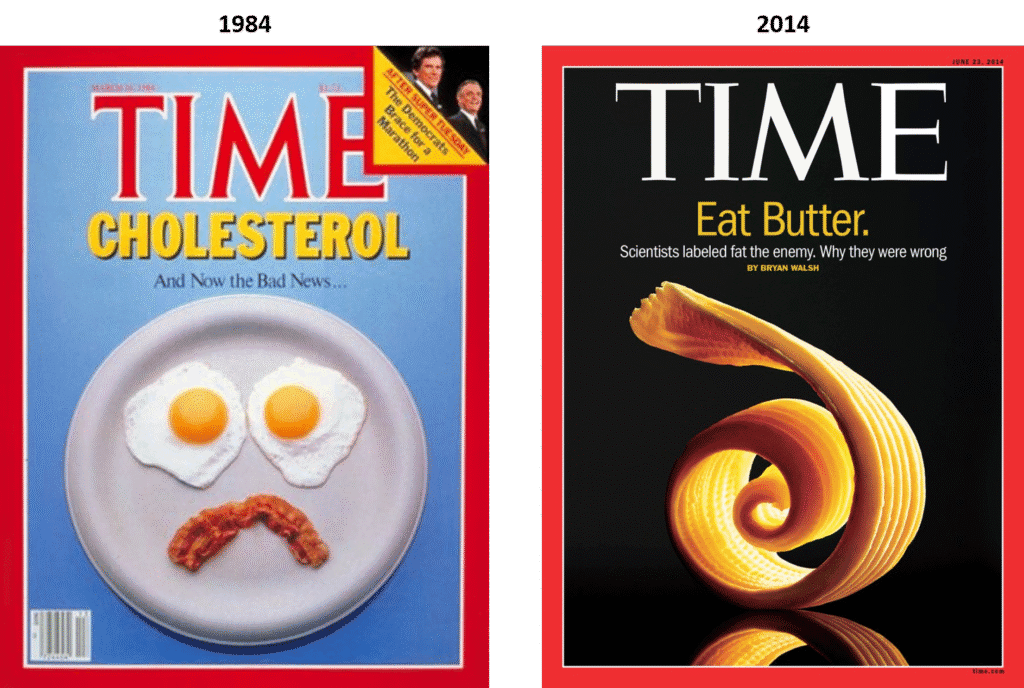
Of late, there have been lot of awareness about how dietary fat is good for health. An example is the comparison of the cover page of Times magazine in 1984 and 2014. In the 1980’s fat was considered as the biggest contributor to heart disease. Of late lots of research supports the fact that carbohydrates lead to all lifestyle diseases and fat is not the culprit.
Intermittent fasting helps in keeping the body free of insulin for longer duration of time which helps in reversing insulin resistance. I have covered this in my previous article on Intermittent Fasting 101 (link).
LCHF Diet Basics
LCHF stands for Low Carb High Fat. As the name implies, in this diet, carbs are restricted and replaced with dietary fat. LCHF is a general diet plan and specific diets like Atkinsons, Keto etc. fall under LCHF. In the regular low-fat food pyramid, carbs can be as high as 350 to 400 grams a day. Whereas in LCHF, it can be anything between 20g to 100g a day. Some even consider 125g or 150g as LCHF. Below is a comparison of the macronutrient constitution of a typical low-fat diet and an LCHF diet.

In a low-fat diet, carbs can range from 55% to 75%, and the rest split between protein and fat. In a low carb diet, carbs are limited to 100g, and the rest replaced with fat, and protein remains the same.
LCHF Diet guidelines:
Eat: Meat, eggs, fish, vegetables, fat(butter, ghee, coconut oil, olive oil etc.)
Avoid: Sugar in all forms(soft drinks, sweets, cakes, ice creams etc.), grains (rice, breads, pasta etc) and starchy vegetables (potatoes, yams etc.)
- Avoid sugar in all forms – processed, unprocessed, honey etc.
- Avoid or keep in strict moderation, all forms of grain – rice, wheat, legumes, beans etc. Legumes and beans are better than rice and wheat because they have higher protein and fiber and lower carbs compared to rice and wheat.
- Avoid anything that is labeled low fat, for example low fat milk, low fat yoghurt etc. Instead go for full fat milk and full fat yoghurt
- Keep protein in moderation, typically one serving per day of meat, poultry, fish etc. Use fatty cuts of meat instead of lean cuts. Have chicken with skin as skin has more fat.
- Eggs should be consumed in whole. Do not throw away the yolk.
- Have as much as vegetables as you want, except starchy vegetables like potatoes, sweet potatoes, yams and sweet vegetables like beetroot. Prepare the vegetables with good amount of butter, ghee, coconut oil or olive oil.
- Include liberal amount of dietary fat from butter, cheese, coconut oil, olive oil etc.
- Avoid sugary fruits or keep in moderation
Conclusion:
In this Part – 1 of LCHF and Keto 101, we have looked at wrong food guidelines which have been the root cause of obesity, diabetes and heart diseases, the anatomy of why we get fat, and general guidelines of an LCHF diet.
In Part – 2, let us have a detailed look at the Keto diet.
Discover more from graaja.blog
Subscribe to get the latest posts sent to your email.

2 Comments