An Appointment with the Jungle King – A Photography Tour to Gir National Park
One of my long-term wishes is to photograph the big cats – lions, tigers, and leopards. So when I saw the information about a photography tour to Gir National Park, I grabbed it with both hands.
This tour was being organized by Mr. Vipul of Wild Ark. I had participated in his herping and macro photography workshop in Agumbe last year. I have written a detailed report on this workshop in the below thread.
A Herping and Macrophotography Trip to Agumbe
In the first few sections, I will cover the details of the trip, information on the Gir National Park, the safaris, our routine etc. I will then cover each safari in detail with lots of pictures.
Here is a YouTube video with a compilation of video clips from this trip.
The Program
The tour was organized from 6th to 9th June 2024 for a small group of 6 participants. We were asked to arrive in Gir in the afternoon of the 6th June. Of the six participants, I was from Coimbatore, 2 others, Mr. Kumar and Mr. Saravanan were from Bangalore, and 3 others, Mr. Yusuf with his mom (he had brought his son with him), and Mrs. Aparna were from Mumbai.
We had 6 safaris planned – the first on the evening of the 6th, 2 safaris each on the 7th and 8th, and the last on the morning of the 9th. After the morning safari on the 9th, we said our byes.
Reaching Gir and the Briefing
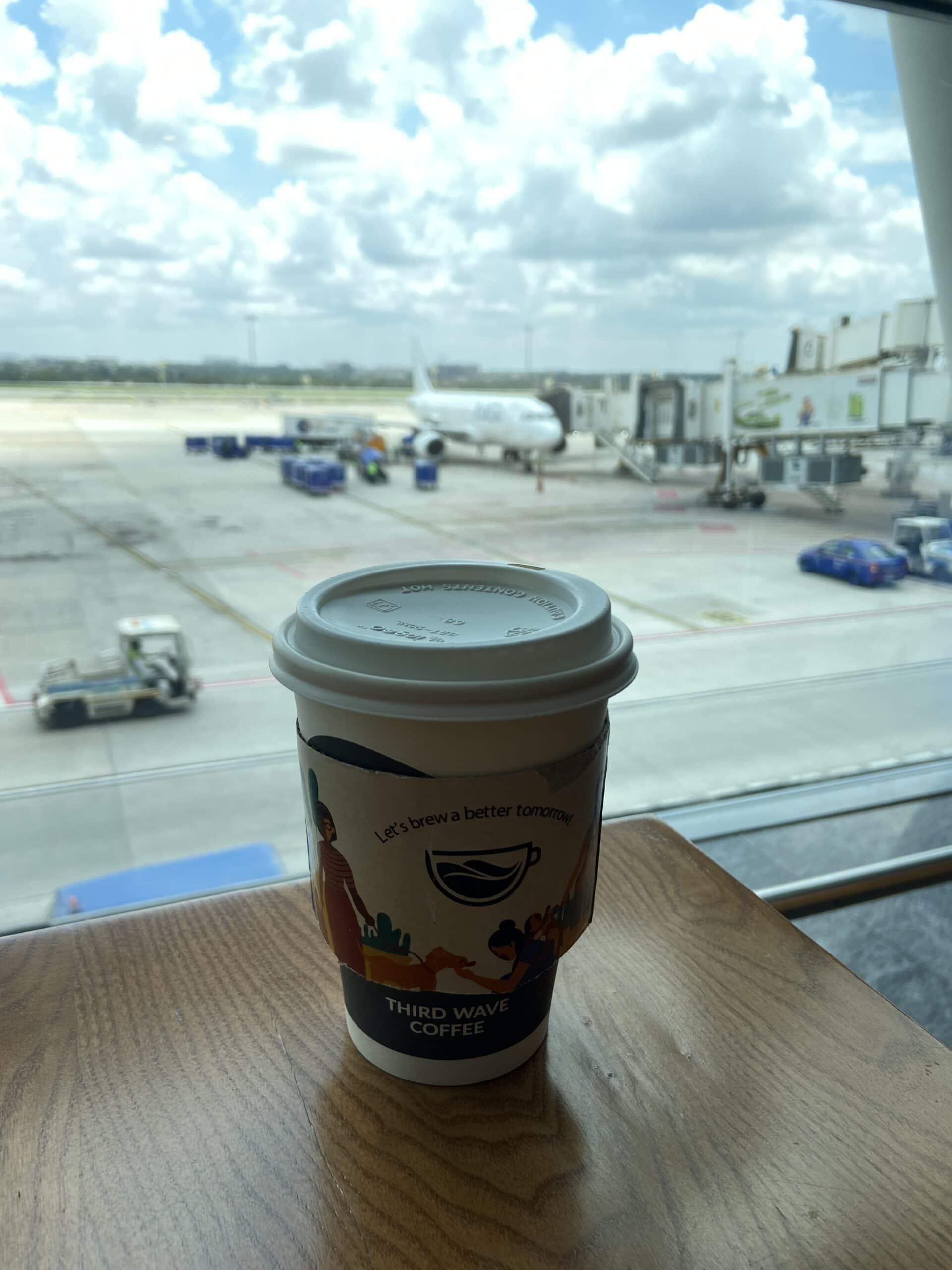
I took a flight from Coimbatore to Rajkot (via Bangalore) on 5th June and stayed for a night in Rajkot. A cup of coffee as the flight to Rajkot gets ready to board in Bangalore.
Landing in Rajkot.
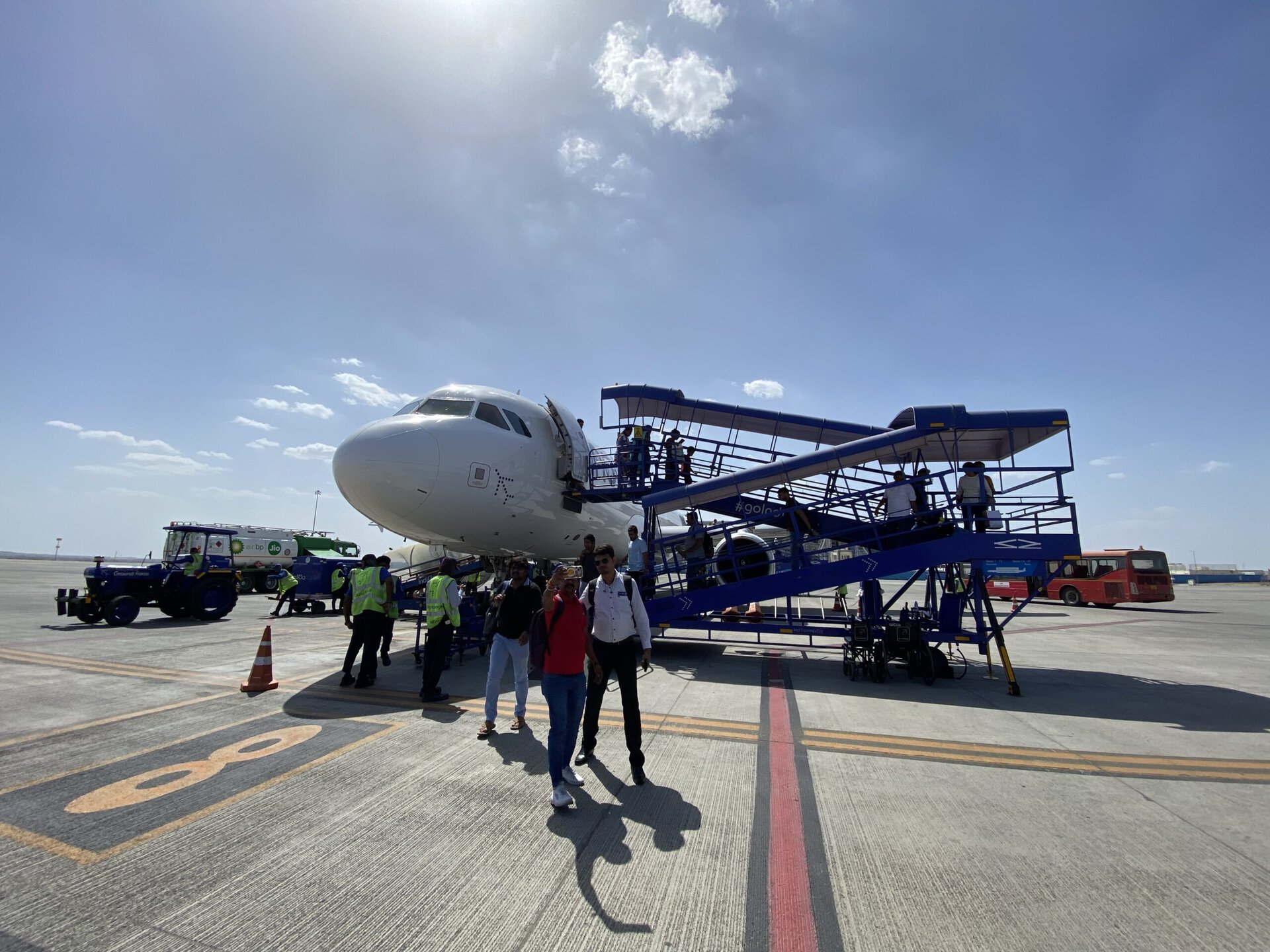
Welcome to the land of the lions. Rajkot airport.
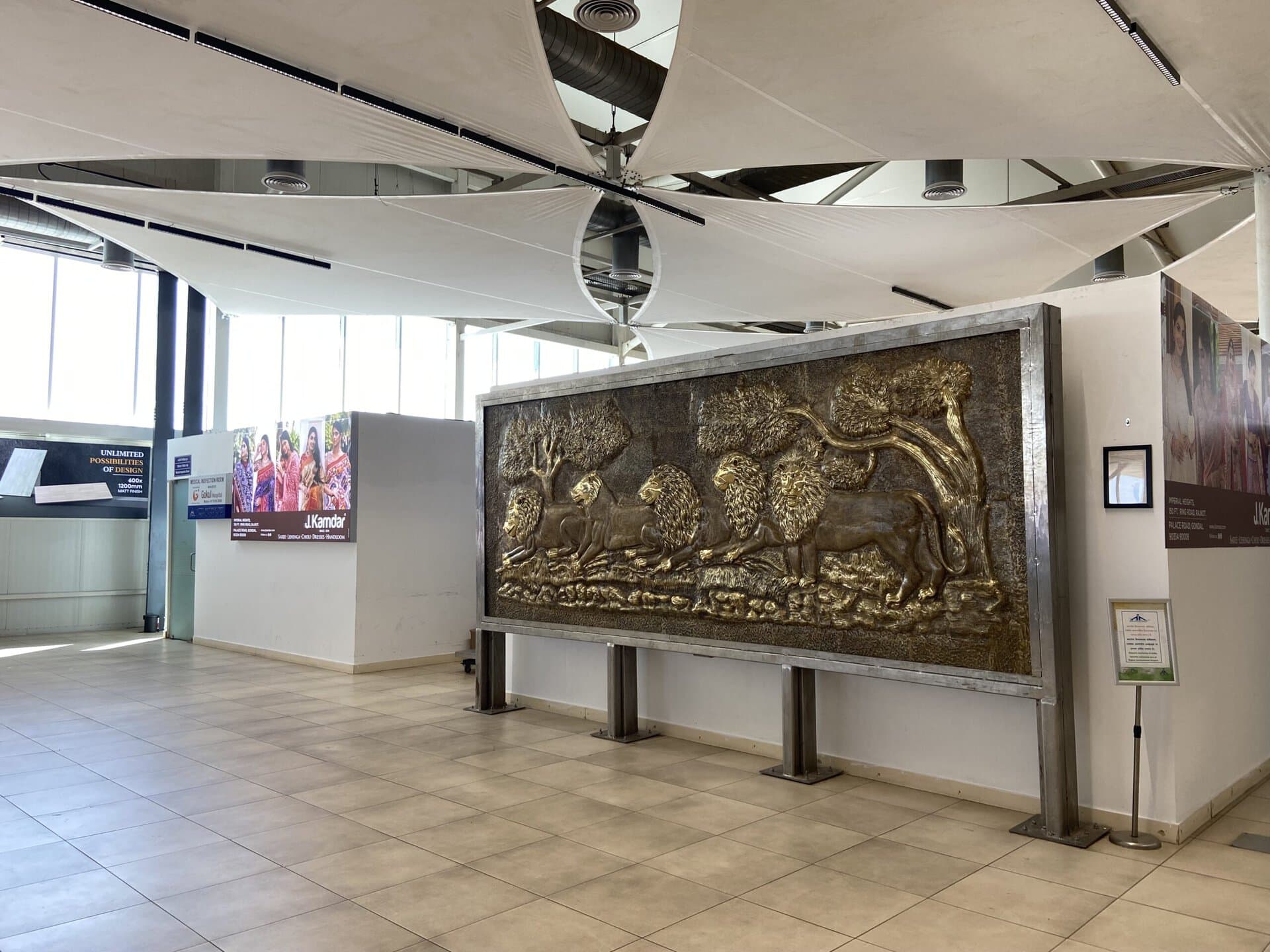
Mr. Kumar and Mr. Saravanan from Bangalore were also on the same flight from Bangalore to Rajkot and we met at the airport. On the 6th morning, we took a cab from Rajkot to Gir and reached Gir in the afternoon. The participants from Mumbai had arrived just before us.
Over lunch, Mr. Vipul briefed us about the program. He explained in detail the history of Gir National Park, how the Asiatic lions from almost going extinct in the beginning of 20th century have thrived in the park, how the safaris are organized, the timings of the safaris, do’s and don’ts during the safaris, tips on photography etc. I will cover all the information I learnt from this session in the next post.
The Place of Stay
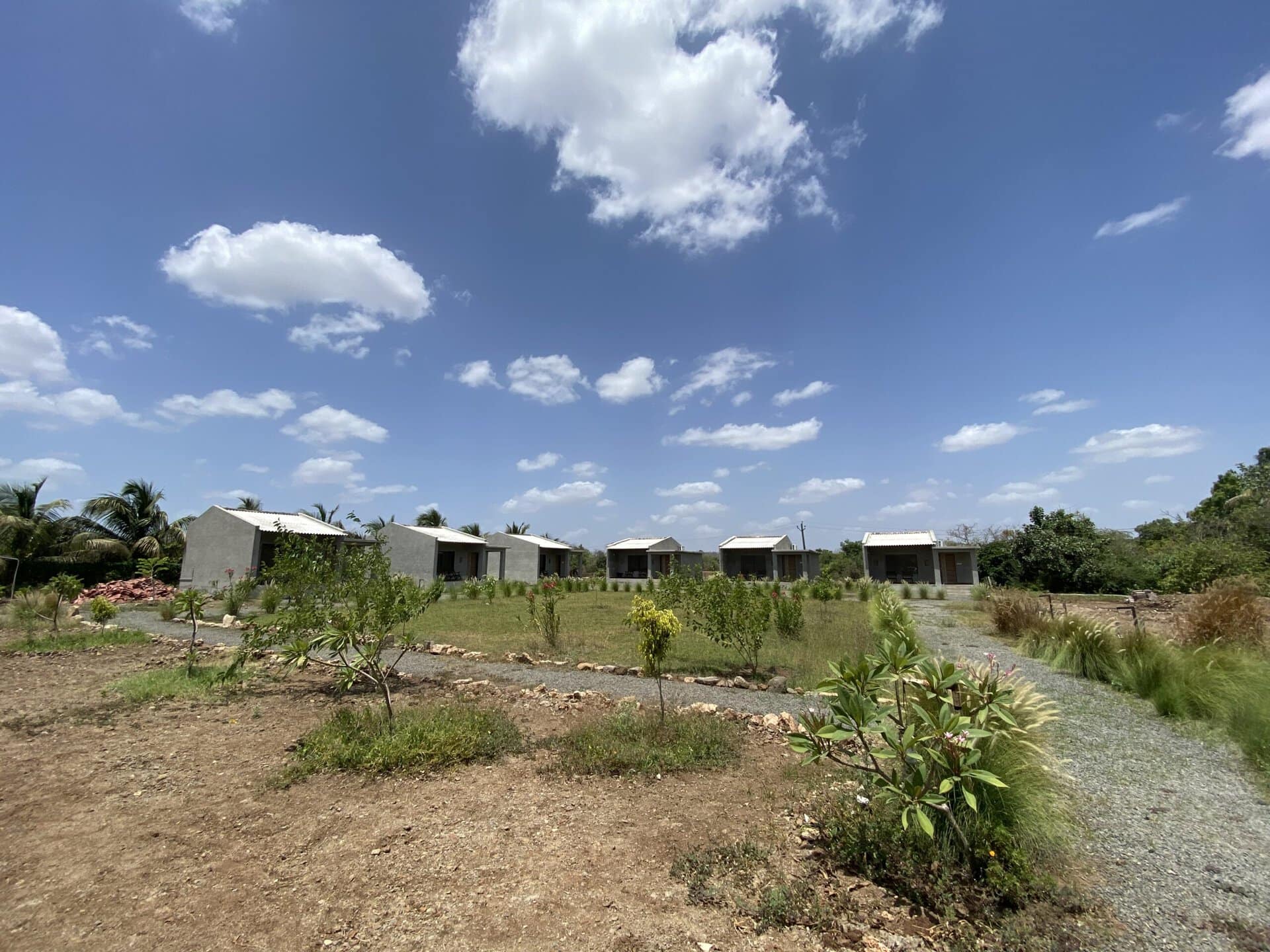
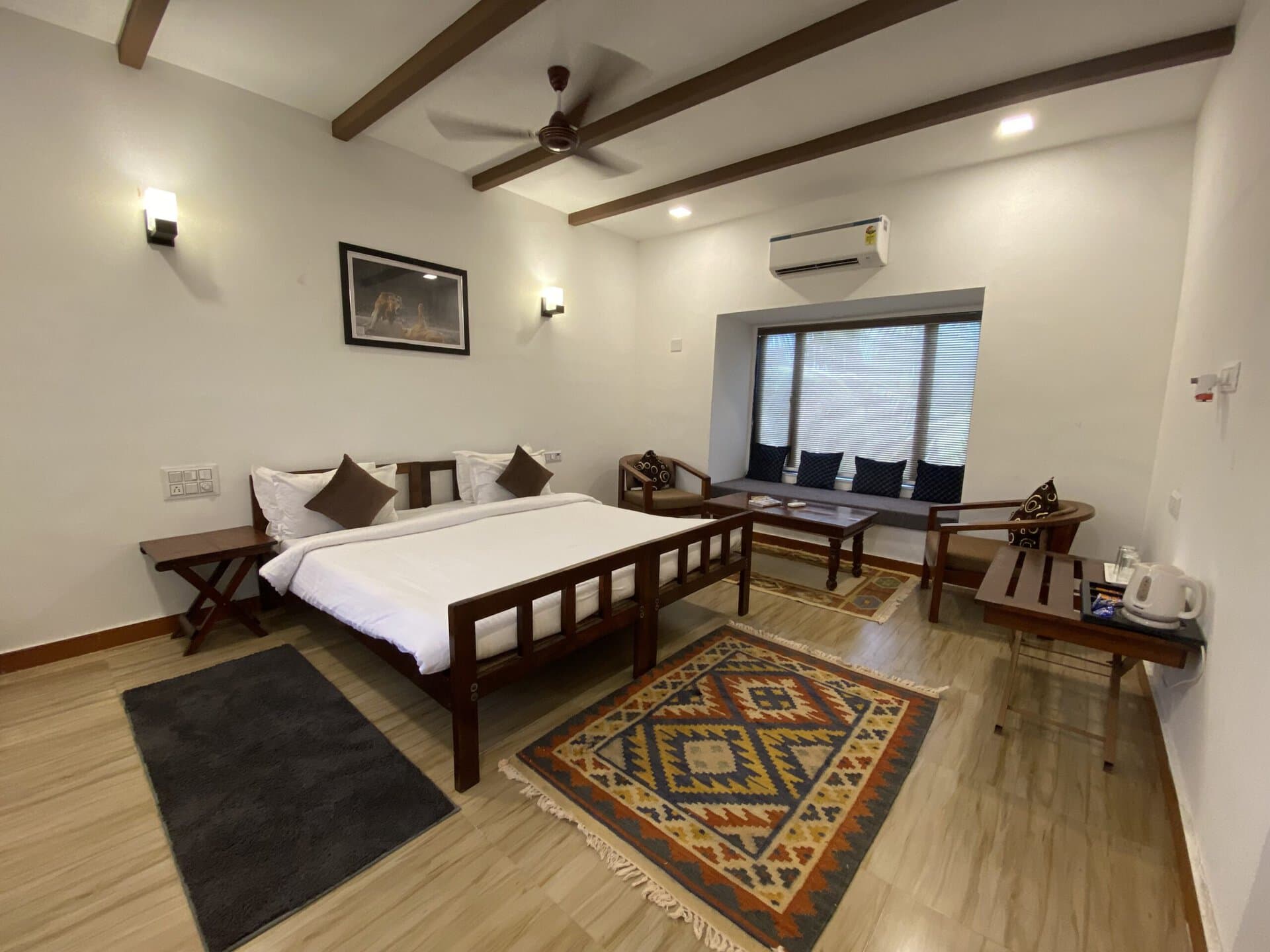
We stayed in a small homestay a few kilometers from the Gir park entrance. There were 6 cottages with simple, neatly maintained rooms. The food was simple local food which was super tasty. Had tasty dishes like bajra roti with baingan bartha, dhoklas, sev in tomato gravy, local chicken gravy, freshly made shrikhand etc.
A few pictures of the property.
The 6 cottages.
The simple, neat room.
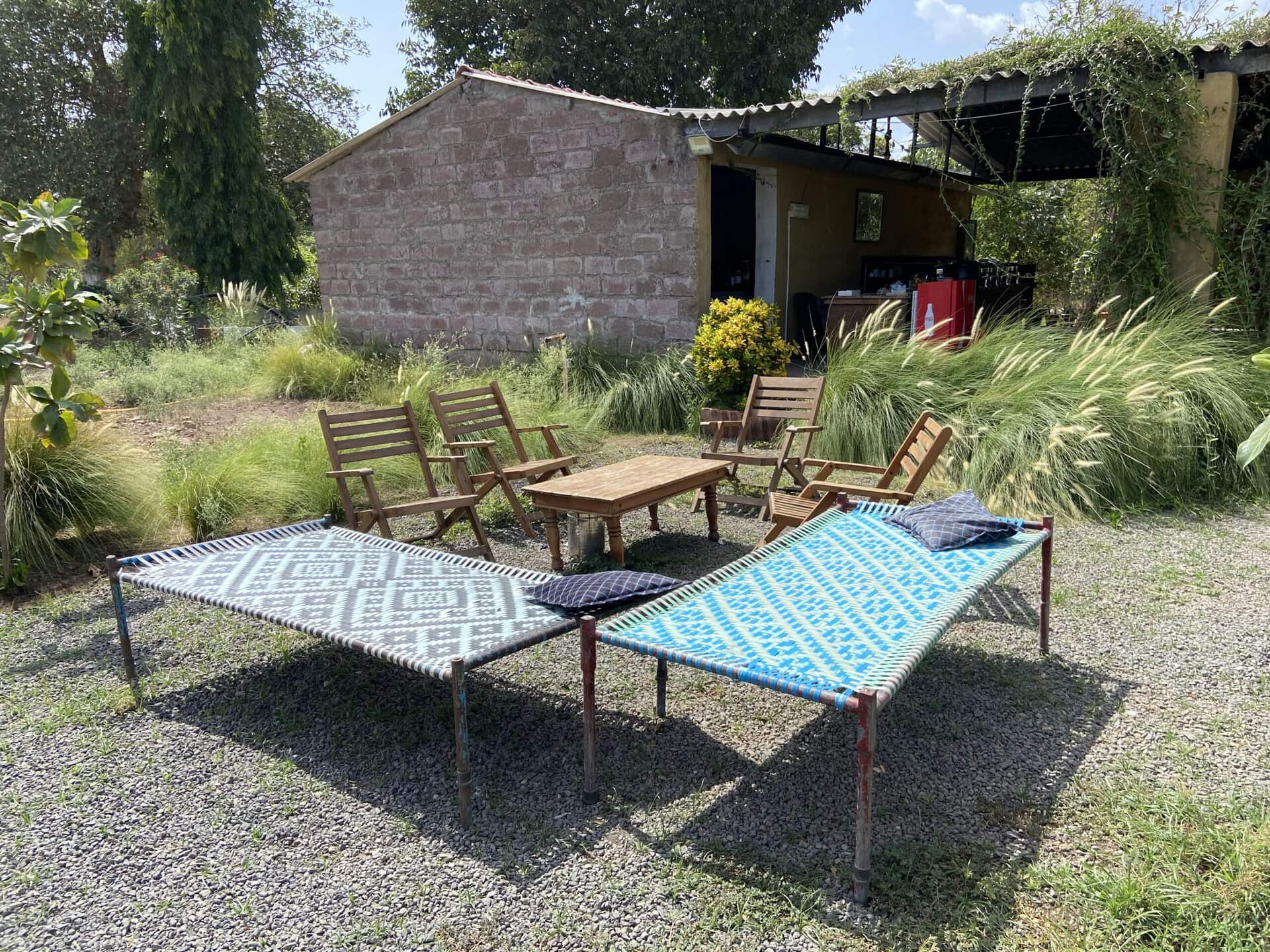
A nice place to relax with tea after our evening safaris.
The Food
Though I follow the lifestyle of low carb and fasting, food is an integral part of my travels. I love to taste the local cuisines of the places I visit. From drinking masala tea from the saucer, tasting local dishes like Gujarati kadi, sev in tomato gravy, bajra roti with baingan bartha, locally made srikhand, fafda and jalebis from the roadside eateries to attacking the dessert spread in the Rajkot hotel, I had lots of food during this trip.
Dhoklas, patra and fafda at the Rajkot hotel.
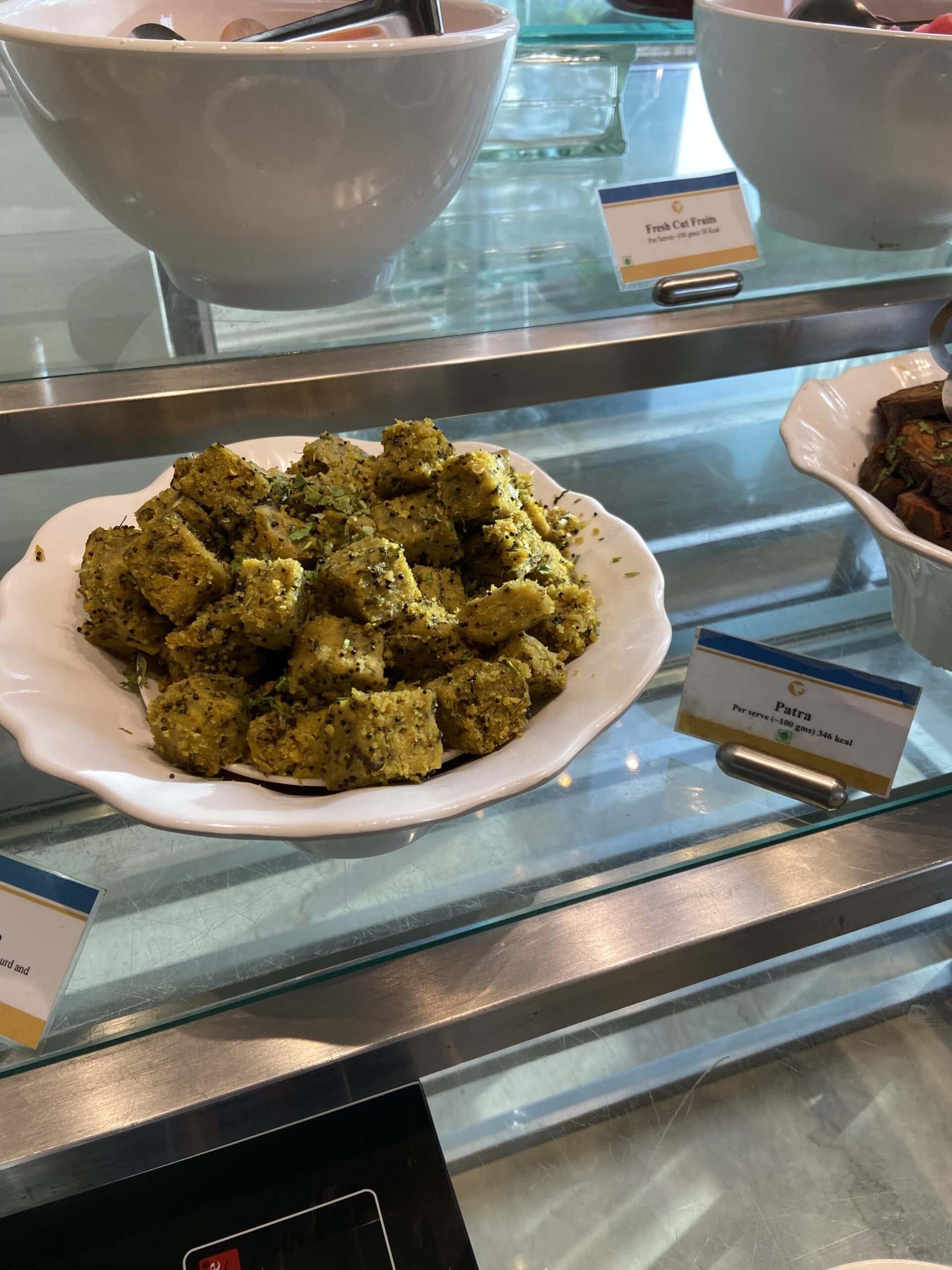
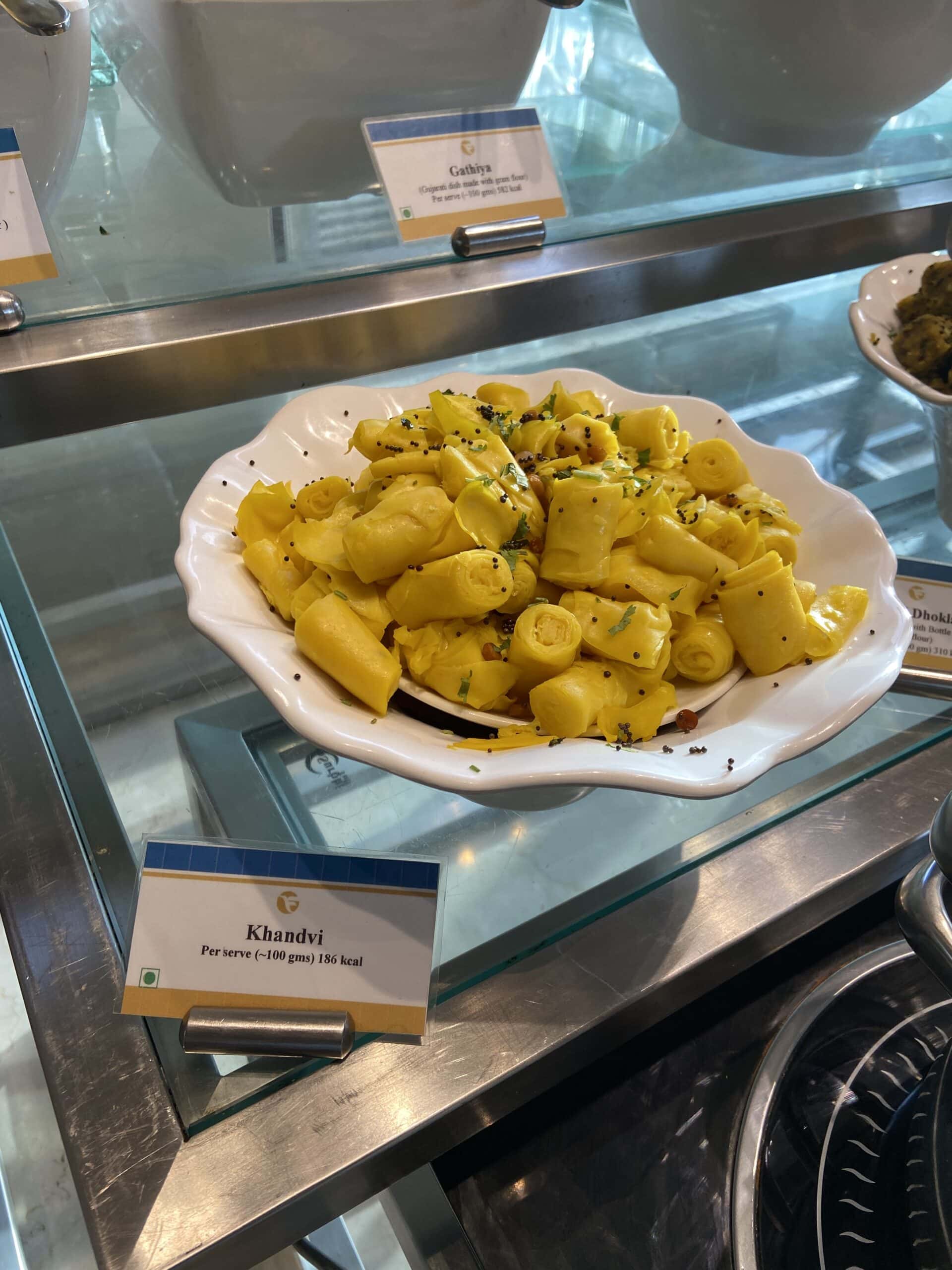
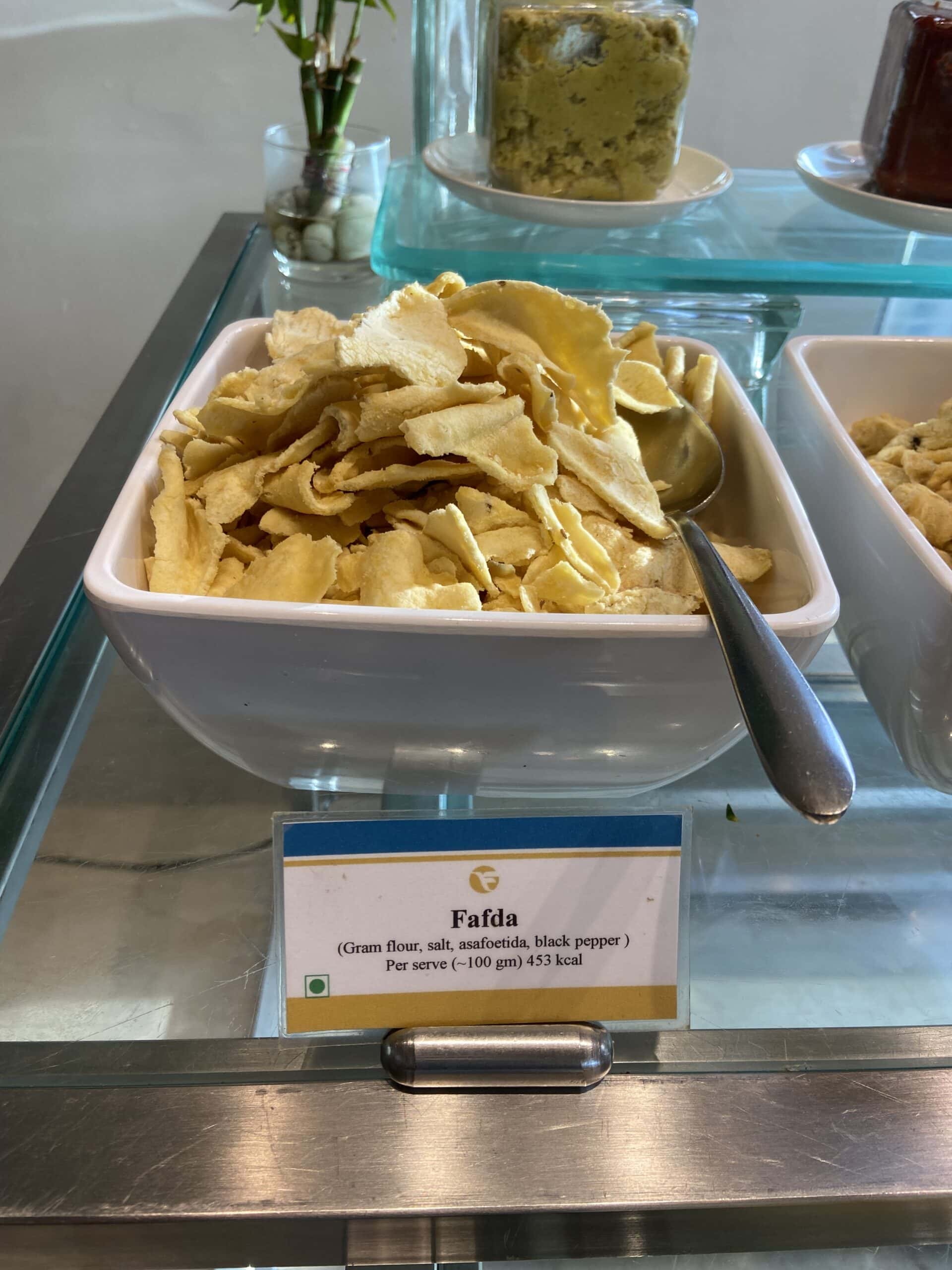
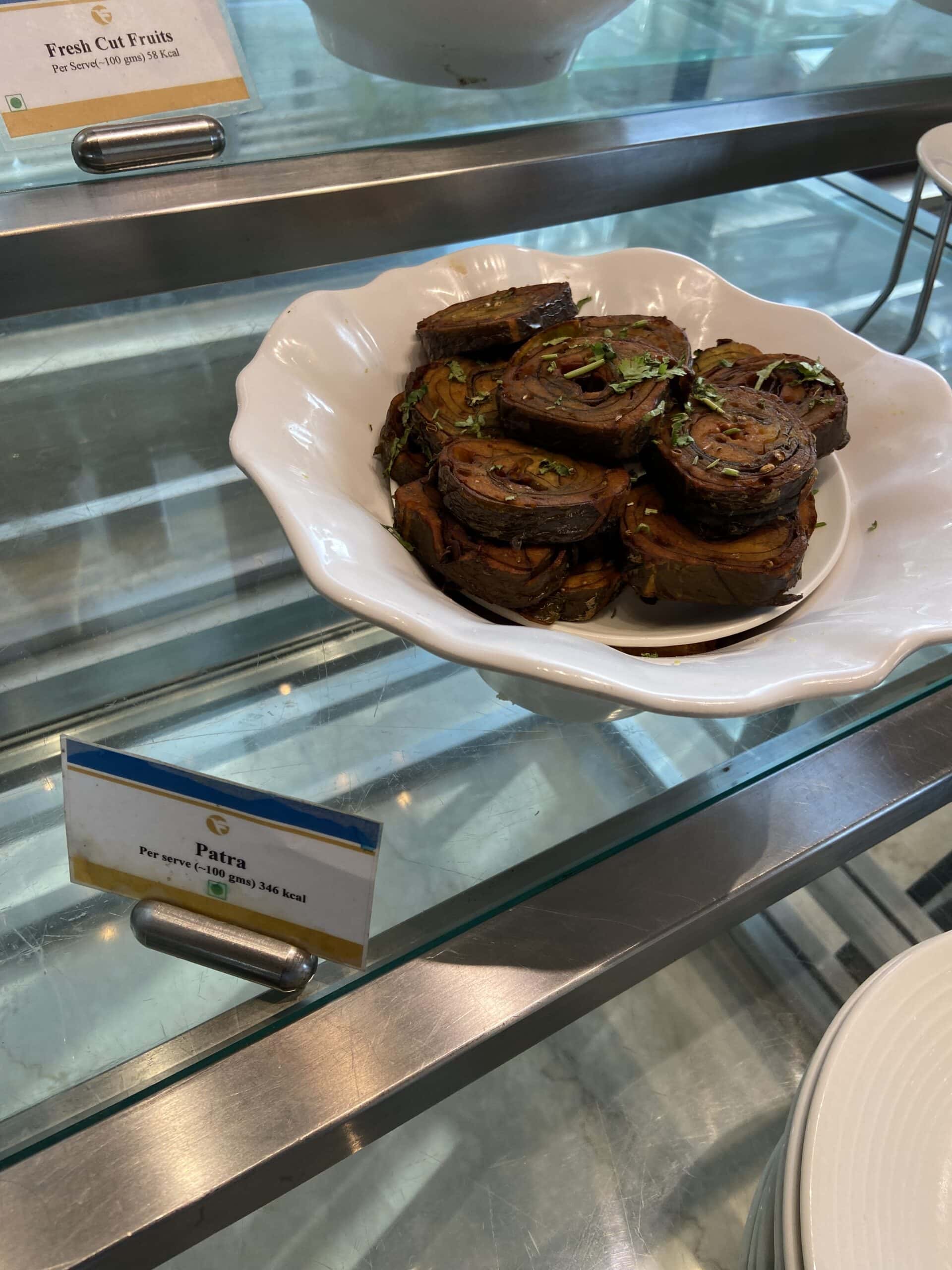
Simple and tasty local dishes made at the homestay.
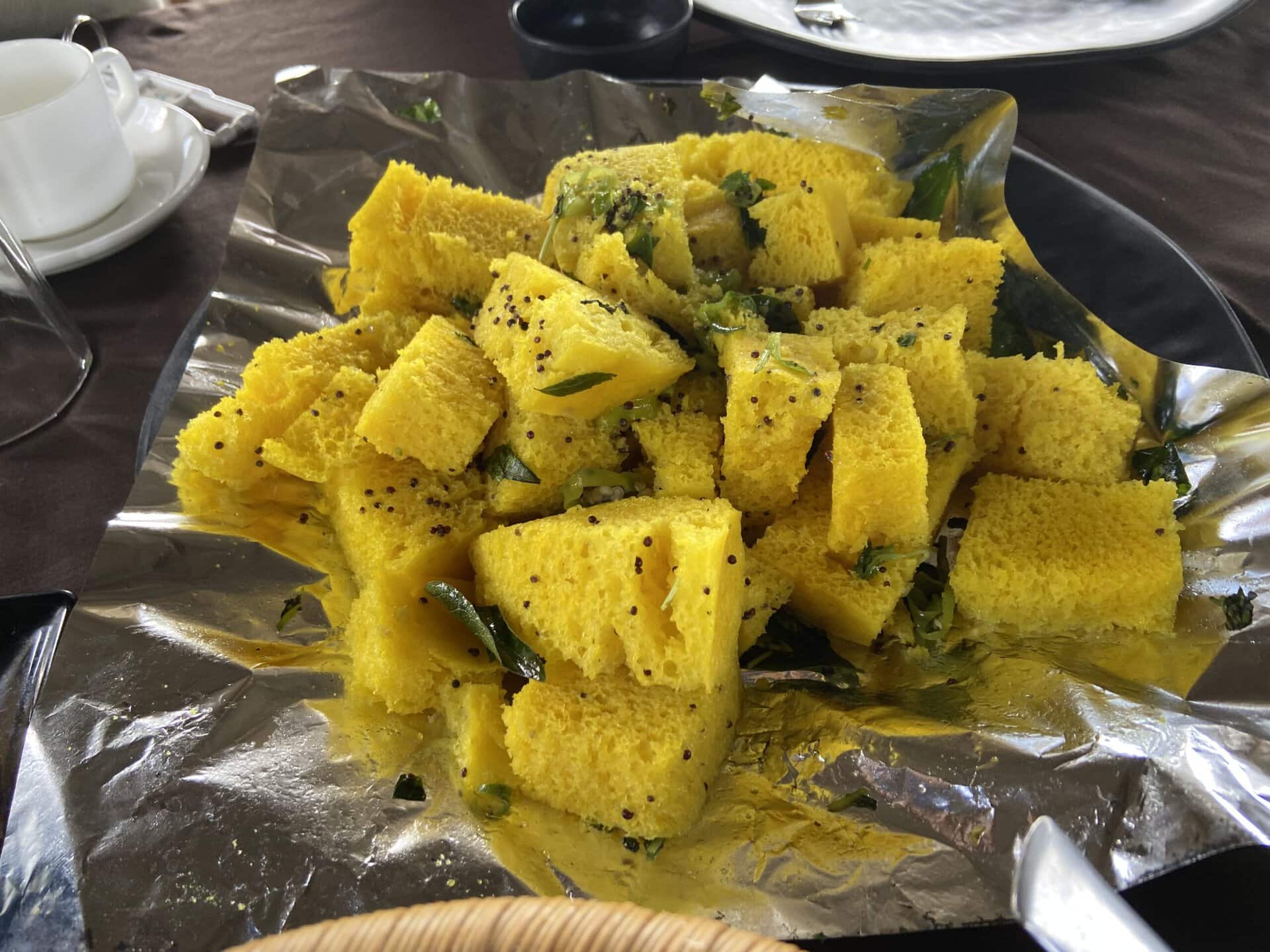
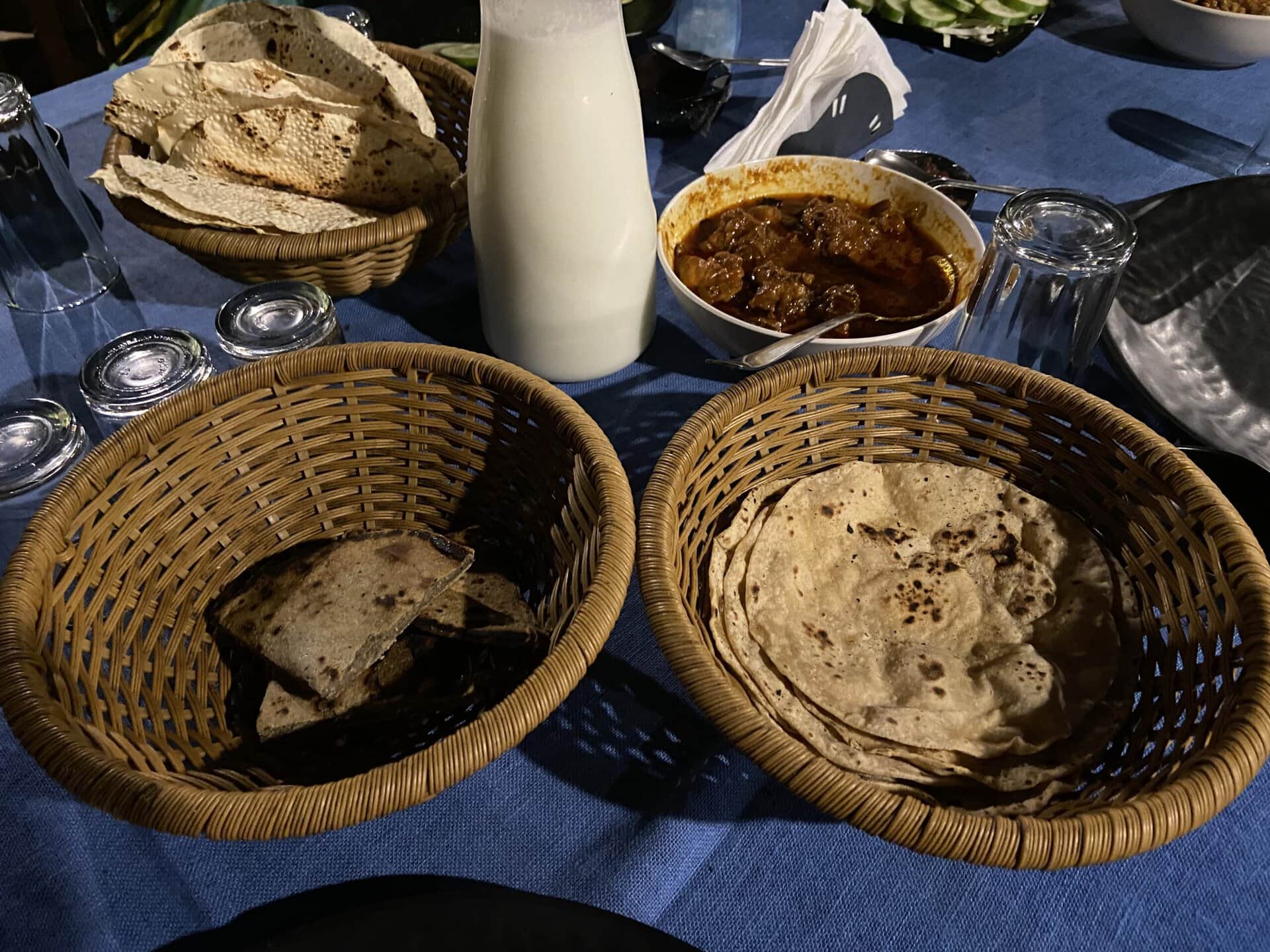
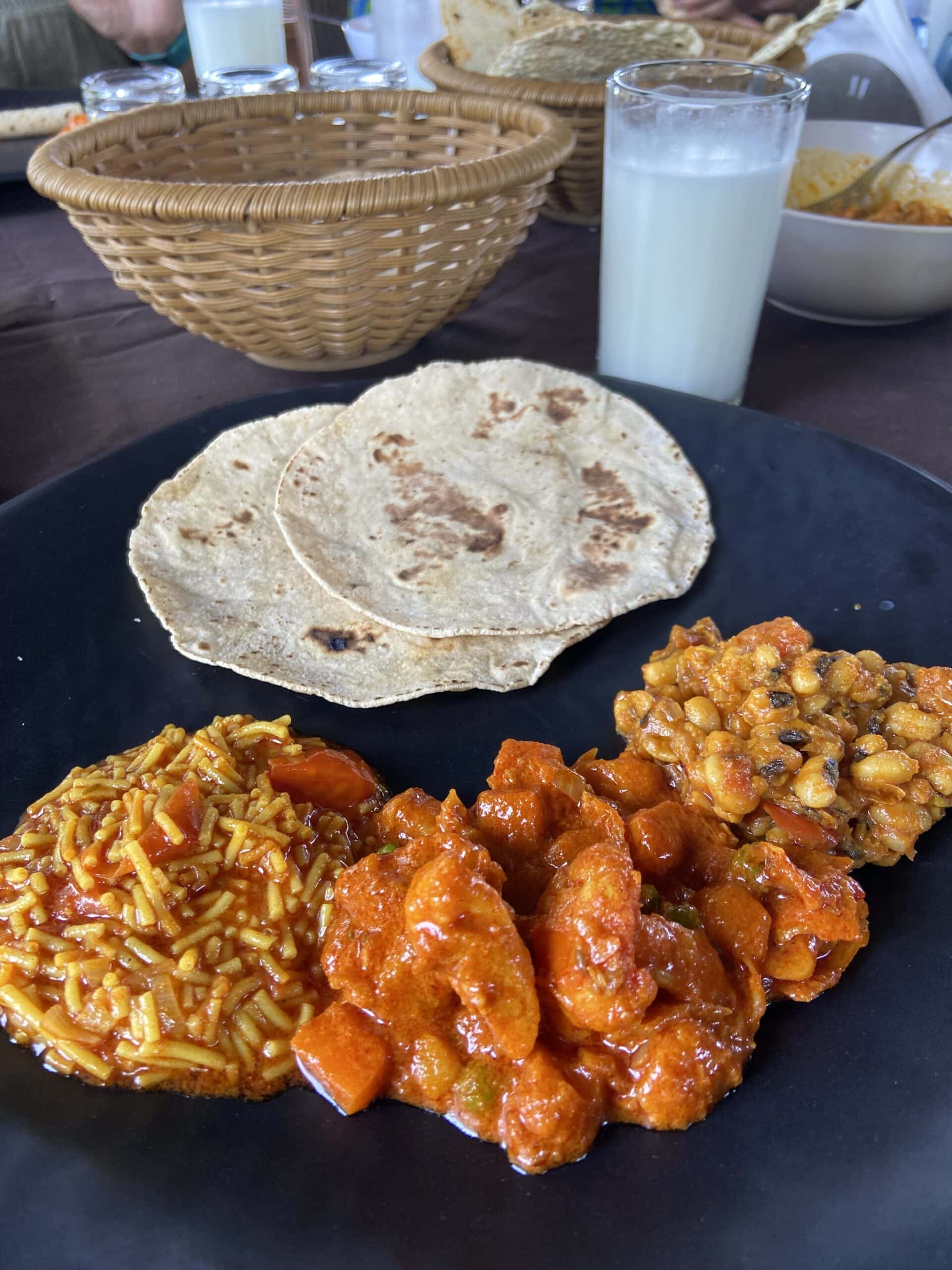
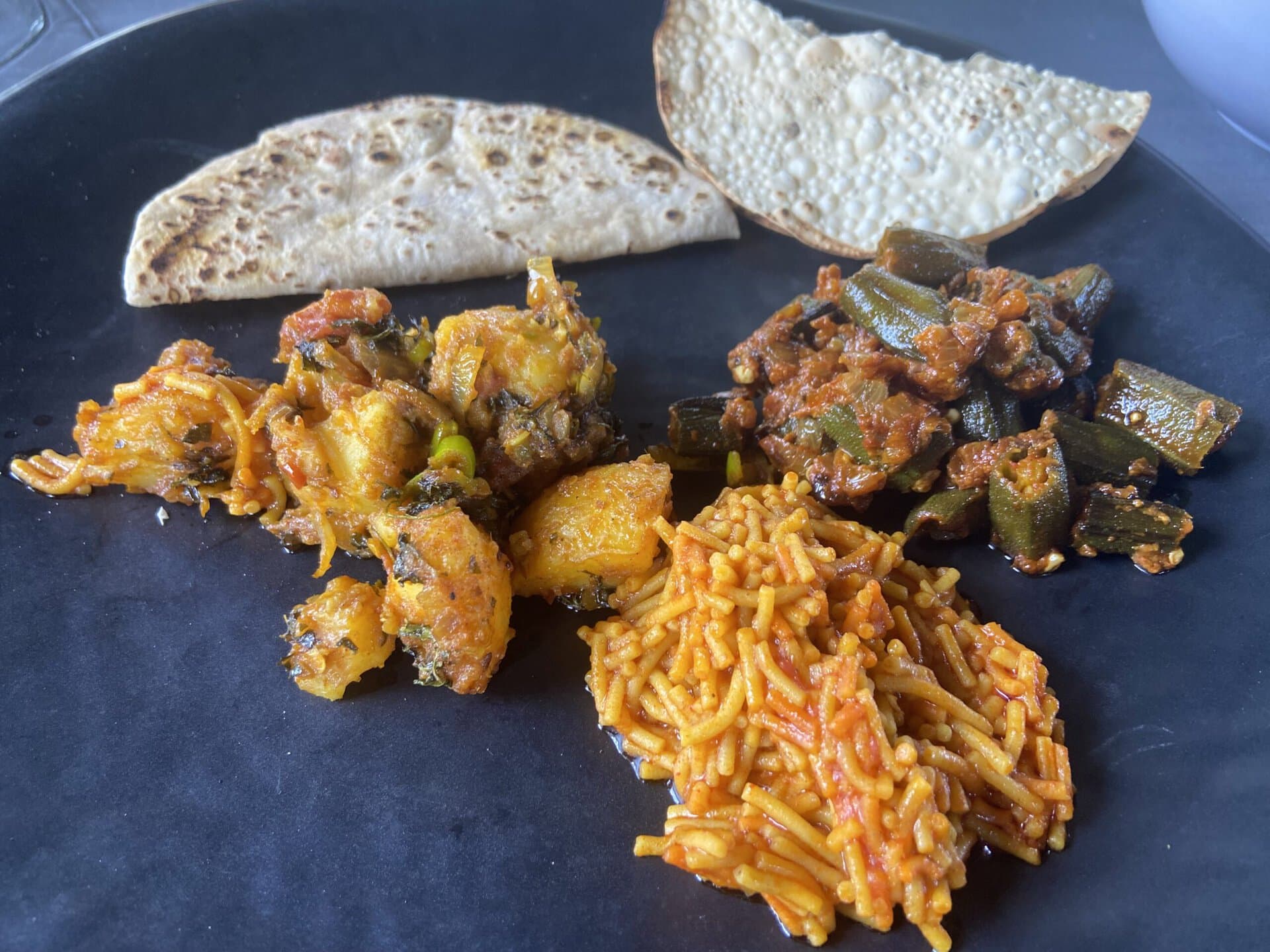
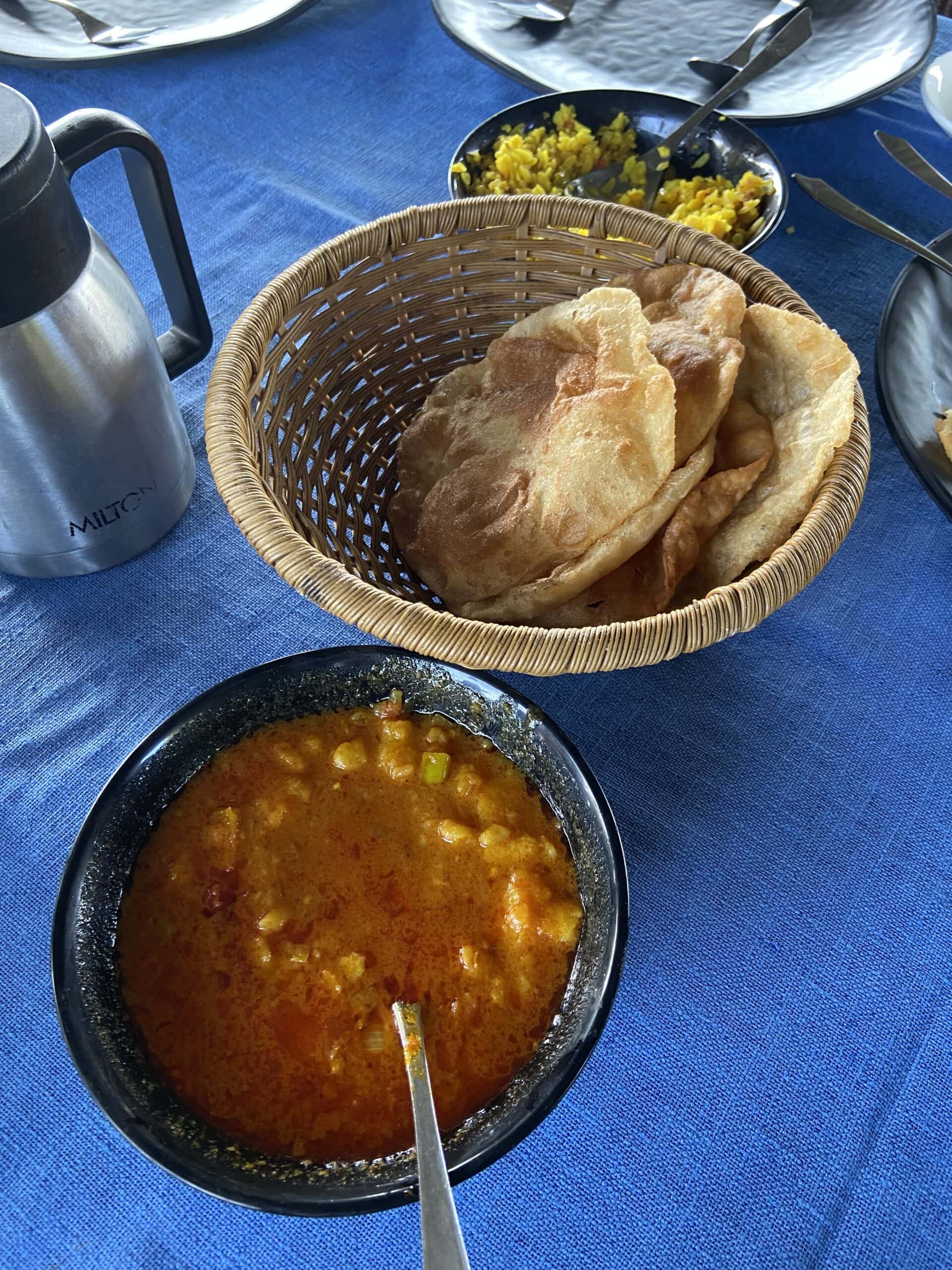
I had heard a lot about having jalebis and fafda for breakfast. But I did not get a chance to taste this till the last day of the tour. Enjoyed a plate of fafda and jalebi after coming back from the last safari on the 9th morning.
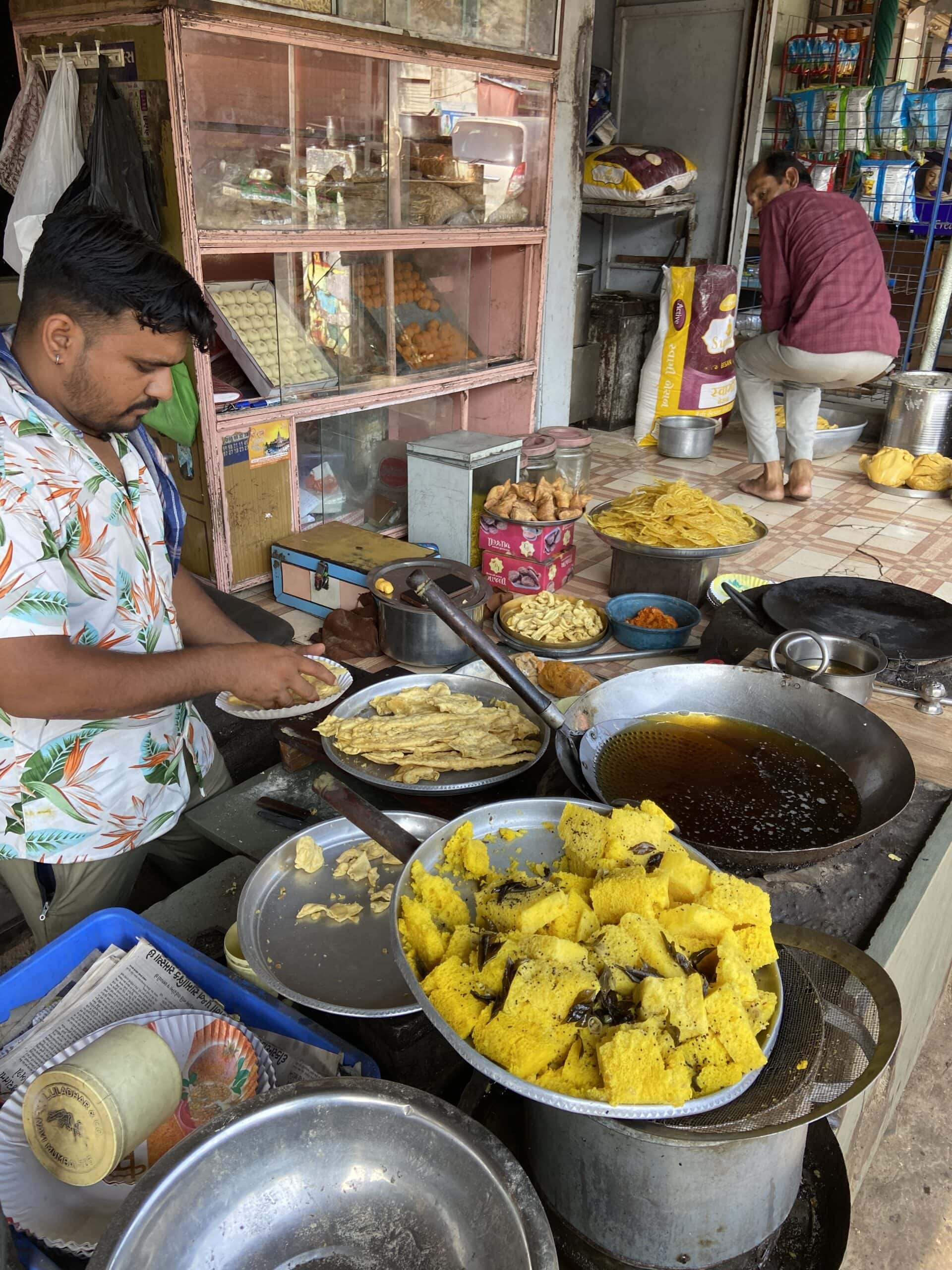
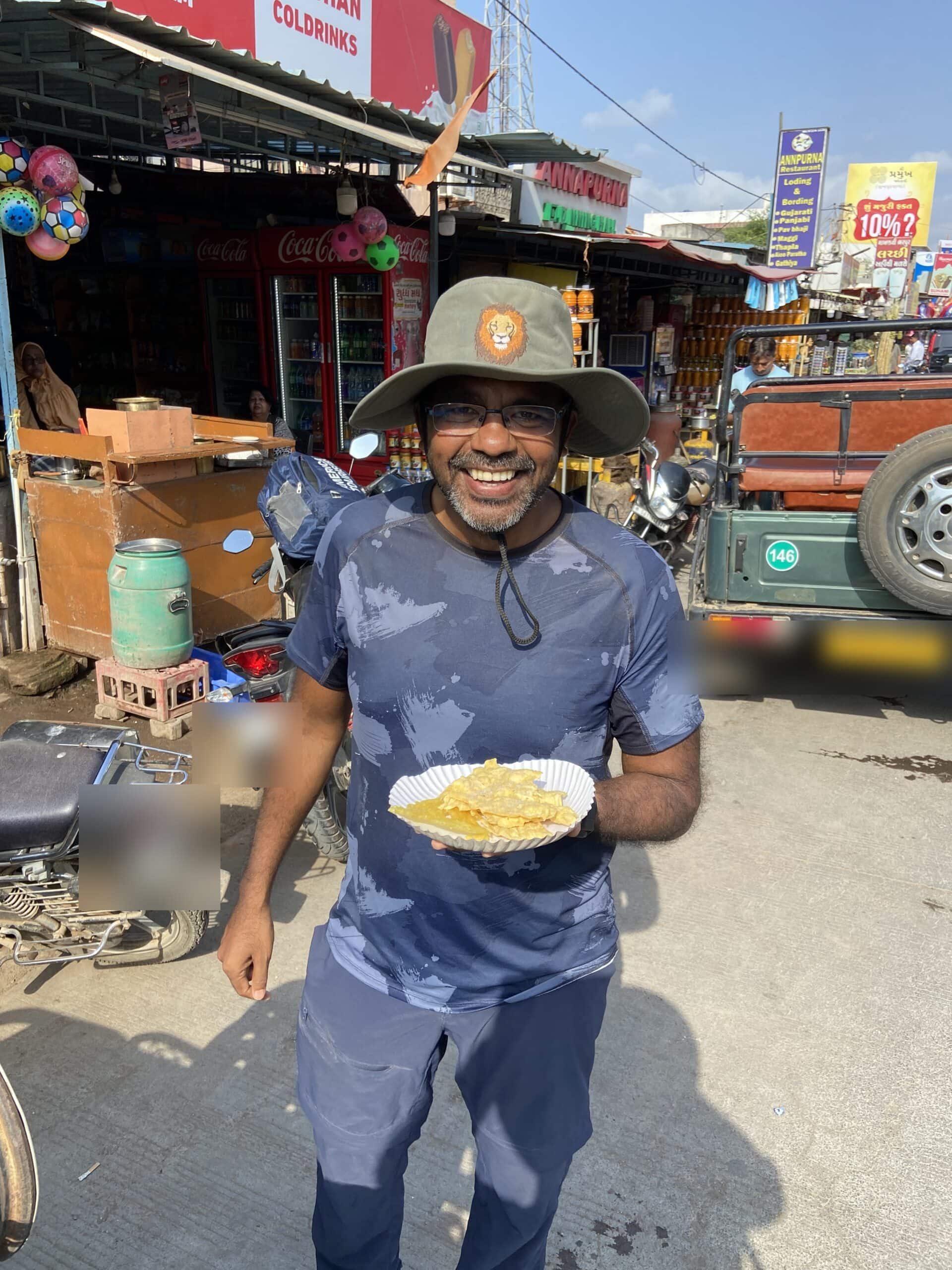
A friend from Gujarat commented that having fafda without papaya chutney was like driving a BMW with 3 cylinders. On the drive from Gir to Rajkot, requested the driver to stop at a shop that served fafdas and jalebis and fixed this 3-cylinder issue, and upgraded to 6 cylinders
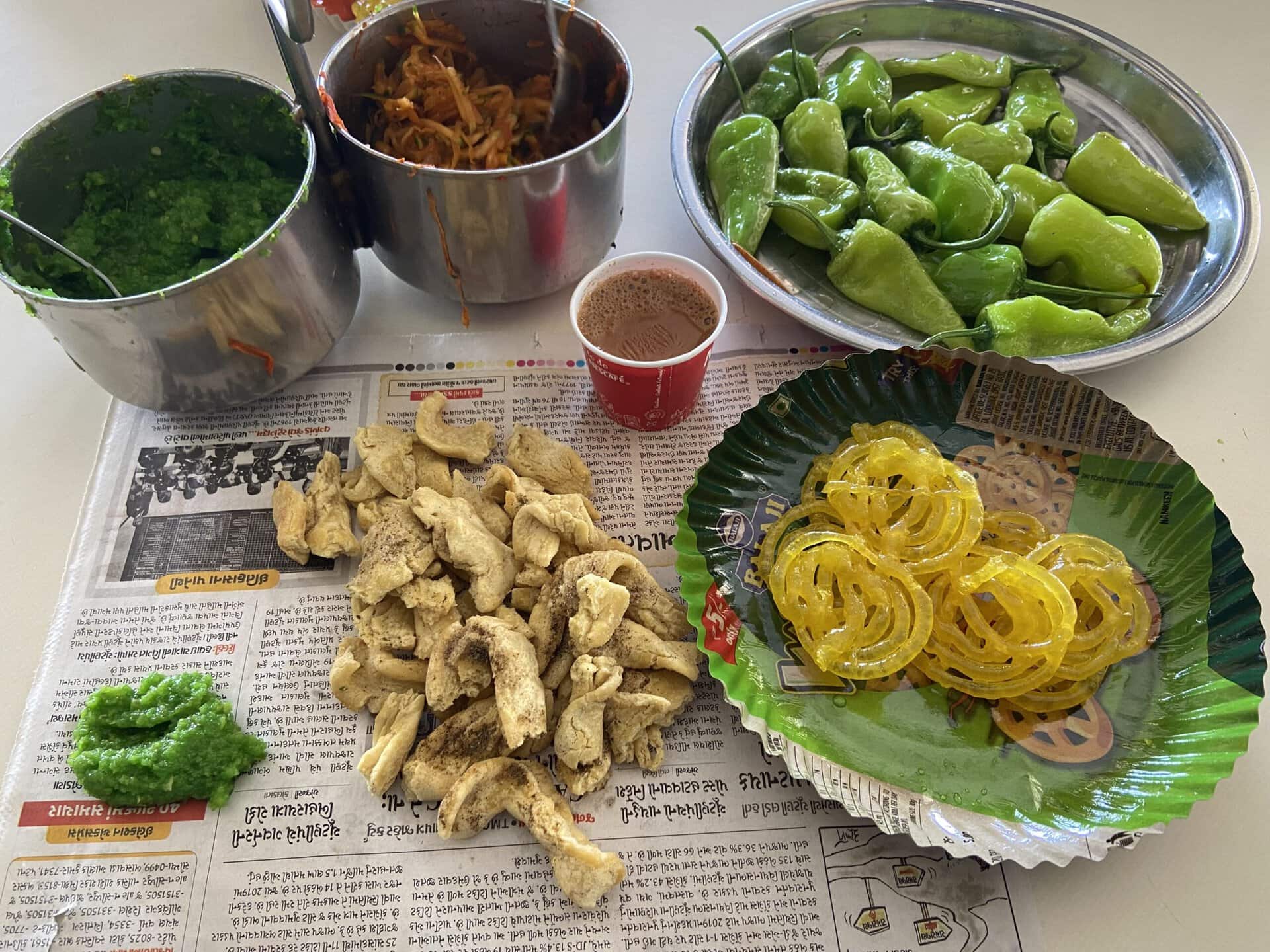
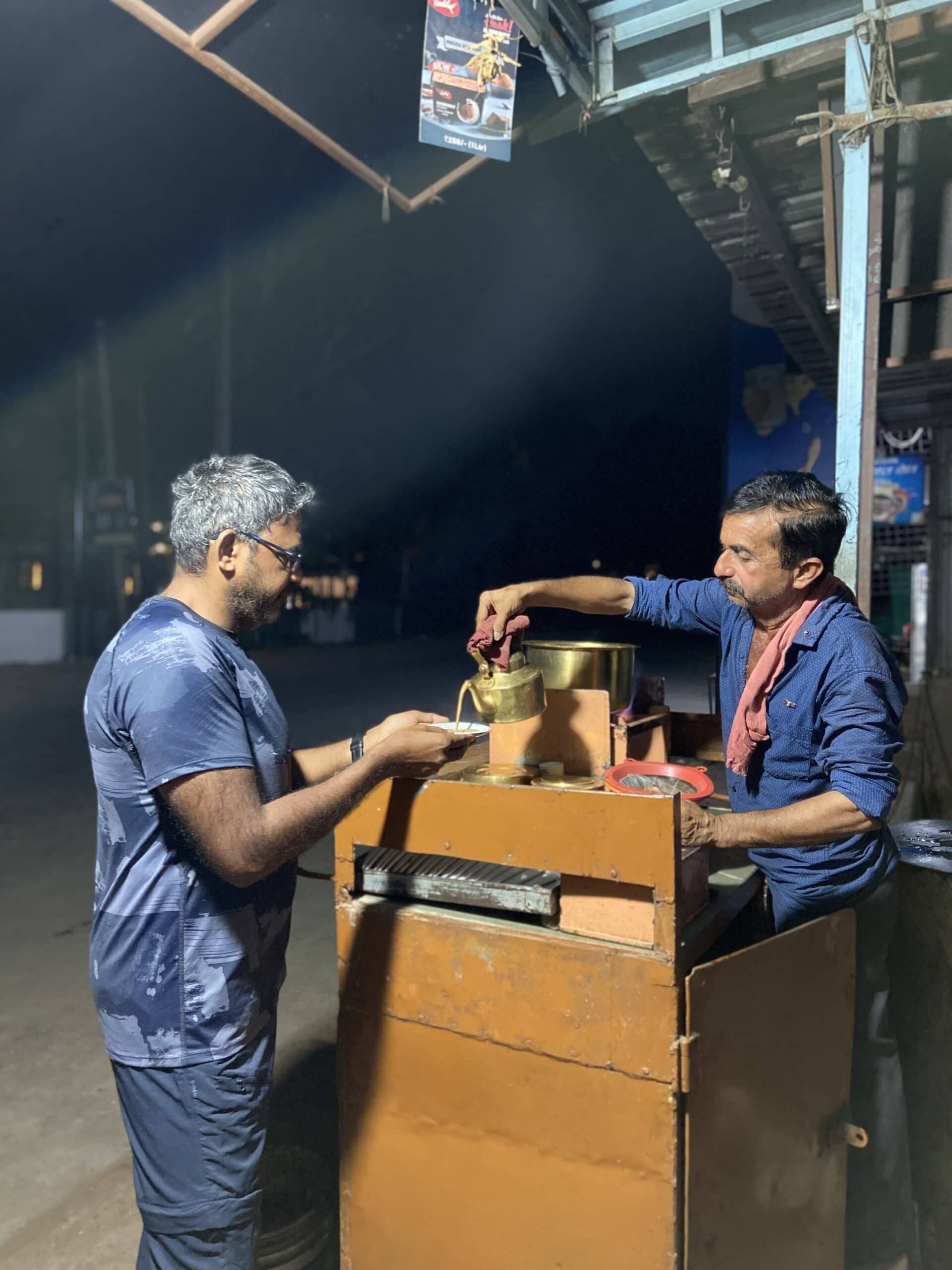
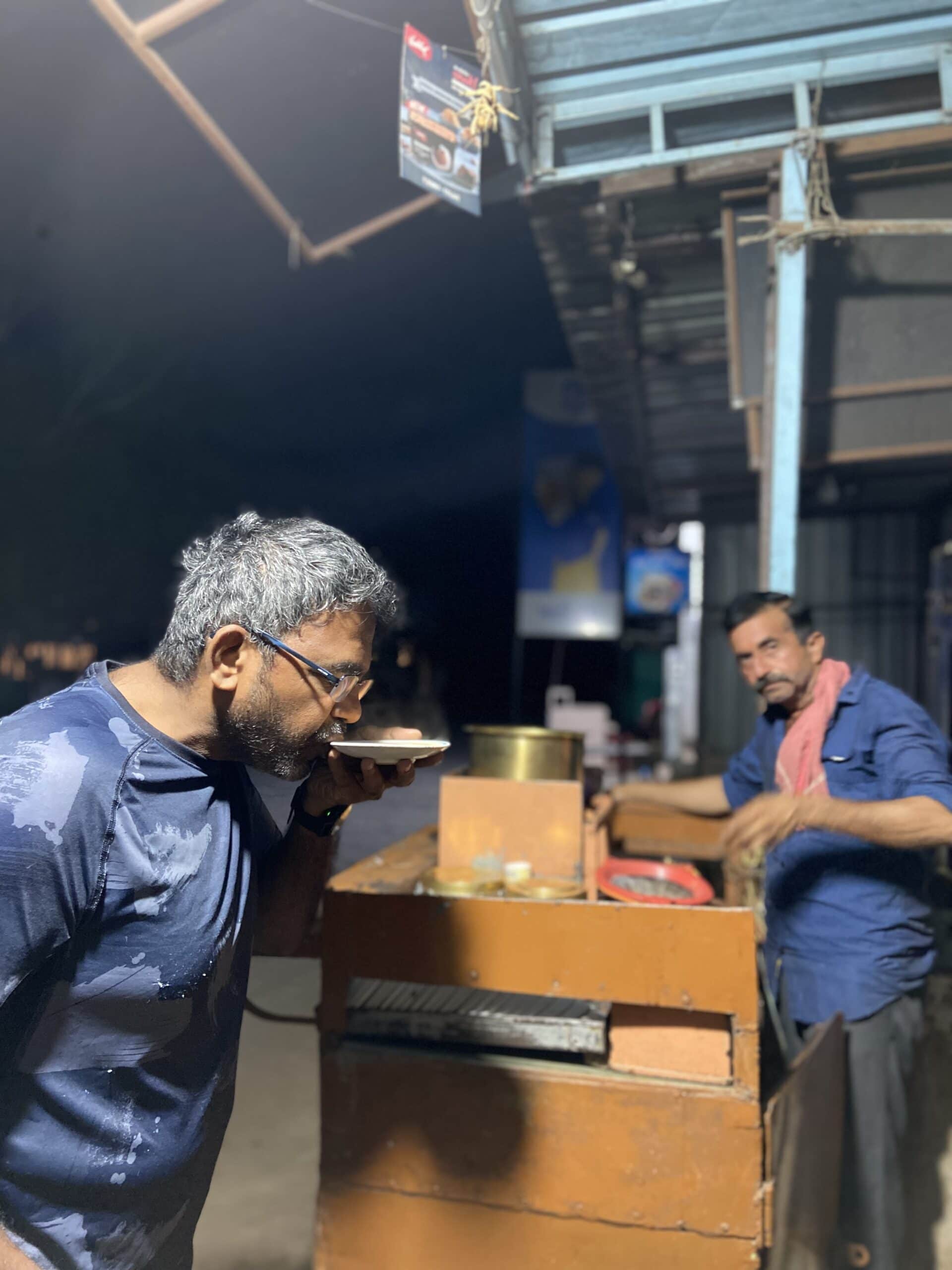
An interesting custom I saw was drinking tea from the saucer. I saw several saucers stacked at the tea shop, but no cups. Then the mystery was solved when they served tea directly on the saucers. Balancing the saucer on the hand and sipping tea without spilling is a skill to be learnt!
In this post, I will cover the various information I learnt from the briefing session and some other general stuff.
Asiatic Lions
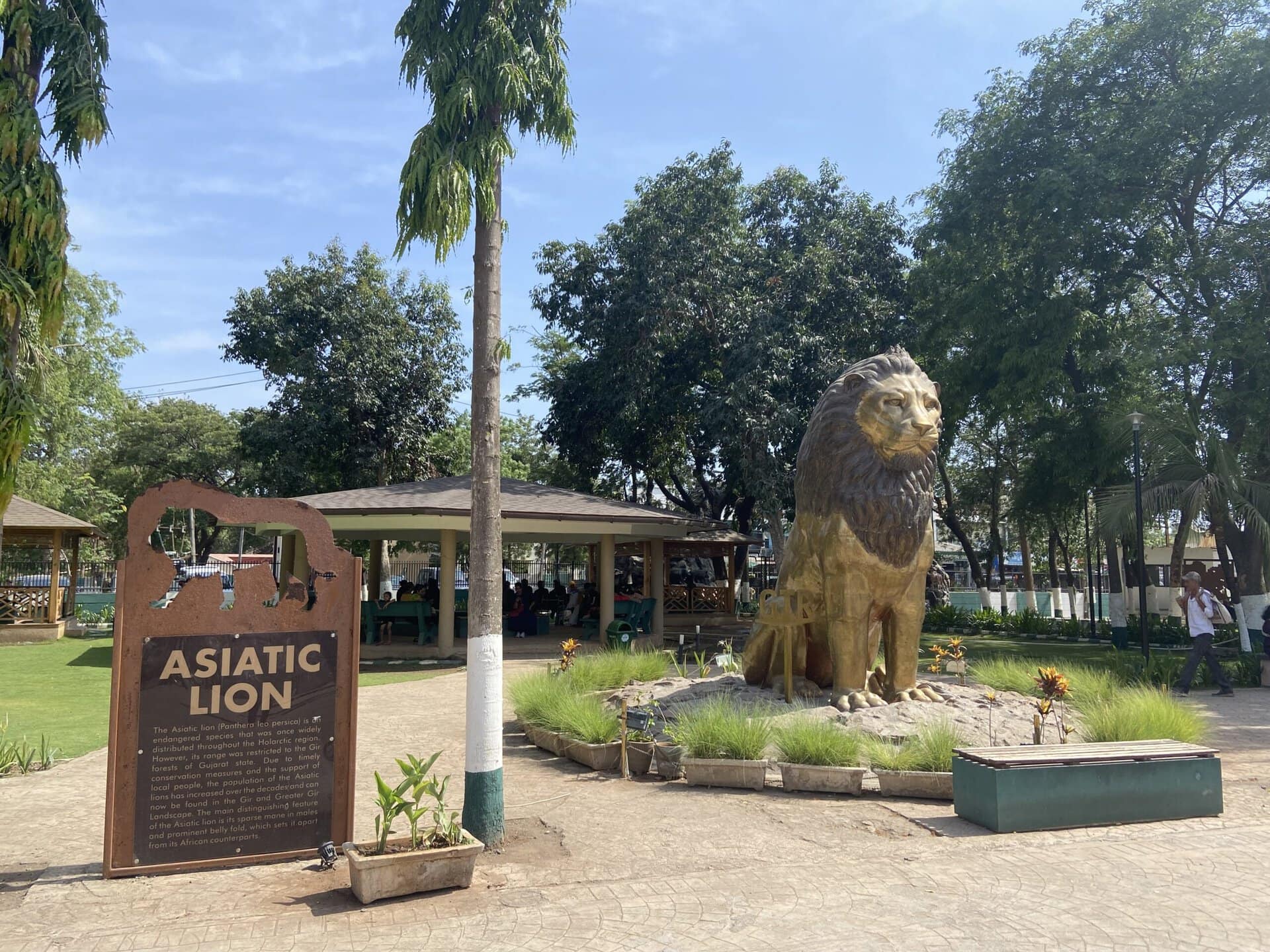
Until the 19th century, Asiatic lions occurred in Saudi Arabia, eastern Turkey, Iran, Mesopotamia, and from east of the Indus River in Pakistan to the Bengal region and the Narmada River in Central India. Since the turn of the 20th century, its range has been restricted to Gir National Park and the surrounding areas in the Indian state of Gujarat.
Asian lions are slightly smaller than African lions. Unlike African lions, the males do not tend to live with the females of their pride unless they’re mating or have a large kill. We experienced this first hand in the safaris. Whenever we spotted adult males, they were alone. Females formed a group protecting the young cubs.
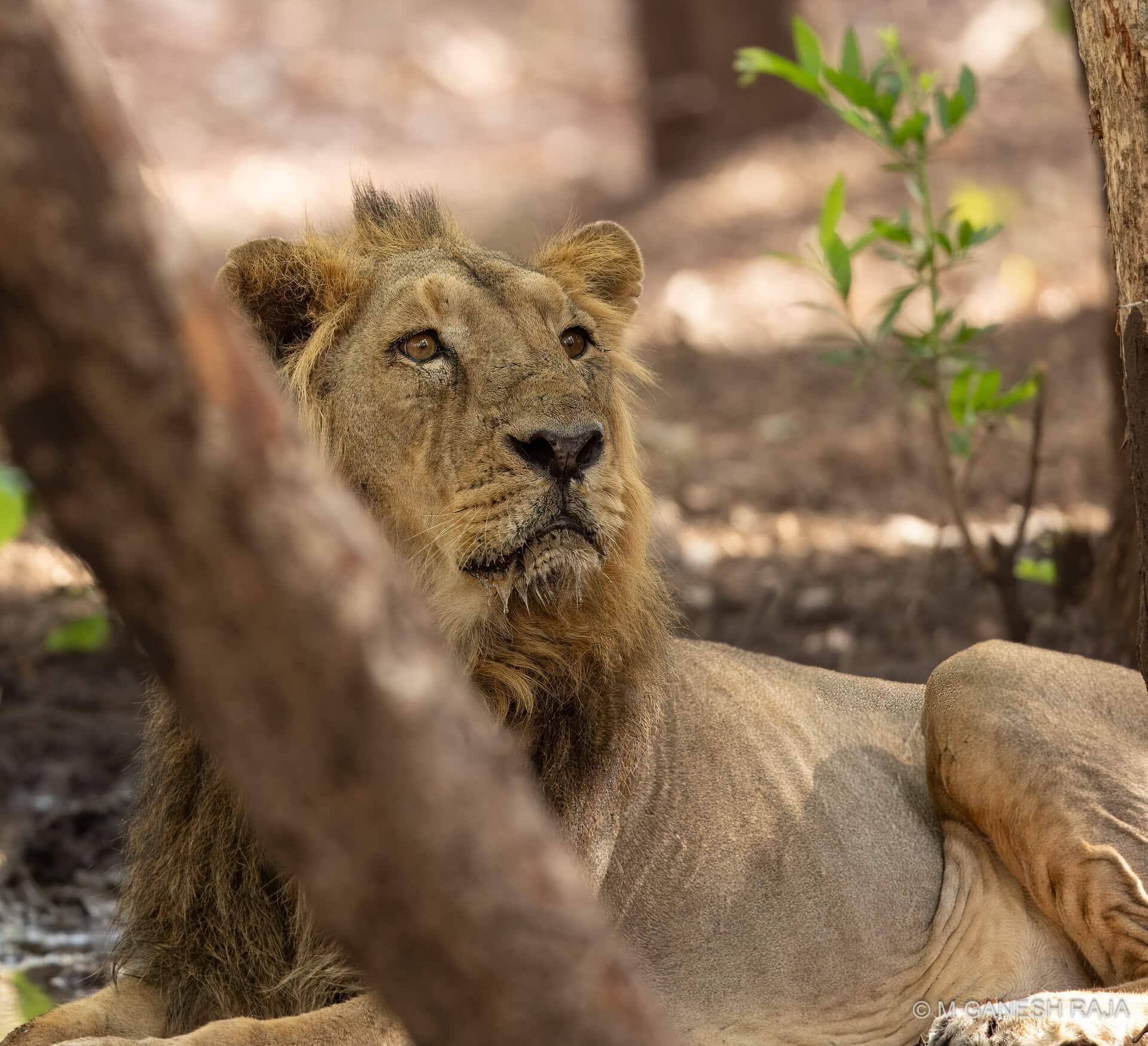
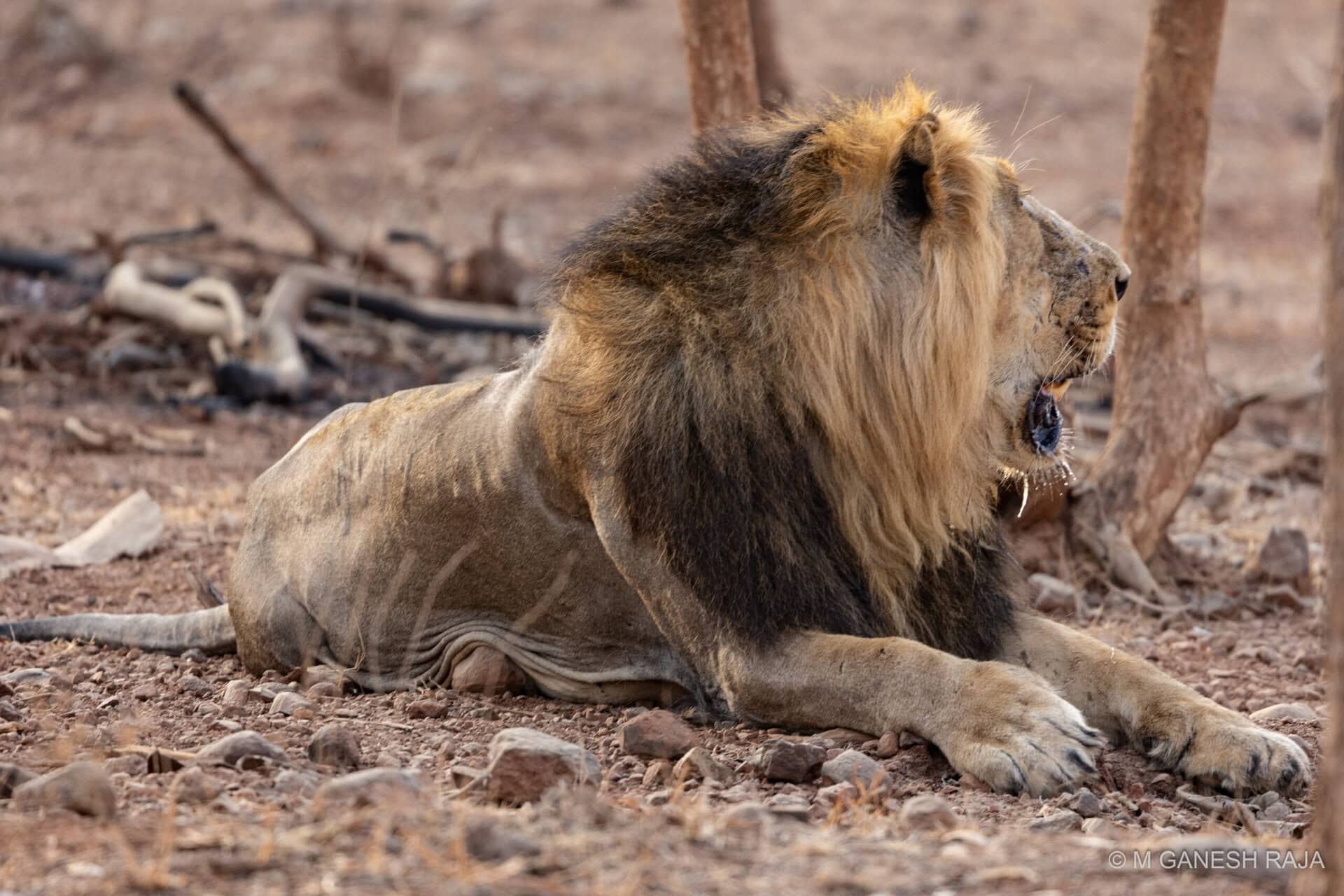
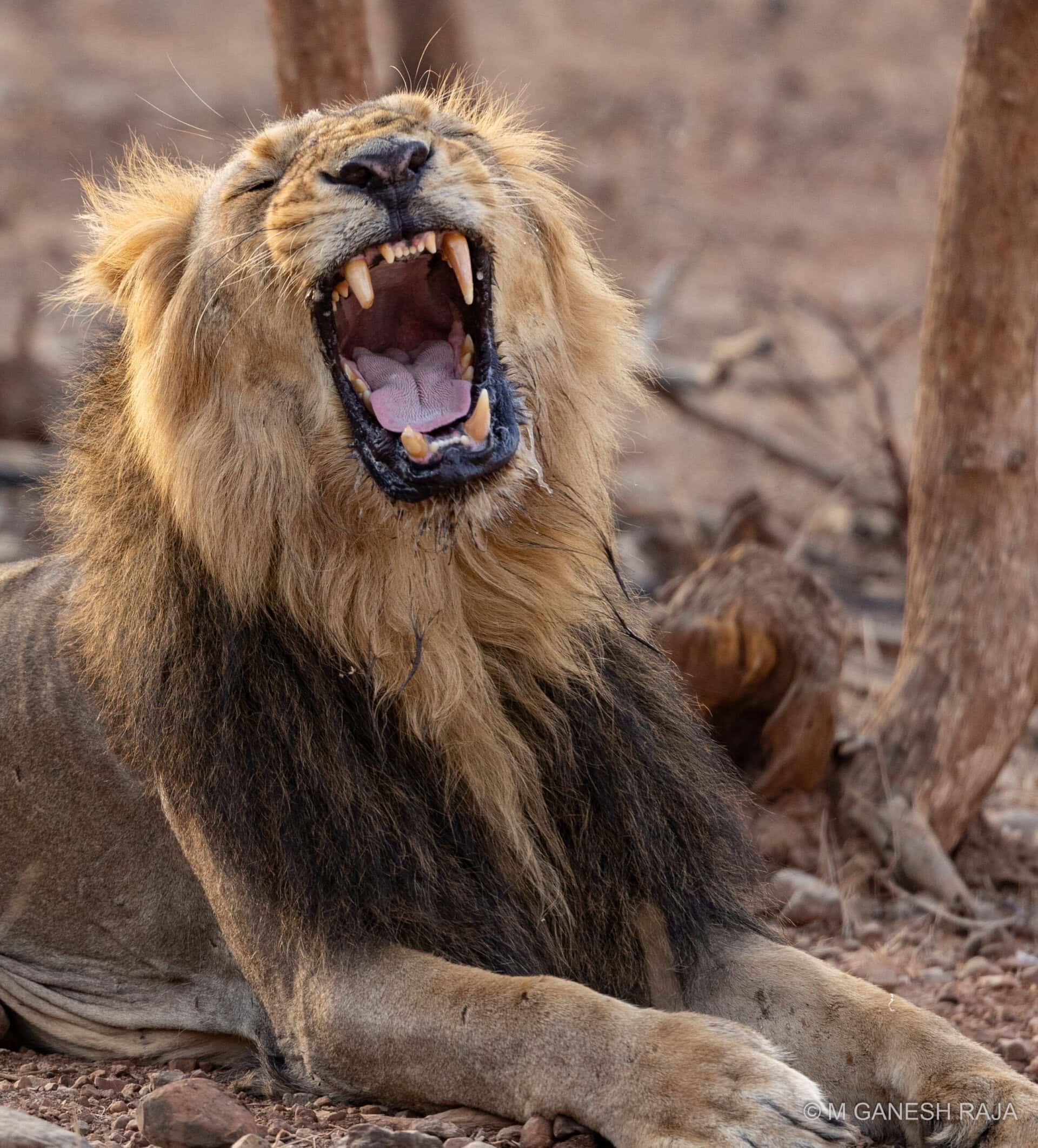
The male Asiatic lion has a relatively short, sparse, and darker mane compared to the fuller mane of the African lion. As a result, the male Asiatic lion’s ears tend to remain visible at all times. The most distinguishing characteristic of the Asiatic lion is the longitudinal fold of skin that runs along its belly.
Asiatic lions’ diet is made up of both large and small mammal prey such as deer, wild boar, and antelope. They have also been known to feed on domestic cattle. The Government compensates the owners of the cattle when a lion kills domestic cattle.
During the safaris, I found that lions are not shy of humans. Even when safari vehicles were passing by, they ignored the humans and would just lie around by the side of the road, mostly near water holes. Sometimes the male lions walked so close to the safari vehicles that one could just reach and touch them.
Leopards on the other hand are very shy and would stay at least 300 meters away from the roads. Even a small sound from humans, they would vanish deeper in the forest.
Gir National Park
In the beginning of 20th century, British officials used to visit Gir and hunt lions. Due to rampant hunting, the Asiatic Lions became almost extinct. The Nawab of Junegadh established the sanctuary to protect the Asiatic Lions from going extinct. The Government of India declared a large area of Gir (1412 square kilometers) as a National Park. From a population of about 20 lions in 1913, they have risen to a comfortable 650 in 2020. At present the population is around 700.
There are several villages and tribal settlements in the National Park and the lions have adapted to living with the human population. The lions never hurt the humans. The tribals even have a way to communicate with the lions. When the tribals are grazing cattle, if they sense a lion approaching, they make some sound to let the lions know of their presence. The lions too sound a response and do not harm the humans or the cattle. During the safaris, we saw many locals inside the deep forest areas. Sometimes we saw locals commuting on bikes and sometimes we saw them on foot. It’s amazing to see how humans live alongside lions.
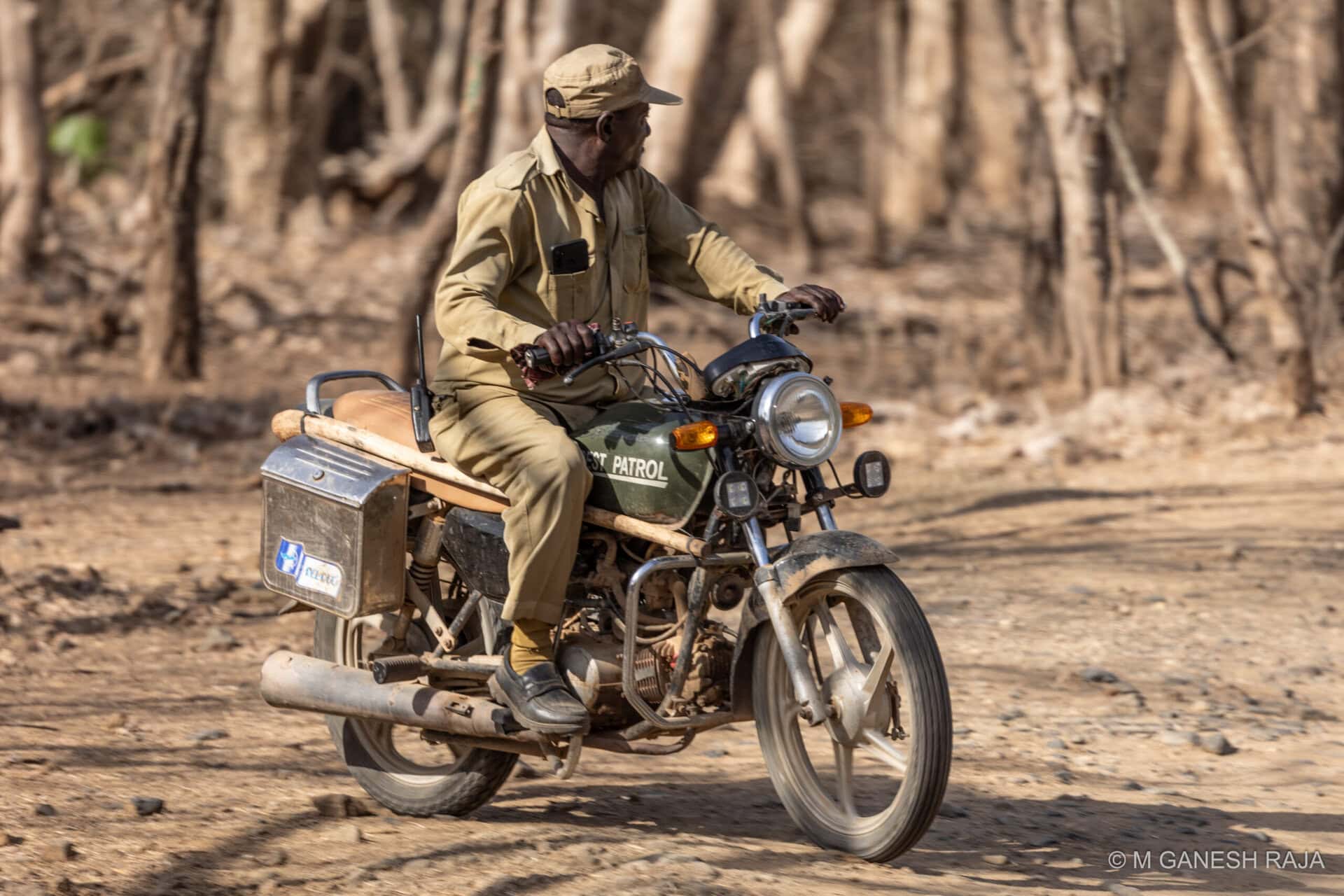
Trackers are another important part of the ecosystem. These are rangers on motorcycles who track the lions throughout the day. Every lion or pride has trackers nearby. These trackers halt when the lions halt and move with the lions when they move. The lions have developed some form of relationship with the trackers, and never harm them.
I observed there was a very good network between the trackers, drivers, and the guides. The drivers and guides used to be in touch with other drivers and trackers about the movement of lions and the probability of the lions crossing a particular route. Most of the time, they used to wait in one particular spot for more than 15 minutes and the lions used to cross the road exactly at that point.
The Park and the Safari System
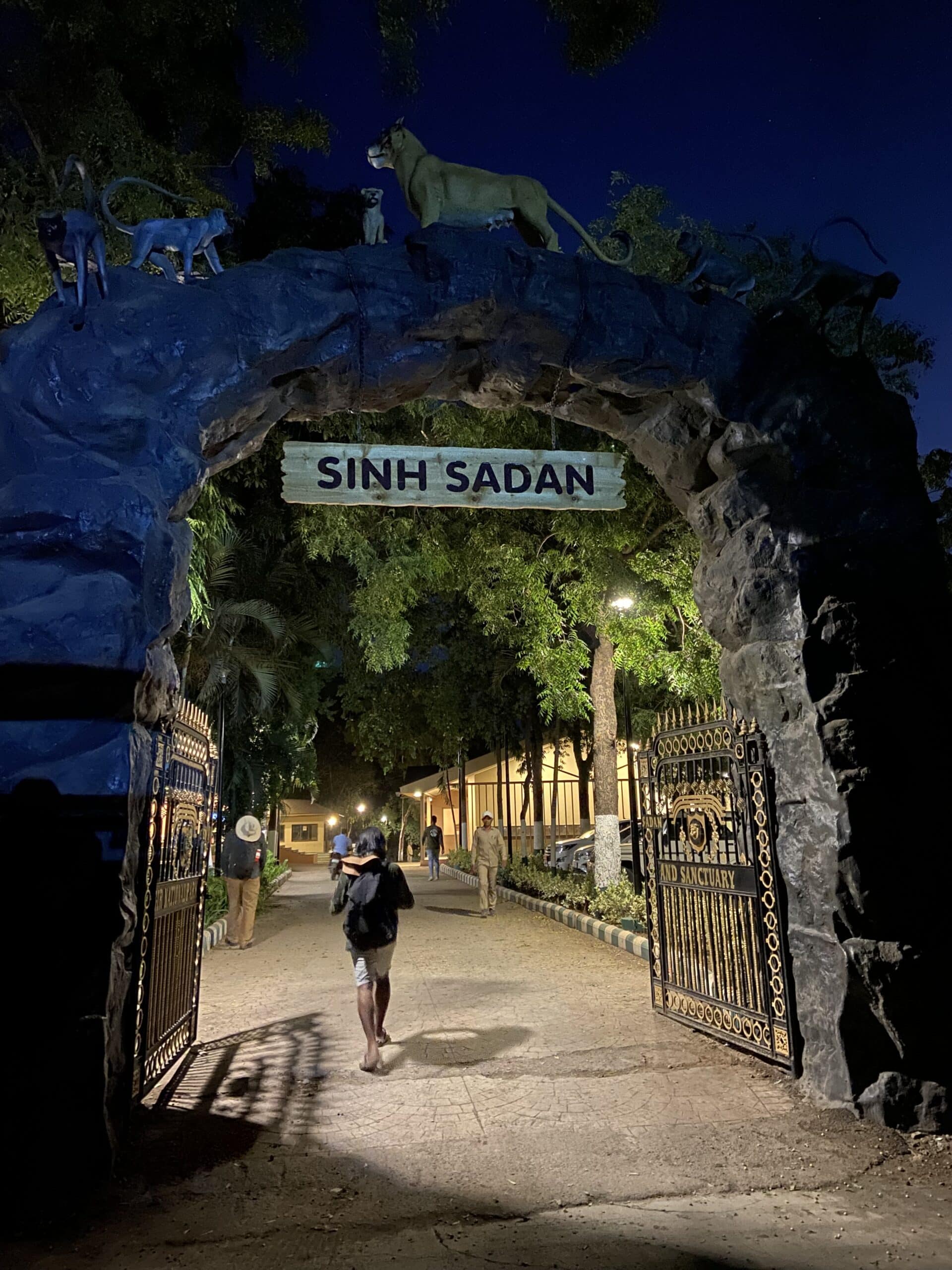
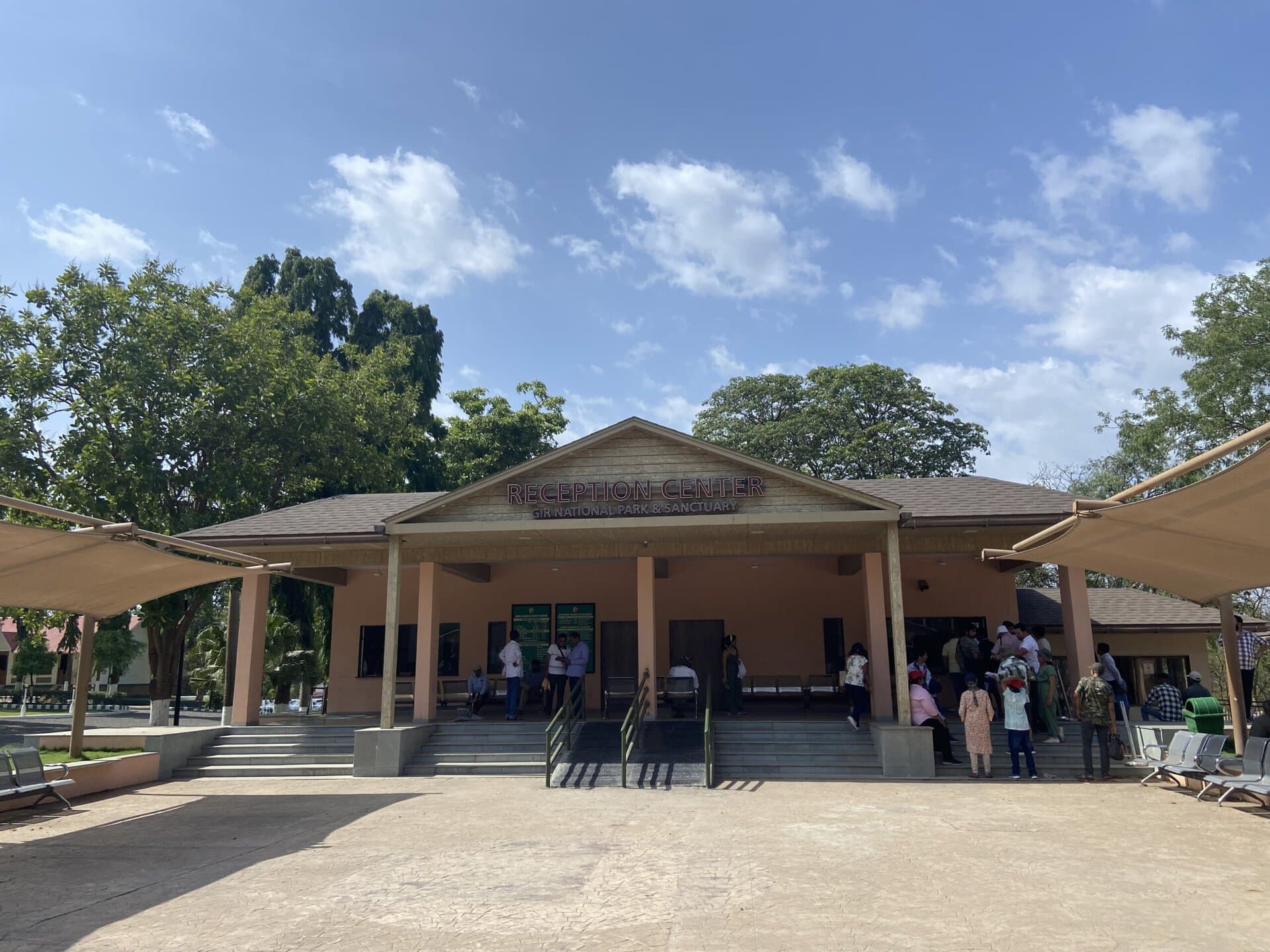
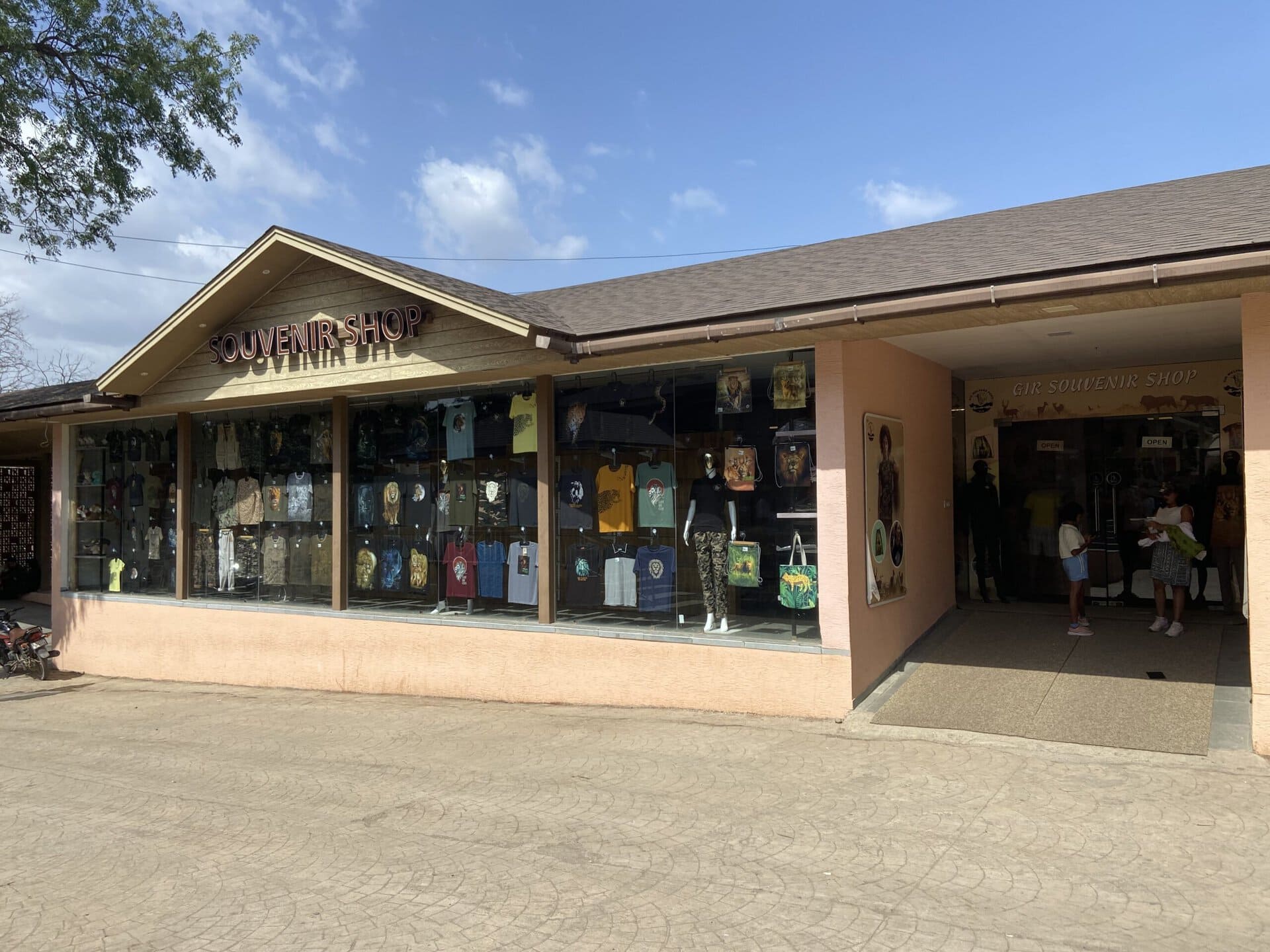
The main administrative building is named Sinh Sadan (roughly translates to Lion’s Residence). This is where the ticketing offices are located. There is also a nice souvenir shop where one can buy Gir-themed stuff like T-shirts, hats, water bottles, stuffed toys, camouflage clothing etc. A few pictures of Sinh Sadan.
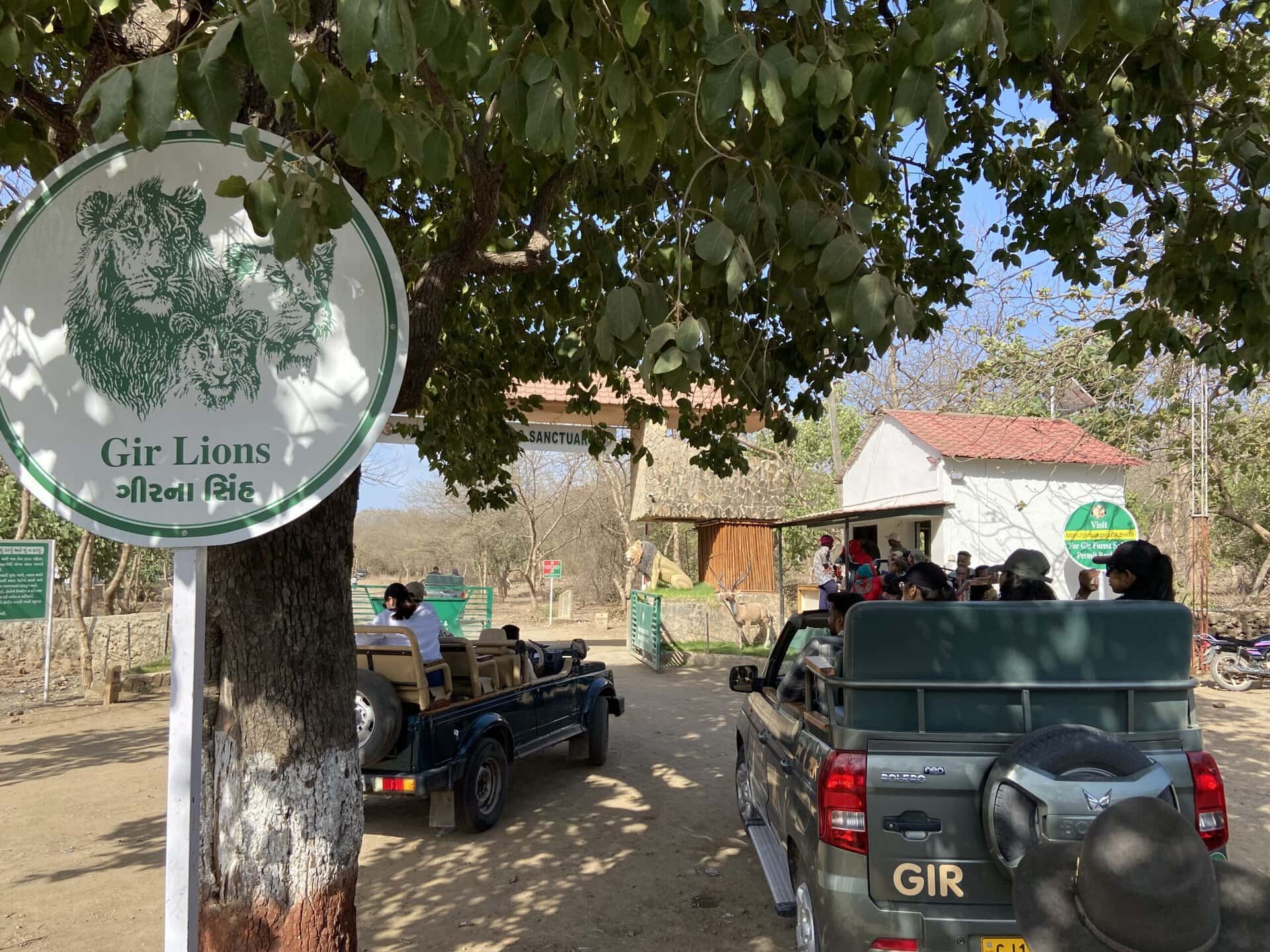
The park has two entrance gates. 13 routes run through the park that are 30km to 40km long in distance. Most of the routes overlap with other routes. Some of the routes are the same as others but in the opposite direction. The entry and exit of the routes are also mixed between the two gates. Sometimes we enter through gate #1 and exit through gate #2, sometimes vice versa, sometimes entry and exit happen through the same gate etc.
Gate #1
Gate #2
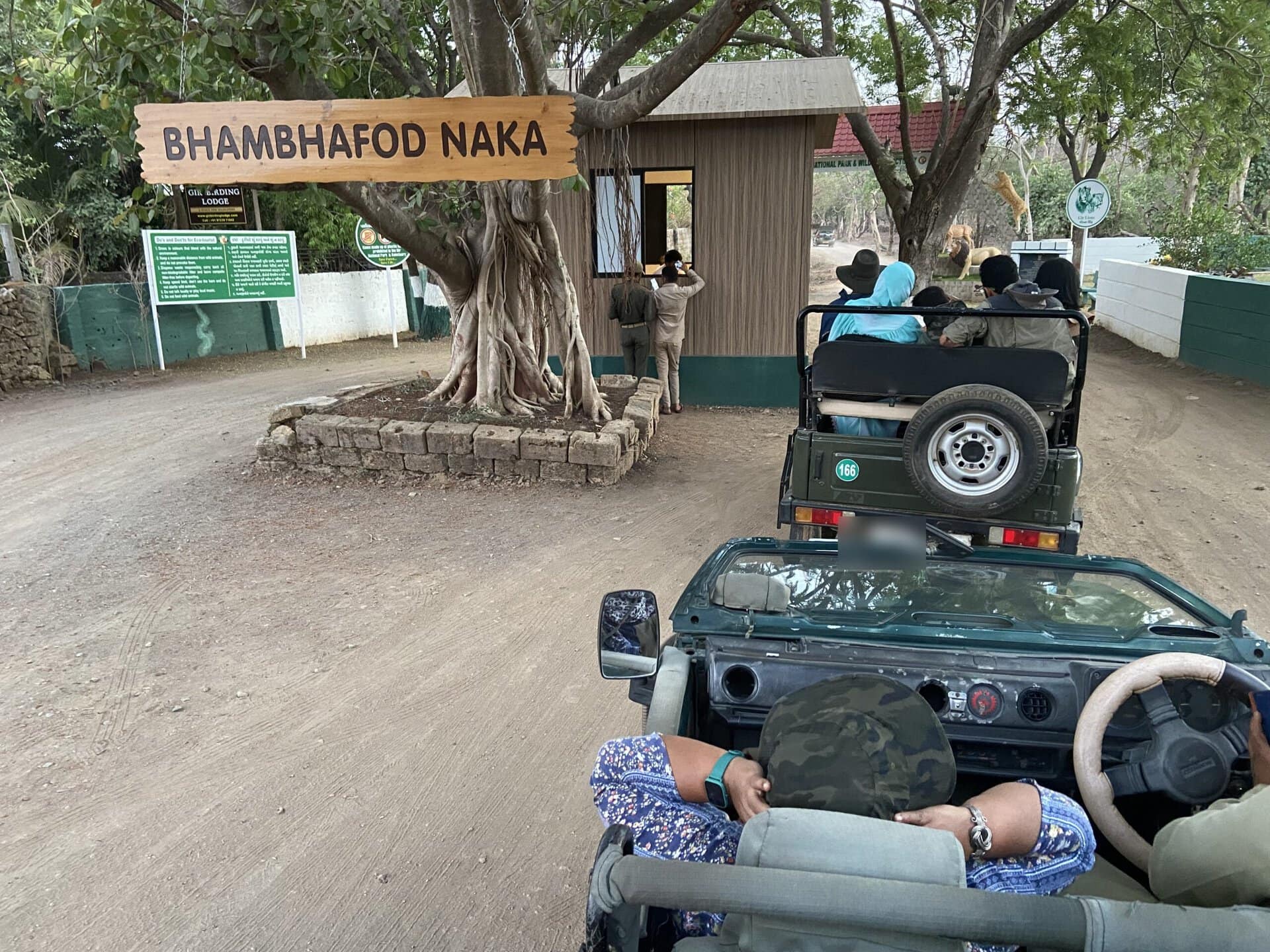
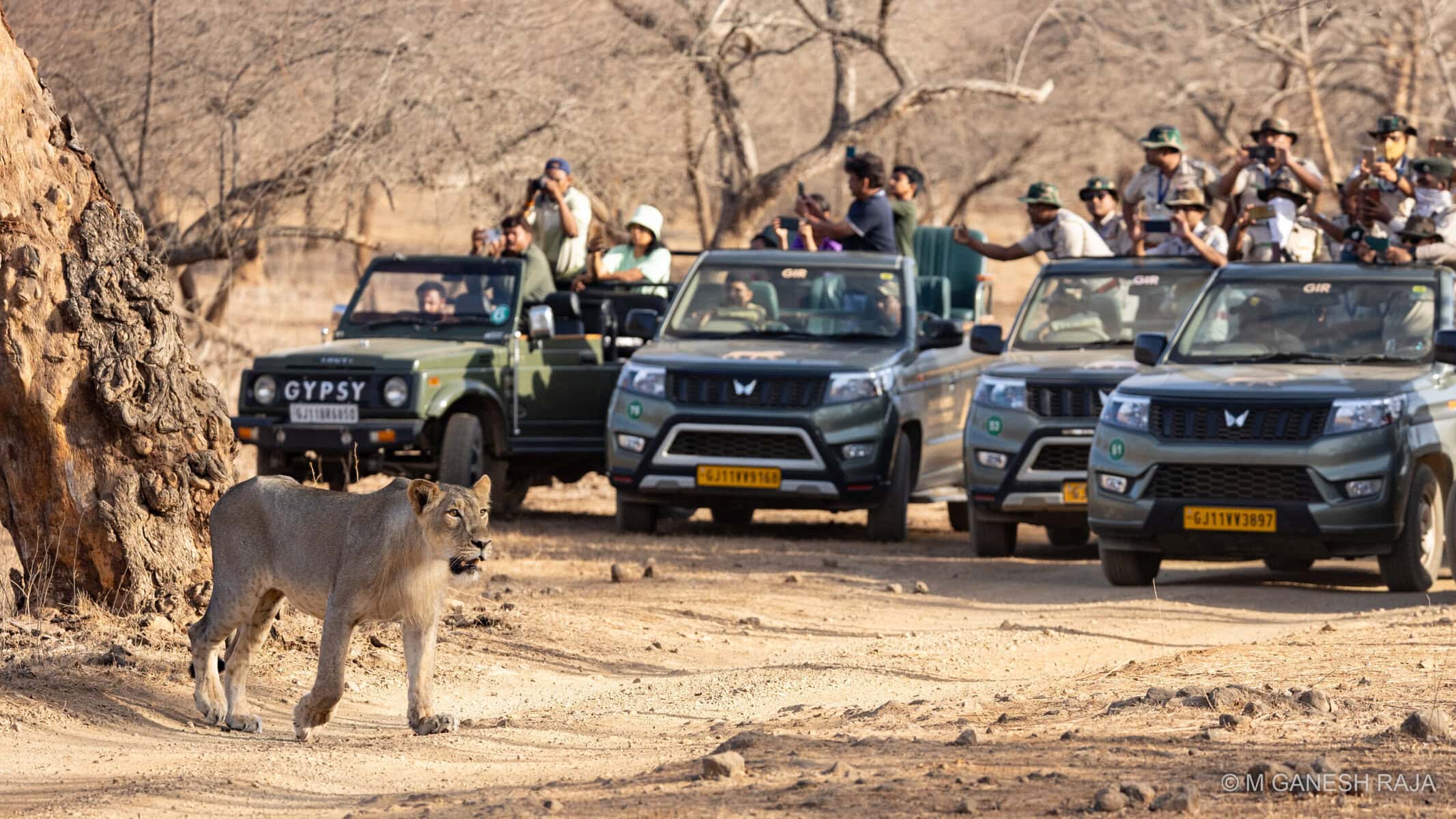
There are different types of safari vehicles – Gypsies which are barebone, with collapsible windshield and some latest Mahindra trucks which are more modern and luxurious. For photography-oriented trips, Gypsy is the vehicle of choice as the windshield can be collapsed on the bonnet providing a completely open top with an unhindered view from the front, back, and the sides. There is a driver and a compulsory guide for each vehicle. Timings are strictly enforced. Morning safaris start at 6:00 and end at 9:00, and the evening safaris start at 4:00 and end at 7:00. We have to be at the exit gate on time. The drivers and guides are penalised (sometimes even suspended) when the vehicles do not reach the exit on time.
A couple of pictures of the vehicles we rode on.
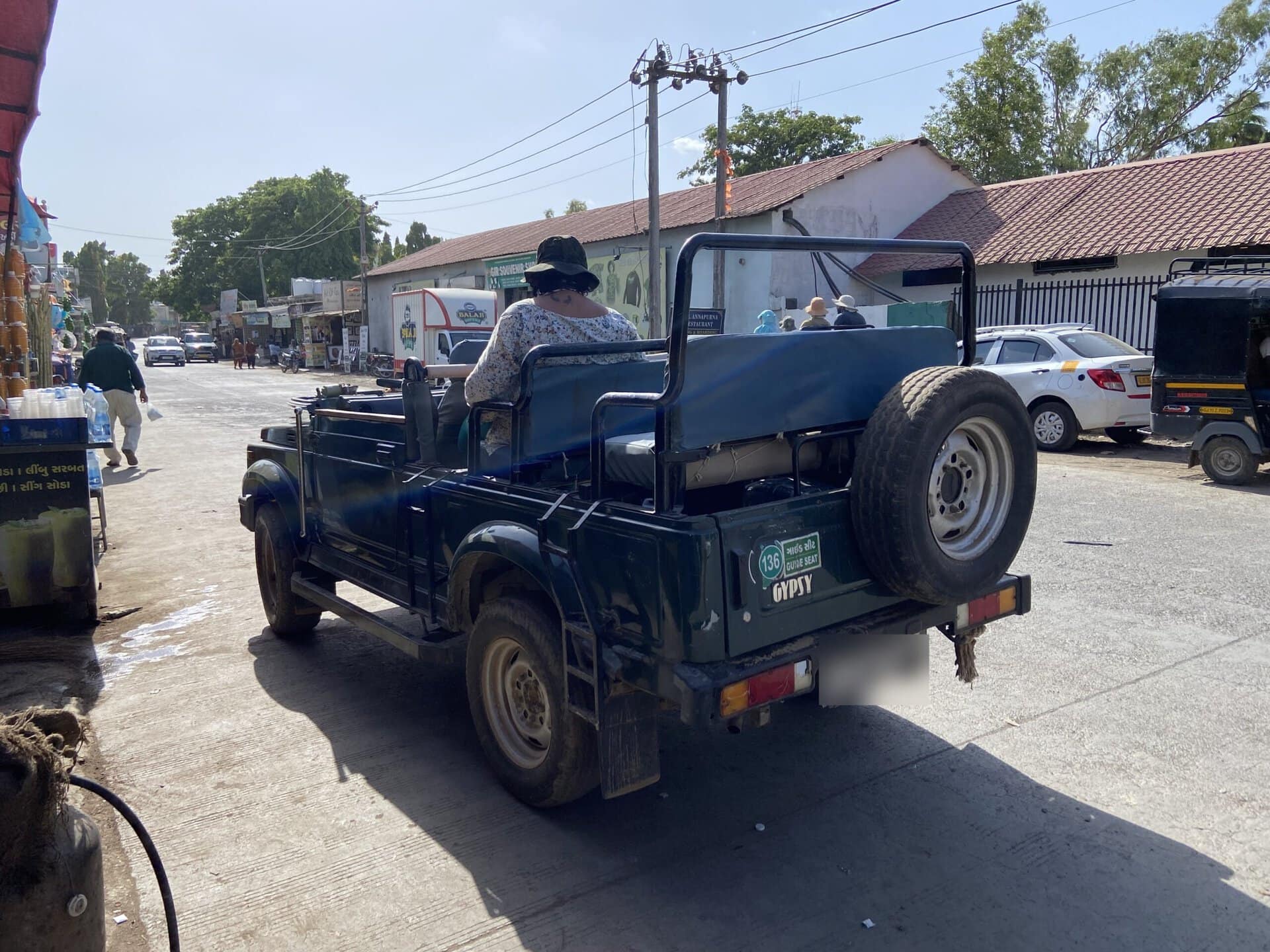
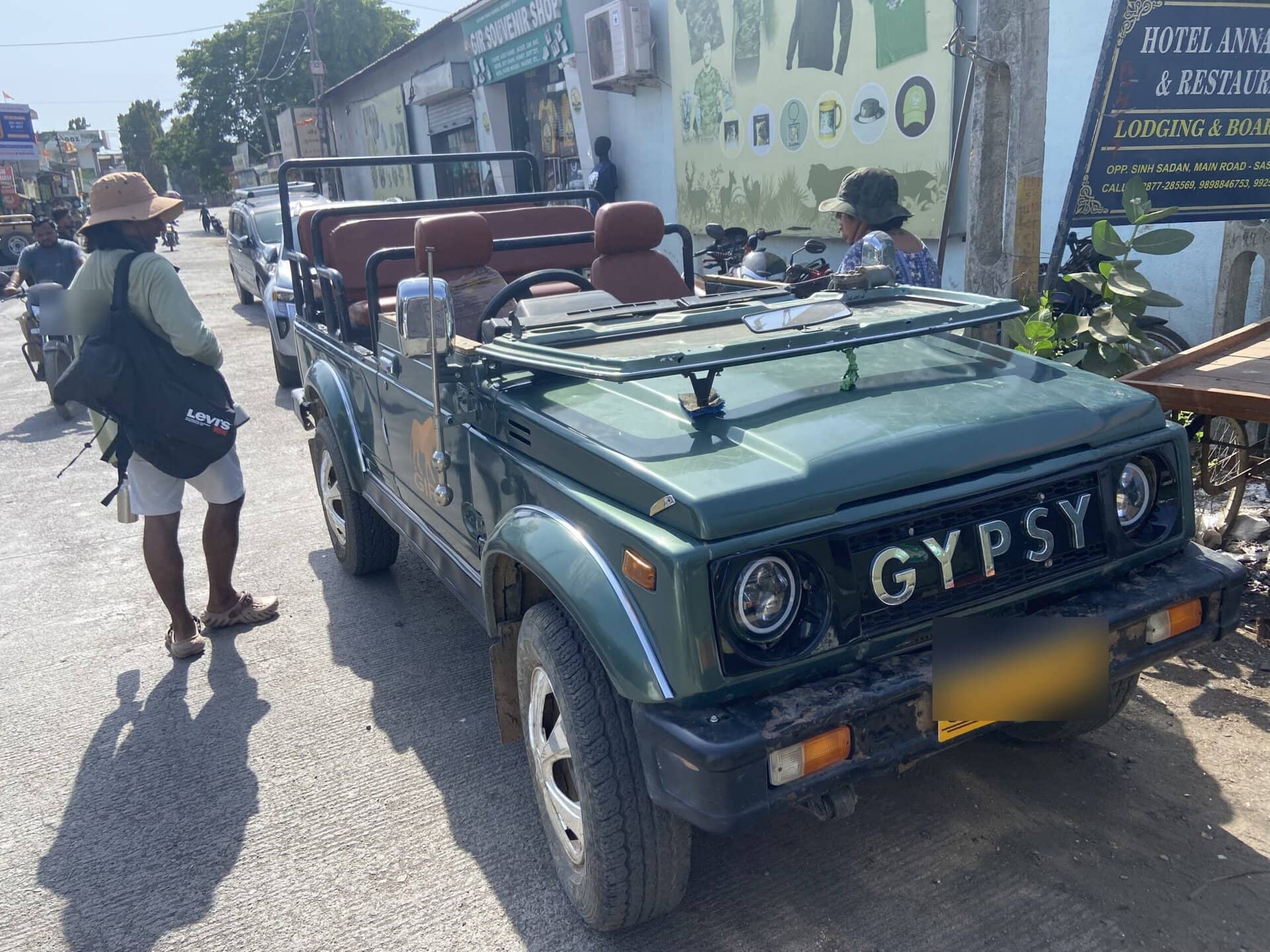
At the beginning of a safari, a route, vehicle, driver, and guide are randomly assigned. There is some flexibility that we can choose one of these. For example, we could choose a driver, and everything else will be randomly assigned. For photography, we need skilled drivers who are able to move the vehicles to various spots giving a good opportunity to photograph the lions. Mr. Vipul had requested a couple of specific drivers (he knows a few good drivers) for all our safaris. We got them for 5 of the 6 safaris. For the 6th one, we were assigned a random driver. And these drivers played an important role in getting some good pictures. For example, on the 4th safari, when we saw a lion with a wild boar kill, we were so close to the end time of the safari. The driver gave us that few extra minutes to shoot the lion with its kill and then drove quickly to reach the exit gate on time. An unskilled driver would never have done this.
The Landscape
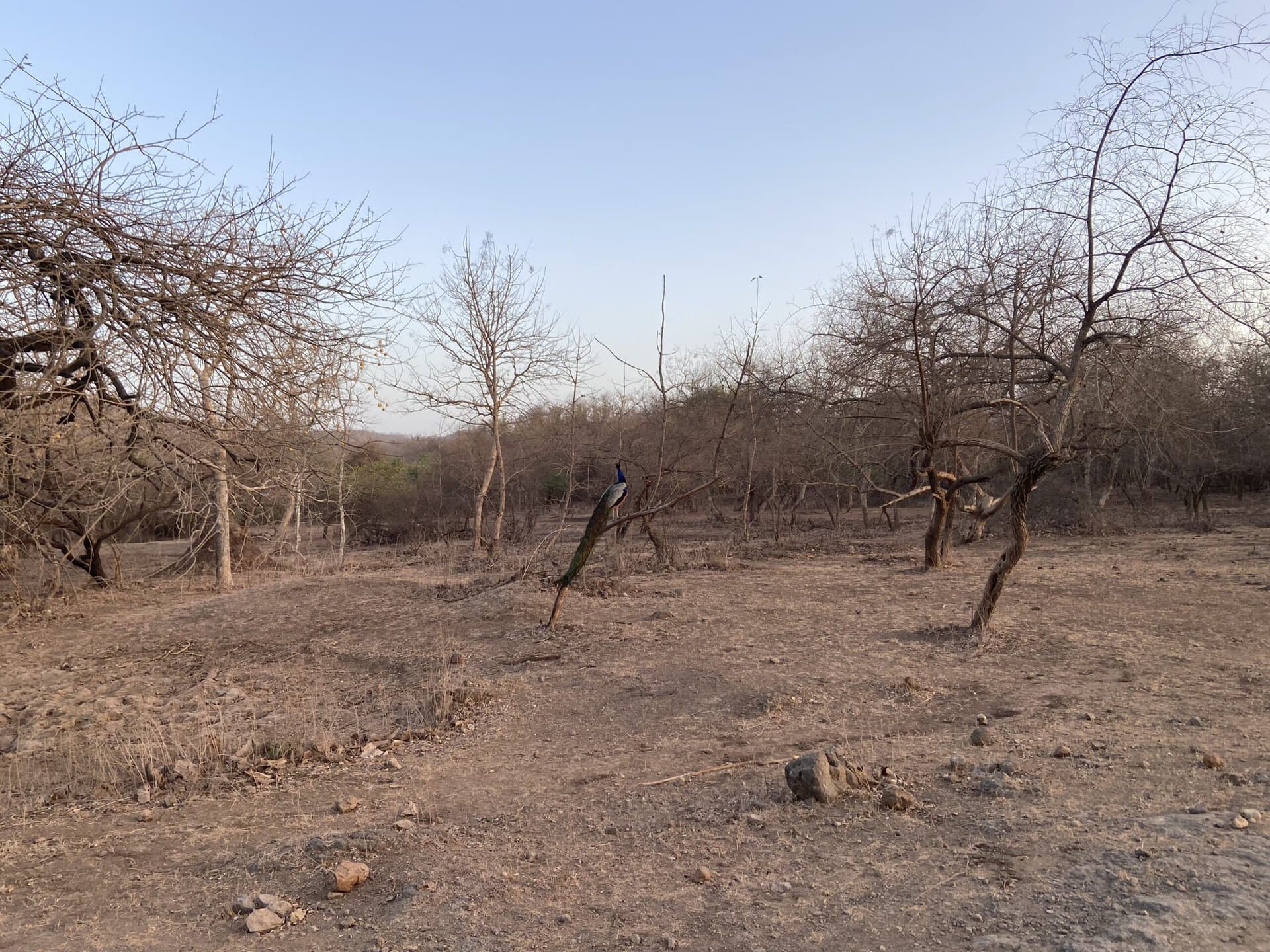
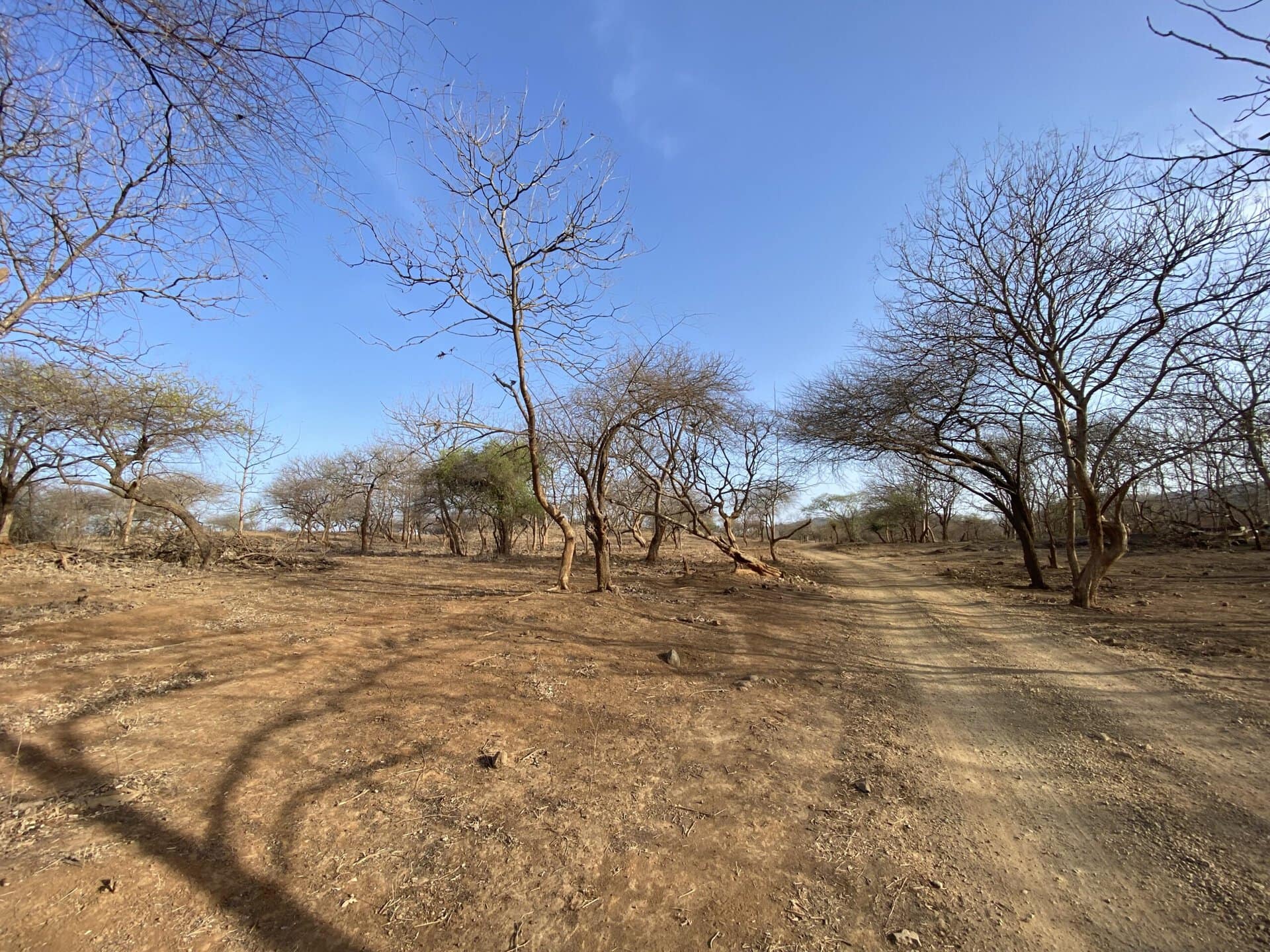
The Gir National Park is mainly dry deciduous forest. The forest is dry and brown in the dry season and gets covered in green post-monsoon. As we visited just after summer, we saw a dry forest everywhere, except for some greenery from evergreen trees close to the entrance gates. A few pictures of the landscape we saw on the safaris.
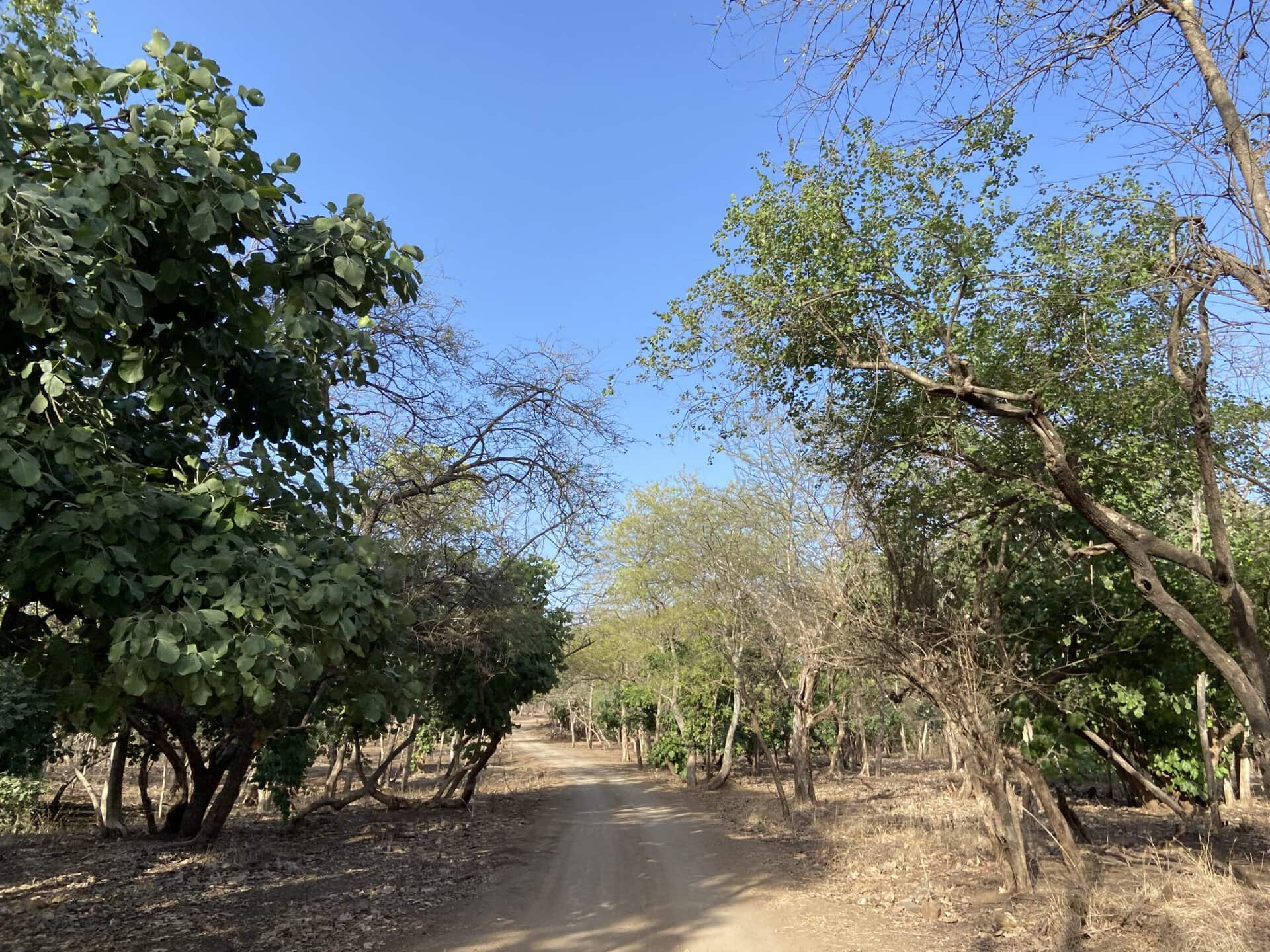
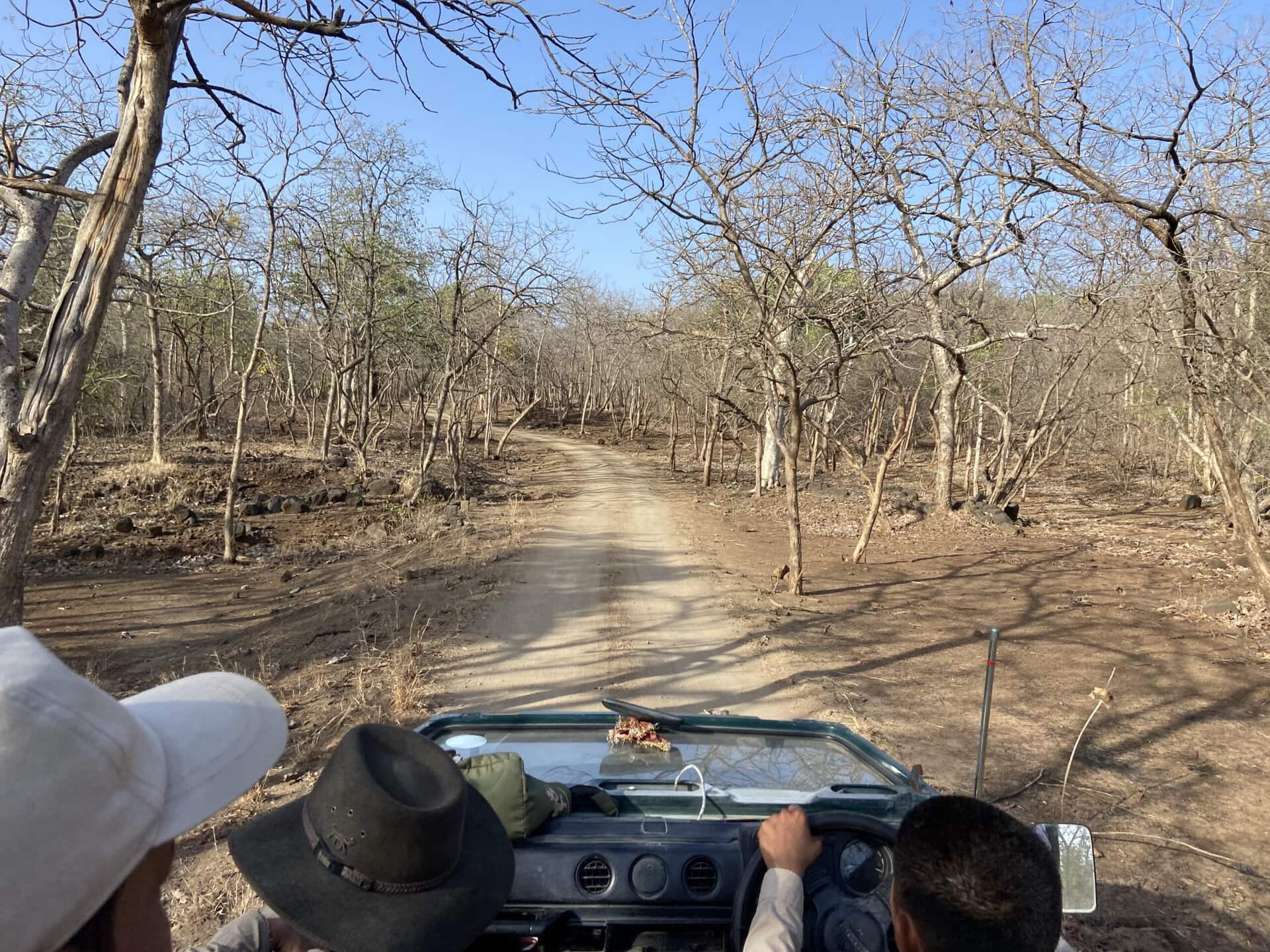
The Routine
We had a total of 6 safaris and the following was our daily routine.
Every day, we assembled at 5:00 in the morning for a cup of tea and would proceed to Sinh Sadan. We would then wait for the driver, and guide to arrive with the safari vehicle. The safaris started at 6:00. The morning safari ended at 9 and we were back at homestay at 9:30 in time for breakfast. We rested after breakfast till lunch at 1:30.
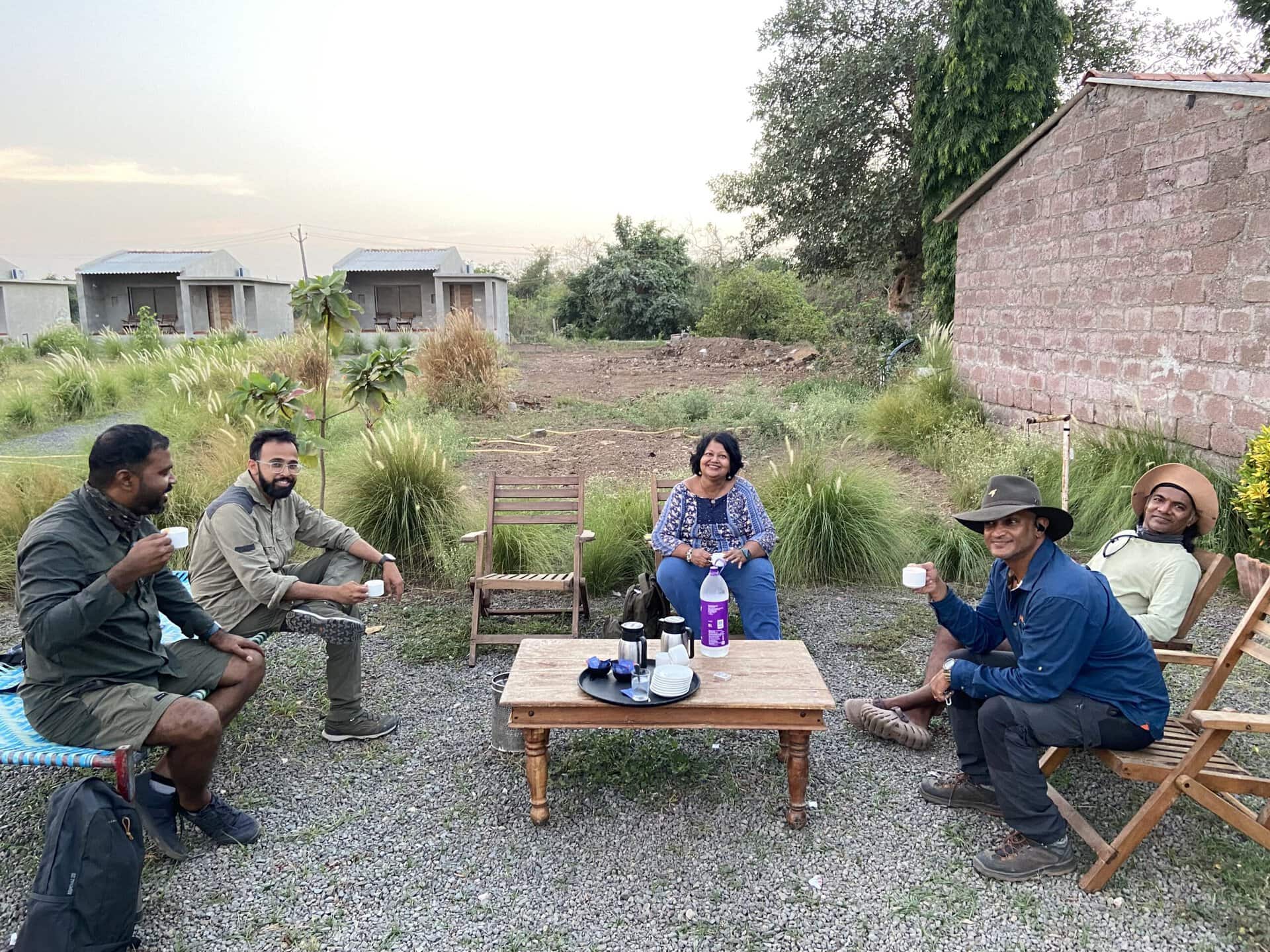
In the afternoon, we left the homestay for the evening Safari at 3:15. The safari started at 4:00 and ended at 7:00. We were back in the homestay around 7:30, and used to relax with a cup of tea discussing the day’s events, sightings, photography opportunities, show each other the pictures captured in the day etc. We had our dinner at 8:30 and retired at around 9:30.
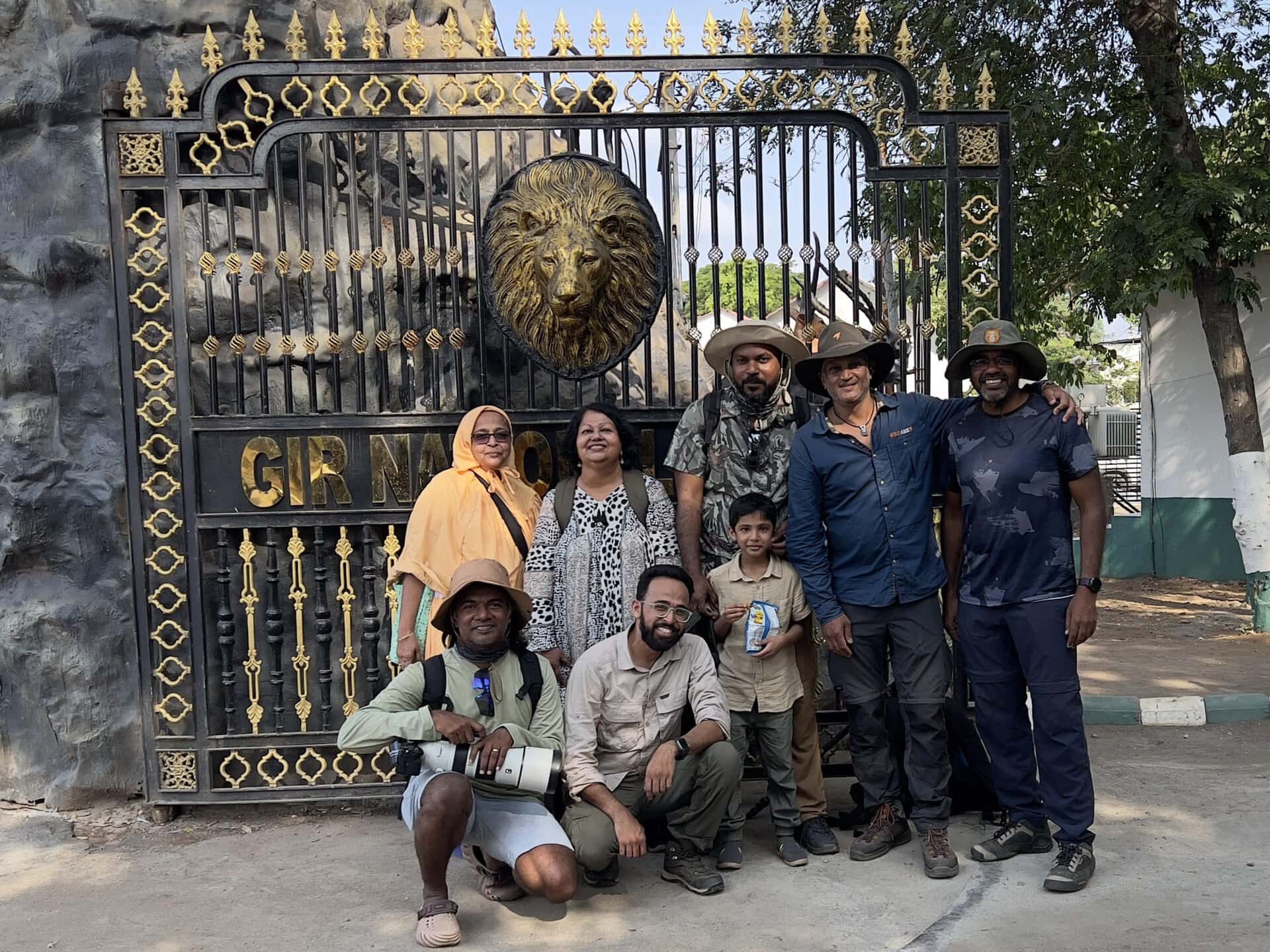
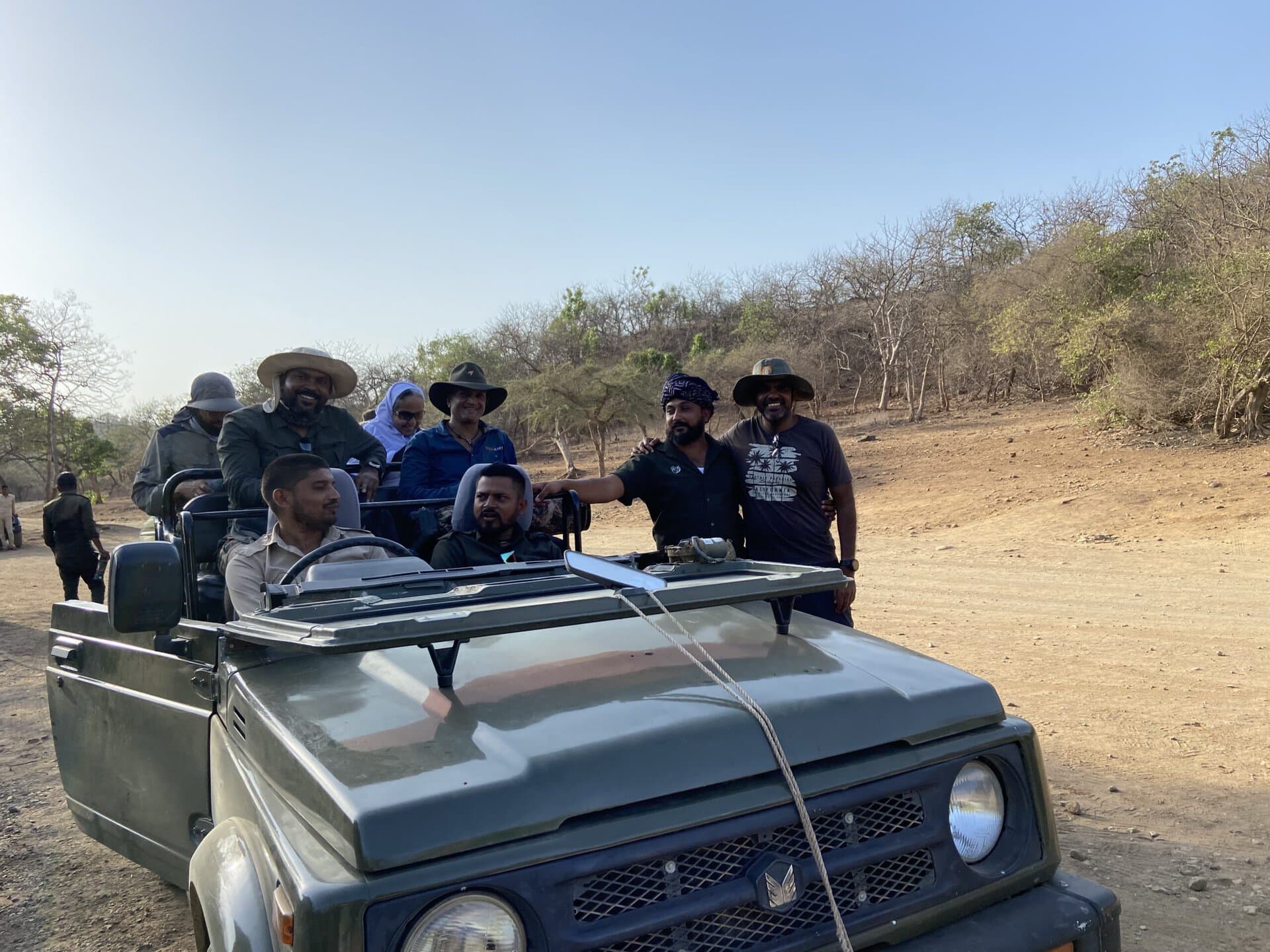
A few pictures of the team.
Relaxing in the evening with a cup of tea.
A group picture after the final safari on the 9th.
A break during one of the safaris. This is the only place where we are allowed to get off the safari vehicles.
I will cover each safari in detail from the next post.
Safari #1
6th June 2024, 4:00 PM to 7:00 PM
This was our first safari. As we entered the park, the driver and guide
were on the phone with some trackers and they got information of movement of a single male lion somewhere on the route. About 30 minutes into the safari, we came across one of the trackers who said there was a lion somewhere nearby, and it may cross the road to visit a nearby water hole.
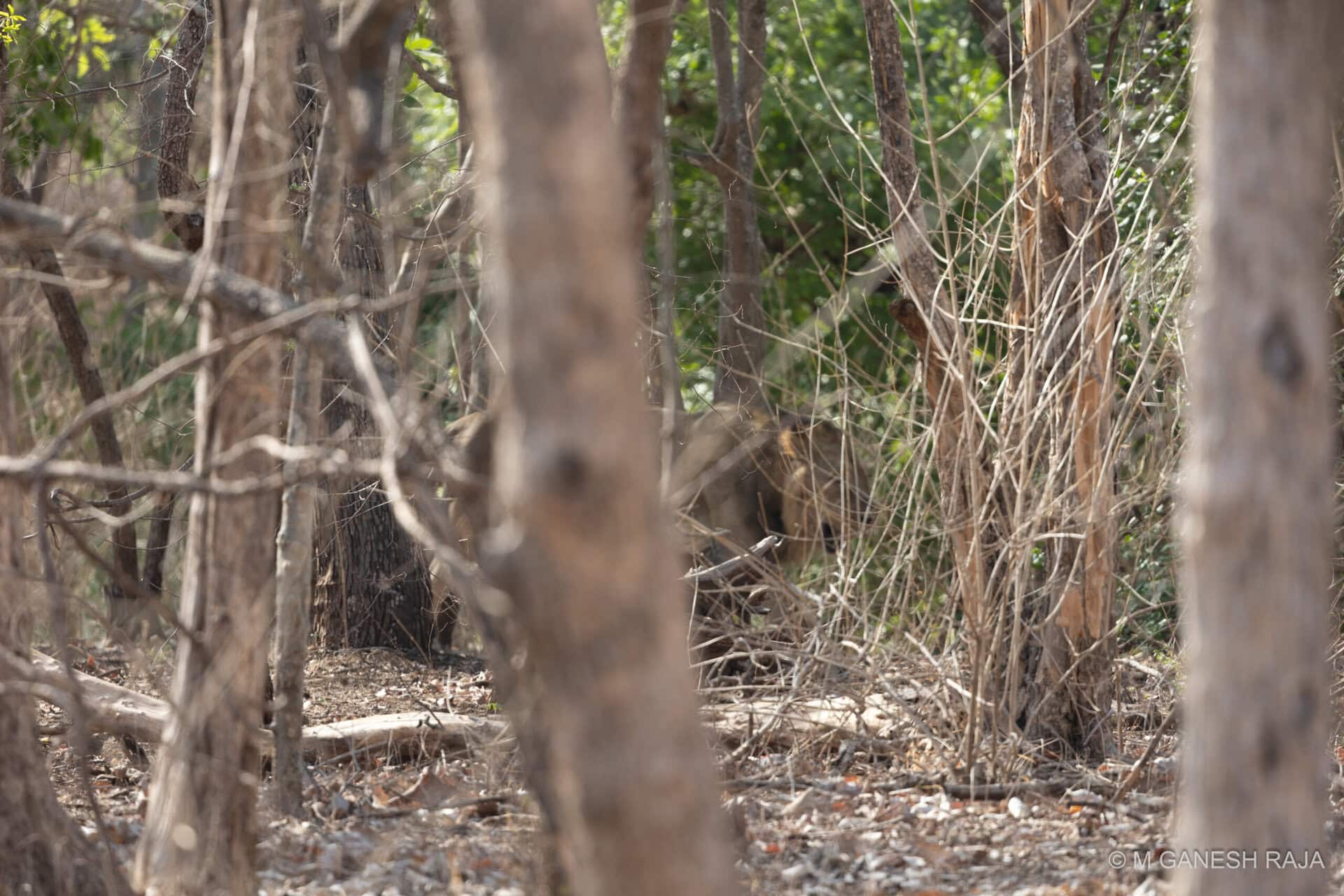
So the driver stopped the vehicle and we waited. After waiting for about 15 minutes, I saw a movement in the bushes and I had the first sighting of a big cat in my life – an adult male lion.
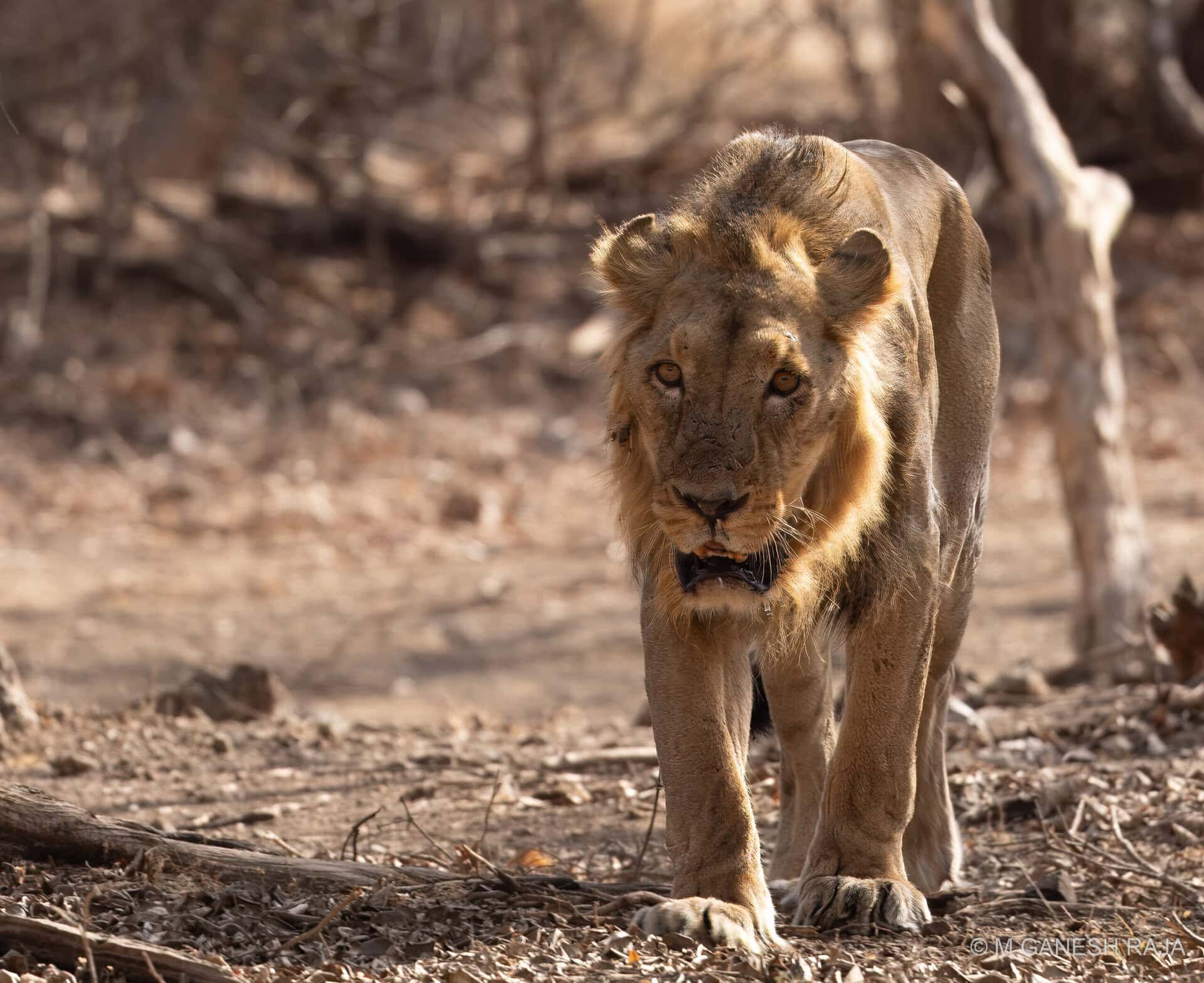
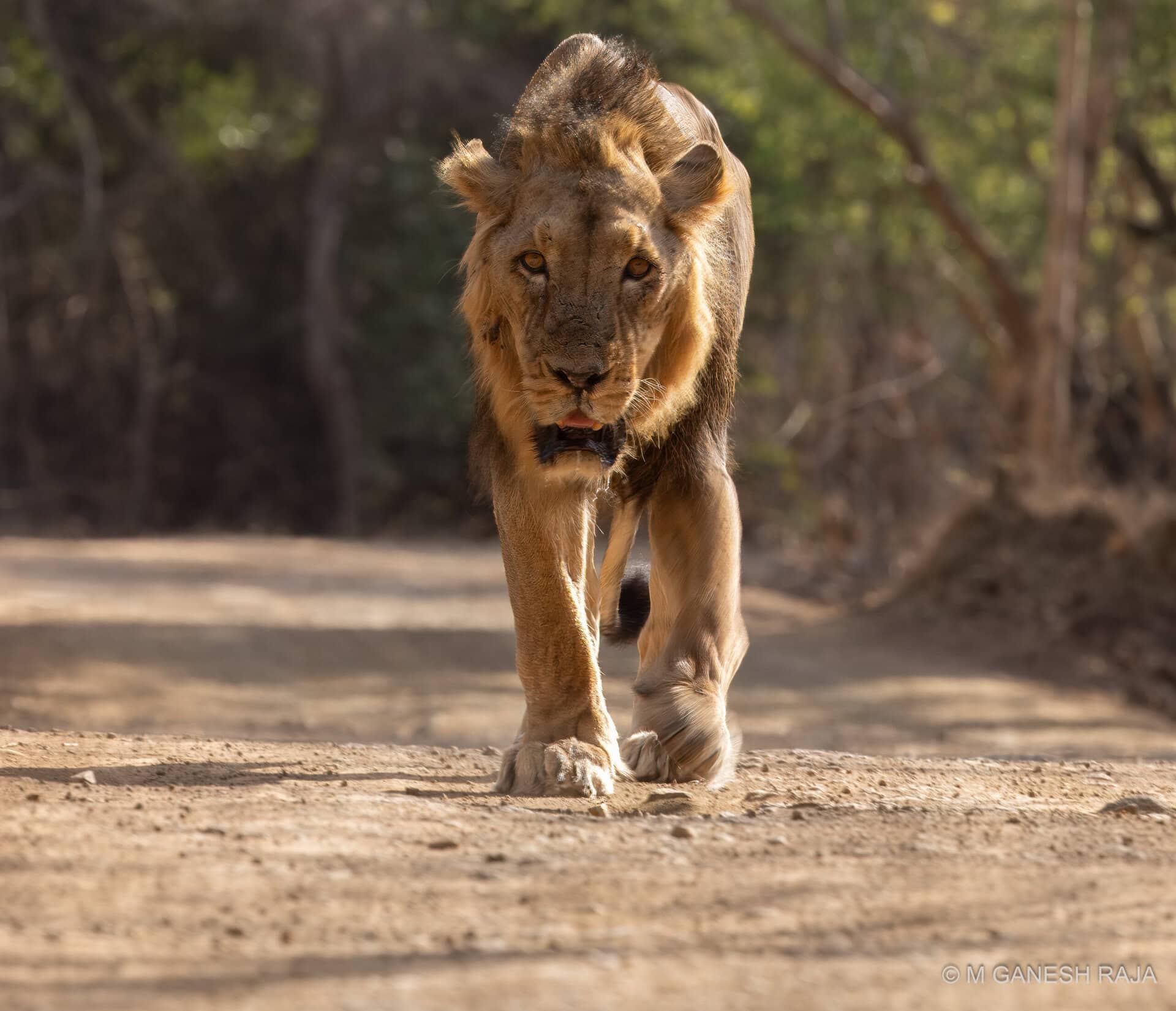
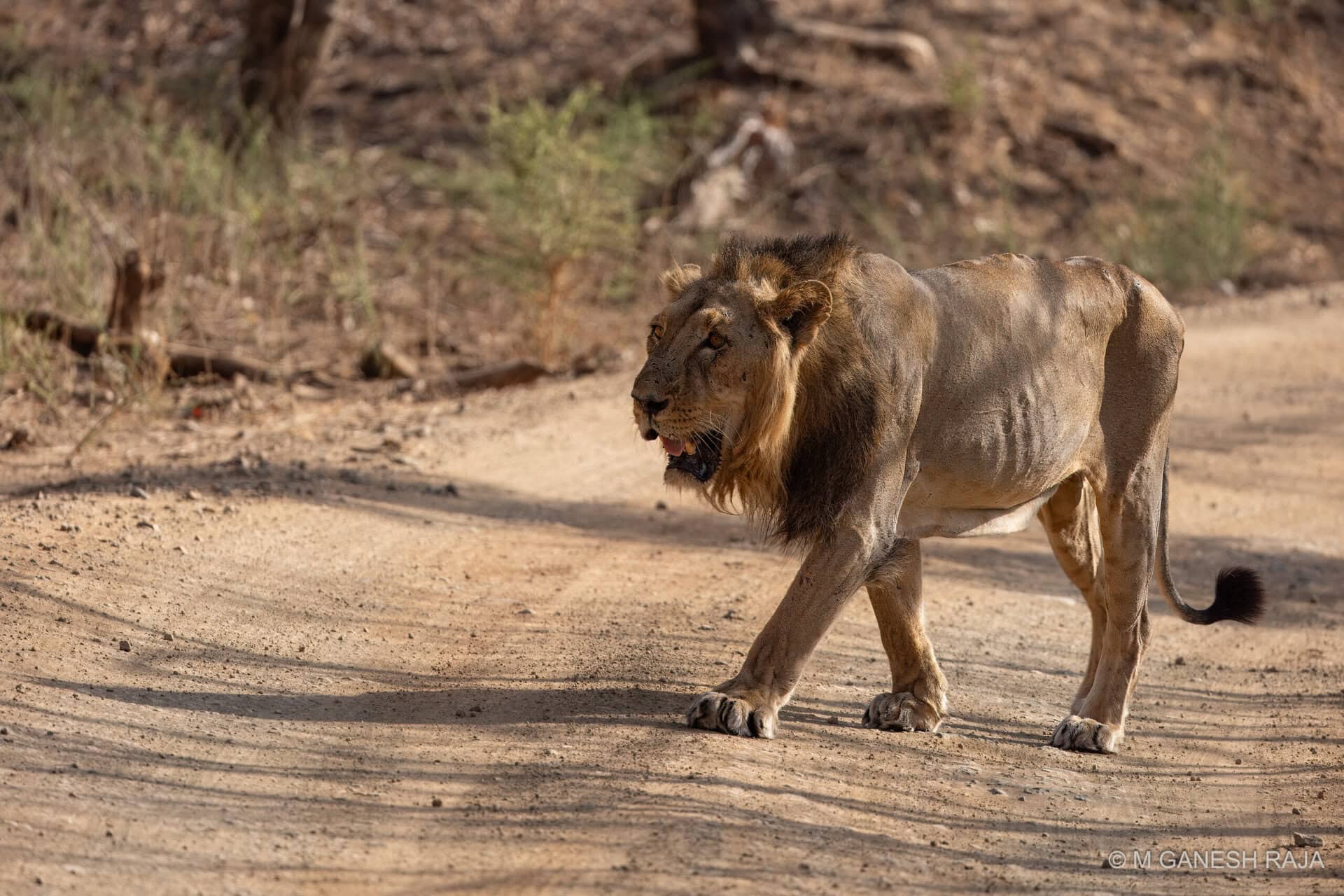
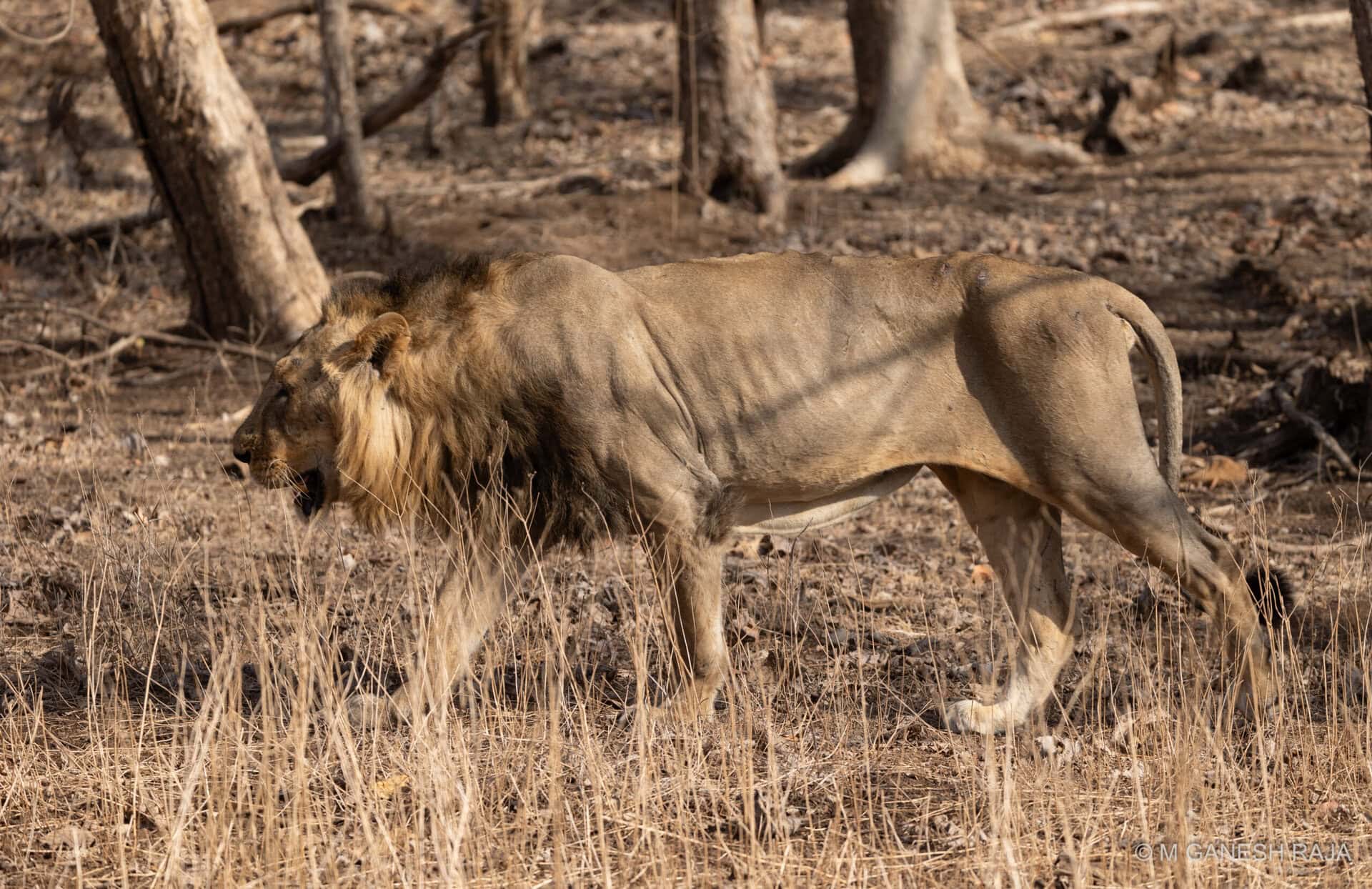
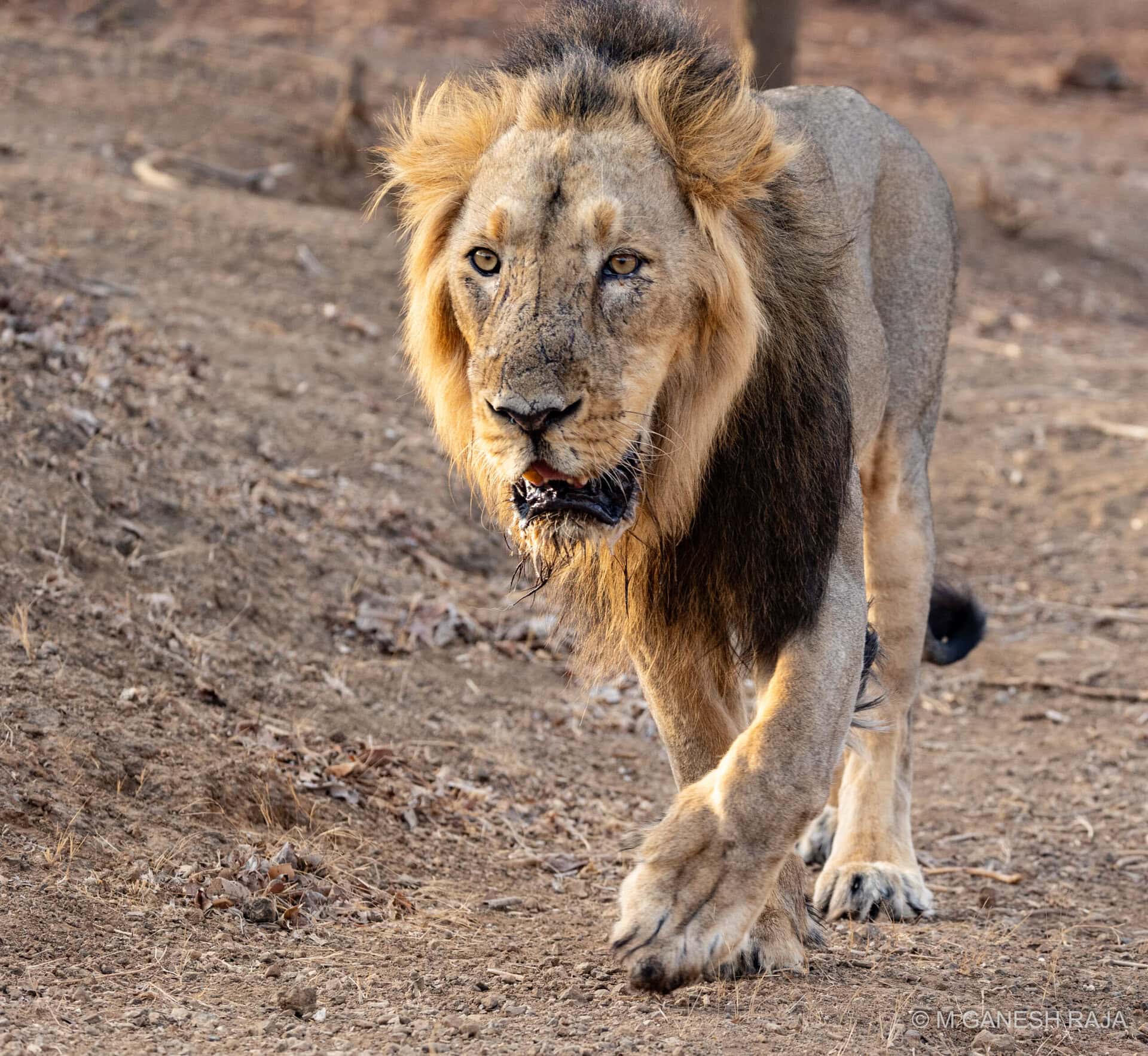
As predicted by the tracker, the lion came on the road and started walking towards a water hole about half a kilometer away. The driver kept a sufficient distance between the vehicle and the lion. As the lion would get closer, he would drive away and stop at a distance. The lion was unperturbed by our presence and kept walking on the road. I got good eye-level shots of the lion walking on the road towards us. After some distance, the lion went inside the forest to a waterhole very close to the road.
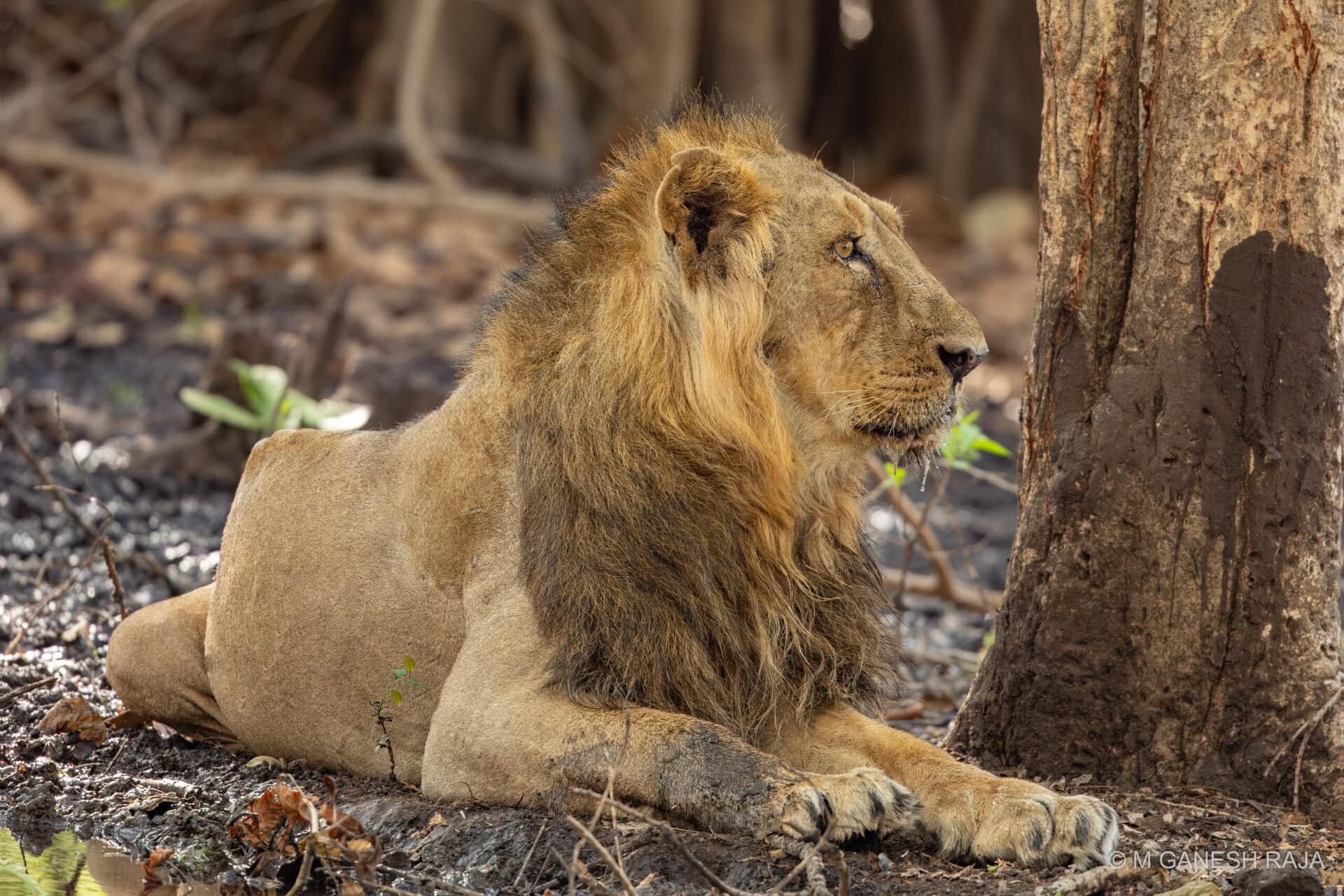
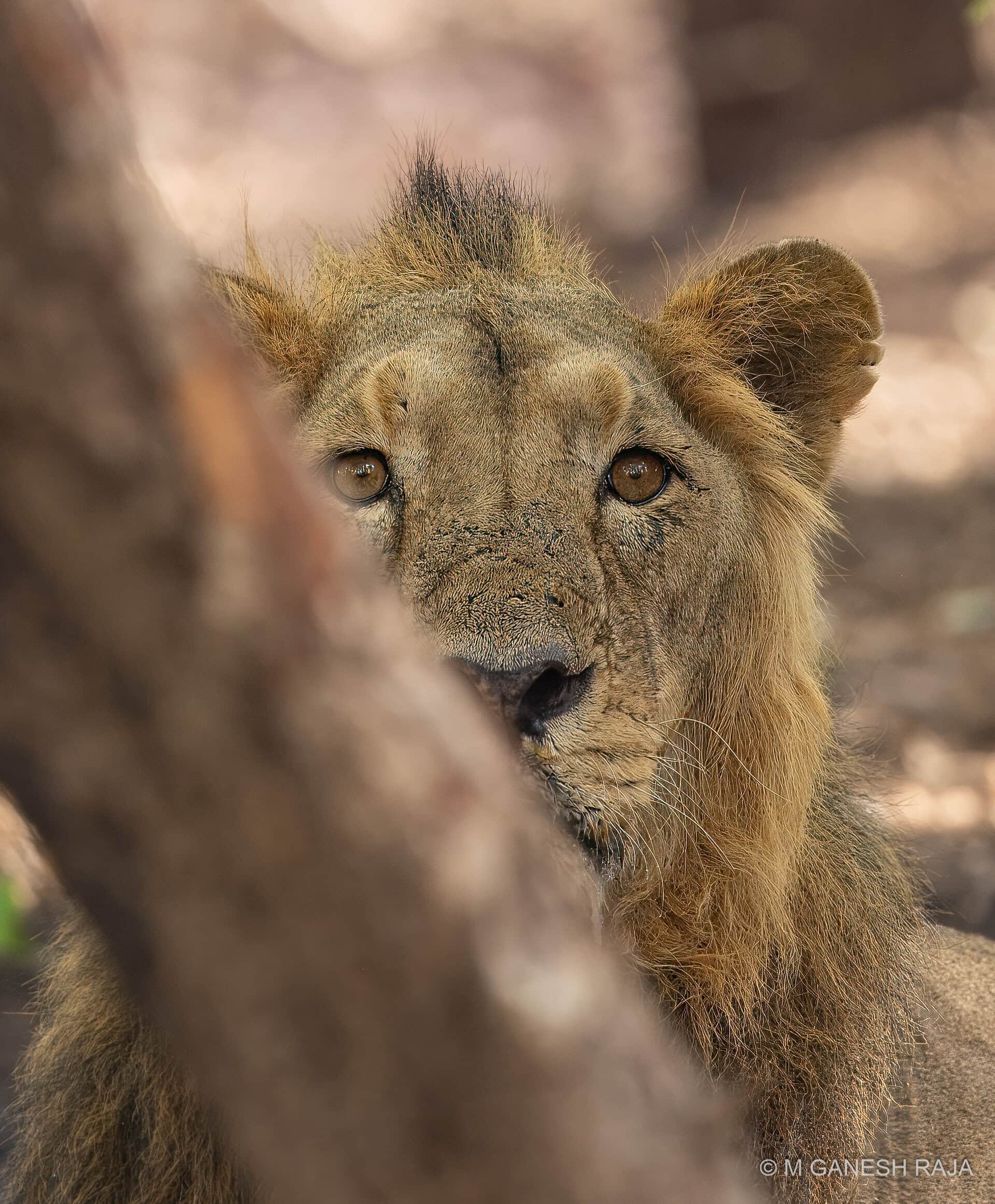
The driver parked the vehicle from where we got a direct line of sight of the lion quenching its thirst and resting. We spent more than 45 minutes in this spot photographing the lion and then continued. After this, we did not have any more lion sightings.
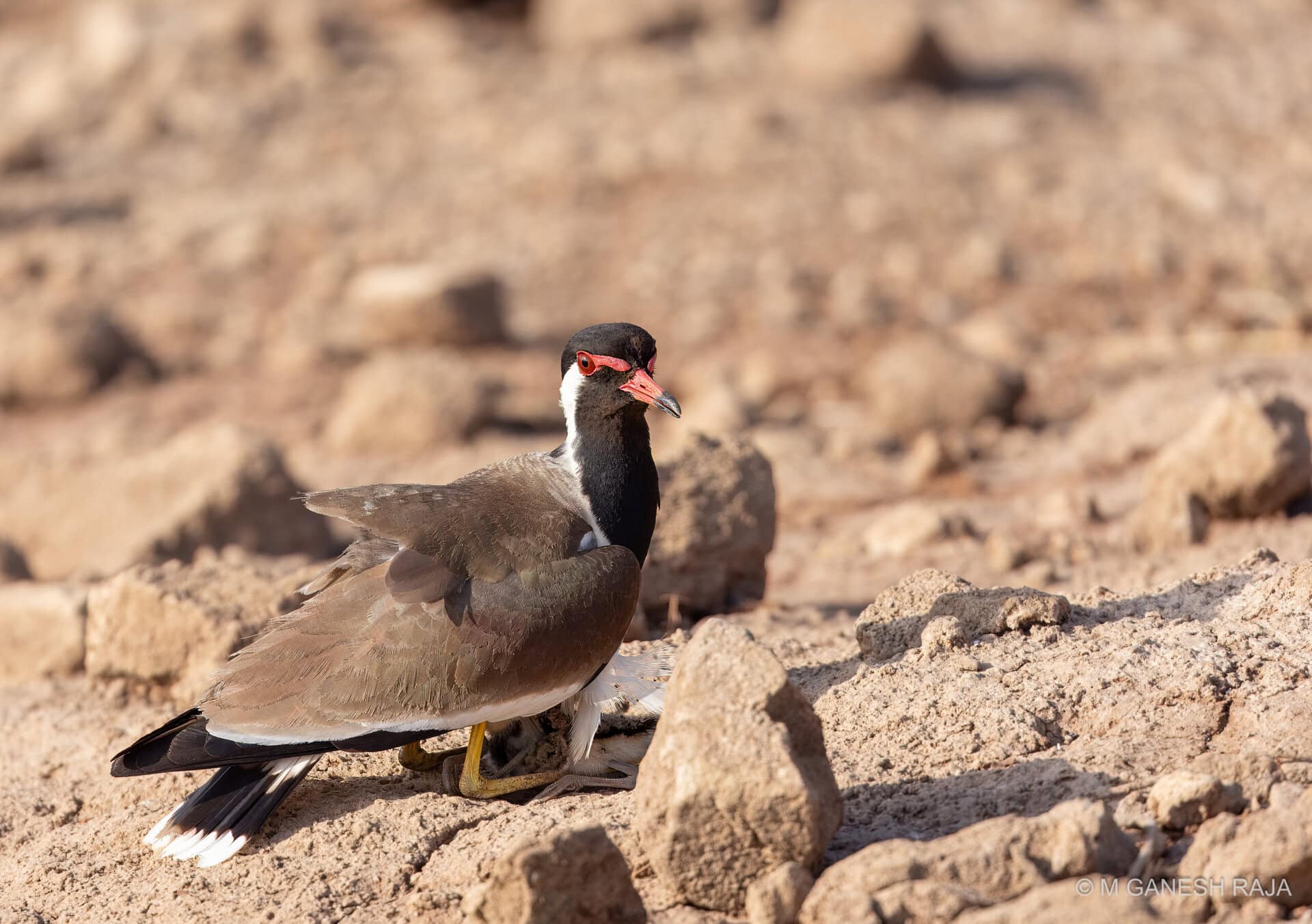
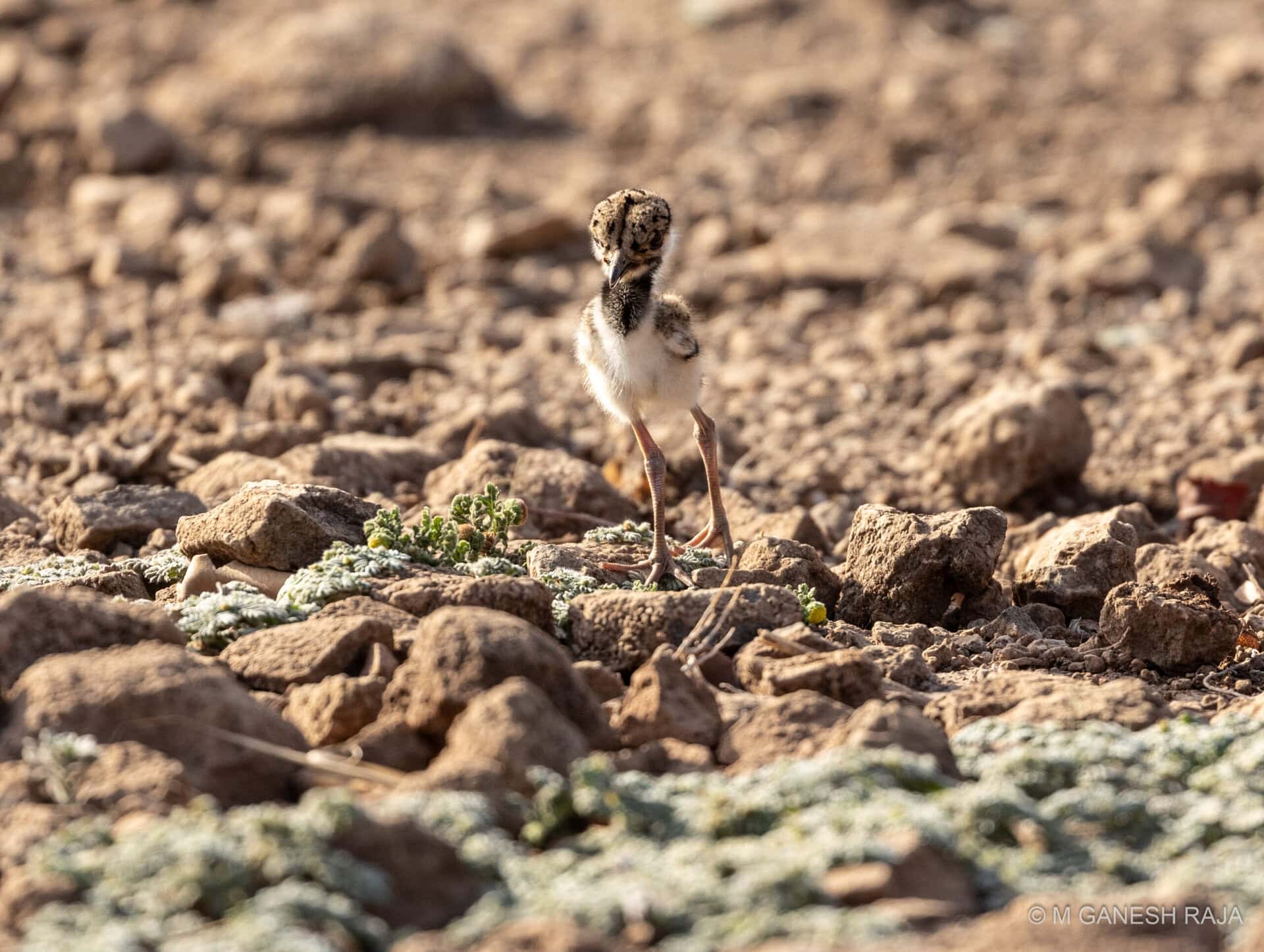
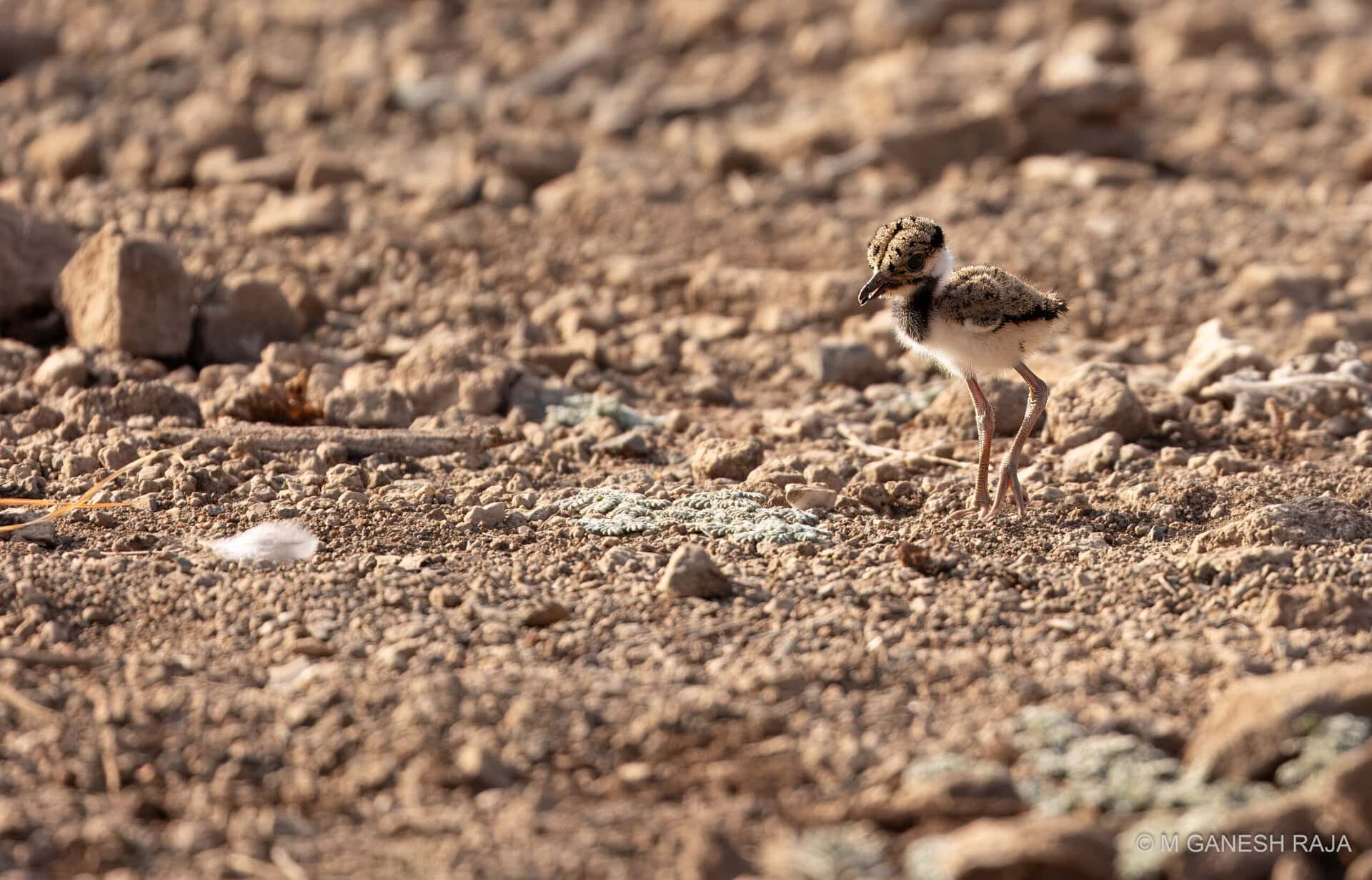
On the way, we spotted a Red Wattled Lapwing protecting a couple of chicks. It let go of the chicks in a while, and as the chicks walked around, I got a few pictures.
Close to the end of the safari, we got news of the possible movement of lions to a water hole. We waited about 15 minutes near this waterhole, but the lions never arrived. While waiting at this waterhole, I saw a honey buzzard and clicked a picture.
Overall, this safari was a good start to my big cat photography!
A few pictures from this safari.
The tracker Mr. Sulaiman who informed us of the lion movement nearby.
The first glimpse of the lion in the bush.
A wide-angle shot of the lion on the road.
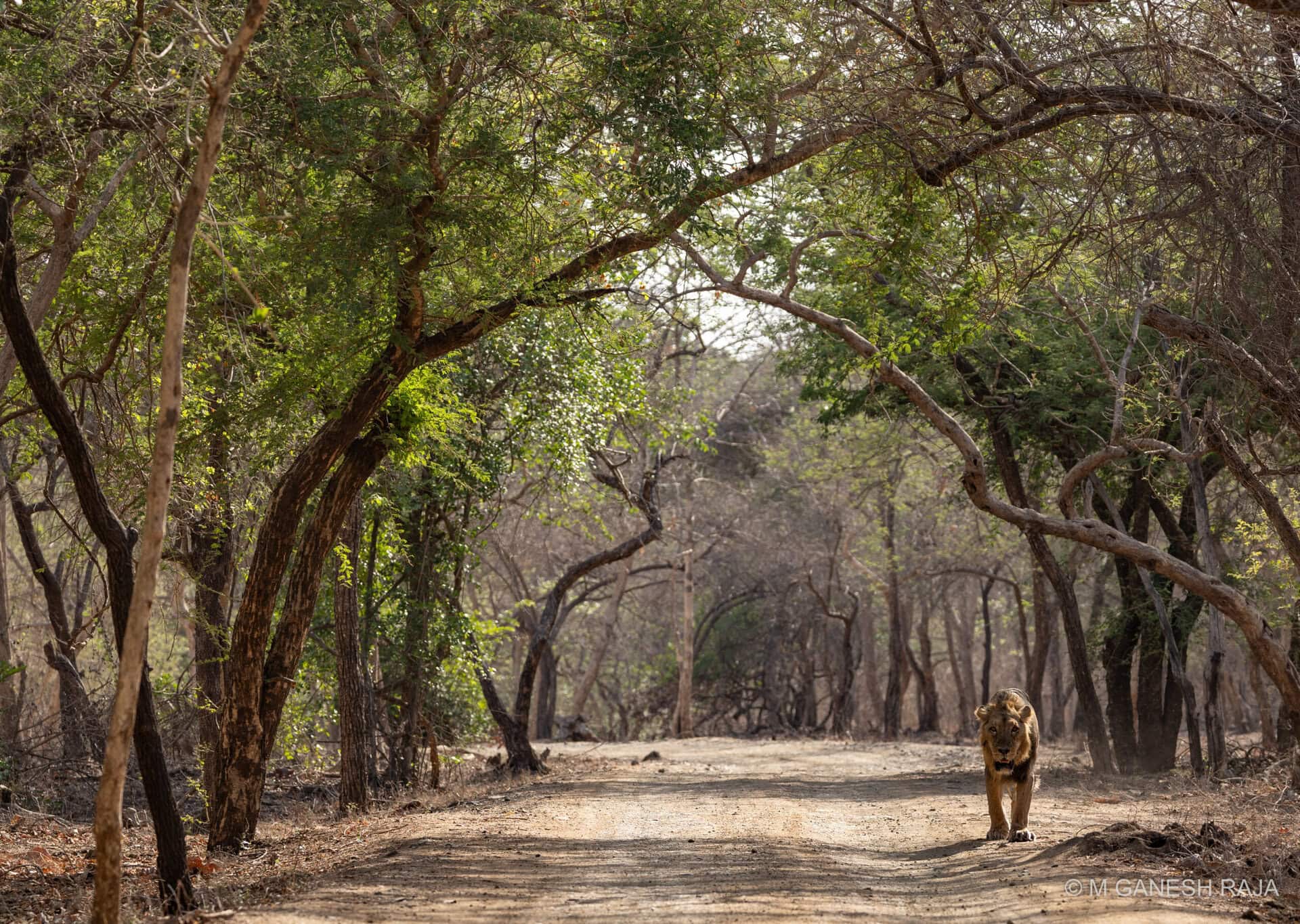
The lion walking on the road.
The lion gets off the road to the waterhole.
The lion drinking water.
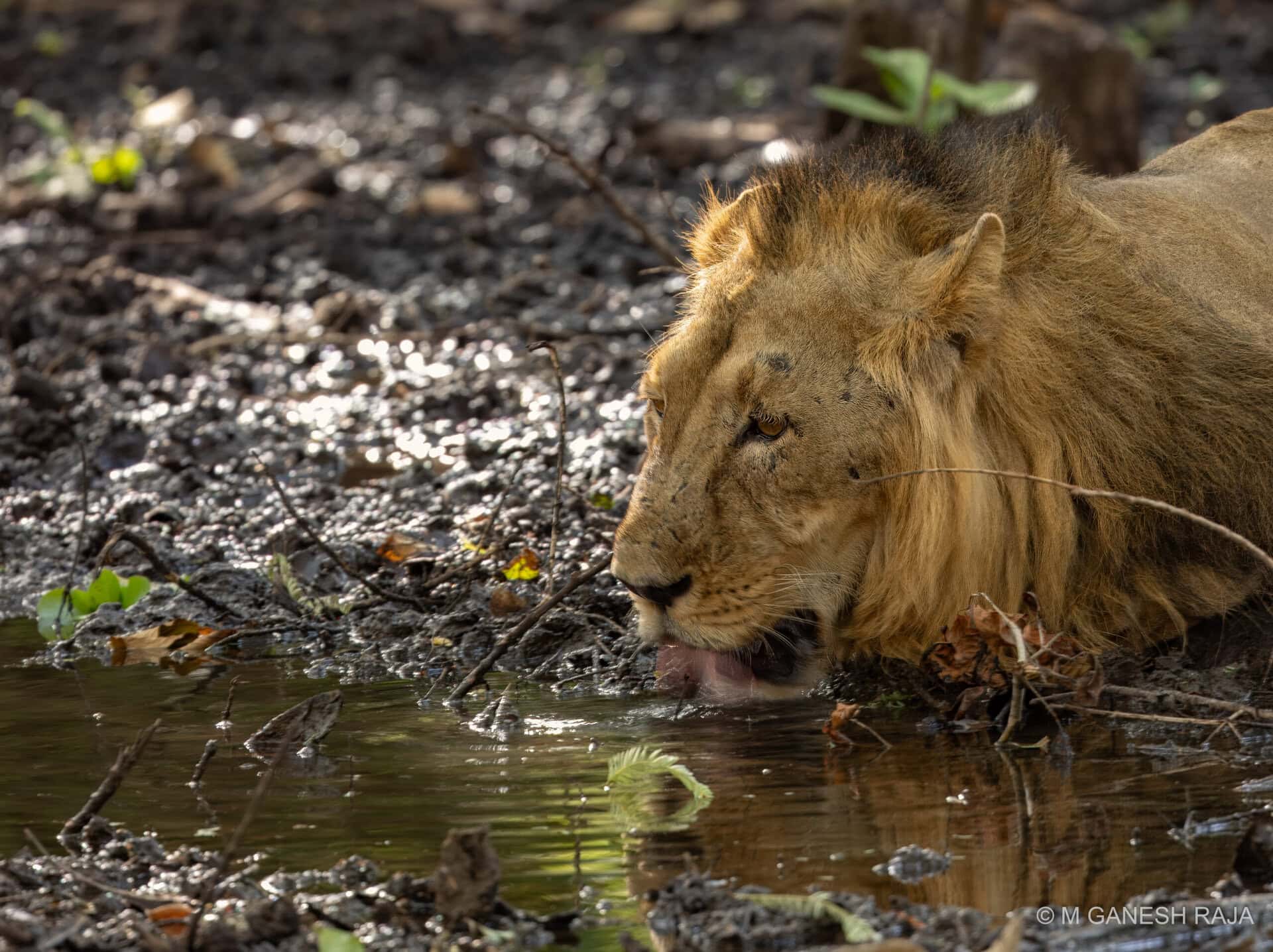
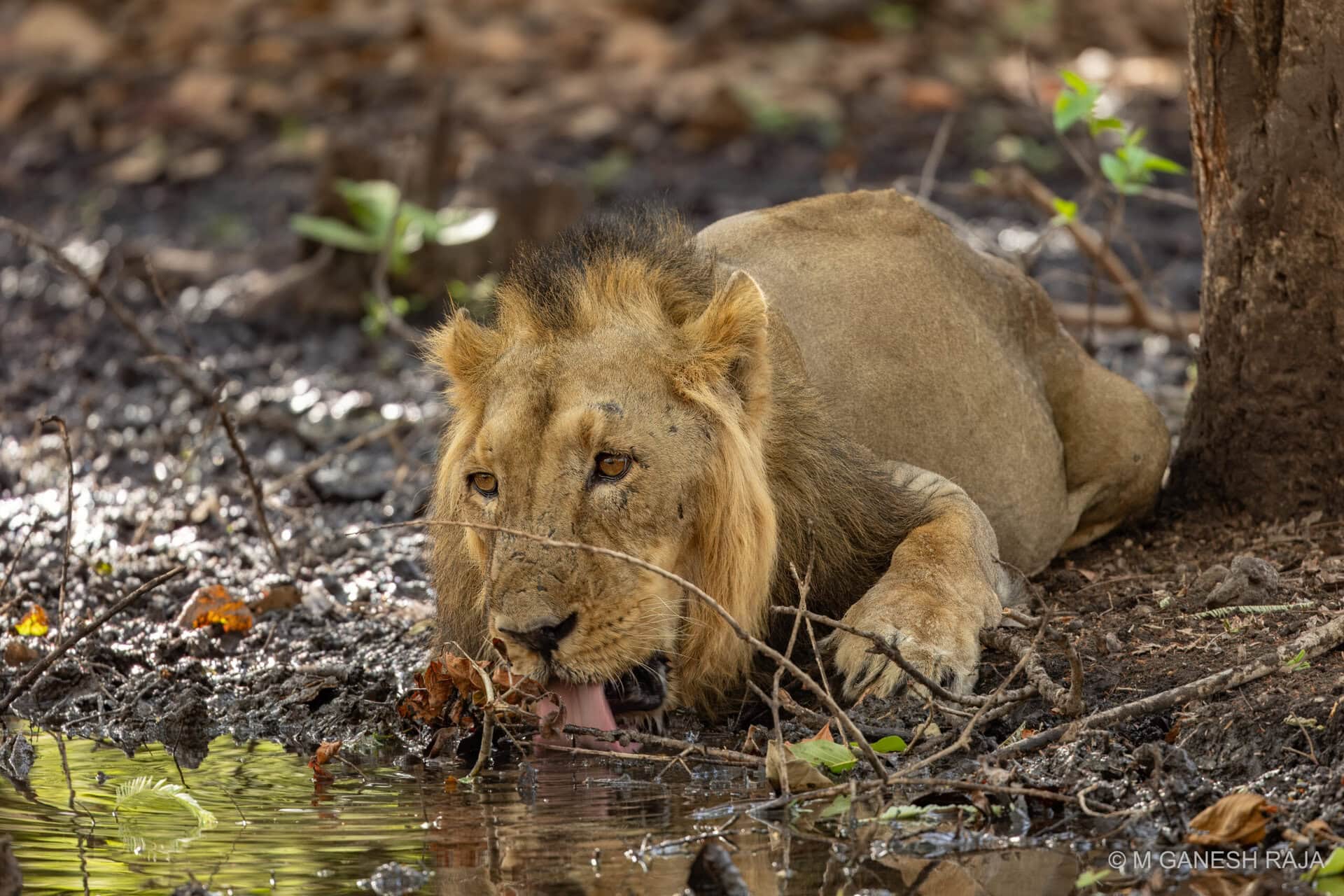
The lion resting after quenching its thirst.
A Red Wattled Lapwing protecting its chicks.
Lapwing chick.
A Honey Buzzard by the water hole.
Safari #2
7th June 2024, 6:00AM to 9:00AM
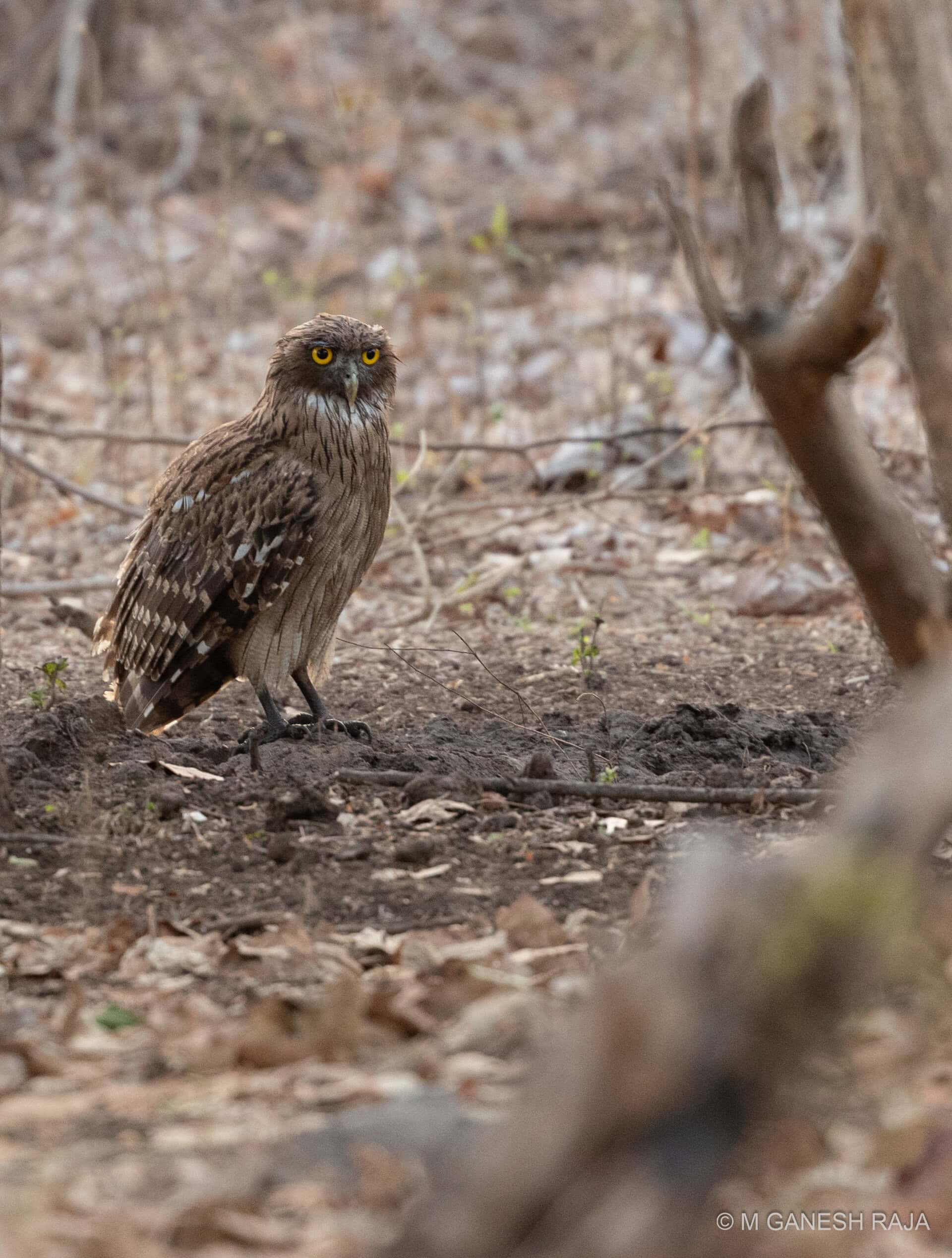
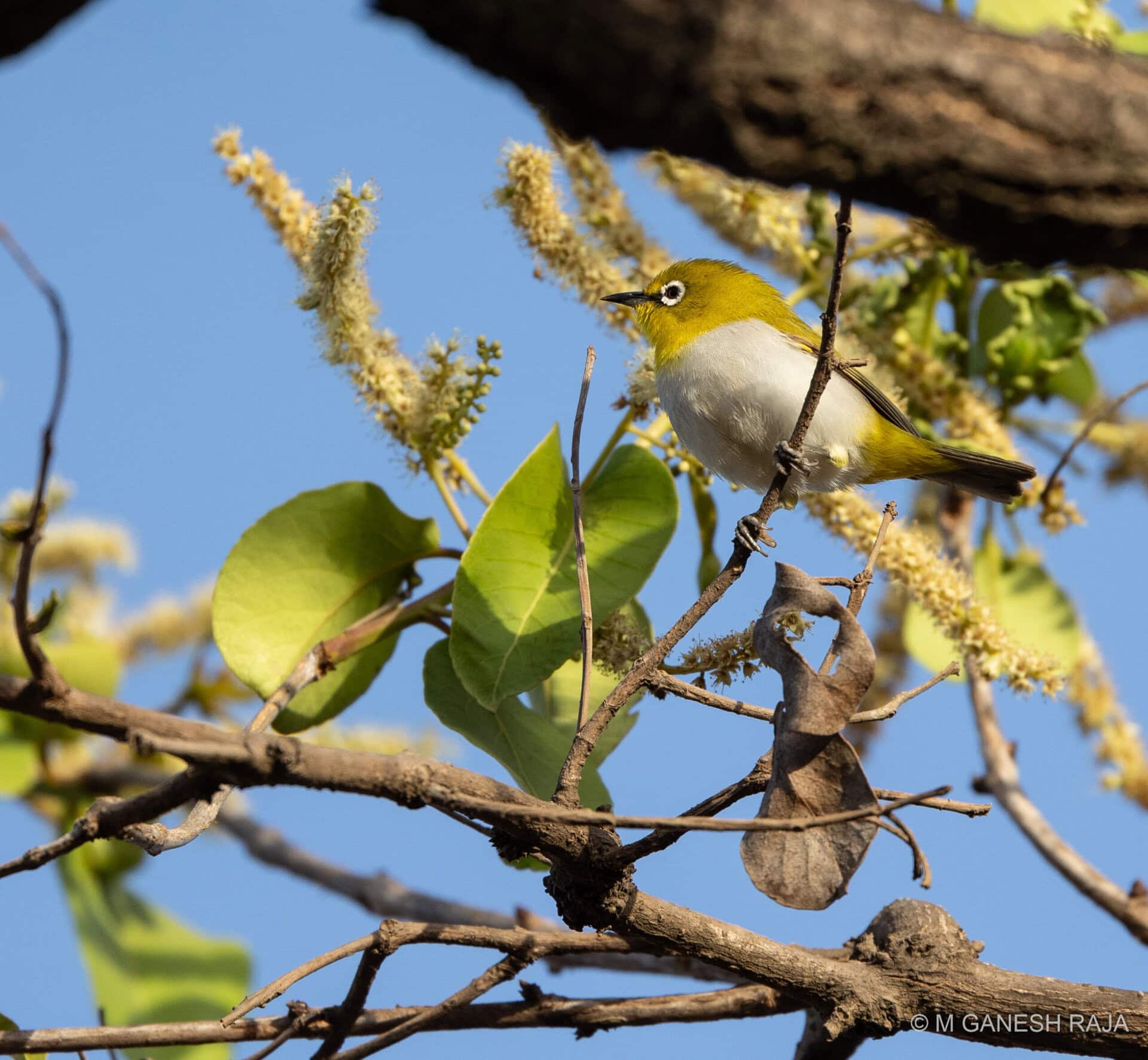
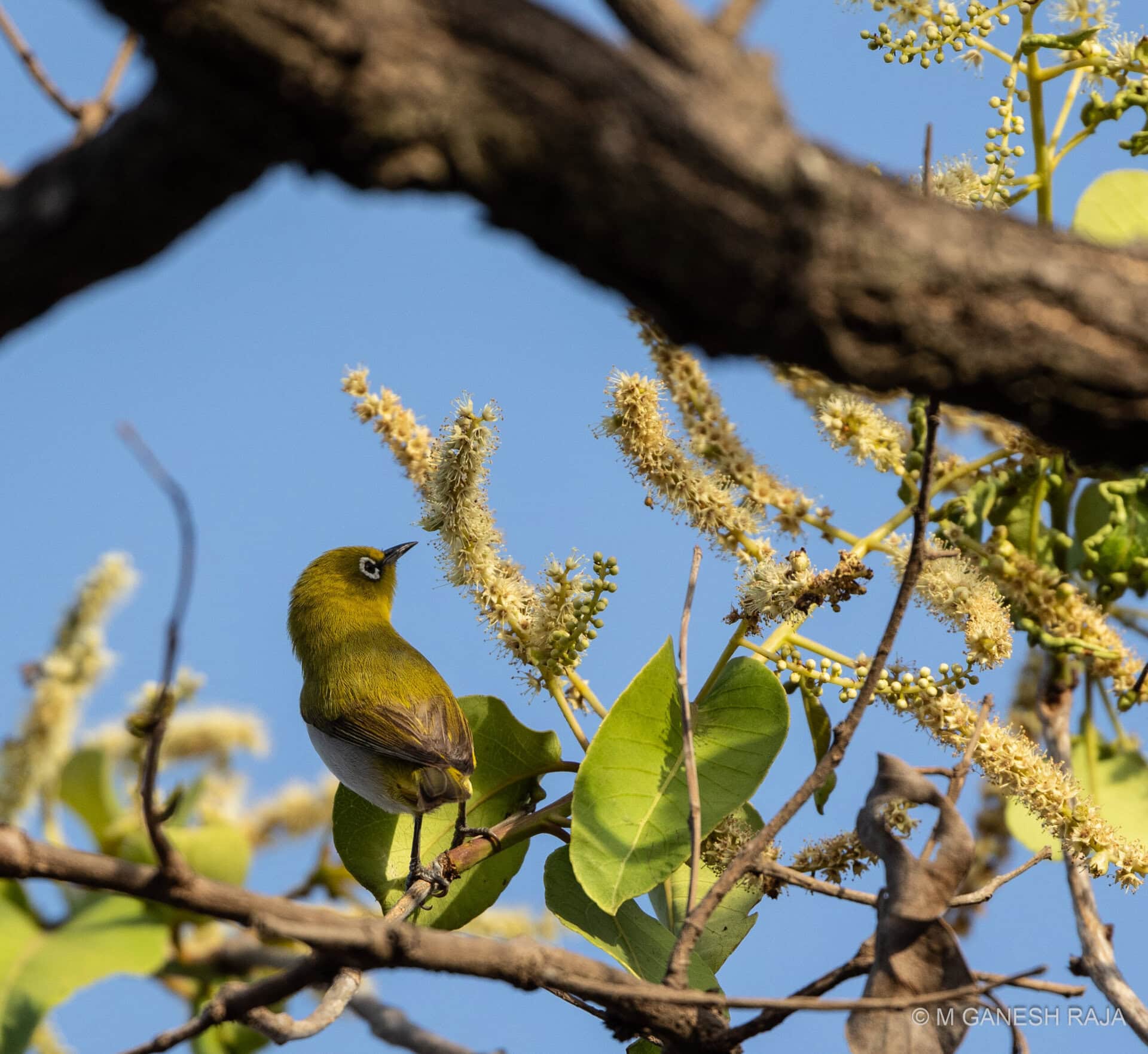
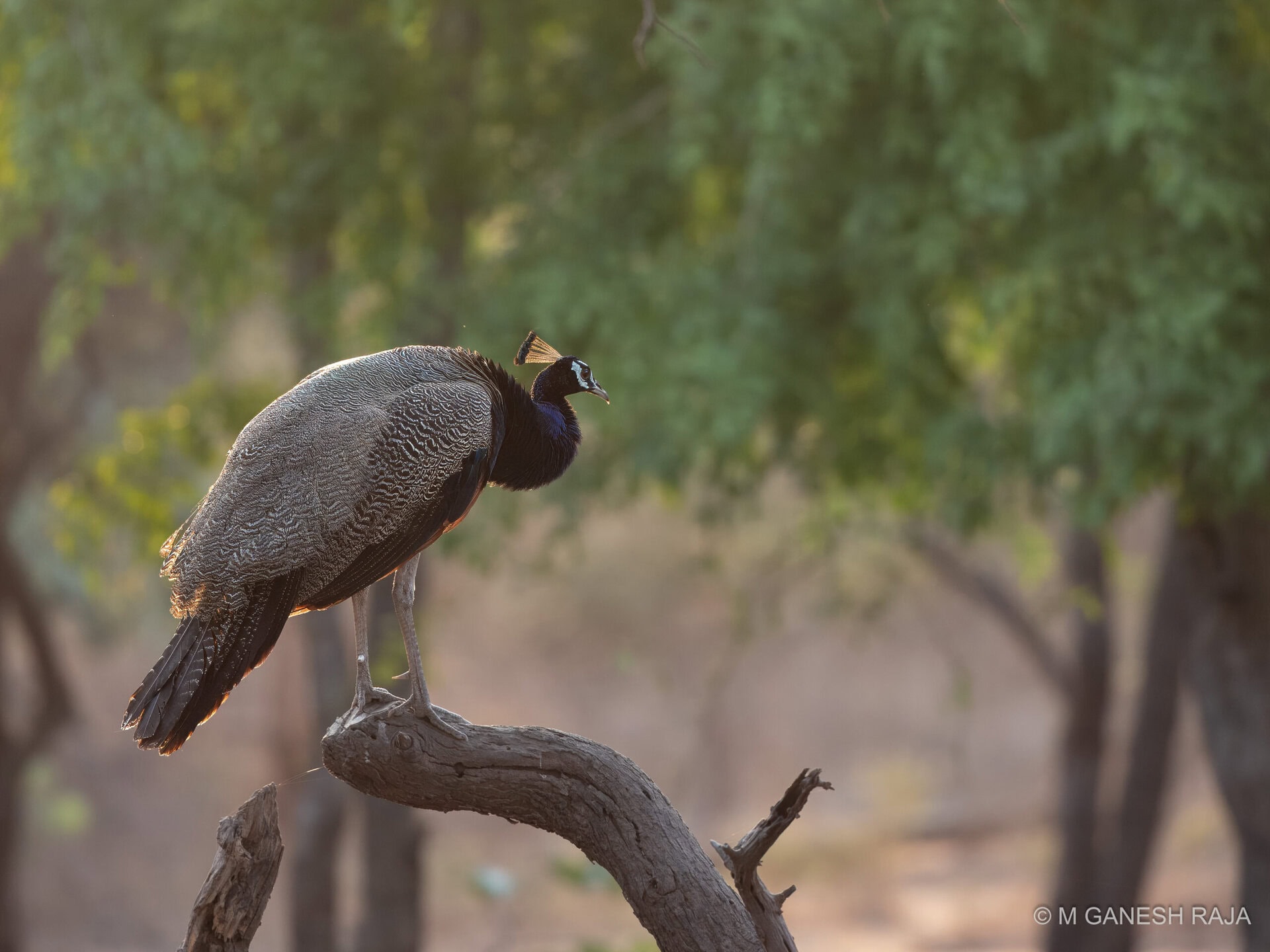
In the first half of the safari, we did not see any lions, but spotted several bird species like the brown fish owl, Indian scops owl, Indian white eye, and the usual Hanuman langurs, spotted deers, peacocks, and peahens.
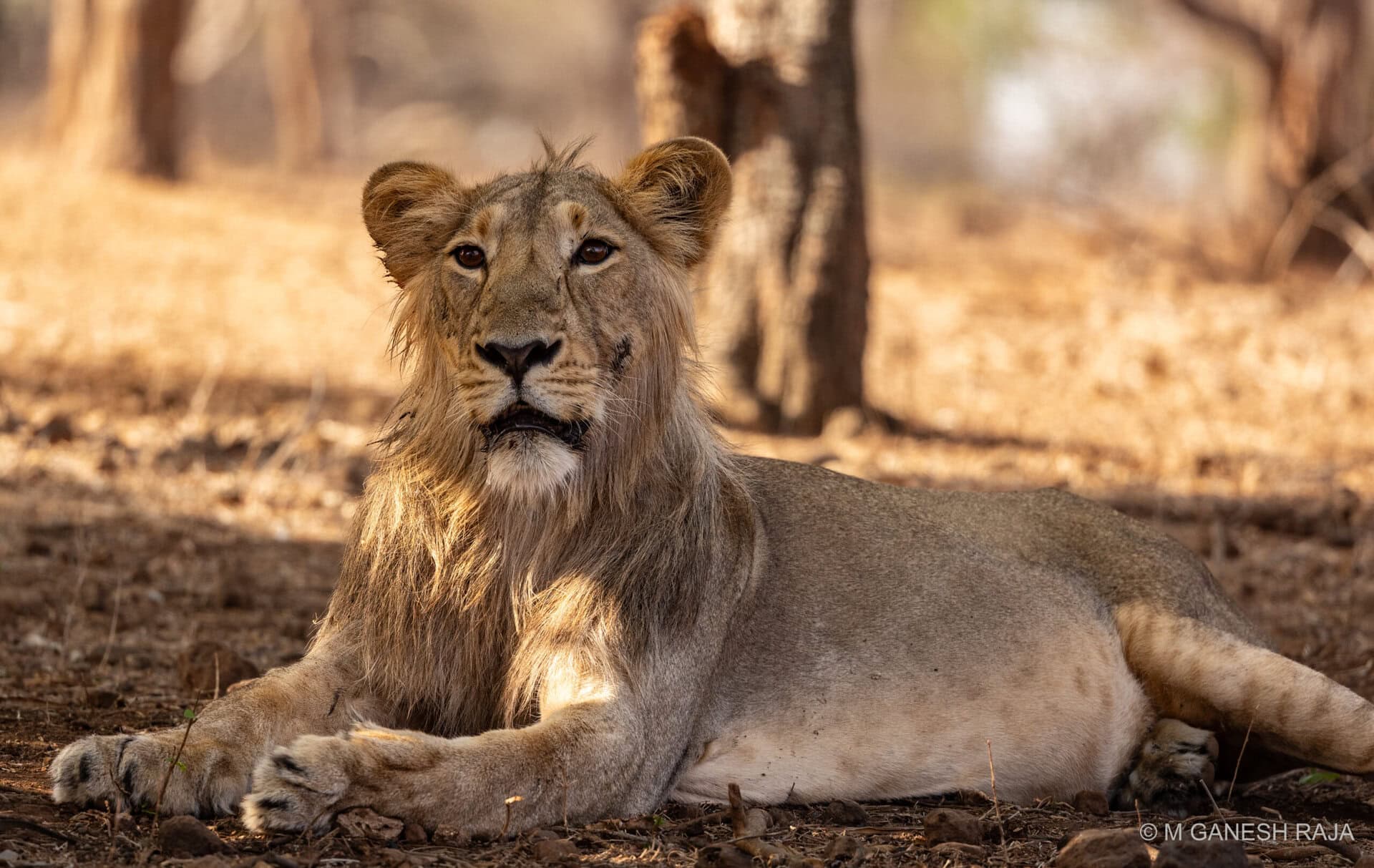
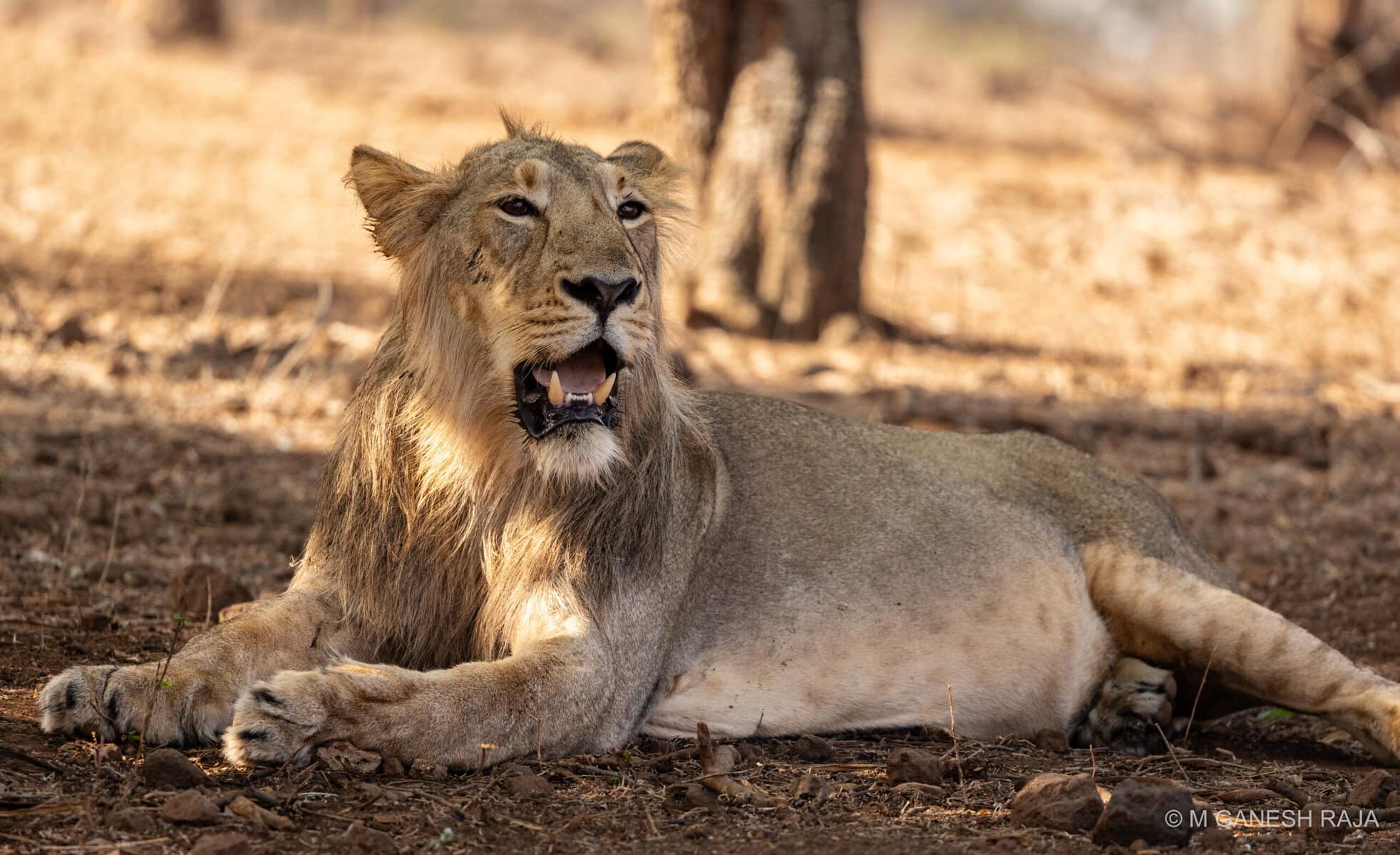
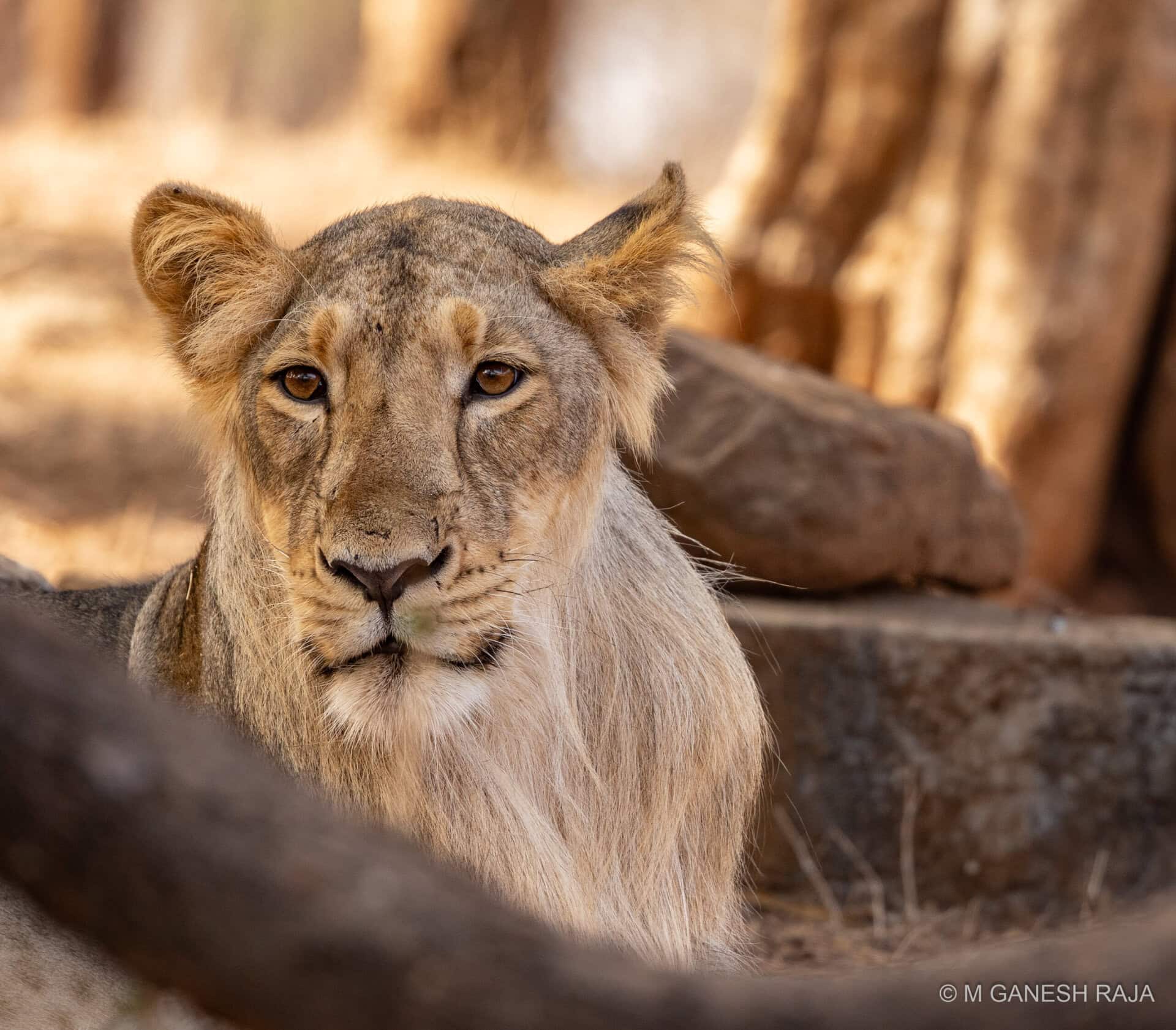
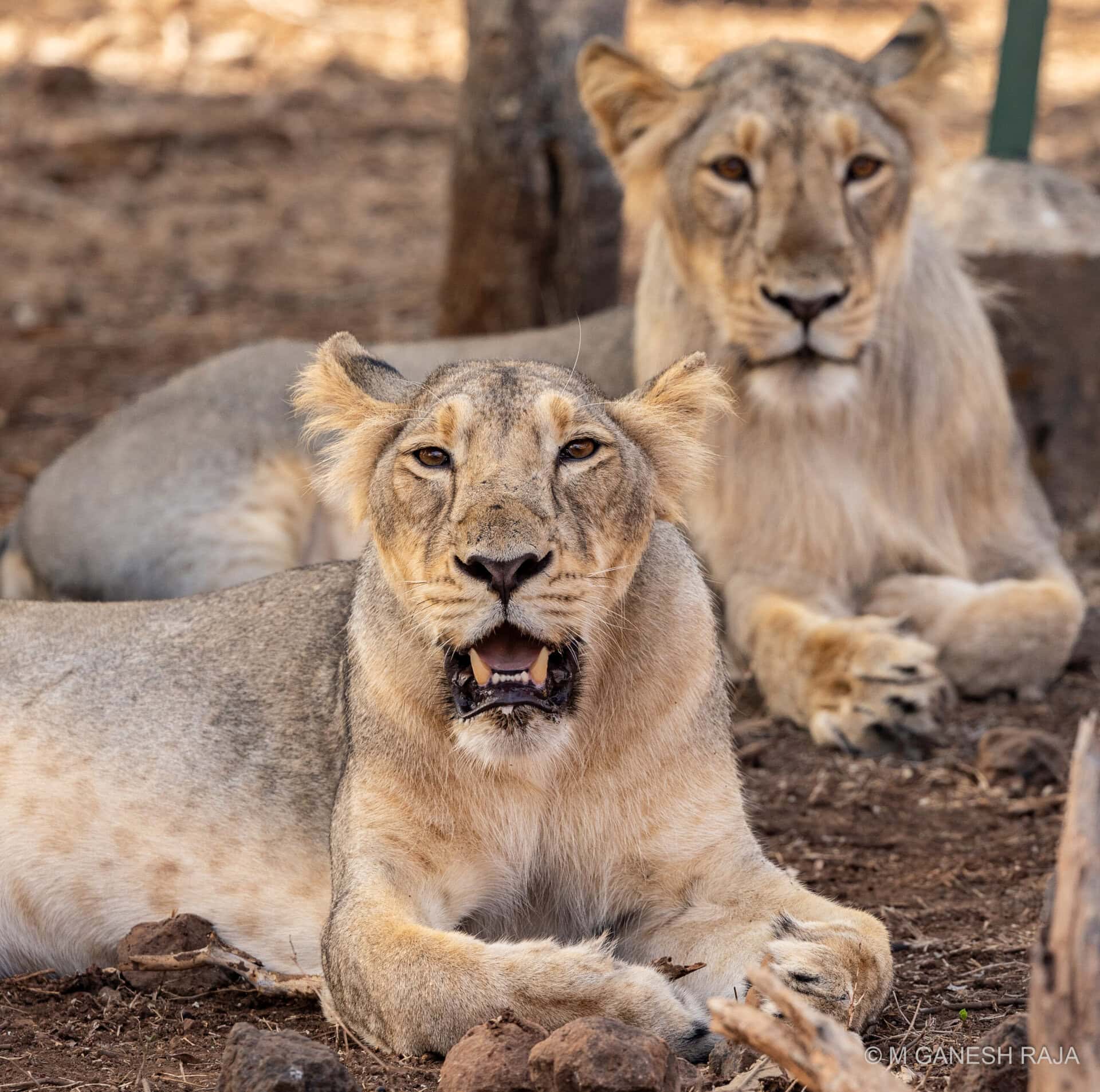
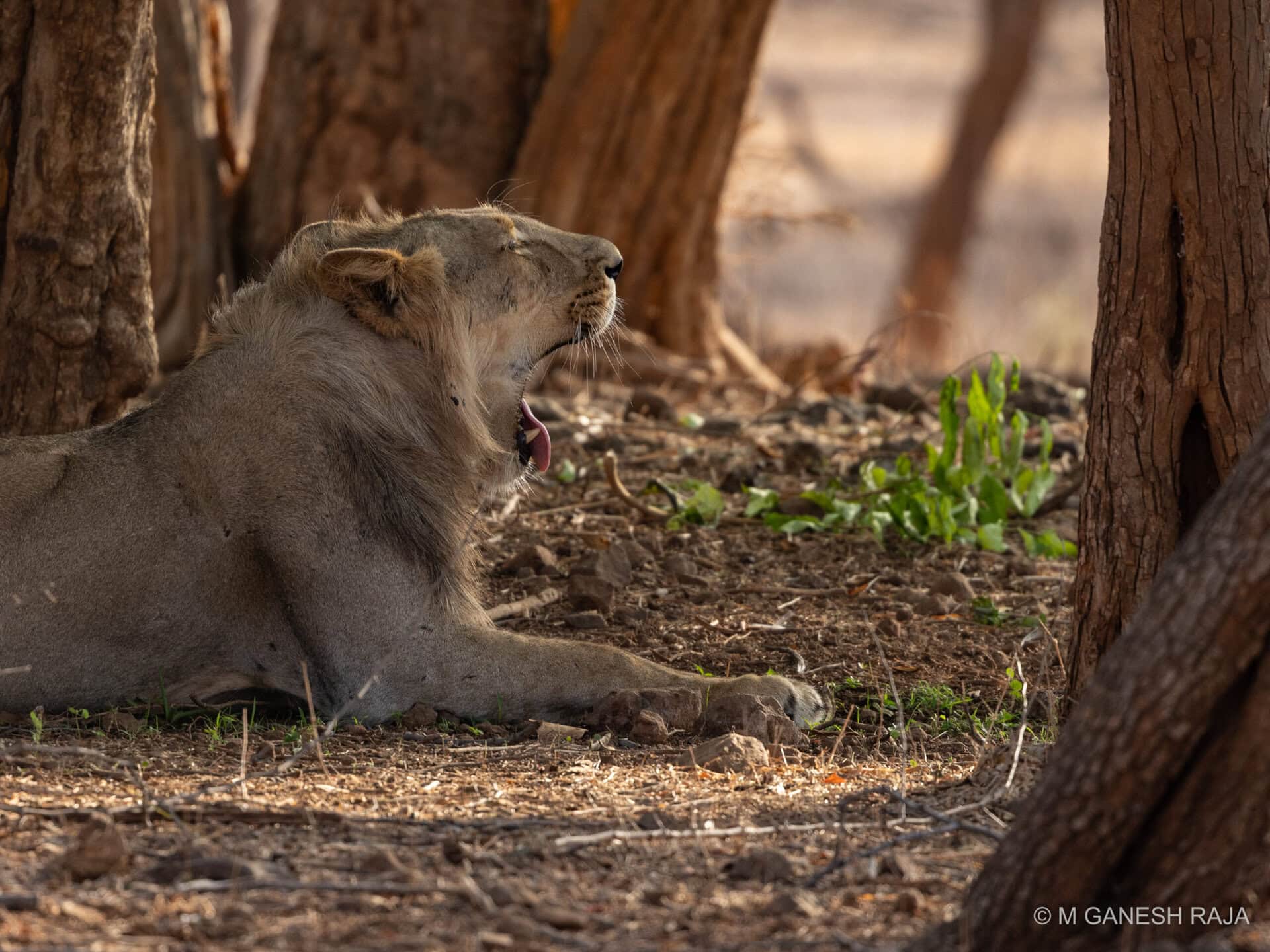
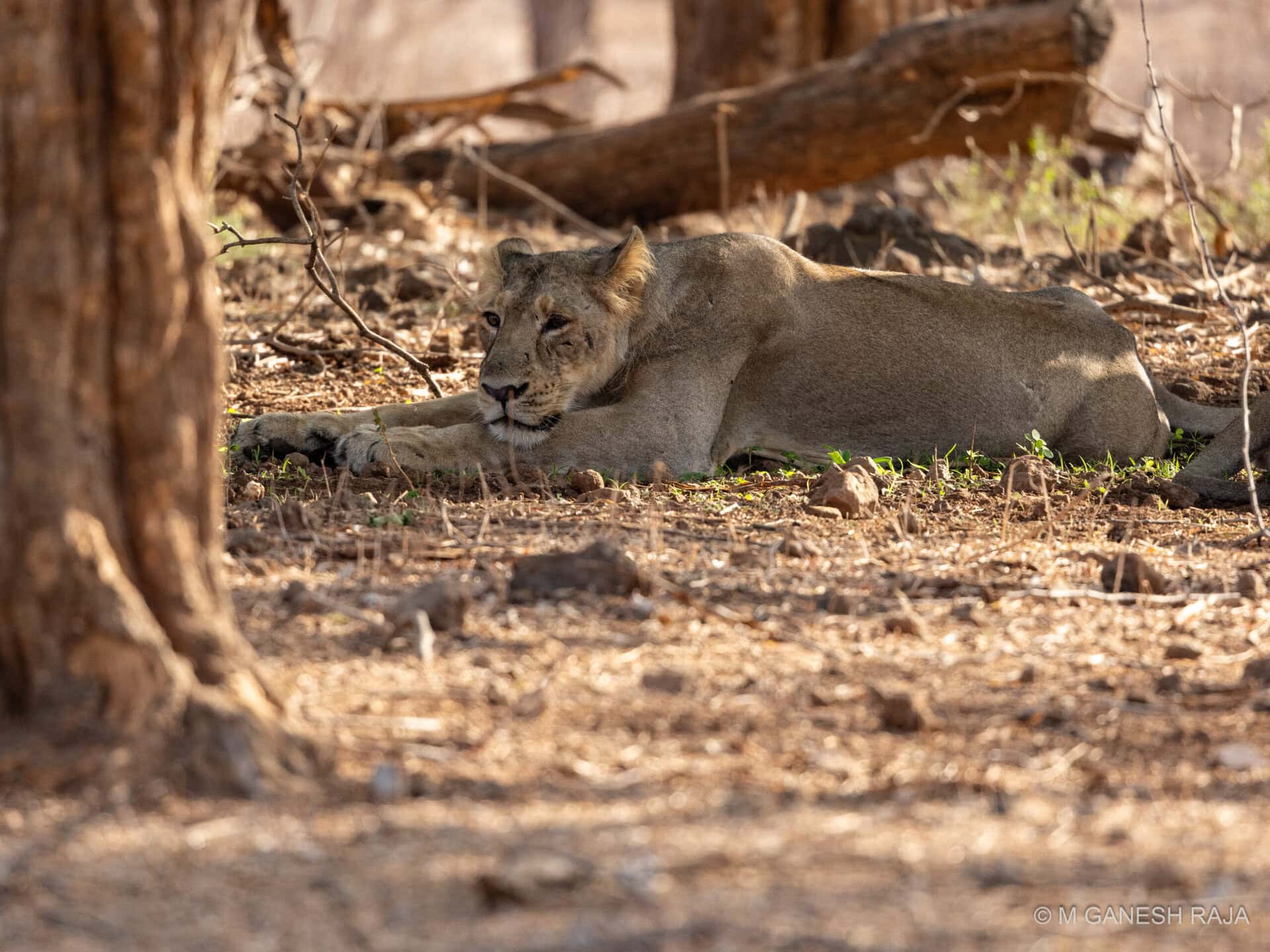
Then we reached a spot where some trackers gave us information about a small group of lions approaching nearby. So we waited for about 15 minutes. As we were waiting, several other safari vehicles too arrived. Then we saw a group of 4 young adult lions – 3 females and 1 male, crossing the road and reaching a water hole. I clicked lots of pictures of these lions approaching the road, crossing the road, and resting after quenching their thirst.
We spent more than 45 minutes in this spot shooting the lions as they were resting. After this, we moved on and finished the safari on time as the closing time approached.
Pictures from this safari are below.
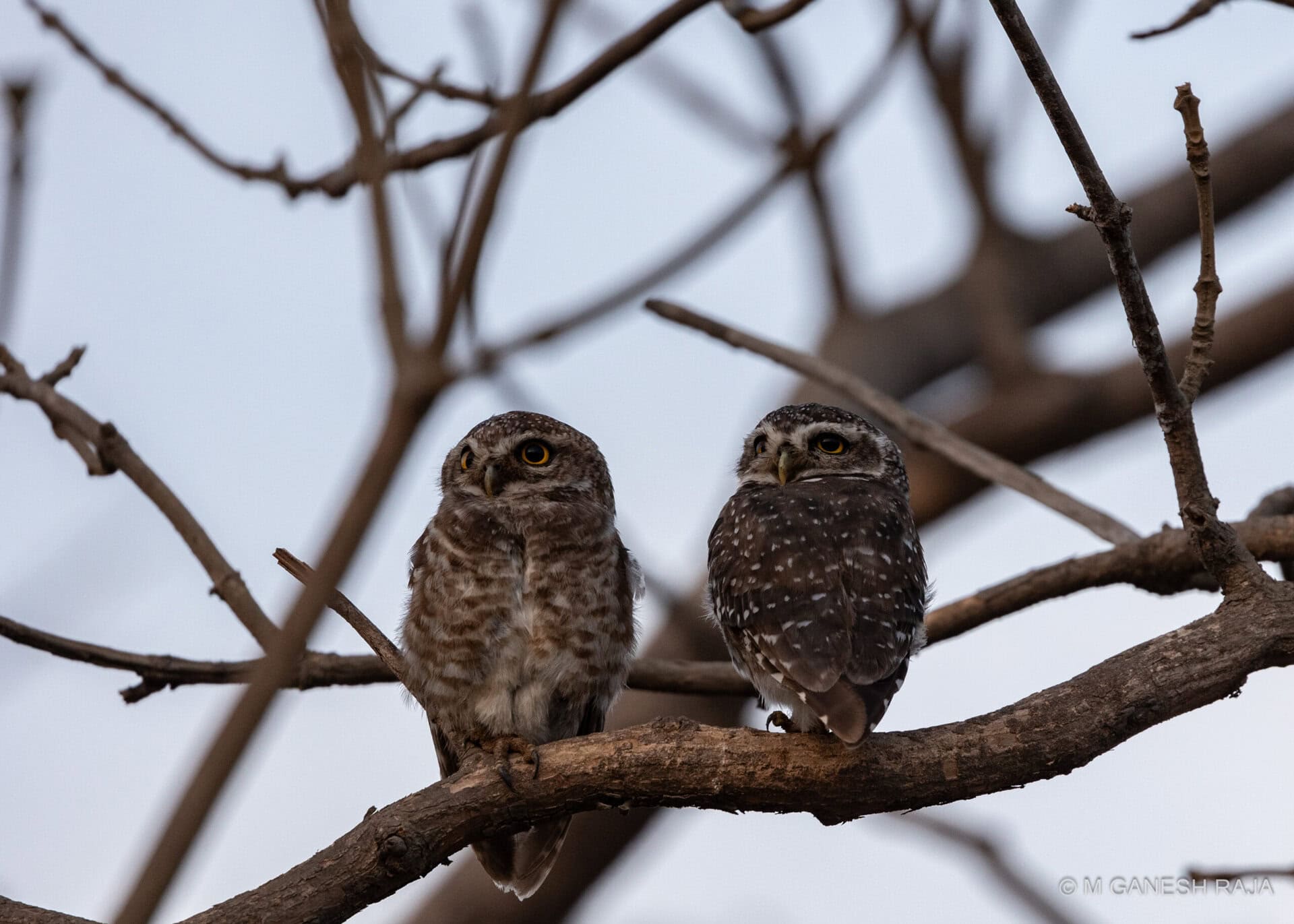
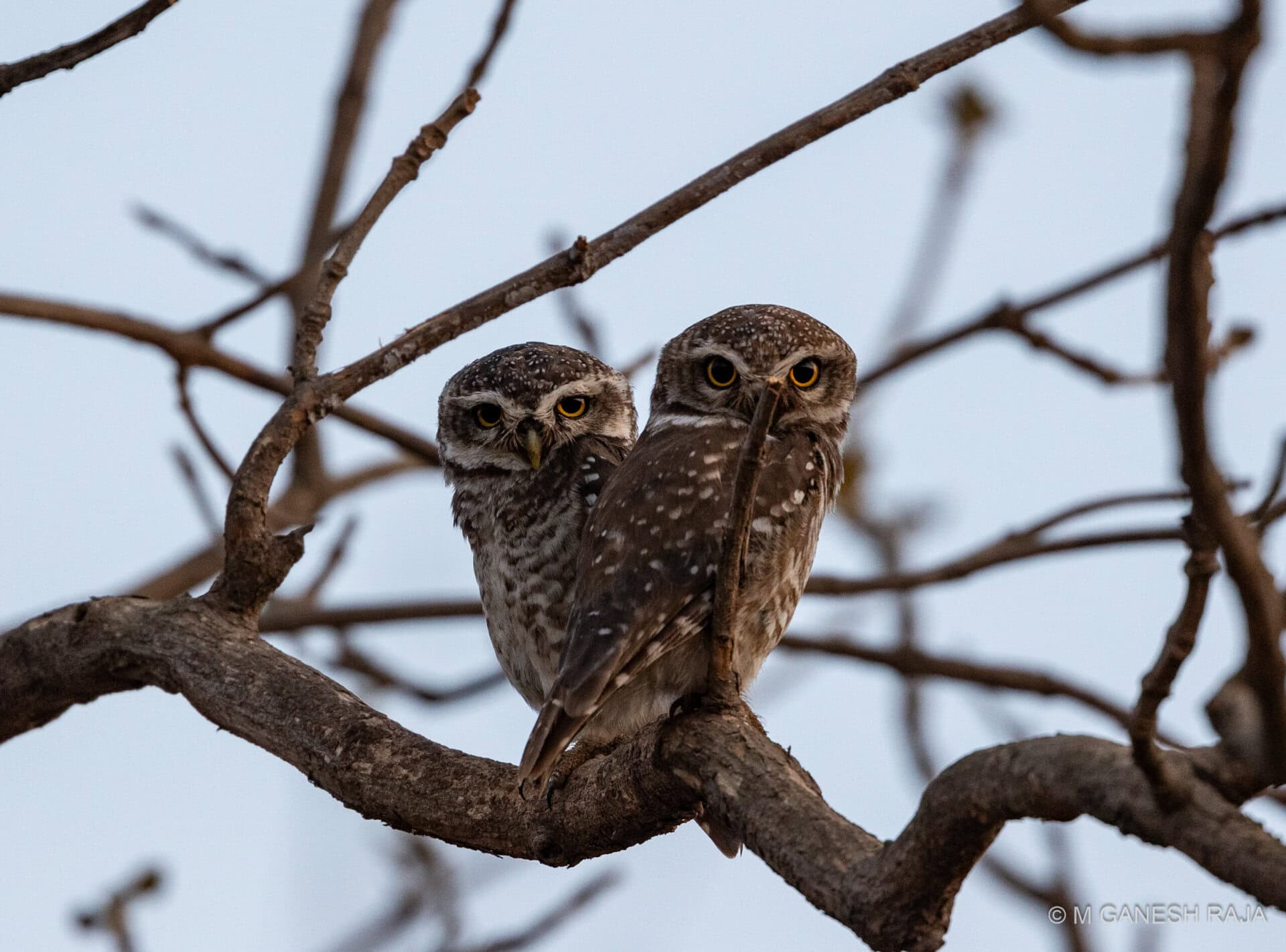
A couple of cute spotted owlets on the tree.
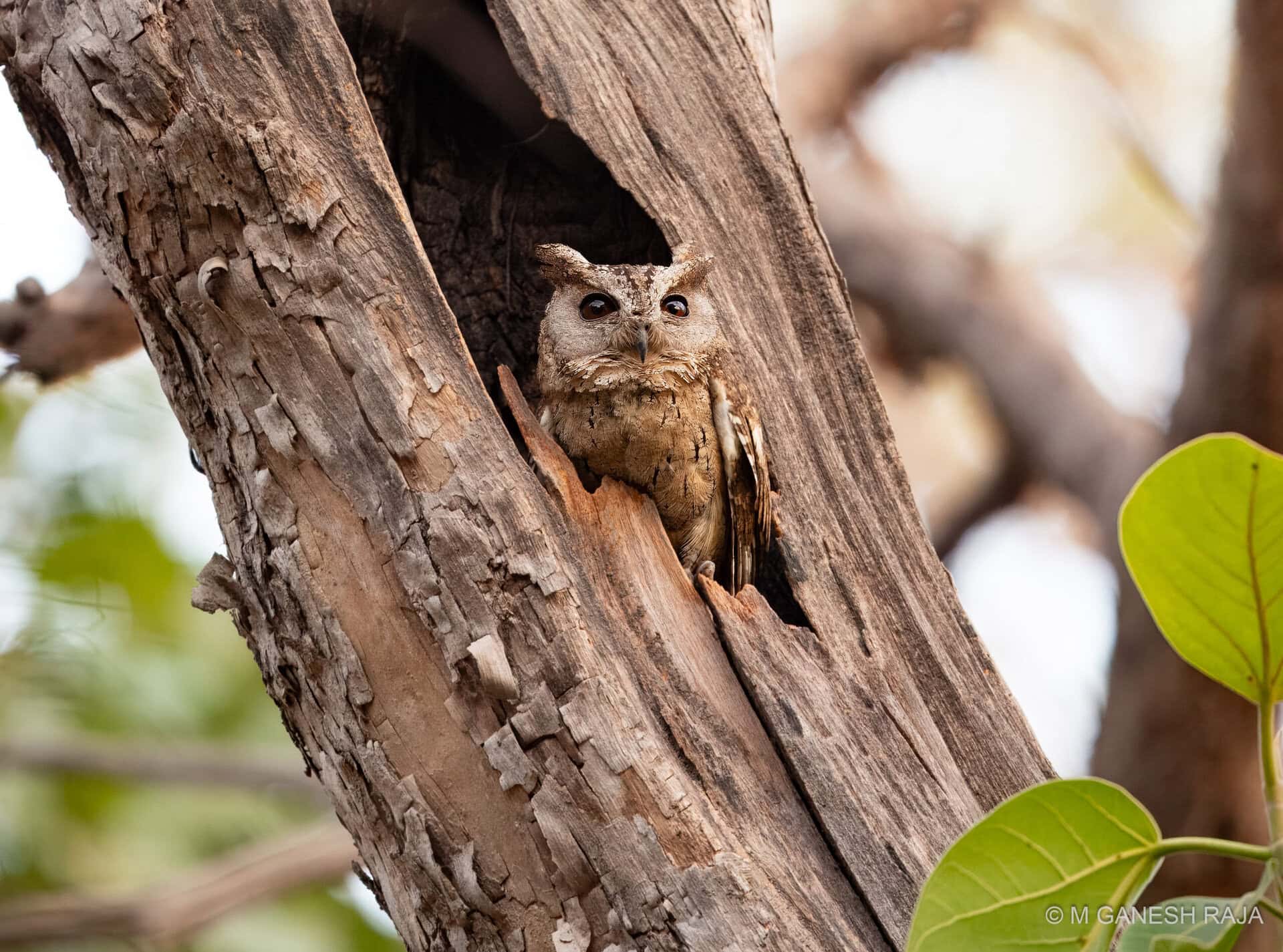
An Indian scops owl resting inside a tree trunk cavity. Some of my birding friends told me that seeing a scops owl resting with open eyes is very rare.
A brown fish owl. This one was standing on the ground. I had to get to the floor of the safari vehicle in the cramped space to shoot this at close to ground level.
Just before we reached the spot where the lions arrived, we saw a small tree with some greenery and this beautiful Indian white eye.
The lions walking to the waterhole.
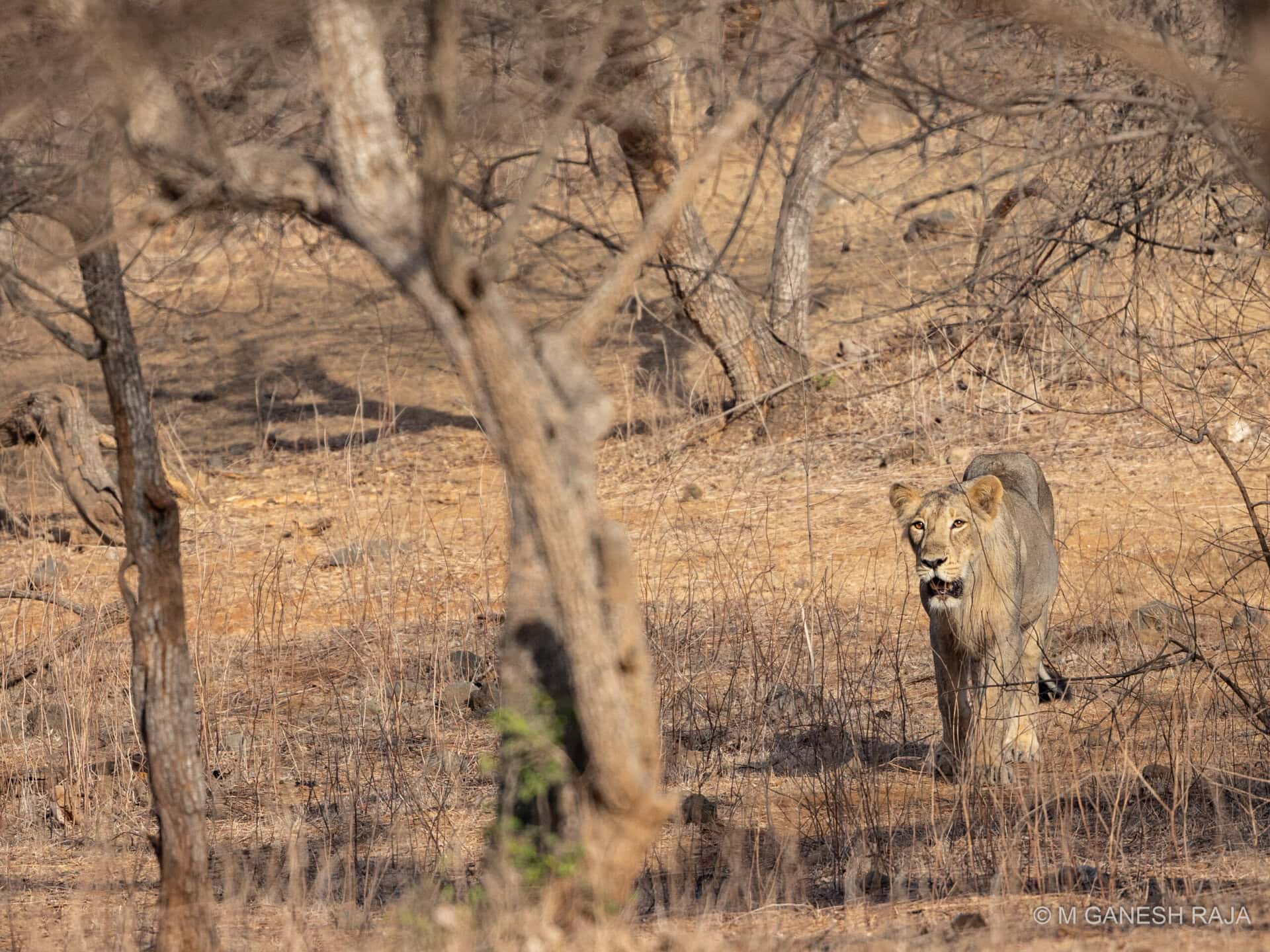
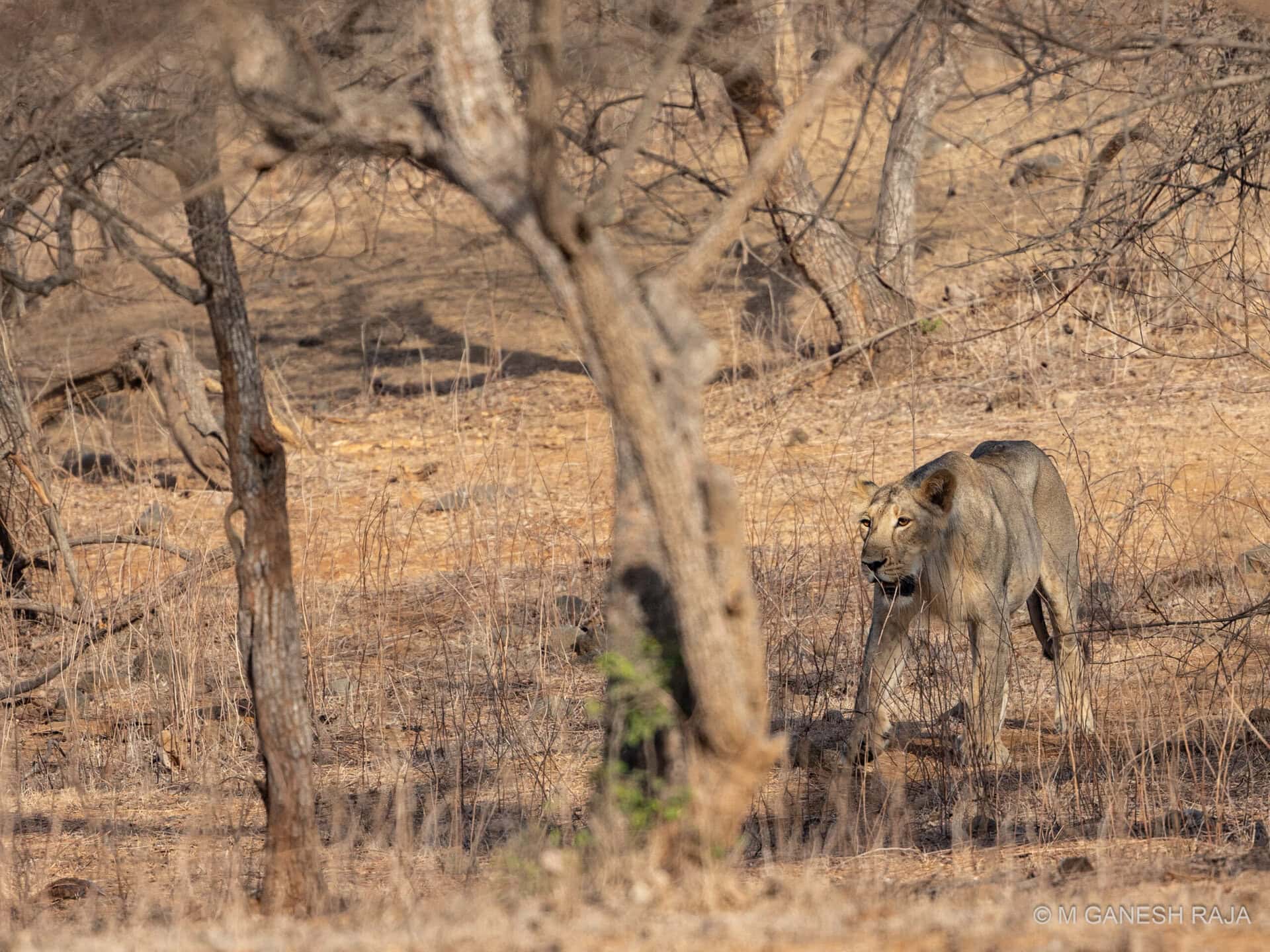
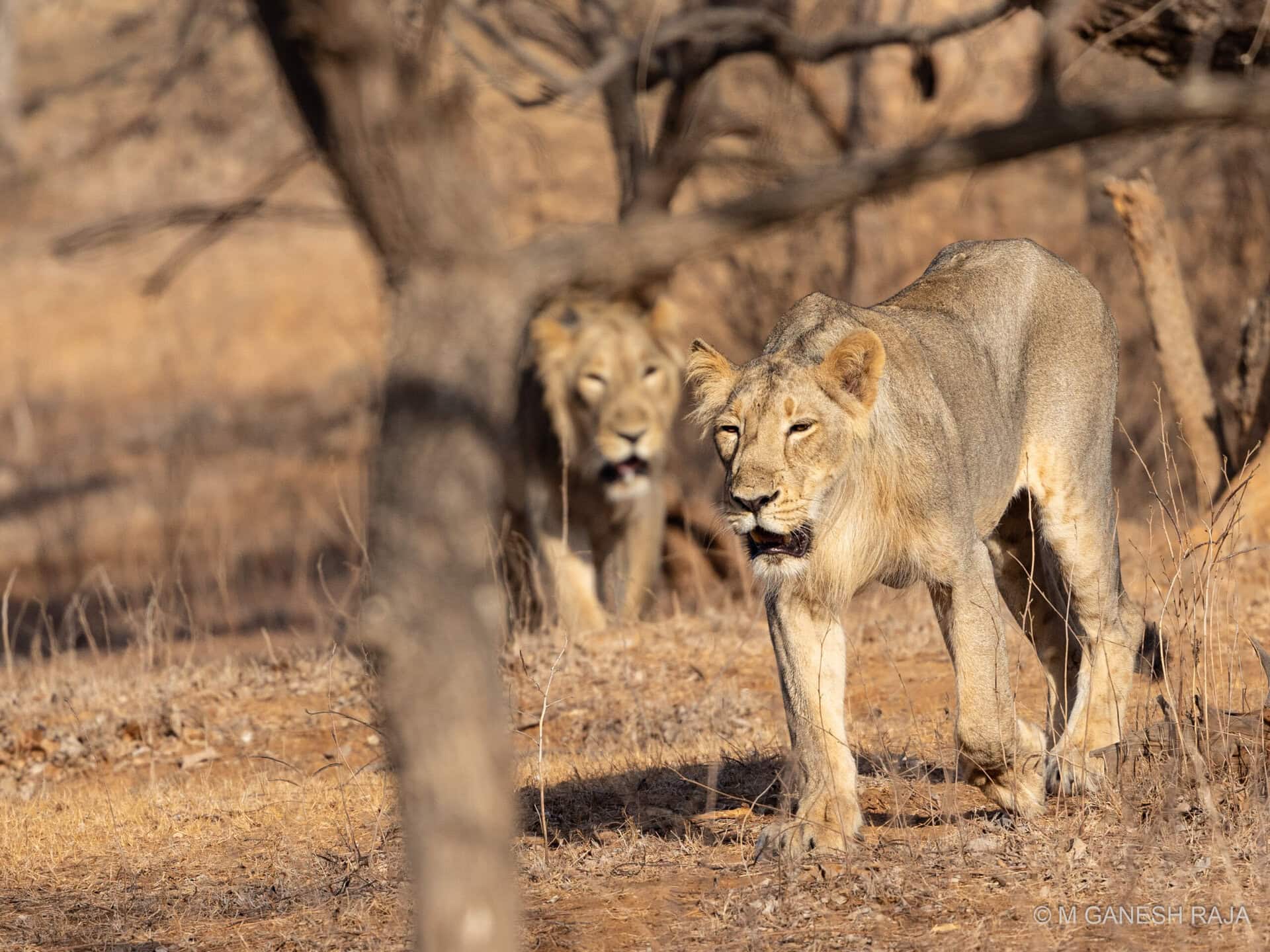
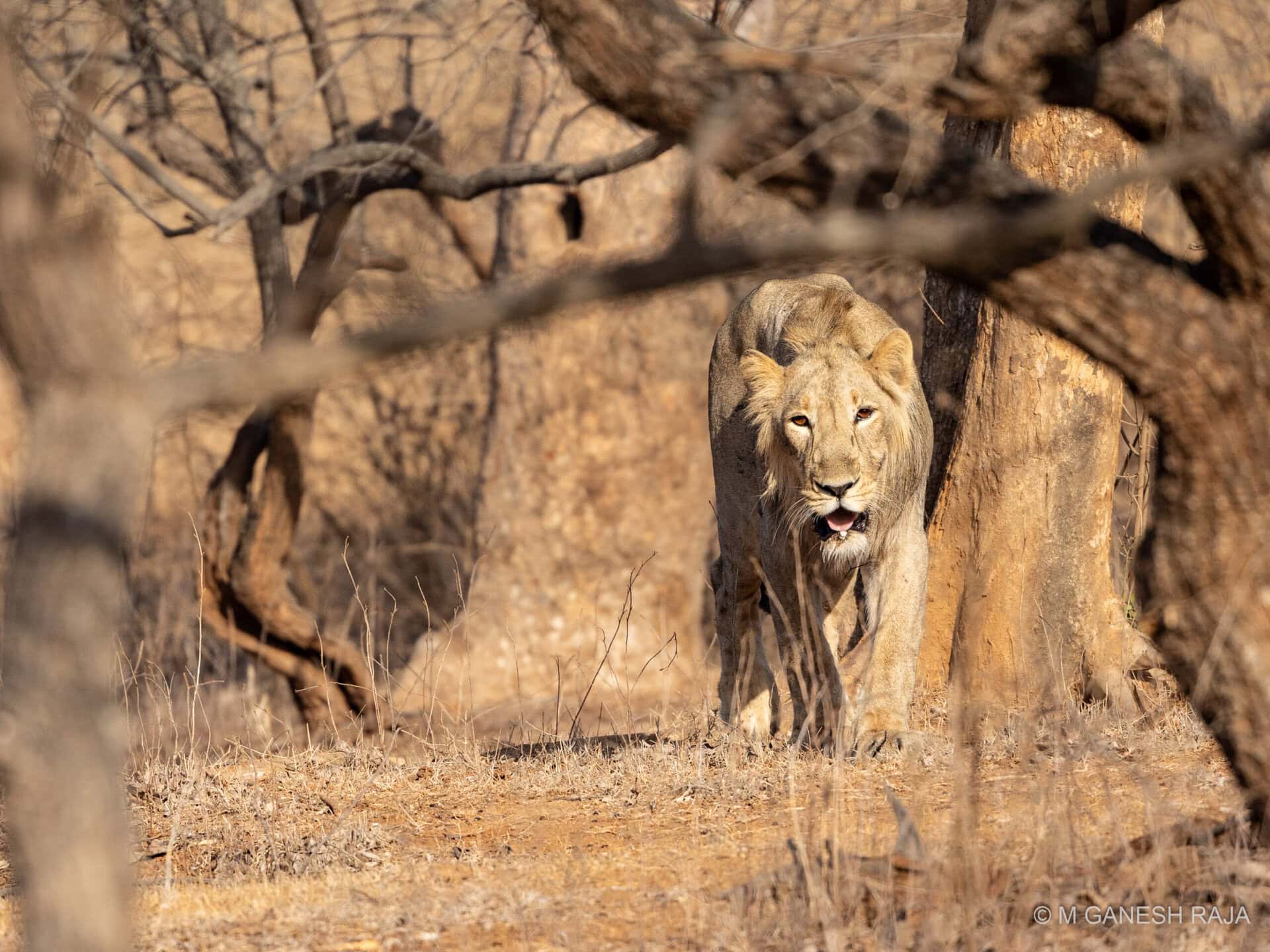
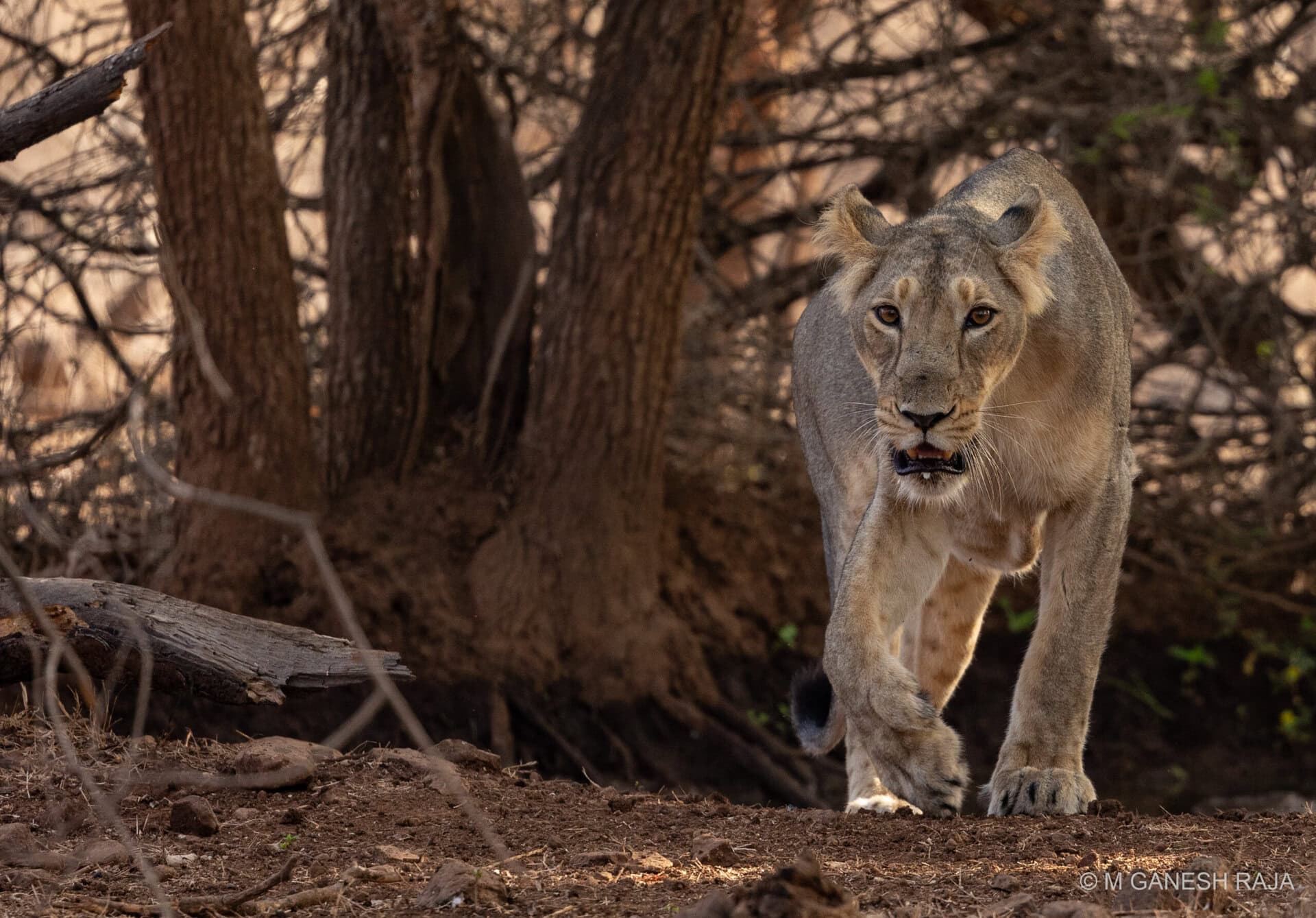
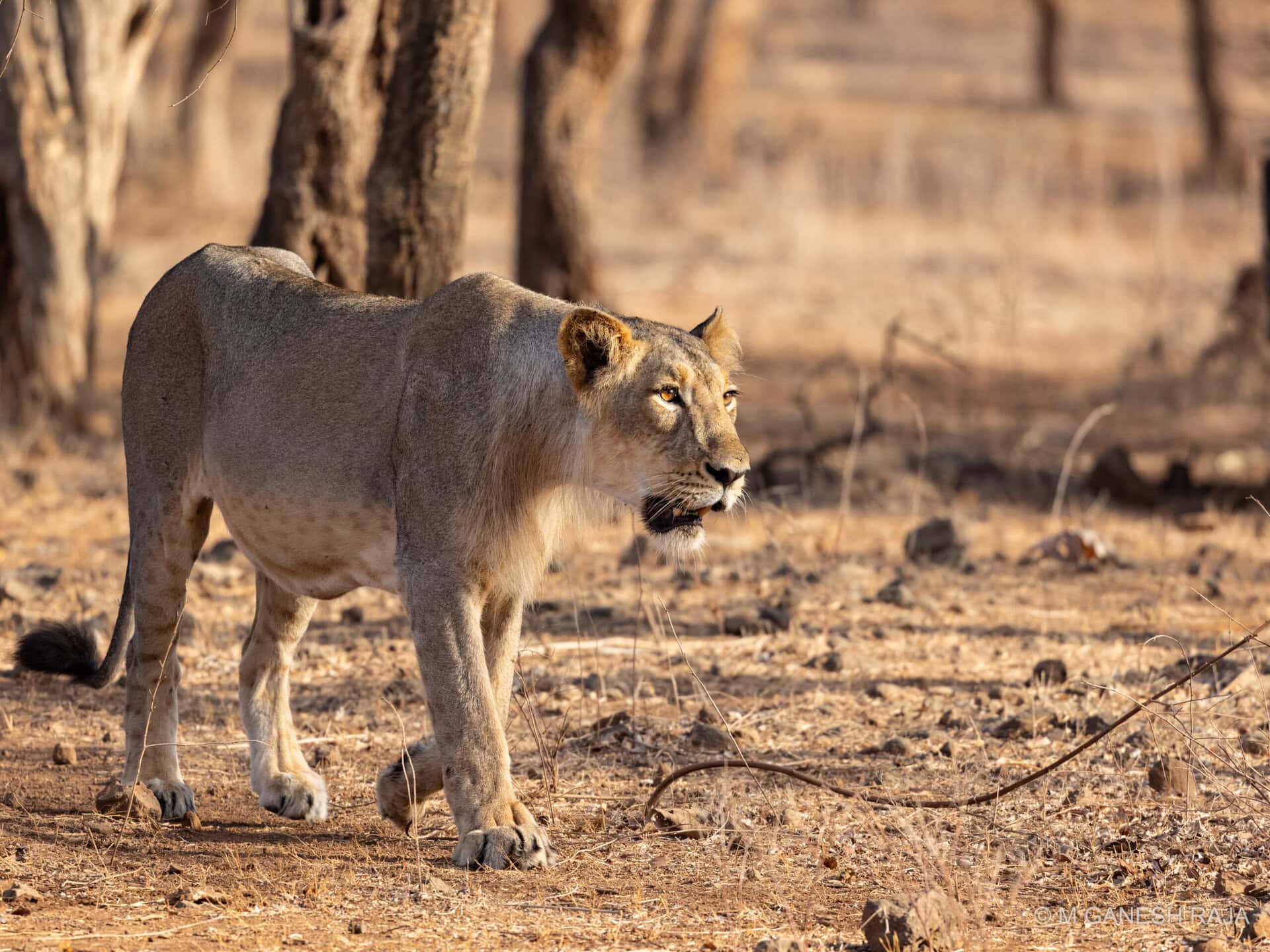
The lions unperturbed by the presence of humans.
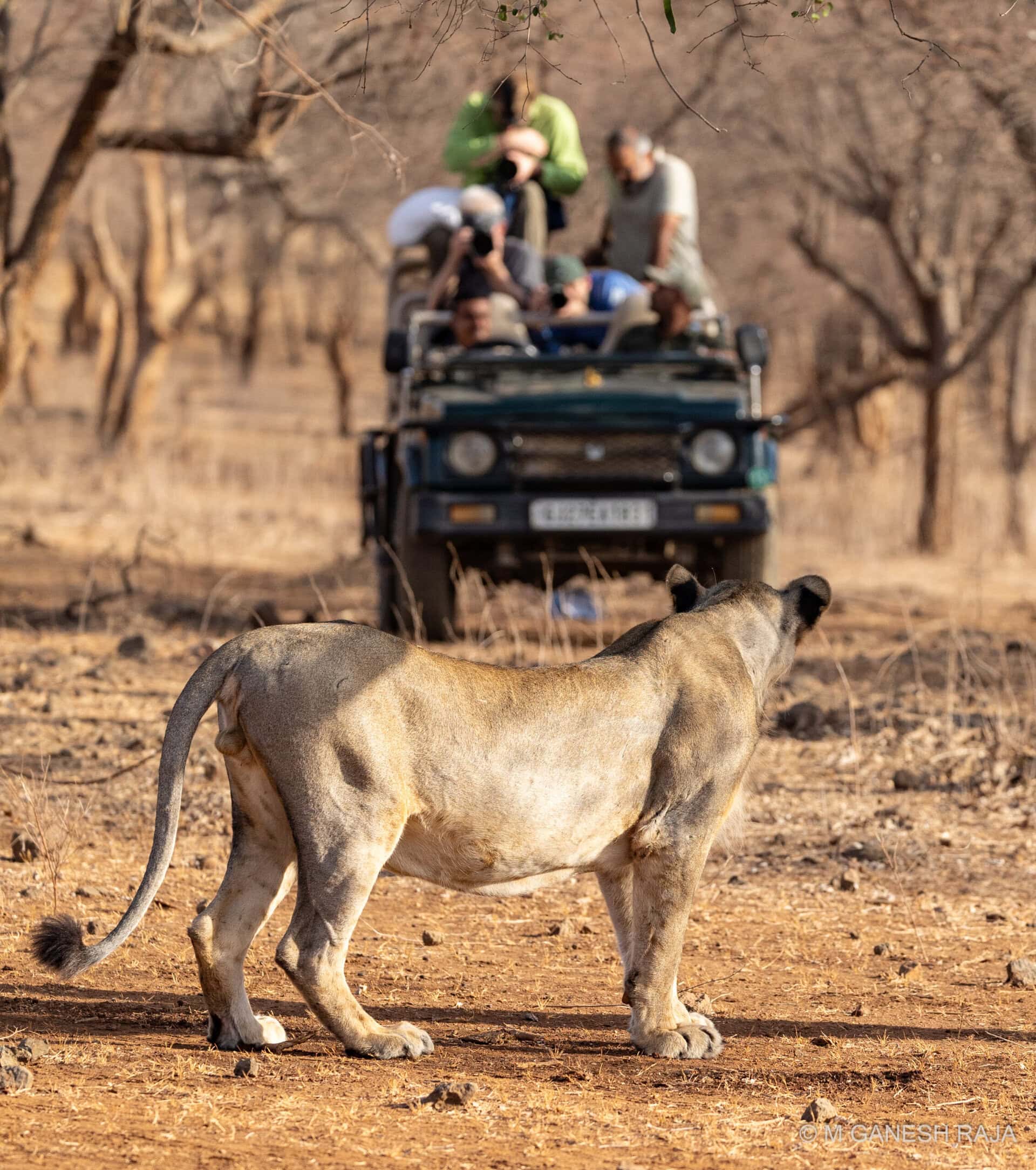
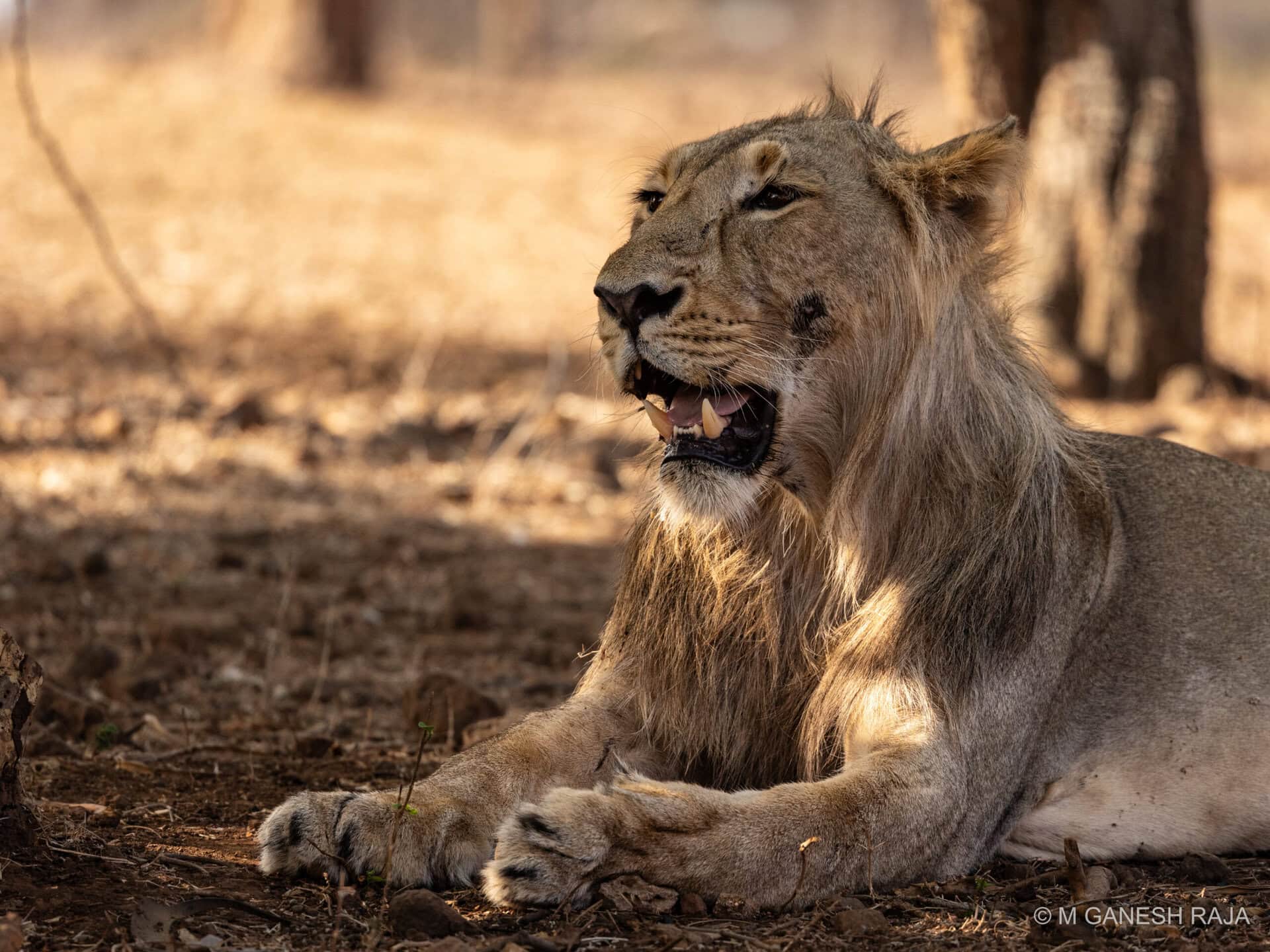
The lions resting in the cool shade after quenching their thirst.
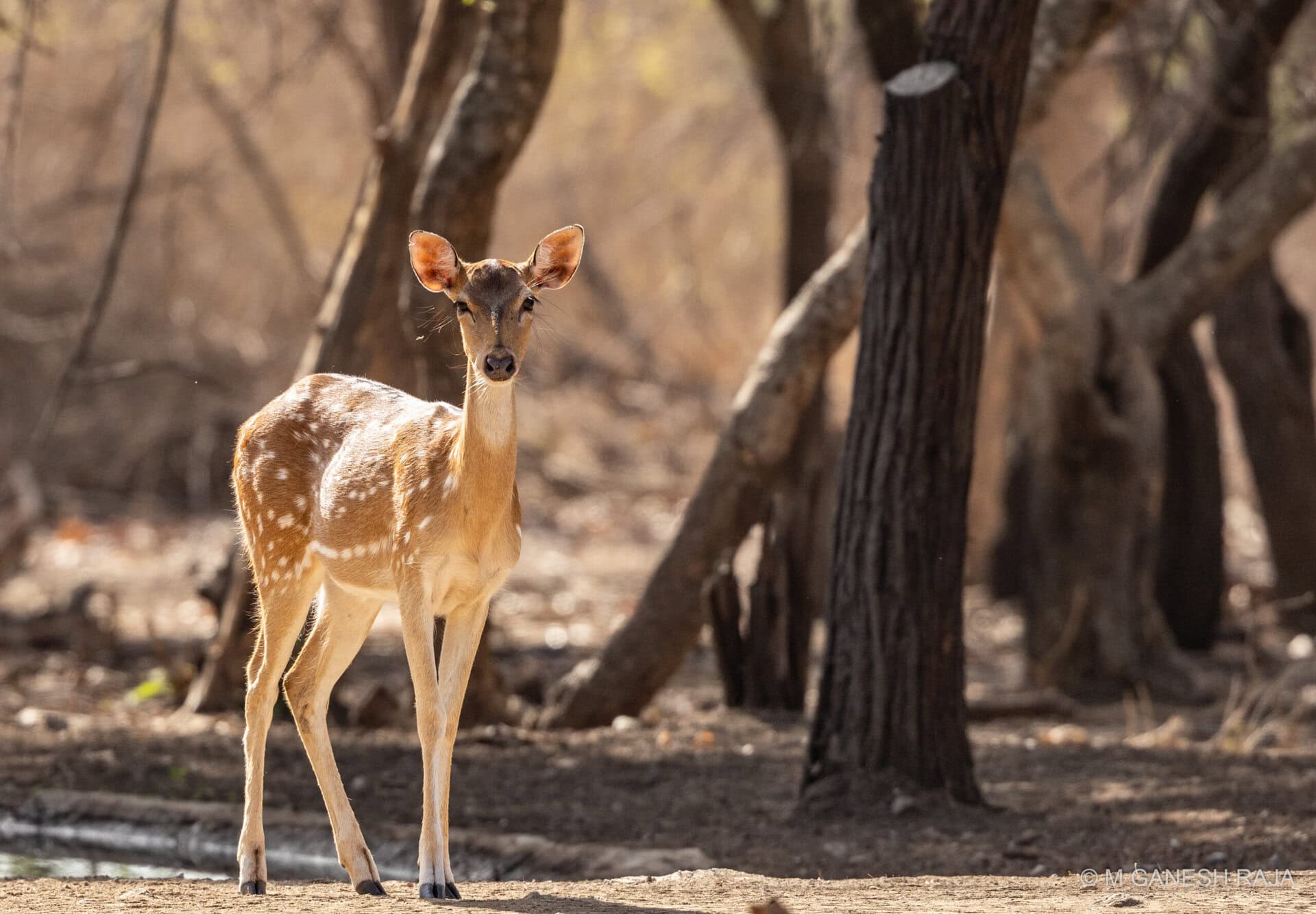
A spotted deer.
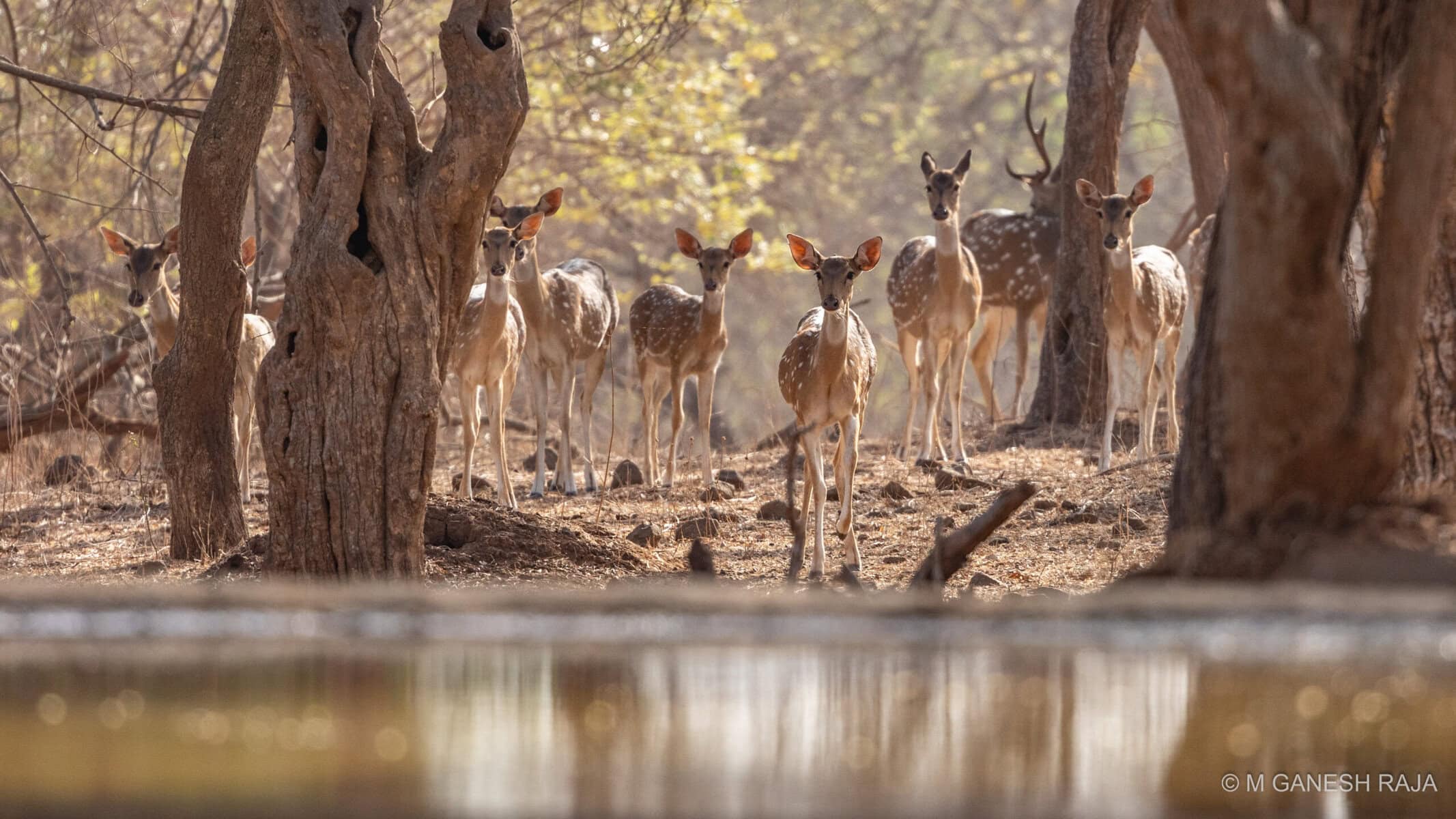
These deer looked as if they were waiting for the lions to go away so that they can have some water.
Safari #3
7th June 2024, 4:00PM to 7:00PM
We got assigned the same route as in the morning but in the opposite direction. As we reached the spot where we had seen the 4 young adults in the morning, that group was still in the same spot resting in the shades. We stopped there for some time and watched the lions resting. I took very few pictures as I had taken many pictures of the same lions in the same spot in the morning. After some time, we left this spot and carried on. When we approached a spot where there was a water hole situated at a distance below the road level, the driver and the guide got some news on their phones that another pride with young cubs was approaching this spot. So we stopped there and waited. Several other vehicles too reached the spot.
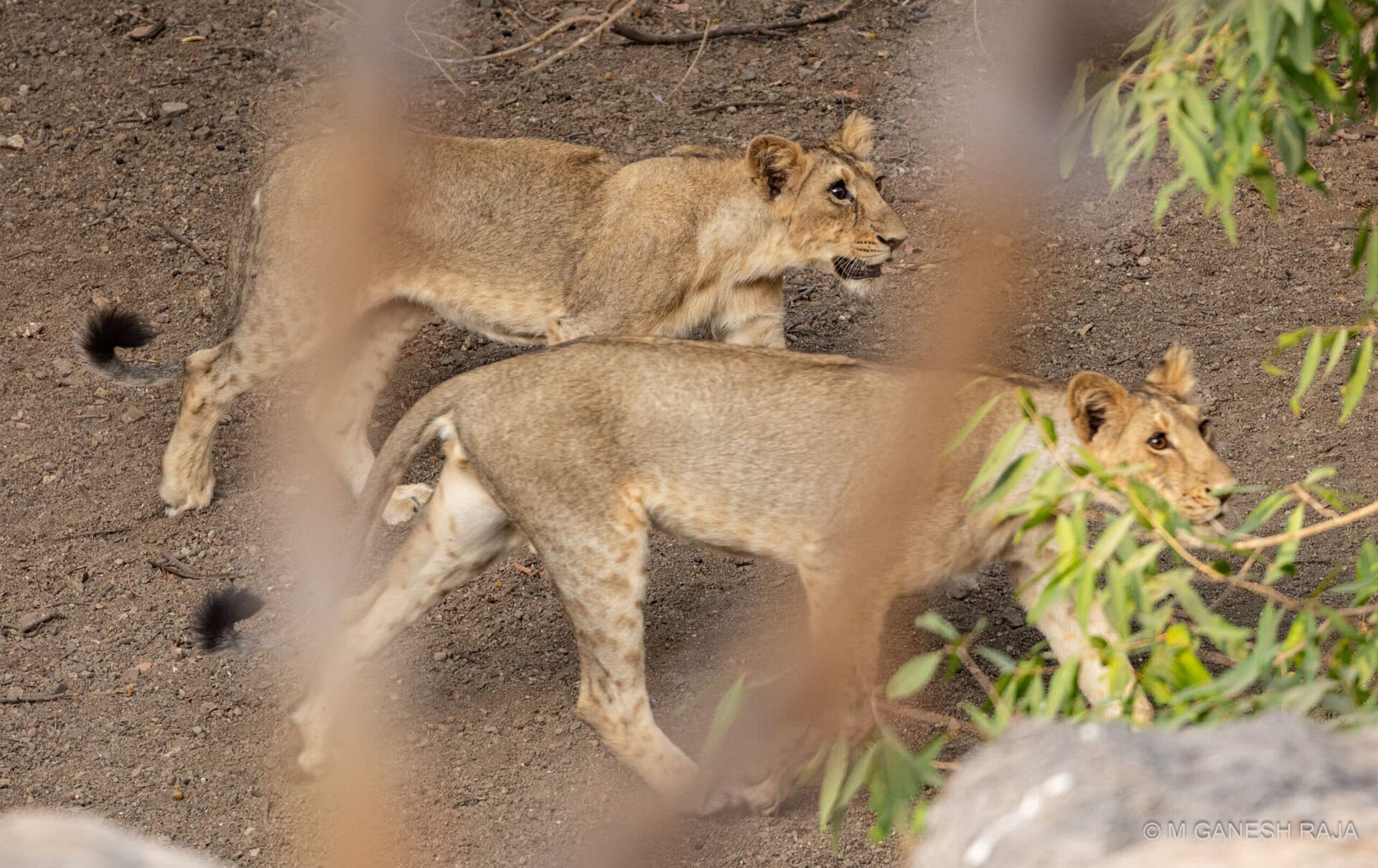
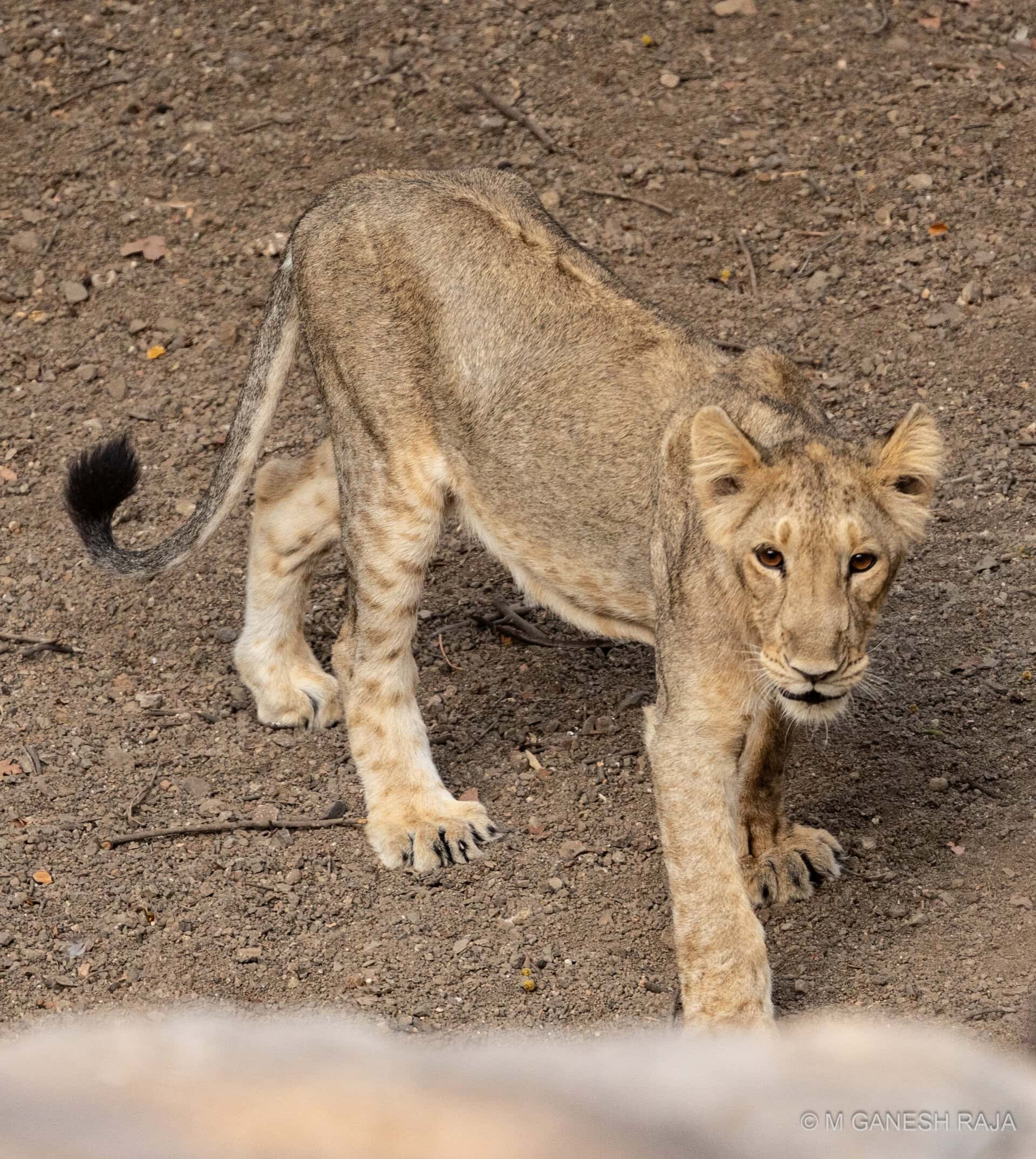
After about 15 minutes of waiting the first of the adult females approached the road. She stopped there and surveyed the surroundings including all those safari vehicles. She must have found us humans to be harmless and continued to cross the road. Immediately after she crossed the road, 6 young cubs followed by two other adult females crossed the road.
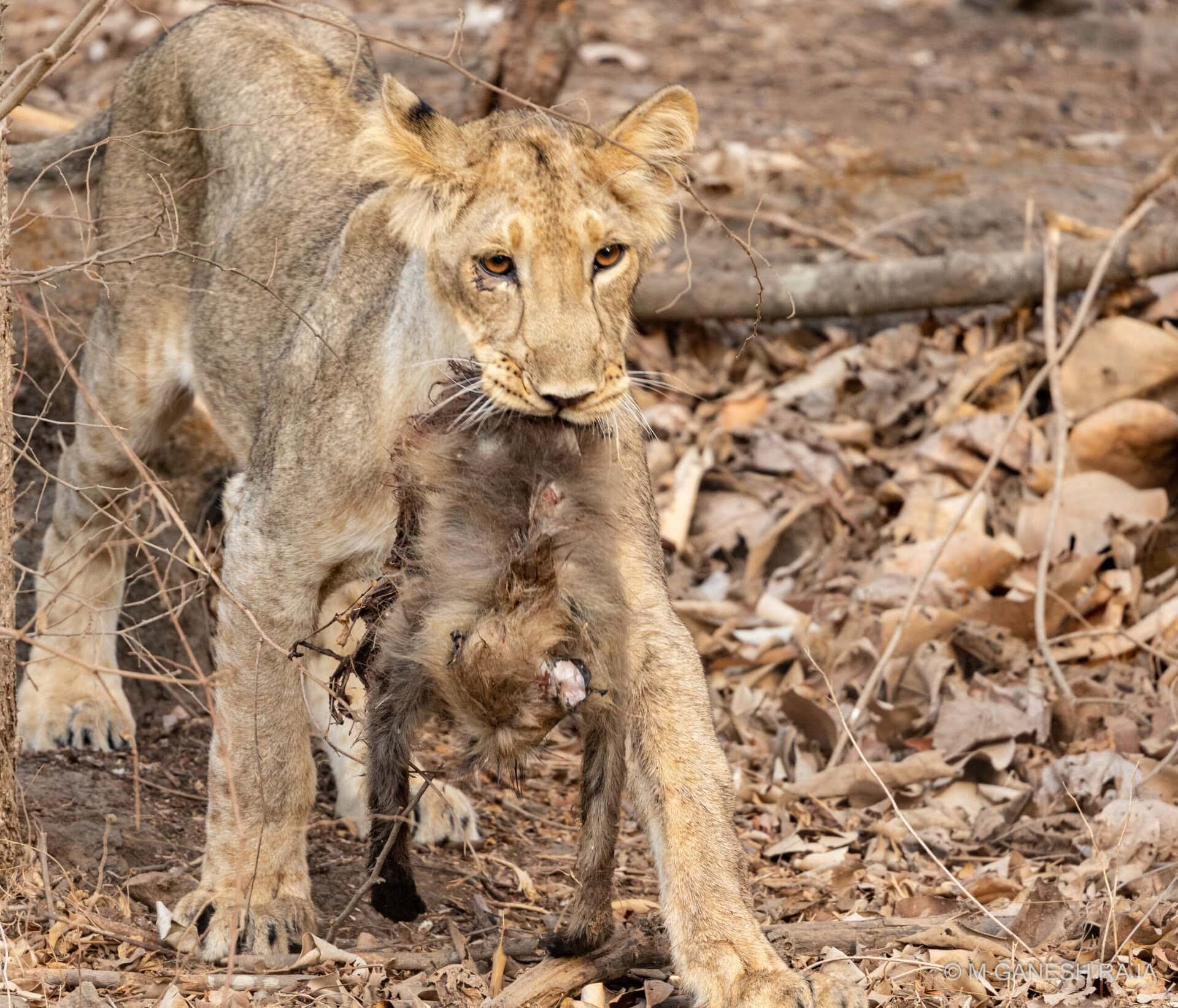
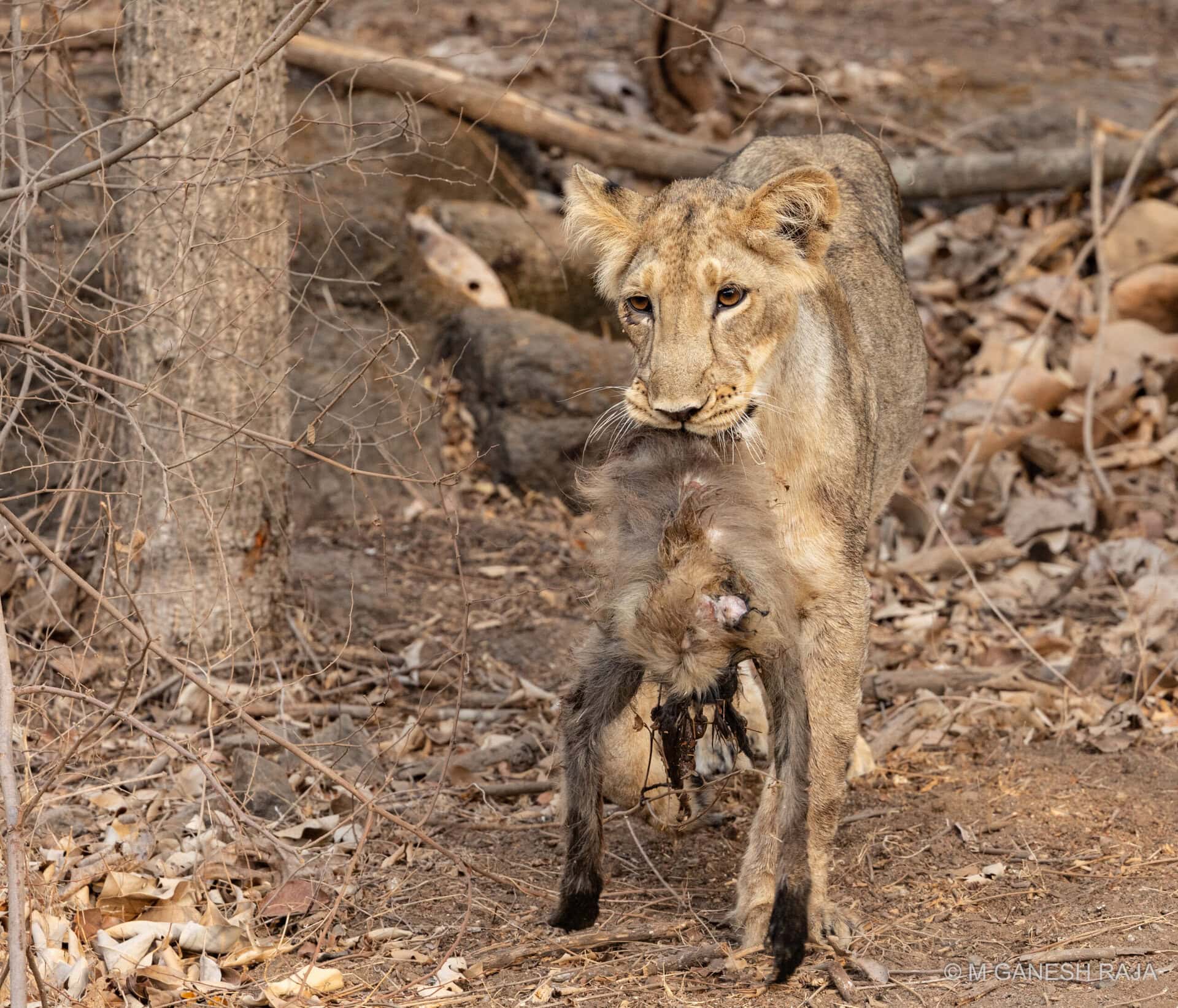
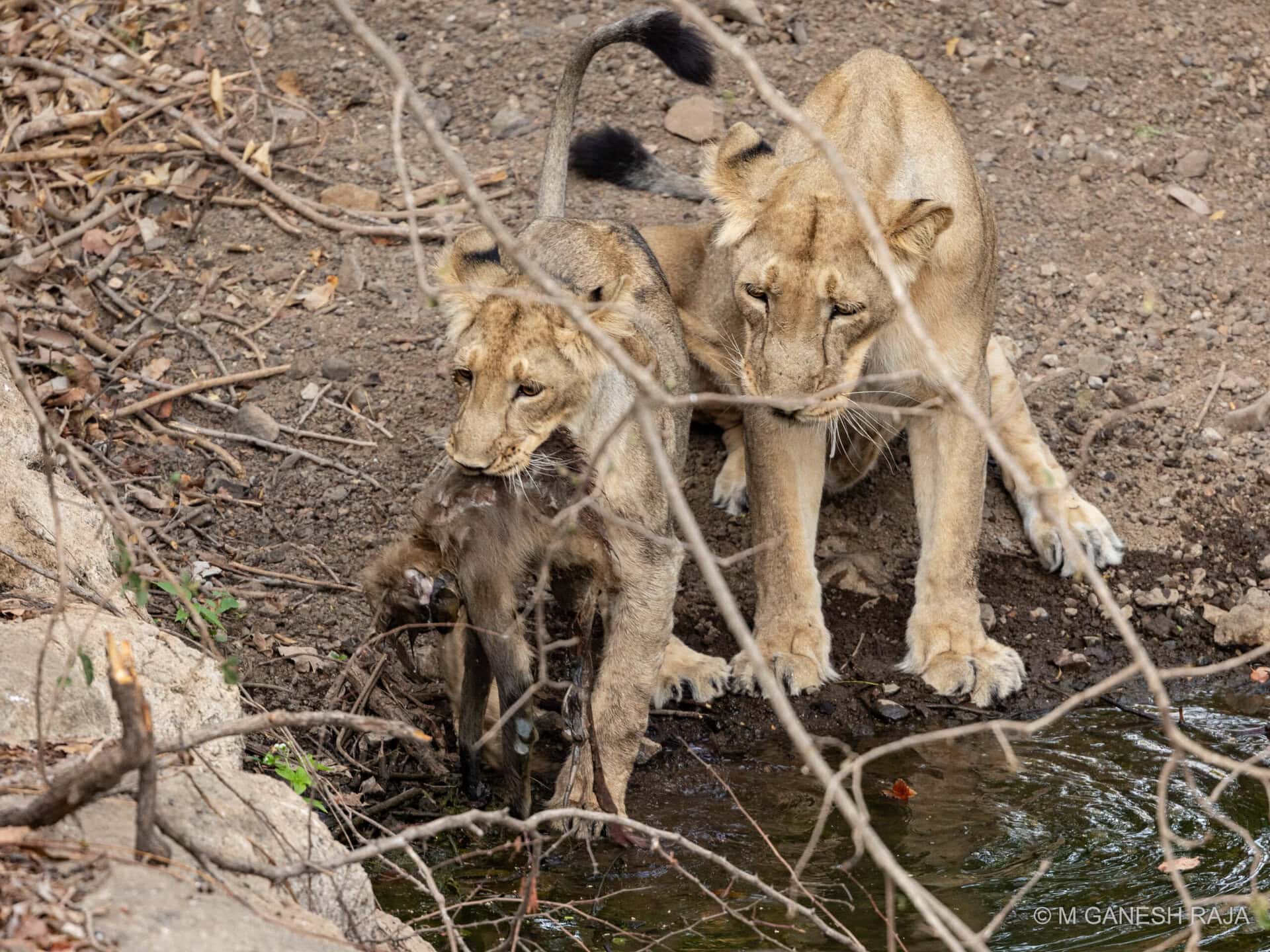
One of the cubs was carrying the carcass of a dead hanuman langur. Later I came to know that lions do not hunt langurs as they are too fast for the lions and can quickly climb trees. Hanuman langurs are usually hunted by leopards. This may have been a leopard kill which the leopard must have abandoned when the pride got near, and the cub should have picked it up. It was a great experience seeing the cubs playing with each other, getting into mock fights etc. As the pride was far below the road obstructed by rocks and bushes, I could not get many clean pictures. Also, there were too many vehicles crammed up on the narrow road, making it difficult to move. I still managed to shoot some video footage and pictures of the pride.
After watching this pride for some time, we had to move on as it was nearing the end of safari. Overall, this was a very productive day, when we saw 13 lions in total, and also some birds.
A few pictures from Safari #3
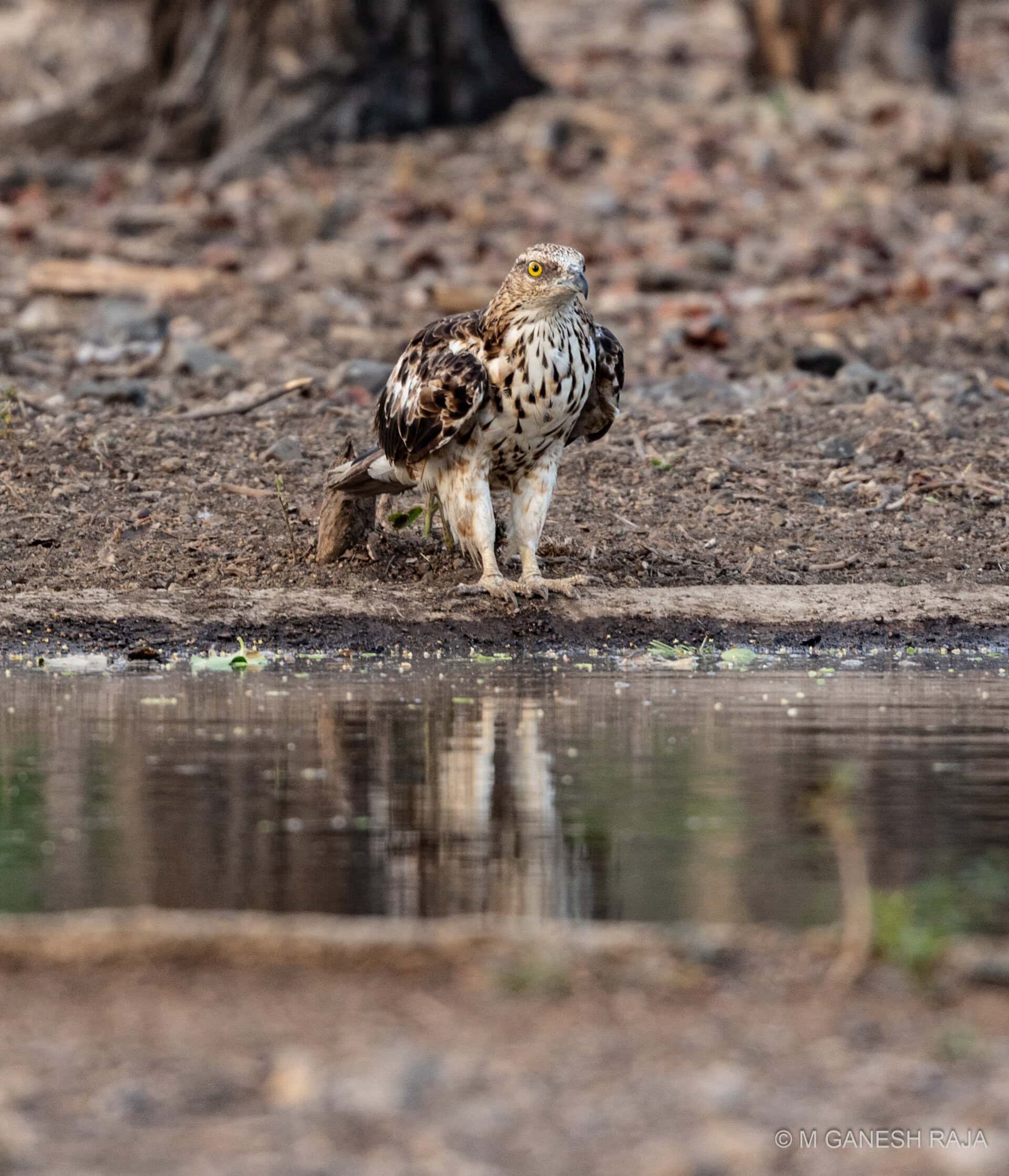
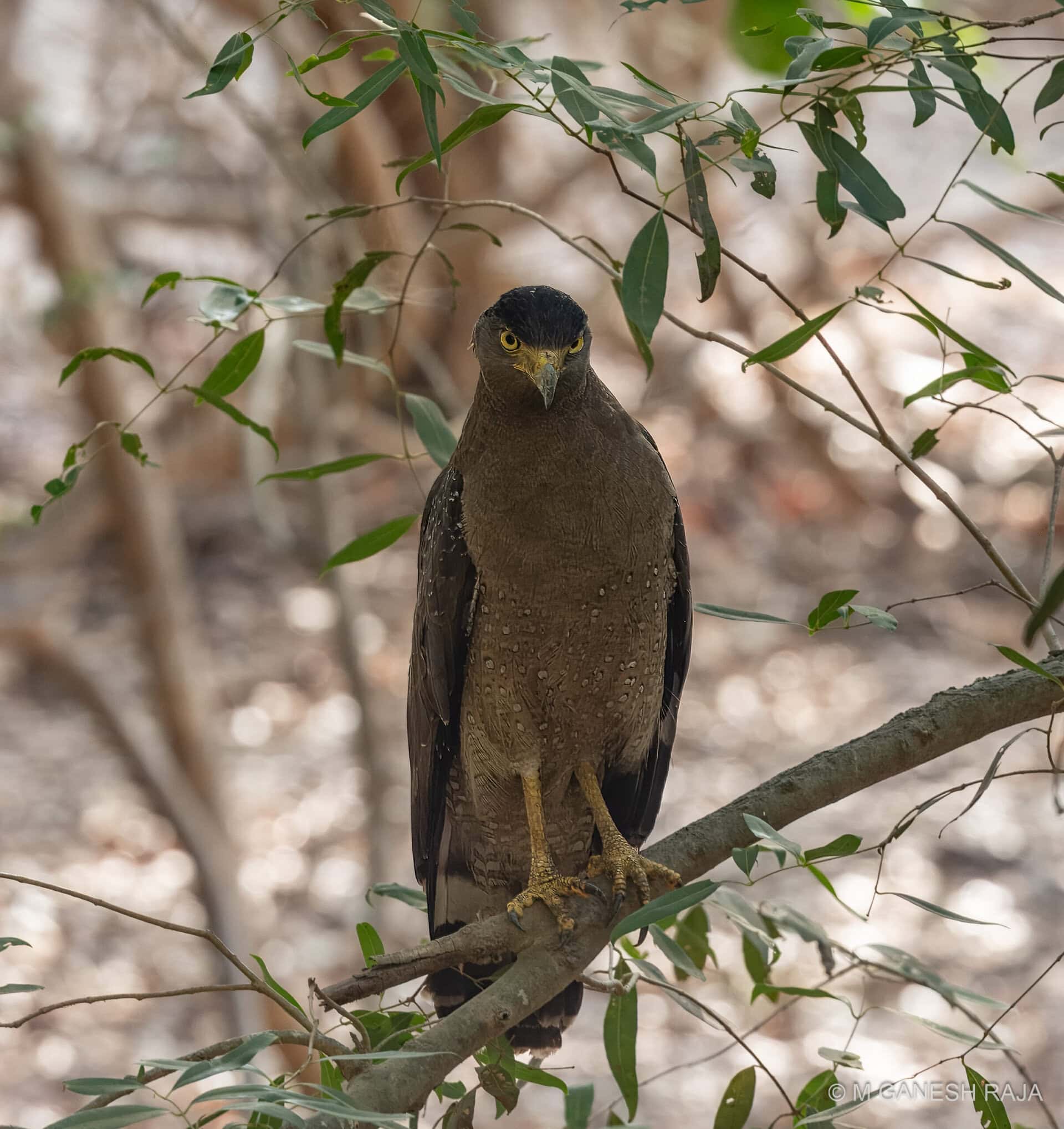
Crested serpent eagle. This one was sitting very close to the road and surprisingly did not fly away as we neared.
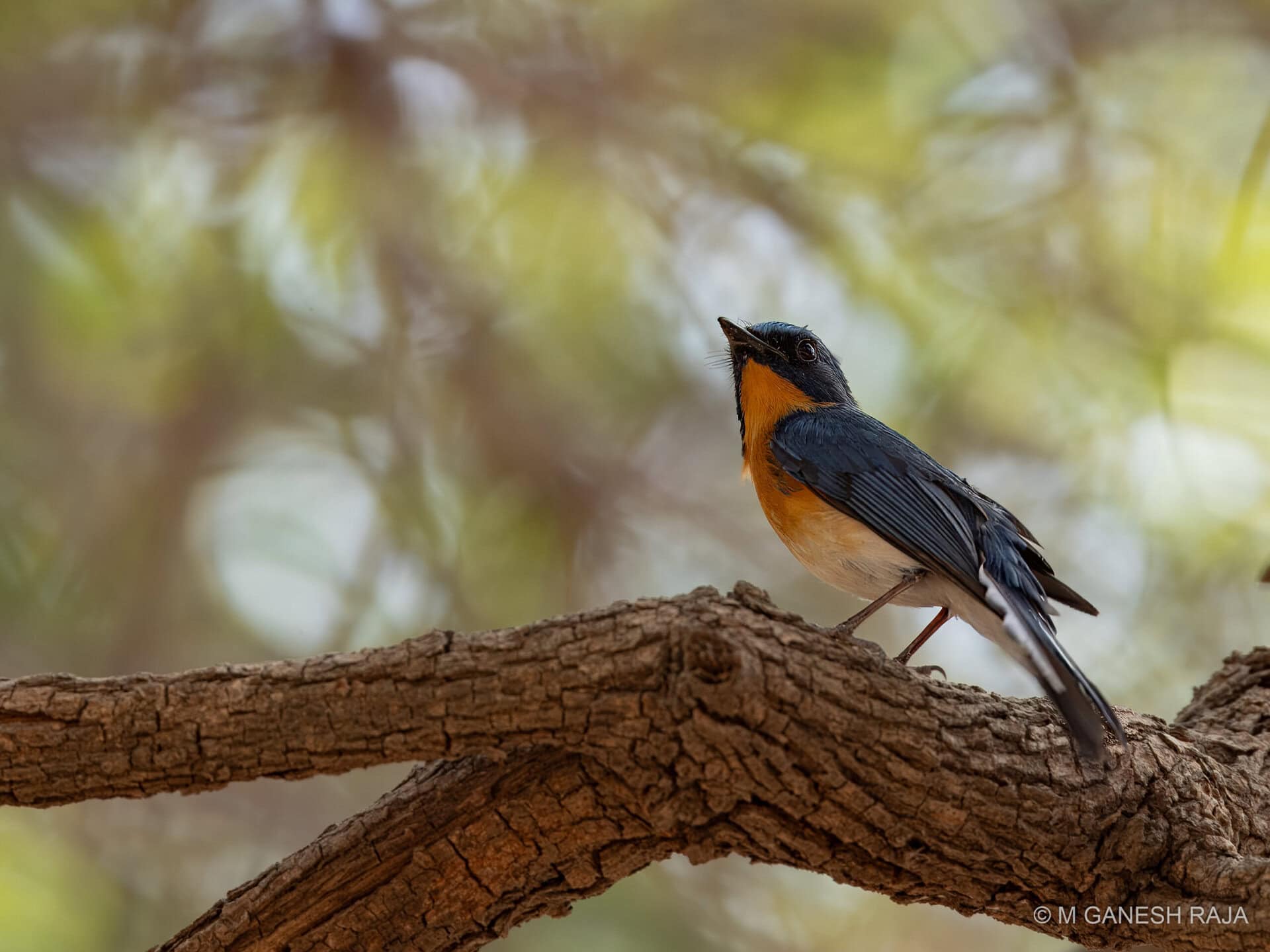
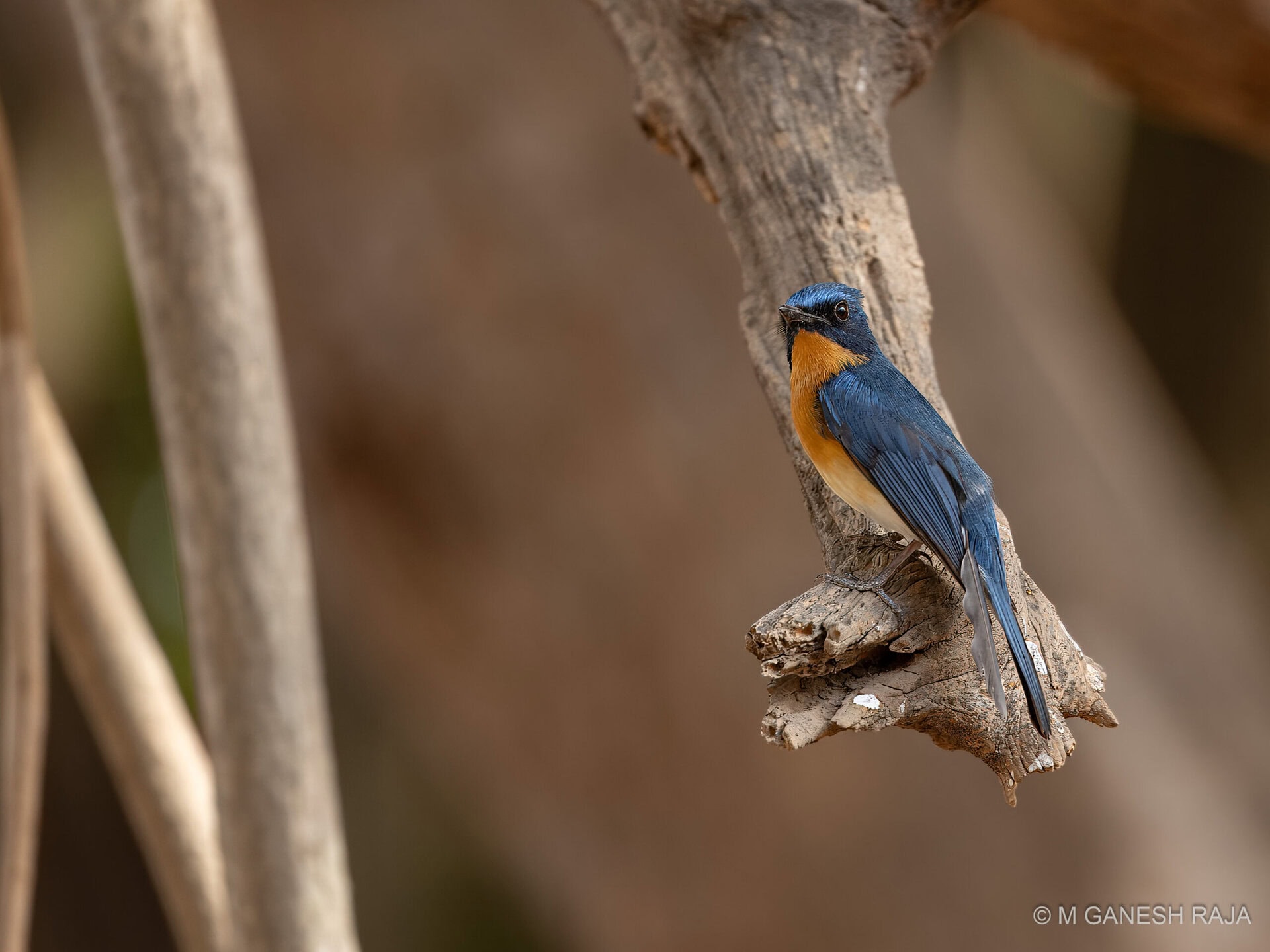
Tickell’s blue flycatcher.
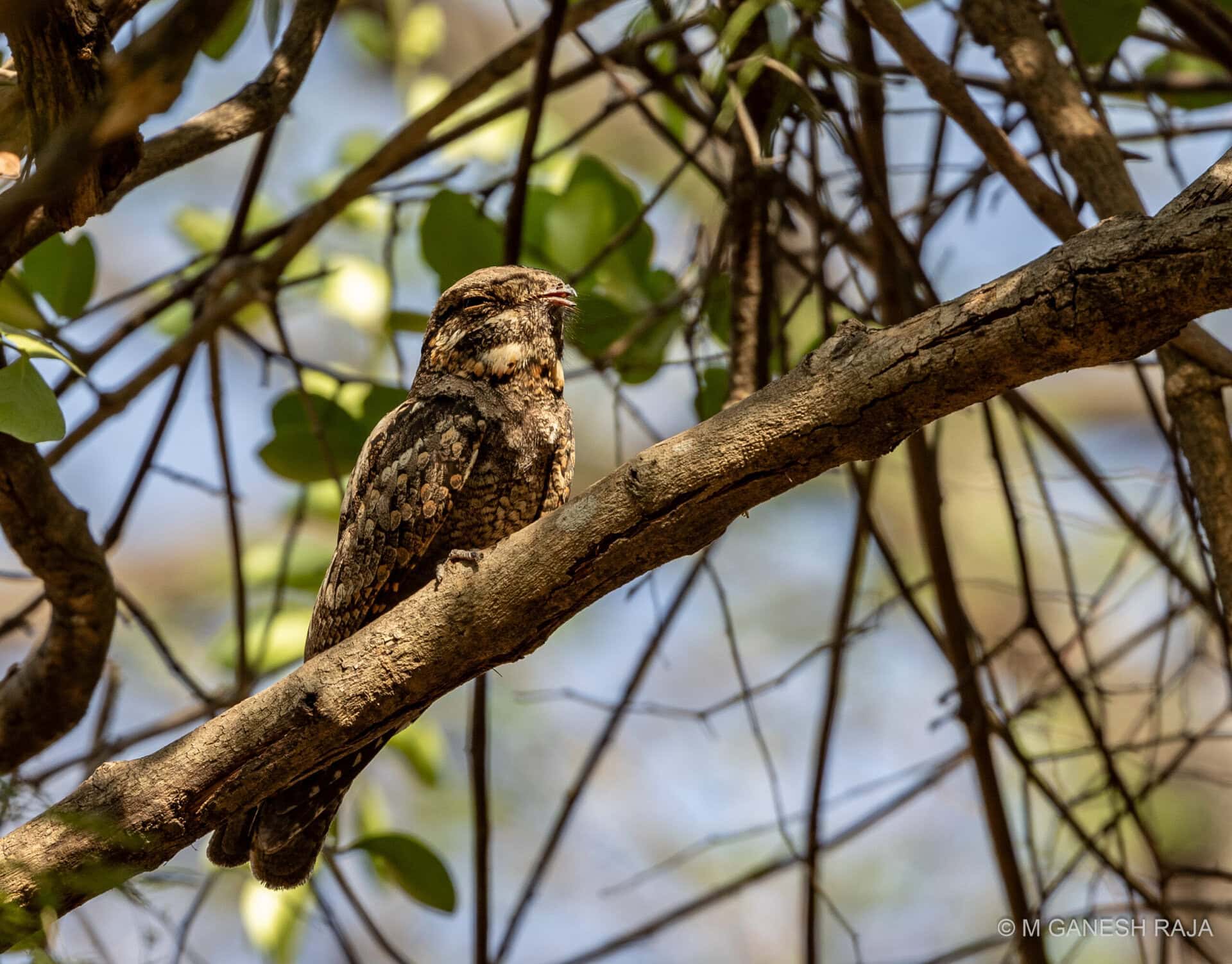
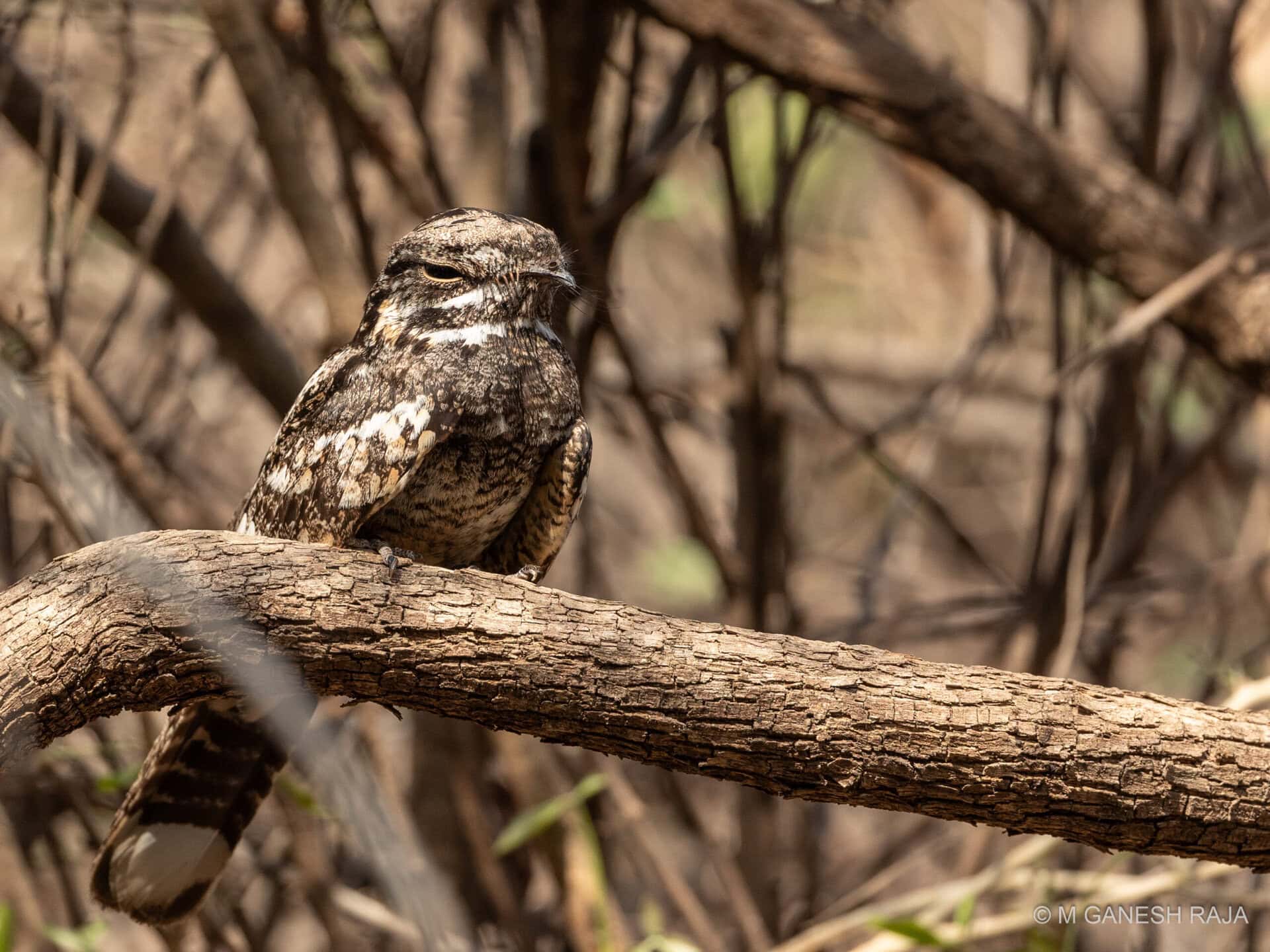
A nightjar resting on a trunk. Nightjars are nocturnal birds that hunt in the night and sleep in the day. I had this doubt about nightjars sleeping in the open in the daytime and being vulnerable to predators. Mr. Vipul explained that they are a camouflaged species and predators can’t spot them easily. Even though they are sleeping, they keep their eyes open a slit and can spot any predators approaching very close and would easily escape.
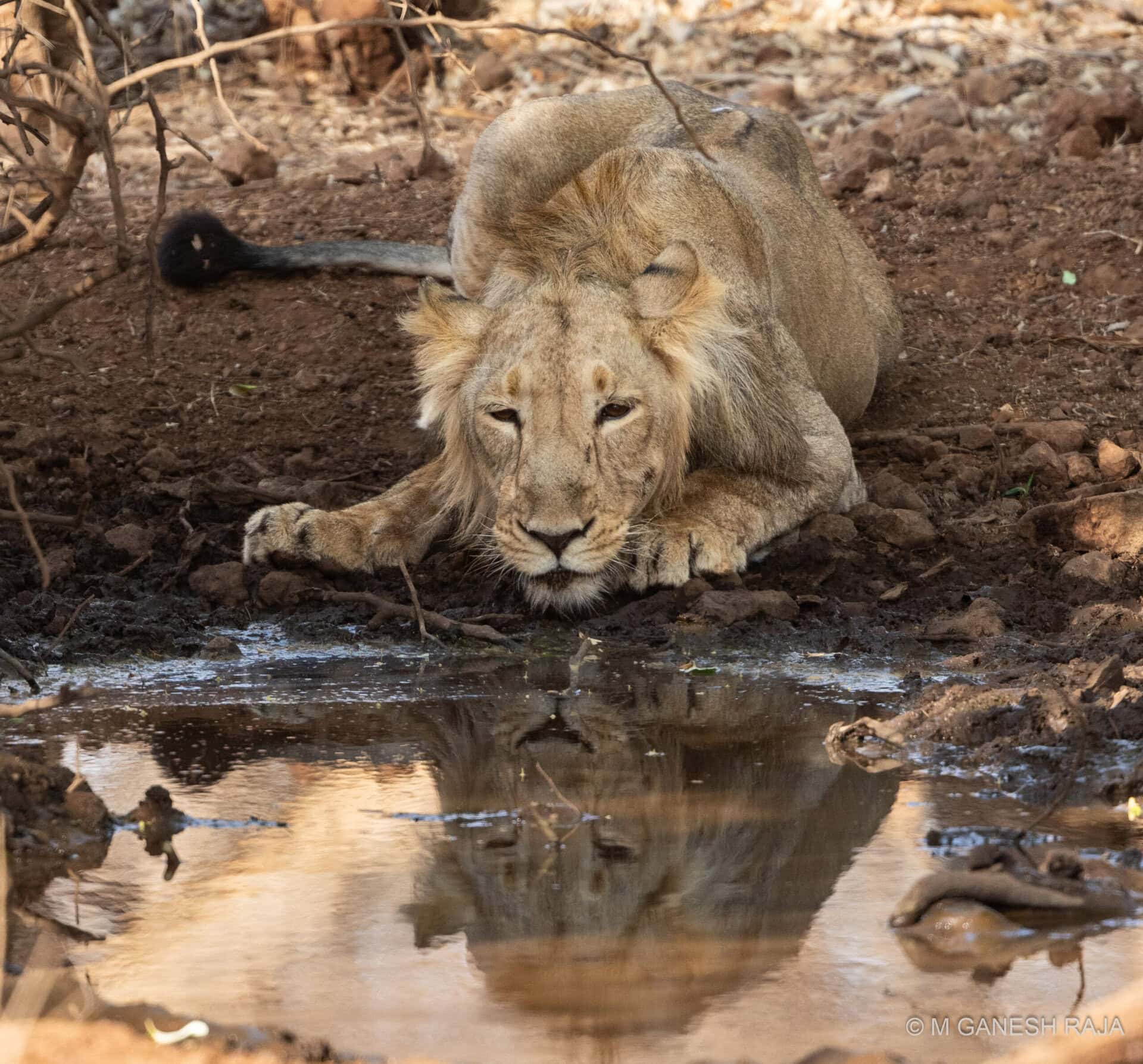
The male from the morning’s pride of 4, by the water. Who is that handsome guy in the water?
A couple of cubs.
Another cub.
The young cub with the hanuman langur carcass.
An adult supervises the cub with the carcass.
Safari #4
8th June 2024, 6:00AM to 9:00AM
Another great safari – 4th in a row of great sightings. The first couple of hours was quite boring with no sign of any lions. The guide was showing us peacocks, langurs and spotted deers.
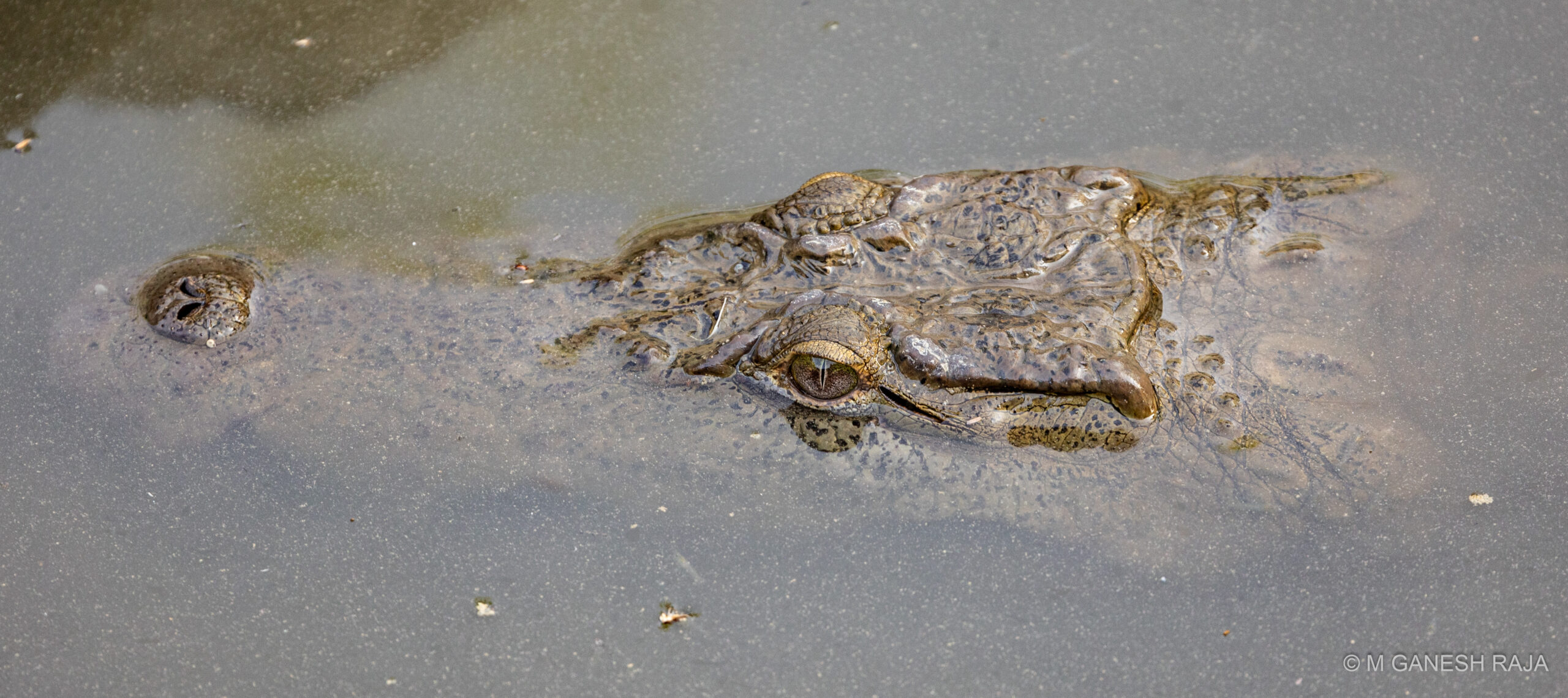
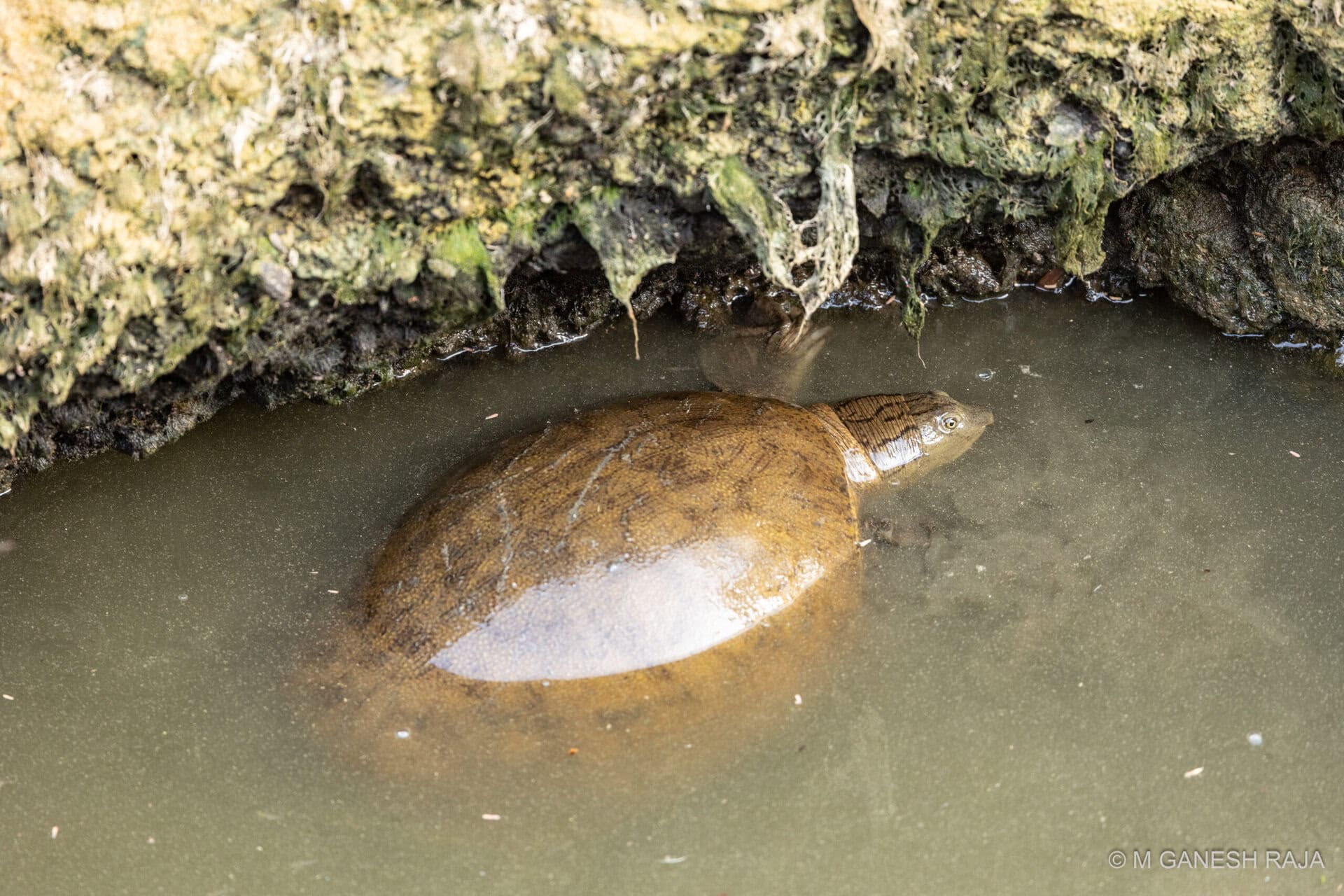
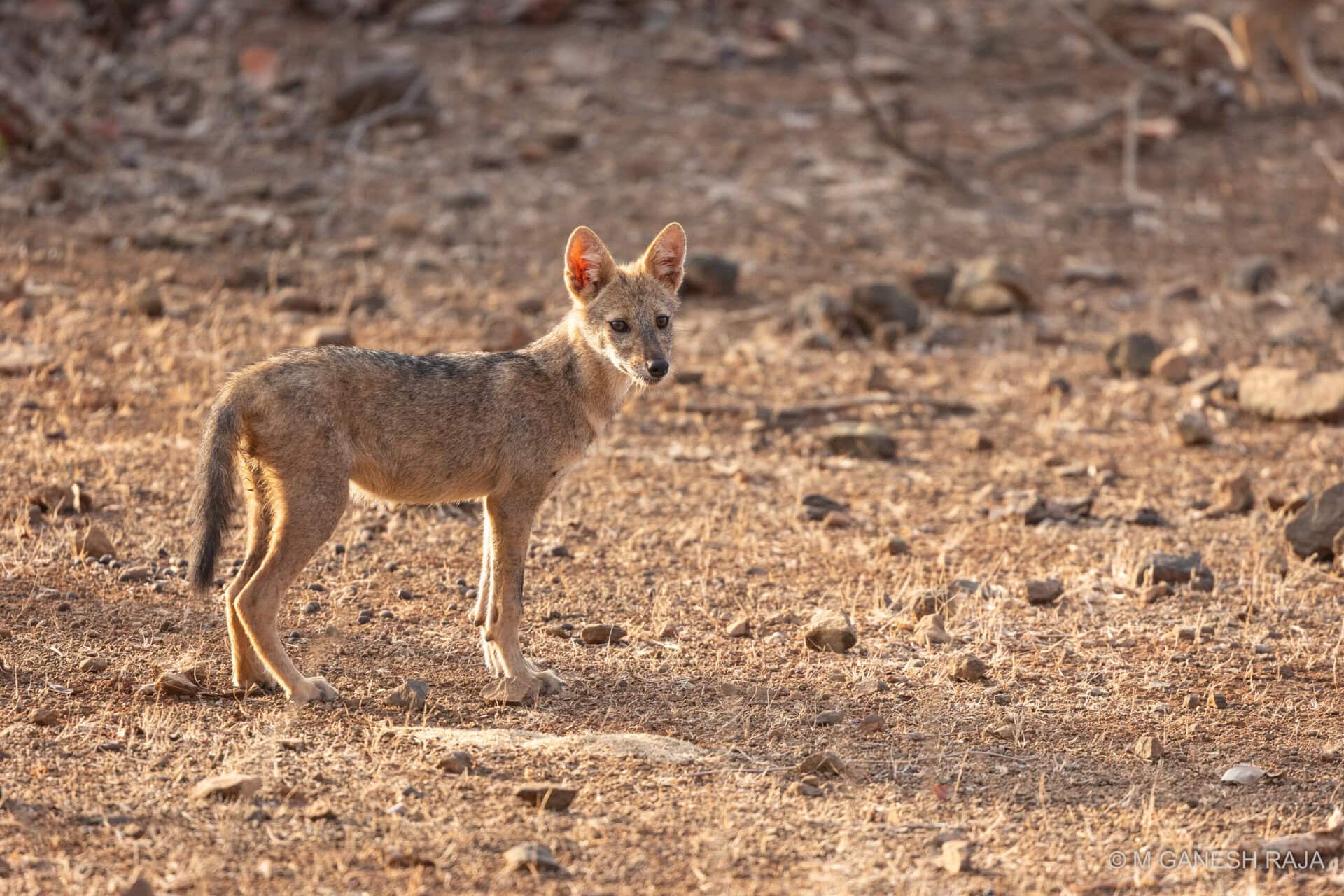
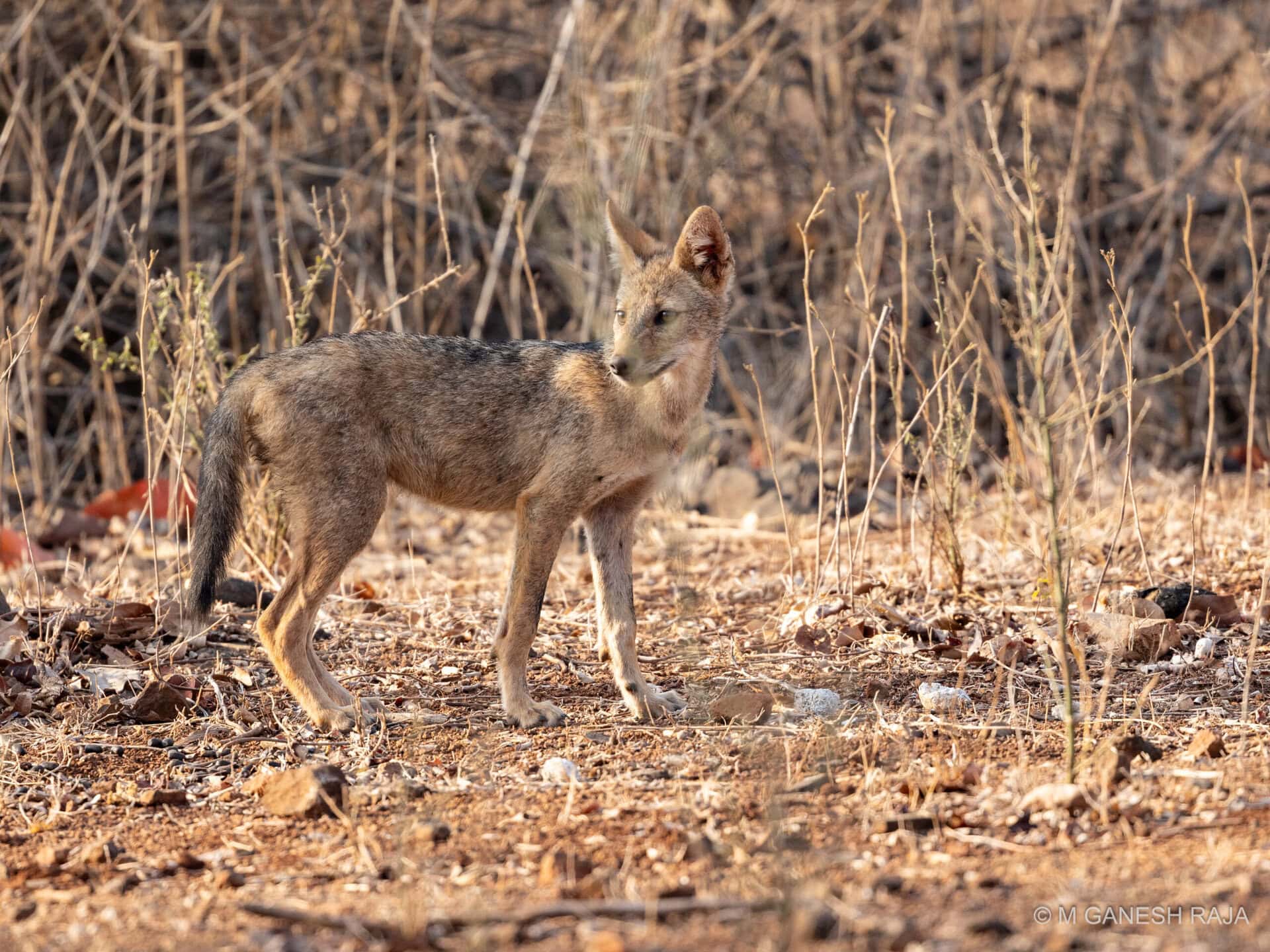
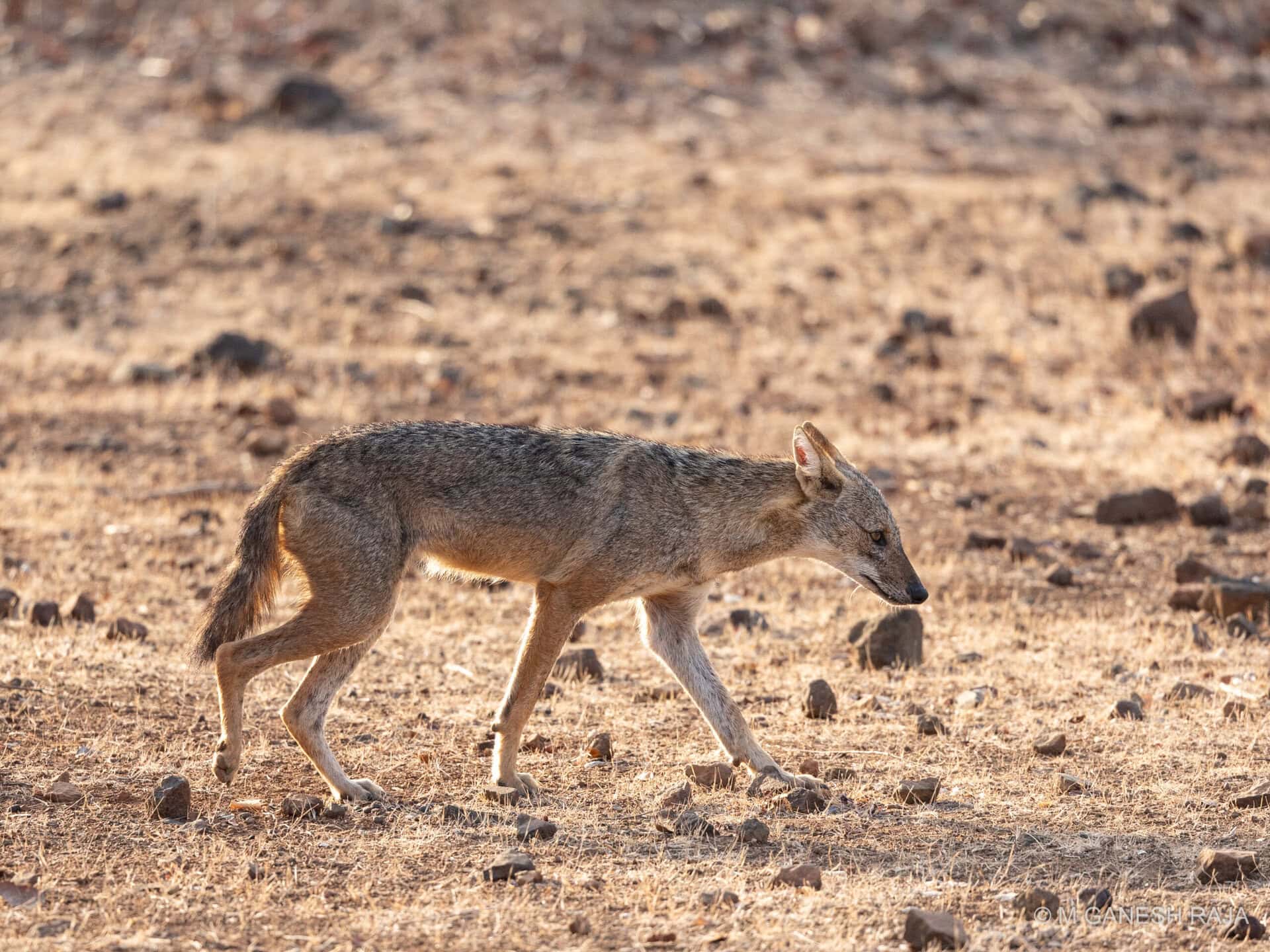
After two hours, luck turned in our favor and we spotted a pack of 4 or 5 foxes. Foxes are shy creatures and keep their distance from humans. So these were at a distance of about 100 to 150 meters from the road. I still managed to get a few good shots. We then saw a small pond with a crocodile and a turtle very close.
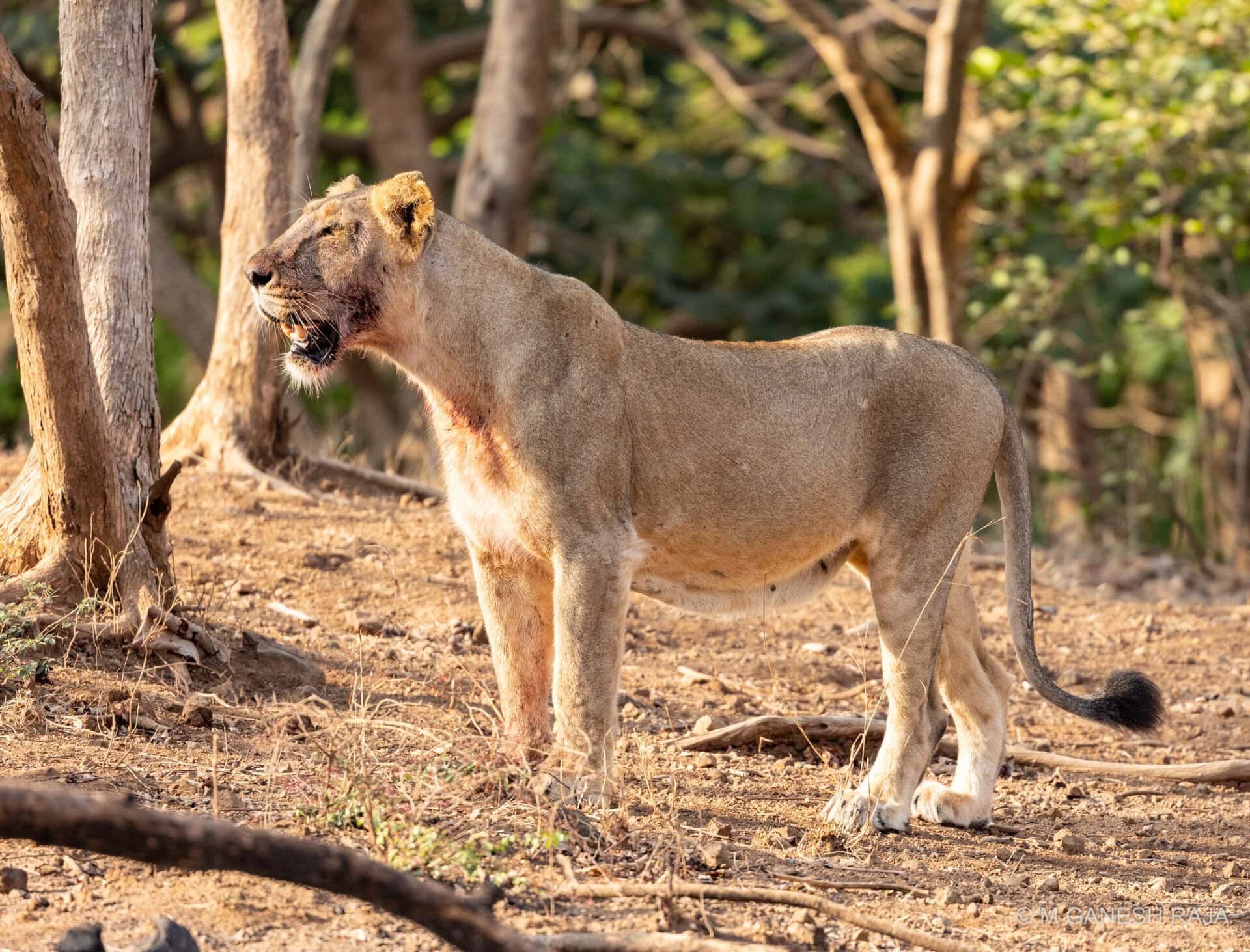
As we were nearing another waterhole by the road, the guide got information that a part of the 3 adult / 6 cubs pride we saw the previous evening was approaching the waterhole. So we waited. After about 10 minutes of wait, we saw the first adult female reach the road. Like the previous day, she surveyed the surroundings and crossed. We could see blood on her face. The driver and guide explained this should be from a recent hunt.
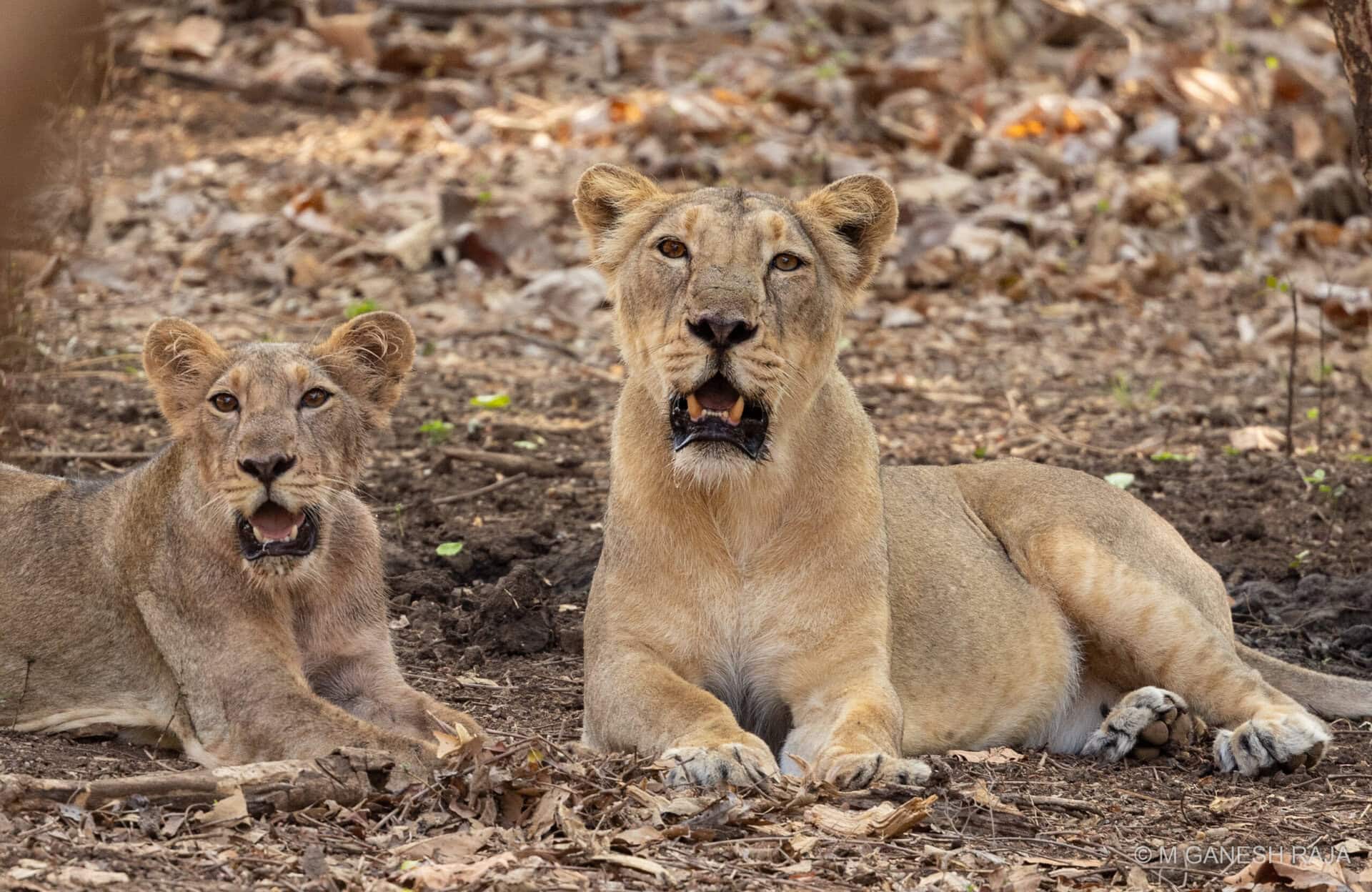
This adult was then followed by two young cubs. They went to the waterhole and after quenching their thirst settled down to rest. We stayed there for some time and took some pictures. All the other vehicles left. When we were about to leave, the driver and guide received news that another female with a wild boar kill was approaching.
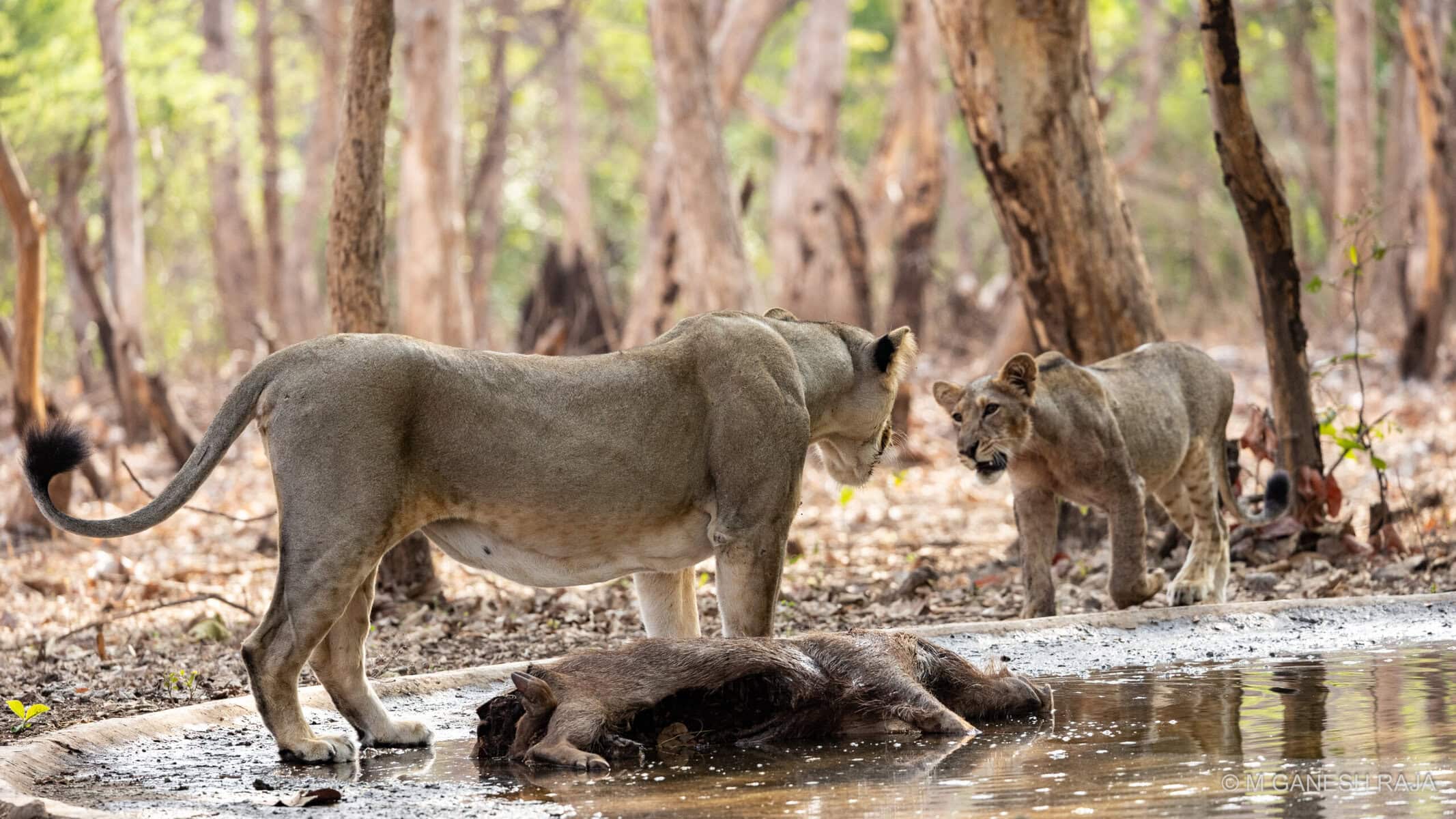
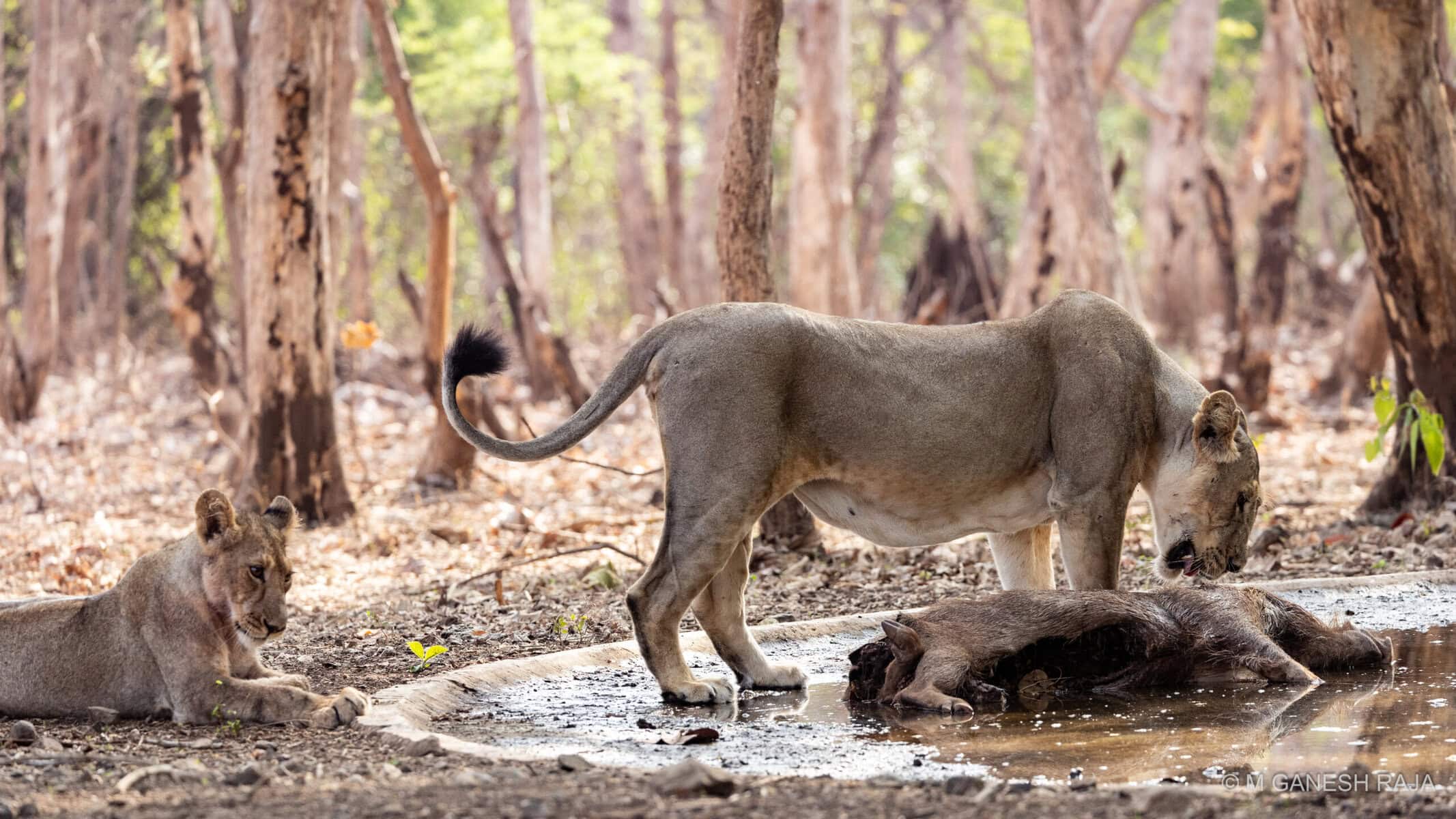
The driver took the vehicle a little behind and we waited. In about 5 minutes, we saw movement behind the bushes by the side of the road and gradually, an adult with a wild boar kill emerged. It was amazing to see how the adult female dragged the huge wild boar with her jaws. The boar should have weight at least 75 kilos.
She dragged the wild boar, crossed the road, and dropped the boar at the water hole. And the young cub approached in anticipation of a good meal. It was as if the adult was telling the cub “breakfast is served”.
I got some good video clips and pictures of the whole drama.
It was getting too close to the closing time. The driver gave us a couple more minutes to watch this awesome scene and he then drove quickly and made it just in time at the exit gate.
Overall, this was the best safari of this tour.
Pictures from this awesome safari.
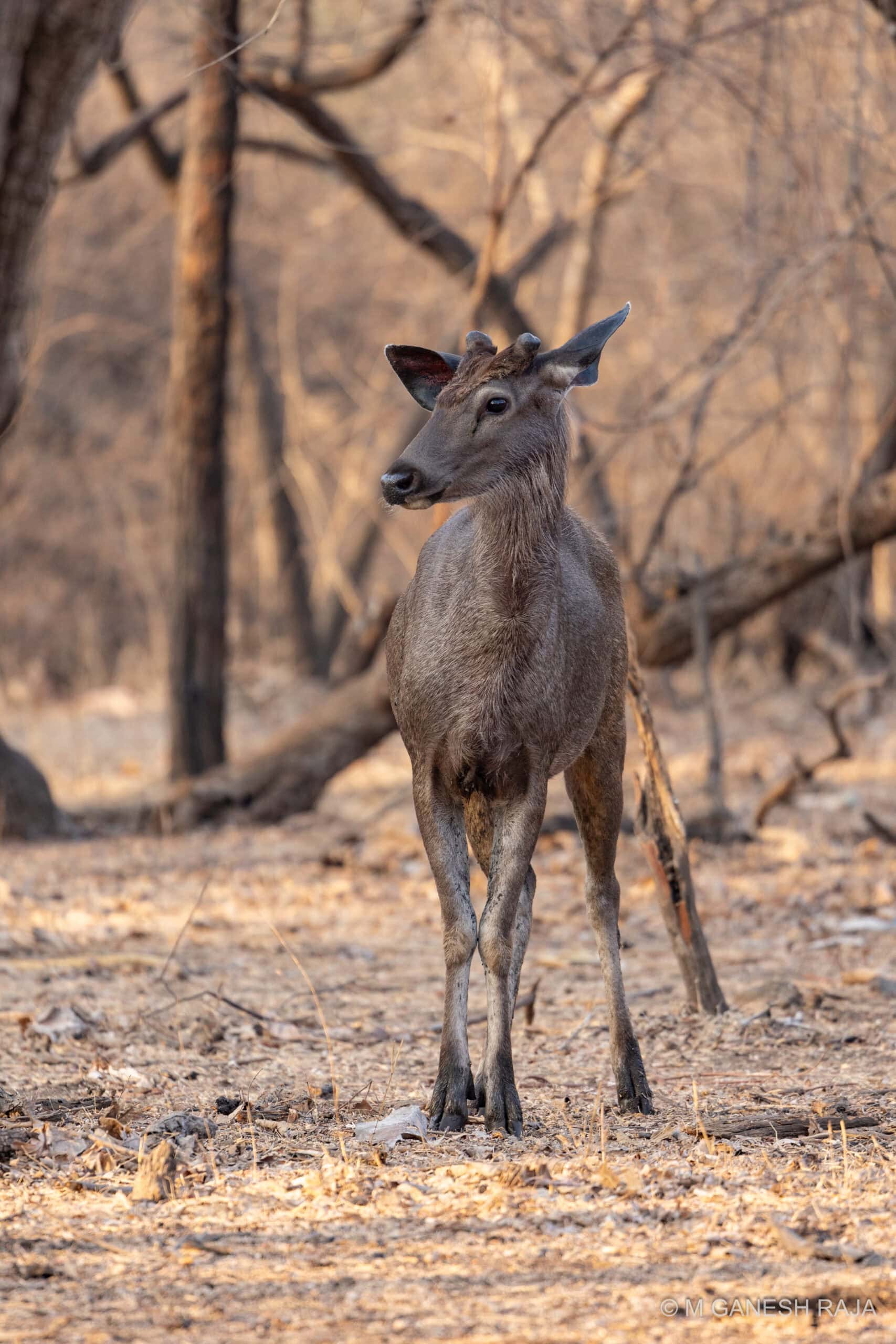
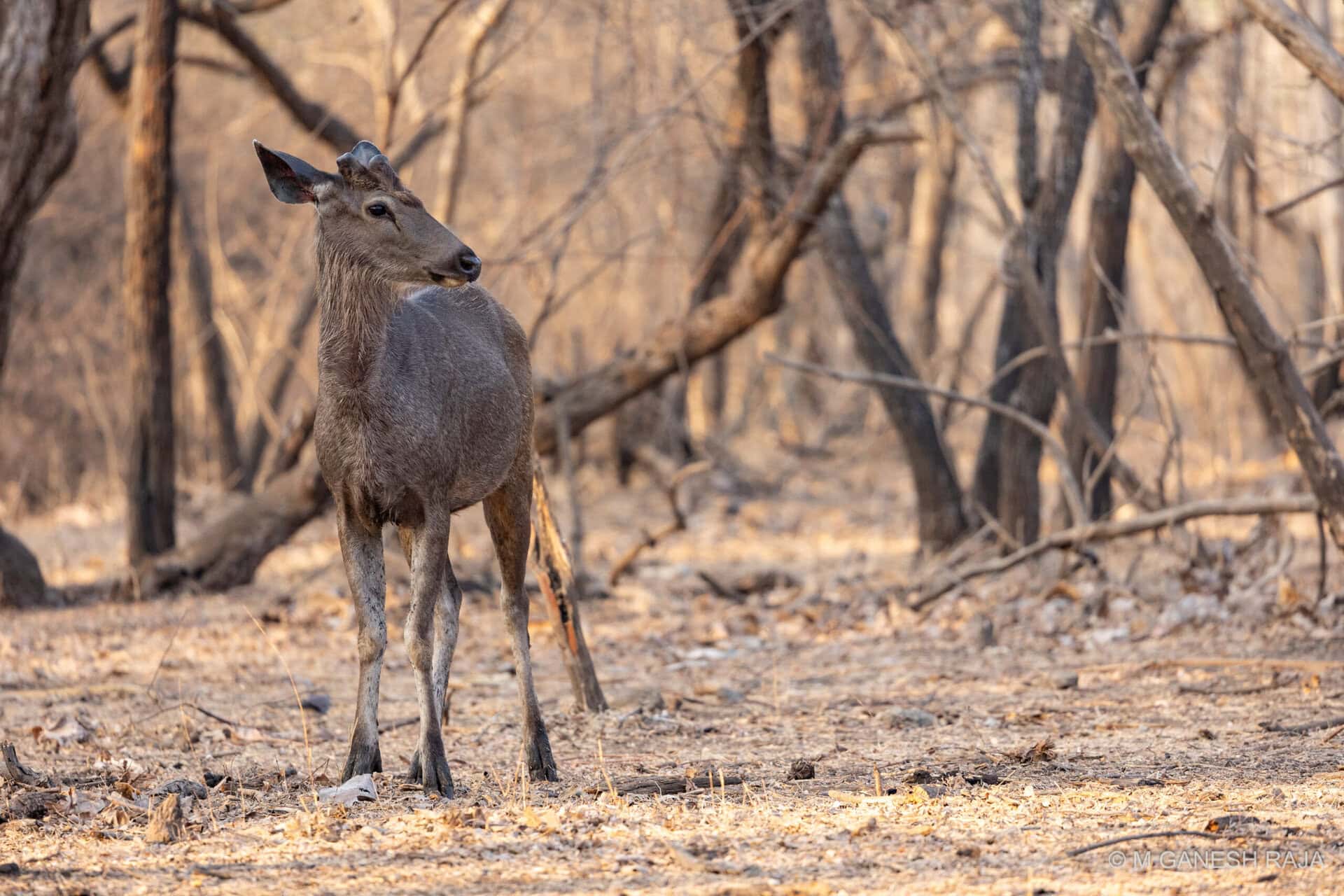
Sambar deer.
A peahen resting on a tree trunk.
A crocodile in the pond.
A turtle swimming nearby. It was very close to the crocodile. It is possible that the crocodile was waiting for the right time to make a meal of the turtle.
A few pictures of the foxes.
The adult female with blood on her face arriving first to survey the road.
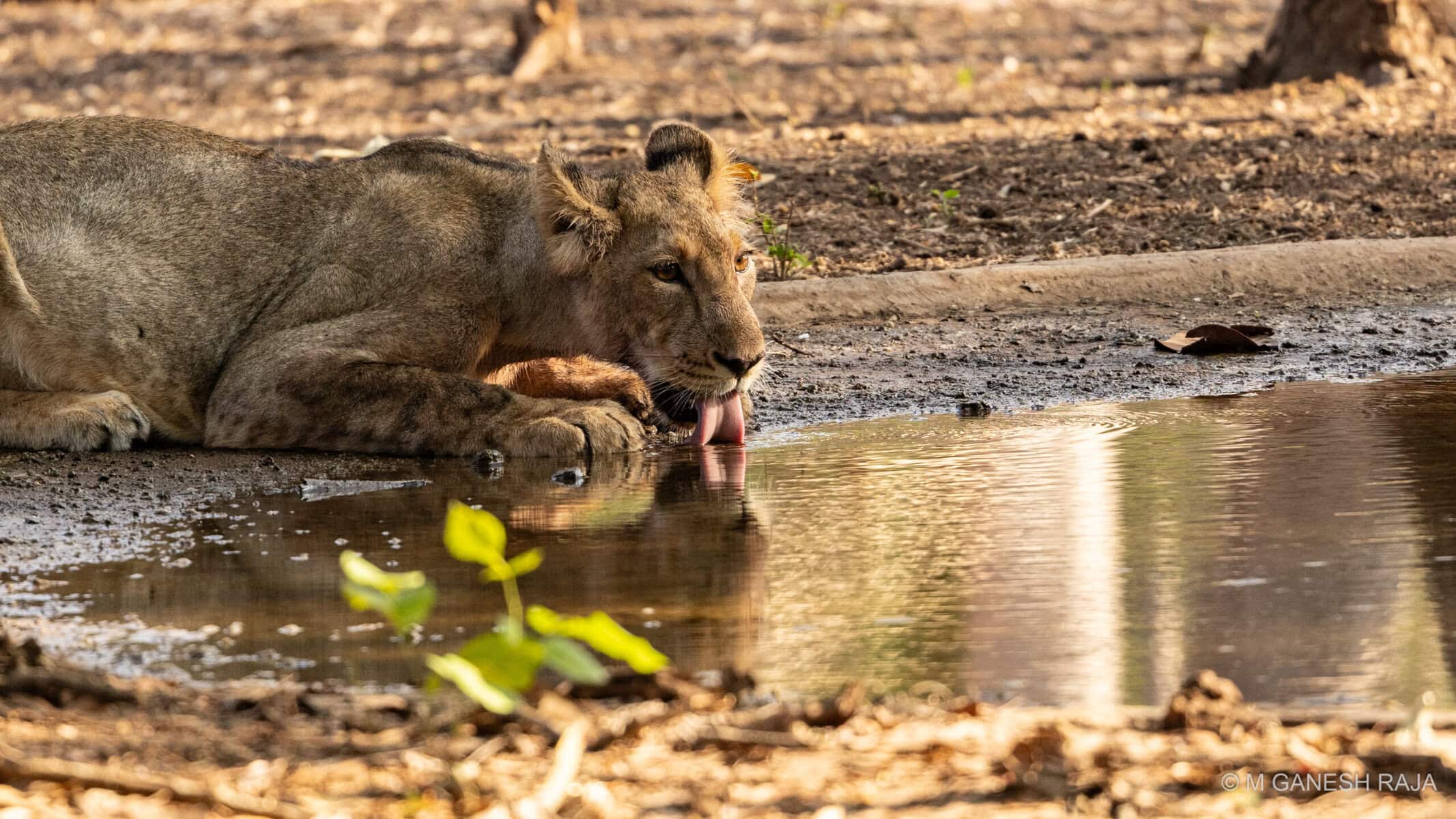
One of the young cubs at the water hole.
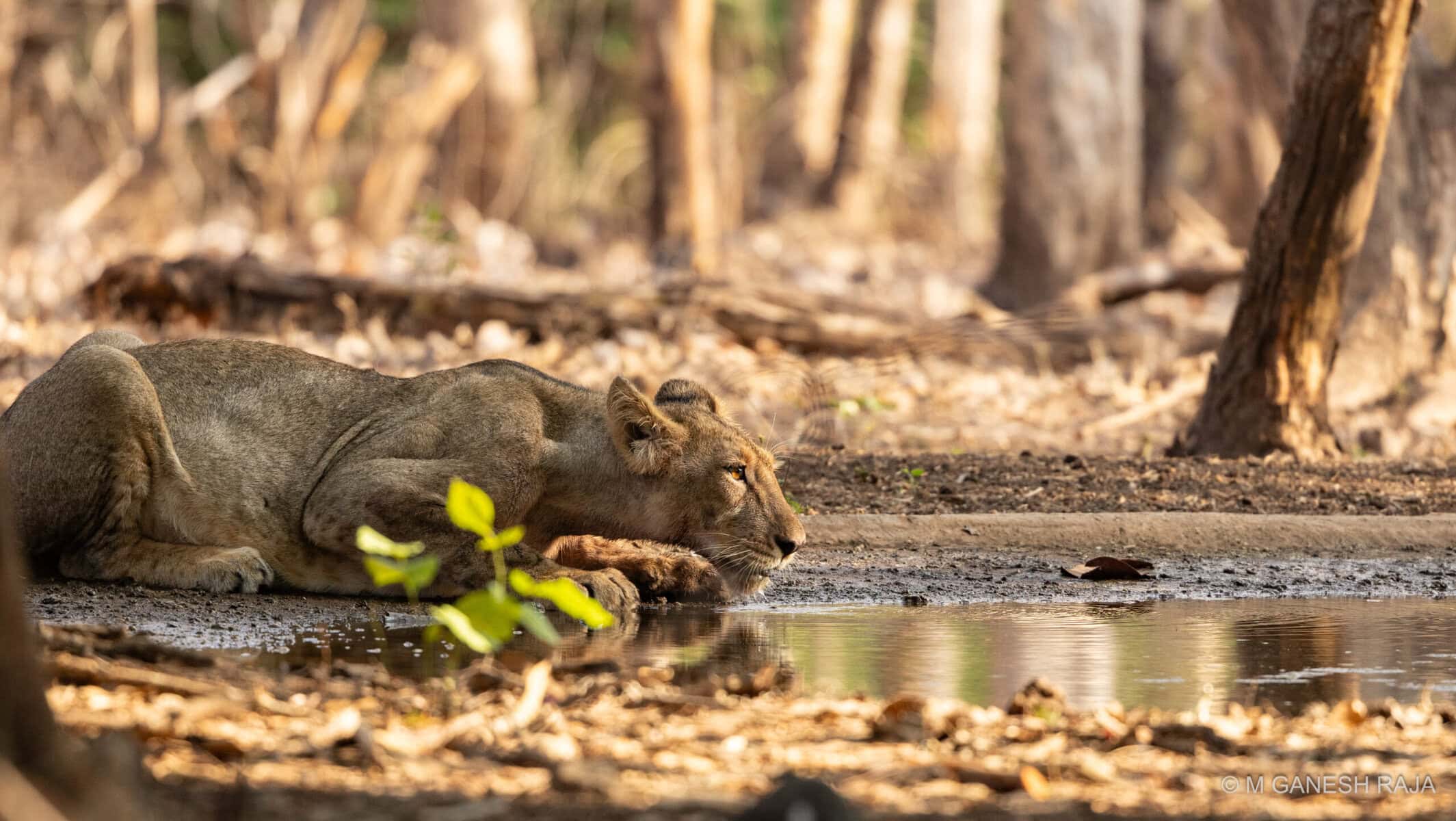
The young cub and the adult female resting.
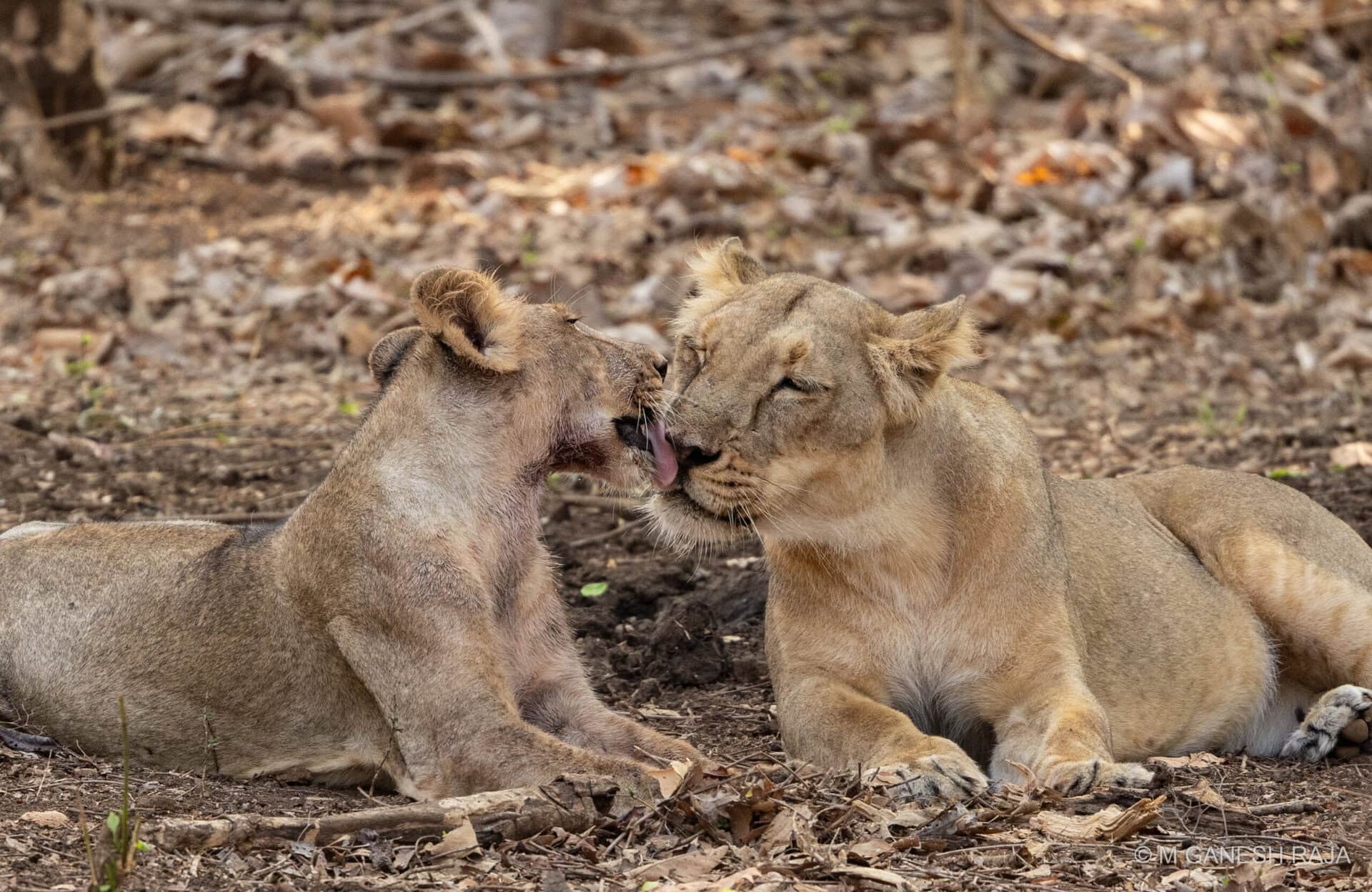
Showing some love.
The adult female with the wild boar kill.
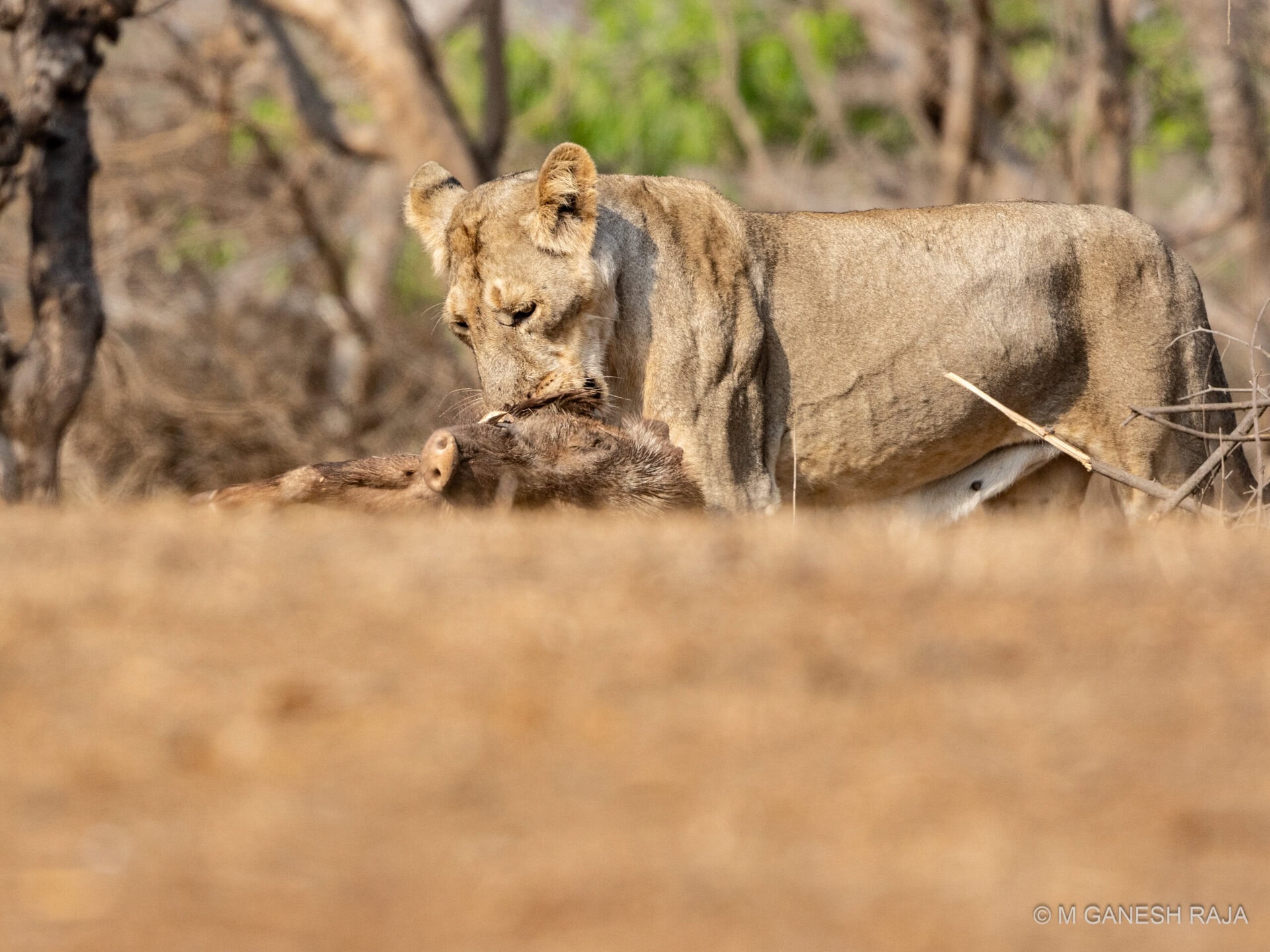
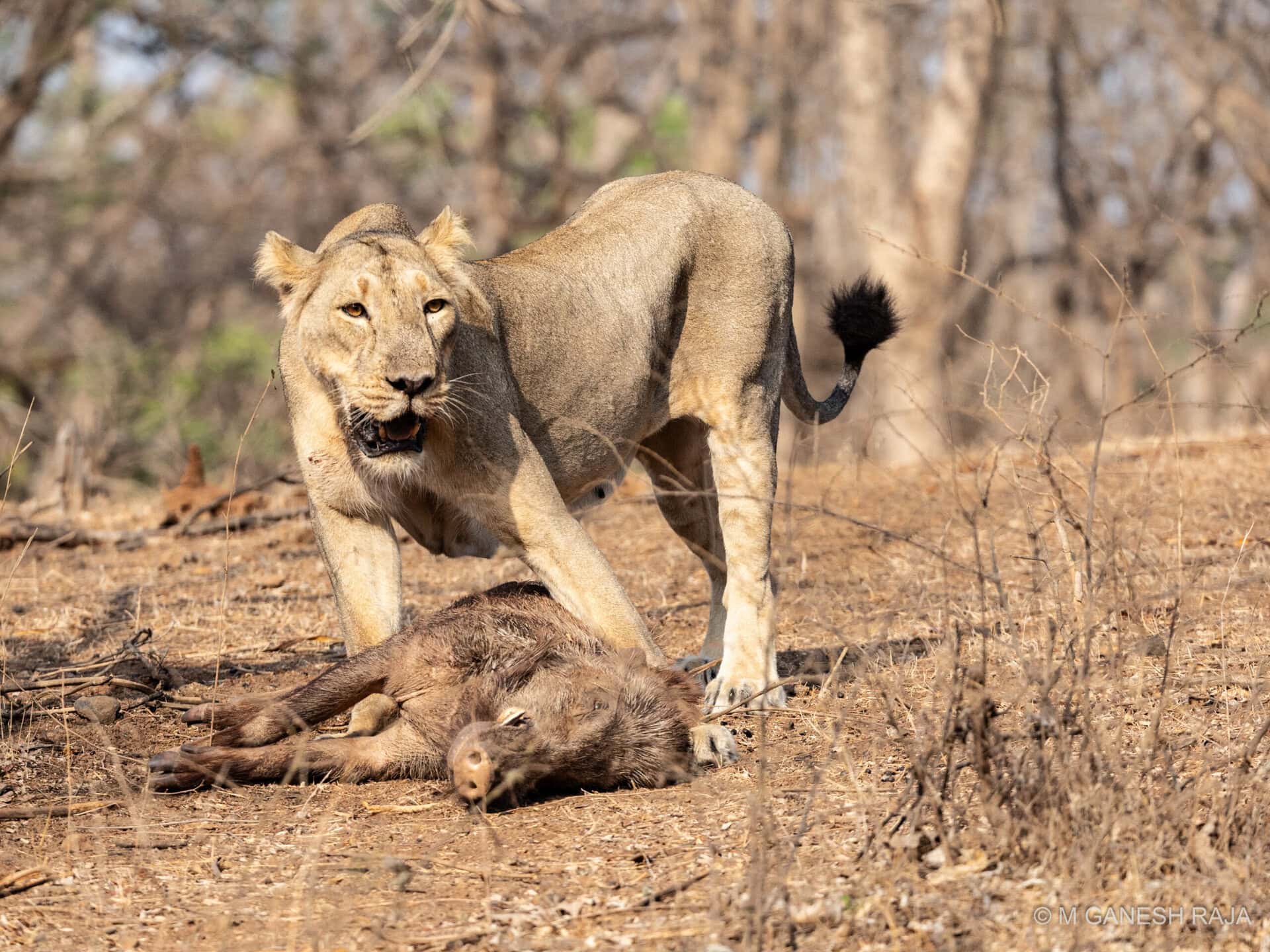
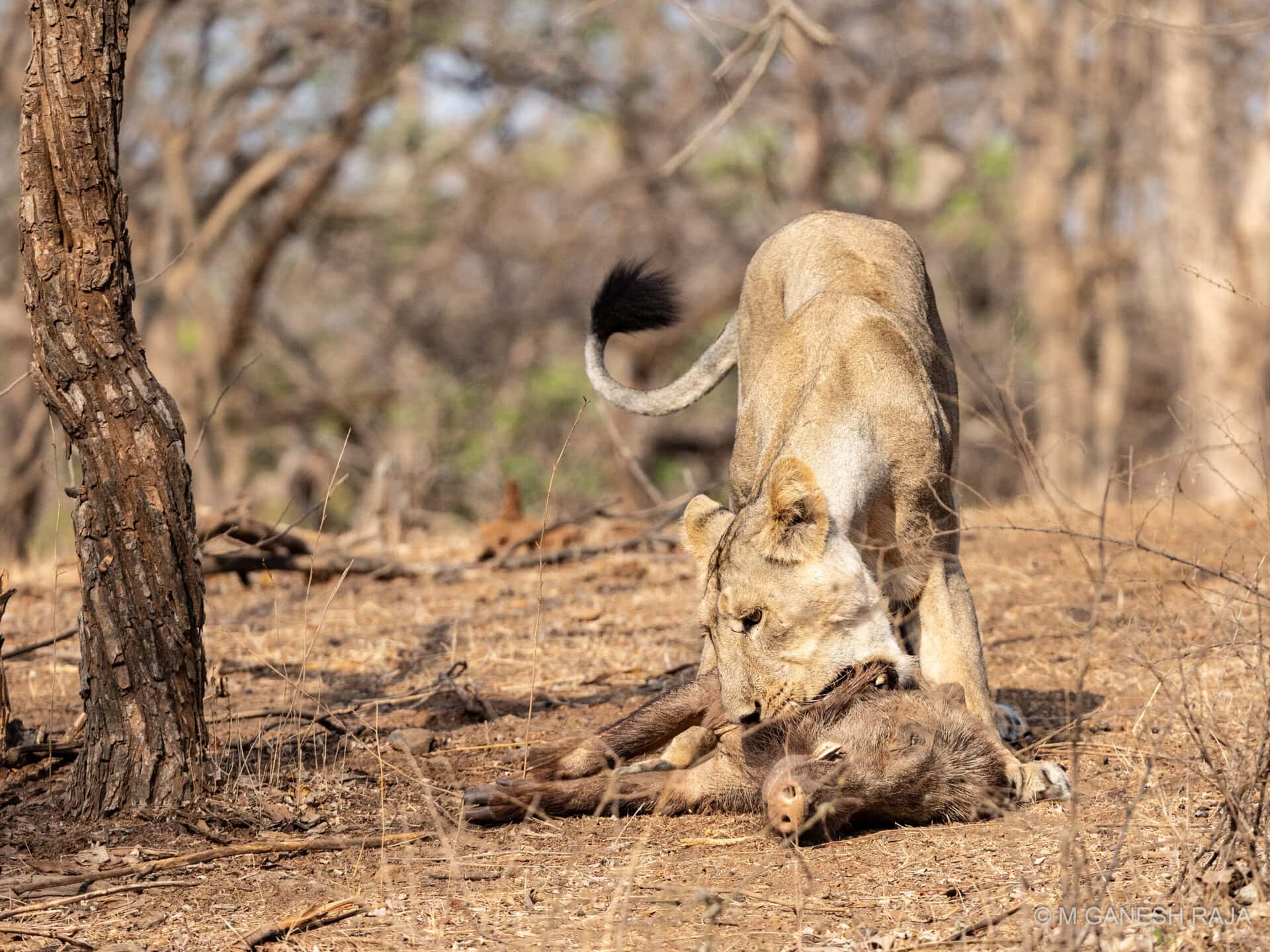
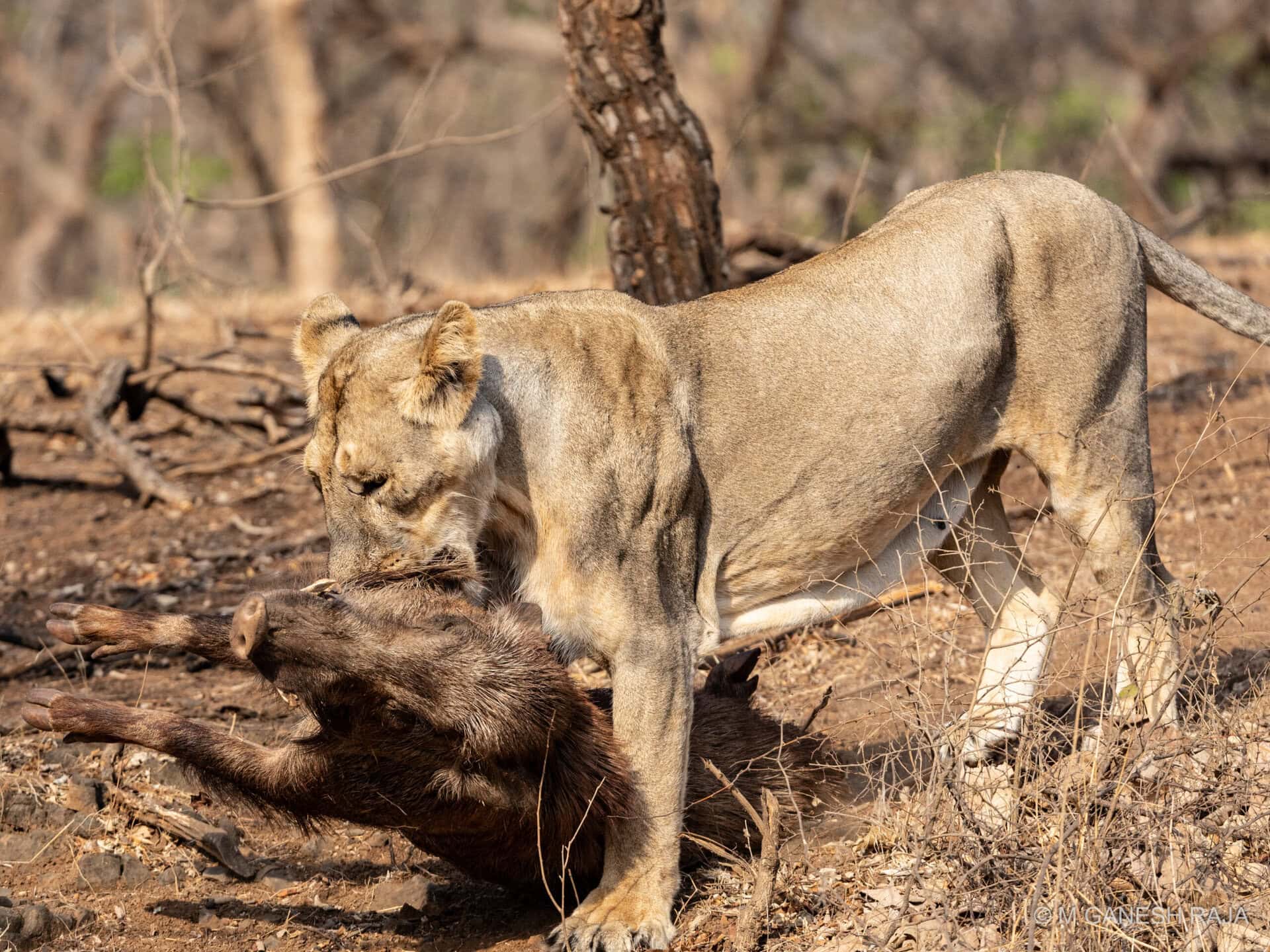
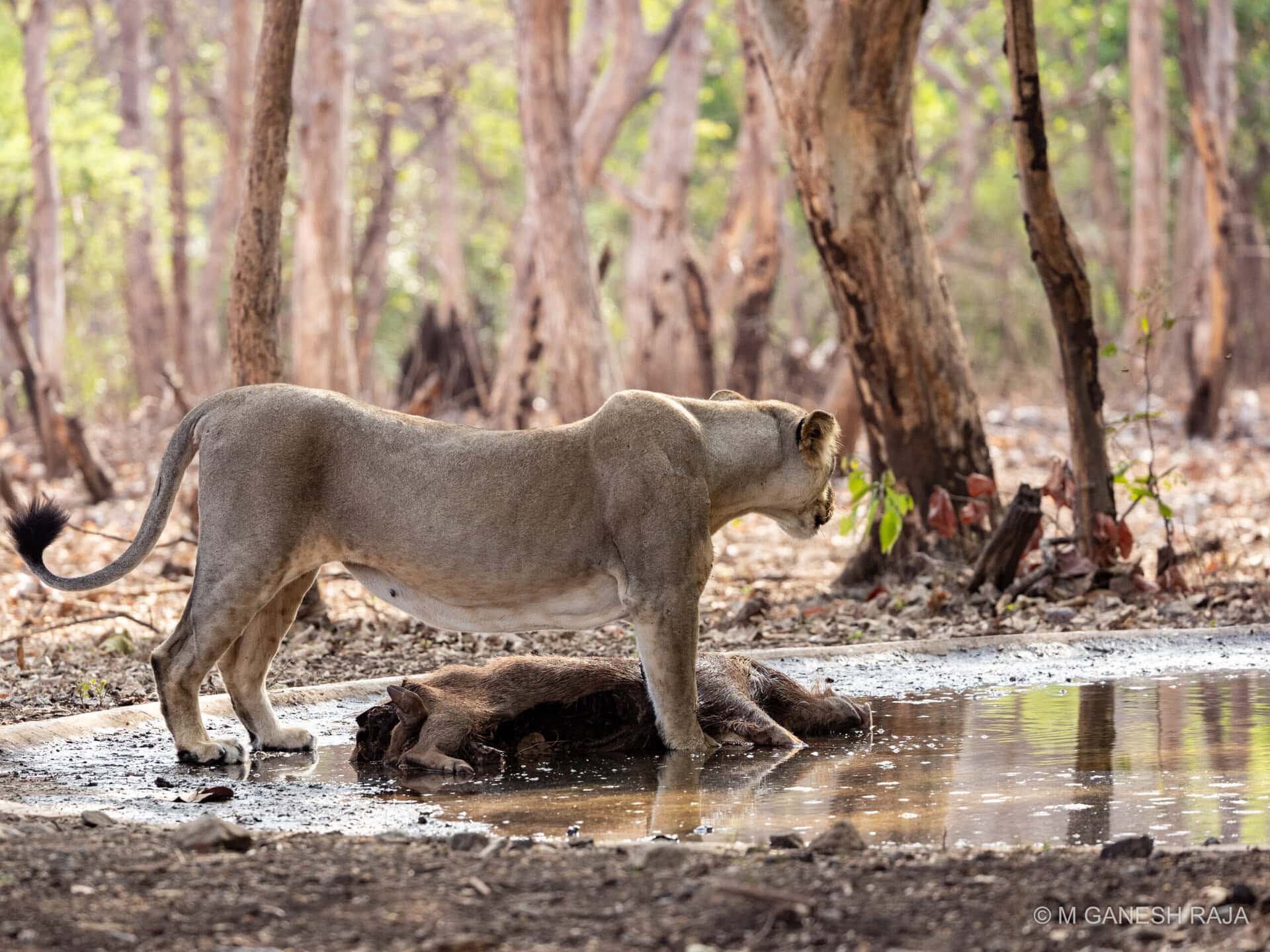
Breakfast is served!
Safari #5
8th June 2024, 4:00PM to 7:00PM
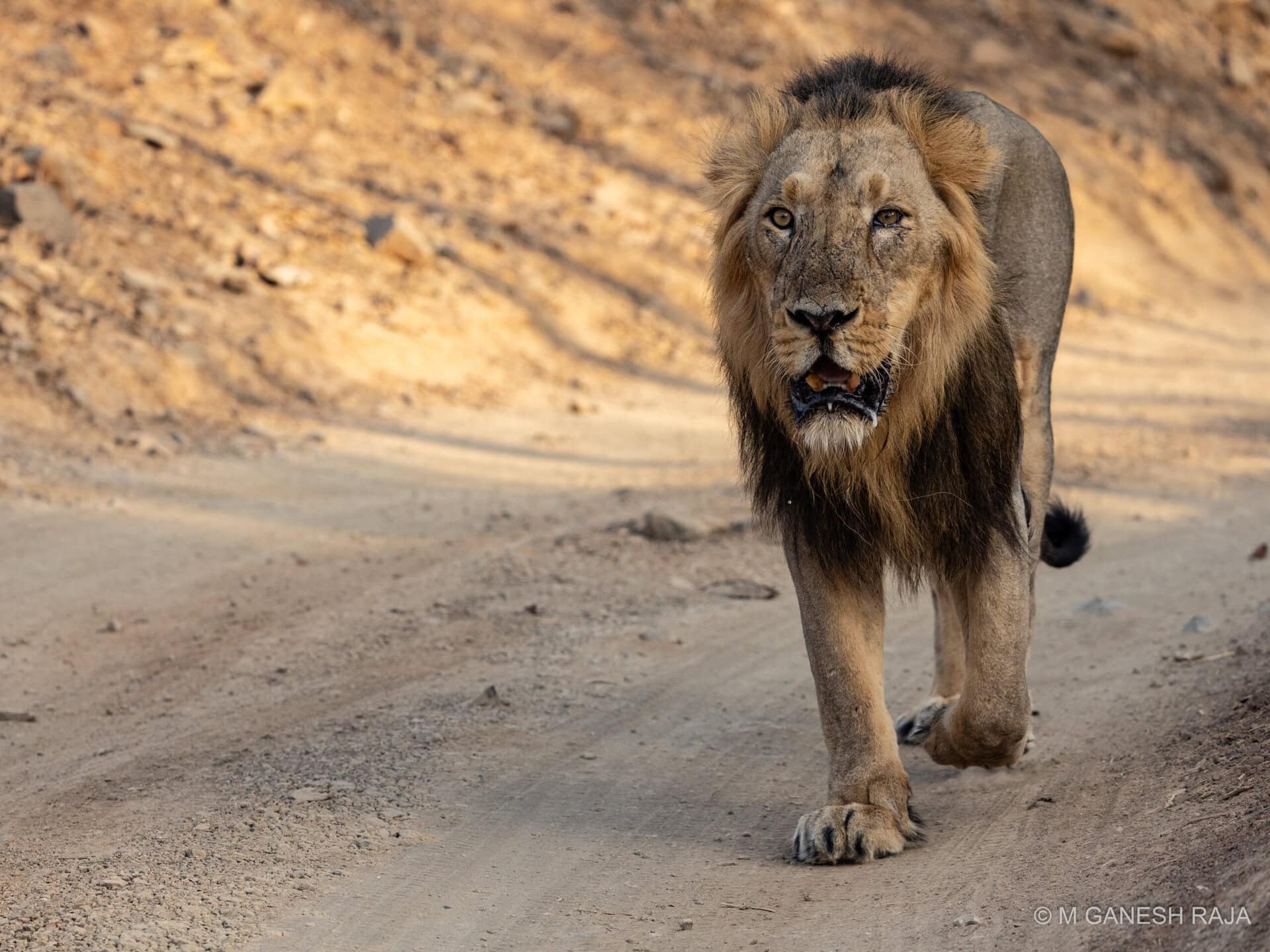
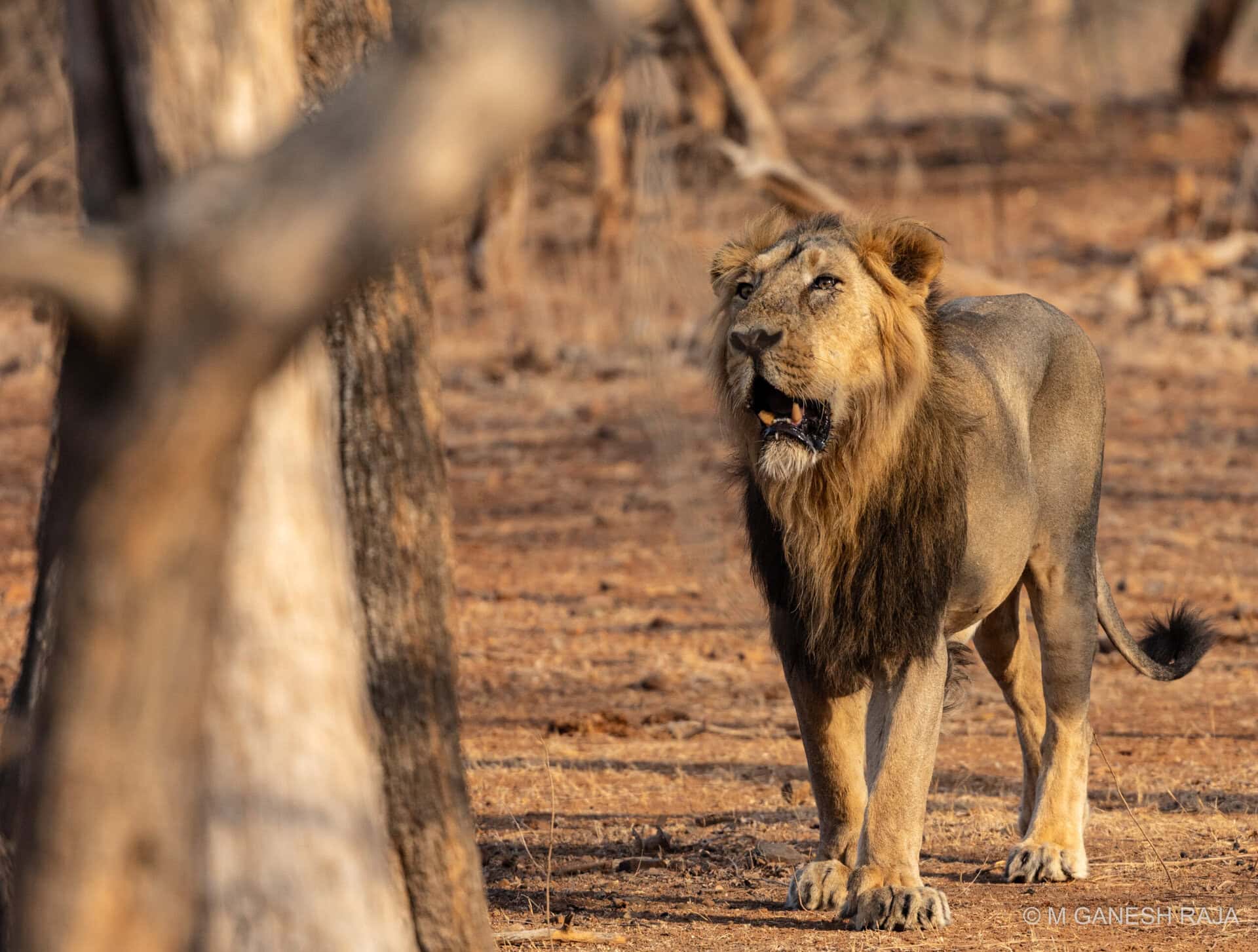
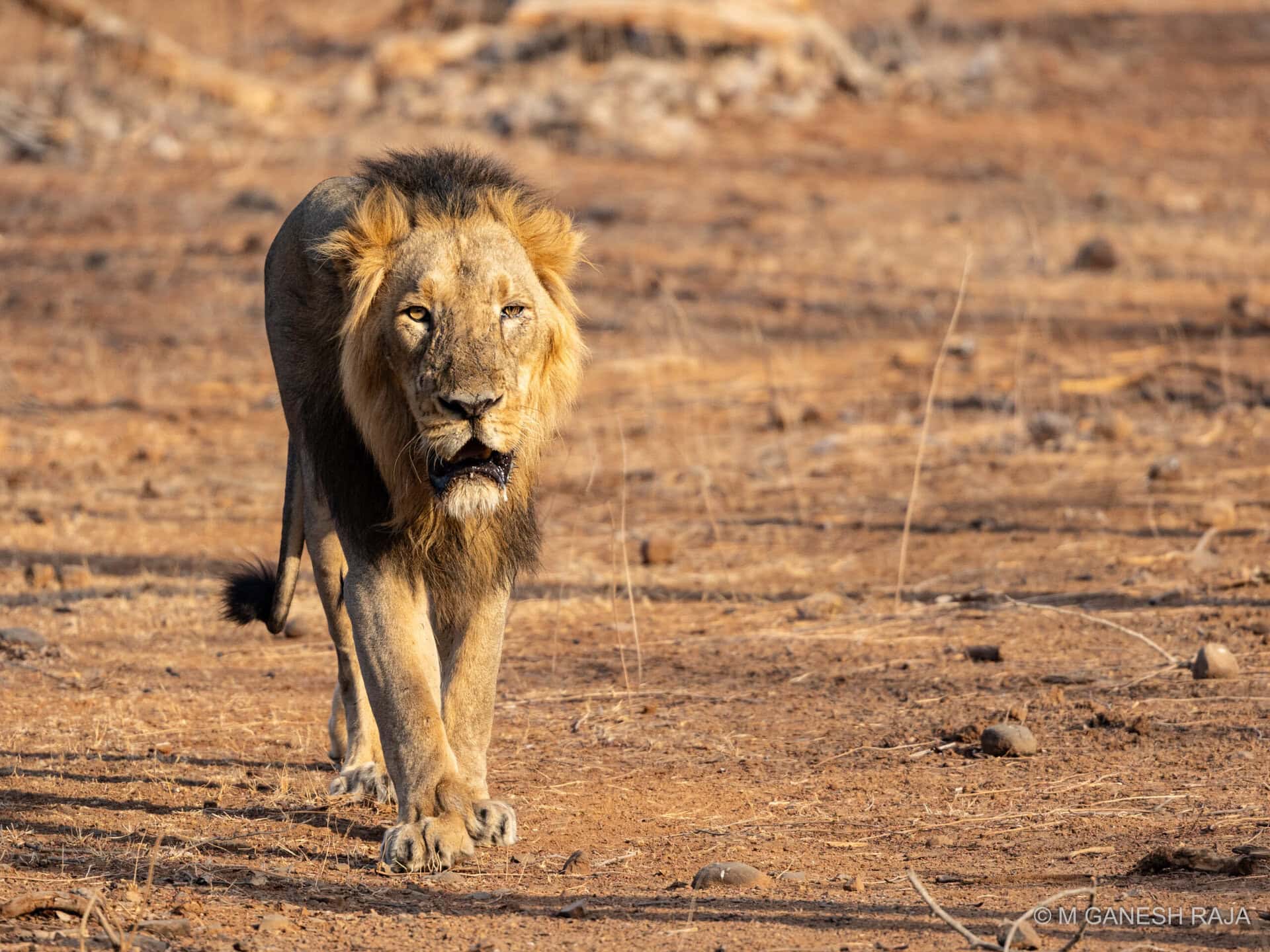
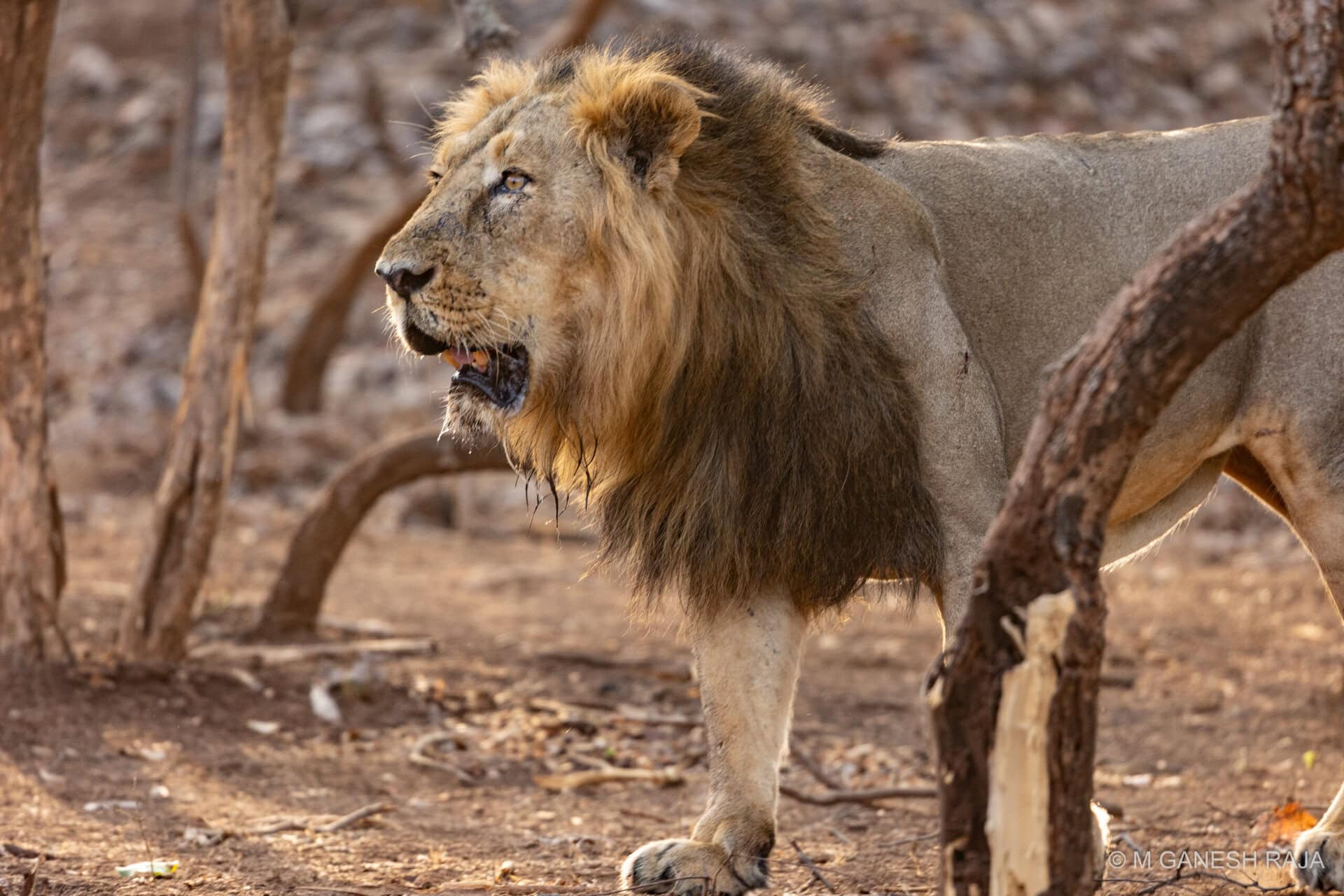
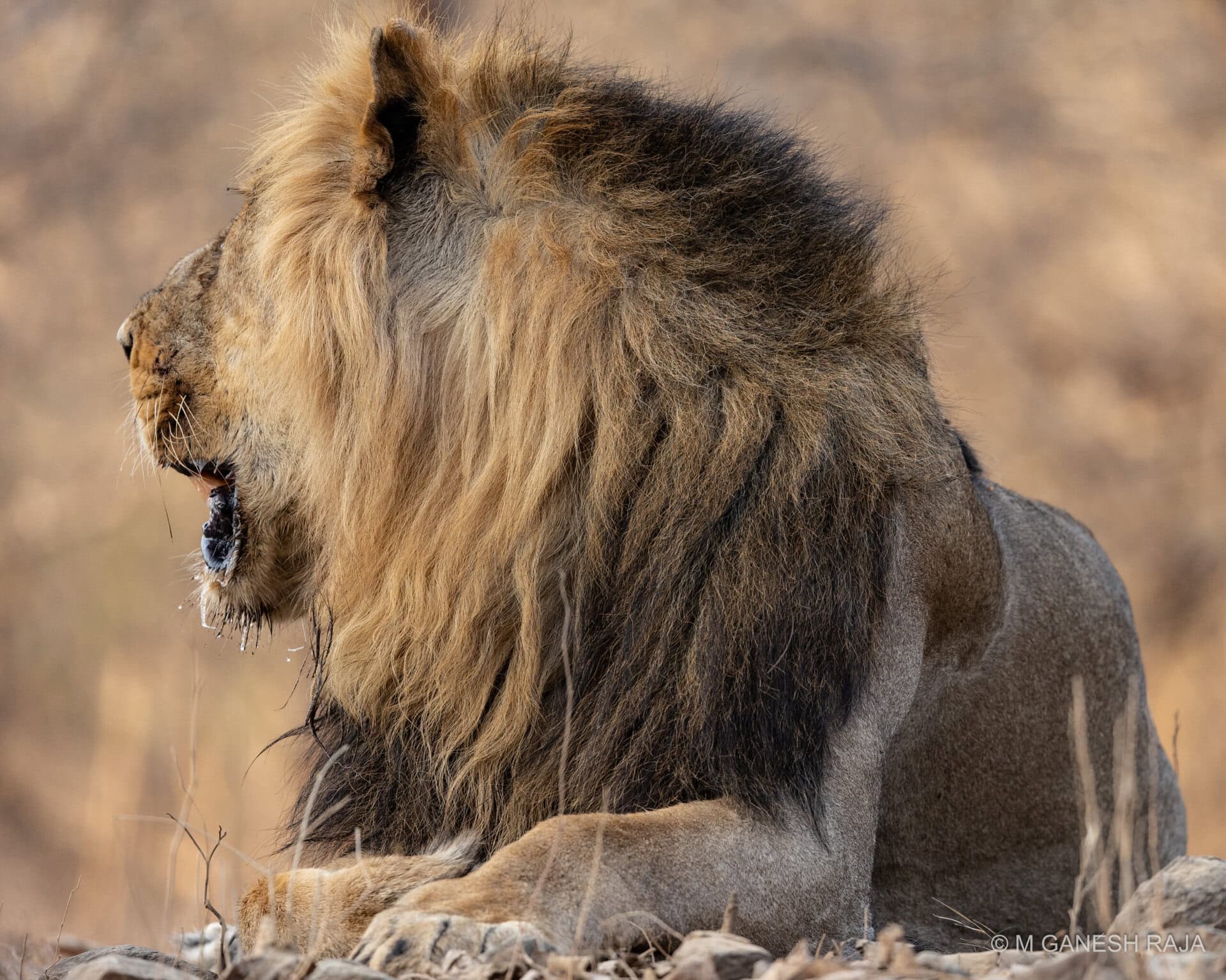
As we started the safari, we received news that two adult males were resting near the road on this route. These lions seem to be staying together and have been named Jai and Veeru. As we approached the spot where they were reported to be seen, we saw a couple of trackers resting by the road side. This meant the lions were resting nearby. And we could spot two adult males a little farther inside the jungle. We stopped and waited. After about 10 minutes of waiting, one of the lions got up and started walking towards the road. Many safari vehicles had arrived by that time and the lion walked very close to all the vehicles and reached a water hole. It drank water and then moved around as if it was posing for all the humans. This one was too close that even at 100mm focal length which is the widest in my my 100-500 lens, I could not fit the lion in the frame many times. We spent more than 30 minutes shooting. Other vehicles started leaving and we too left after some time.
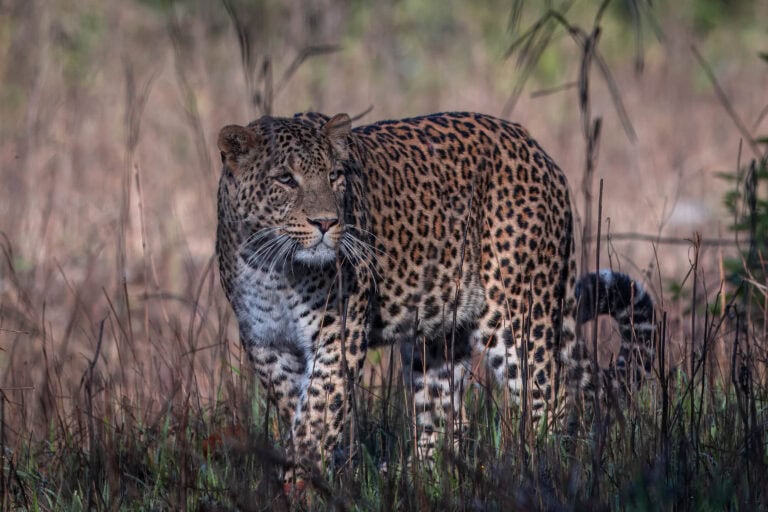
As we were nearing the exit, we found another safari vehicle stopped by the roadside. The driver of that vehicle signaled us to stay absolutely silent. Mr. Vipul whispered that this could mean that there was a leopard nearby. And after some time, we could spot movement very far about 200 to 300 meters away from the road. To the naked eye, it looked like a lion to me. But when I quickly pointed my camera at full zoom, I realized it was a leopard. It somehow sensed our presence and ran into the jungle in a flash. I managed to capture a couple of pictures in the brief time it was visible.
I was told on the first day that lions are easy to sight as they are not shy of humans and stay very close to the road. But spotting a leopard in Gir is very difficult. So, it was a big surprise that I was able to see a leopard and take a couple of pictures too.
Another good safari – 5 in a row of good sightings.
A few pictures from this safari.
The nightjar.
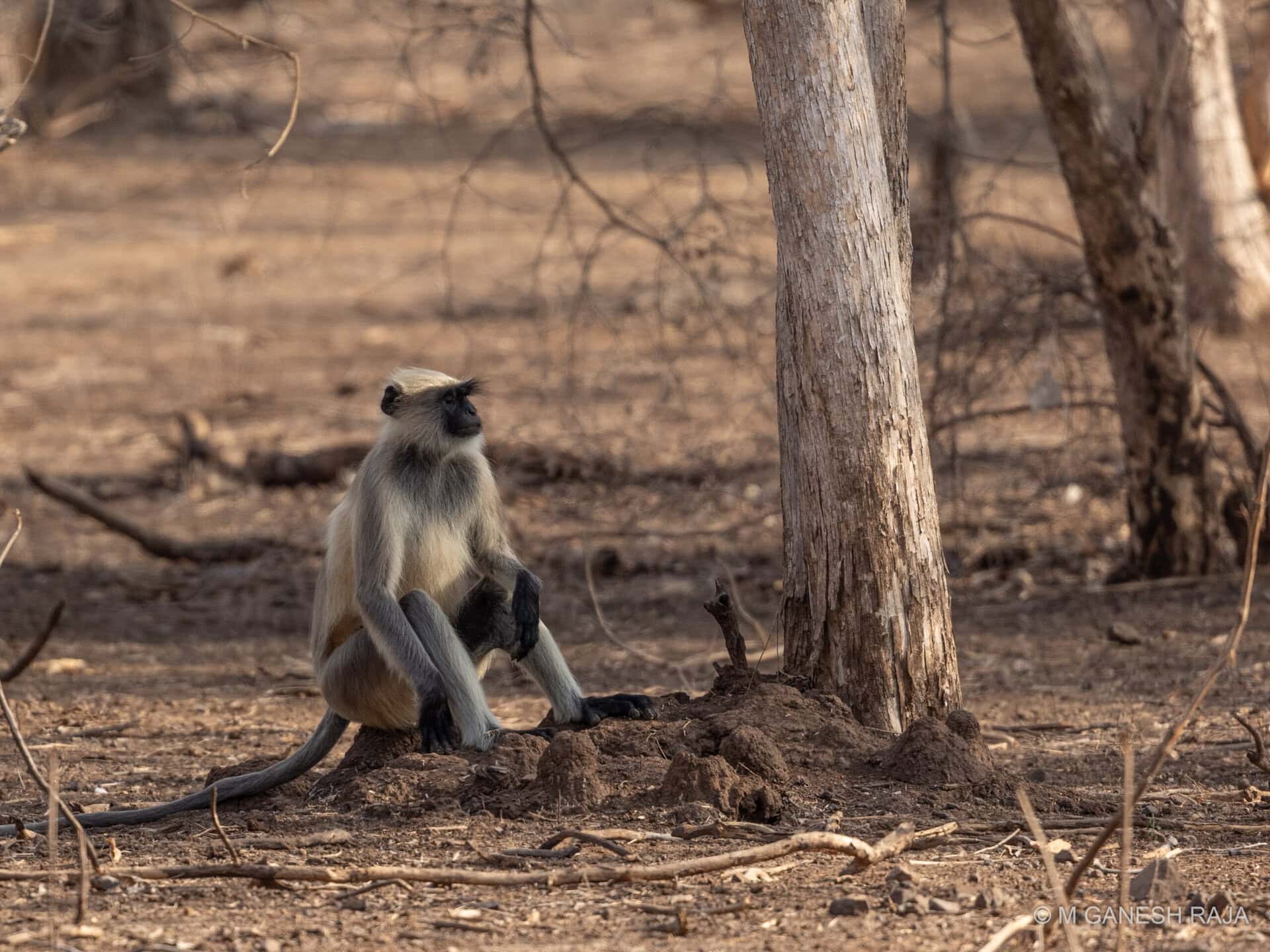
A hanuman langur.
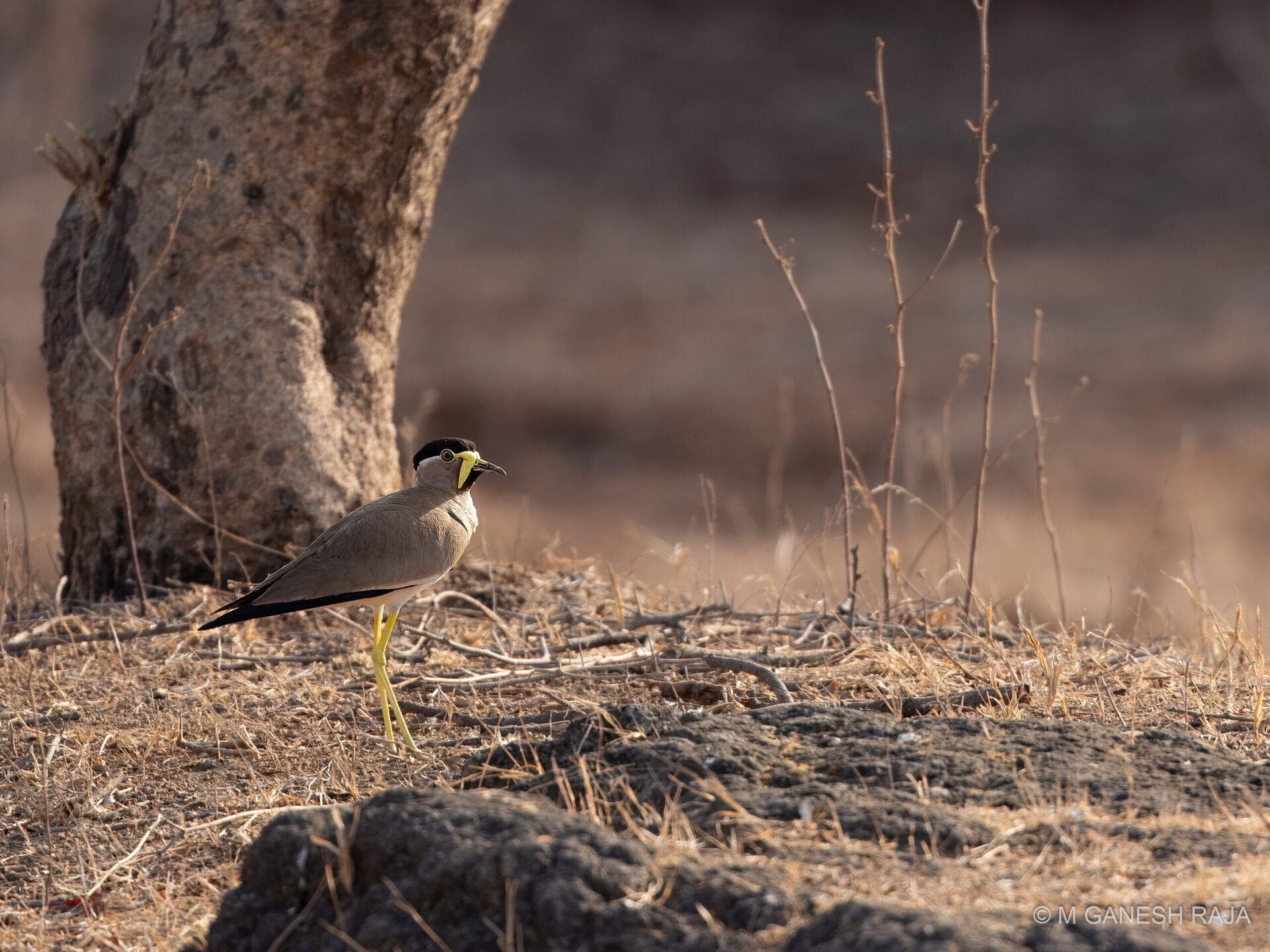
A yellow wattled lapwing.
The male adult lion.
The leopard. As the leopard was very far, these pictures are tightly cropped.
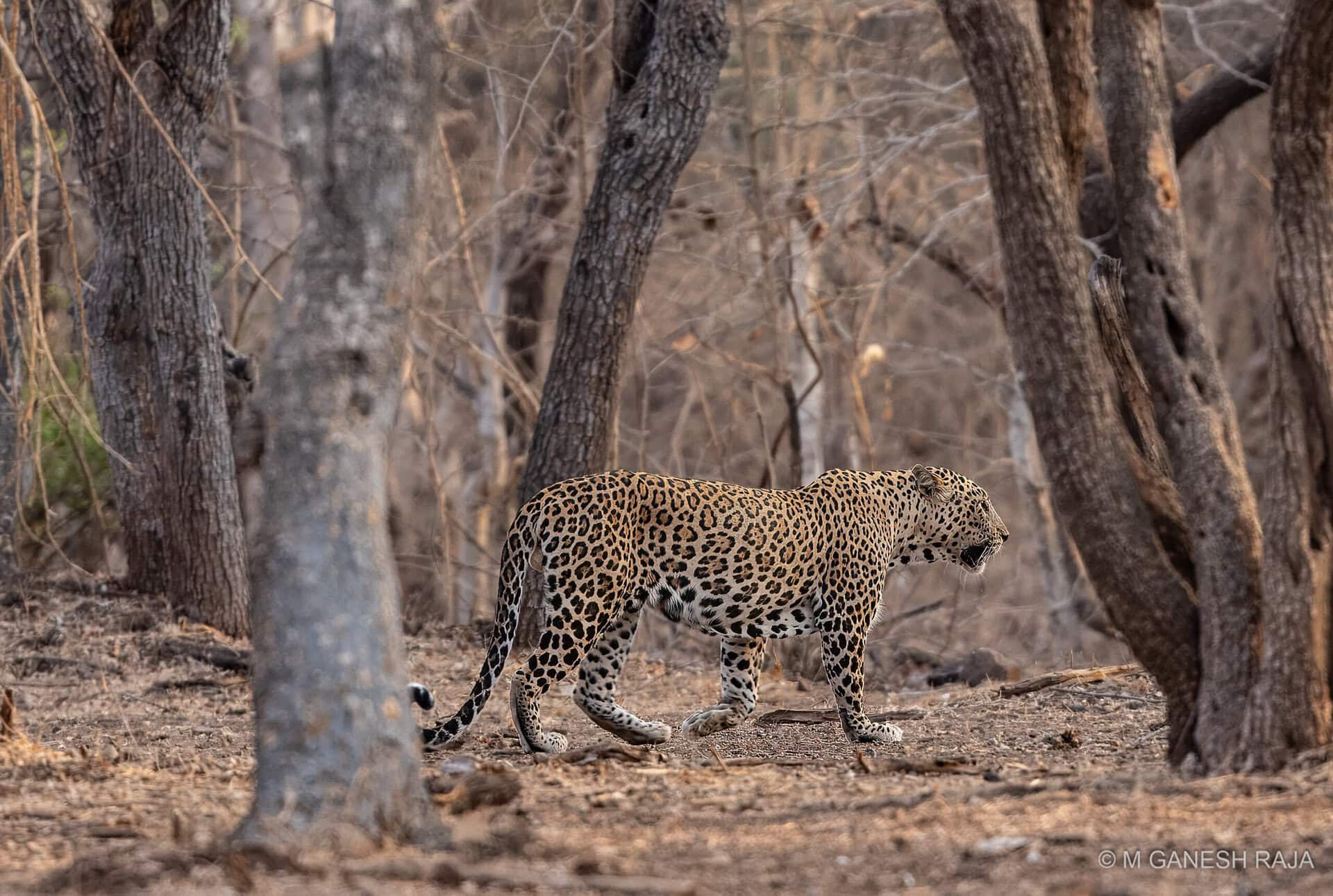
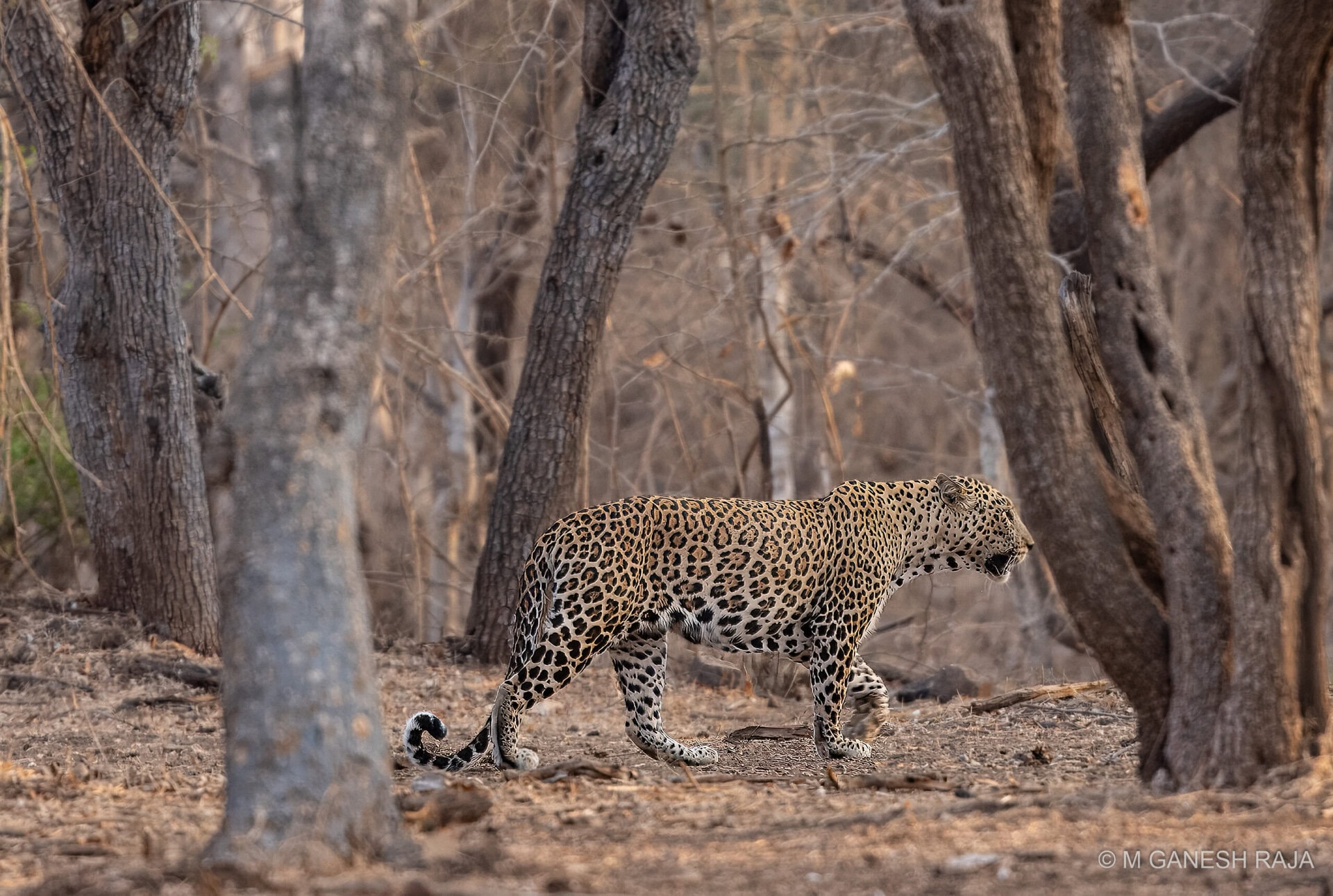
The uncropped image of the leopard.
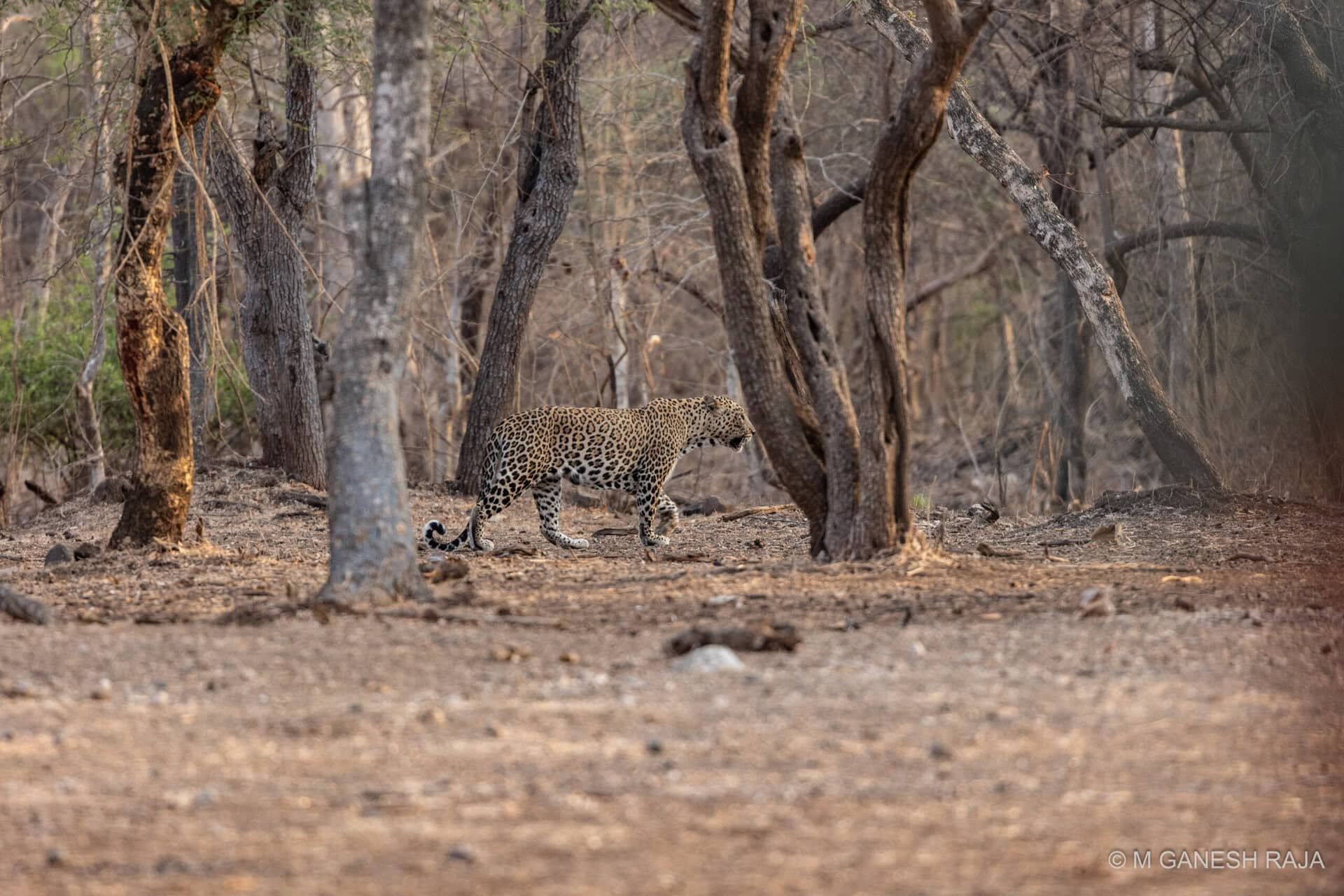
Safari #6
9th June 2024, 6:00AM to 9:00AM
The law of averages at last caught up with me. After 5 consecutive safaris with great sightings and pictures, the last one was a failure – almost. One hour into the safari, we spotted a lion far inside the jungle. But as it was far away and behind lots of foliage, I could not get any pictures.
About 2 hours into the safari, we reached another spot, where there was another lion far in the jungle. It was there for a couple of minutes and moved deeper inside. I did not get any chance to photograph this lion either.
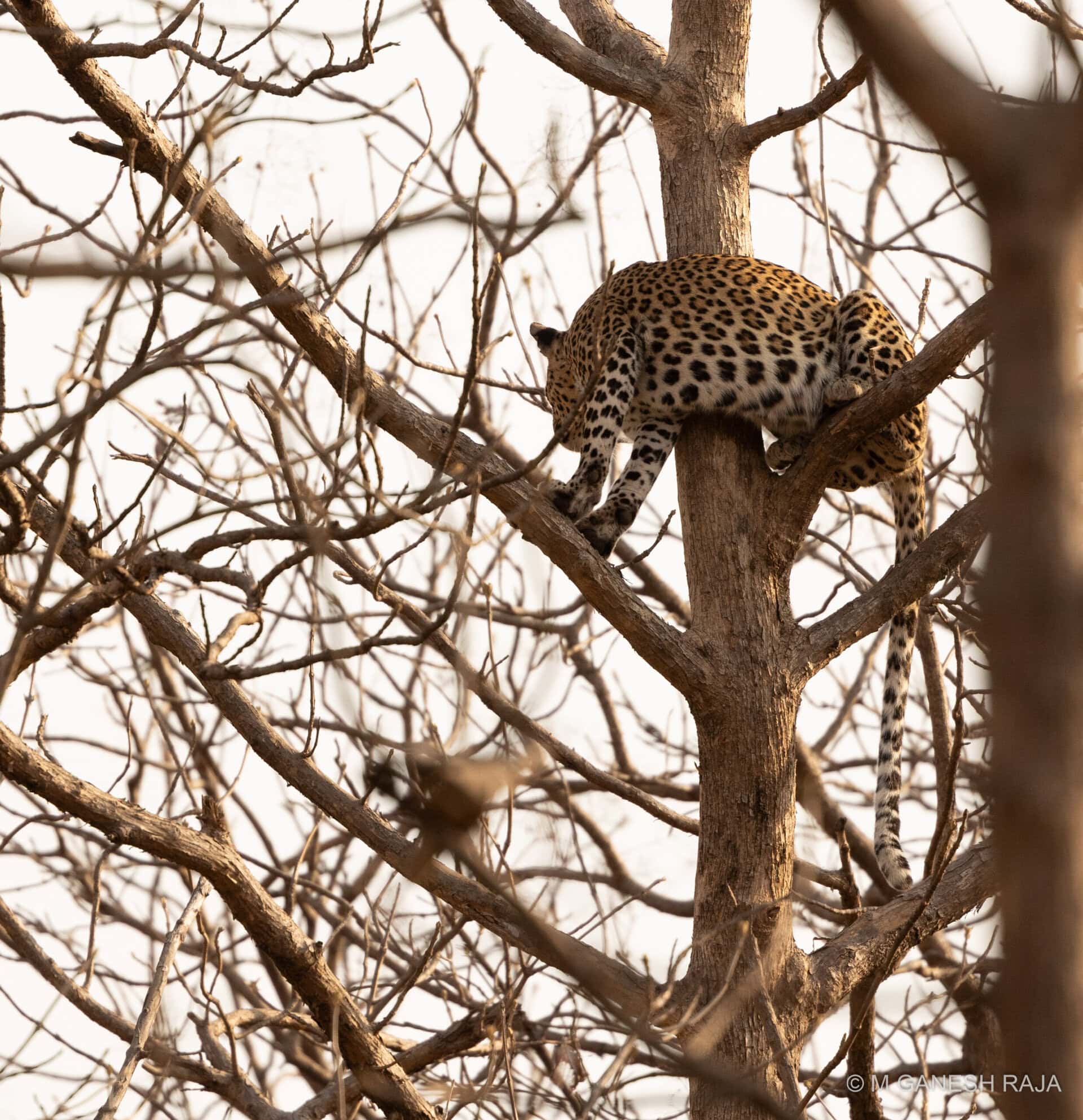
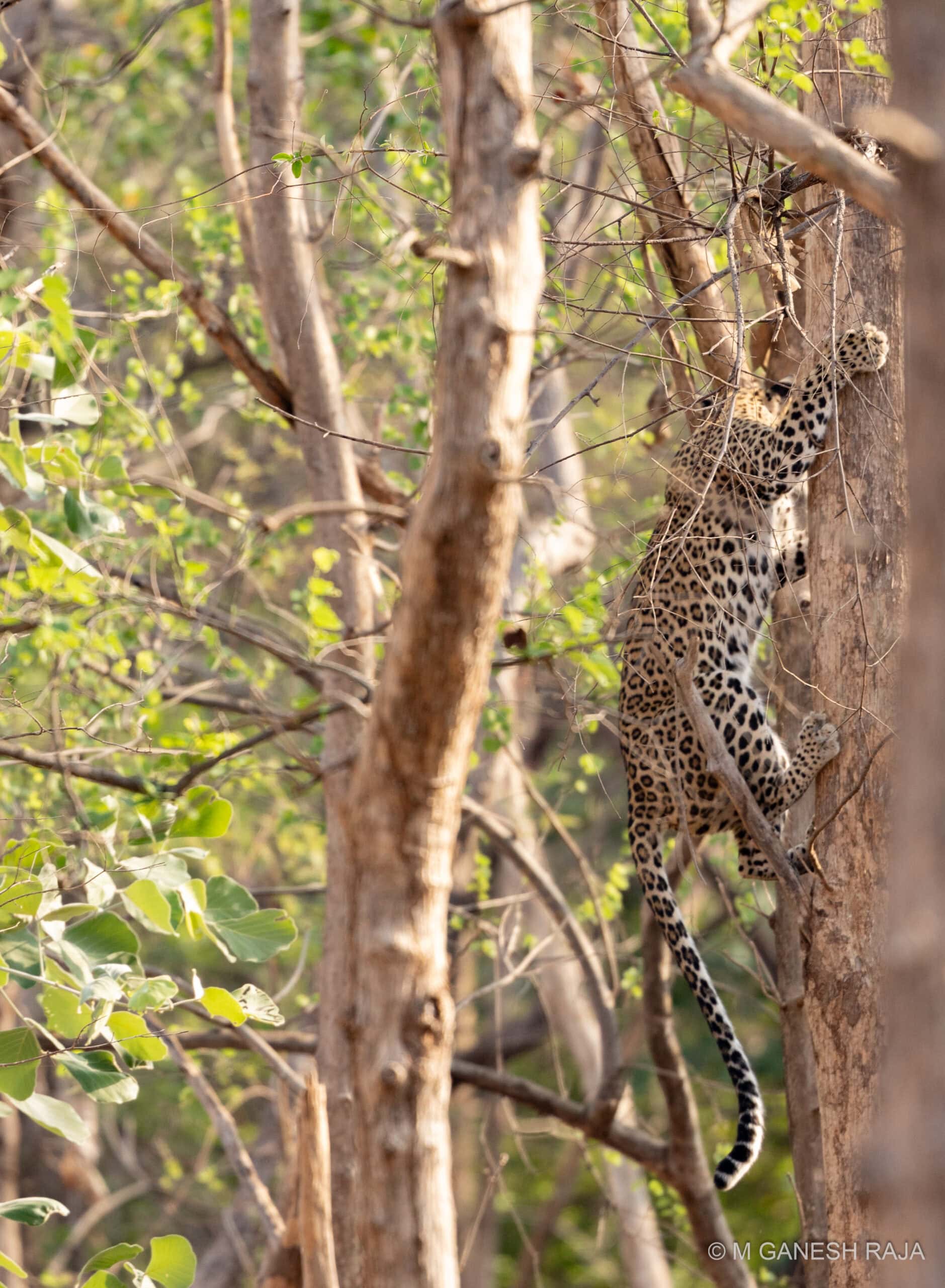
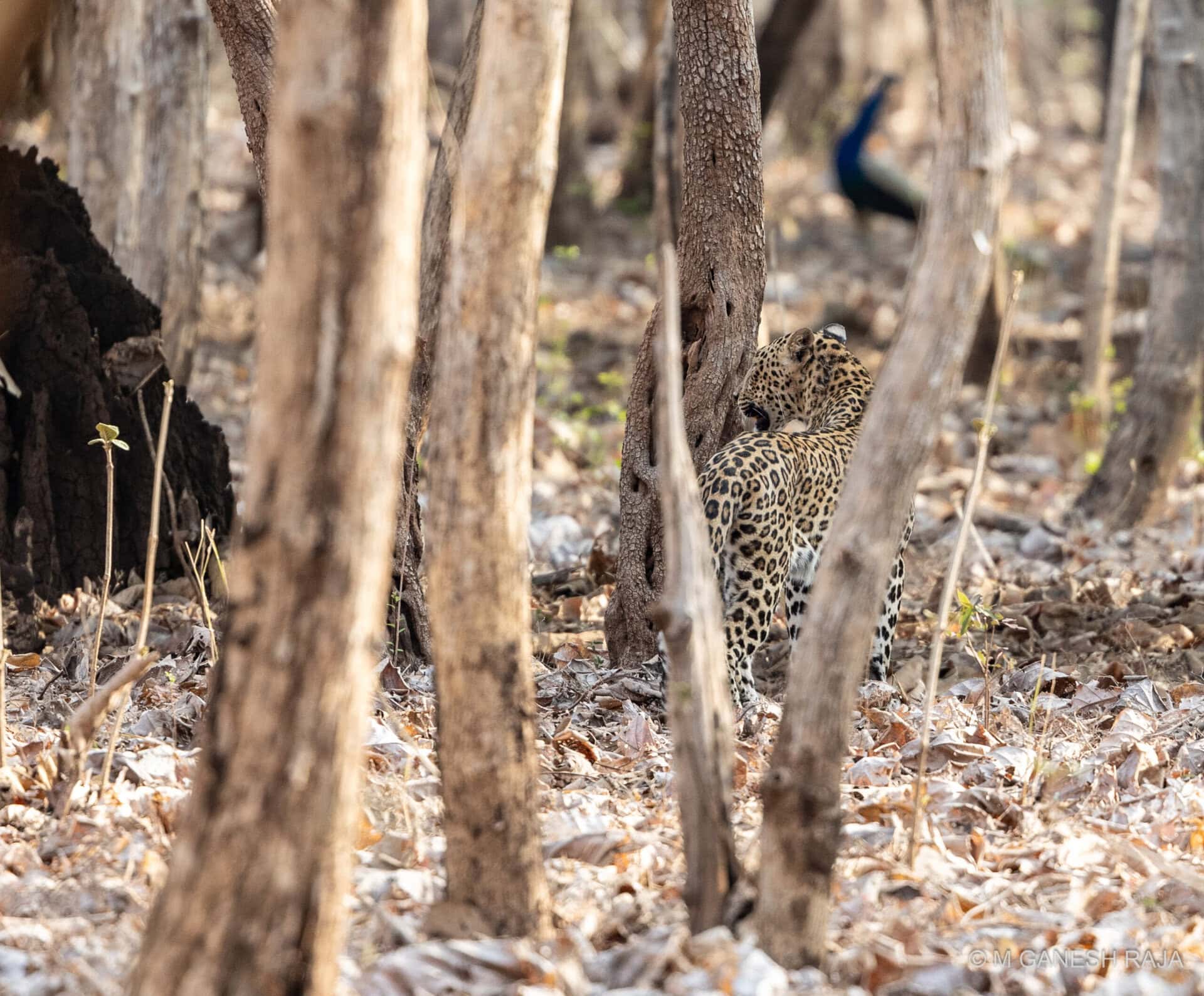
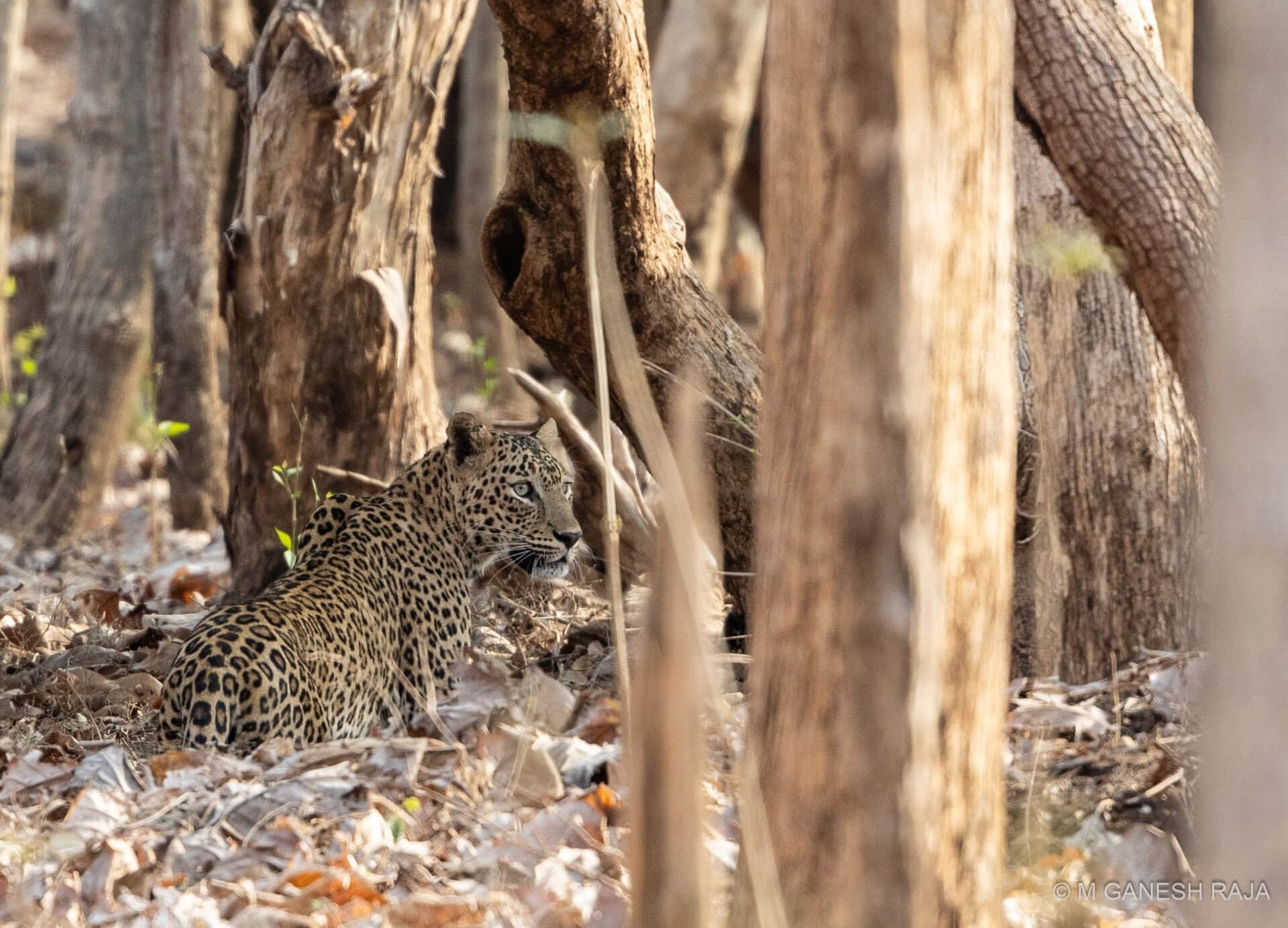
At this time, the guide pointed to a leopard high in the trees. The leopard should have climbed the tree to escape the lion. We stopped in this spot for some time waiting for the leopard to come down as the lion had left. After some time, the leopard climbed down the tree and soon was joined by another leopard. This leopard had climbed another tree to escape the lion. As the leopards were too deep inside with lots of tree cover, I could get only a few pictures of one of the leopards.
A few pictures I managed to capture of one of the leopards.
The leopard waiting on the tree for the lion to clear out.
The leopard climbs down.
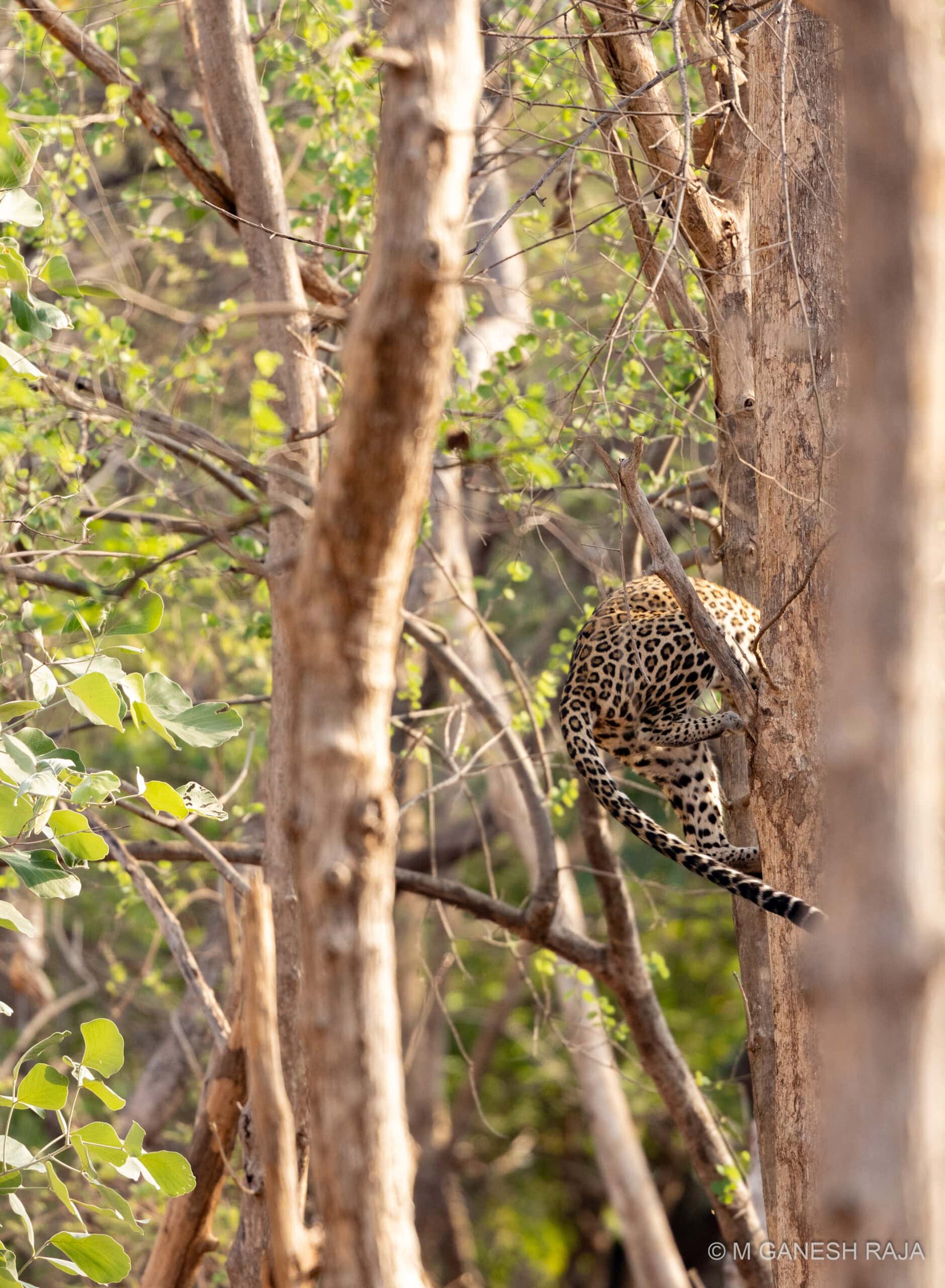
A few shots of the leopard before it went deeper into the jungle.
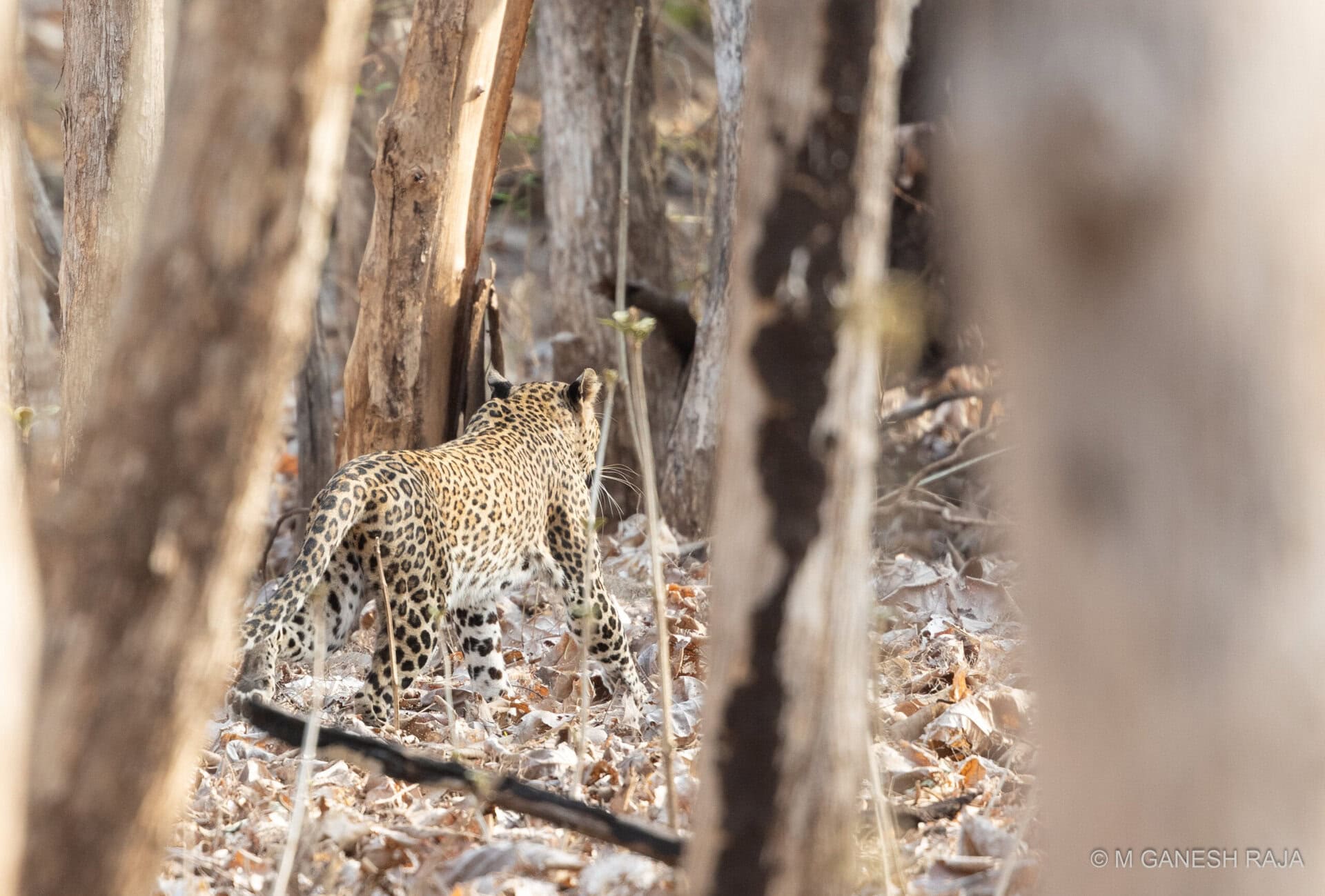
The full uncropped frame. The leopard was quite small in the frame and well camouflaged.
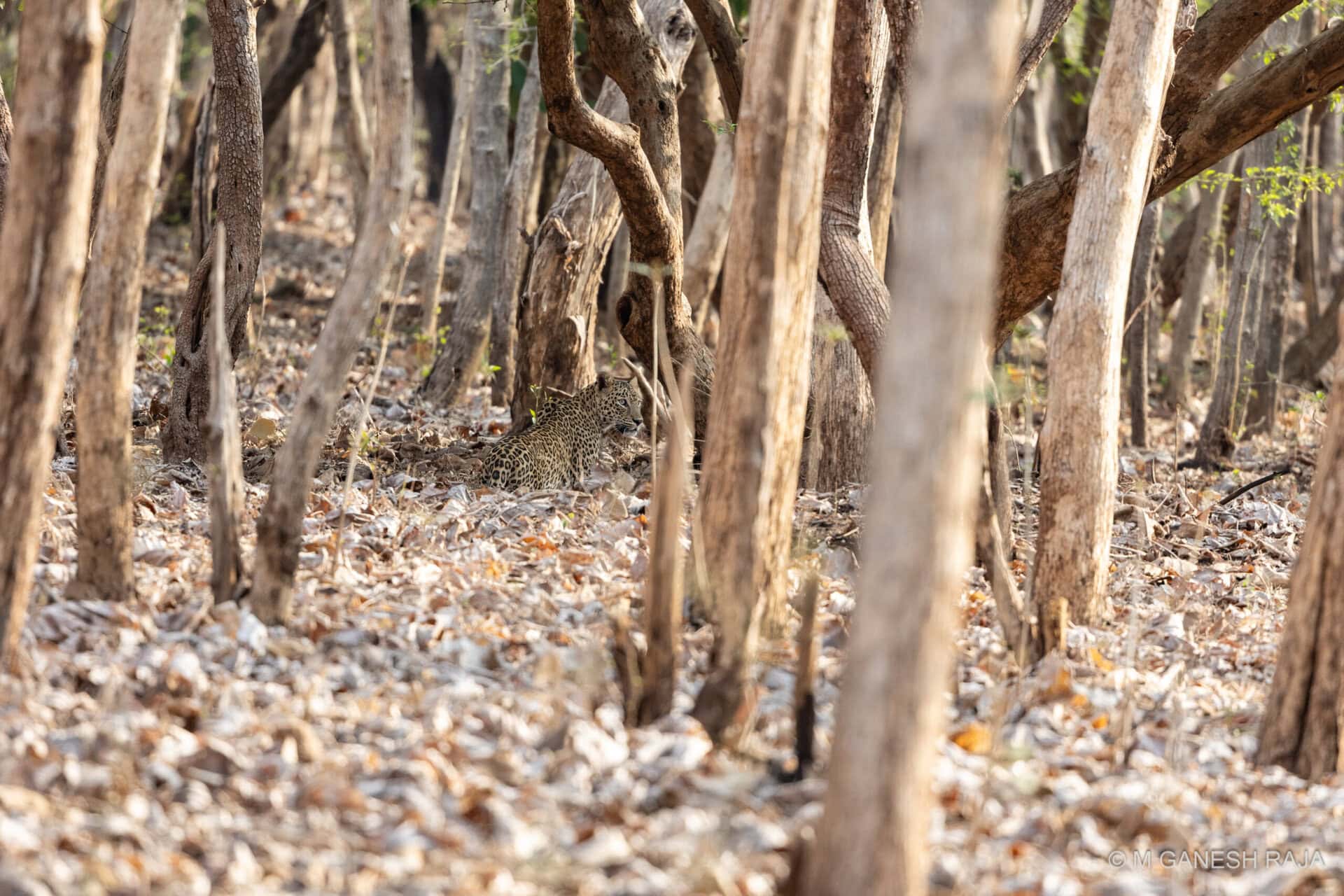
Though Safari #6 was a failure in terms of lion sighting, the saving grace was the spotting of the leopards. Though I did not get many pictures, I was able to observe the movement of the leopards through binoculars and it was a great experience.
The End of the Tour and Conclusion
After we returned from the safari, we said our goodbyes with a group picture by Sinh Sadan. Mr. Saravanan, Mr. Kumar, and I took a cab back to Rajkot from where I took the flight to Coimbatore the next day and the others flew to Bangalore.
Overall, this was a very successful trip. As this was my first big cat photography tour, I went without any expectations. I am very glad with the pictures I was able to capture of the lions. The few leopard pictures were totally unexpected.