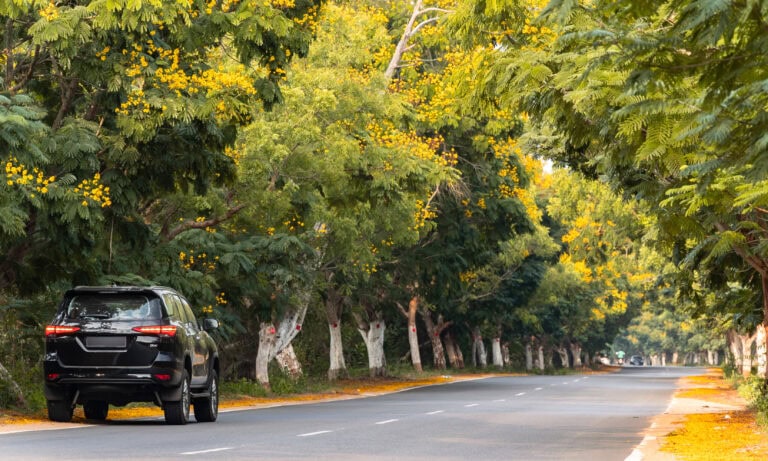
A Herping and Macrophotography Trip to Agumbe
Herping – Herping is the act of searching for amphibians or reptiles. The term, often used by professional and amateur herpetologists, comes from the word “herp”, which comes from the same Greek root as herpetology, herpet-, meaning “creeping”.
Macrophotography – Macro photography is extreme close-up photography, usually of very small subjects and living organisms like insects, in which the size of the subject in the photograph is greater than life size.
The Program
Attended a Herping / Macrophotography workshop organized by Herpetologist Mr. Vipul Ramanuj of Wild Ark, in Agumbe. I learned about this program a couple of months ago from my close friend and TBHPian Robi, who is an avid wildlife and bird photographer. When I found out that Robi had already enrolled, I decided to join as well. I am averse to leeches and afraid of snakes. I believed facing them during this workshop might help me overcome these fears. And to a great extent, it did! (Perhaps one more trip to conquer them completely.)
This was a 3-day program. The program started on 13th July afternoon and ended on 16th July. We stayed in a cottage in Agumbe Rainforest Research Station (ARRS) and made several field trips into the rain forest every day and night in search of snakes, lizards and frogs and photographed them up close.
I learnt a lot of facts and techniques from Mr. Vipul on Herping and Macrophotography. He explained in detail the characteristics of snakes, how to behave around them, how to be alert of the surroundings, and techniques in macrophotography to get the best shots etc. More in detail later.
The Drive
I drove from Coimbatore to Bangalore on 12th July and stayed overnight in Bangalore. Left Bangalore early morning at 5:30 on 13th and drove to Agumbe. I took the Bangalore -> Hassan -> Chikmagalur -> Agumbe route. This was a fantastic drive with 4 lane highway upto Hassan and beautiful winding scenic roads from Hassan to Agumbe. Except for a few short stretches of bad patches, the roads were smooth.
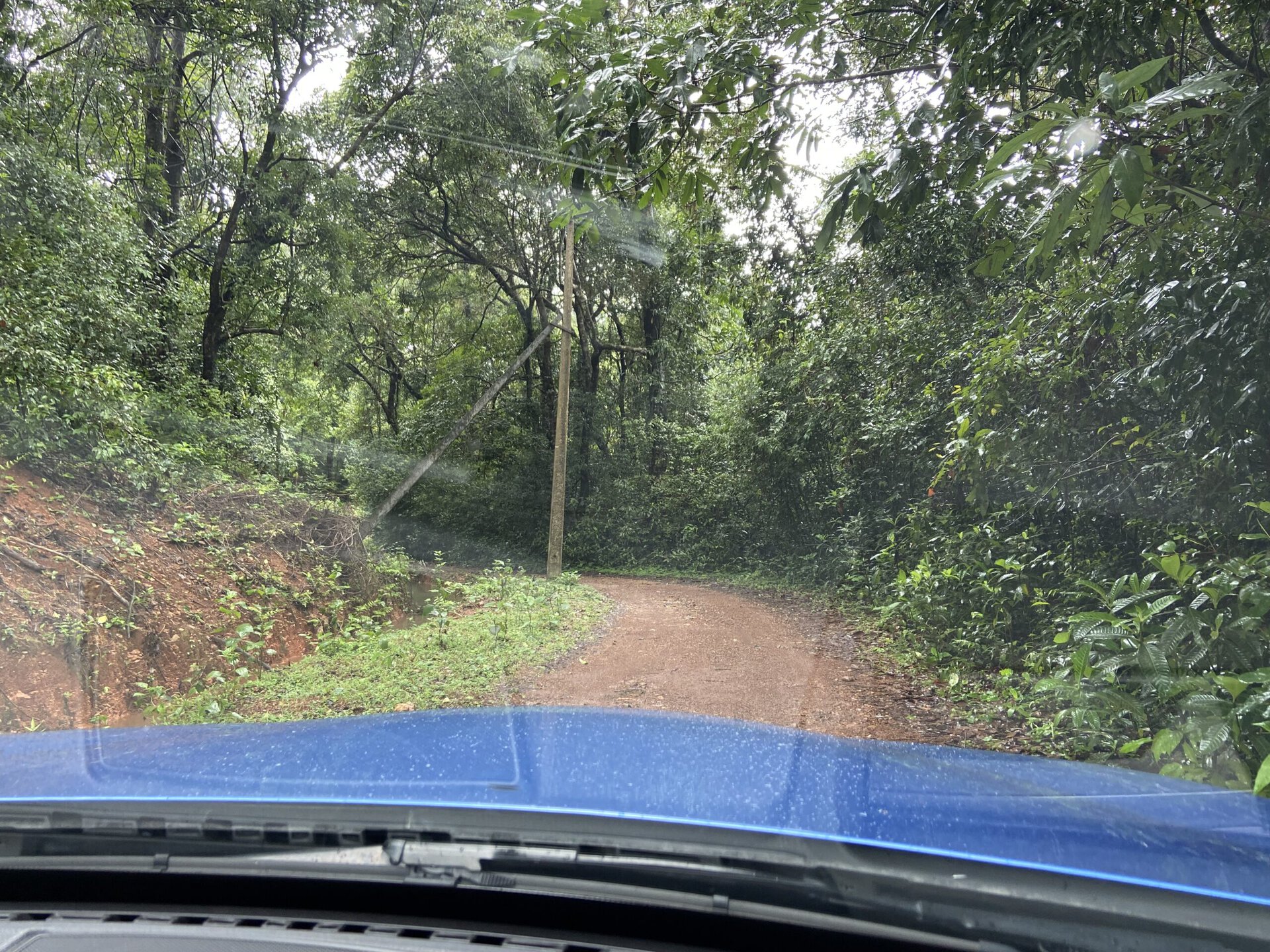
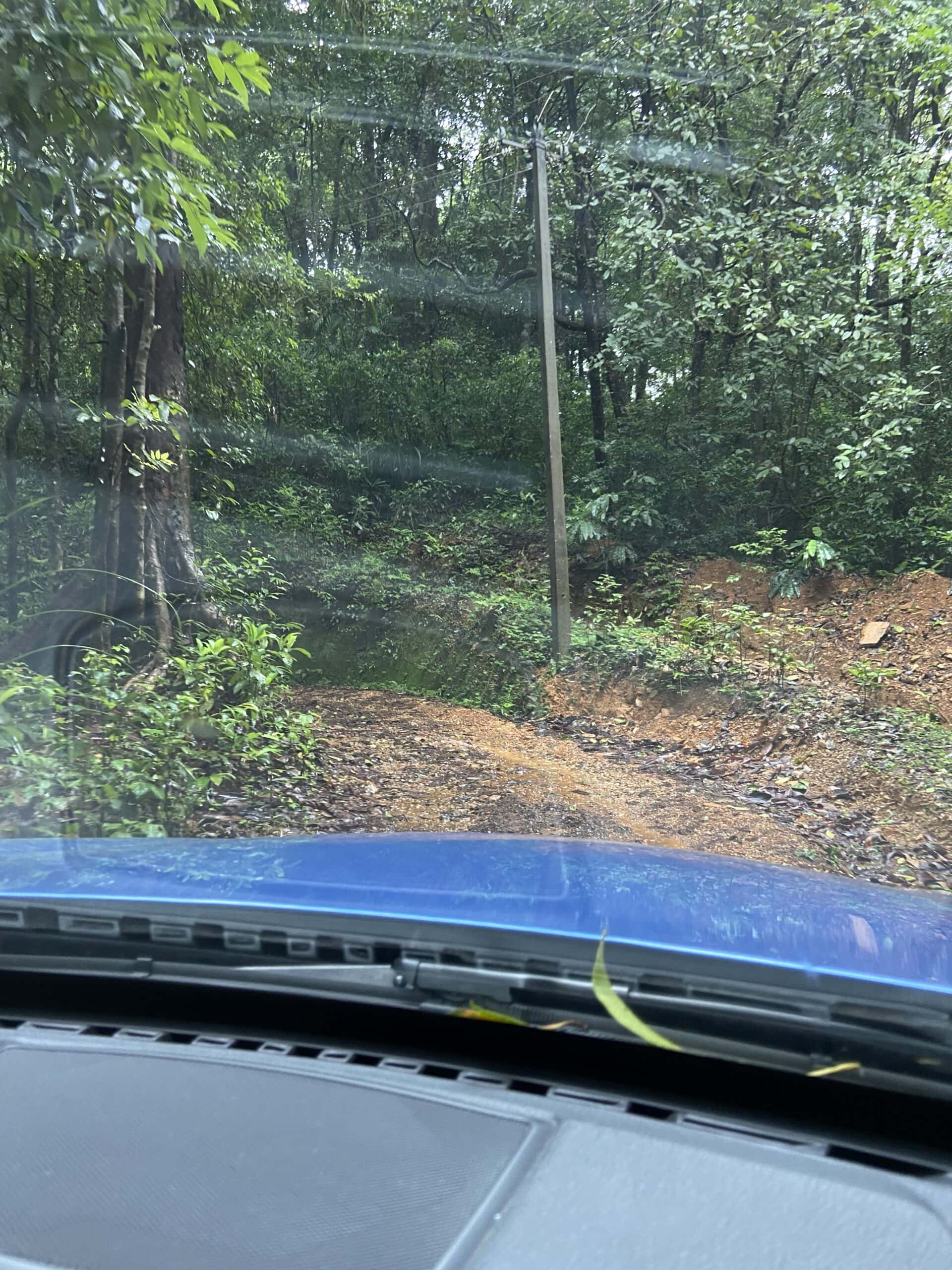
The biggest unknown challenge was the final approach to the ARRS campus. The last 1km to the campus is a very narrow unpaved road. I was told that this road can get slushy during monsoon and my car may not have enough traction. So, I had a Plan-B to park the car somewhere safe in Agumbe town (Mr. Vipul said he can help me with this). Plan-C was to have Robi tow my car with his Thar.
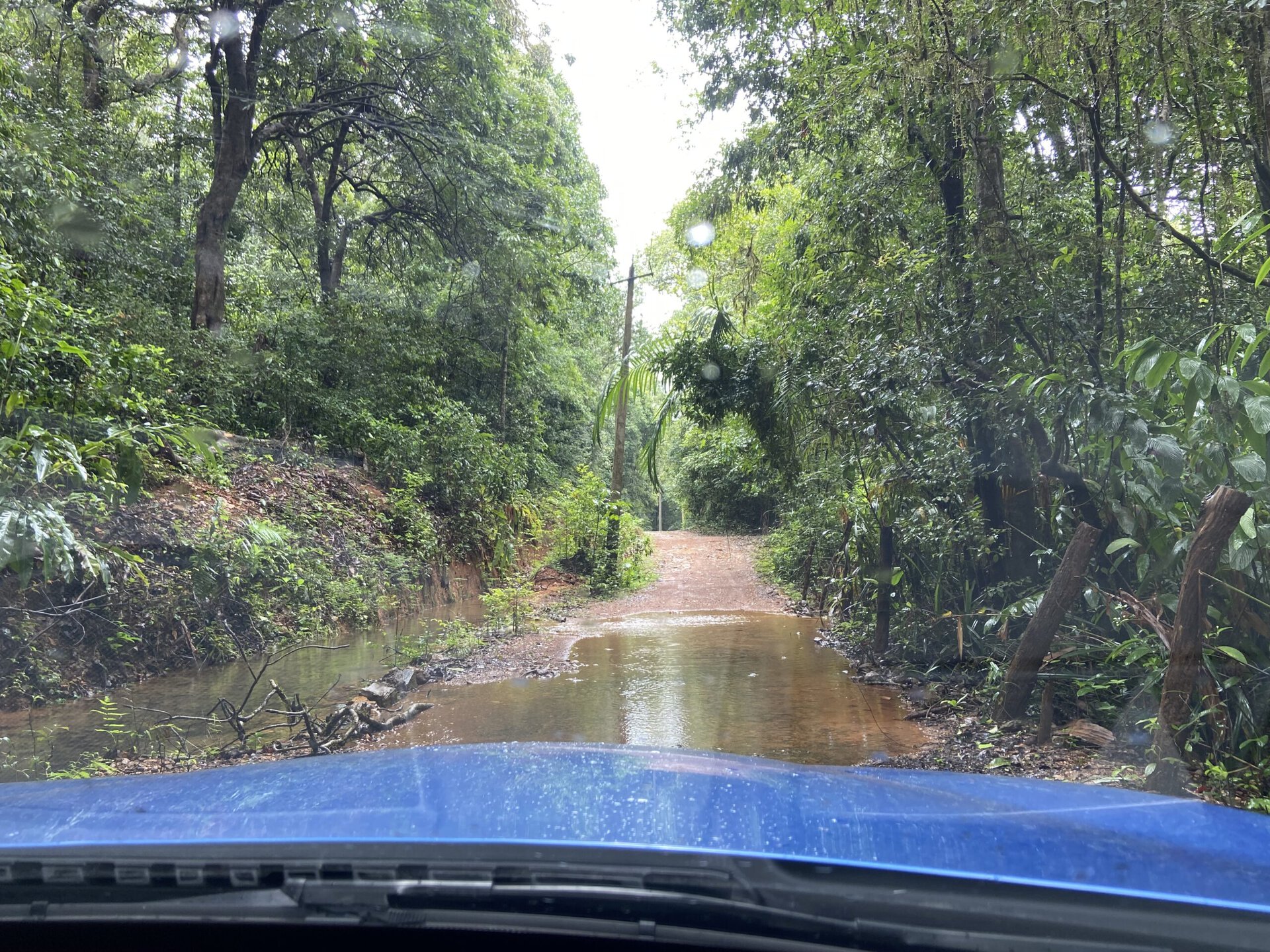
However, when I reached this bad section of road, I found the road surface to be hard with lots of puddles, but not slushy. Also, there were a couple of shallow streams to cross. But these streams were very shallow, so they were not a concern. So, I continued driving and reached the campus without any problem at 1:00PM. Robi had a late start but drove non-stop and reached around 2:00PM. I also met another TBHPian turboNath who joined us in the night of the first day.
A few pictures from the drive.
Breakfast stop at Dhruvatare with my favorite dip sambhar idli/vada and coffee.
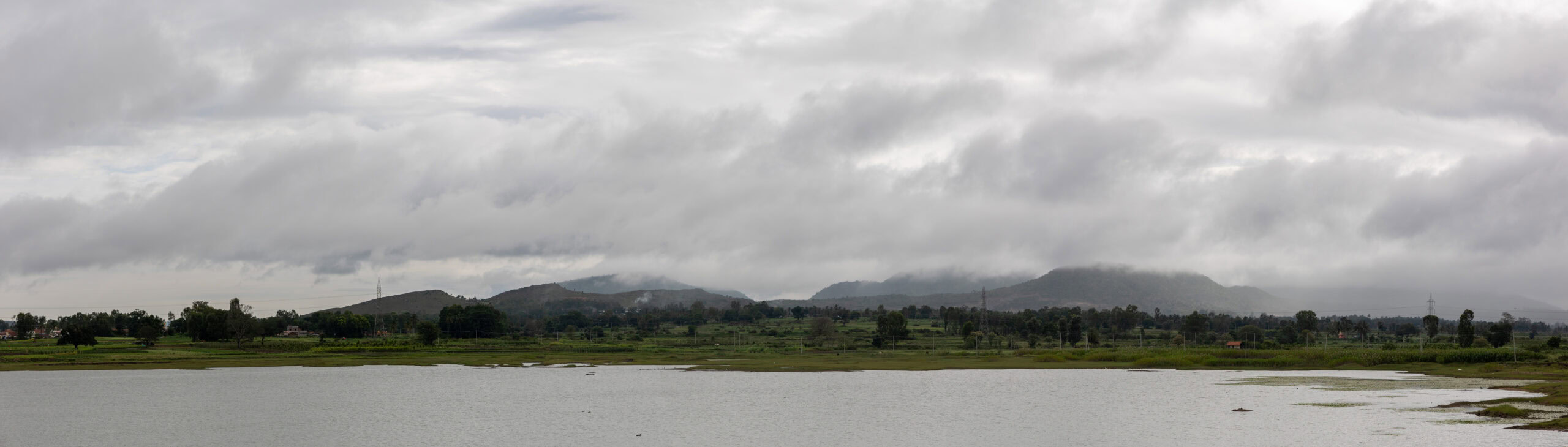
The sky was overcast throughout the drive with occasional light showers. A beautiful water body near Chikmagalur under the overcast skies.
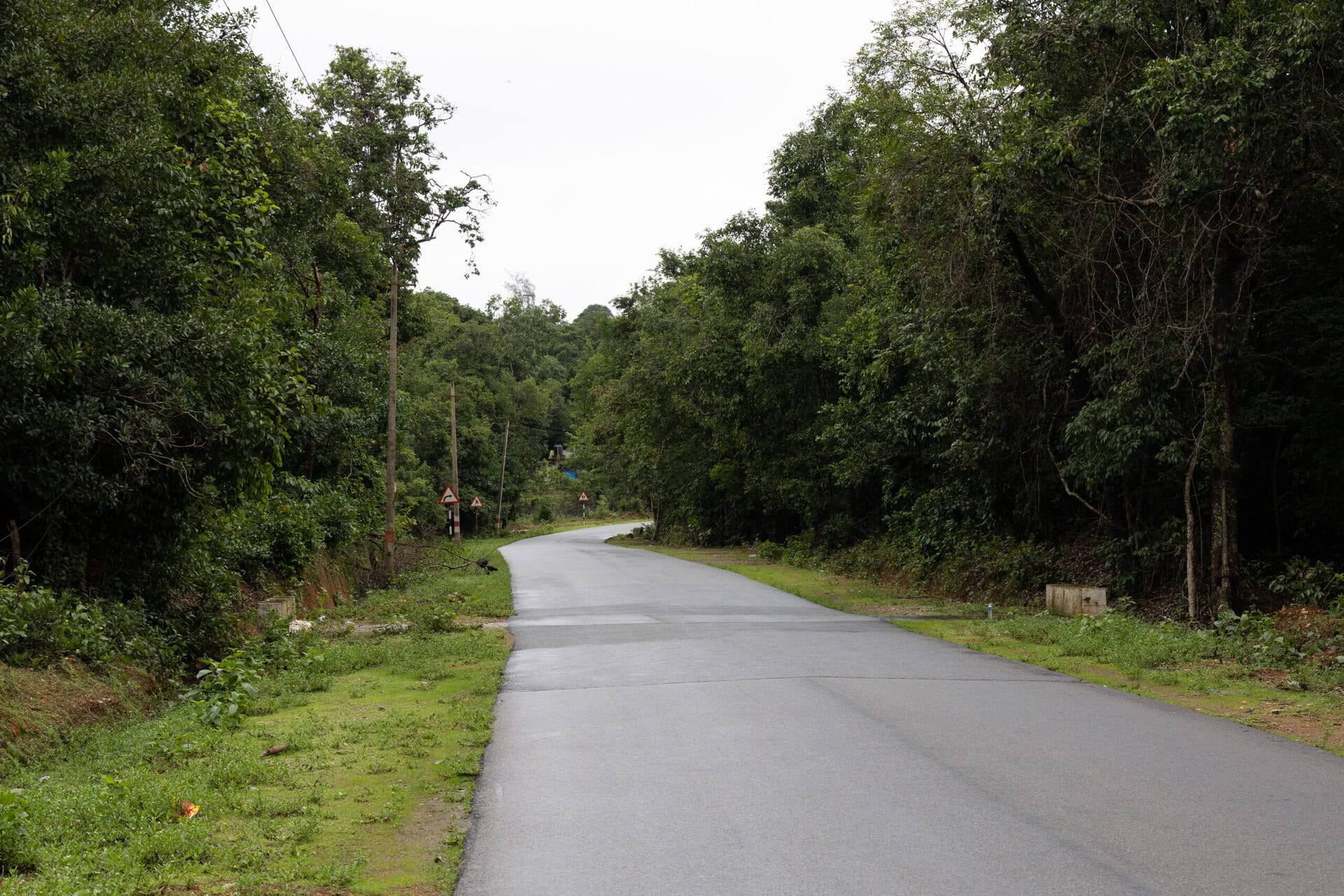
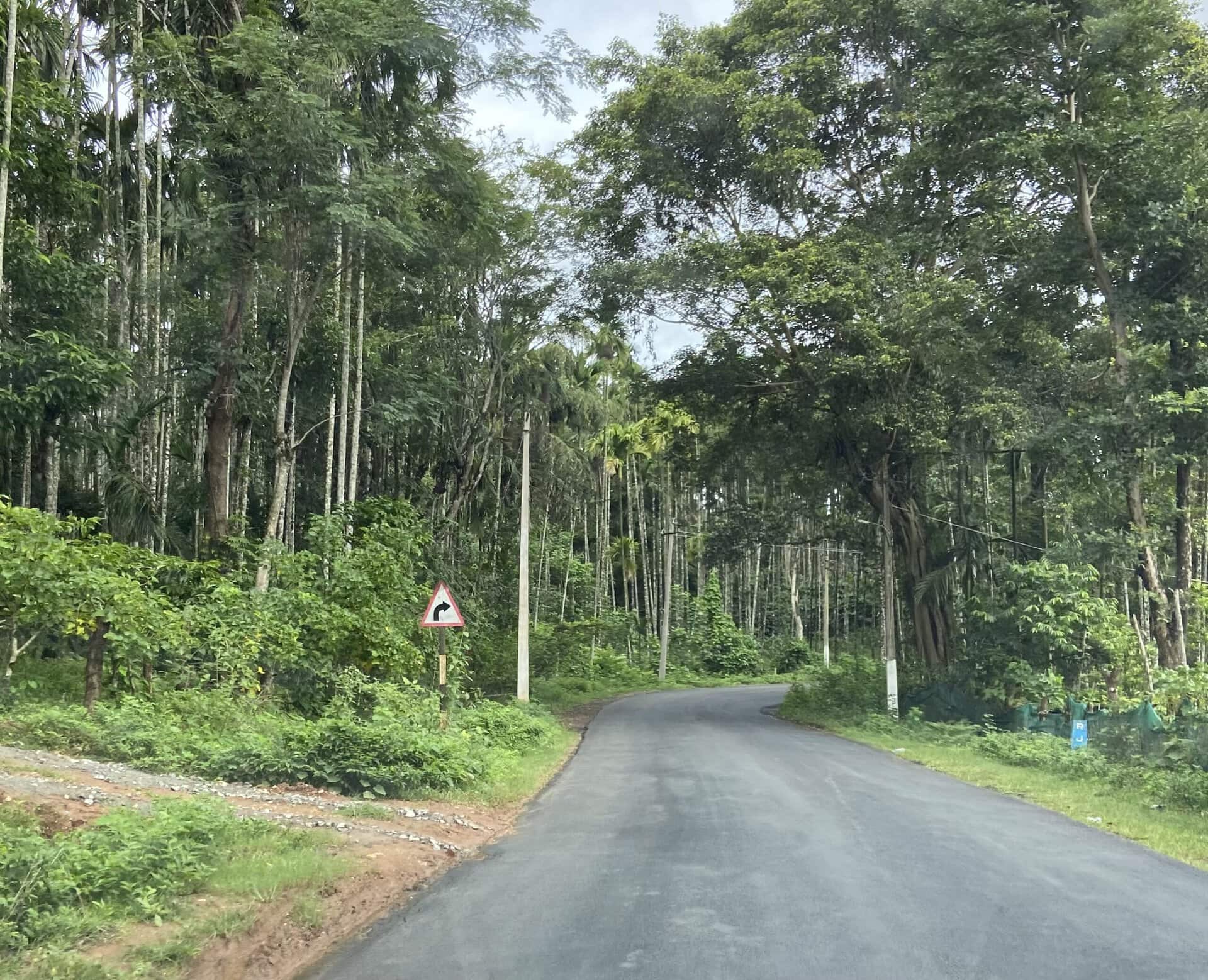
Driving through beautiful winding roads through forests.
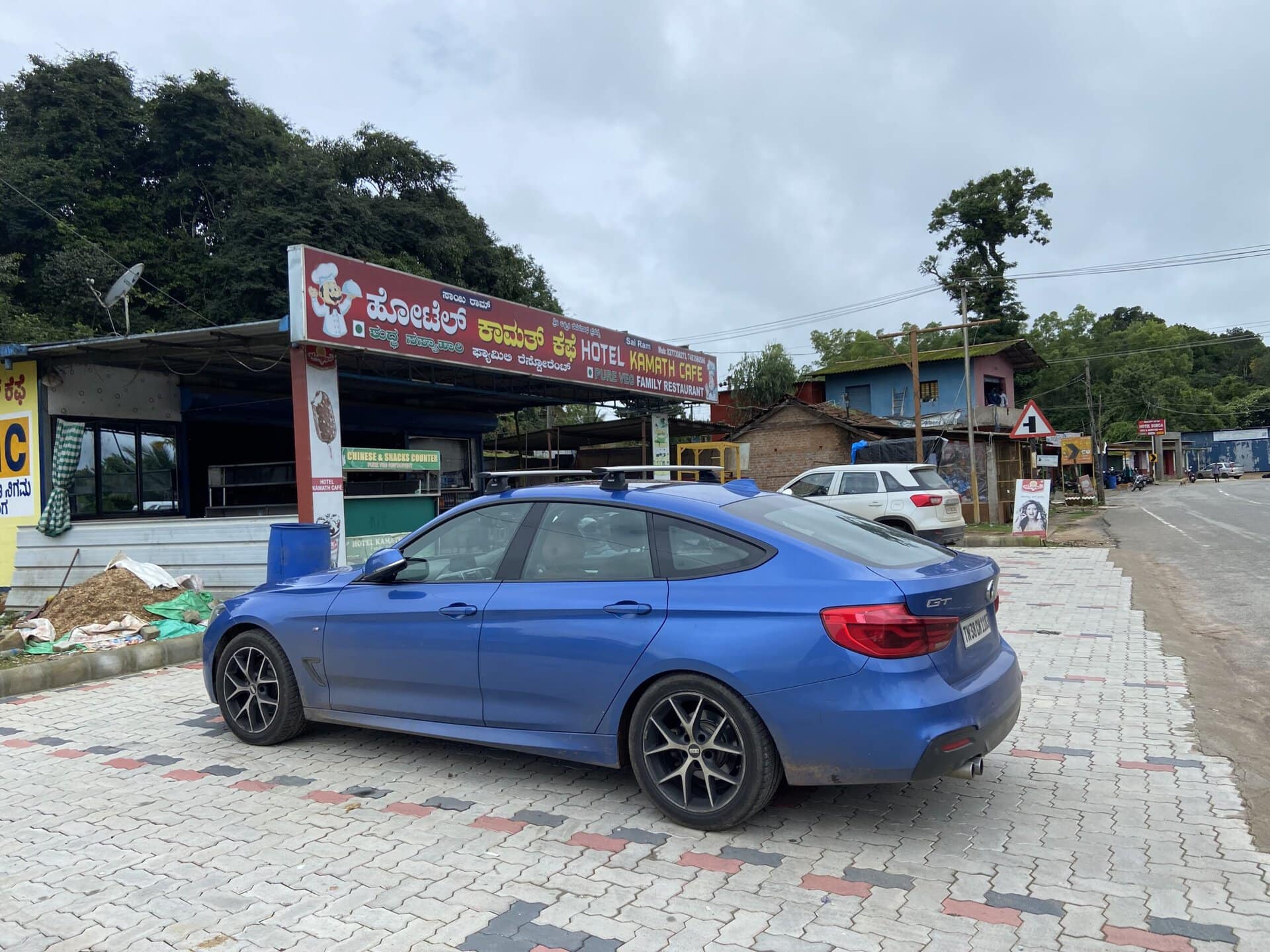
Stopped for coffee at a place called Bhadra Stop Coffee Shop.
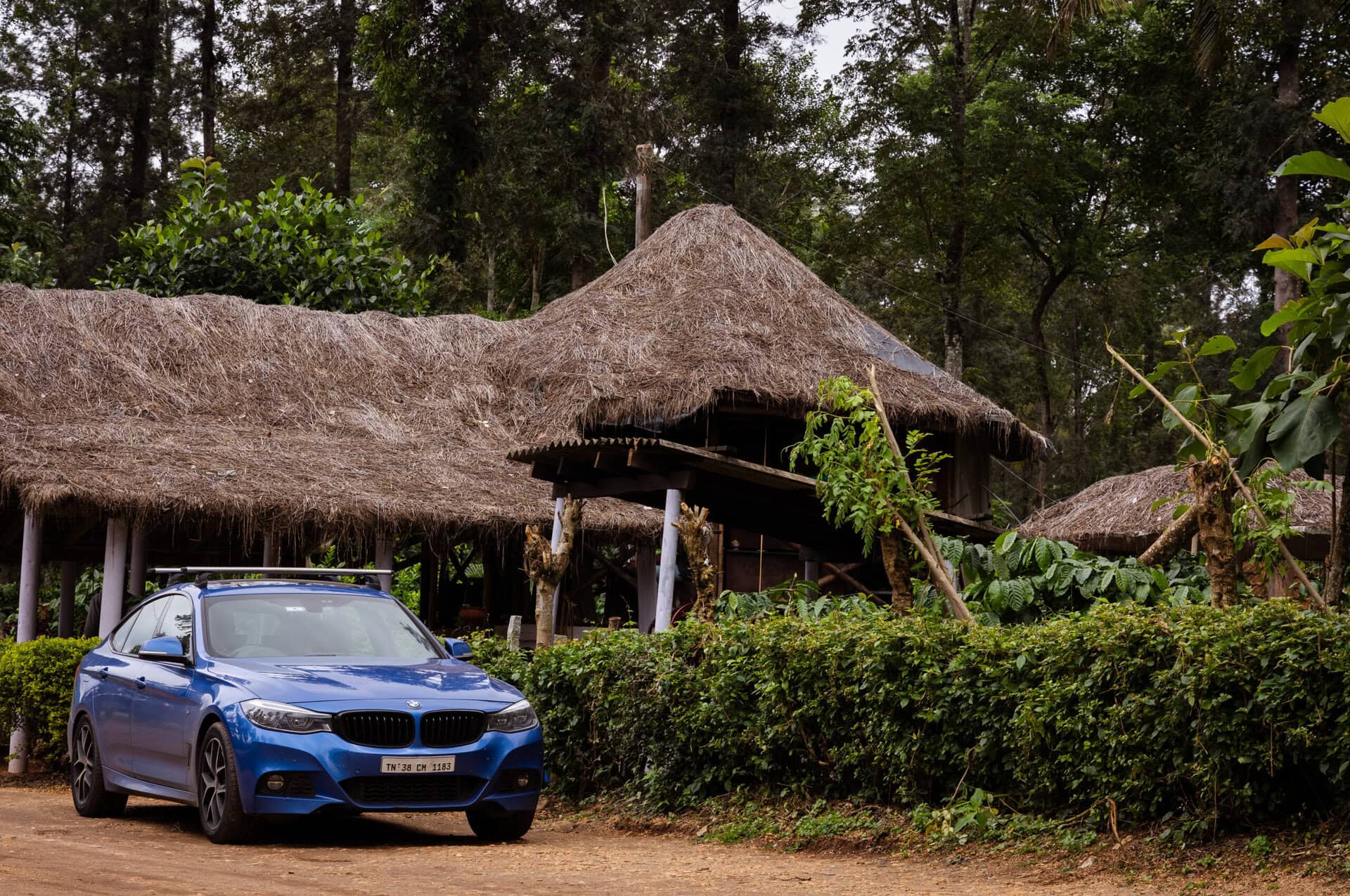
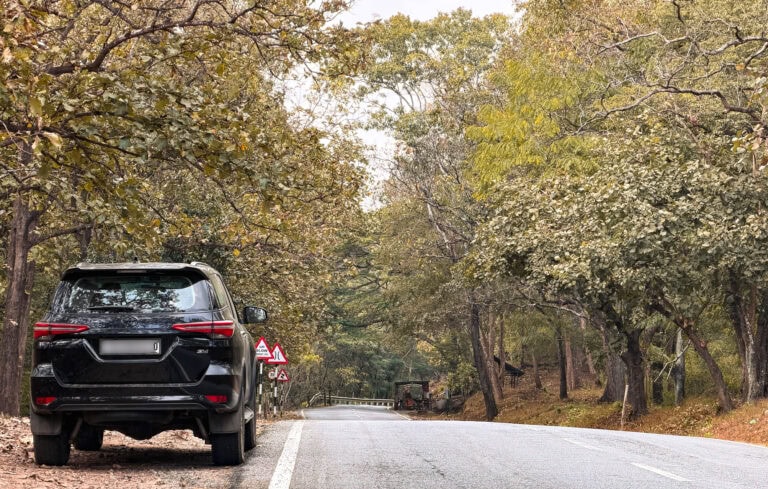
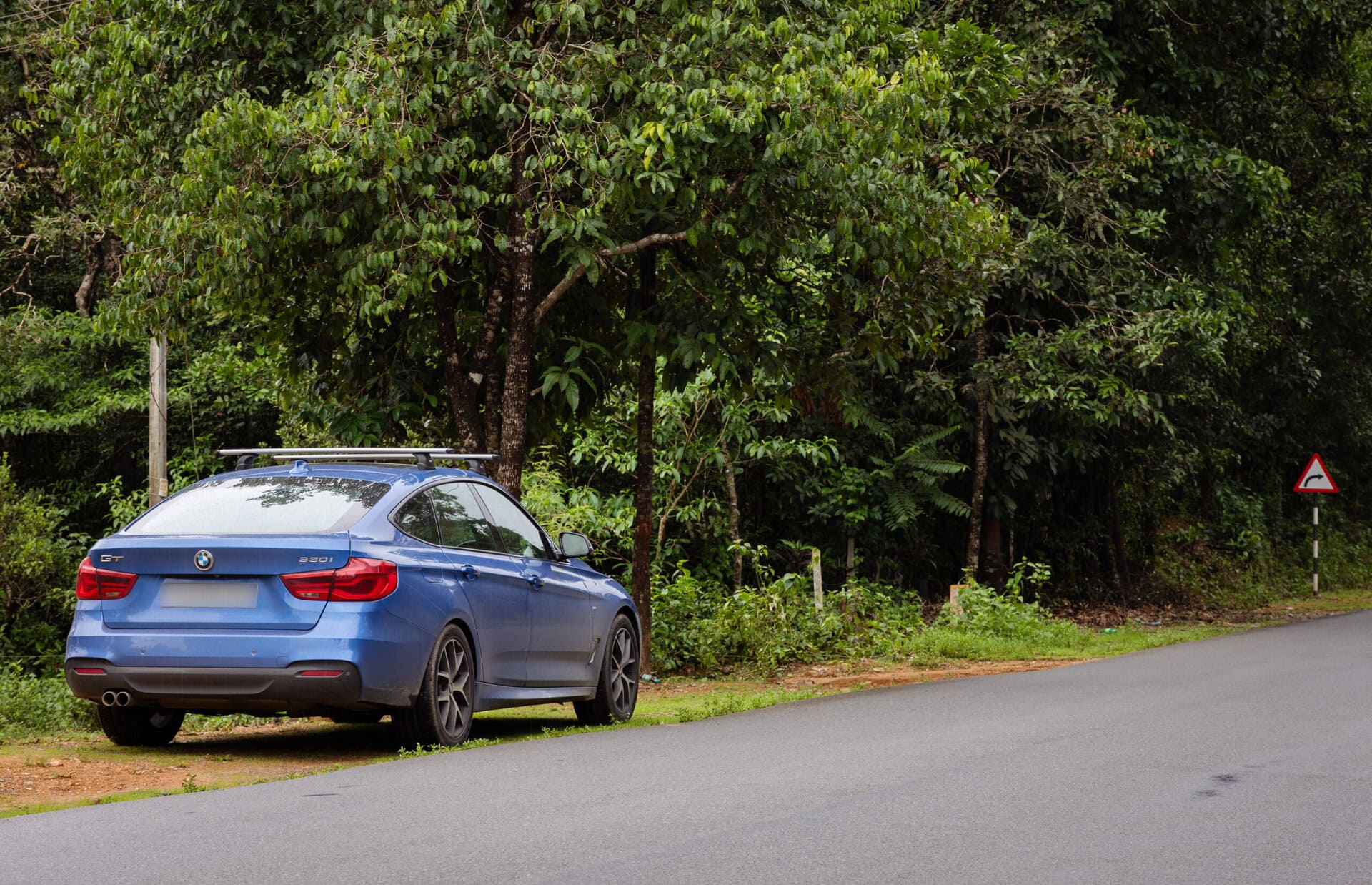
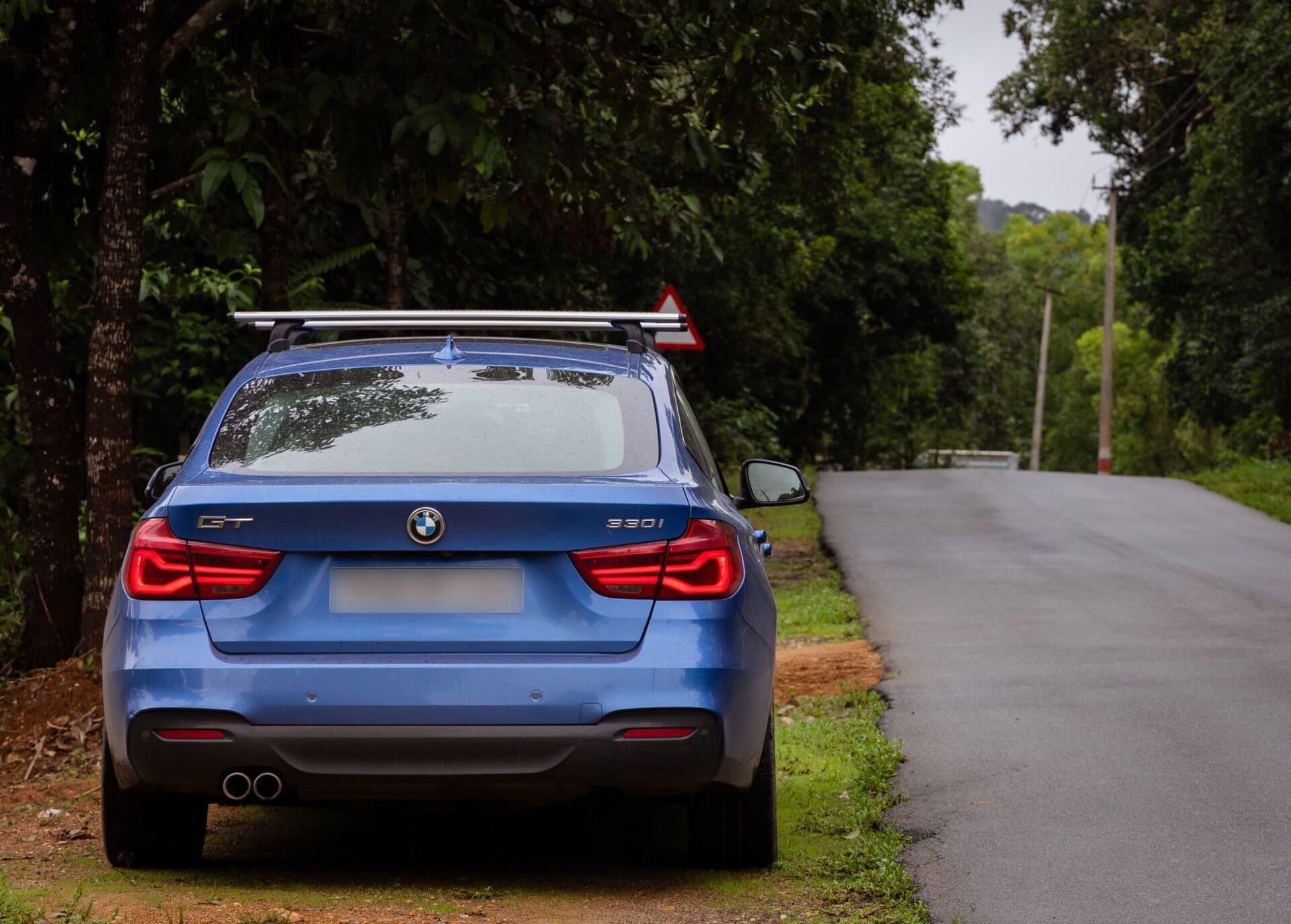
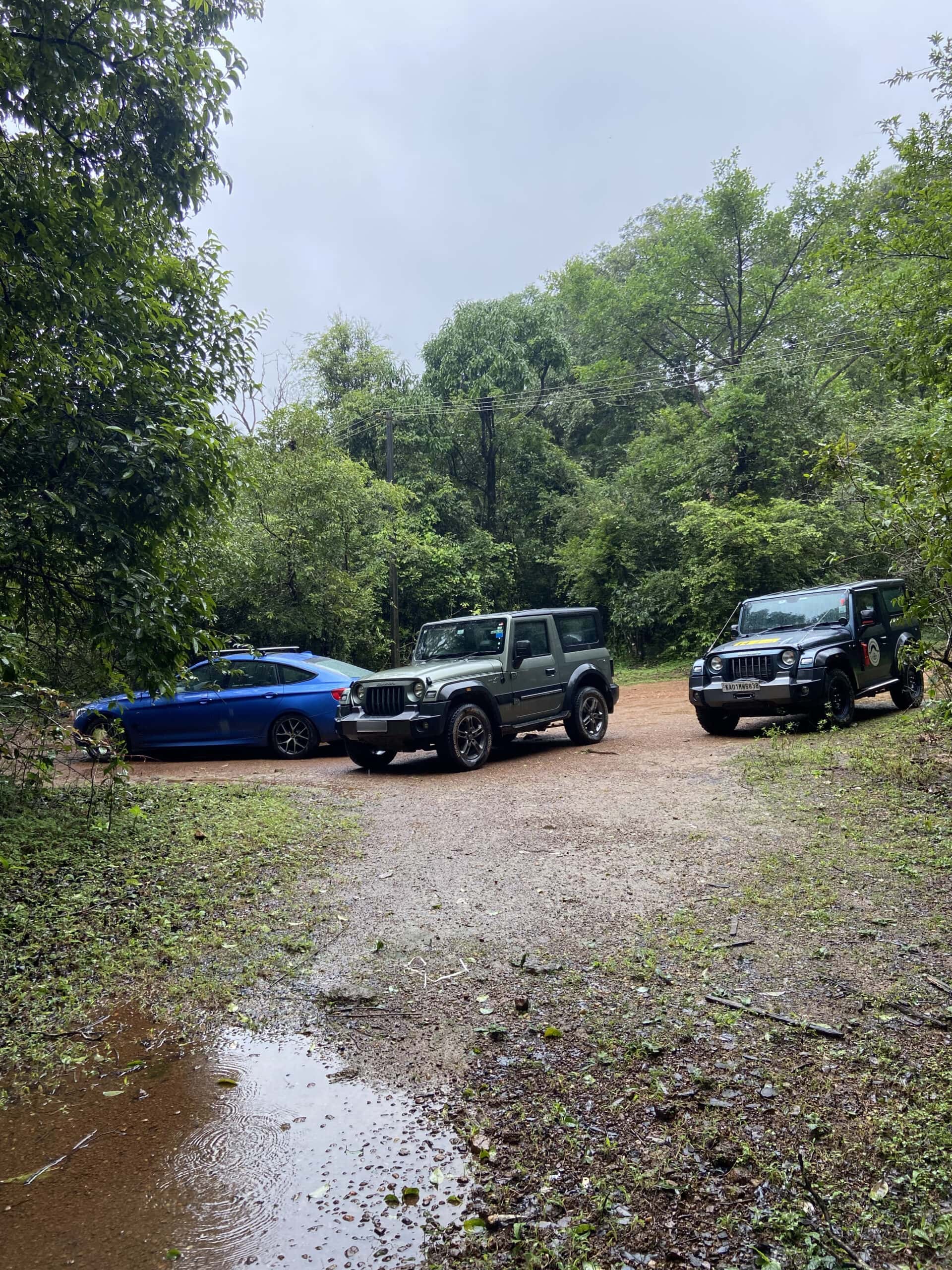
A couple of pictures of the 3GT.
The narrow approach road to ARRS.
Water crossing.
The 3GT with Robi’s and turboNath’s Thars.
The Stay
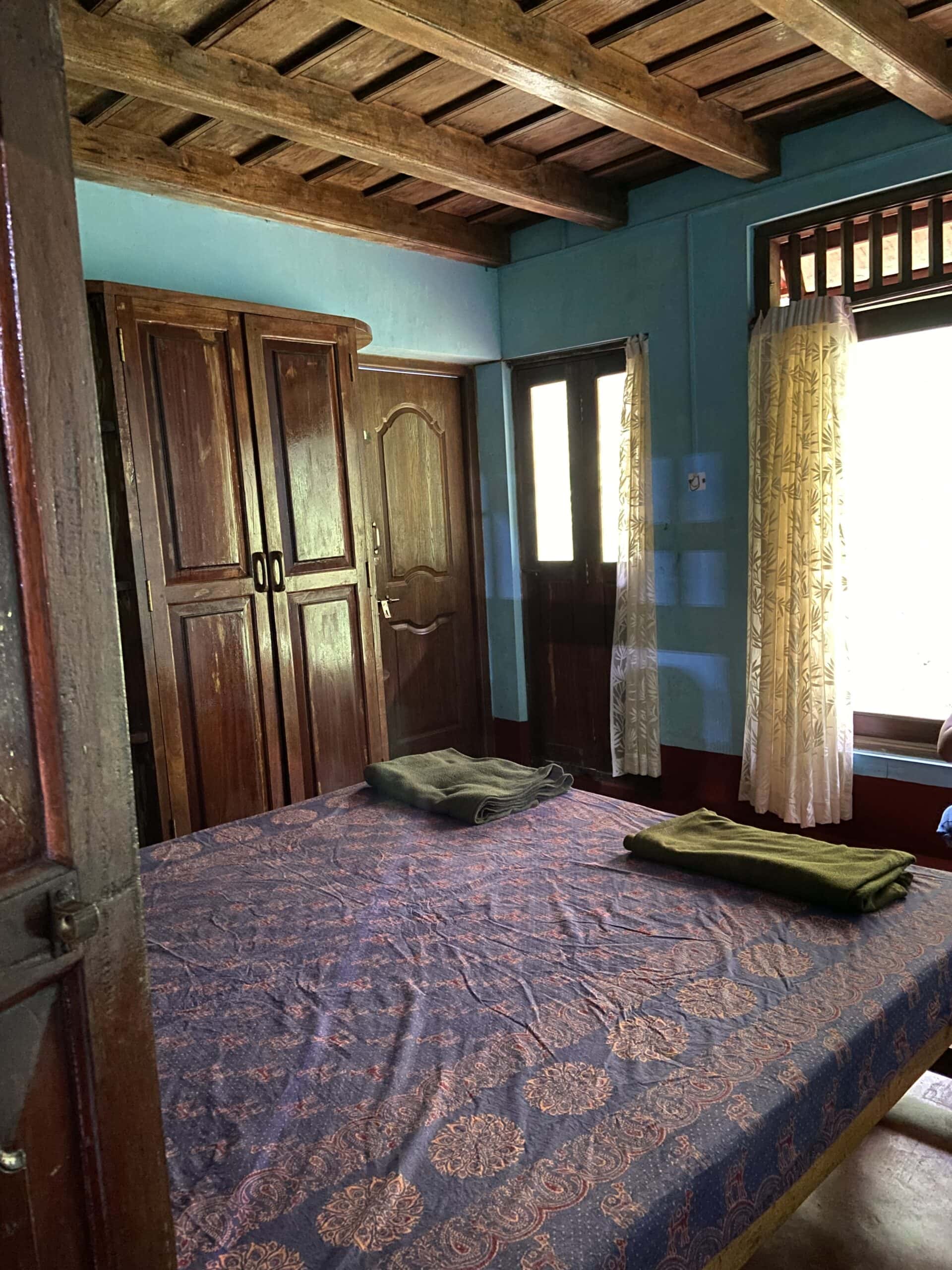
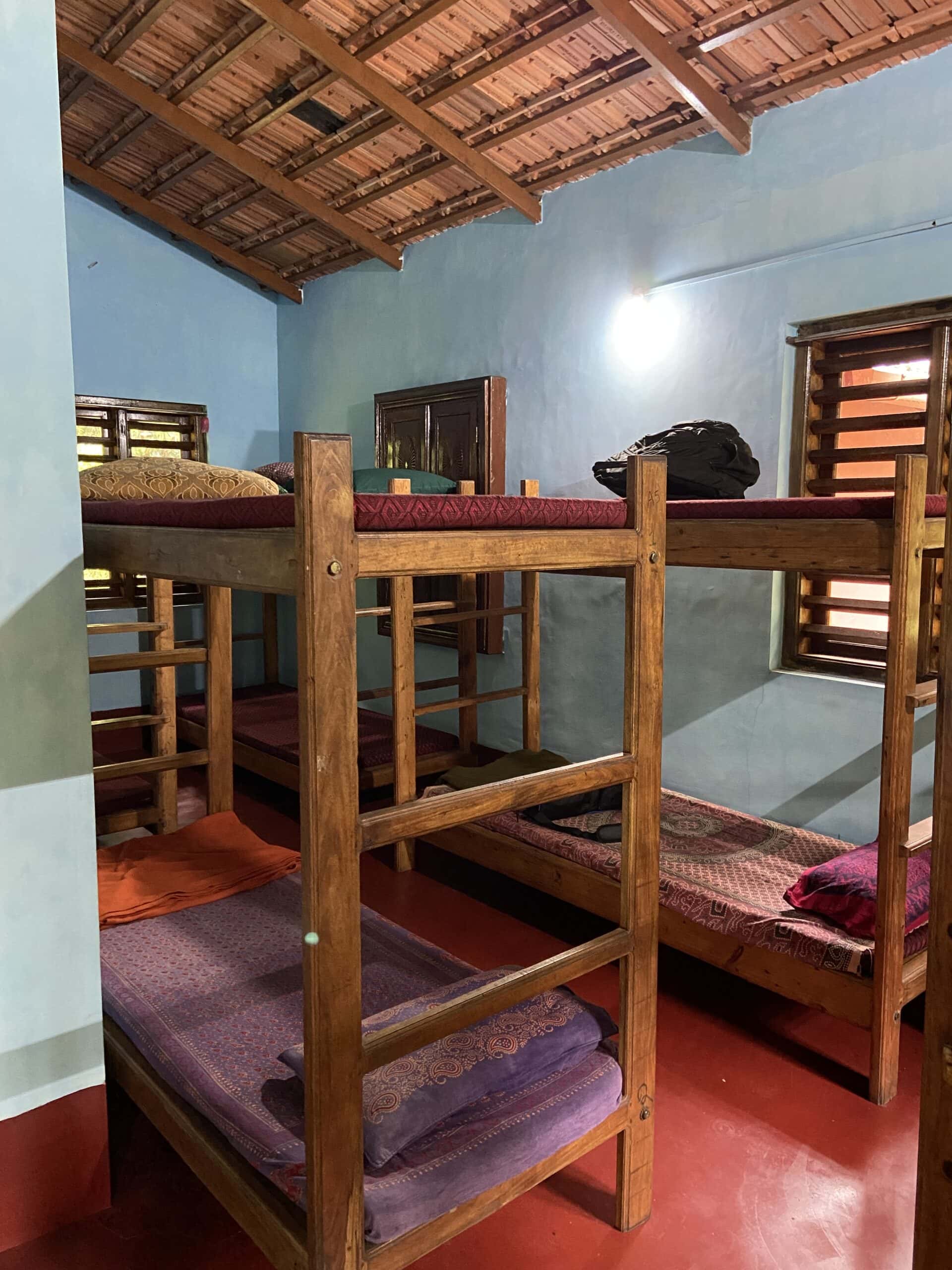
We stayed in a cottage in ARRS (Agumbe Rainforest Research Station). The accommodation was very simple with two rooms – one with a cot and another with bunker beds. 5 of us occupied these two rooms. The food was simple, but very tasty. As this is not a commercial establishment like a homestay, but accommodation in a research station, there are no luxuries, and very strict routines to be followed.
The whole place is off-grid and does not have electricity. Lights are powered by a small solar electricity setup. They turn on a generator for an hour or two every day for powering the water heaters and for charging our equipment.
A few pictures of the property, our accommodation and food.
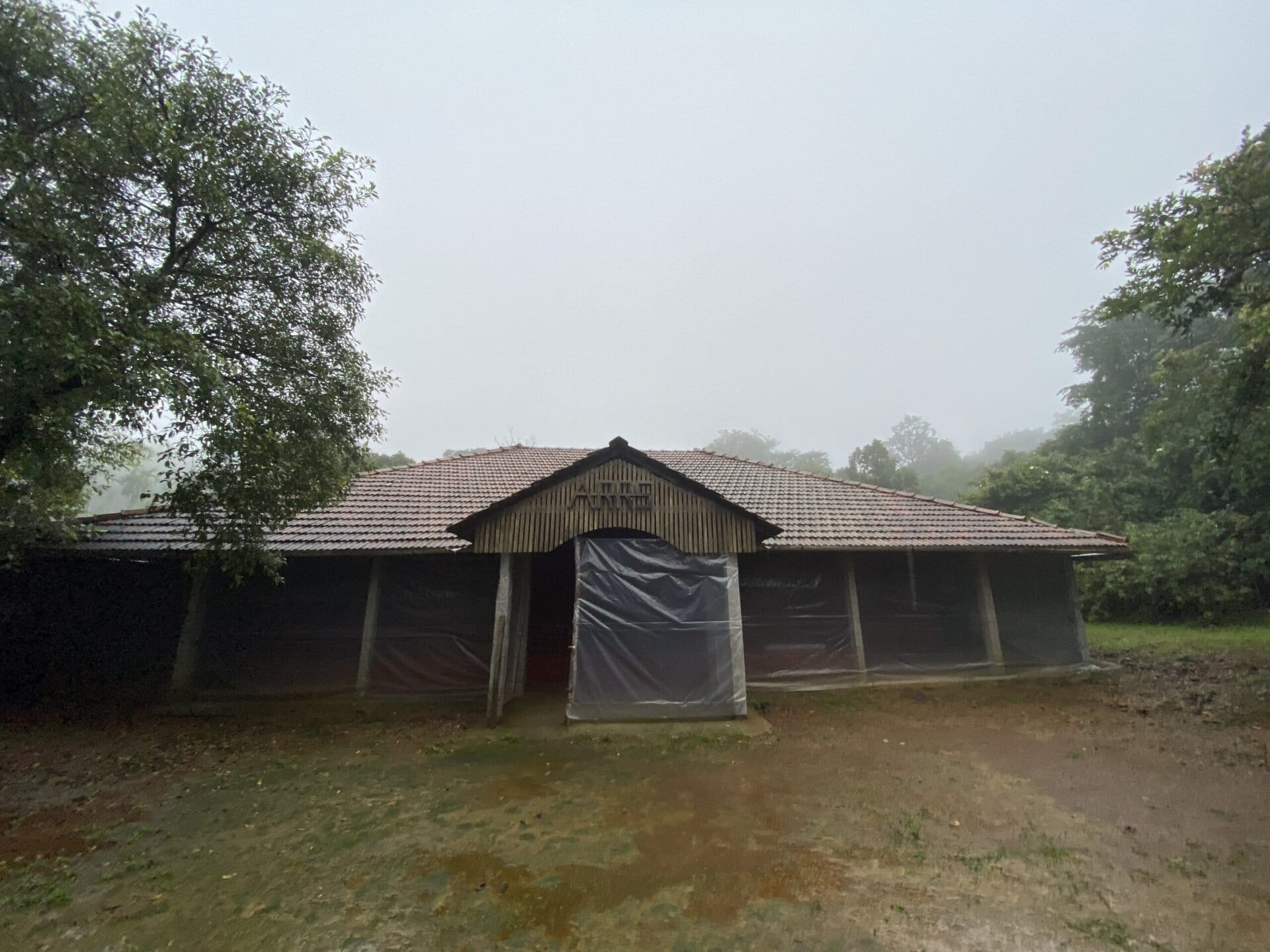
The main building where the staff quarters, kitchen and dining hall are located.
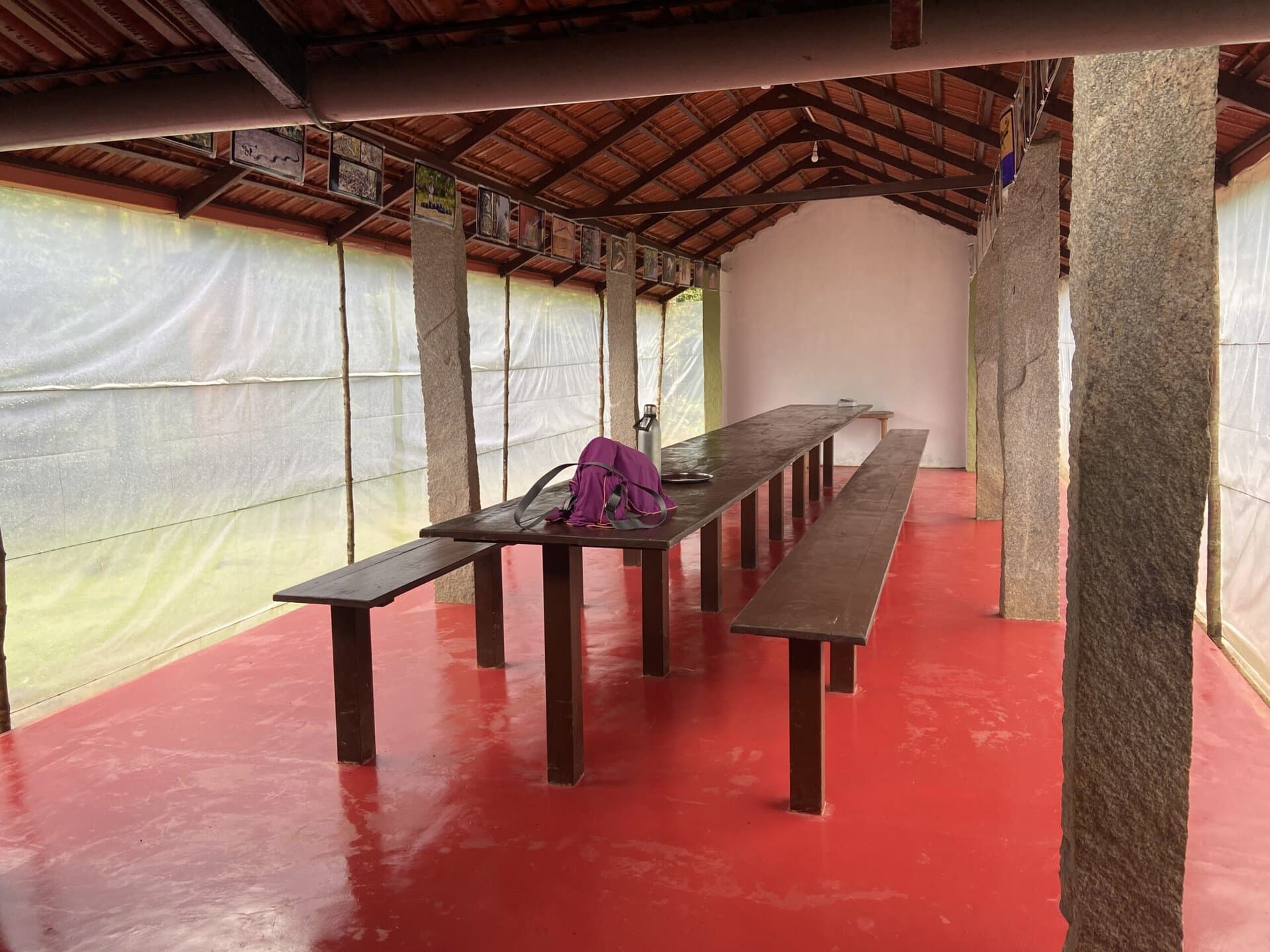
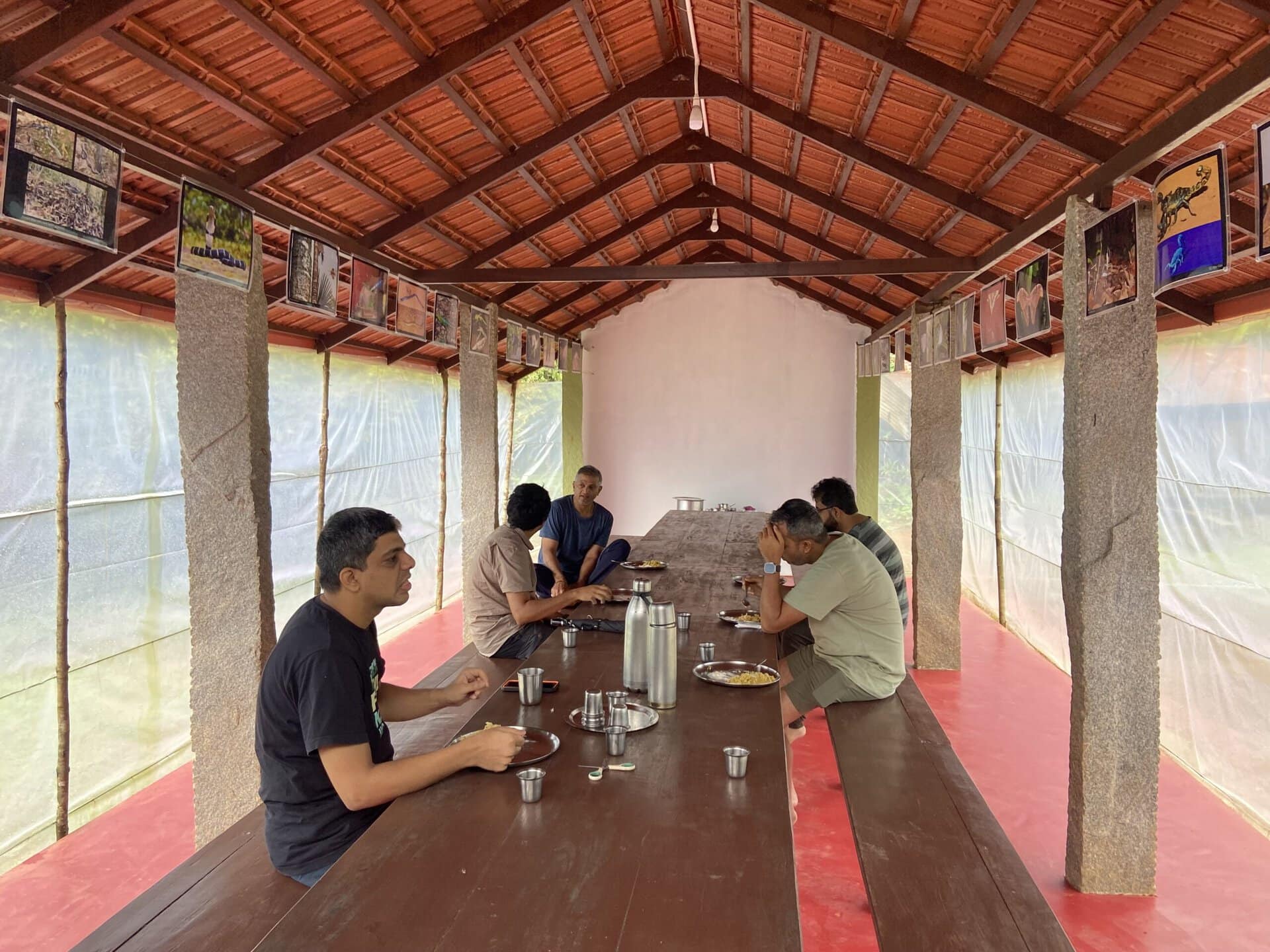
The dining hall. Mr. Vipul told how they had tagged king cobras with transmitters for research on this very table.
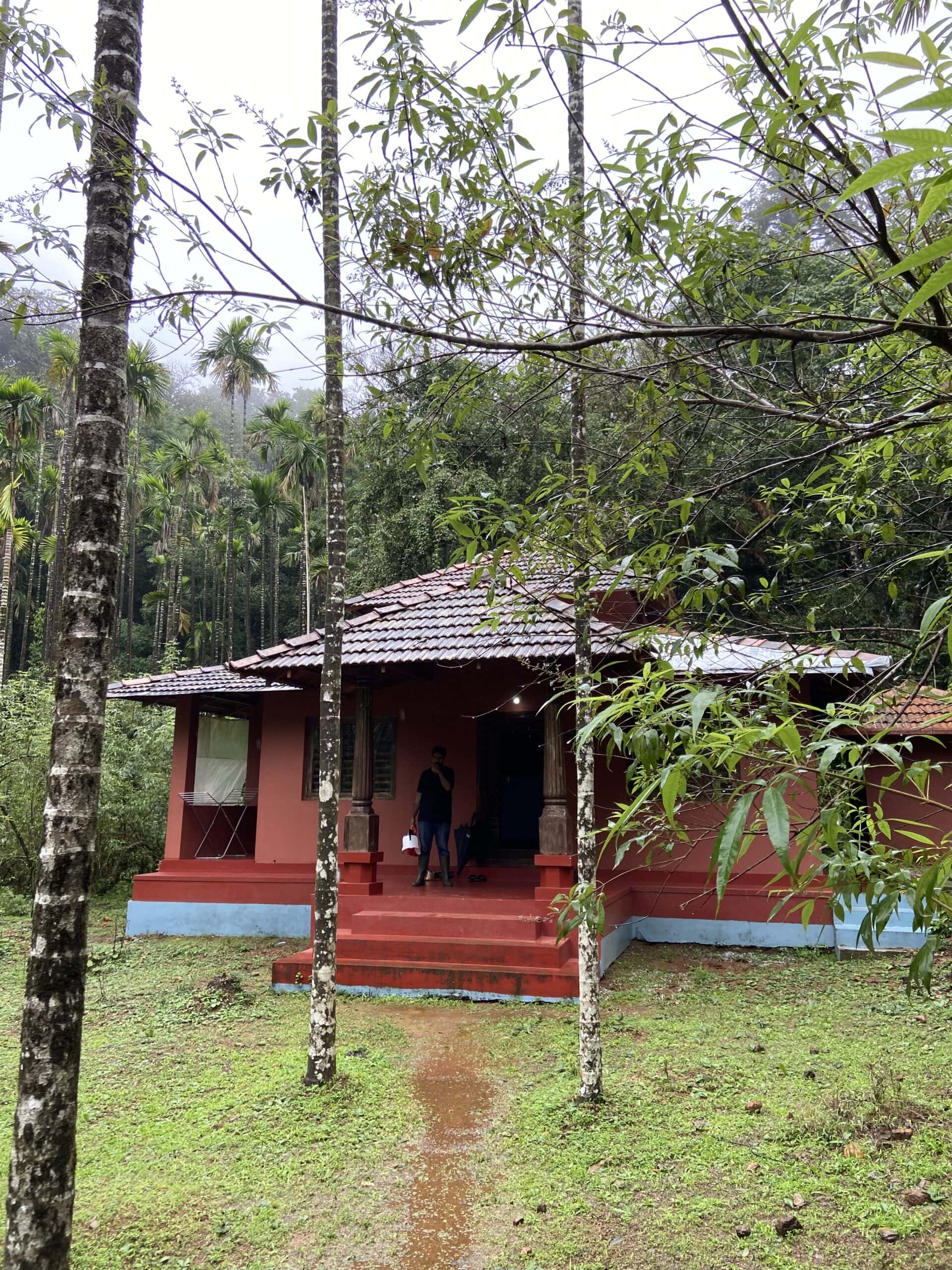
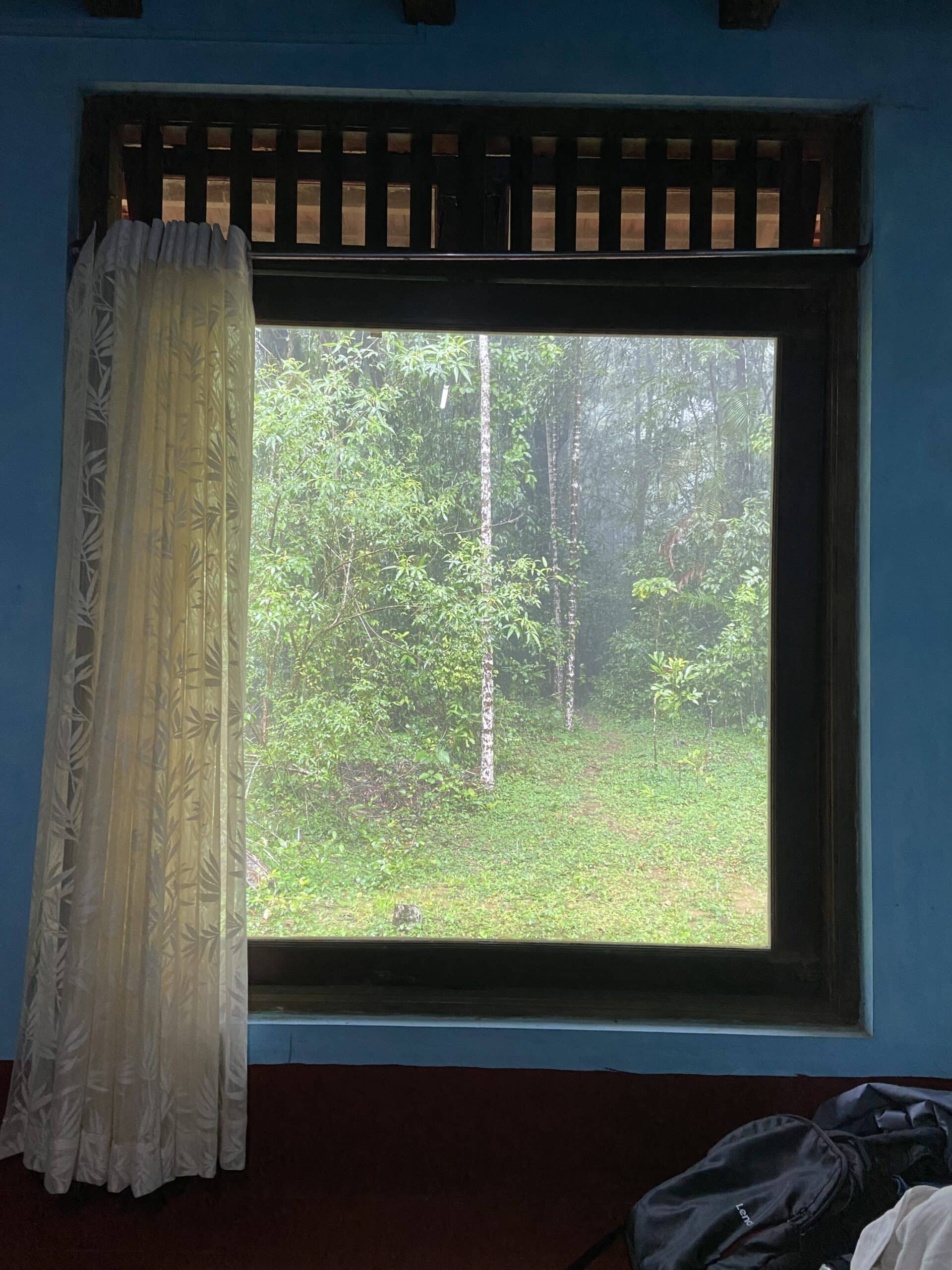
The cottage where we stayed. The cottage is located among tall areca nut trees.
The view from the front porch of the cottage.
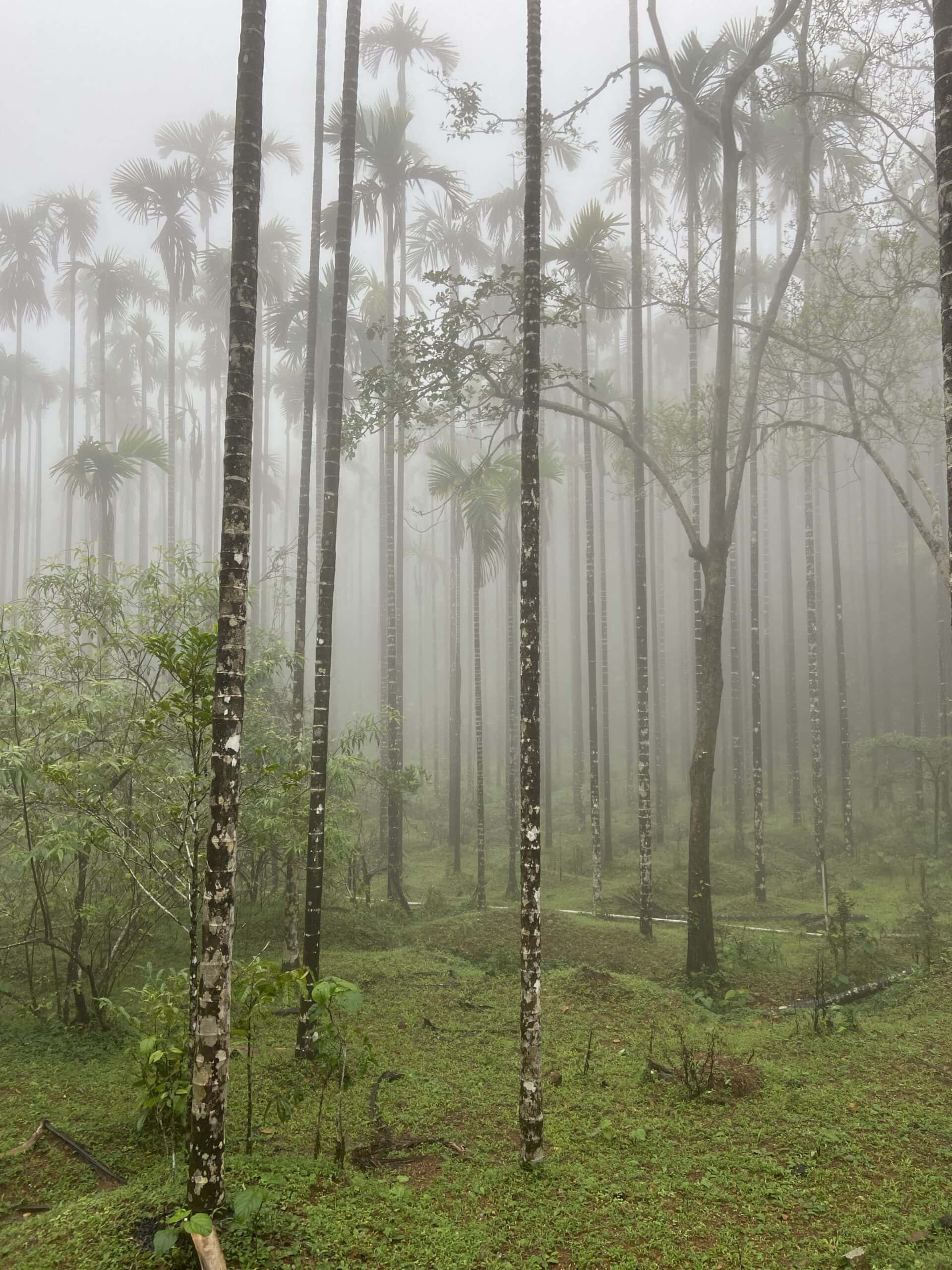
Another view from the front porch. This view overrides the previous one
The room with a double cot.
The room with several bunker beds.
The view from the room with the cot.
The simple yet tasty food we had during the stay.
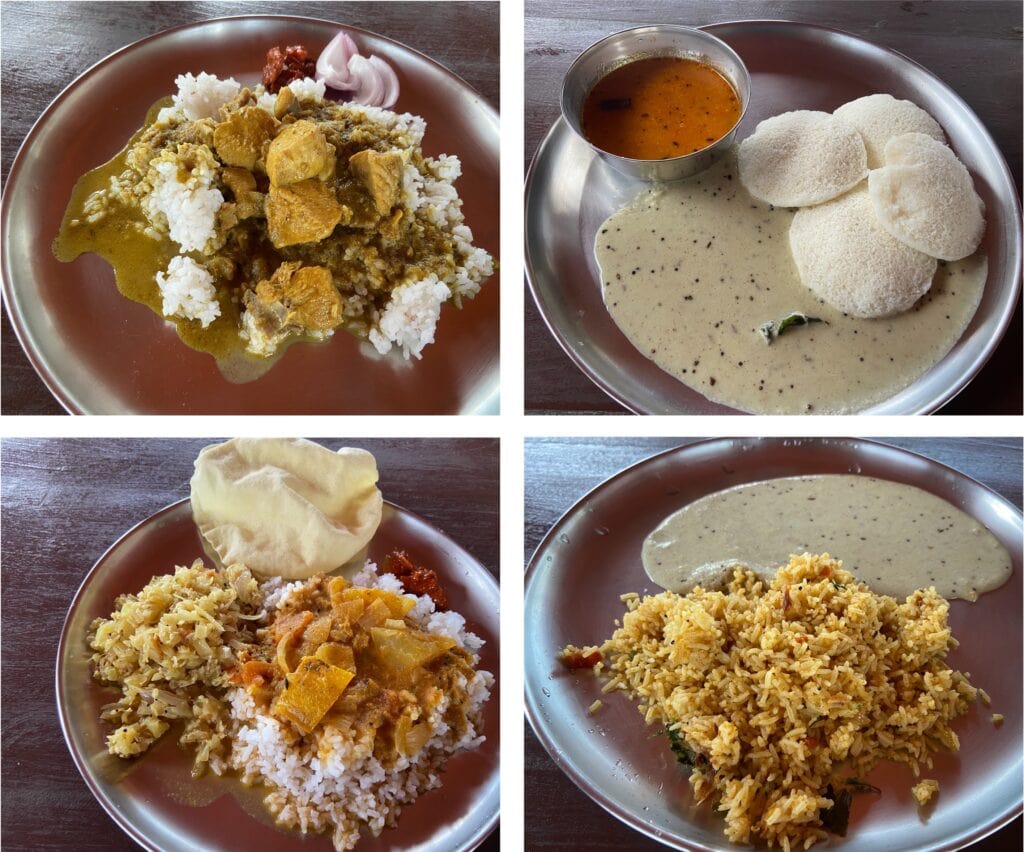
On the first day after lunch, Mr. Vipul gave us an orientation program where he explained important things like what gear to carry, how to protect the equipment, mandatory dress code etc. He had also sent a checklist at the time of registration.
The Gear
Following were the photography gear required.
1. Camera: Any full or crop sensor DSLR or mirrorless body
2. Macro lens: A macro lens has the ability to focus at very short distances. While normal lenses have focusing distances of one meter or more, macro lenses can focus as close as 20cm. This is crucial in macrophotography as we get to within a feet of the subject.
3. Flash: As we get very close to the subject in macrophotography, the depth of field is very shallow at wide open apertures, sometimes just a couple of millimeters. At this shallow depth of field, it is impossible to get a sharp focus on the full subject. To overcome this problem, we have to shoot at very narrow apertures like F11 to even above F20. At such narrow apertures, a flash becomes necessary even during day time.
4. Diffuser: A diffuser spreads the light from the flash in all directions thus lighting the subject from all directions. Without the diffuser, the lighting will be very harsh and will light up one part of the subject overexposing that part while other parts will remain underexposed.
I used a Canon R6 mirrorless camera with an RF100mm F2.8 macro lens and a Godox V860 flash, and a custom diffuser from Radiant Diffuser.
Mr. Vipul had asked us to bring ziploc bags for protecting the camera, flash and lens. On the first day, he cut openings in these ziploc bags and covered the camera, lens and the flash such that rain water would not enter the equipment. Below pictures show the gear covered with ziploc bags.
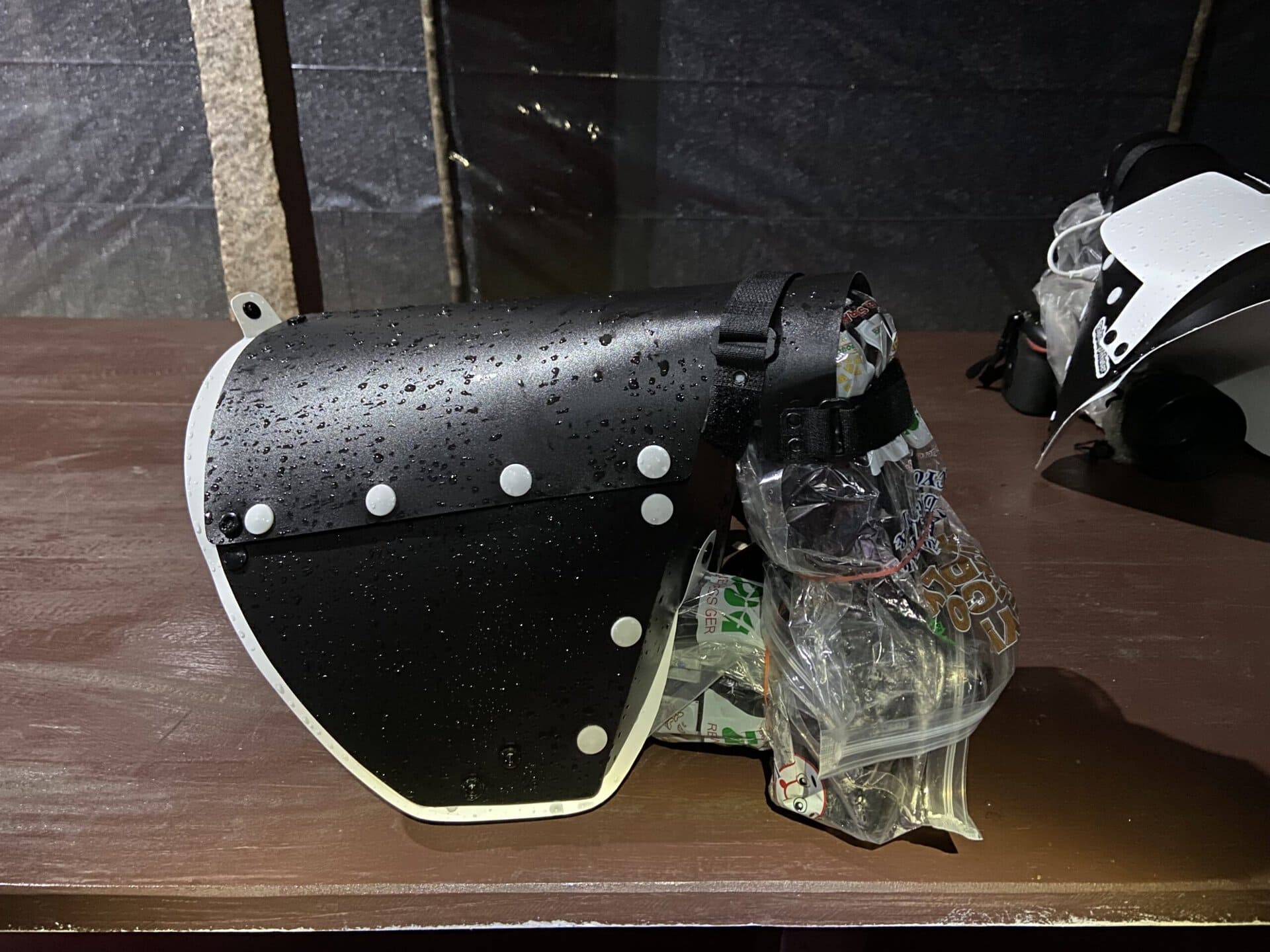
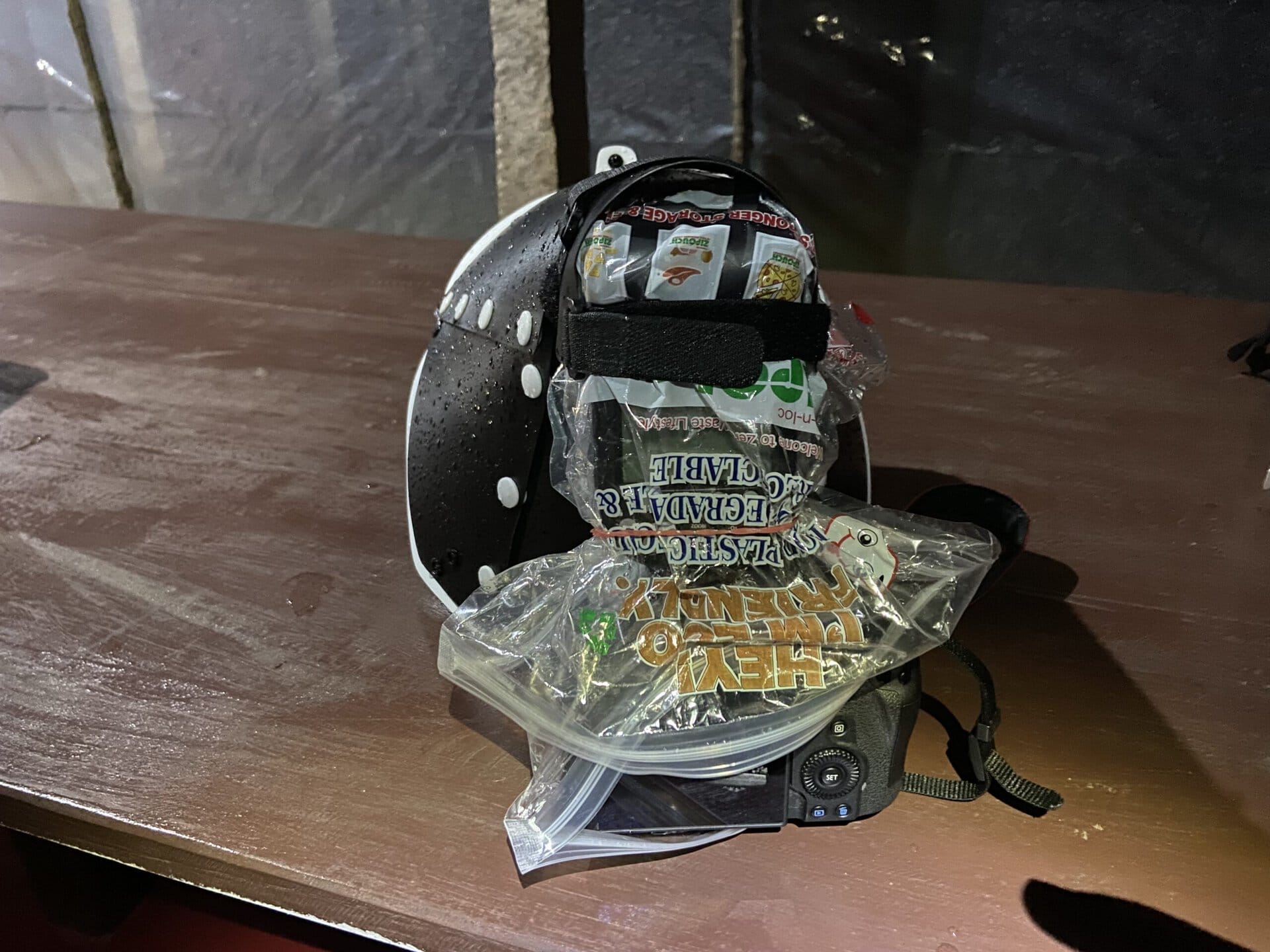
Mandatory dress code before entering the jungle
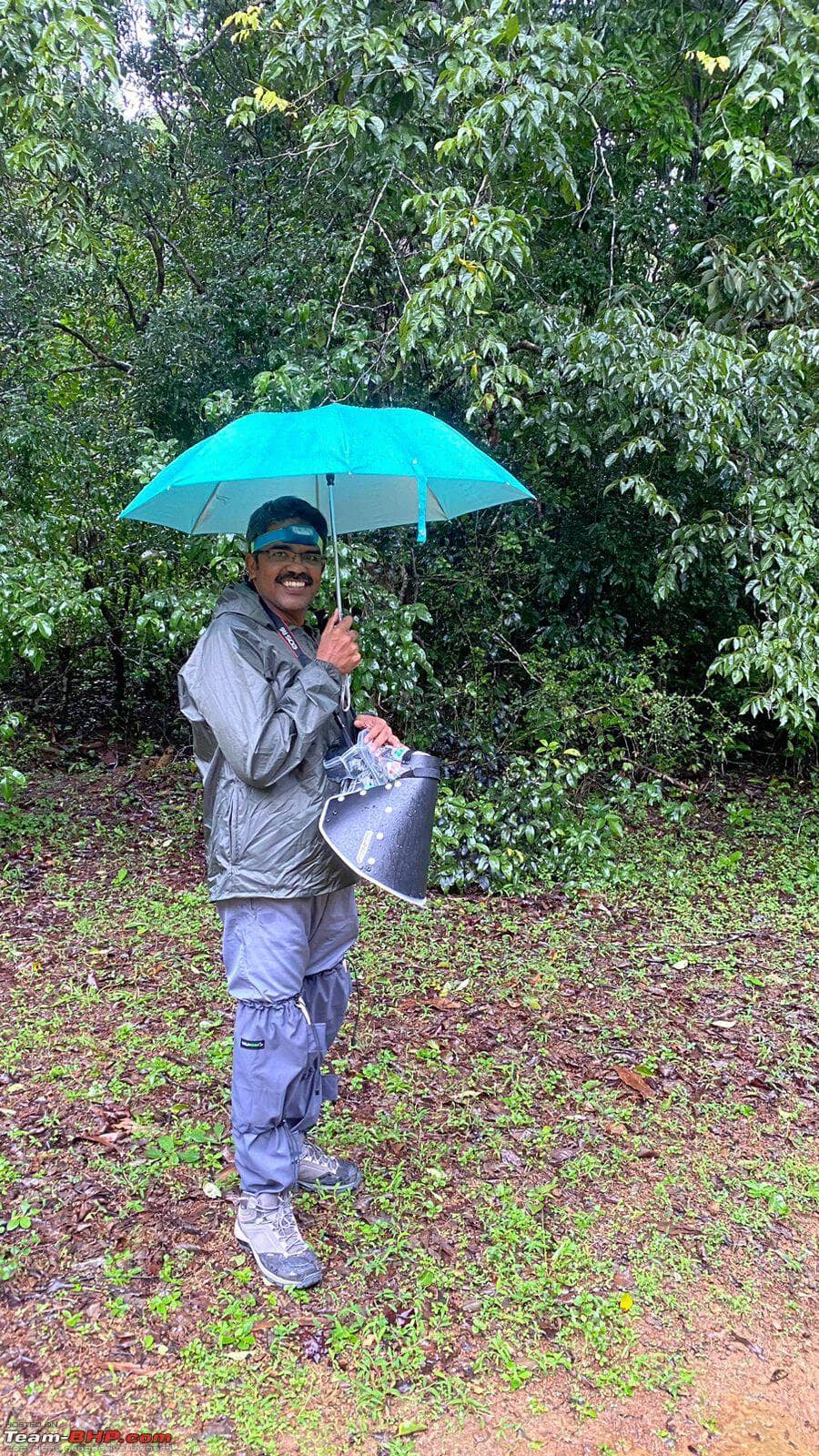
1. Anti-leech socks: These were life savers. The anti-leech socks cover the entire legs from the toes to above the knees. This prevents the leeches from getting to the feet. They enter the shoes, but don’t get access to the feet. As the highest population of leeches is on the ground, the leech socks cut leech infestation almost 80%. Leeches still drop from trees and attach to the face or neck, or get on hands when we get down to shoot low lying subjects. We just had to flick these away.
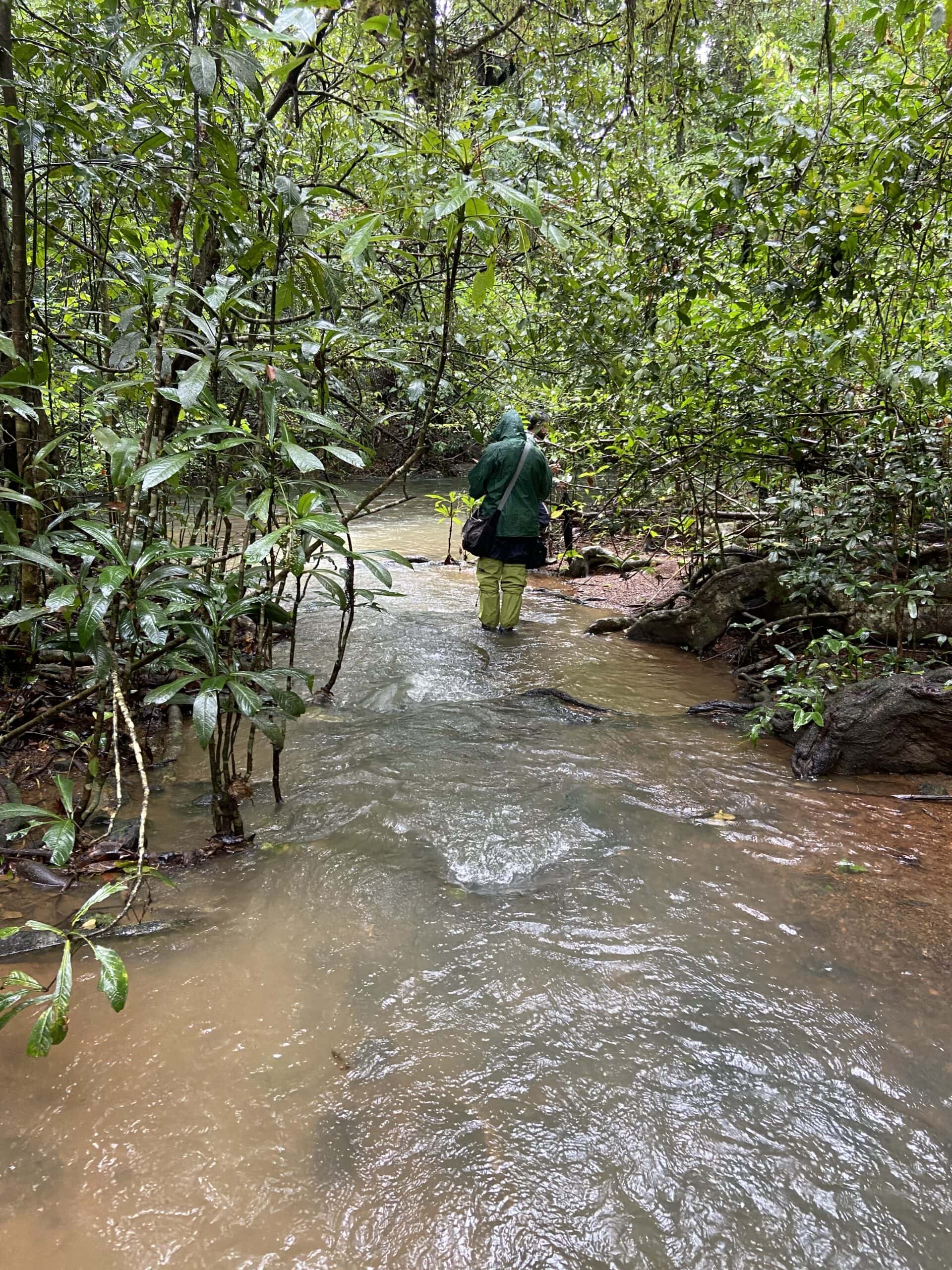
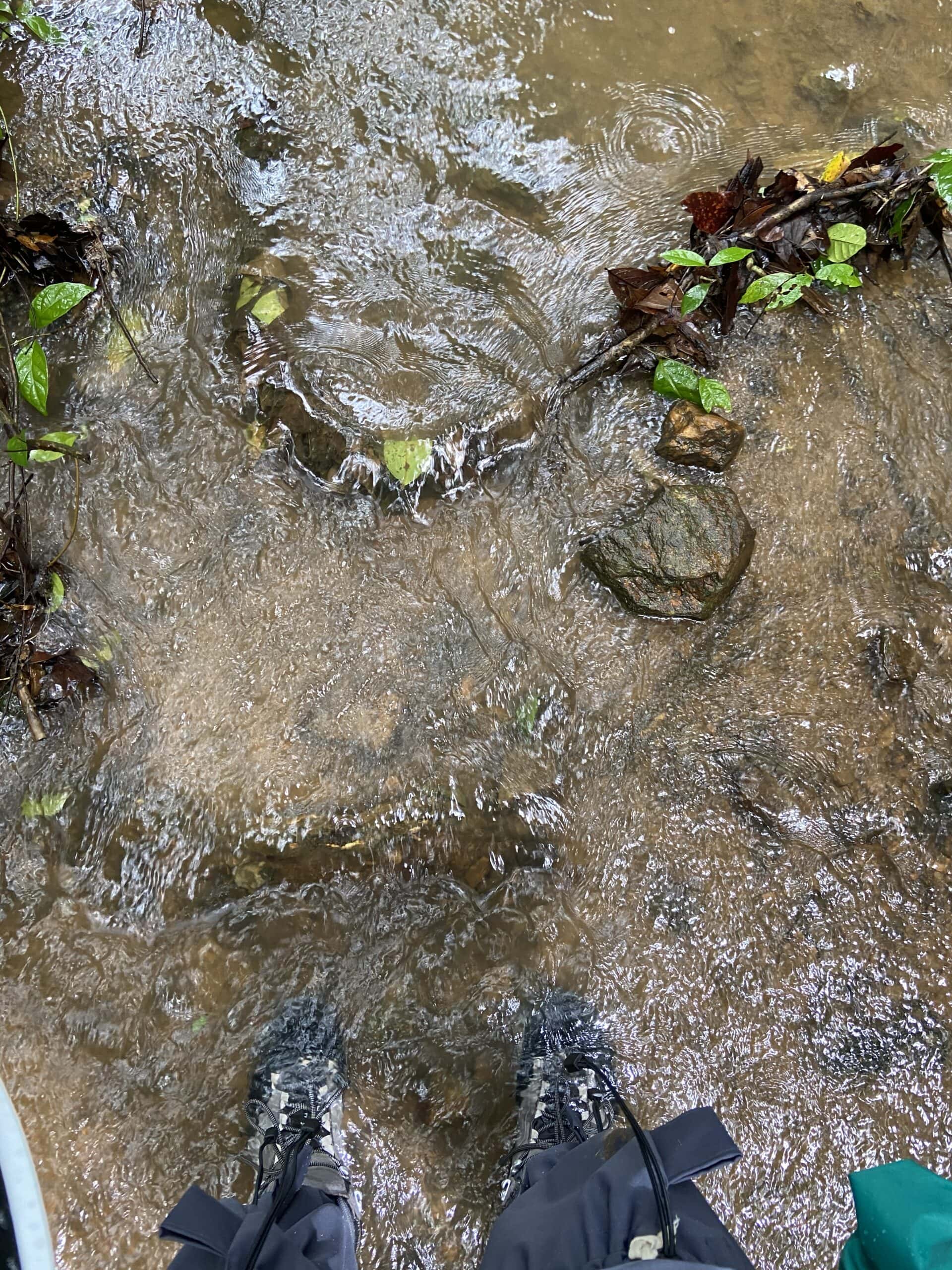
2. Gum boots (preferable) or good hiking shoes: The advantage of wearing gum boots is that it protects the socks from getting wet while wading through streams. I did not have a gum boot and though my hiking shoes are water proof, the moment we started wading through water that reached just below the knees, I got my anti leech socks wet and had to wear soggy socks for two days.
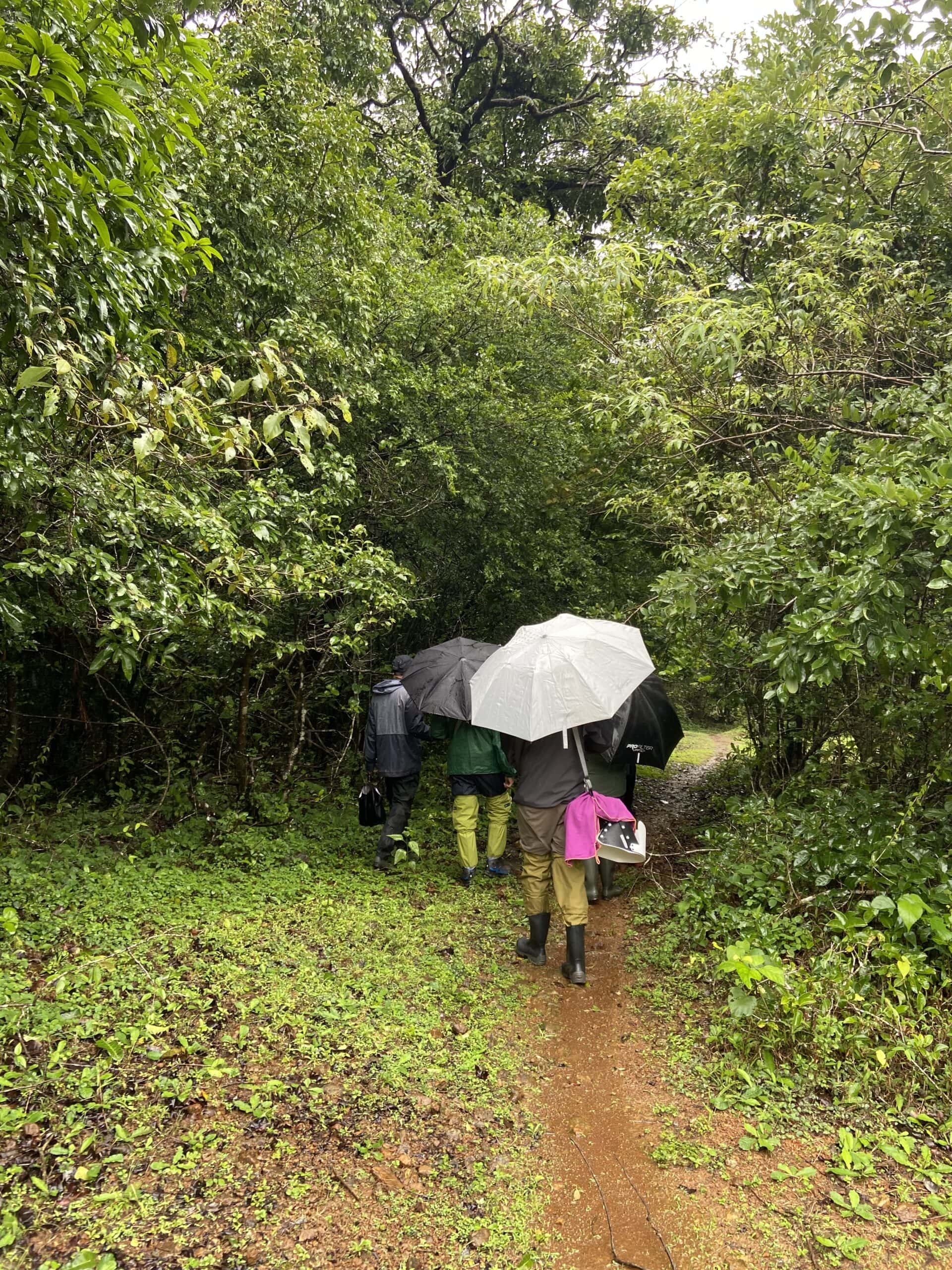
3. Rain gear: It was raining non-stop all the days. So it was essential to wear a rain coat to prevent getting wet.
4. Umbrella: Though we were wearing rain coats, we also carried an umbrella to protect our cameras from getting wet.
5. Torch light: We were asked to carry a torch even during day time. Some parts of the forest were so dense, it was quite dark even during day time.
Below is a picture of me in full gear. This picture is from the TeamBHP thread I wrote on this trip.
The Daily Routine
Following is the timetable that we followed every day give or take a few minutes.
8:30AM – Breakfast
9:00AM to 12:00AM – First field trip
1:30PM to 2:00PM – Lunch
2:00PM to 4:30PM – Rest
4:30PM – Coffee
4:45PM – 7:00PM – Second field trip
7:30PM – Dinner
8:00PM to 11:00PM – Third field trip
Though the distance we covered during these trips was not that high – maybe 3km to 5km, the sessions were quite tiring for the following reasons: going through the thick forest moving through thick foliage, broken trees etc; being in those wet clothes (they do get wet despite all the rain protection) and soggy shoes; the tough positions we had to get into and the contortions we had to do to shoot the subjects; constantly checking for leeches.
But the beautiful forests and the pictures we got of the subjects made it all worth the effort.
A few pictures from the field trips we did in the 3 days in no particular order.
Entering the jungle.
Wading through streams.
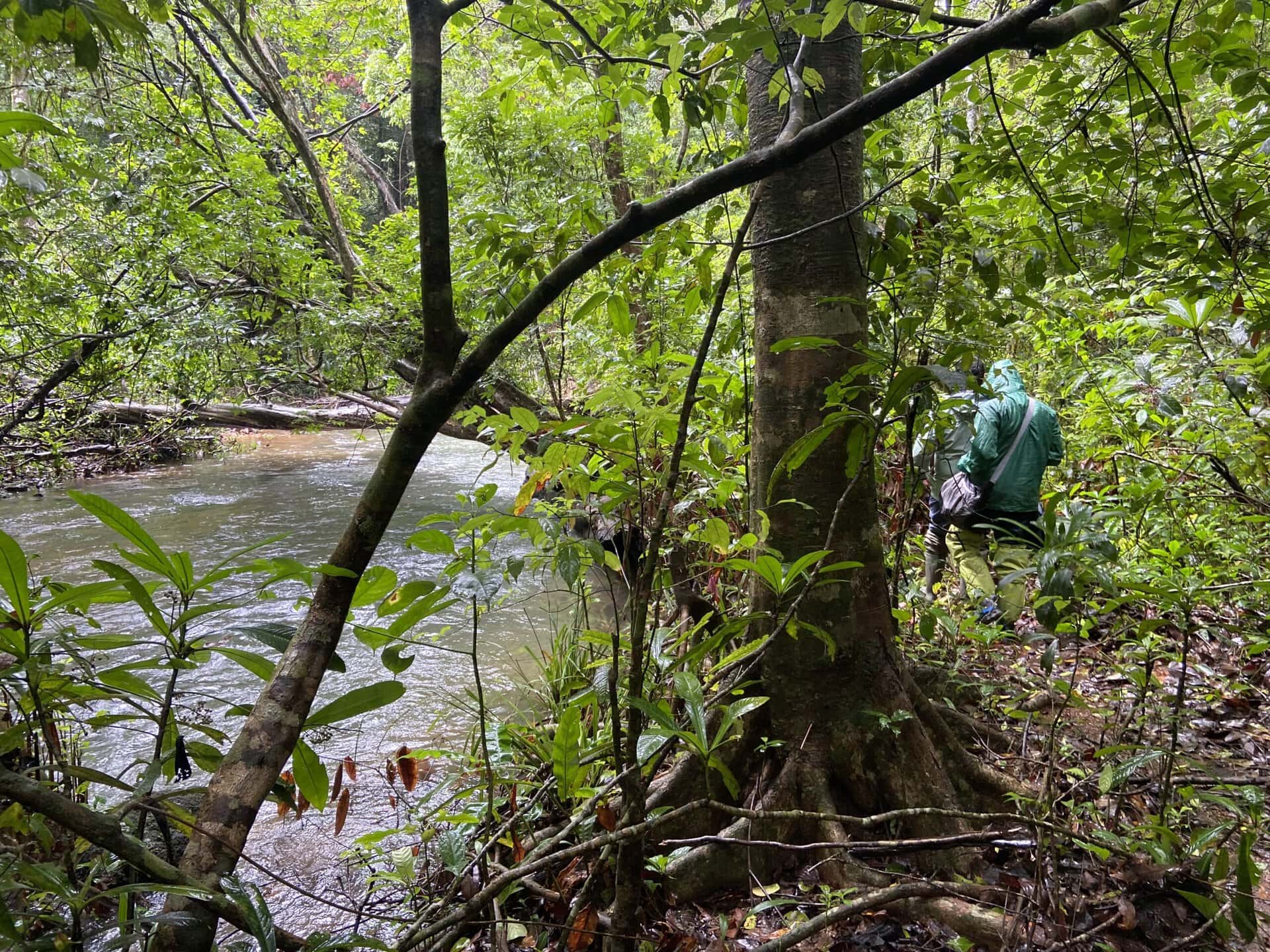
Cutting through thick foliage by the river.
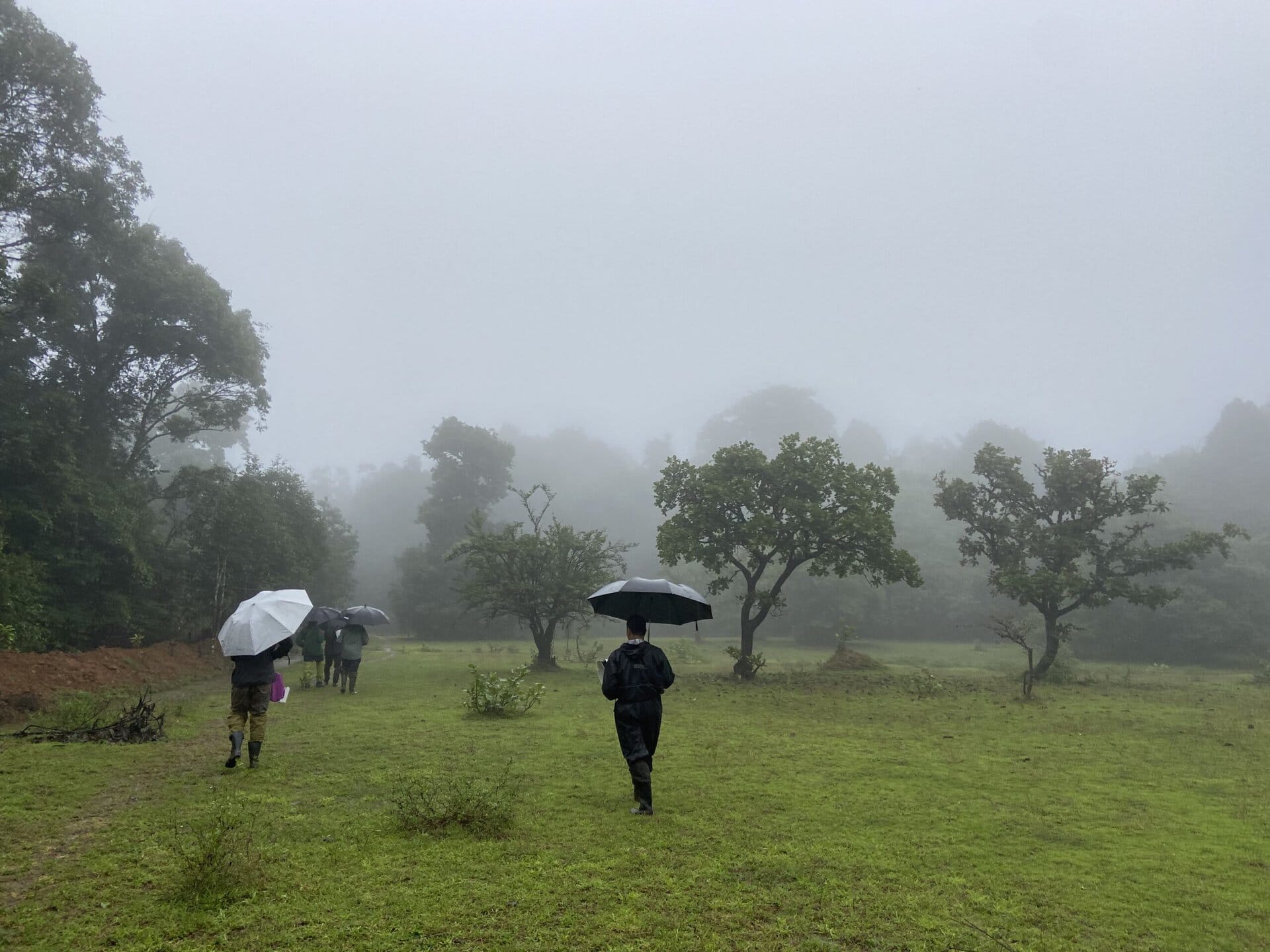
Through misty grasslands.
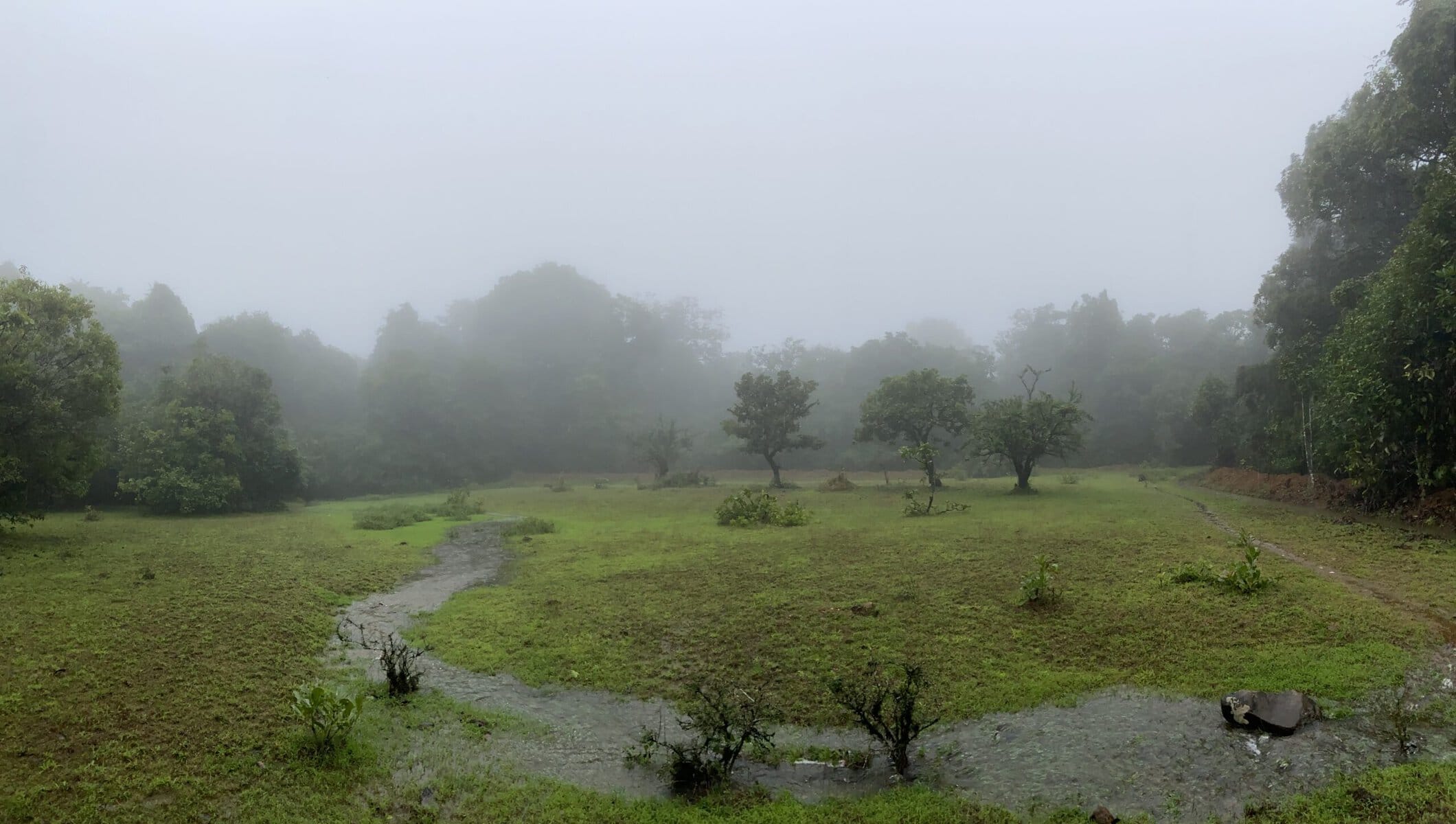
Streams running through grasslands.
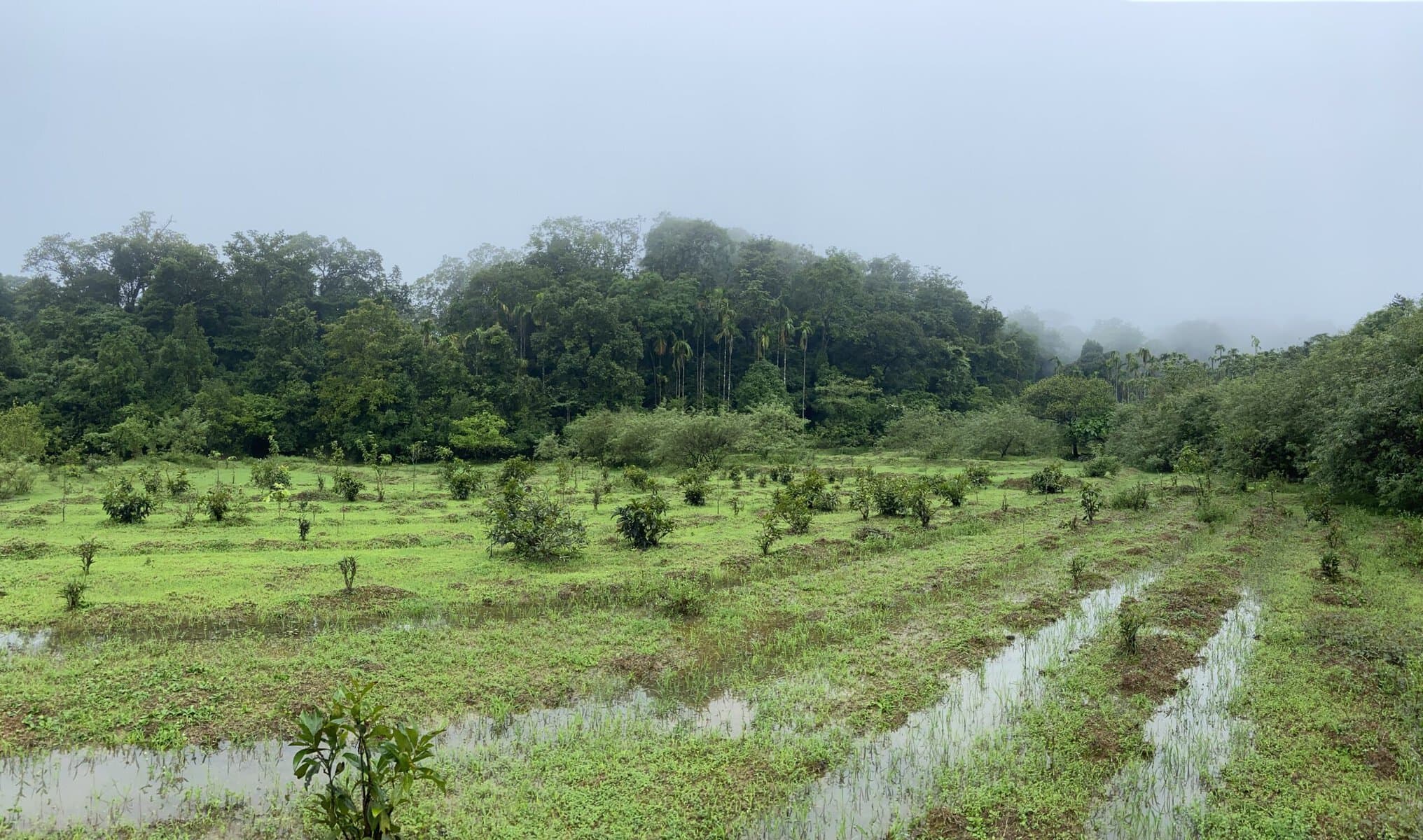
Waterlogged grasslands.
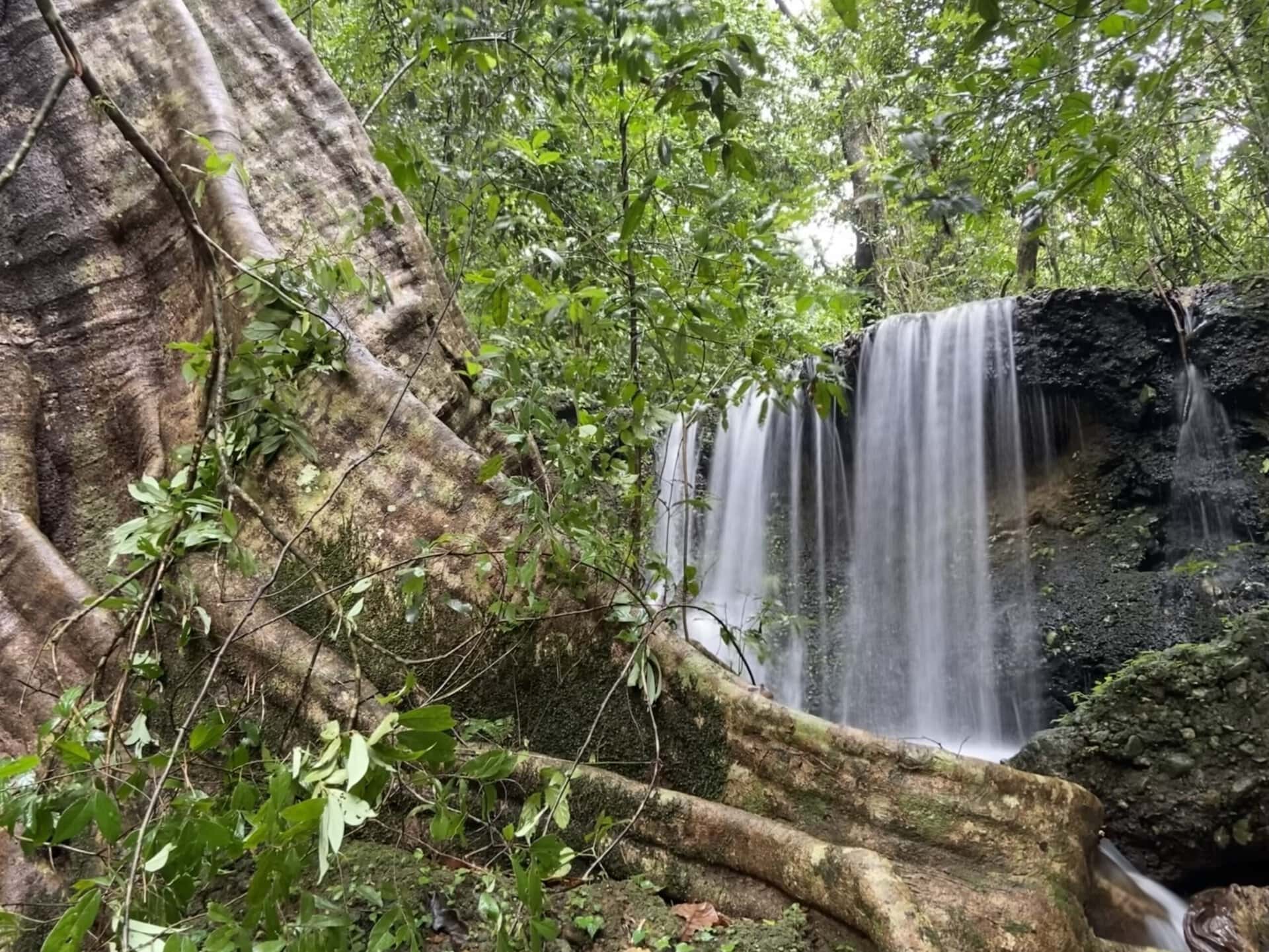
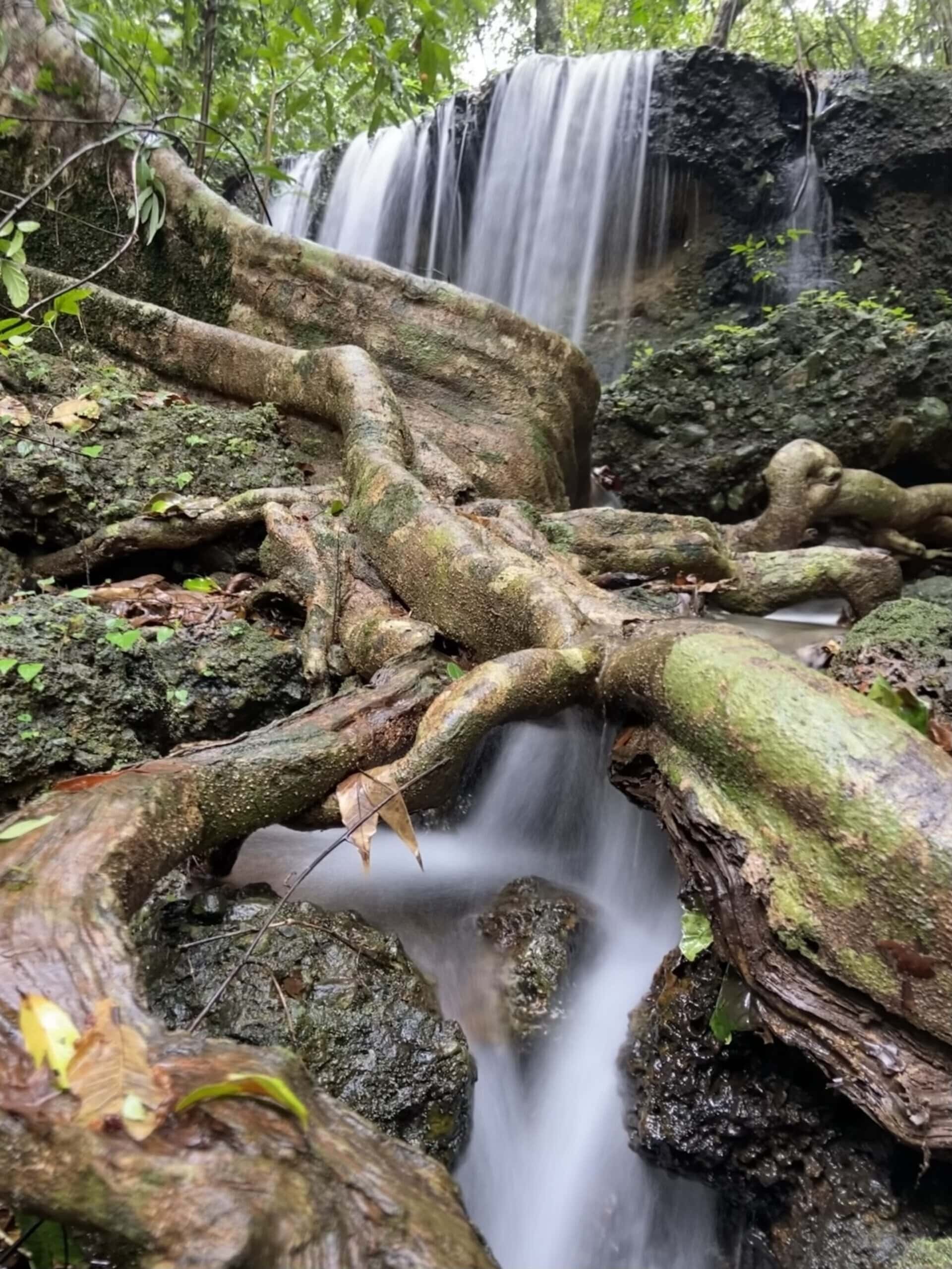
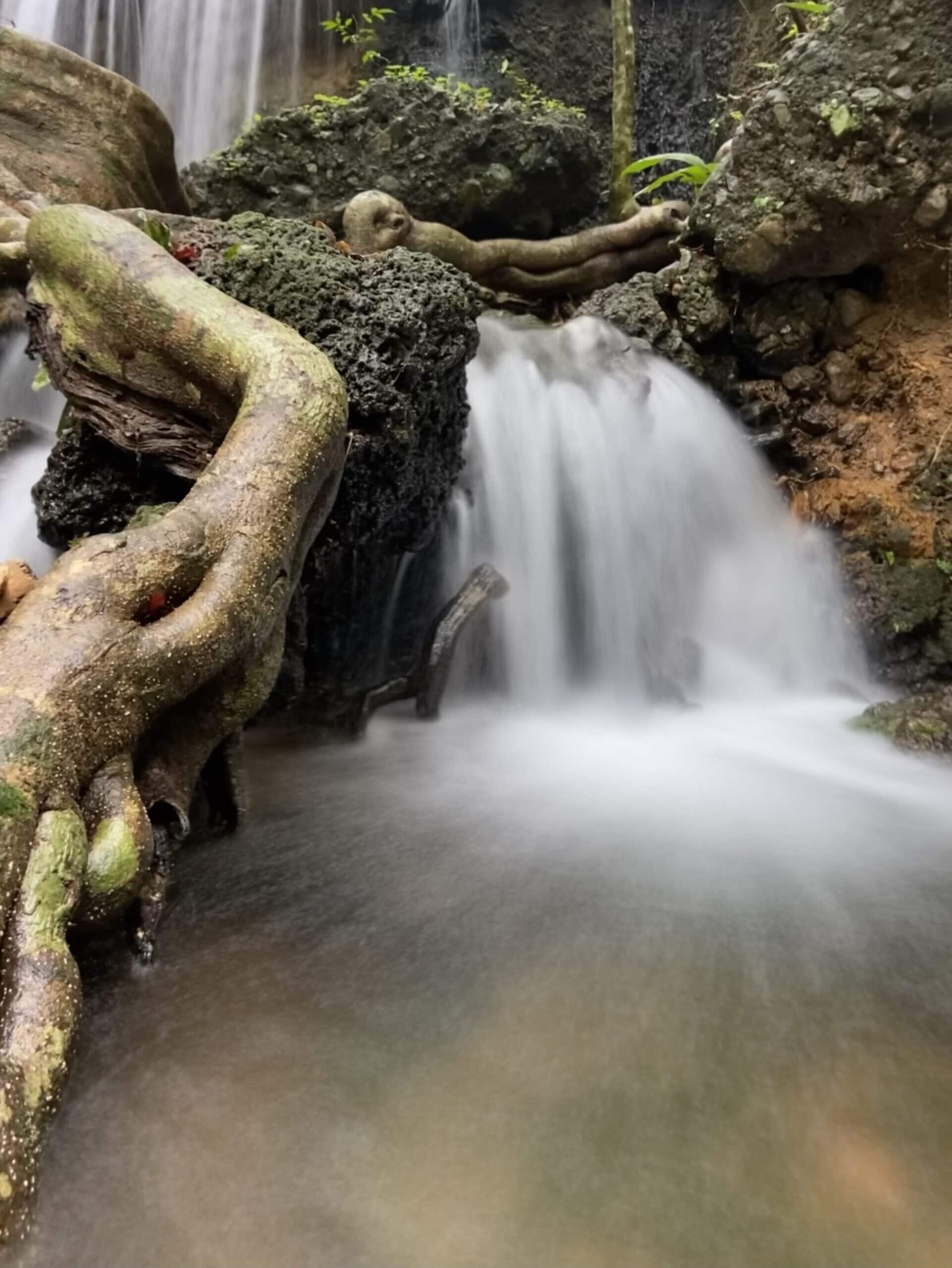
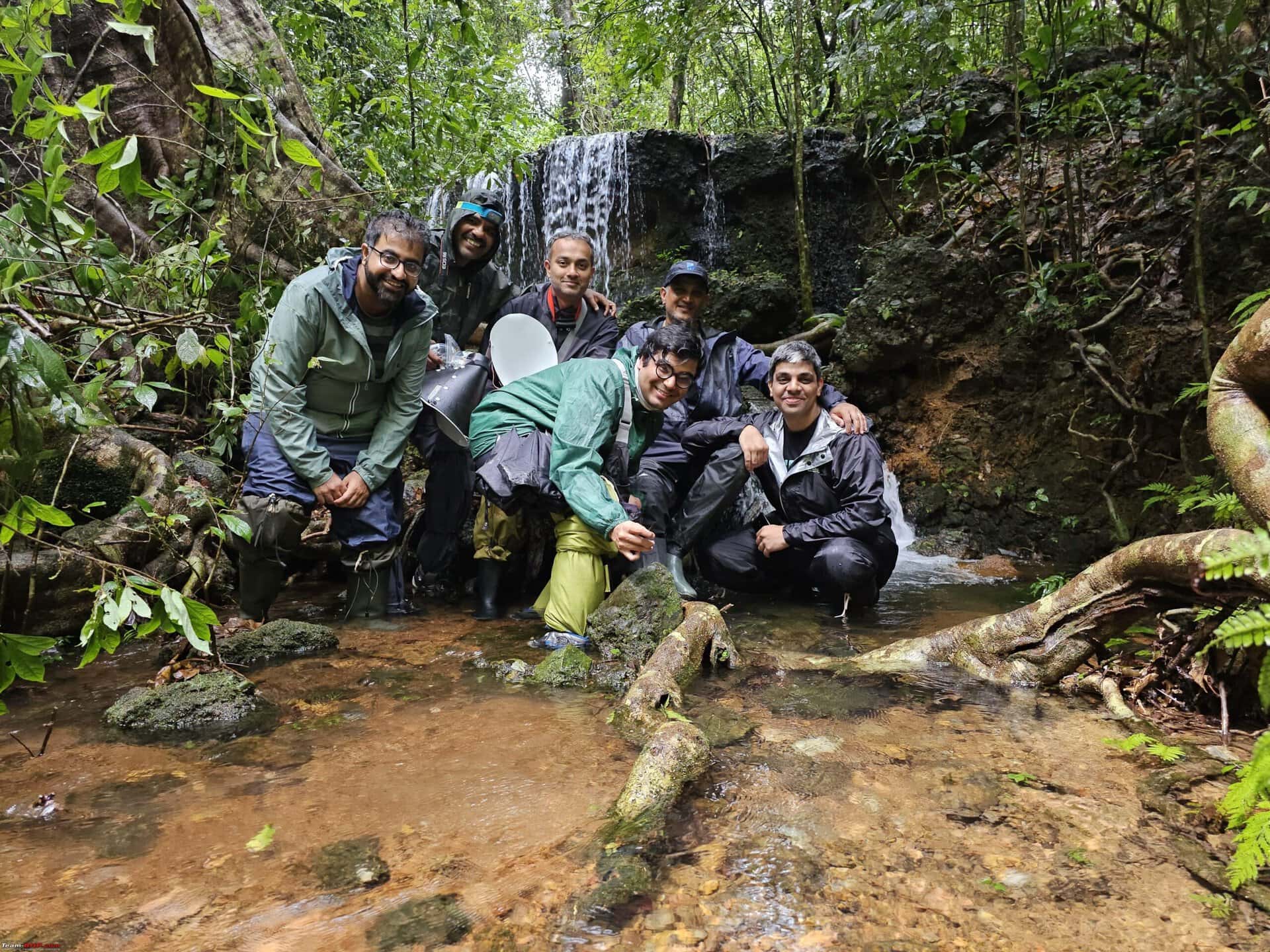
One of the days we hiked to this beautiful waterfalls in the middle of the jungle.
A group picture at the waterfall.
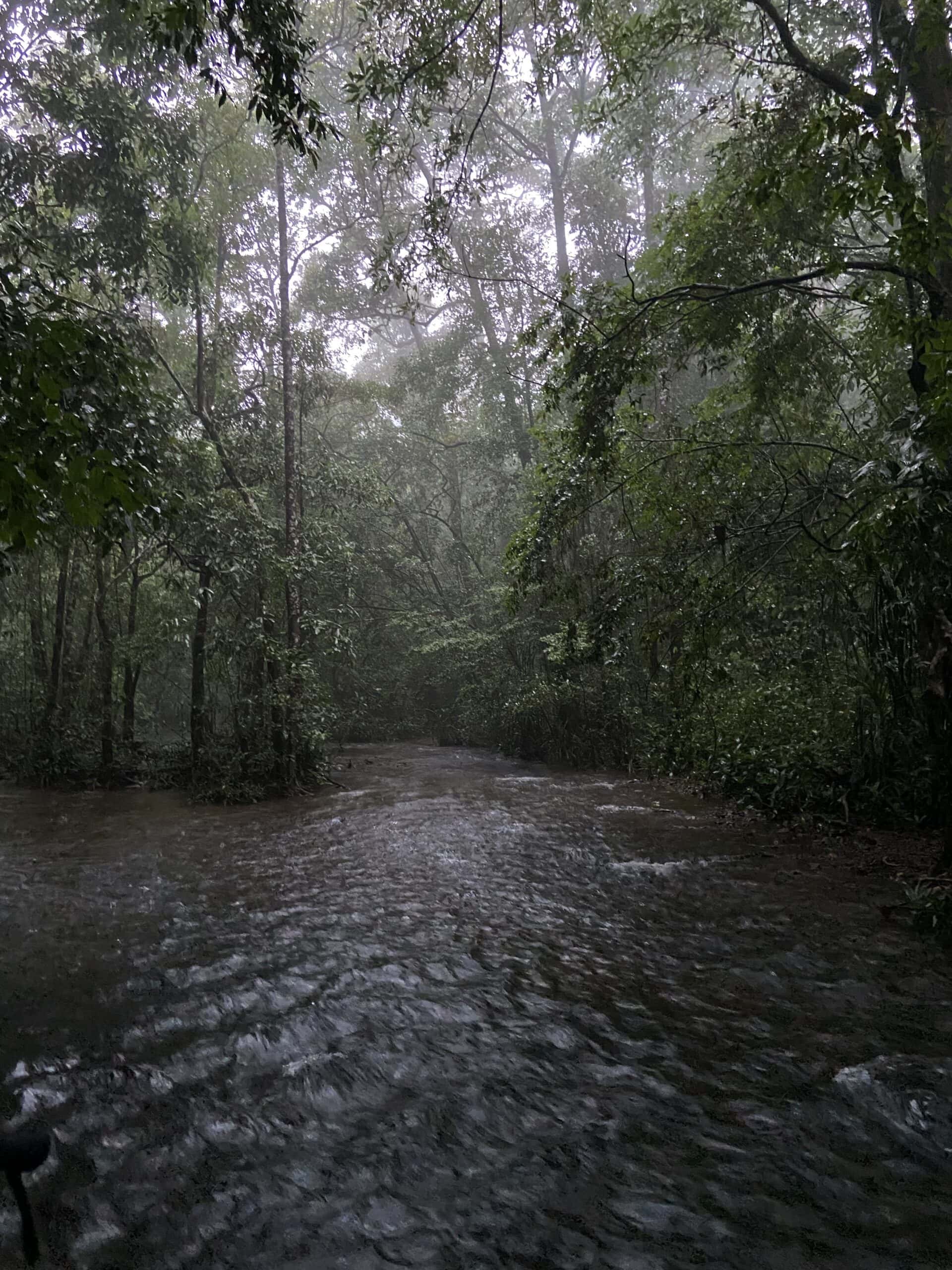
Another day we went through the jungle to see this beautiful river. See how dark it is inside, though this was during the day.
Looking for snakes and frogs in the night.
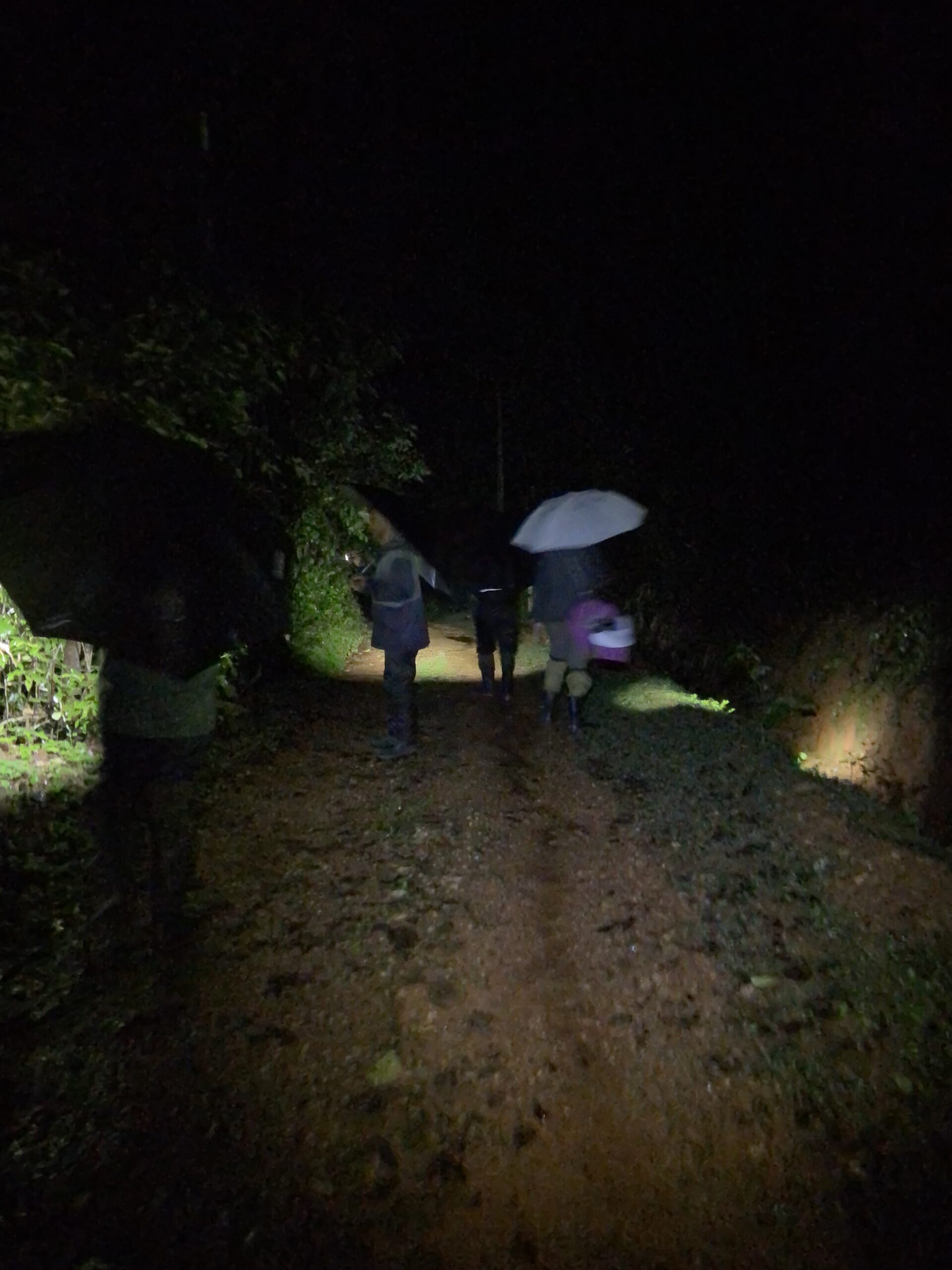
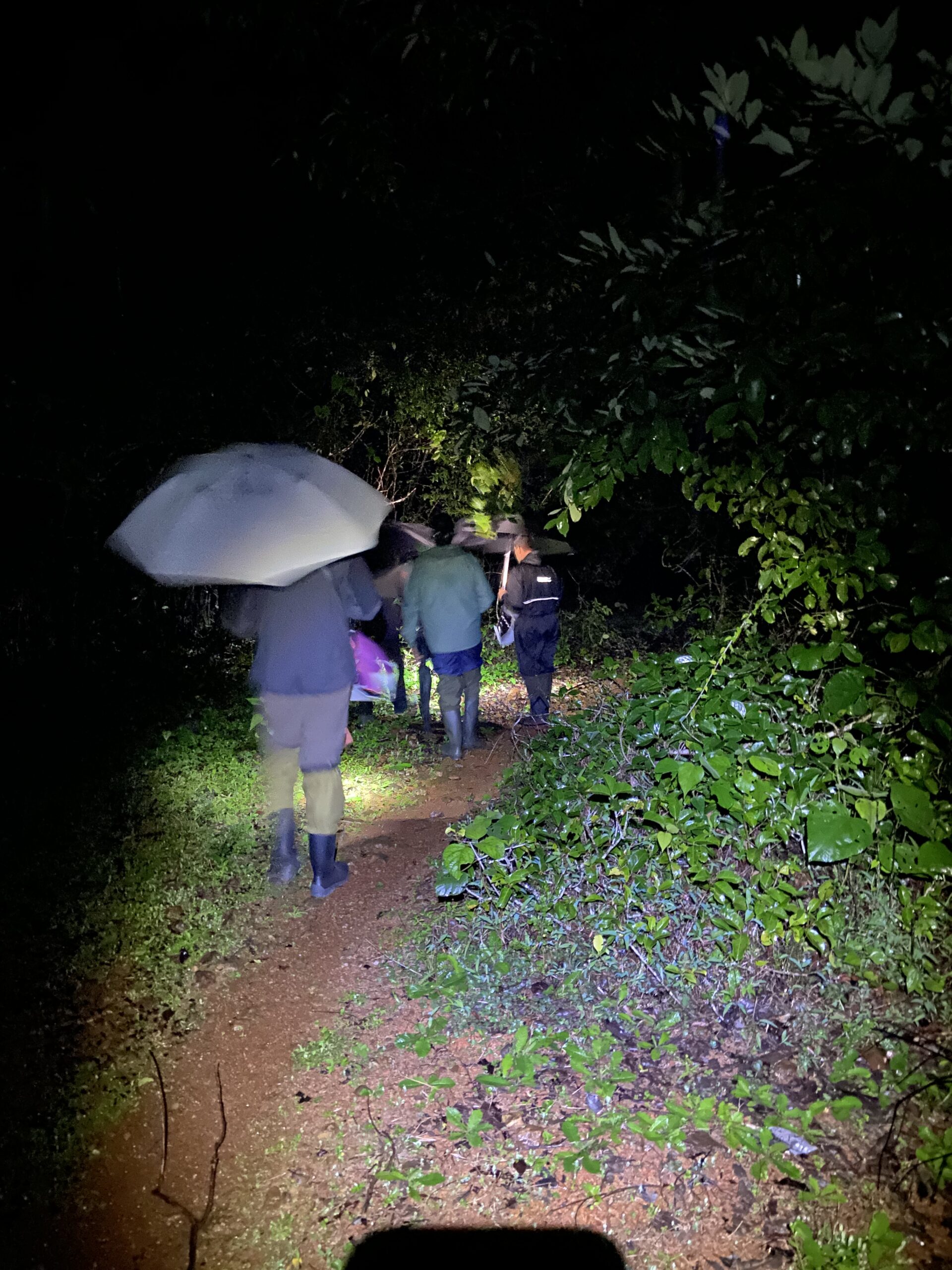
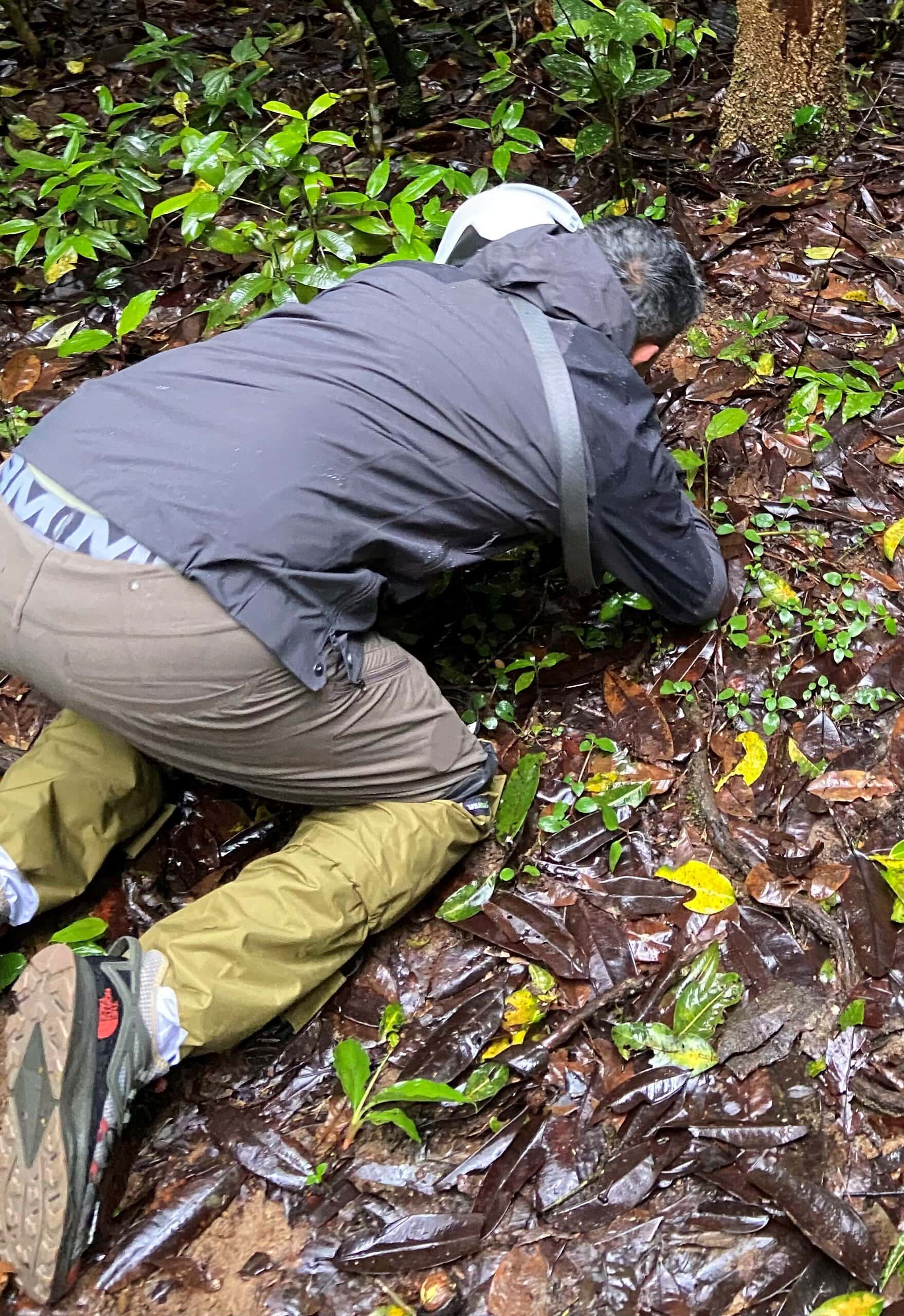
The tough positions and contortions we had to do to get these subjects. Shooting snakes was relatively easy as they were a little high on the trees. But shooting frogs was the real challenge, where we had to get on the ground to get to their level and these times we were exposed to leeches.
Here Robi goes on the ground to get level with a frog.
We used to have lots of discussions during breakfast/lunch/dinner time. Mr. Vipul would give us information about the species we shot during the previous session, tell us about his experiences during his research at ARRS, show us various pictures he had shot, give us tips on macrophotography etc.
List of species photographed
Following is the list of species I was able to photograph in these three days.
- Malabar pit viper brown morph
- Malabar pit viper green morph
- Green vine snake
- Bicolor frog
- Wayanad bush frog
- Golden back frog
- Leaping frog
- Day gecko
- Lantern bug
- Damsel fly
The photographs are found in the next couple of sections.
Snakes
We photographed the malabar pit viper – brown and green morph and the green vine snake.
Mr. Vipul encouraged us to get as close to them as possible to photograph. I was very surprised how we could get close to the snakes without them strikig us. He explained that these are camouflaged snake species and ambush predators. Due to their camouflage they are confident that they are invisible to us. They do not strike unless they see a prey or perceive a threat. They definitely don’t see us as prey. When we approach or retreat very slowly (in absolute slow motion), they do not perceive us as a threat. We would be seen as just a moving branch or foliage. Mr. Vipul kept reminding us to be slow. After taking a shot, he asked us not to drop the camera abruptly to view the captured shots, or make an abrupt retreat.
After understanding these facts about the snakes, my fear for these snakes was gone. Of course, these facts apply to only these species. A King Cobra or a Russell Viper which are hunter predators which can kill humans would be a different story and will need a different approach.
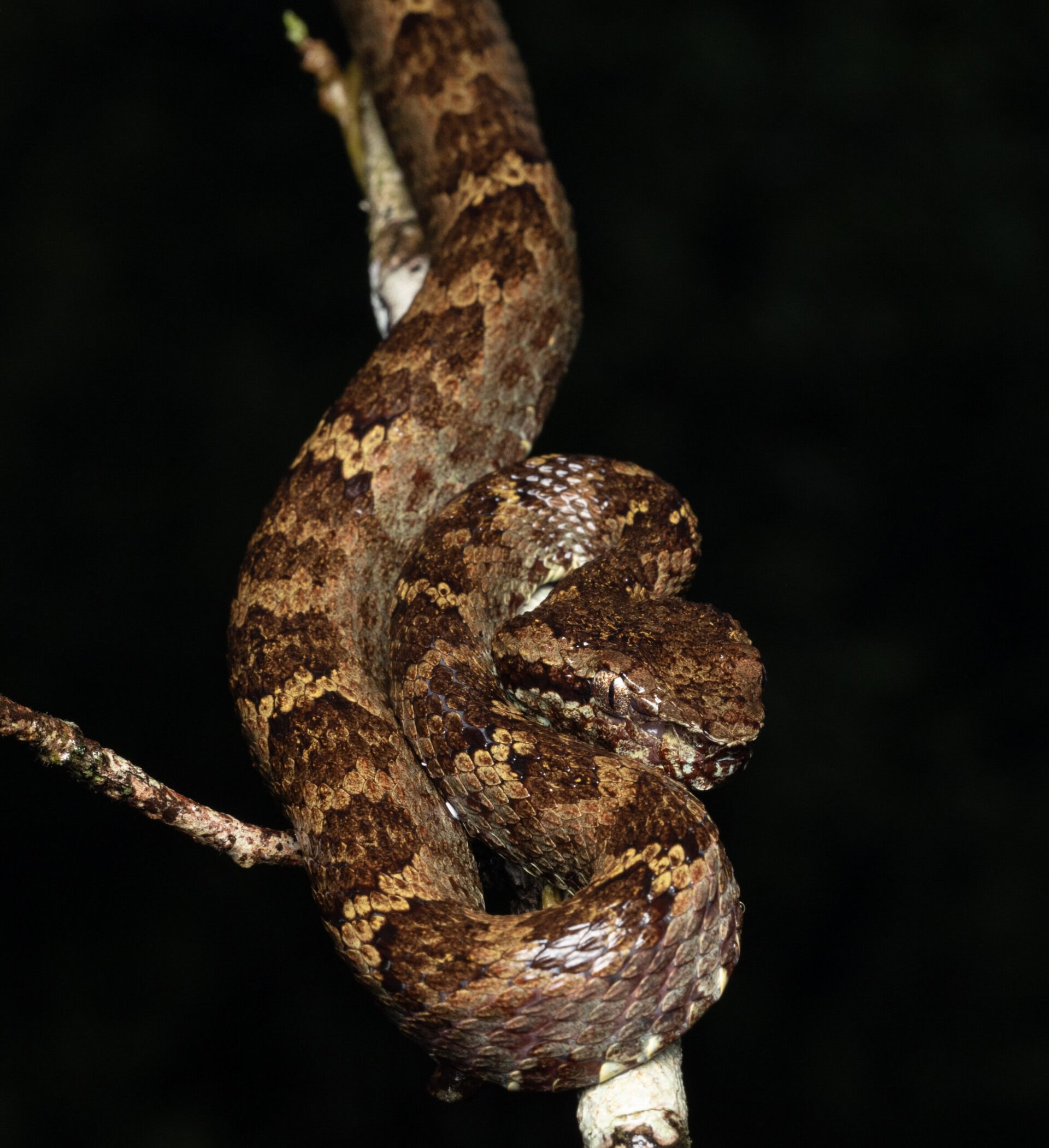
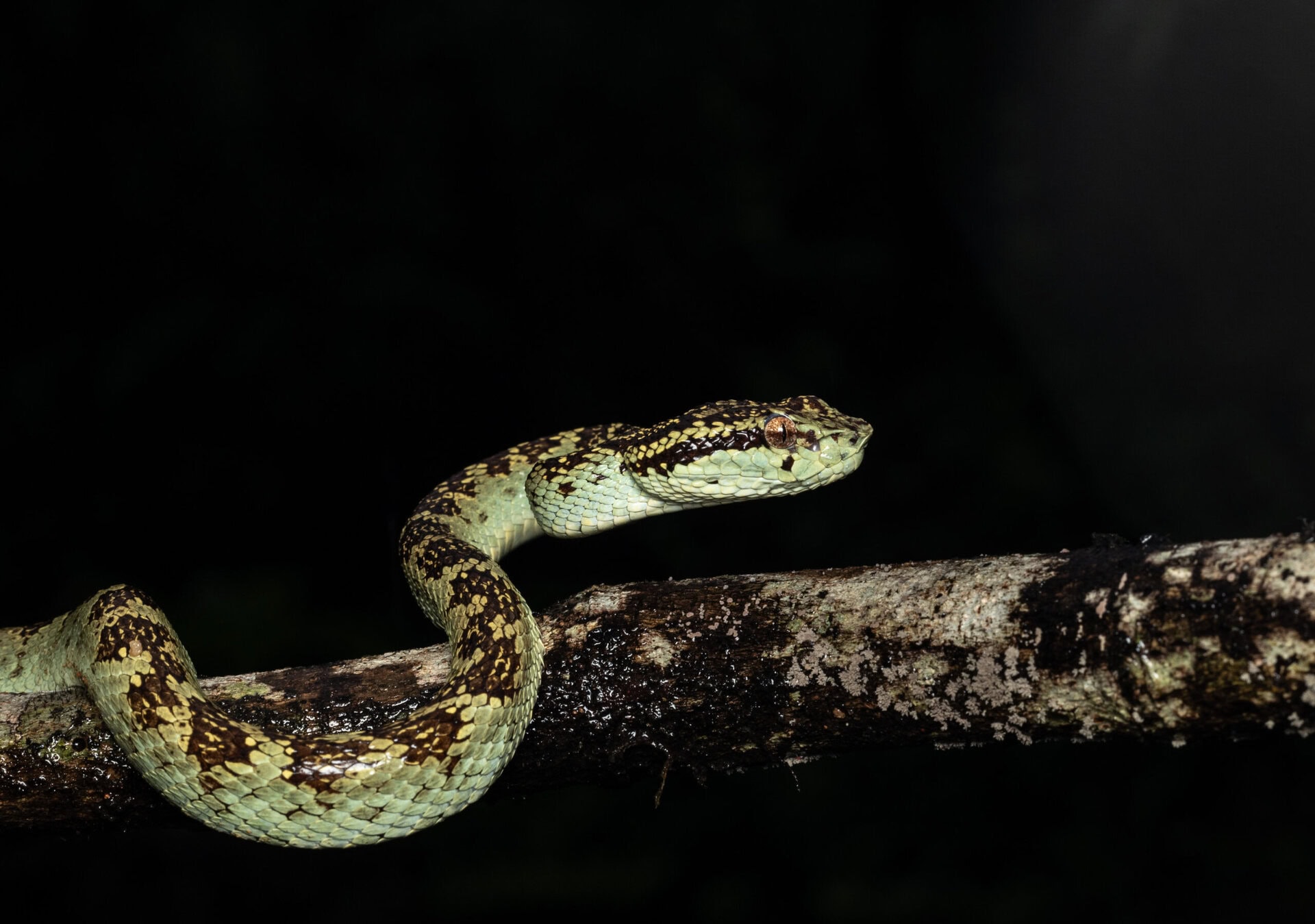
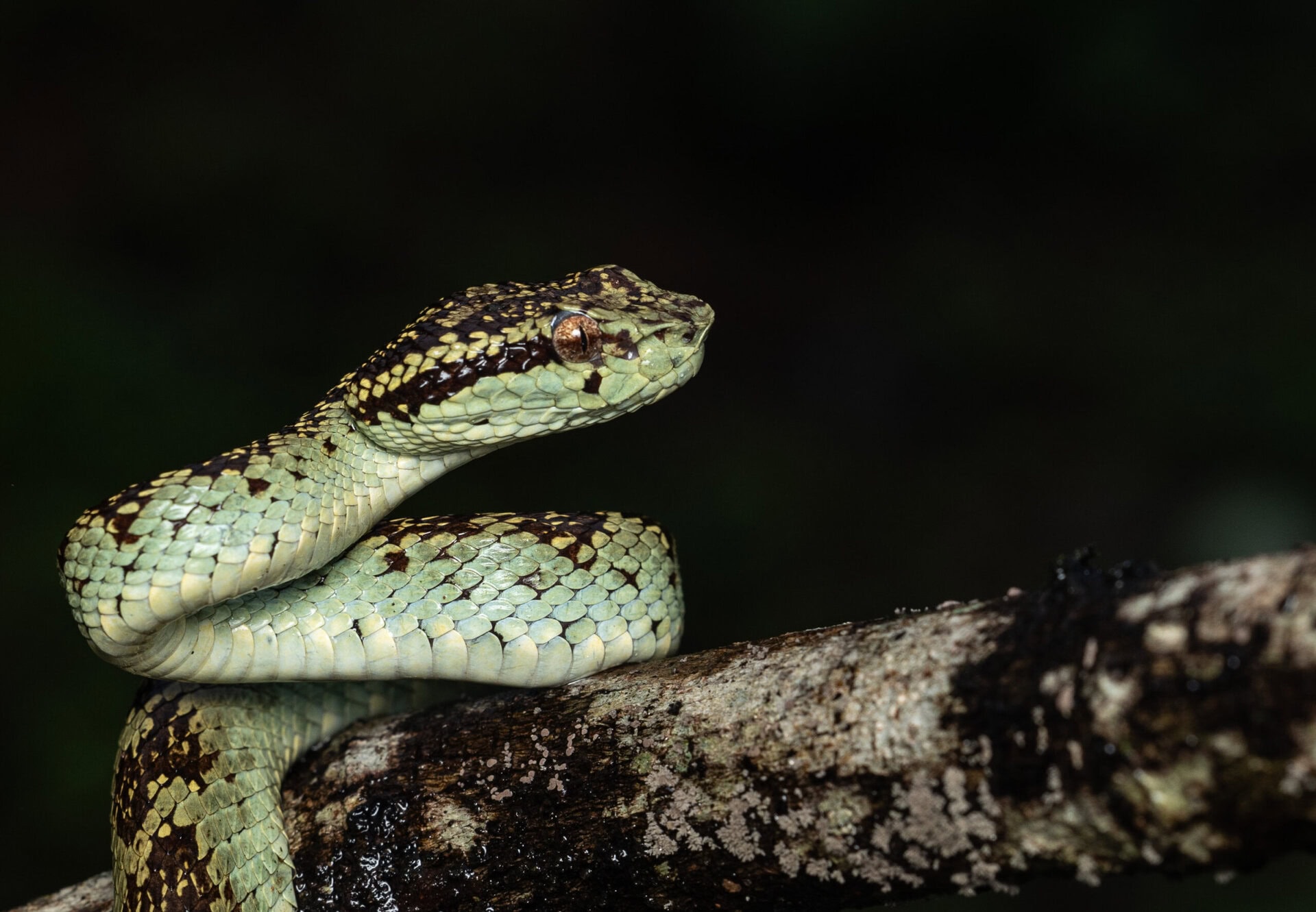
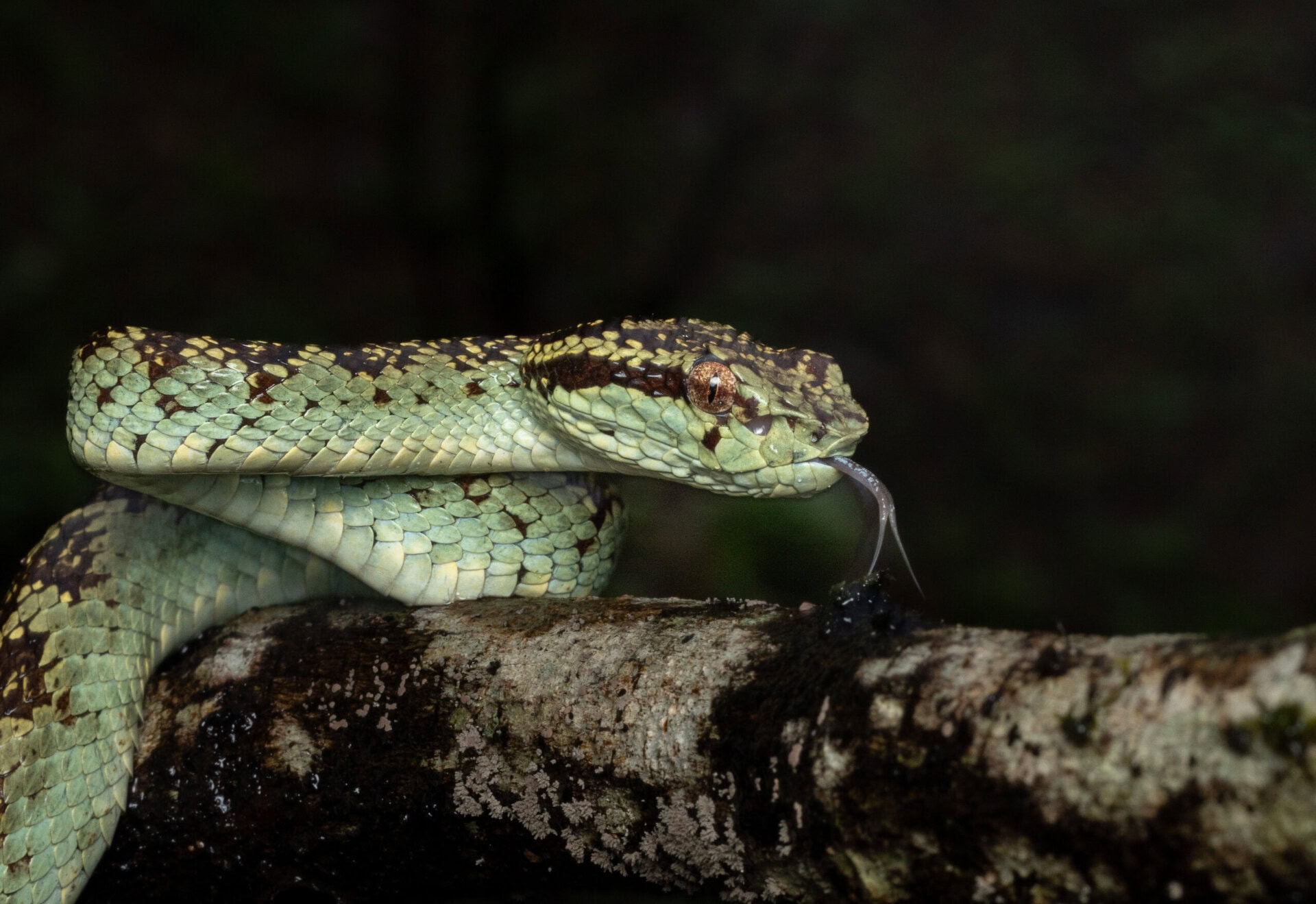
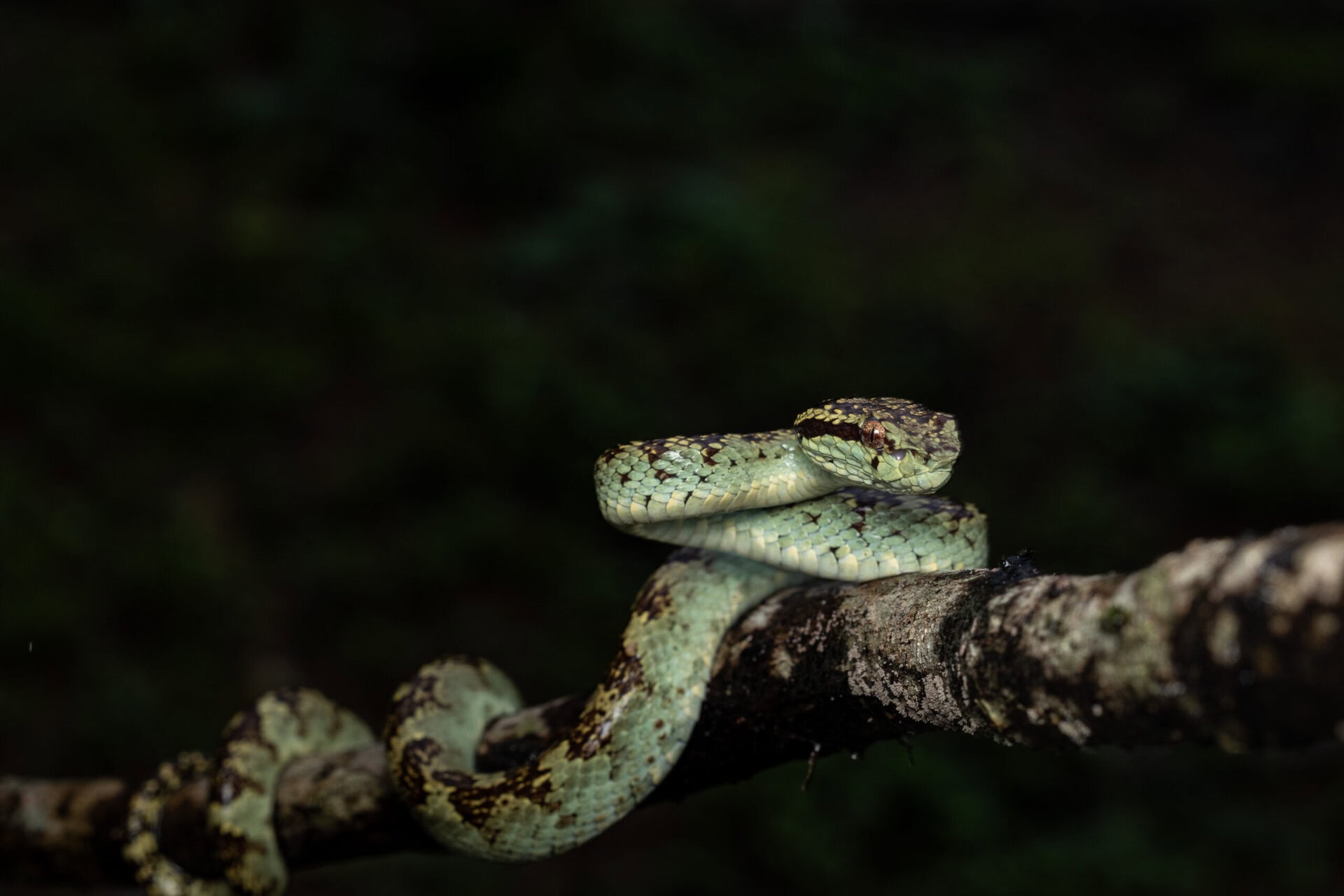
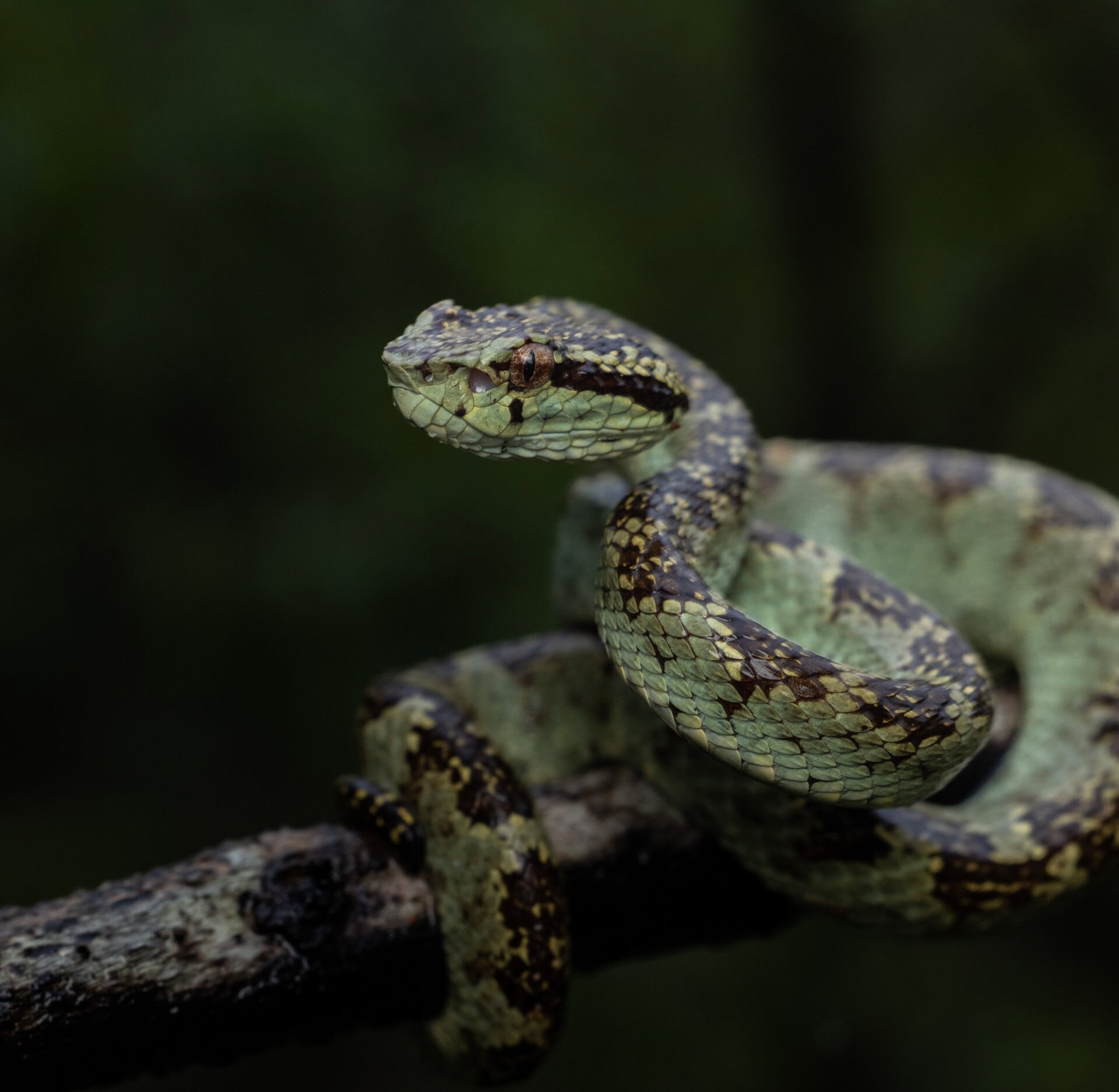
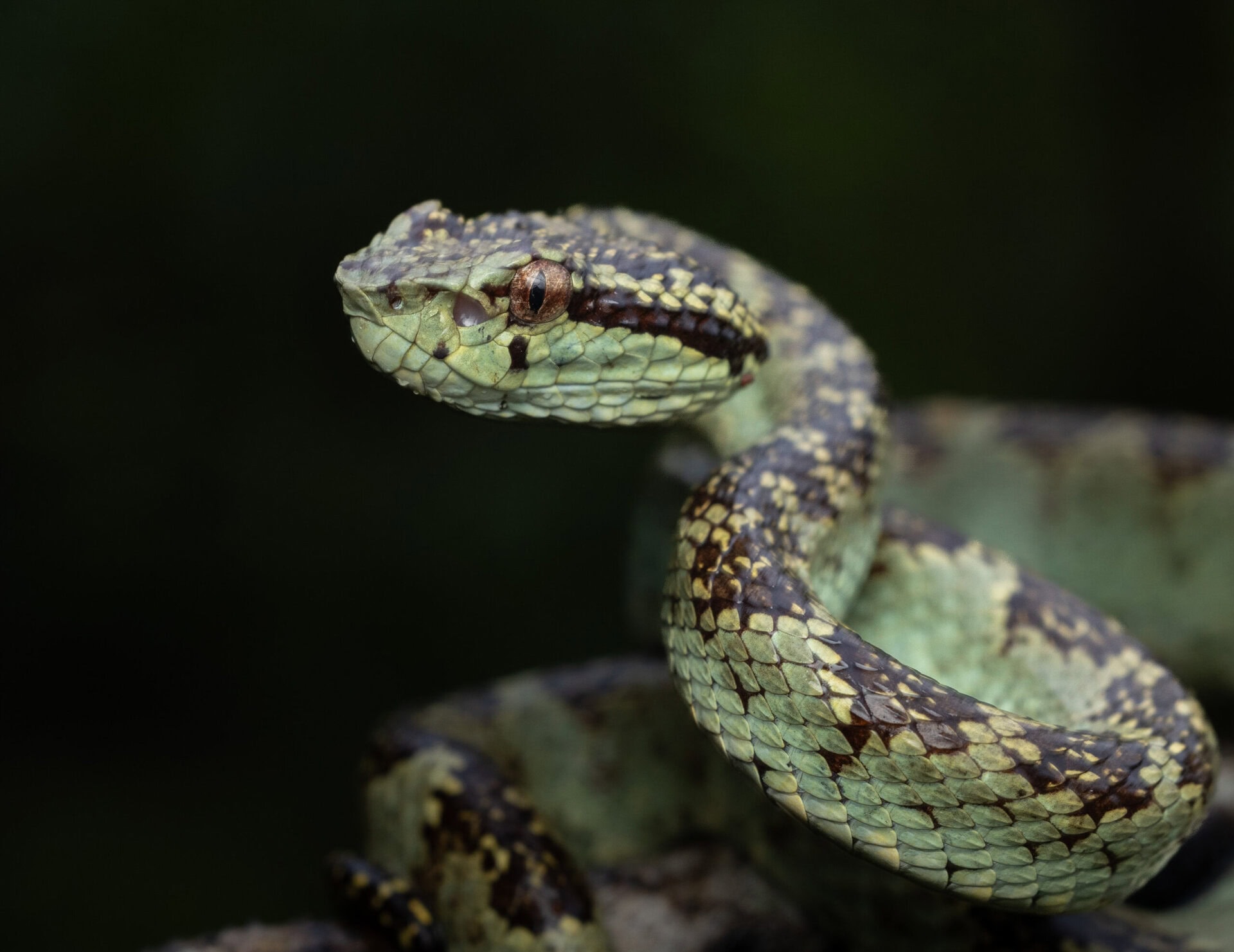
Malabar Pit Viper (Craspedocephalus malabaricus)
Craspedocephalus malabaricus, (formerly Trimeresurus malabaricus) commonly known as Malabar pit viper, Malabar rock pit viper, or rock viper, is a venomous pit viper species endemic to the High-moderate elevations of western ghats of southwestern India. Adults may attain a length of 105 cm. The malabar pit viper is slow-moving, but capable of fast strikes. Its venom causes moderate pain and swelling to humans. These symptoms subside in a day or two.
The Malabar pit viper is nocturnal and usually inactive in the day, sometimes seen basking on rocks or trees near streams. It is more commonly encountered during the monsoon months. The species preys upon frogs, lizards, nestling birds, musk shrews, mice and other small animals.
These are ambush predators which lie camouflaged waiting for prey. When the prey gets nearby, they strike.
The reason they are called pit vipers is that they have large heat-sensing pits on the face, unlike other vipers which are without this ability. These large heat sensing pits are located on each side of its head, between the nostril and the eye.
Malabar pit vipers are found in various colors (or morphs) like brown, green, and yellow. We were able to spot the brown and green morphs, but did not spot the yellow morph.
Below are various pictures of the brown morph and green morph. I got only one picture of the brown morph, but several pictures of the green morph.
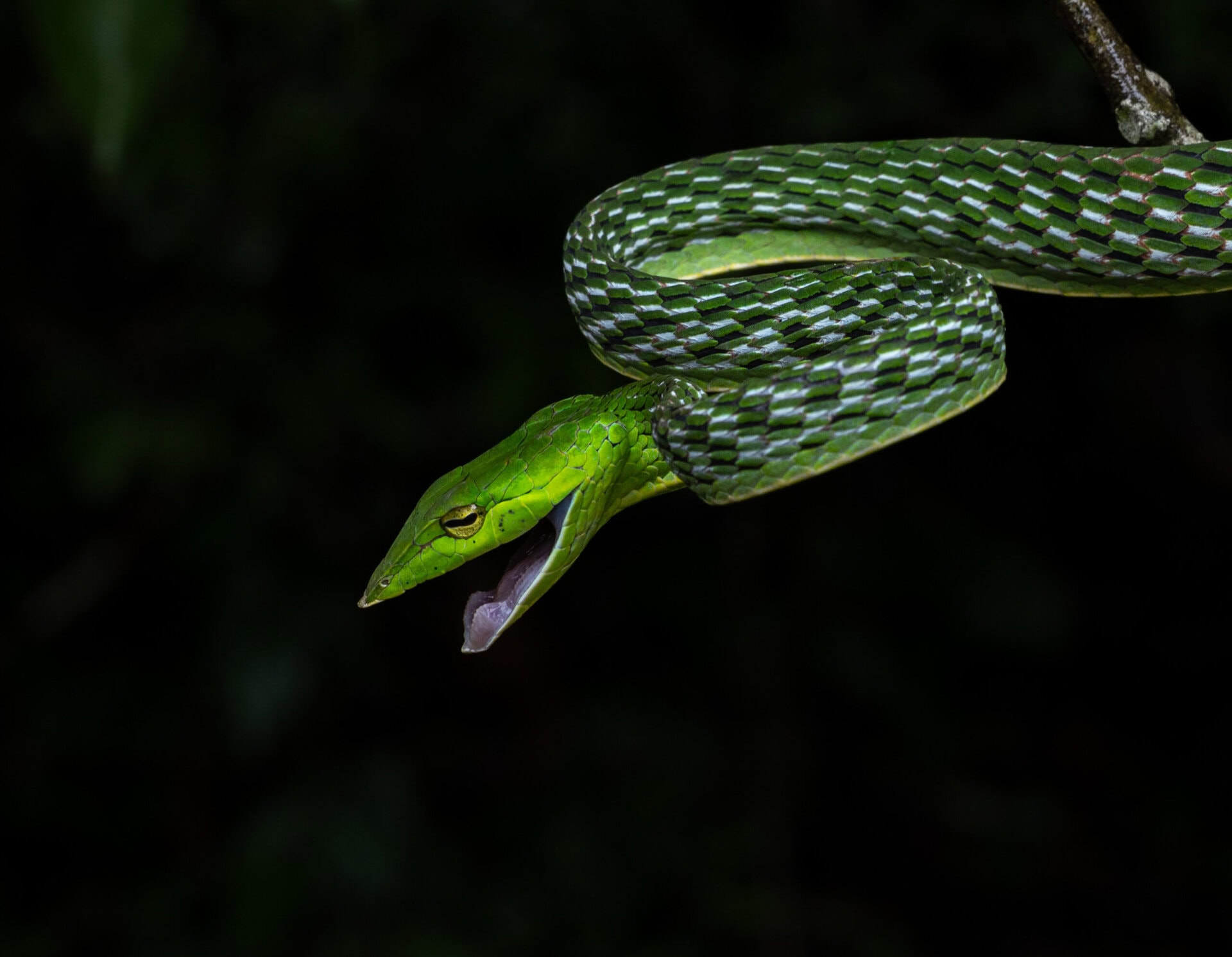
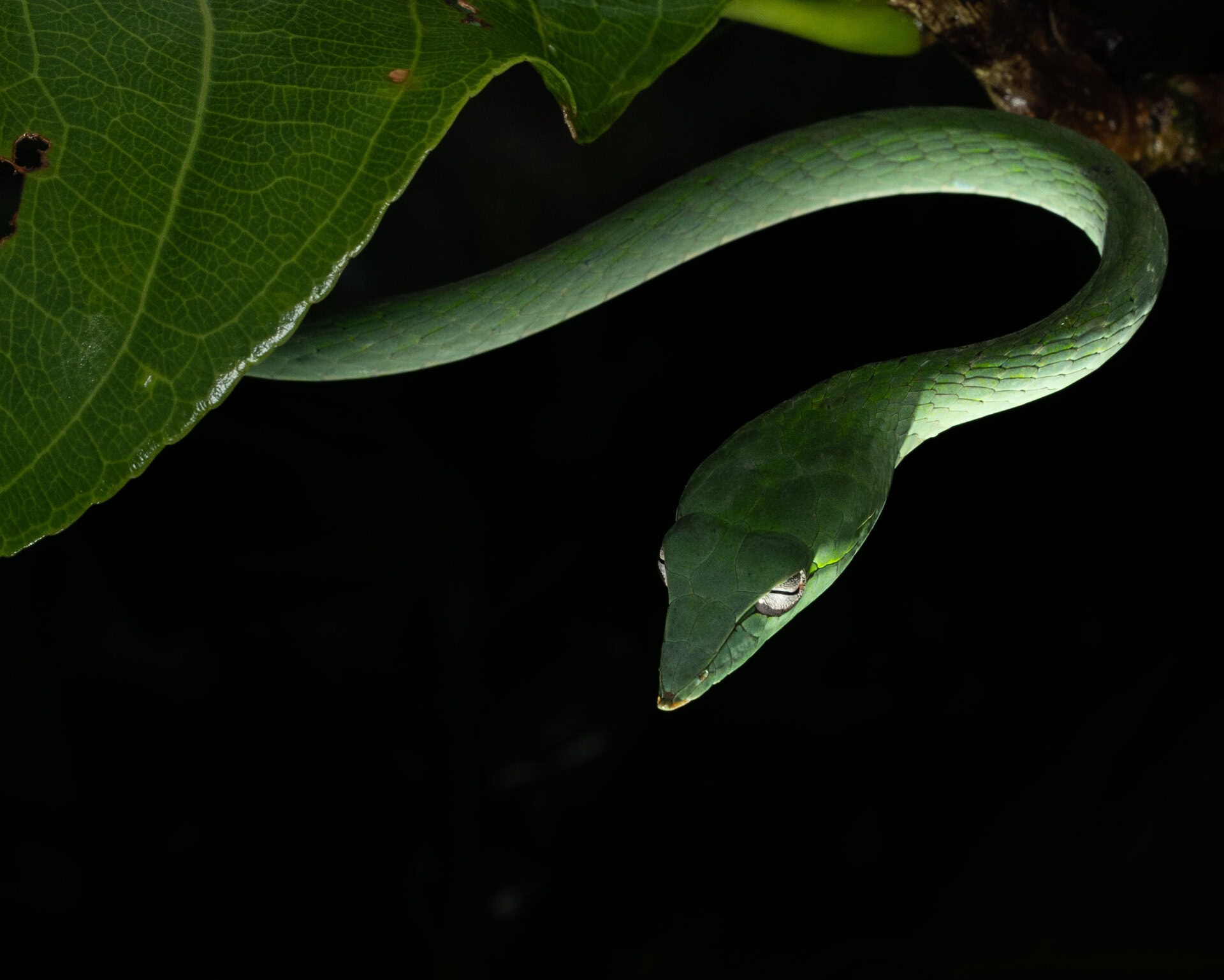
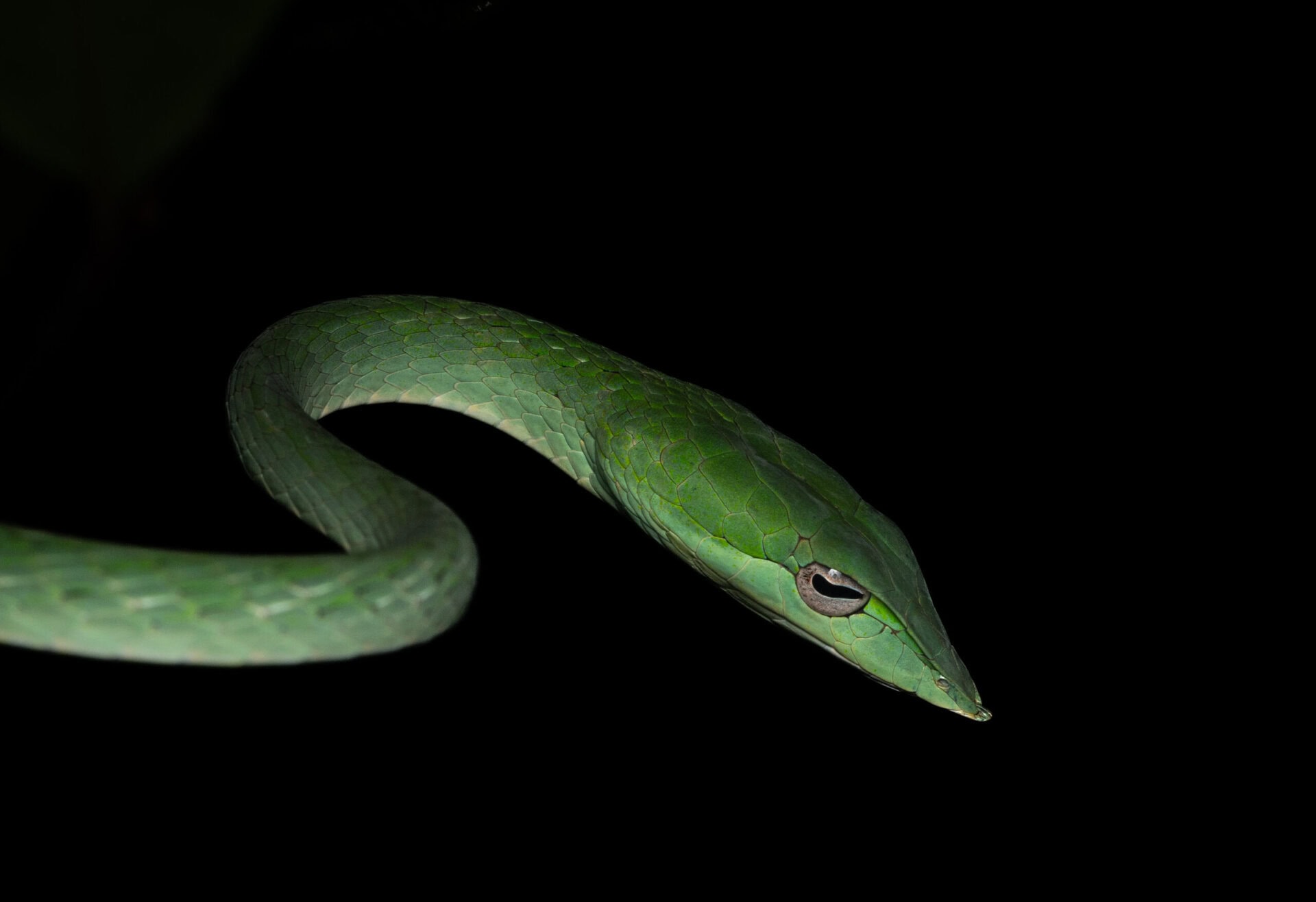
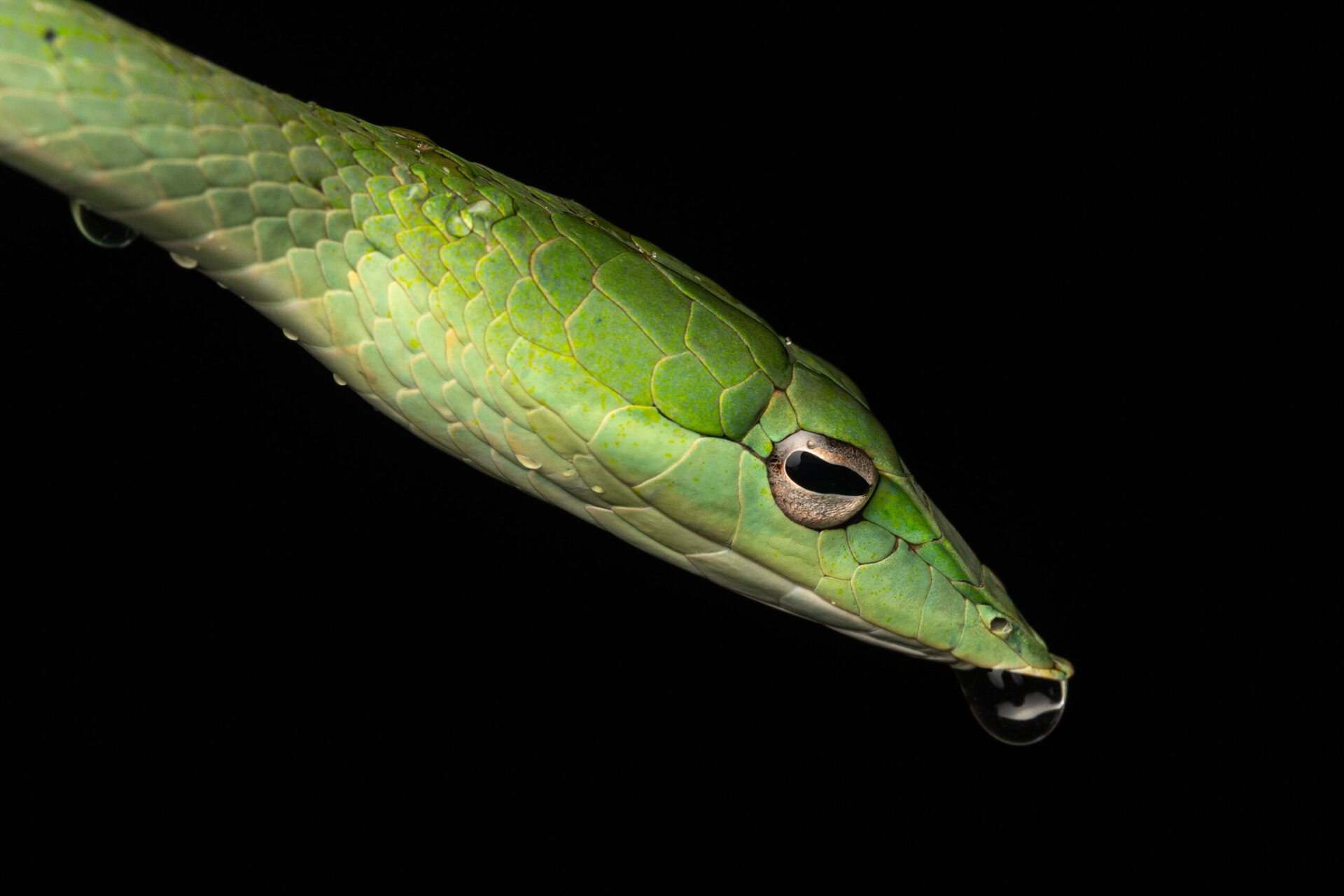
Green Vine Snake (Ahaetulla nasuta)
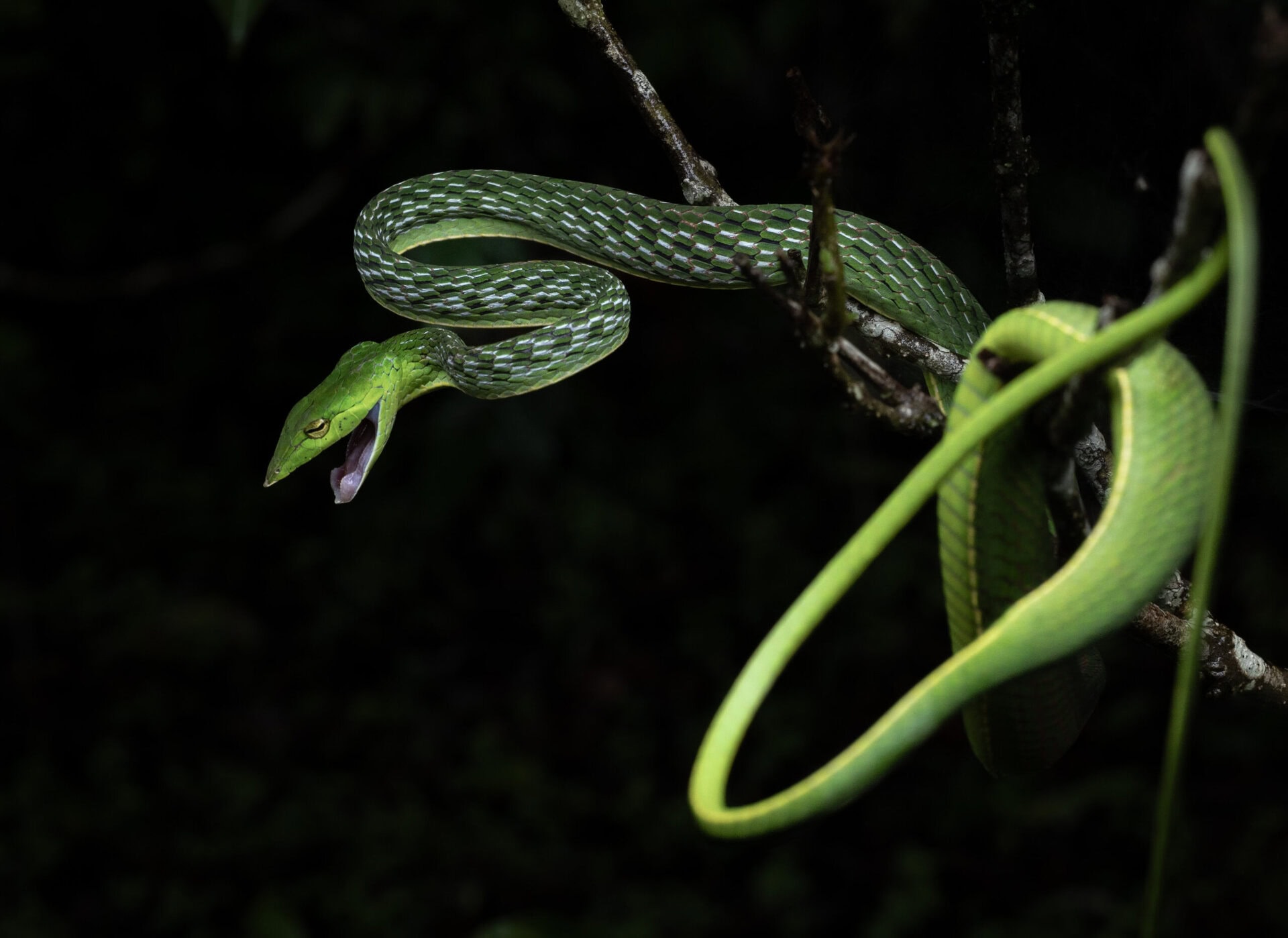
Ahaetulla nasuta, also known as Sri Lankan green vine snake and long-nosed whip snake, is a venomous, slender green tree snake endemic to Sri Lanka. 4 populations from the Western Ghats of India that were formerly grouped with A. nasuta were split into the species A. borealis, A. farnsworthi, A. isabellina, and A. malabarica.
Common vine snakes are diurnal (active during day), arboreal (living in trees), and mildly venomous. They normally feed on frogs and lizards using their binocular vision to hunt. They are slow moving, relying on camouflaging themselves as vines in foliage.
They expand their bodies when disturbed to show a black and white scale marking. Also, they may open their mouths in a threat display and point their heads in the direction of the perceived threat. They are the only species of snake with horizontal pupils, compared to the normal vertical slit pupils found in many species of viper.
We spotted three individual vine snakes during our field trip. Two of them displayed open mouth and the black and white scales, whereas third one was quite calm. When the snakes opened their mouths, Mr. Vipul asked us to wait some time for them to calm down. But when they did not calm down, we stopped photographing them and moved on. The third one we found in the evening did not display any aggression and remained calm and we were able to spend some time shooting. Following are the pictures of the green vine snake.
Snake #1 which did not calm down and remained with open mouth. Notice the black and white pattern in the scales.
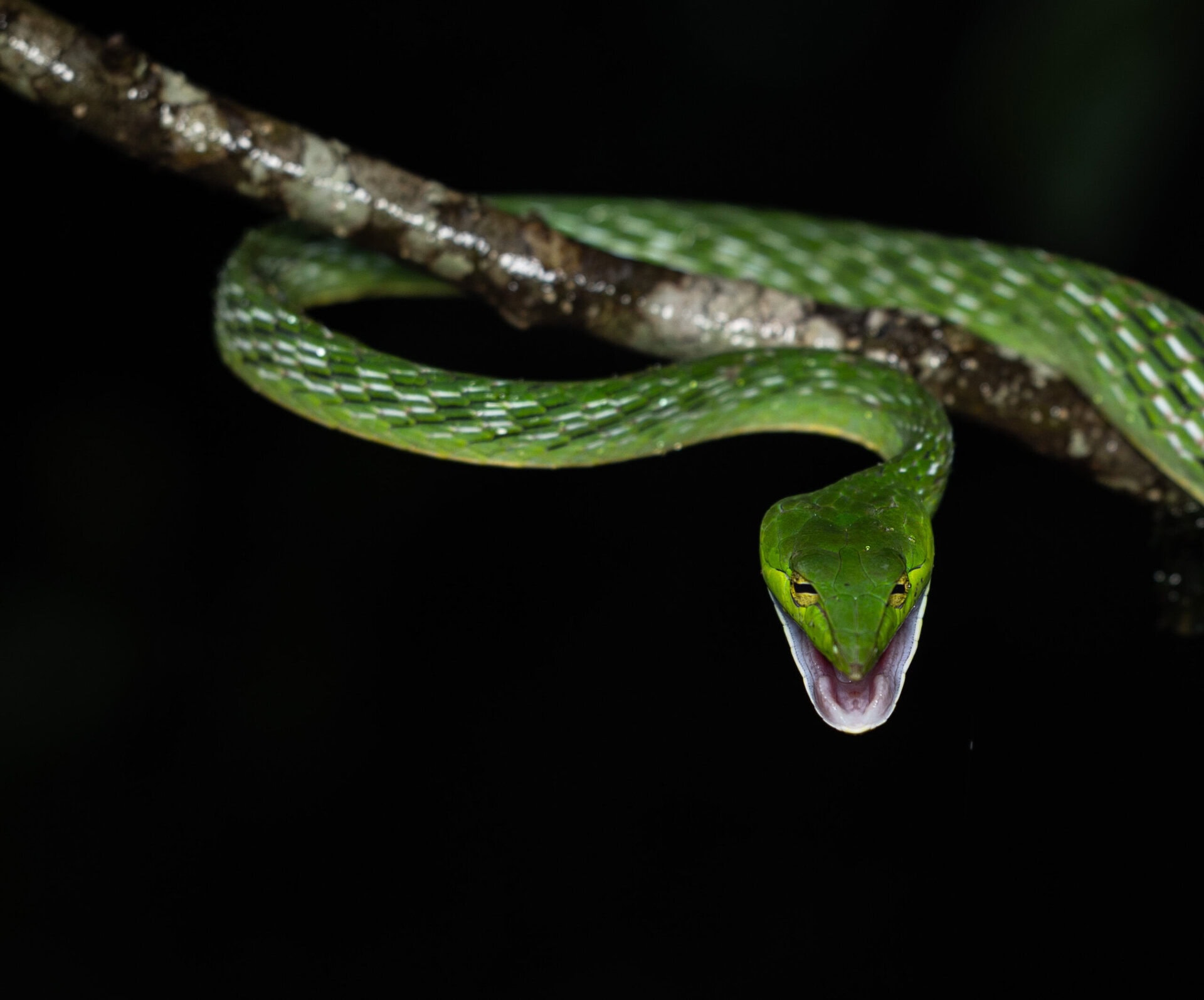
Snake #2 which initially had its mouth open, but closed its mouth as we moved away and waited for some time. Notice the black and white pattern in the scales.
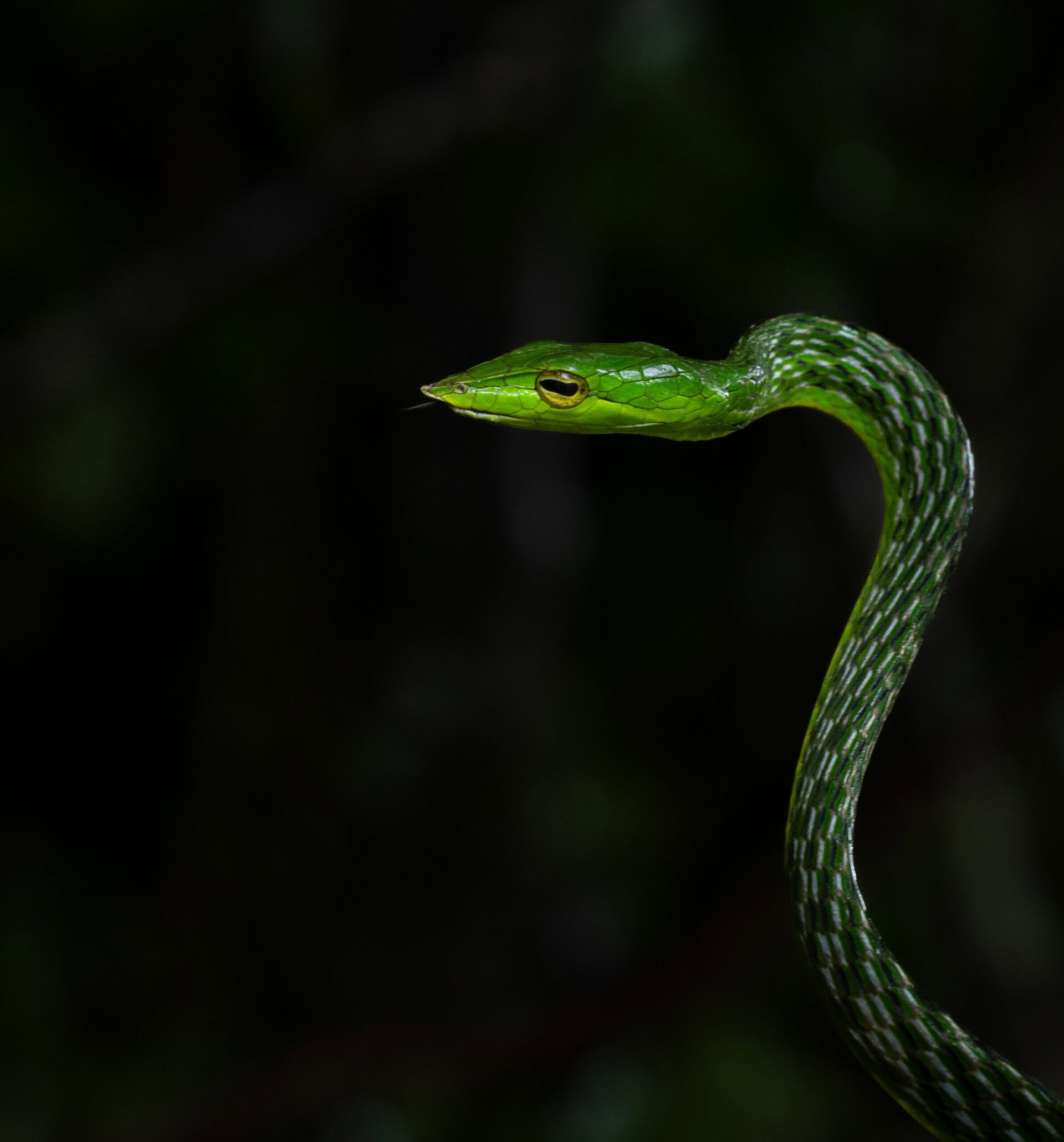
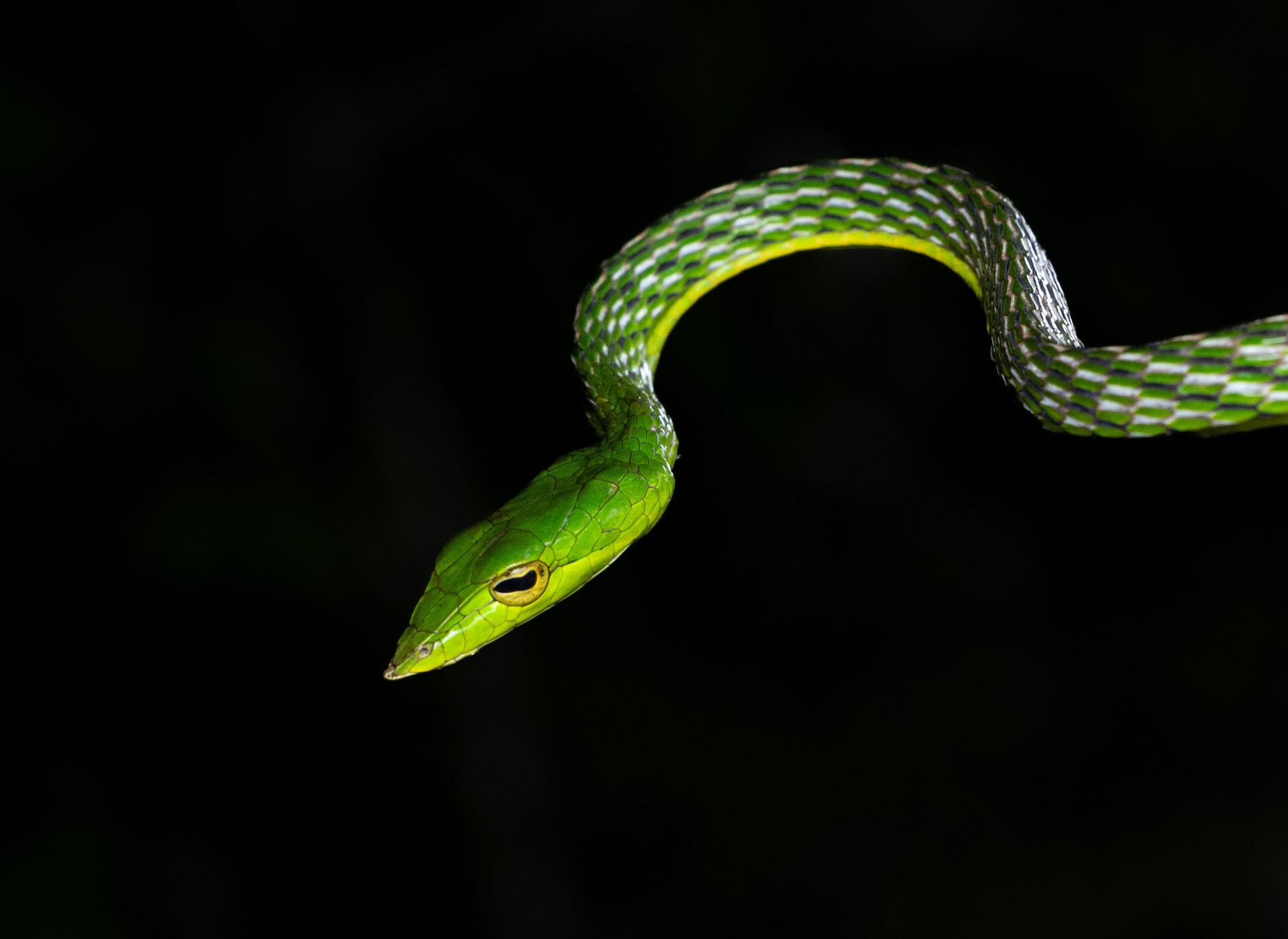
Snake #3 which remained totally calm, with its mouth closed and not displaying the black and white scales.
Frogs, Lizards and Insects
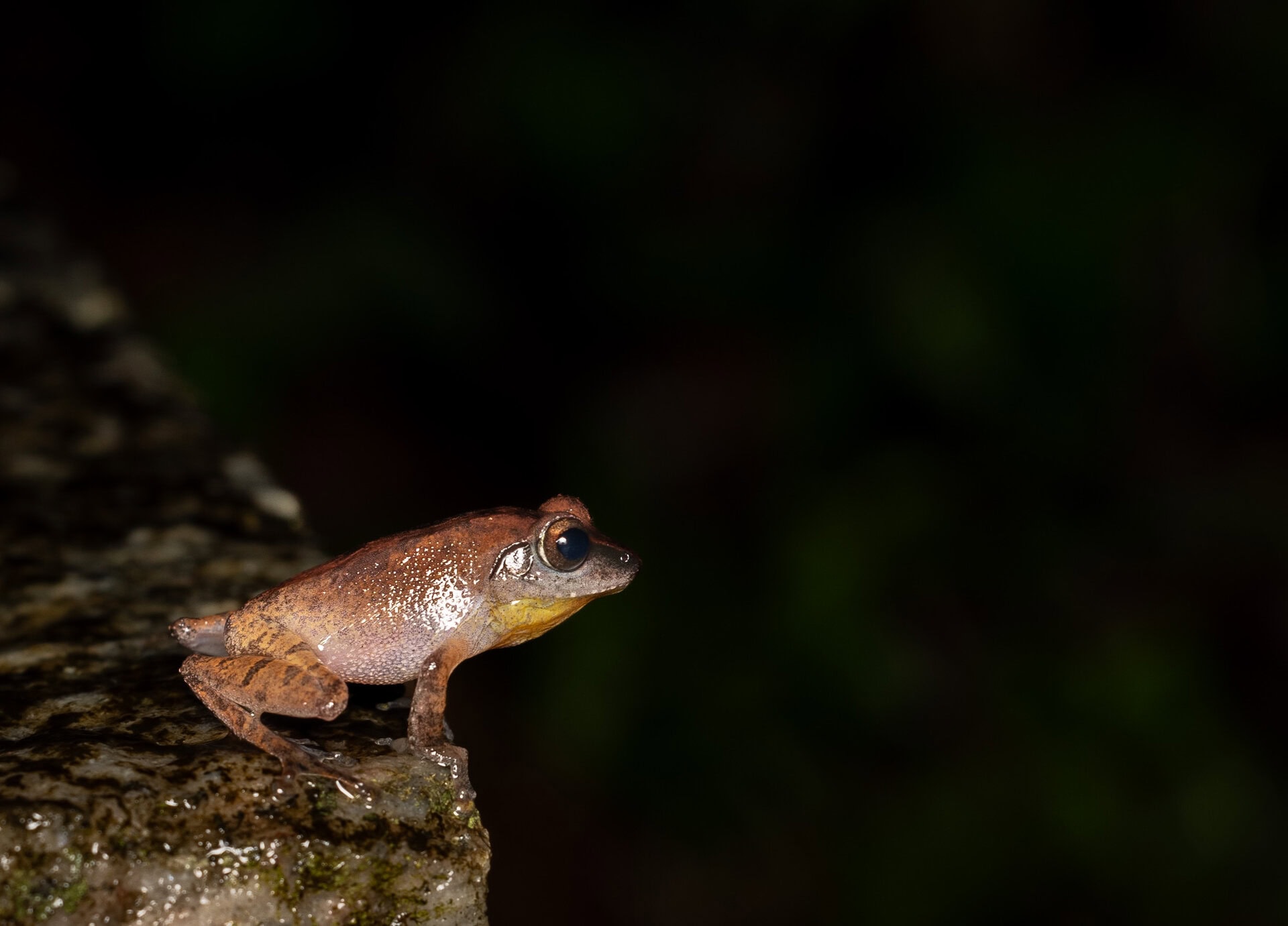
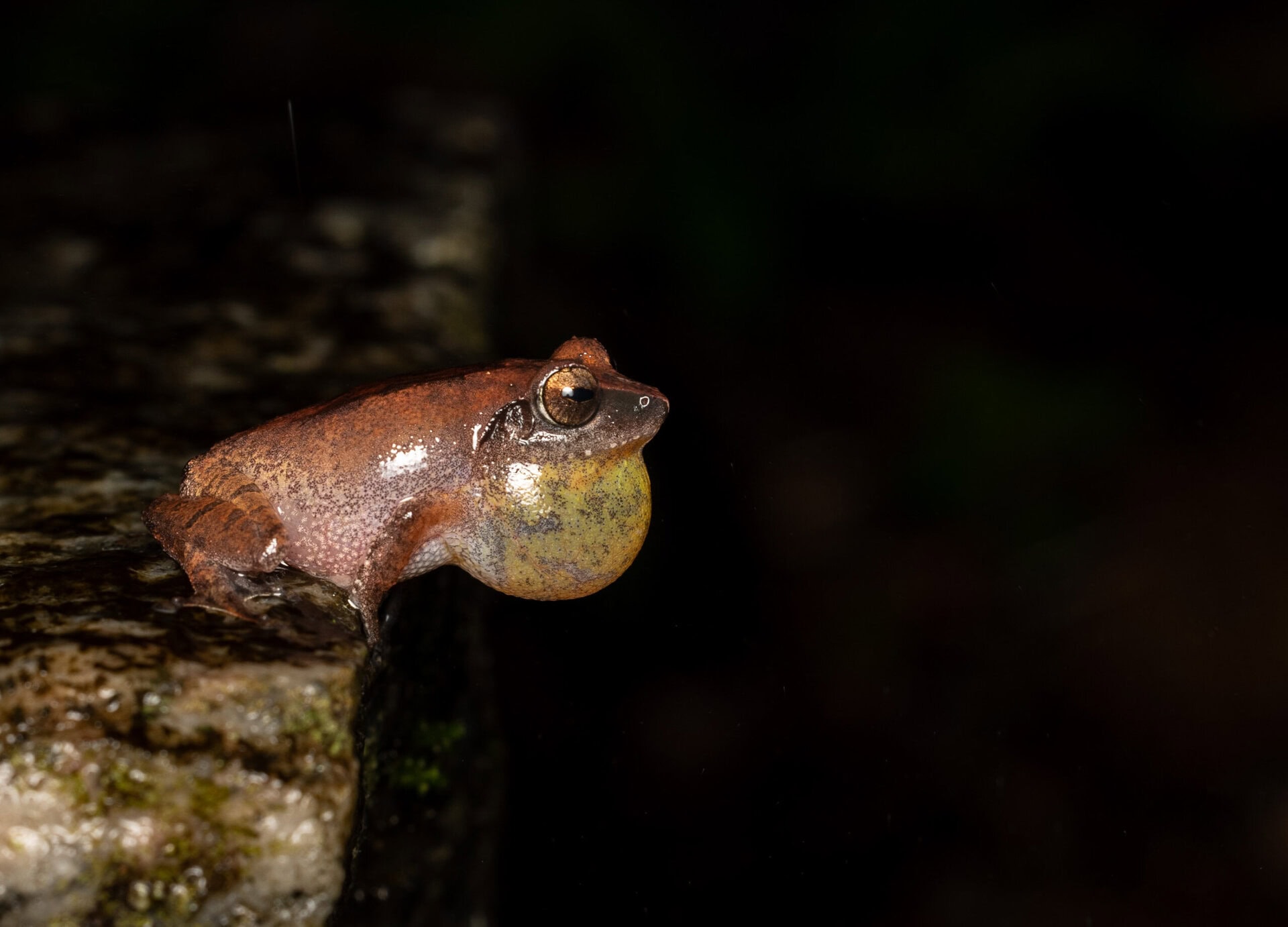
Wayanad Bush Frog (Pseudophilautus wynaadensis)
Pseudophilautus wynaadensis, commonly known as the Wayanad bush frog, common bush frog, jerdon’s bush frog, plain-colored bush frog, Malabar coast frog, or dark-eared bush frog, is a species of frog in the family Rhacophoridae. It is endemic to the Western Ghats of southwest India. The frogs are about 28mm long in males and 33mm long in females.
The male frogs have a sac below their mouth which they fill with air and produce their mating call by releasing this air.
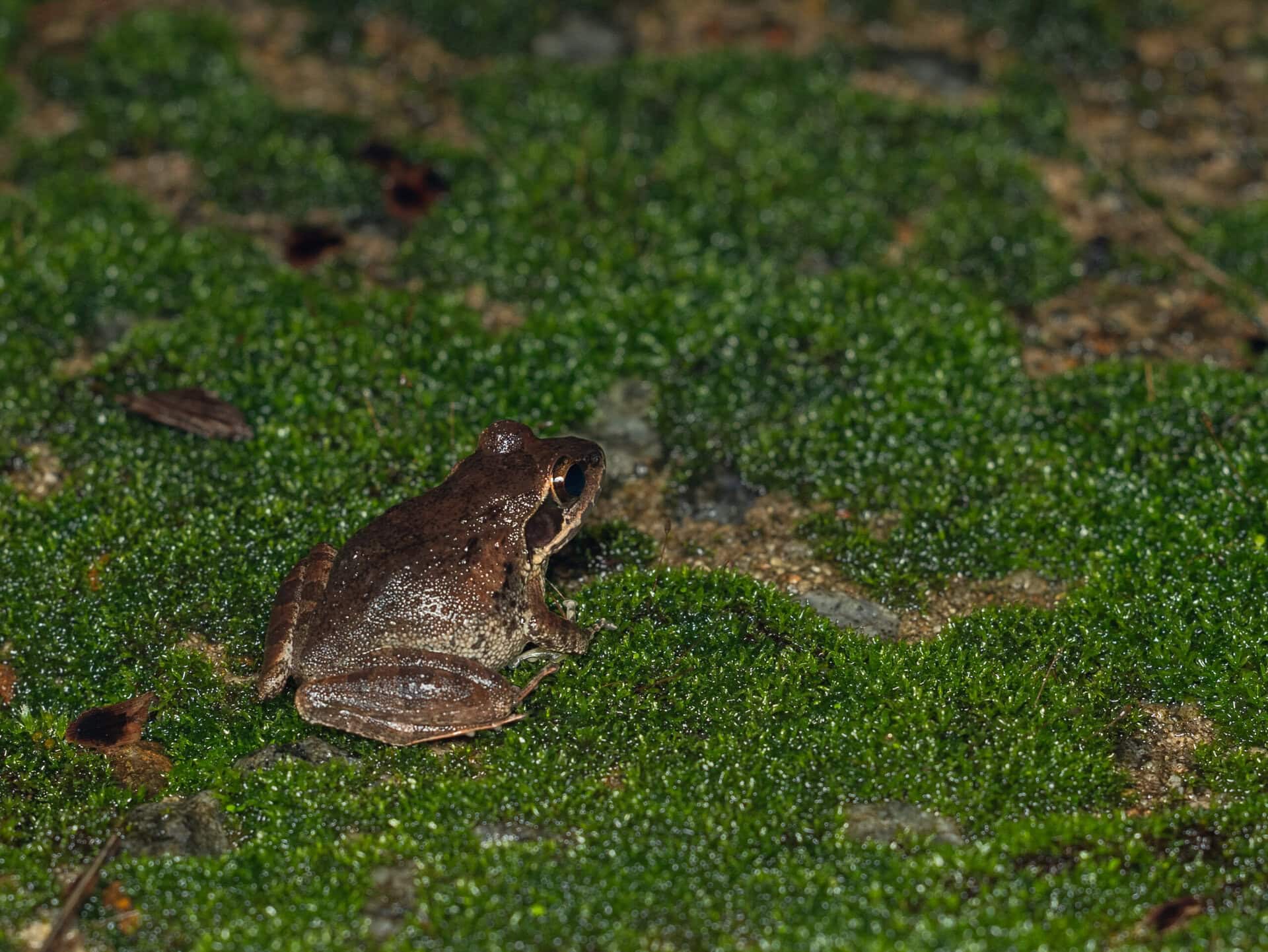
Leaping Frog (Indirana leithii)
Indirana leithii (Leith’s leaping frog, Leith’s frog, Boulenger’s brown frog, Matheran leaping frog, or Matheran Indian frog) is a species of frog in the family Ranixalidae. It is endemic to the northern Western Ghats of India. Adult males measure 19–29 mm and adult females 24–36 mm in snout–vent length.
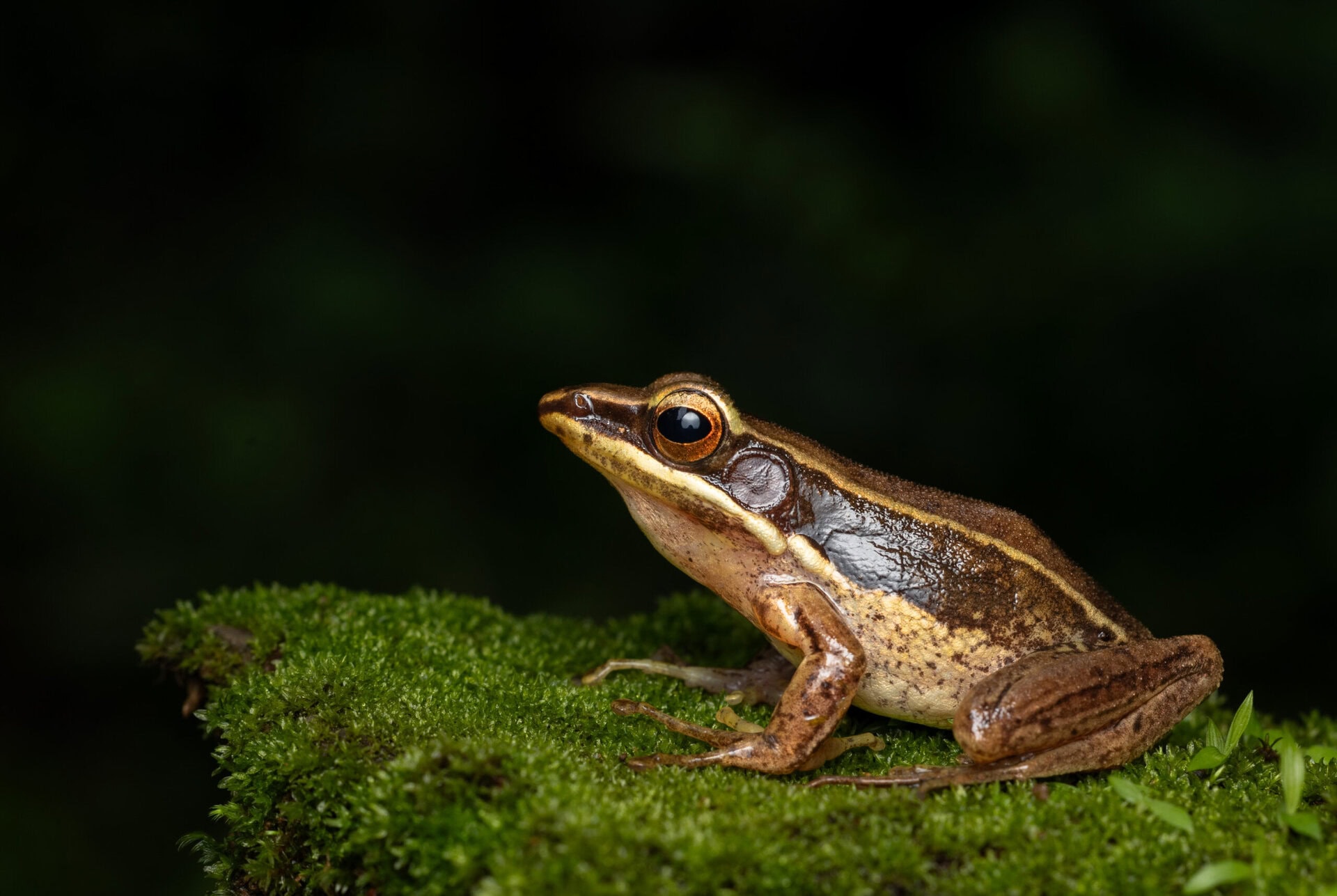
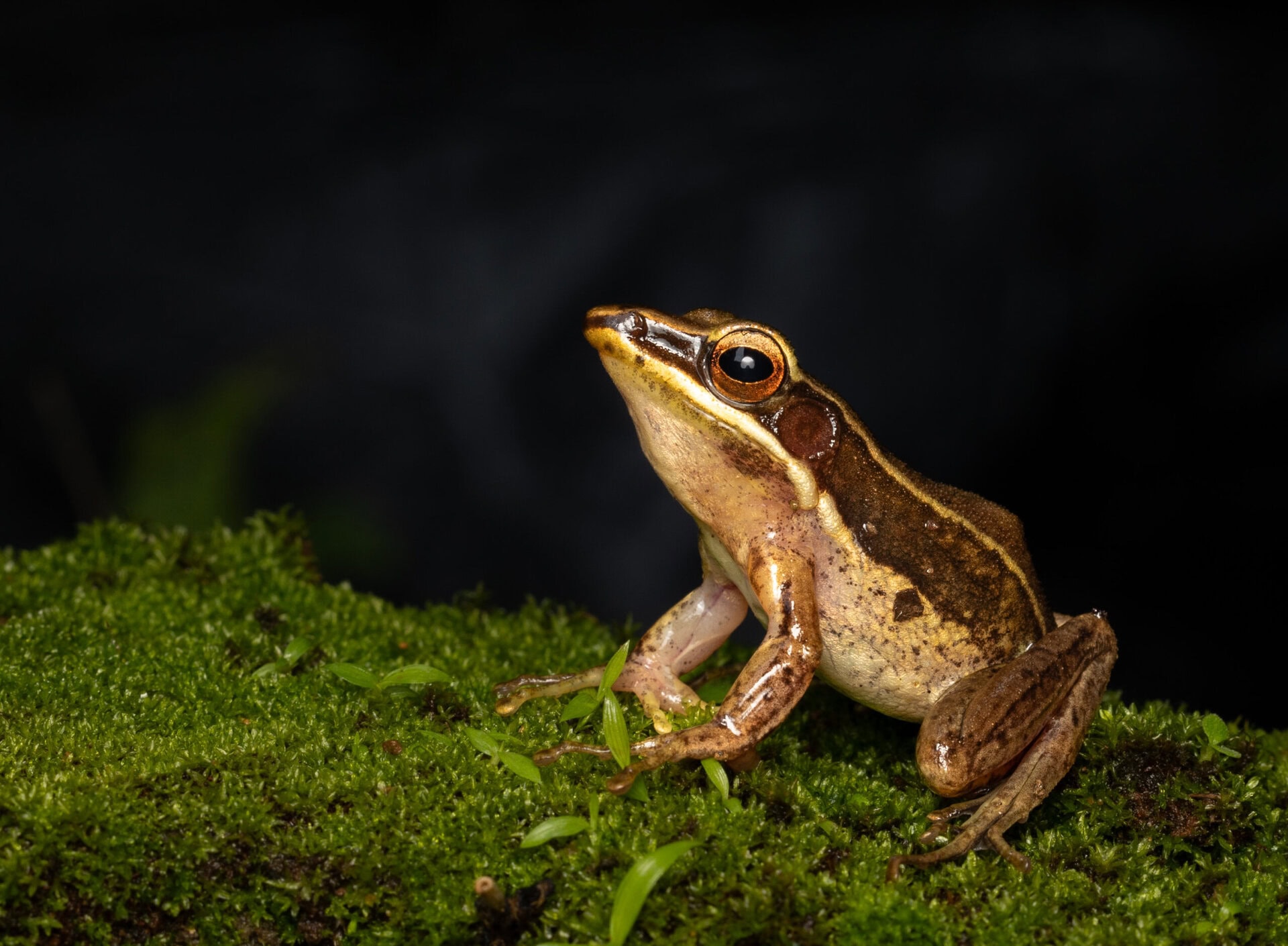
Golden frog (Indosylvirana aurantiaca)
Indosylvirana aurantiaca, commonly known as the golden frog, is a species of frog endemic to the Western Ghats of India. The species is also known as the Trivandrum frog, the common wood frog, or the small wood frog. Golden frogs are small to medium-sized frogs. Mature males grow to 32 to 55.7 mm. Females are larger, growing to 62.6 mm long.
Golden Frogs are partially arboreal (living in trees) and partially aquatic (living in water). Typically found tropical wetlands, moist and swamp forest, and coastal regions, larvae are often found in running water while adults rest on rocks and other objects in and around bodies of water. From hatching to metamorphosis takes approximately 60 days, and they can be distinguished by observing dark bands on their hind limbs. They are normally nocturnal (active in night), though they can become active during light rains in the daytime (the one we found was during daytime).
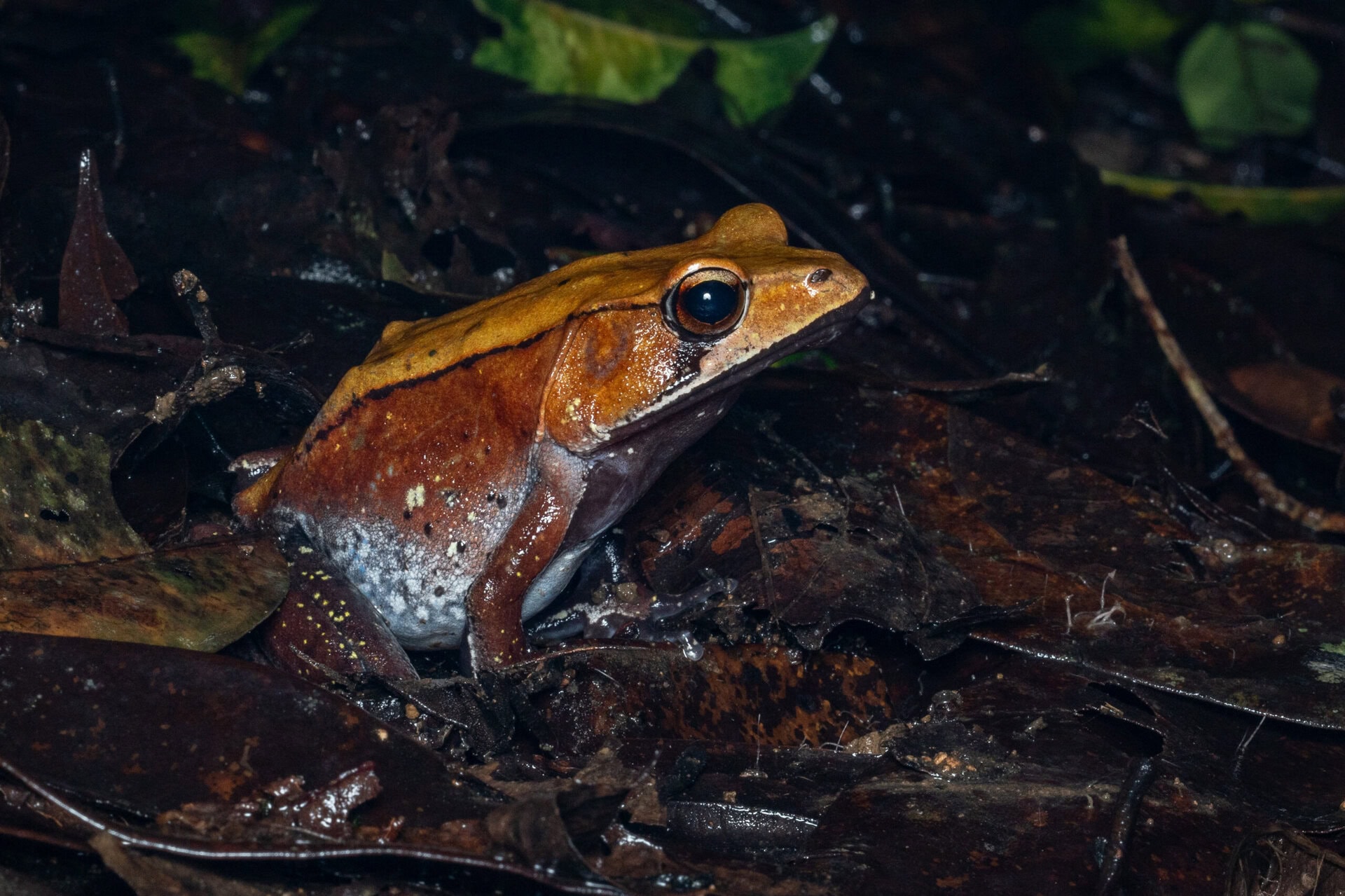
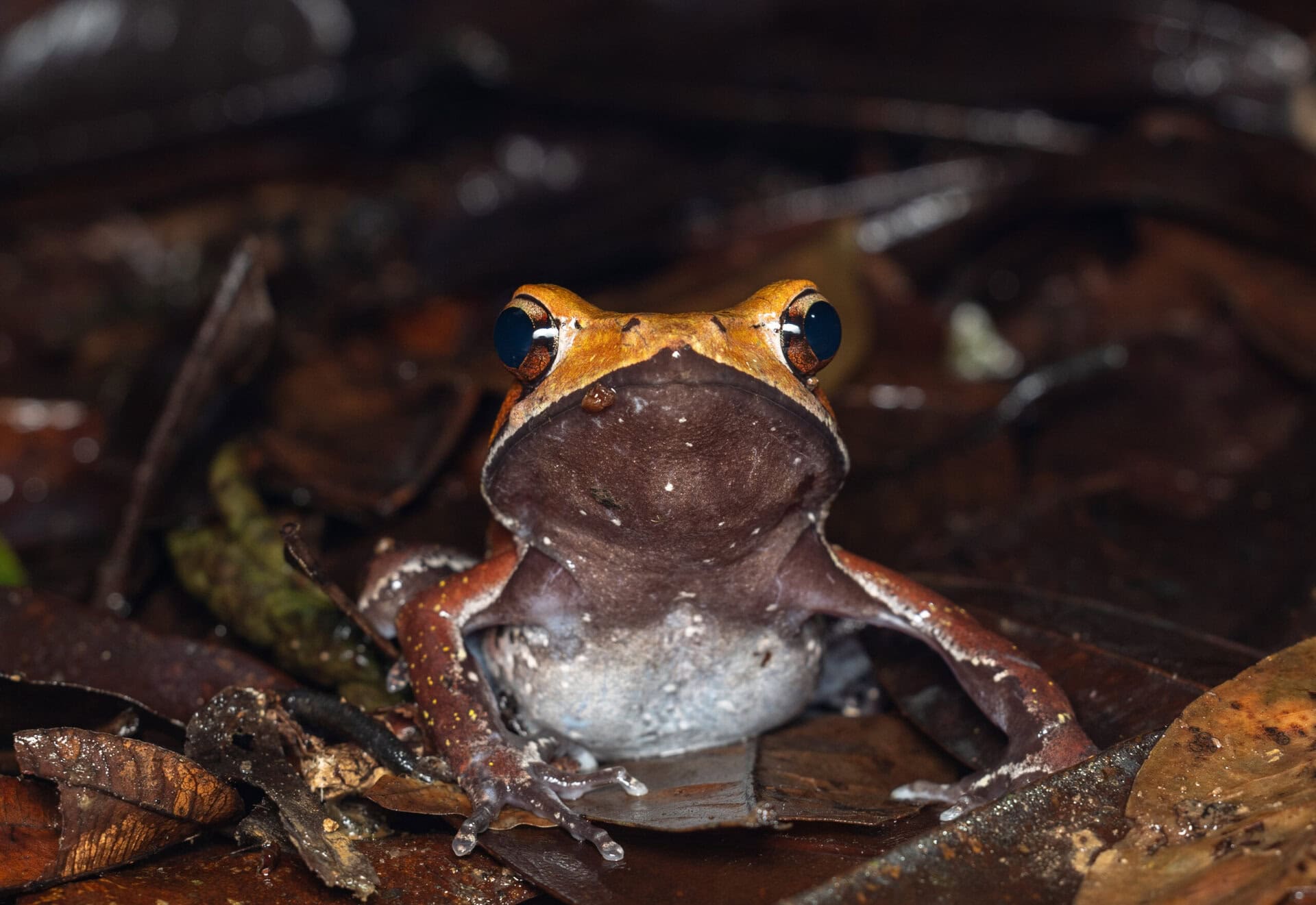
Bicolored Frog (Clinotarsus curtipes)
The bicolored frog or Malabar frog (Clinotarsus curtipes) is a species of frog endemic to the Western Ghats of India. The tadpoles of the species are black and form dense and compact schools in slow moving streams in forested areas.
Indian Day Gecko (Cnemaspis indica)
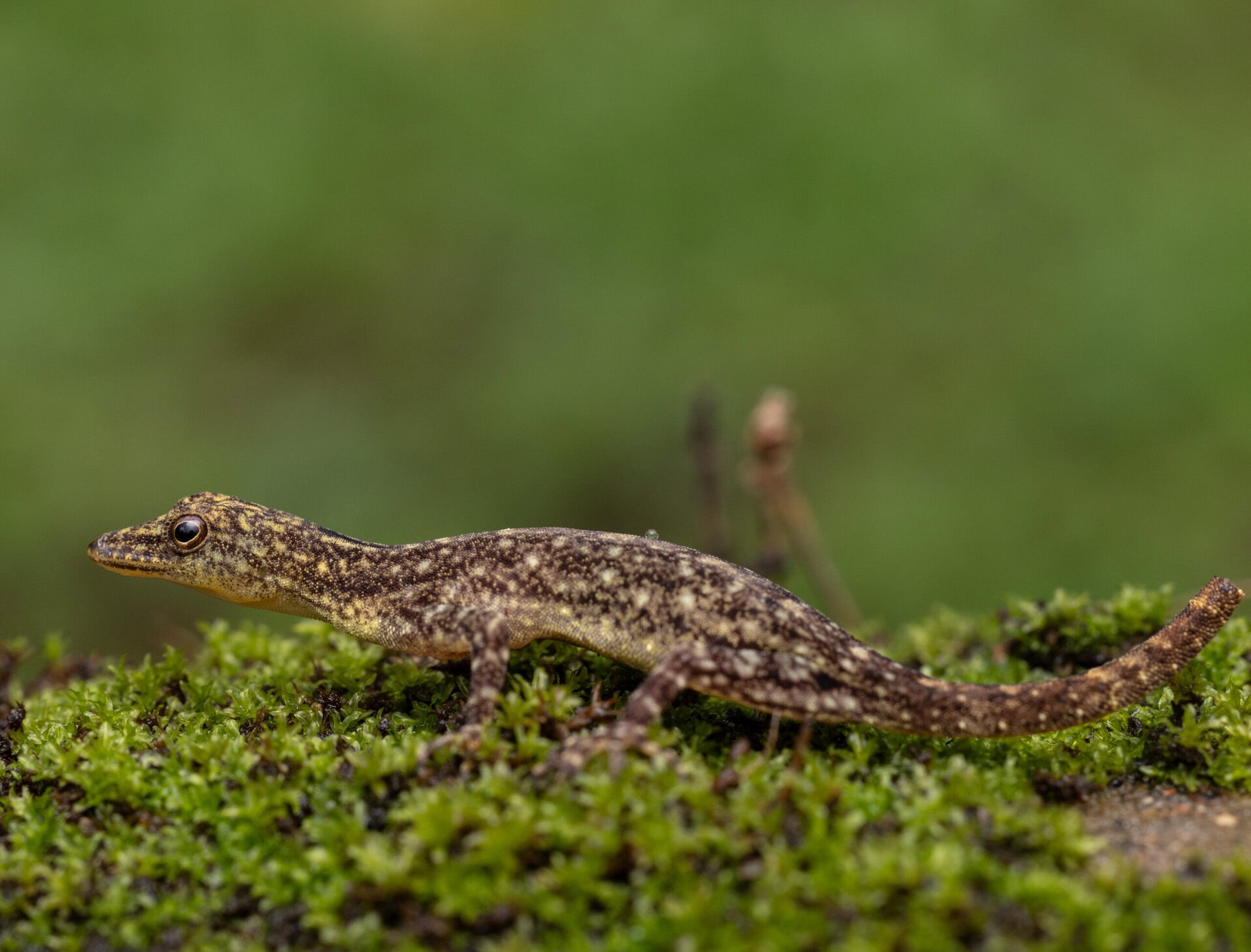
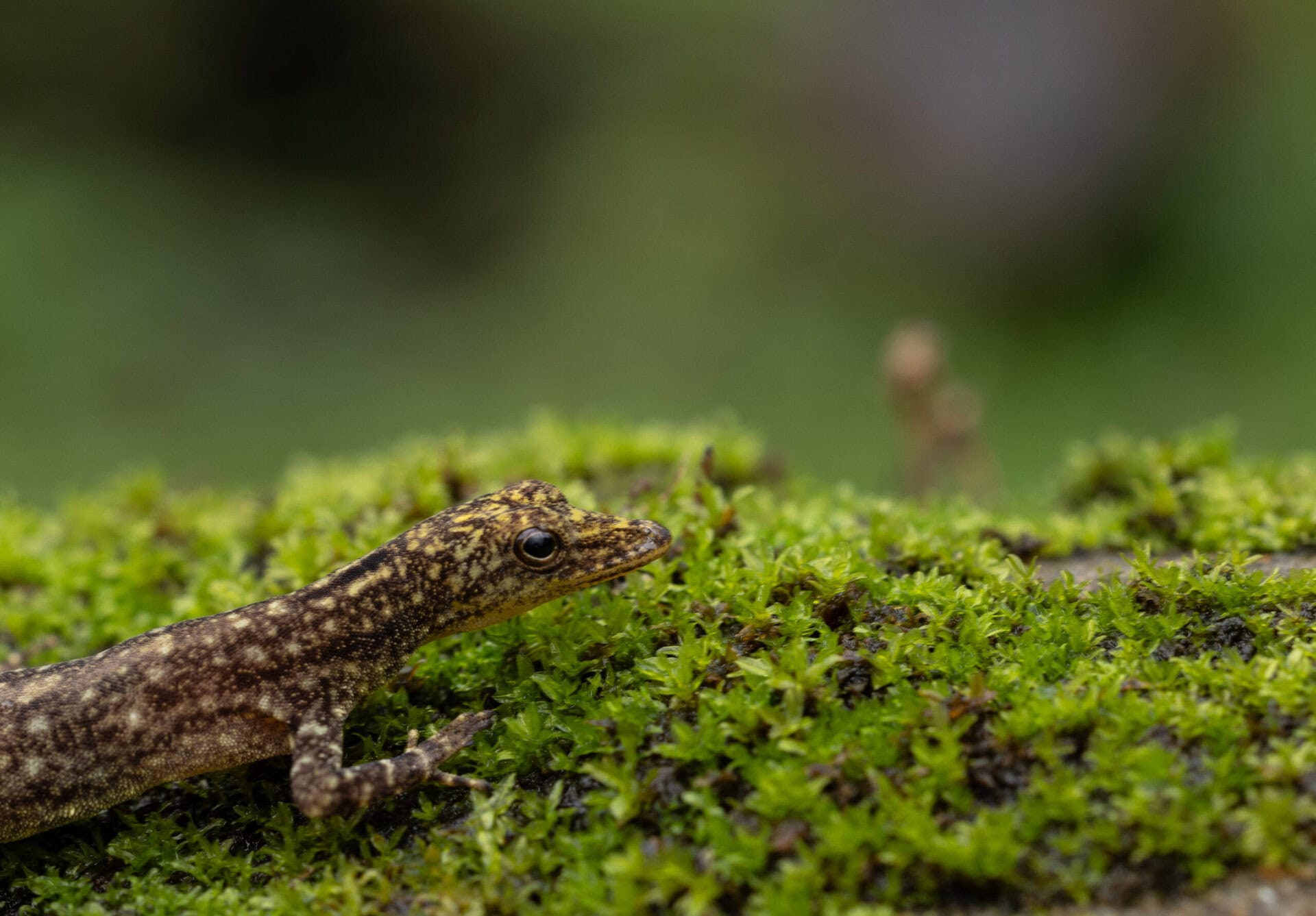
The Indian day gecko or Nilgiri dwarf gecko (Cnemaspis indica) is a species of diurnal and insectivorous, rock-dwelling gecko found in the high elevation grasslands and montane forests of the Western Ghats ranges in South India.
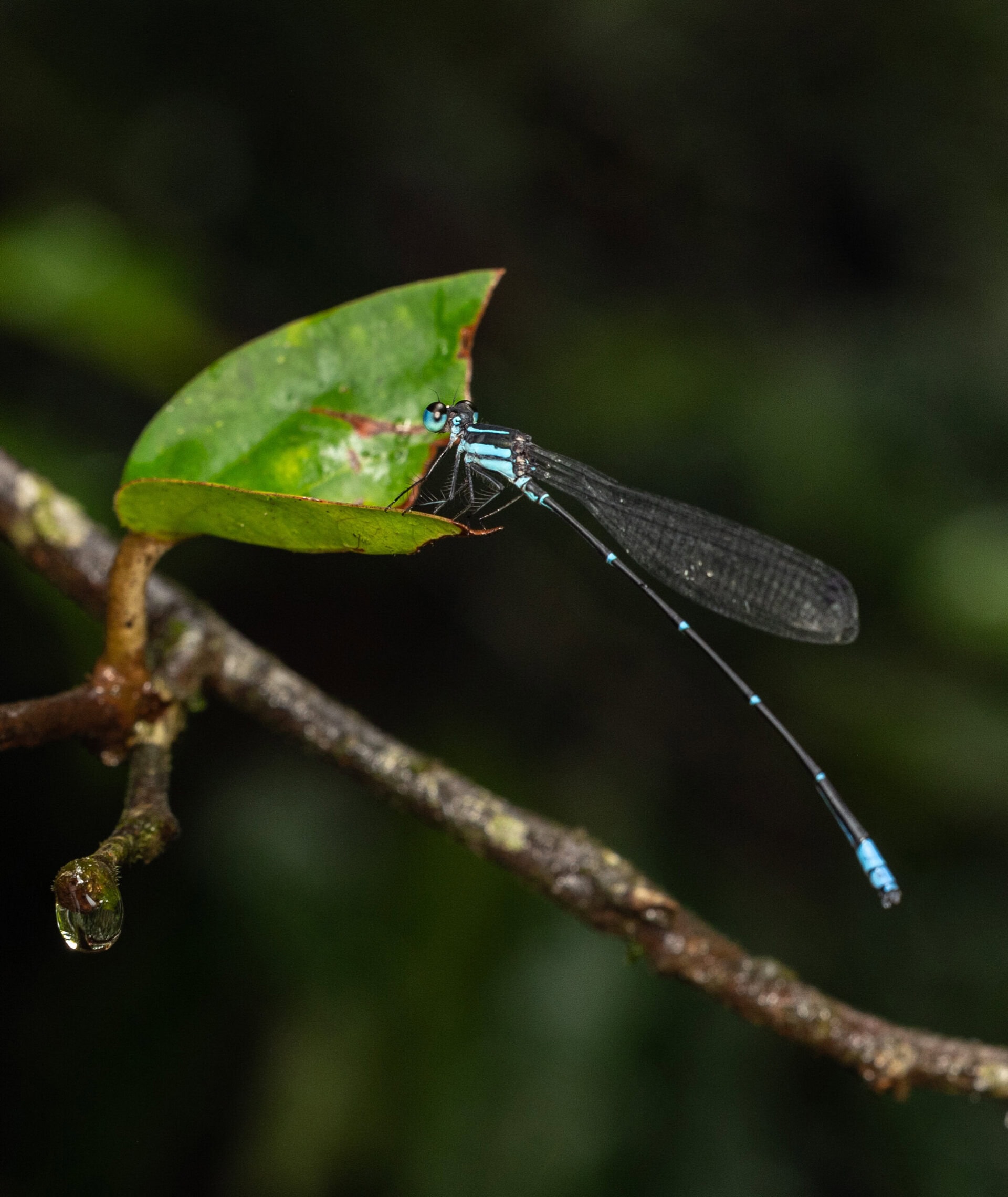
Blue River Damsel (Pseudagrion microcephalum)
The blue riverdamsel, Pseudagrion microcephalum is a common species of damselfly in the family Coenagrionidae. It is also known as the blue sprite and blue grass dart. It is a medium-sized damselfly with pale blue eyes, dark on top. They grow to 38mm in length.
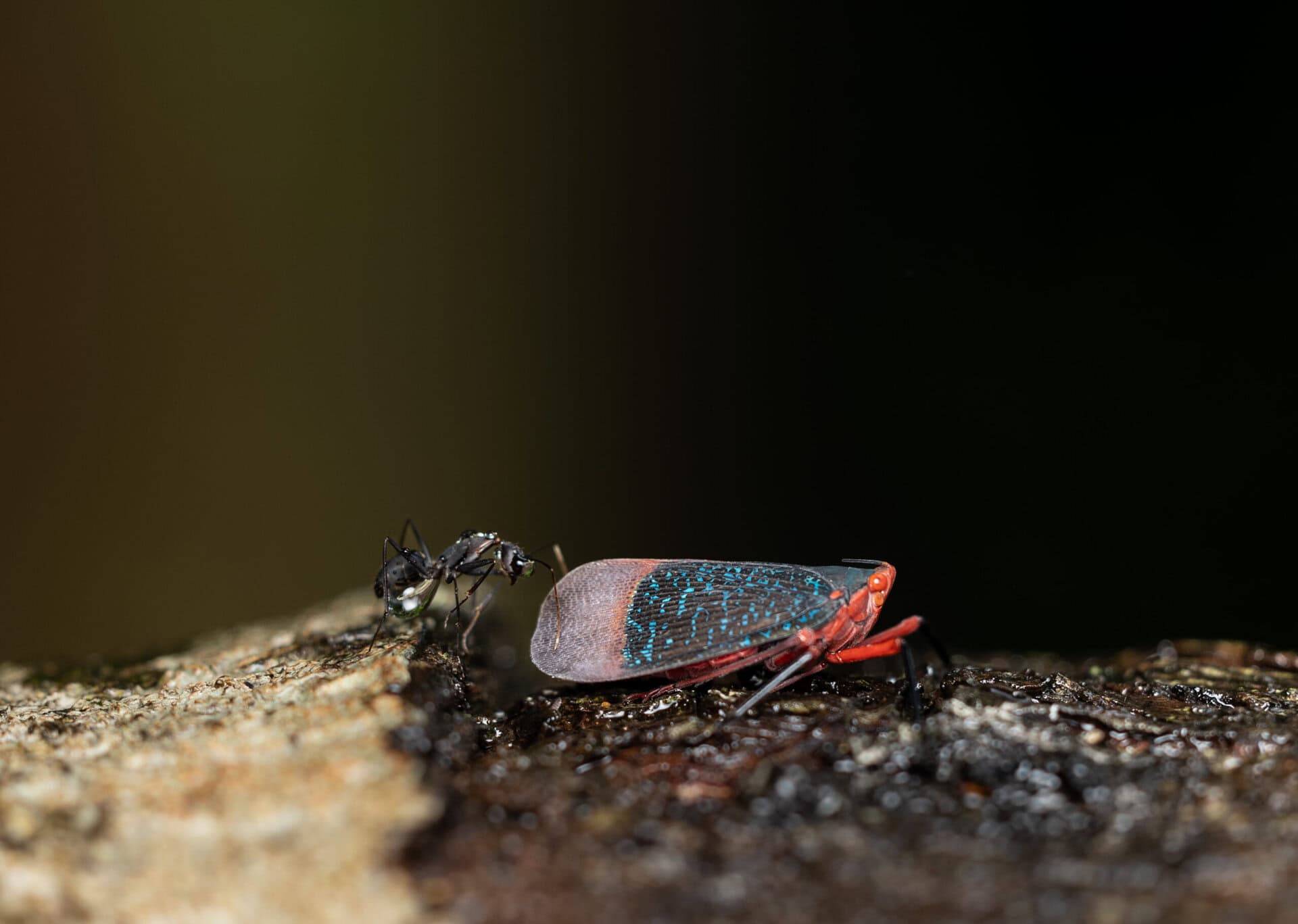
Lantern Bug (Kalidasa Lanata)
The lantern bugs emit a sweet secretion which attract ants. In this picture, an ant can be seen behind the lantern bug attracted by this sweet secretion.
Problems faced
Following are some of the problems faced during this trip.
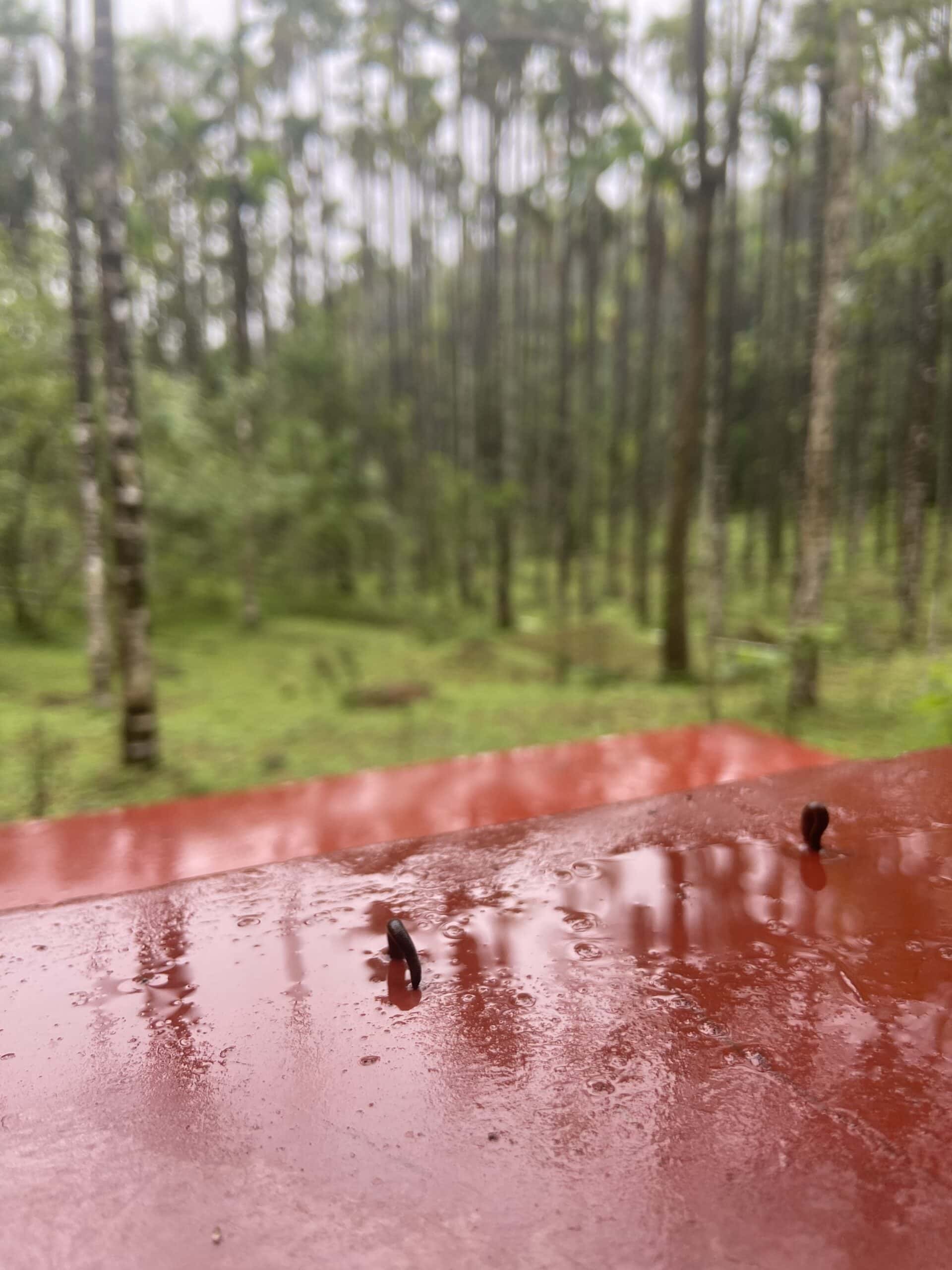
Leeches: The biggest problem were the leeches. They were everywhere – even inside the house. You stand still for a few minutes and guaranteed to find a leech on the body. On the first day, almost 50% of my attention was in avoiding leeches. I was checking for leeches on my shoes, trousers and hands every couple of minutes. Because of this I was not able to focus on the field trip and photography. Mr. Vipul said the best way was to remove leeches from the mind. He did mention this is easier said than done. Another point he mentioned was “they don’t kill you”. On the second and third days, I just accespted leeches as part of the ecosystem. With the anti-leech socks cutting off most of the leeches from getting on the body, I became less conscious about the leeches and was able to focus on the field trip and photography.
Macro Photography: This is my first field trip dedicated to macro photography. For getting that perfect macro shot with the full subject in focus with a dark background, the aperture, shutter speed, flash intensity and ISO all need to be correctly tuned. I struggled a lot in getting these settings right and had to do lots of experiment adjusting all the settings. Mr. Vipul was very helpful. He would check the pictures and suggest changes to settings.
Soggy shoes and socks: Though gum boots are preferred, I took my water proof hiking shoes to the trip. I did not expect that we would be wading through knee deep water. On the first session on the second day itself, we had to wade through deep water and both my shoes and the anti leech socks got wet and soggy. I had to manage with these soggy shoes and socks for the rest of the program. Next time, I will definitely get a pair of gum boots for such a trip.
Night field trips: As I am a “early to bed, early to rise” person, I am not used to staying awake late in nights. So it was very difficult to stay awake during the night field trips which lasted till 11PM. Add to this the tiredness from the day trips, wearing those wet shoes and socks, I decided to skip the night trips on the second and third days. Because of this, I missed photographing the Malabar Gliding Frogs which can be found only in the night.
The Drive Back Home
We all left on the morning of 16th after breakfast. I took the Agumbe -> Chikmagalur -> Mysore -> Coimbatore route. I stayed overnight in Mysore and reached home in the afternoon on 17th.
Conclusion
I had a great time during this trip – the drive through some awesome roads, learning about snakes, frogs and macrophotography, those field trips, the discussions, and the pictures I managed to shoot and getting over my fear of leeches and snakes.
I enjoyed participating in this program with Robi. He is a fantastic photographer and the way he frames the subjects is just awesome. I learn a lot from him in photography every time we go on such trips.
It was also great to meet TBHPian turboNath in this program.
I would like to thank Robi for introducing me to Mr. Vipul and this program. Mr. Vipul was very knowledgeable and gave us lots of information about snakes and frogs and on macrophotography techniques. He was very patient with all the participants and made sure that we got the shots right every time. He would make us adjust the settings till we got the shot right. He gave us tips on frame composition, playing with light etc. I look forward to joining him in more of his programs in the future.
That’s all folks I have on this trip! Thank you for reading.